Spider Mites on Philodendron Xanadu: Checks & Fixes
Quick answer
Spider mites on Philodendron Xanadu show as pale stippling on the glossy lobes plus fine webbing where leaflets meet the petioles. First, isolate the plant and rinse the undersides of every leaf forcefully. Then confirm live mites with a white-paper tap test before applying insecticidal soap or horticultural oil with thorough underside coverage and repeat treatments.
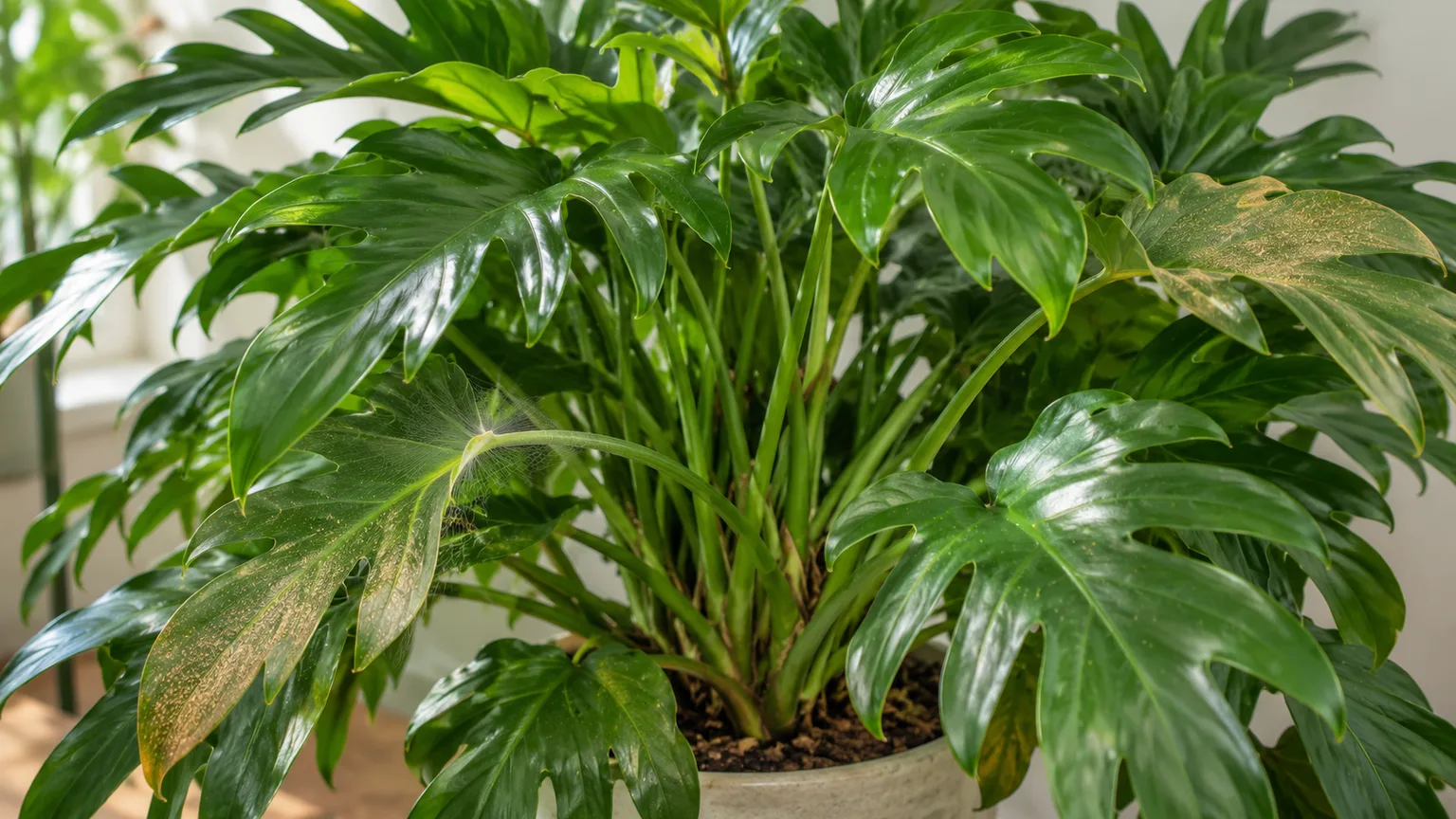
Spider Mites on Philodendron Xanadu: Causes, Checks & Fixes
This guide covers spider mites on Philodendron Xanadu. See also the general Spider Mites guide, watering, and light pages for this plant.
Spider Mites on Philodendron Xanadu: Causes, Checks & Fixes
Quick answer
Spider mites on Philodendron Xanadu announce themselves as pale stippling across the glossy lobes, followed by fine silk webbing where the leaflets meet the long petioles. Isolate the plant first, then rinse the undersides of every leaf with a forceful stream of water. Confirm live mites with a white-paper tap test before reaching for insecticidal soap or horticultural oil, and plan on repeat applications with thorough underside coverage rather than a single spray.
What spider mites look like on Philodendron Xanadu
On Xanadu, the earliest sign is a dusty-looking stipple of tiny pale dots on the upper surface of the lobes, easiest to see when light rakes across the gloss. As feeding continues, patches turn a dull bronze, leaf edges crisp, and heavily infested outer leaves yellow and drop. The mites themselves are pinhead-sized dots clustered on the leaf undersides, and their colonies live mostly on the undersides of leaves, which is why the top of the plant can look acceptable while the damage spreads below.
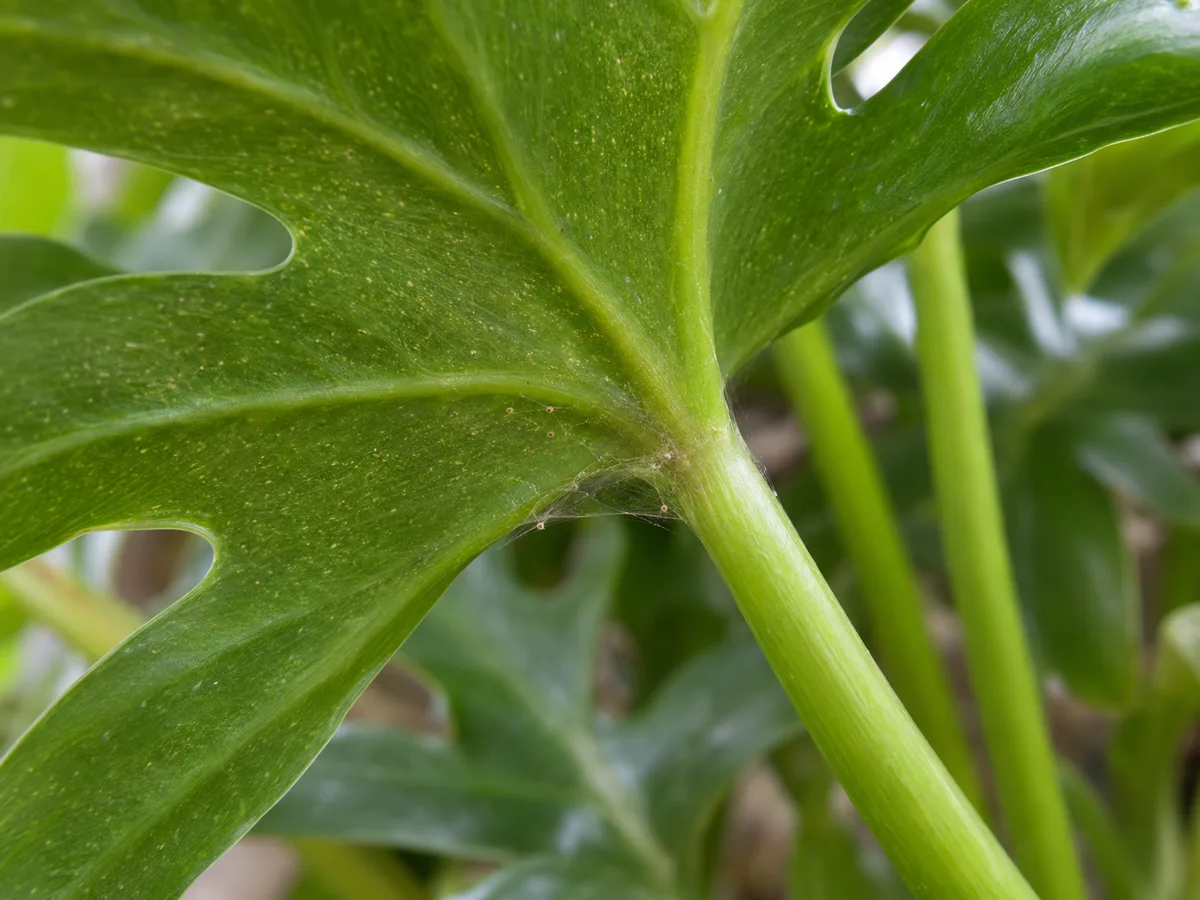
Check beneath glossy lobes for pale feeding stipple and fine silk at petiole joints; the paired signs point to spider mites.
Webbing is the severity signal. A few strands where a lobe meets its petiole mean an established colony, and sheets of silk across the crowded crown center mean the population is dispersing. Because Xanadu grows as a dense self-heading mound with large, glossy, deeply lobed leaves on long petioles, the overlapping foliage gives mites sheltered, hard-to-spray hiding places that open-form plants do not offer.
Why Xanadu invites spider mites
Three traits of this plant stack the odds. First, the broad lobed leaves collect household dust, and dusty foliage in warm, dry air is exactly where mite populations build fastest. Second, the dense crown restricts airflow between petioles, so the interior stays warm while sprays and rinse water struggle to reach every underside. Third, Xanadu is documented as susceptible to spider mites along with aphids, mealybugs, scale, and thrips, so a plant that is already stressed is a plausible mite host rather than a mystery case.
Stress is usually about water and placement. Mite damage turns severe fastest on water-stressed plants in hot, dry conditions, and a Xanadu parked beside a heat vent or a sun-baked window combines both triggers. For the general mechanics of mite feeding and generations, see our spider mites hub. On Xanadu, the pattern that matters is stippling plus webbing concentrated at lobe joints and the crown, paired with a recent dry spell or a missed watering.
How to confirm the cause
Work from the outside of the mound inward. Turn over the oldest outer leaves and inspect the undersides with a magnifying lens, looking for pinhead dots that move when breathed on gently. Then run the tap test: hold white paper beneath a suspect leaf, tap the leaf firmly several times, and watch for tiny crawling specks on the paper, a check that pairs stippling with fine webbing and the paper test to separate mites from other pests.
Confirm before treating because lookalikes are common. Thrips leave dark specks of frass and silvery scars, mealybugs show as cottony clusters in the same petiole joints, and plain dust or hard-water spots wipe off without any moving dots. Mite feeding, by contrast, sucks cell contents out of the leaf, leaving tissue stippled, yellow and dry with pale spots that cannot be wiped away. If you find webbing plus moving dots, the diagnosis is settled.
The first fix to try
Do one thing first: isolate the Xanadu and rinse it. Carry it to a shower or sink, tilt the pot so the mix does not flood, and wash the undersides of every leaf with a firm stream, working from the outer leaves into the crown and along each petiole. Light infestations can often be held down by water sprayed forcefully on the affected plant, covering the leaf undersides, and rinsing first also washes off the dust layer that shelters colonies.
Let the crown drain fully afterward, with no water pooling where the petioles meet. Recheck with the tap test after two to three days. If live mites persist, move to the follow-up treatment below rather than rinsing daily for weeks, since an established colony needs more than water alone.
Follow-up treatment that actually works
Treat only confirmed, ongoing infestations. Coat the undersides of all leaves with insecticidal soap or horticultural oil, since these materials must contact mites to kill them, so excellent coverage of leaf undersides is essential, and repeat applications are expected because eggs survive the first pass. Home programs that succeed combine this physical removal with repeated, thoroughly applied treatments spaced around the pest’s rapid development instead of relying on one heavy dose.
Practical rules for Xanadu: spray in the cool of the morning, test one lobe first and wait two days for burn marks, and never spray a wilted plant or a plant sitting in hot sun. Part the crown with one hand so the mist reaches the interior petioles where mites retreat. Re-treat at roughly weekly intervals for two to three rounds, tapping leaves before each round, and stop when two consecutive checks show no live mites.
Mistakes to avoid
Do not fertilize a mite-stressed Xanadu to push it through the damage. Extra nitrogen softens growth that mites exploit, so hold all feeding until new spears emerge clean and the tap test stays negative for two weeks. Check the plant’s steady watering rhythm instead, because a consistently watered plant tolerates both mites and treatment far better than a feast-or-famine one.
Do not prune the crown into a skeleton. Removing the two or three worst outer leaves is reasonable, but stripping the mound starves the very crown buds that must produce the recovery spears. And do not stack a repot, a hard prune, and a spray in one weekend. One intervention at a time lets you read whether the mites or your impatience caused the next change.
Recovery timeline
Judge recovery from the crown center, not from old leaves. Stippled lobes never regain their gloss, so the first honest sign of progress is a new spear unfurling without speckles about two to four weeks after treatment begins. A second clean spear and a negative tap test across two weekly checks mean the colony has collapsed.
Expect the plant to look ragged for a month or more while marked outer leaves persist. That is normal. Only remove a damaged leaf once a clean replacement has opened above it, keeping the mound photosynthesizing throughout.
How to prevent them next time
Prevention on Xanadu is mostly dust and dryness management. Wipe the lobes with a damp cloth monthly, top and underside, which both removes early colonies and forces you to look at the undersides regularly. Keep the pot on its normal dry-down between waterings rather than letting it sit parched, since drought stress invites outbreaks.
Quarantine every newcomer for two to three weeks before it joins the room, and give the Xanadu elbow room so neighboring plants do not bridge mites straight into the crown. Run weekly underside checks through hot spells and the winter heating season, when indoor air is driest and colonies explode fastest.
When to worry
Escalate when webbing sheets across the crown interior, new spears emerge already stippled, or leaf drop accelerates to several leaves a week. At that point, prune the worst leaves, repeat the soap-or-oil round with full crown coverage, and consider discarding the plant if it shares a shelf with a collection you cannot afford to infest.
A Xanadu whose crown stays firm and keeps pushing spears is worth the effort even when it looks thin. A crown that softens at the base or stops producing growth after treatment has likely exhausted its reserves, and replacing the plant is the rational call.
Related Philodendron Xanadu guides
Stay inside this plant’s own care pages for follow-up. The Philodendron Xanadu hub sets the baseline for light, water, and mound habit, while the full plant problems hub routes you to lookalike issues such as thrips or mealybugs when the tap test comes back negative.
Related tool
Use the Pest Identifier Tool to narrow causes for spider mites on this plant before changing multiple variables at once.