Slow Growth on Pomegranate: Causes, Checks & Fixes
Quick answer
A pomegranate that barely extends its shoots is most often short of sun, sitting in soggy or alkaline soil, or still in its slow juvenile years. First step: confirm the plant gets at least six hours of direct sun daily and fix shade before changing water or fertilizer.
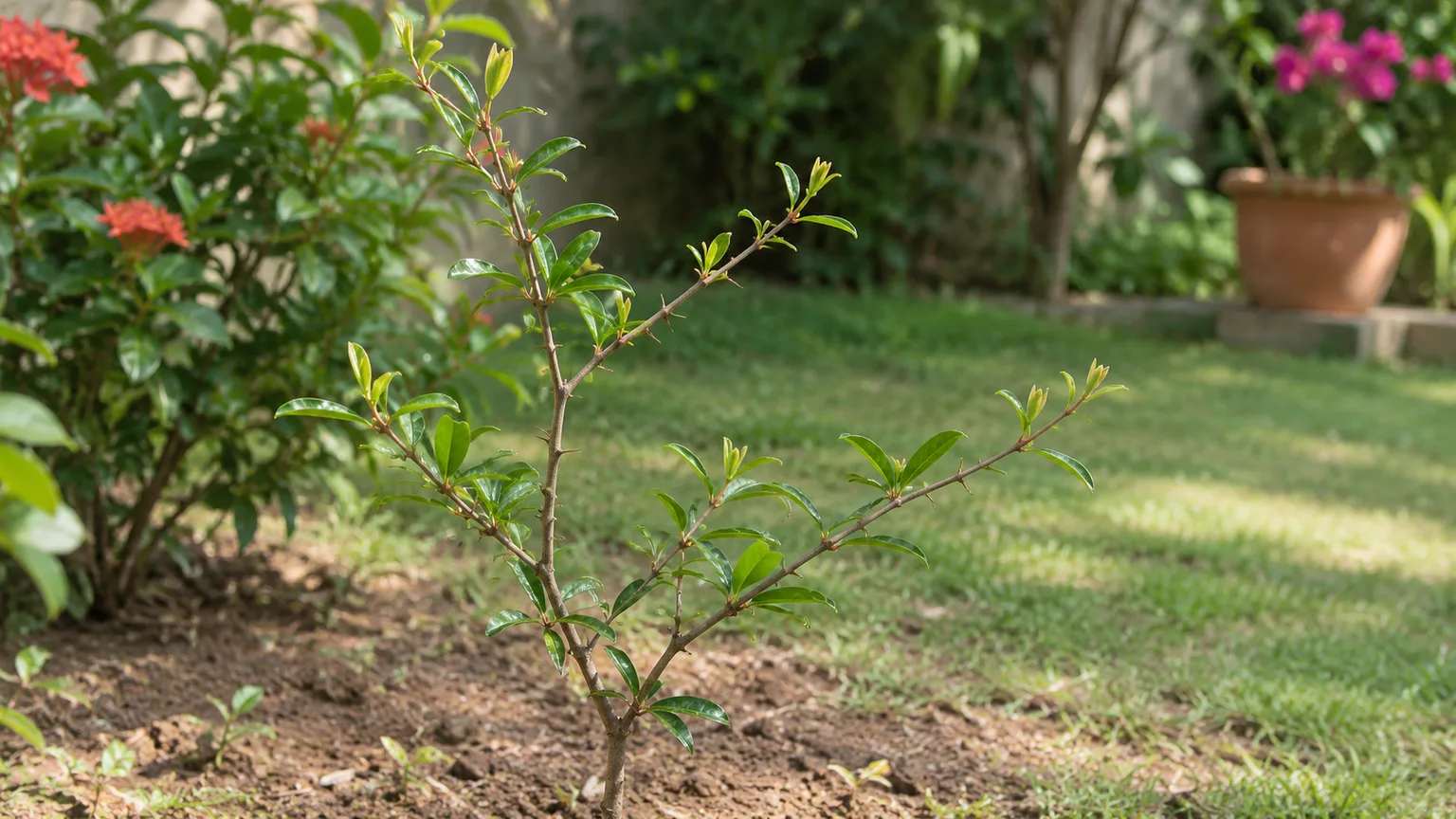
Slow Growth on Pomegranate: Causes, Checks & Fixes
This guide covers slow growth on Pomegranate. See also the general Slow Growth guide, watering, and light pages for this plant.
Slow Growth on Pomegranate: Causes, Checks & Fixes
Quick answer
A pomegranate that puts out only stubby shoots with small leaves is usually telling you about sun, soil, or age rather than disease. This species spends a juvenile period of three to five years establishing before it fruits freely, so a young plant growing slowly but otherwise healthy is often on schedule. For the mechanics of stunted extension growth in general, see our slow-growth guide. On pomegranate, the pattern usually shows up as short new shoots, sparse branching, and small pale leaves while the plant otherwise looks intact.
First step: confirm the plant gets at least six hours of direct sun every day, and remove the shade if it does not. Pomegranates set far more growth and fruit planted in full sun rather than in a shady area, and no amount of fertilizer compensates for a shadowed corner. Make that one correction, then watch the next flush of shoots before changing anything else.
What slow growth looks like on pomegranate
Healthy pomegranate shoots extend noticeably each warm season, carrying glossy narrow leaves and ending in firm buds or flower tips. A stalled plant breaks bud late, extends only an inch or two per shoot, and holds small yellowish-green leaves that never size up. Branching stays sparse because lateral buds never get the energy to push.
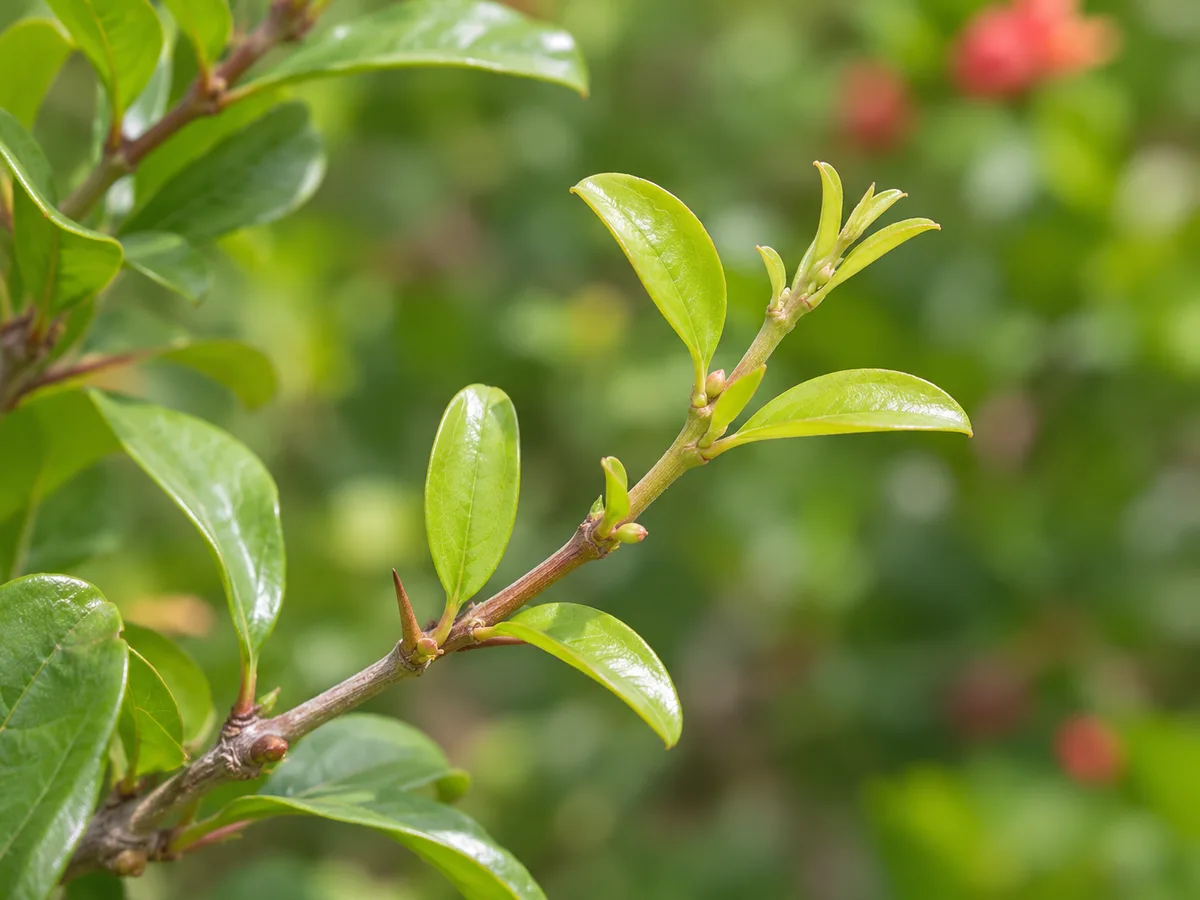
A stalled pomegranate shoot stays short, with small pale leaves and few lateral buds pushing into new branches.
Because pomegranate wood is slender and thorny with dense twiggy growth, a slow year also shows up as congestion: many short twigs and few strong extending leaders. Do not confuse this with the plant’s natural winter rest. Pomegranate is deciduous, and its leaves turn yellow and drop in fall and winter as part of the normal cycle (Gardening Know How notes this annual drop), so bare stems from late autumn through early spring are dormancy, not decline.
Why pomegranate stalls
Not enough direct sun
Pomegranate is a heat-loving shrub that wants as much sun and warmth as possible, with at least six hours of full sun per day for a good harvest. Plants in partial shade survive but extend weakly, flower poorly, and drop young fruit. North-facing walls, overhanging trees, and crowded patios are the most common culprits for container plants. If your plant leans hard toward the light with sparse growth on the shaded side, sun is the limiter. Our pomegranate light guide details the exposure this species needs across seasons.
Water extremes in the root zone
Pomegranates want deep, moist but well-drained soil and should be irrigated every seven to ten days in the absence of significant rainfall. Both extremes stall growth: prolonged drought forces leaf drop and shoot tips to stall, while soggy ground suffocates roots and invites decline. Potted plants swing between these extremes fastest, especially in small containers that dry in a day or saucers that never drain. Our pomegranate watering guide covers the deep-soak rhythm that keeps extension growth steady.
Alkaline, compacted, or poor-draining soil
This species produces best on deep loams yet adapts to sands and clays, but optimum growth sits in well-drained soils in the pH range of 5.5 to 7.0, and growth on alkaline soils is poor. In chalky or lime-heavy ground, iron and micronutrients lock up, leaves stay small and pale, and shoots refuse to extend even with adequate water. Heavy clay that puddles after rain causes the same stall through oxygen-starved roots. NC State’s plant profile likewise stresses good drainage and moisture as the non-negotiable soil condition. Our pomegranate soil guide explains how to build the loose, slightly acidic mix this plant prefers.
Nutrient timing, not nutrient volume
Young pomegranates need only modest feeding: an established schedule is to fertilize in November and March for the first two years, with little needed after. Over-fertilization backfires, producing soft vegetative growth at the expense of fruit and aggravating fruit drop in young trees (UF/IFAS flags both over-fertilization and excess irrigation as aggravators). A plant that is pale and stalled from shade or bad drainage will not respond to extra nitrogen; it will only grow salt stress on top of its existing problem. Our pomegranate fertilizer guide sets out the light-touch schedule.
Crowded suckers dividing the plant’s energy
Pomegranates naturally grow as multi-trunk shrubs with many suckers arising from the root and crown area. Left alone, a thicket of a dozen weak stems forms, and no single trunk gains enough vigor to extend strongly or fruit well. Commercial and dooryard growers train plants to one or a few trunks and remove extra suckers frequently for exactly this reason. If your plant is a dense broom of thin whips with no dominant leaders, congestion is stealing the growth. Our pomegranate pruning guide shows how to select the framework stems.
Pot-bound roots in containers
Container pomegranates stall when roots circle and mat inside an undersized pot. Circling, root-bound roots can keep tightening around the root ball and choke water and nutrient distribution, which reads above ground as chronic slow growth no watering tweak will fix. Give container plants at least a 10-gallon container with plenty of drainage holes and repot before the mat becomes solid.
Youth and cold checks
A one- or two-year-old plant directing energy into roots rather than shoots is normal, particularly given the three-to-five-year juvenile window before reliable fruiting. Cold also pauses everything: shoots are killed to the ground at temperatures below 10°F, and a plant recovering from a hard freeze spends its season rebuilding rather than extending.
How to confirm the cause
Work through these checks in order on a dry morning:
- Sun audit. Note when direct sun first hits the plant and when it leaves. Under six hours, or bright shade instead of direct rays, confirms the leading suspect.
- Shoot measurement. Measure five of this year’s new shoots. Uniformly short extension across the whole canopy points to a systemic limiter (sun, soil, roots); one stunted branch among vigorous ones points to local damage instead.
- Soil moisture at depth. Push a finger or probe 3–4 inches into the root zone. Dust-dry means underwatering; soggy and sour-smelling means drainage failure. Either stalls growth, and each demands the opposite fix, so check before acting.
- Drainage test. Water until it flows, then time the puddle. Standing water after an hour in a pot, or a planting hole that holds water for a day, confirms poor drainage.
- Soil pH. A cheap probe or test kit reading above 7.5 in a stalled plant points to alkaline lockup, especially with pale small leaves.
- Root inspection. Slip container plants out of the pot and look for dense circling mats. For in-ground plants, scrape back mulch and check whether the root flare sits buried under soil.
- Age and calendar. Plants under three years old, or any plant checked between leaf fall and spring bud break, may simply be young or dormant rather than sick.
The first fix to try
Give it full sun and nothing else for now. Move a container to a spot with six or more hours of direct sun, or prune back the overhanging branch shading an in-ground plant, then resume your normal watering routine unchanged. New shoot tips should respond within three to six weeks in the growing season. Stacking fertilizer, repotting, and pruning onto the same weekend hides which change worked and stresses an already slow plant.
Step-by-step recovery
Once sun is secured, address findings from your confirmation checks in this order:
- Fix drainage before feeding. Clear blocked pot holes, lift the pot onto feet, or work coarse compost into the top inches of heavy ground. Roots must breathe before nutrients matter.
- Set the watering rhythm. Deep-soak so moisture reaches the full root zone, then let the top few inches dry before watering again, roughly every seven to ten days without rain, shifting shallower in winter dormancy.
- Correct pH only with a test result. For alkaline soil, incorporate elemental sulfur or acidic organic matter per label rates and retest in a month; do not guess with vinegar drenches that swing pH wildly.
- Feed lightly and on schedule. If the plant is in its first two years, apply a balanced fertilizer in the November–March window rather than mid-summer rescue doses. Skip feeding entirely until drainage and sun are fixed.
- Thin the thicket. Select three to five strong, well-spaced stems as the framework and cut the weakest suckers at the base. Spread heavy thinning across two seasons on weak plants.
- Repot circling containers. Step up one pot size, tease out or trim the worst circling roots, and replant at the same depth with fresh, slightly acidic mix.
Recovery timeline
Pomegranates respond on a flush cycle, not a daily one. Expect existing shoots to hold steady for two to three weeks after the fix, then fresh extension growth with larger, deeper-green leaves on the next flush. A mildly stalled plant usually looks clearly better within one growing season; a severely pot-bound or alkaline-locked plant may need a full season plus the following spring to rebuild its root system. Finished stunted wood will not stretch, so read progress only in new growth. If an entire season passes with zero extension after sun, drainage, and pH are all verified good, suspect root disease or planting-depth problems and investigate below ground.
Dormancy and lookalike check
Rule these out before treating slow growth as a care failure:
- Winter dormancy. Bare stems with firm buds from late autumn to early spring are rest, not stunting. Scratch a twig: green under the bark means alive and waiting.
- Cold damage. Dieback concentrated on the upper and outer shoots after a hard freeze, with regrowth from the base, matches winter kill rather than a soil problem.
- Leaf blotch spotting. Small dark reddish-brown areas on foliage with premature leaf fall indicate disease pressure rather than simple slow growth, and call for sanitation plus an approved fungicide rather than fertilizer.
- Aphid colonies. Clustered insects on shoot tips with sticky residue and distorted young leaves point to sap-feeders; a strong blast of water dislodges light infestations before sprays are needed.
- Fruit drop on young trees. Heavy drop of immature fruit in the first years is a known juvenile behavior aggravated by over-feeding and over-watering, not a sign the tree needs more of either.
If symptoms match one of these instead, the pomegranate problems hub routes you to the right guide.
Mistakes to avoid
- Force-feeding a shaded plant. Nitrogen cannot substitute for light and only adds salt stress.
- Daily shallow watering. Wet surfaces with dry depths train roots upward and stall deep establishment.
- Planting too deep. A buried root flare suffocates the crown; keep it at or just above soil level.
- Letting every sucker stay. A congested thicket looks full but grows slowly; commit to a few strong trunks.
- Judging growth in winter. Comparing December stems to June shoots manufactures a problem that does not exist.
- Repotting and pruning and spraying on the same day. One intervention at a time lets you read the plant’s response.
How to prevent it next time
Site new plants where they will receive full-day sun in deep, loose, slightly acidic ground, spacing dooryard trees as orchards do so suckers can be managed rather than tangled. Mulch widely but keep mulch off the trunk, water deeply on the seven-to-ten-day rhythm, and feed modestly in the establishment years. Remove suckers a few times each growing season while they are small enough to pinch or snip. For containers, start with a large pot, refresh the top mix annually, and step up before roots mat. These habits mirror the plant’s natural life as a long-lived, sun-demanding shrub that can reach 6 to 12 feet as a shrub or 20 feet trained as a tree when its roots and light are right.
When to worry
Treat slow growth as urgent when shoot tips die back progressively, bark shrivels or oozes, the root zone stays foul-smelling and wet, or an established plant drops leaves outside autumn. These patterns suggest root rot, canker, or severe waterlogging that will not self-correct. A young plant growing slowly with firm wood, intact buds, and no spreading symptoms can be worked through steadily without alarm.
Related pomegranate guides
- Pomegranate watering guide — set the deep-soak rhythm when moisture checks show drought or soggy cycles.
- Pomegranate light guide — verify exposure hours when the sun audit finds shade.
- Pomegranate soil guide — fix drainage and pH when tests show waterlogging or alkaline lockup.
- Pomegranate fertilizer guide — feed lightly on schedule once sun and drainage are confirmed.
- Pomegranate pruning guide — thin suckers and build the trunk framework on congested plants.
- Pomegranate problems hub — route lookalike symptoms such as leaf blotch or pest damage to the right fix.
Related tool
Use the Plant Growth Rate Calculator to log shoot extension over the season and confirm your pomegranate is back on a normal growth pace after fixing sun and soil.