Raat Rani Fertilizer: Type, Dose and Timing
Raat Rani Fertilizer: Type, Dose and Timing
Raat Rani Fertilizer: Type, Dose and Timing
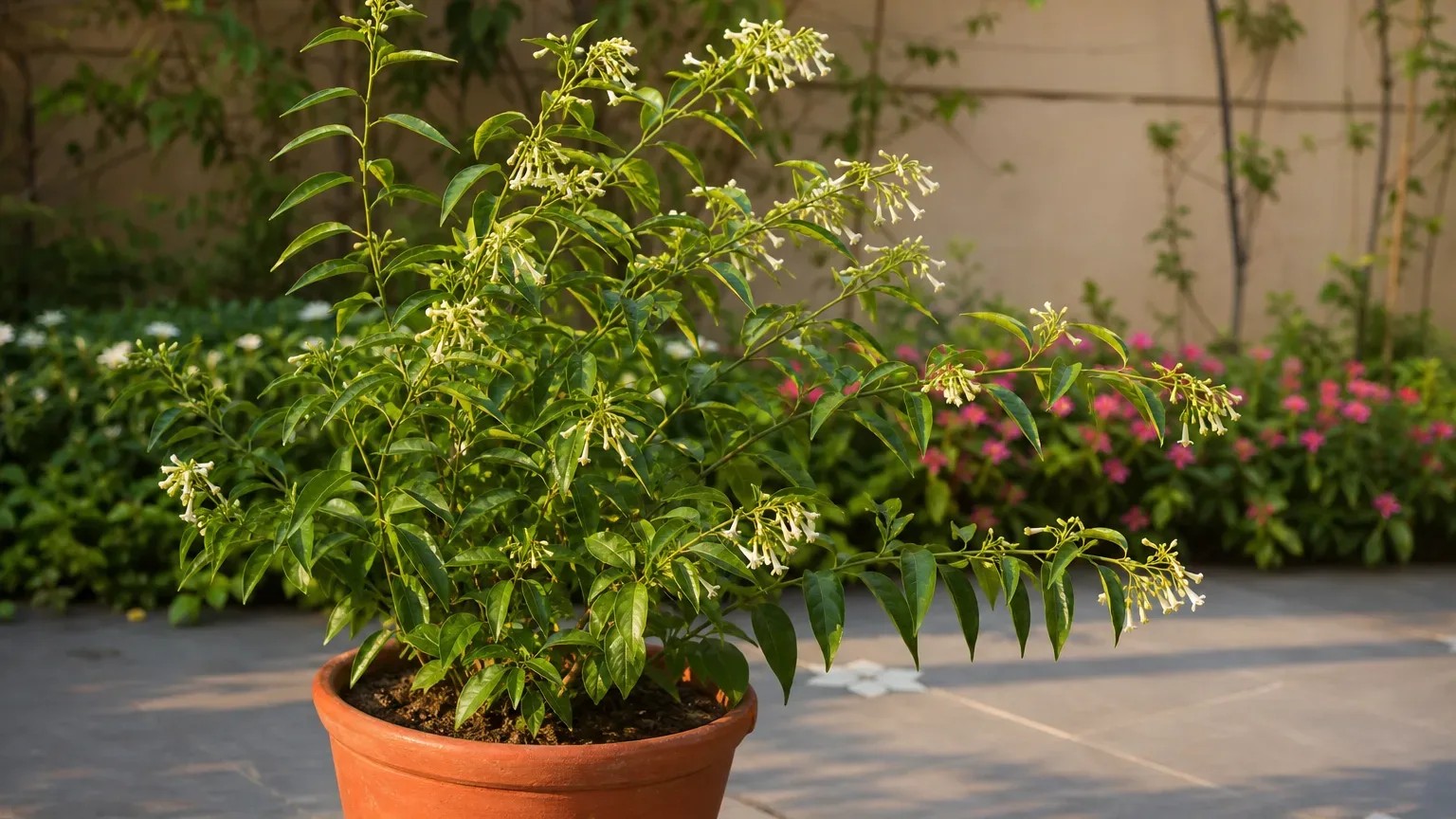
Raat Rani (Cestrum nocturnum) is a fast-growing woody shrub, not a true jasmine. Its accepted native range runs from Mexico through tropical America, according to Kew’s Plants of the World Online, and its warm-climate growth pattern matters more to feeding than the month printed on a calendar. Feed when fresh shoots are extending and the root zone is warm enough to use nutrients; pause when cool weather, drought, waterlogging, or recent root disturbance has stopped growth.
The quick feeding answer
For a healthy potted Raat Rani, use a complete balanced liquid fertilizer at half the label rate every four to six weeks during active warm-season growth. A balanced slow-release product applied once at the beginning of the main growth flush is an alternative, not something to stack with liquid feed. Clemson Extension advises that fertilizer should serve a defined need rather than be applied automatically, especially with established woody plants (fertilizing trees and shrubs).
Always apply fertilizer to moist mix and let excess solution drain. In cool winter conditions, during a waterlogged monsoon spell, or while the shrub is visibly stalled, stop feeding and correct the limiting condition first.
Why this shrub needs measured feeding
Raat Rani can produce long shoots quickly in heat, so it is easy to mistake vigorous foliage for a need to feed even more. Nitrogen supports shoot and leaf growth, but excess nitrogen can favor leafy growth at the expense of flowers. For a shrub grown mainly for scented flower clusters, the goal is steady new growth with short-to-moderate internodes, not soft canes that race beyond the pot.
Flowering depends on the whole growing system. Strong light, correct pruning timing, an aerated root zone, and even moisture determine whether nutrients can be used. If your plant is green and stretching but not budding, review the Raat Rani light guide before increasing fertilizer.
Best fertilizer type for Raat Rani
Choose a complete fertilizer that supplies nitrogen, phosphorus, potassium, and listed micronutrients. A general-purpose formula such as 10-10-10 or 20-20-20 can work when diluted; the higher numbers describe concentration, not a superior product. The three prominent label numbers represent nitrogen, phosphate, and potash percentages by weight, as explained in Clemson’s fertilizer label guide.
There is no authoritative species-specific evidence that Raat Rani requires a high-phosphorus “bloom booster.” In ordinary potting mix, a balanced complete feed is the more defensible default. If a soil test shows phosphorus is already sufficient, adding more does not solve low light, late pruning, damaged roots, or drought stress.
How to read the NPK numbers
NPK ratios compare the relative proportions of the three macronutrients. A 10-10-10 and a 20-20-20 have the same 1:1:1 ratio, but the second is twice as concentrated by weight and therefore must be measured with particular care. Clemson Extension recommends matching the product to the nutrient need rather than choosing by package claims (choosing a fertilizer).
Use the label rate for container ornamentals as the ceiling. Starting at half that rate gives you room to observe leaf color, shoot length, and flowering without loading a relatively small root volume with salts.
Seasonal feeding calendar for India
Begin feeding when spring warmth produces clear new extension growth. Continue through the main warm growing period while the plant has adequate light and is taking up water normally. During intense summer heat, feed only after confirming that the root ball is evenly moist; during prolonged monsoon saturation, wait for drainage and active growth to recover.
In mild frost-free cities, a plant may keep growing into autumn, so the final feed can follow the plant rather than a fixed date. In cooler north Indian winters, stop when nights cool and shoot extension pauses. Restart only after new growth resumes, not merely because the calendar says spring.
Potted Raat Rani
Containers lose nutrients through drainage but also accumulate soluble salts because the root system occupies a confined volume. Feed a vigorous established plant every four to six weeks at half strength, then run plain water through the pot between applications. Missouri Extension notes that soluble fertilizers are easy to regulate but can create damaging salt accumulation when overused in containers (caring for houseplants).
A recently purchased plant may already contain slow-release granules. Check the mix and nursery label before adding anything; combining an unknown slow-release charge with regular liquid fertilizer is a common route to excess.
Raat Rani growing in the ground
An established garden shrub often needs less fertilizer than a container plant, particularly where compost, mulch, and fallen organic matter recycle nutrients. Use a soil test when growth or leaf color suggests a deficiency; poor growth may instead come from root damage, drought, excess water, or unsuitable pH. If feeding is justified, distribute the measured product over the root zone rather than piling it against the stem.
One modest application around the start of active growth is usually a safer trial than repeated calendar feeding. Water it in according to the product label and keep granules off foliage and the woody crown.
How to apply fertilizer safely
First, check that the top layer of mix is beginning to dry but that the root ball is not parched. Follow the Raat Rani watering guide if moisture is uncertain, then water lightly or apply a diluted liquid feed to already-moist soil. Never pour concentrated fertilizer onto dry roots.
Measure with the scoop or syringe dedicated to that product, mix thoroughly, and apply evenly until a little drains from a container. Discard drainage rather than allowing the pot to stand in it. The “right source, right rate, right time, right place” approach reduces waste and nutrient loss, a principle emphasized in Clemson’s fertilizer and environment guidance.
Wear gloves if feeding requires handling fallen leaves, berries, or clipped stems, and keep both plant debris and fertilizer out of children’s and animals’ reach. Raat Rani is a toxic nightshade shrub, not a true Jasminum jasmine; Queensland Poisons Information Centre states that all parts are toxic, especially the fruit and advises urgent medical attention after ingestion. Do not use pruned material as mulch where pets or grazing animals can reach it, and seek appropriate medical or veterinary advice after suspected ingestion.
Fertilizer cannot fix weak flowering
When a Raat Rani stays leafy but does not bloom, check direct light first. Then ask whether hard pruning removed developing flowering shoots, whether the pot is staying wet, and whether repeated high-nitrogen feeding has produced soft extension growth. Fertilizer cannot compensate for any of those limits.
Do not respond to missing buds by doubling the dose or switching immediately to a high-phosphorus product. Give the plant several weeks of stable light, moisture, and normal new growth, and use the Raat Rani pruning guide to time structural cuts without repeatedly removing potential flowering wood.
Signs of too much fertilizer
Watch for a white crust on the mix or pot rim, browned leaf tips and margins, sudden wilting despite moist soil, or roots that appear dark and injured. These signs overlap with hard-water deposits, drought, and root rot, so inspect the moisture and roots before deciding fertilizer is the sole cause. Penn State Extension describes excess soluble salts as a cause of root injury and leaf-edge burn in potted plants (over-fertilization of potted plants).
Very dark green leaves and long soft stems without a proportional increase in buds suggest too much nitrogen relative to the plant’s light and growth demand. Stop feeding rather than trying to counter one fertilizer with another.
How to recover an overfed plant
Remove any visible pellets from the surface and stop fertilizer. If the pot drains freely and the roots are not rotten, slowly flush the mix with plain water and let it drain completely; do not leave the plant sitting in runoff. Repeat only if drainage remains good, because aggressive flushing of already-saturated soil can worsen oxygen stress.
Keep the plant in suitable light and resume normal watering based on soil dryness. Wait for healthy new growth before feeding again, usually at a lower concentration. If the mix is compacted, sour-smelling, or no longer drains, use the Raat Rani repotting guide instead of repeatedly leaching a failing root zone.
Signs that nutrition may be too low
Possible signs include generally pale new growth, progressively smaller leaves, weak shoot extension, and poor flowering despite adequate light, warmth, moisture, and healthy roots. These are not proof of a fertilizer deficiency. Clemson recommends soil or plant-tissue testing because visual symptoms can have several causes (soil testing guidance).
For a potted plant that has grown for months in the same mix without feeding, a half-strength complete fertilizer is a reasonable diagnostic trial once other stress has been excluded. Judge the response in new growth; damaged old leaves will not turn perfect again.
Compost, organic feeds, and bloom boosters
Compost can contribute nutrients and improve the organic fraction of a garden soil, but thick additions in a pot can reduce air space and make watering harder to judge. Use mature compost as a measured component or light top-dressing, not as a dense replacement for the airy mix described in the Raat Rani soil guide.
Liquid seaweed, compost tea, and similar products vary widely in nutrient analysis. Treat the guaranteed analysis on the label as evidence; “natural” does not mean salt-free or impossible to overdose. UF/IFAS explains that fertilizer selection should account for plant need, release rate, and environmental losses rather than relying on product category alone (fertilizer basics).
When not to fertilize
Do not feed a dry, wilted plant, a waterlogged plant, one with active root rot, or one recently moved into a larger pot with fresh pre-fertilized mix. Avoid feeding immediately after hard pruning or during a cold-weather pause. Root recovery, drainage, and suitable light come before nutrition.
Also pause when heavy monsoon rain keeps washing through an outdoor container. Adding fertilizer repeatedly to replace presumed losses can send more nutrients into drains and waterways while oxygen-starved roots remain unable to use them.
When to use this page vs other Raat Rani guides
Use this page to choose a fertilizer, set the dose, time applications, and diagnose possible nutrient excess or shortage. Use the watering guide for moisture checks and flushing decisions, the soil guide for drainage and mix structure, and the light guide when feeding produces leaves but no flowers.
For root-bound plants, exhausted mix, or poor drainage, switch to the repotting guide. Feeding a structurally bad root zone is not a substitute for repotting.
Related Raat Rani guides
Start at the Raat Rani care overview for the whole growing system. Then coordinate fertilizer with watering, soil, light, pruning, and repotting rather than changing several variables at once.
Conclusion
Feed Raat Rani lightly while it is visibly growing: a complete balanced liquid fertilizer at half strength every four to six weeks is a practical container default, while established garden plants may need only a tested, modest spring application. Pause for winter slowdown, saturated monsoon soil, drought, damaged roots, or recent repotting.
If flowers are missing, investigate light, pruning, drainage, and excess nitrogen before buying a bloom booster. The safest first action is simple: check for active growth and moist, freely draining soil, then apply one measured dose and observe the next flush.