Raat Rani Watering Guide for Pots and Gardens
Raat Rani Watering Guide for Pots and Gardens
Raat Rani Watering Guide for Pots and Gardens
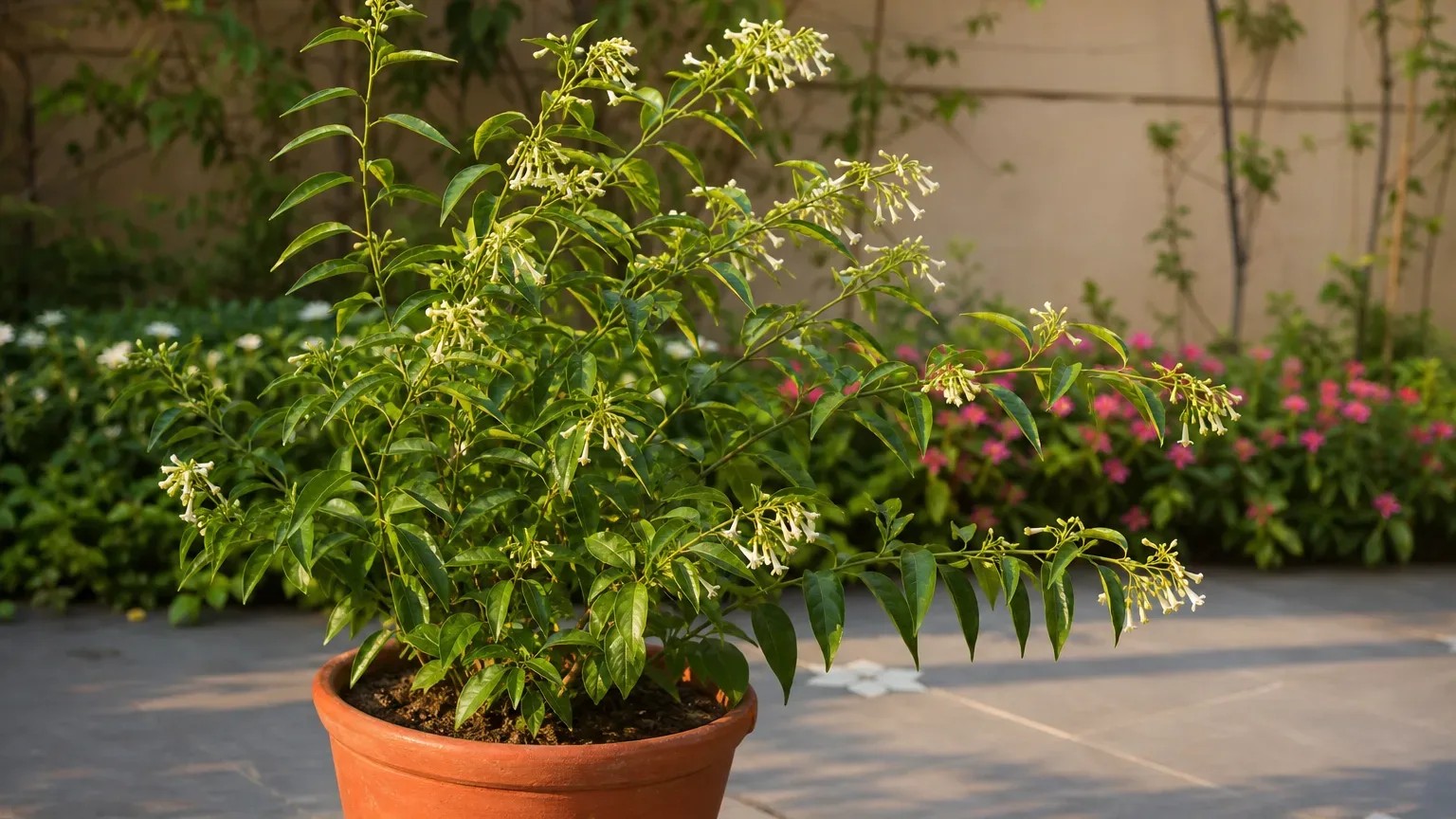
Raat Rani wants a root zone that is evenly moist during warm, active growth but never continuously saturated. That distinction matters because Cestrum nocturnum is a fast-growing woody shrub in the nightshade family, not a true Jasminum jasmine, and not a plant that should be kept in a permanently wet saucer. The RHS species profile describes its preferred moisture as moist but well-drained and advises free watering in summer followed by just-moist conditions in winter.
Treat every part of Raat Rani as potentially toxic, especially berries. Keep the pot, runoff area, and fallen fruit away from children and animals; wear gloves if watering exposes you to broken stems or sap. If any part is swallowed, seek urgent medical or veterinary advice rather than attempting a home remedy.
For a potted plant, check the top 2–3 cm of mix and water when that layer feels dry while the mix below still has slight moisture. In a garden bed, inspect the soil several centimetres down and irrigate only when the root zone is drying; established shrubs need less intervention than containers. Never let a calendar overrule what the soil, weather, and pot are telling you.
Quick answer: how often to water Raat Rani
There is no safe fixed interval. In a hot, sunny Indian summer, a leafy Raat Rani in a crowded container may need checking every day and watering every two or three days. The same pot may need no irrigation through a rainy monsoon week, then only an occasional drink in cool winter weather.
Use 2–3 cm of surface dryness as the trigger, not “every Sunday” or “twice a week.” Water deeply until excess exits the drainage holes, empty any collecting saucer, and check again only after the upper layer dries. This follows the broader horticultural principle of watering thoroughly and then allowing the surface to dry, as explained in the RHS watering guide.
When to water Raat Rani
Test in the morning, particularly during hot weather. A plant that is slightly soft at midday but firm again by evening may be responding temporarily to heat; a plant that remains limp in the cooler morning deserves a root-zone check. Do not pour on water before touching the mix, because drought and damaged, oxygen-starved roots can both produce wilt.
Newly planted or recently repotted shrubs need closer observation because their roots occupy only part of the surrounding soil. Clemson Extension notes that container-grown shrubs can dry quickly, while also warning that poorly drained planting sites can collect water around roots. For Raat Rani, the correct response depends on which condition you actually find.
The finger test for the upper root zone
Push a clean finger 2–3 cm into the potting mix, away from the stem. Water when this layer feels dry and loose but stop if it feels cool, dark, and damp. A dry crust alone is not enough evidence: coco-rich mixes can look pale on top while remaining wet underneath, especially in a large plastic pot.
For a garden plant, use a narrow trowel or soil probe to inspect below the mulch without cutting major roots. Missouri Botanical Garden recommends checking soil with a hand trowel or probe because drought and excess-water symptoms can resemble one another. Replace the soil after checking so the probe hole does not become a channel that bypasses the root zone.
The pot-weight test for a more reliable decision
Lift a manageable container immediately after a full watering and remember how heavy it feels. Lift it again as the upper mix dries. The difference soon becomes more informative than surface colour, particularly where hard water leaves a pale crust or mulch hides the soil.
Use pot weight together with the finger test for the first few weeks. A surprisingly heavy pot with limp foliage points away from simple thirst; a light pot whose soil has pulled from the sides is genuinely dry. Moisture meters can help in a deep tub, but test at several points because one reading may hit a wet pocket or a dense root mass.
How to water Raat Rani thoroughly
Apply water slowly over the whole surface rather than pouring one fast stream beside the stem. The aim is to wet the active root ball evenly and flush air back into the pores as excess drains, not to keep the lower pot submerged. If water races down a gap at the pot wall while the centre stays dry, the root ball has become hydrophobic and needs slower rewetting.
Use room-temperature tap water unless its quality is visibly damaging the mix; Raat Rani does not need distilled water for routine care. Water early enough that splashed foliage can dry, but direct the stream to the soil. Frequent light sips encourage an unevenly wetted root ball and make it difficult to know whether deeper roots received water.
A complete watering pass for a container
- Check the upper 2–3 cm and lift the pot if possible.
- Confirm that every drainage hole is open and the pot is not sitting in collected rainwater.
- Pour slowly around the entire surface until water begins to leave the base.
- Pause for a minute, then make a second slow pass if the first ran straight through a very dry mix.
- Let the pot drain completely and empty the saucer or outer cachepot.
Do not add gravel as a substitute for drainage holes. The reliable safeguards are an appropriately sized container, an airy Raat Rani soil mix, open outlets, and a watering trigger based on actual moisture. If a thorough watering leaves the pot swampy for many days, solve the drainage or root problem instead of reducing each watering to a token splash.
Adjust watering through Indian seasons
Water demand follows growth, light, heat, wind, rain, and root volume. Raat Rani grows in warm, moist environments but is not tolerant of waterlogging, according to NSW WeedWise. That combination explains why the shrub can need generous irrigation in May yet suffer in the same pot during a cloudy, rain-soaked August.
Hot spring and summer weather
As days lengthen and new shoots expand, check containers more often. Terracotta, a small pot, rooftop heat, and drying wind can move a plant from adequately moist to wilted quickly. Give a full soak when the trigger depth is dry; do not automatically water every day if the pot still feels heavy.
A 3–5 cm organic mulch can slow surface evaporation in a garden bed, but keep it away from the main stem. Strong light increases both growth and water use, so match this page with the Raat Rani light guide when moving a plant from shade to a sunnier terrace. Acclimatisation and closer moisture checks should happen together.
Monsoon rain and humid spells
Treat rainfall as watering. Move a container from a drip line or empty its saucer after heavy rain, and tilt or raise the pot only enough to keep its existing outlets clear. High humidity and cloud reduce drying, so a schedule learned in pre-monsoon heat can become excessive almost overnight.
For an in-ground shrub, inspect the site after prolonged rain. Standing water, a sour smell, or soil that stays glossy and sticky indicates a drainage issue, not a need for the next scheduled irrigation. Pause fertilizer as well: feeding a stressed, saturated root system does not restore oxygen, a distinction covered in the Raat Rani fertilizer guide.
Cool winter weather
Reduce watering when cool temperatures and shorter days slow growth. The goal is not a bone-dry root ball; keep it lightly moist, then wait longer between complete waterings. The species-specific RHS advice is to keep container plants just moist in winter, which is different from maintaining summer-level moisture.
Check sheltered plants carefully because cool soil in a large pot can remain wet long after the surface changes colour. If a plant sheds some leaves and stops extending shoots, its water use will fall. Resume more frequent checks only when warmth and fresh growth return.
How pots, soil, and placement change water demand
A small terracotta pot loses moisture faster than a large glazed or plastic one. A root-bound plant may dry within a day because little mix remains, while an oversized pot can hold a wet outer ring beyond the existing roots. If the plant repeatedly swings from soaked to dry despite careful watering, use the Raat Rani repotting guide to decide whether root crowding or poor pot proportion is the real issue.
Soil texture changes the interval, not the watering goal. Coarse, airy mix drains sooner; compact garden soil or decomposed potting mix stays wet longer and excludes oxygen. University of Georgia Extension explains that successful container culture depends on a medium with both drainage and water-holding capacity, which is exactly the balance this shrub needs.
Placement can change demand within hours. Sun reflected from masonry, hot balcony floors, wind, and an air-conditioner exhaust all accelerate drying; dense shade and still humid air slow it. Recheck the plant after moving it instead of carrying the old schedule to the new position.
Overwatered vs underwatered Raat Rani
Start diagnosis by feeling the soil at depth. Symptoms alone are not decisive, and adding water to a wet, wilting plant makes the likely cause worse. Use this comparison to choose the first action:
| What you observe | Likely excess water | Likely drought |
|---|---|---|
| Soil and pot | Damp for days; pot remains heavy | Dry below the surface; pot feels light |
| Leaves | Yellowing or soft leaves; wilt despite wet soil | Limp leaves, crisp margins, dull surface |
| Stems and roots | Soft lower stem, sour smell, brown soft roots | Flexible wilted tips; roots firm but dry |
| Flowers | Bud loss with generally declining wet plant | Buds dry or drop during a dry spell |
| First action | Stop watering and restore drainage | Rewet the whole root ball slowly |
Signs of excess water
Yellow leaves combined with persistently wet mix, sudden leaf drop, soft lower stems, or a sour smell justify a drainage and root inspection. Do not diagnose overwatering from one yellow leaf: normal ageing, low light, pests, and nutrient issues can overlap. The defining evidence is a root zone that remains saturated and a plant that fails to recover.
Remove collected water, clear drainage holes, and protect the pot from further rain. If roots are brown and soft rather than pale and firm, use fresh, free-draining mix and remove only dead tissue; then follow the Raat Rani repotting guidance for aftercare. Do not fertilize until healthy new growth shows that the root system is functioning.
Signs of drought
A dry Raat Rani develops limp leaves and soft shoot tips; prolonged stress may produce crisp margins, dry bud drop, and mix that contracts from the pot wall. Water slowly in two passes so a shrunken root ball absorbs water rather than shedding it through the side gap. If the container is extremely dry, stand it briefly in shallow water to rewet from below, then remove it and let it drain freely.
One dry episode does not require daily “compensation” afterward. Return to moisture checks and consider why the pot dried so quickly: heat, roots filling the container, a very coarse mix, or missed rain shielding. Flowering also depends on light, nutrition, and pruning timing, so use the Raat Rani overview before blaming every lost bud on irrigation.
When to use this page vs other Raat Rani guides
Use this page when the decision is whether to water, how deeply to water, or whether a symptom matches wet or dry soil. Use the soil guide when water lingers too long or runs through without wetting the root ball, and the repotting guide when roots crowd the pot or the medium has collapsed.
For weak, stretched growth that uses water slowly, start with the light guide. For green growth with few flowers, assess light and the fertilizer guide before feeding more. Watering supports flowering, but it cannot correct deep shade, excessive nitrogen, or pruning that removed developing shoots.
Related Raat Rani guides
The complete Raat Rani care overview connects watering with placement, safety, and seasonal growth. The pruning guide explains when canopy reduction changes water use, while the propagation guide covers the more delicate moisture balance needed by cuttings rather than established shrubs.
Keep the distinction clear: this watering guide is for an established or recently repotted Raat Rani. A fresh cutting has few roots and can rot in conditions that a vigorous mature shrub would use quickly.
Conclusion
Water Raat Rani when the upper 2–3 cm of mix dries, then soak the entire root ball and let it drain. Check more often in hot, bright, windy weather; count monsoon rain as irrigation; and keep the plant only lightly moist during cool, slow winter growth.
When the plant wilts, inspect the soil before acting. A light pot with dry mix needs slow, complete rewetting, while a heavy pot with persistently wet mix needs drainage and root attention. That soil-first decision is more dependable than any weekly schedule.