How to Prune Raat Rani: Timing, Cuts & Recovery
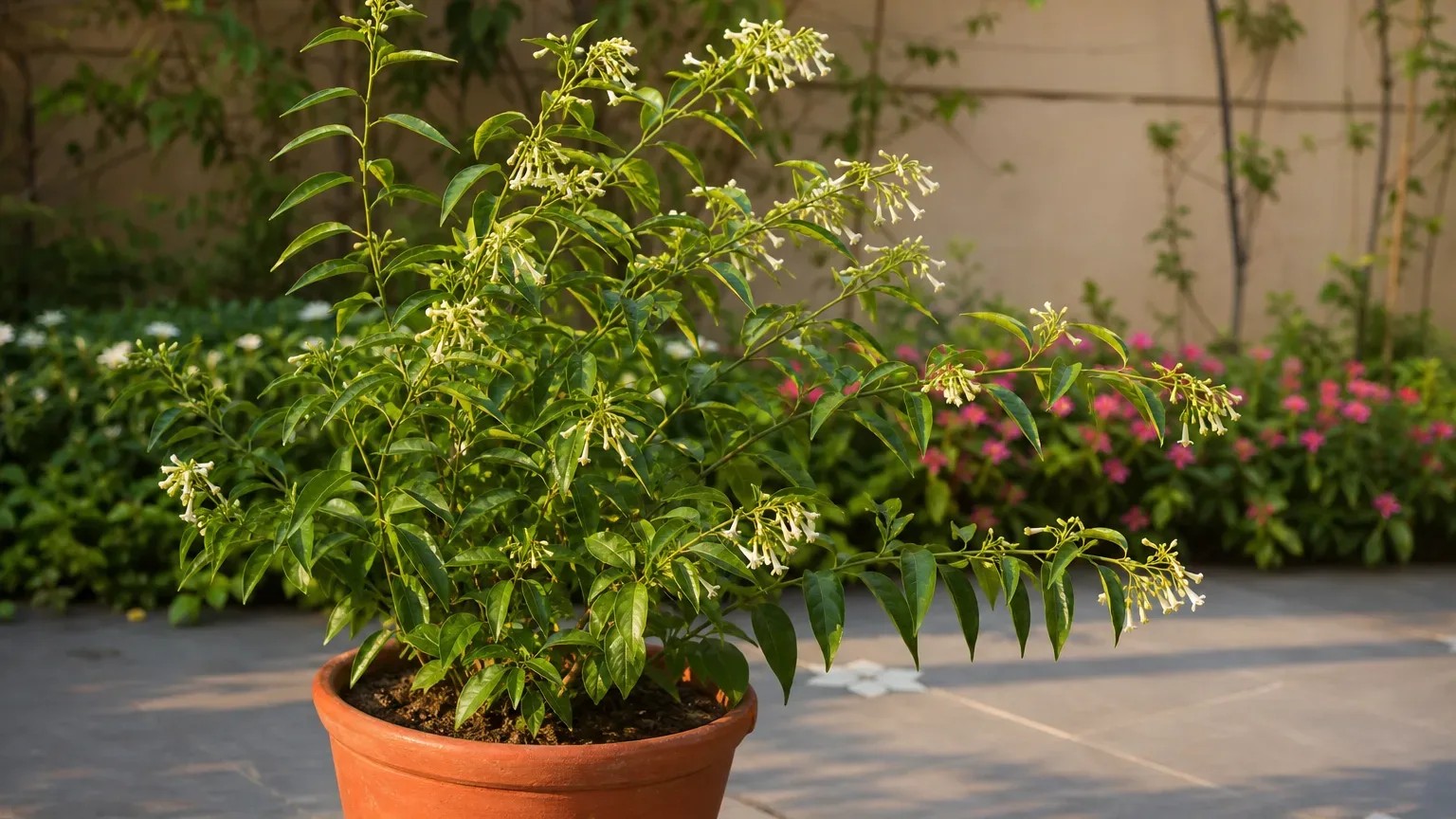
Raat Rani Pruning Guide: Timing, Cuts, and Recovery
Raat Rani Pruning Guide: Timing, Cuts, and Recovery
First, remove one dead, broken, or diseased stem back to healthy wood. Do not begin by shearing the whole shrub. That single sanitation cut lets you see Raat Rani’s arching framework before deciding whether it needs light grooming, branch thinning, or a larger size reduction.
Quick answer
Raat Rani (Cestrum nocturnum) is a fast-growing woody shrub, not a true jasmine. It naturally develops long, arching branches and can reach 3–13 feet, while its creamy green-white flowers appear in axillary or terminal clusters (Missouri Botanical Garden). Pruning works best when it respects that structure: clean out dead wood first, shorten selected live stems just above healthy leaf nodes, and preserve enough young outer growth to carry the next flower display.
Schedule major framework work for late winter or very early spring, before the strongest warm-season growth. After a bloom flush, limit work to spent clusters and a few overlong shoots. A healthy shrub can usually handle removal of up to about one-third of its live canopy as a conservative ceiling, but a potted or stressed plant needs less.
Pruning can make Raat Rani denser, keep it below a balcony roof, and remove crossing growth. It cannot correct weak light, waterlogged roots, or repeated drought. If the shrub keeps producing long, thin stems after trimming, check the Raat Rani light guide before cutting again.
What pruning does for Raat Rani
The species is an evergreen shrub with arching branches; NC State Extension describes its growth rate as rapid and its mature habit as dense, erect, rounded, or spreading. That vigor makes regular selective pruning useful, especially in containers where a few unchecked shoots can quickly dominate the outline.
There are four distinct pruning jobs:
- Sanitation: remove dead, broken, diseased, or badly pest-damaged wood.
- Tip pinching: take the soft end from selected young shoots to encourage branching.
- Post-flush grooming: remove spent flower clusters and shorten only obvious extensions.
- Structural pruning: reduce height, thin crossing stems, and rebuild an overgrown framework.
Do not treat all four as one task. A light post-flush trim preserves more potential flowering growth than an indiscriminate hedge-shear pass. Structural pruning is a deliberate reset and may delay the next display while shoots rebuild.
When to prune Raat Rani
Major shaping before warm-season growth
Make substantial height reduction or framework cuts in late winter to very early spring, when cold stress has passed and the shrub is about to grow strongly. In frost-free parts of India, use the plant rather than the calendar: choose the period after cool-season slowdown and before rapid new extension. In a cooler region, wait until the plant is protected from further frost.
This timing gives new shoots a long warm period in which to mature. It also avoids repeatedly removing terminal and axillary flowering growth during the main display.
Light grooming after a flower flush
Once most flowers in a cluster have faded, snip the spent cluster at its short stalk. Then step back and shorten only the branches that genuinely spoil the shape. Removing old clusters also prevents berries from developing where children or pets could reach them.
Avoid continuous trimming every time a shoot extends. It can keep the shrub geometrically neat while repeatedly removing the outer growth that would carry flowers. If blooming is already poor, check light and fertilizer use before assuming another cut will help.
What can be removed at any time
Remove completely dead, split, or collapsing stems when found. Delay cosmetic pruning if the plant is wilting, dropping many green leaves, sitting in persistently wet mix, or recovering from repotting. Correct the underlying watering problem first unless damaged tissue is actively worsening.
What to inspect before cutting
Circle the plant or rotate its pot in good daylight. Identify the live framework rather than judging only the leafy outer shell.
- Find the nodes. These are the points where leaves and side shoots attach. A live node below a shortening cut is the plant’s route to a replacement branch.
- Check stem health. Healthy young stems are firm; old live wood is rigid beneath the bark. Brown, brittle tissue with no green beneath a tiny scratch is dead.
- Mark flower clusters. Preserve unopened clusters unless safety or urgent size control matters more than that bloom flush.
- Look for crossing branches. Remove the weaker or inward-growing member rather than shortening both.
- Check root-zone stress. Sour, wet mix, widespread yellowing, or a soft stem base calls for diagnosis, not shaping.
Raat Rani belongs to the nightshade family, and Kew accepts Cestrum nocturnum as a shrub or tree in Solanaceae. Wear gloves, keep cut material away from faces and food, and collect every clipping rather than leaving it on a patio or lawn.
PPE, tools, and safe handling
Wear waterproof garden gloves, long sleeves, closed shoes, and eye protection when branches are above face level. Use sharp hand snips for soft tips and flower stalks, and bypass pruners for woody stems. A small pruning saw is safer than forcing hand pruners through an old thick branch. Clean blades before starting and after cutting questionable tissue; Iowa State University Extension recommends disinfecting pruning shears with 70–100% alcohol or a bleach solution prepared as directed.
All Raat Rani parts should be kept away from children and animals. The Queensland Poisons Information Centre identifies every part as toxic, especially the fruit. Do not eat, taste, or use the stems as if they came from a true jasmine; Cestrum nocturnum is a nightshade-family shrub, not a Jasminum. Bag fruiting clusters and clippings promptly, then wash tools, gloves, and hands. This is a handling precaution, not medical guidance; seek appropriate professional advice after suspected ingestion.
Where and how to make each cut
Dead or damaged stems
Trace a dead tip downward until you reach firm live wood. Cut just above a healthy node. If an entire branch is dead, remove it at its branch junction without slicing into the swollen collar where it joins the parent stem.
For a partially split branch, do not tape together a weak fork that must carry a heavy canopy. Remove the damaged side cleanly and train a healthier shoot to replace it.
Overlong live shoots
Follow the shoot down to an outward-facing leaf pair or side branch at the height you want. Place the blade about 5–10 mm above that node and make one clean cut. A very long stub can die back; a cut through the node removes the bud needed for regrowth.
Raat Rani’s arching habit looks more natural when cuts finish at slightly different heights. Flat shearing creates a dense outer shell and many short cut ends, while selective cuts keep flowering branches and internal light.
Spent flower clusters
Remove only the faded cluster and its short stalk unless the branch itself needs shortening. The species produces flowers followed by berries, so deadheading is useful for both tidiness and reducing accessible fruit.
Dispose of clippings and prevent spread
Keep flowers, berries, and seed-bearing debris separate from ordinary garden trimmings. Seal them in a bag and use the disposal route required by your local council; do not put fruit or seed in home compost, dump clippings on open ground, or leave them where birds, pets, or livestock can reach them. If roots were cut during removal rather than routine pruning, contain those pieces too.
This caution is location-dependent: Raat Rani is not legally classified the same way everywhere, so check local invasive-plant or noxious-weed rules before growing, sharing, or discarding it. The IUCN Global Invasive Species Database documents bird-dispersed seed, vegetative reproduction, and escape from cultivation in tropical and subtropical regions. Removing spent clusters before berries mature reduces both poisoning risk and the chance of seed leaving the garden.
Step-by-step pruning
- Put on gloves and clean the blades.
- Make the first cut on one dead, broken, or diseased stem.
- Remove remaining dead wood and collect any berries or fallen fruit.
- Mark the final height and width before touching healthy branches.
- Thin crossing, rubbing, and inward-growing stems at their origin.
- Shorten overlong branches 5–10 mm above outward-facing nodes.
- Preserve unopened flower clusters unless size or safety takes priority.
- Stop before more than about one-third of the live leafy canopy is gone.
- Collect all debris, clean the tools, and return a container plant to its established position.
Reassess after every few cuts. The aim is an open, balanced shrub with enough leaves to recover, not a bare set of equal-height sticks.
How much can you safely remove?
Treat one-third of the live canopy as a conservative upper limit for a healthy plant during a planned structural session, not a target. After flowering, 10–15% is usually enough for grooming. A recently purchased, root-bound, drought-stressed, or waterlogged specimen may only tolerate sanitation cuts.
If a neglected shrub needs to lose half its size, stage the work. Reduce the longest and most awkward third first, allow vigorous replacement growth to establish, then reassess in a later growth cycle. Raat Rani is vigorous, but that does not mean every plant recovers equally fast from a severe cut.
Do not remove every leafy tip from an old potted specimen. Leaves support recovery, and dormant buds on old bare wood are less predictable than nodes on younger live branches.
Pruning for a fuller plant
On a young, healthy shrub, pinch selected soft shoot tips after each has developed several leaf pairs. Removing only the tender tip interrupts straight extension and allows side buds below it to compete. Alternate the shoots you pinch rather than stripping every tip at once.
If the plant is leggy because it leans toward weak light, pruning alone gives only a temporary compact shape. Improve placement using the Raat Rani light guide, then shorten the worst extensions when active growth resumes. Stronger light manages the spacing between leaves; scissors only remove the spacing already produced.
Healthy, non-flowering stem tips can also be retained for propagation. Use the Raat Rani propagation guide for rooting steps rather than treating every pruning offcut as viable, and only root as many plants as you can keep contained.
Aftercare and recovery
Keep conditions stable after pruning. Do not repot, move the plant into harsher sun, and apply a heavy feed on the same day. Water only when the upper layer reaches the trigger described in the Raat Rani watering guide; canopy loss may make a pot dry more slowly than it did before the cut.
In warm active growth, practical observation suggests healthy buds may swell and extend within roughly two to six weeks. Treat that as a monitoring range, not a promise. Cool weather, low light, root damage, and a hard cut can delay visible growth.
Signs the plant is recovering well include:
- firm buds or new side shoots below cuts;
- stable green leaves on the retained framework;
- cut surfaces staying dry and firm rather than blackening;
- shorter, better-branched replacement growth;
- later flower clusters on healthy outer shoots.
Pause further pruning if cut ends blacken downward, green leaves fall rapidly, stems soften, or the soil stays wet for unusually long. Those signs point to tissue or root stress rather than a need to “balance” the plant with more cuts.
Mistakes that reduce flowers or slow recovery
- Shearing the whole outer canopy repeatedly.
- Cutting through nodes or leaving long dead stubs above them.
- Removing unopened flower clusters without accepting a delayed display.
- Hard-pruning immediately after repotting or during wilt.
- Taking more than one-third of live growth simply because the shrub is vigorous.
- Pruning a dim, stretched plant without improving its light.
- Leaving berries and toxic clippings where children or animals can reach them.
- Fertilizing heavily before the plant shows stable new growth.
- Composting or dumping fruit, seed, or cut root pieces where they can spread.
Pruning controls architecture; it does not cure root rot, nutrient imbalance, or weak light. Use the Raat Rani overview when the problem extends beyond shape.
Related Raat Rani guides
- Raat Rani overview — whole-plant care and safety context.
- Raat Rani light guide — correct stretched growth before reshaping.
- Raat Rani watering guide — adjust moisture after canopy reduction.
- Raat Rani soil guide — diagnose slow drainage before pruning a stressed shrub.
- Raat Rani propagation guide — root suitable healthy pruning cuts.
- Raat Rani repotting guide — avoid stacking root work with structural pruning.
Conclusion
Prune Raat Rani selectively, not as a uniform hedge. Begin with one dead or damaged stem, preserve healthy nodes and promising flower clusters, and reserve major reduction for the start of warm-season growth. Keep routine live-canopy removal below one-third, treat every clipping as potentially toxic, contain fruit and seed, and judge success by firm new branches and stable leaves before making another cut.