Root Rot on Raat Rani: Causes, Checks & Fixes
Quick answer
Root rot on Raat Rani usually follows days of saturated mix in a poorly drained pot, often during monsoon. Unpot the shrub and inspect the roots today: white and firm means overwatering without rot, while brown, mushy, foul-smelling roots confirm rot that must be trimmed before repotting into fresh, airy mix.
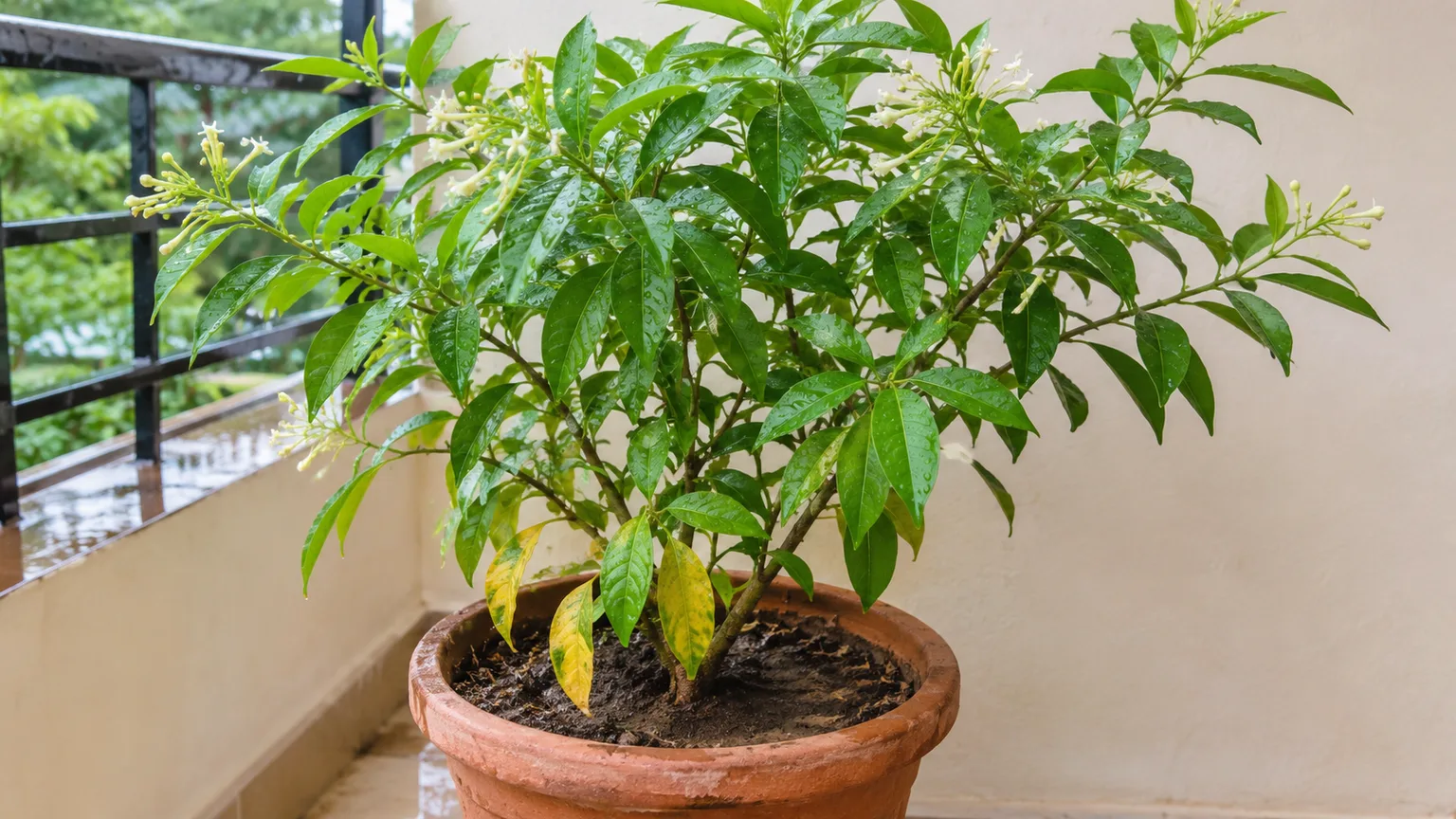
Root Rot on Raat Rani: Causes, Checks & Fixes
This guide covers root rot on Raat Rani. See also the general Root Rot guide, watering, and light pages for this plant.
Root Rot on Raat Rani: Causes, Checks & Fixes
Quick answer
Stop watering, empty the saucer, and shelter the pot from further rain. Then unpot the shrub and inspect the roots today. White or pale firm roots mean the plant is overwatered but not rotted, and drying plus drainage fixes will carry it through. Brown, mushy, foul-smelling roots confirm rot: trim away only the dead tissue with clean tools and repot into fresh, airy mix.
Do not fertilize, prune hard, or spray anything until the root inspection is done. Feeding or cutting a shrub whose roots cannot take up water only adds stress.
What root rot looks like on Raat Rani
On this fast-growing woody shrub, the first visible signs are usually yellowing lower leaves, sudden leaf drop, and shoots that wilt even though the mix is clearly wet. Flower buds may dry and fall before opening, and a shrub that should be pushing fragrant night blooms instead stalls completely. These aboveground signs narrow the field but never settle the diagnosis on their own.
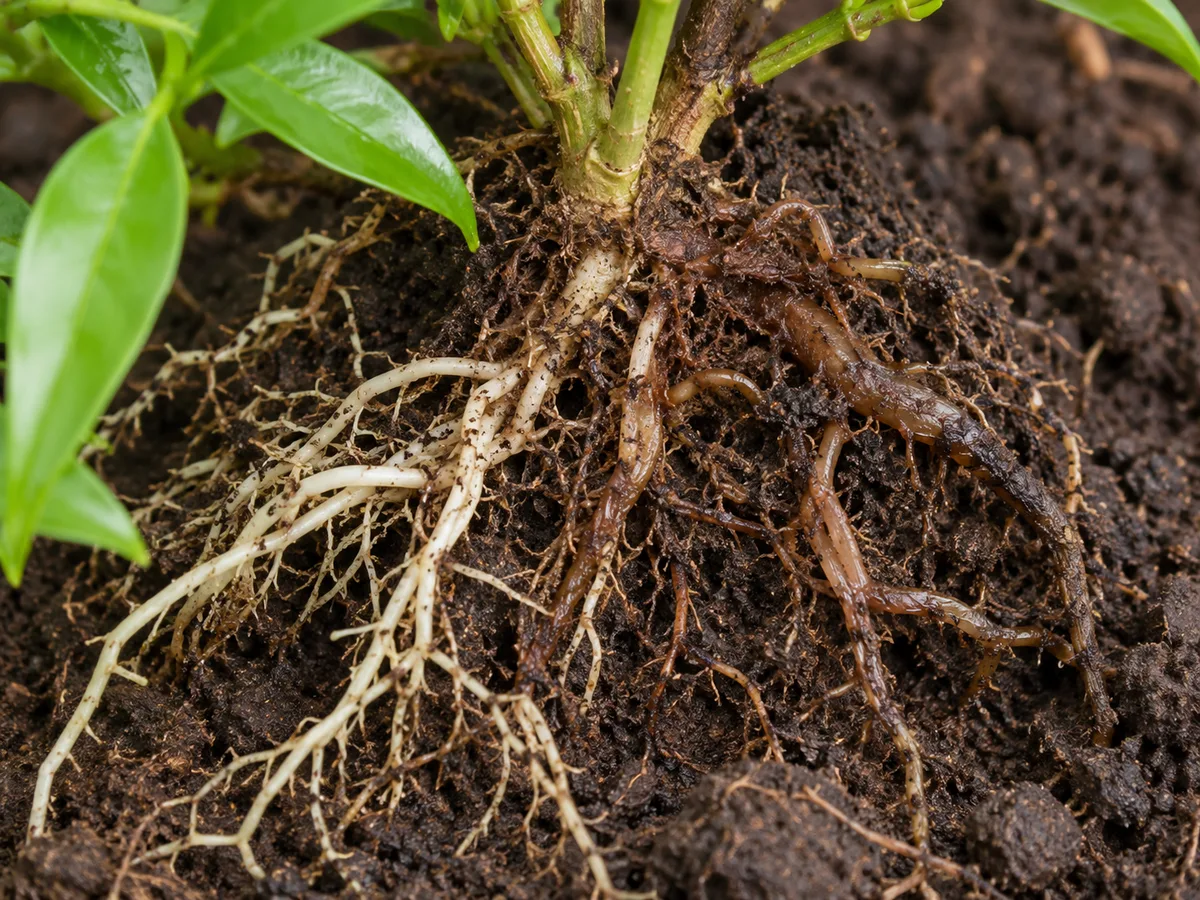
Brown, soft roots that smell sour or strip easily confirm rot; pale, firm roots may indicate overwatering without decay.
The telling evidence is below the surface. Healthy Raat Rani roots are pale and firm; rotted ones turn brown or black, feel soft and stringy, and may smell sour or rotten. In advanced cases the bark near the base of the woody stems darkens and the lower stem itself softens, a pattern also described for Phytophthora-affected shrubs where bark at the base turns dark and reddish or brown. A shrub whose whole root ball slides apart into mush with no firm core has moved past the point where trimming can help.
For how chronic wet mix injures roots in general, see our root rot guide. On Raat Rani the pattern almost always traces back to a specific pot, mix, or monsoon exposure, which is where the rest of this guide stays.
Why this shrub is vulnerable
Cestrum nocturnum grows fast in warm weather and carries a broad, thirsty canopy on woody stems, so owners tend to water generously. The species accepts moist conditions but is not tolerant of waterlogging, which makes a heavy monsoon week in a plastic pot far more dangerous than a hot dry spell. The RHS growing profile describes its requirement as moist but well-drained soil, meaning steady moisture with air returning between waterings, never a permanently saturated root zone.
Three Raat Rani habits invite trouble. Container shrubs on terraces sit in saucers that refill with every downpour, keeping the lower root ball submerged for days. Rich, fine potting mixes collapse after repeated soakings and exclude the air roots need to respire, a failure the Raat Rani soil guide covers in detail. And oversized pots hold a wide ring of wet, unused medium around sparse roots, the exact risk extension guidance warns against when moving houseplants into excessively large pots.
The biology is straightforward: root-decay organisms behave as water molds that thrive in saturated soil, producing swimming spores that infect roots where water collects. A Raat Rani left standing in water through a humid, cloudy week is sitting in exactly those conditions.
How to confirm it before treating
Wilt plus wet soil is the trigger for inspection, not for more water. Damaged, oxygen-starved roots cannot take up water, so a rotted plant wilts in damp mix while a thirsty plant wilts in a light pot with dry mix. Lift the pot first: heavy and wet points toward root trouble, light and dry points toward drought, and the Raat Rani watering guide walks through that weight test.
Then unpot. Slide the root ball out, shake off loose mix, and rinse remaining soil away gently so you can see clearly. Firm, pale roots with a healthy smell mean overwatering without rot: let the ball air for a few hours, return it to the pot with drainage restored, and hold water until the upper mix dries. Brown, soft roots that smear or strip, especially with a sour smell, confirm rot and need the first fix below.
Check the stem base while the plant is out. Firm woody cane with only the fine feeder roots damaged is salvageable. A soft, discolored lower stem with decay spreading upward into the wood is a poor outlook, and you should read the recovery-limits section honestly before investing weeks.
Plant pathologists caution that aboveground symptoms alone are not diagnostic, since anything that cuts water flow to the canopy produces similar wilt and yellowing. The root inspection is what separates rot from drought, light stress, or pests on this shrub.
The first fix: unpot and inspect today
Do this first, before any other treatment: take the shrub out of its pot and look at the roots. Everything else, trimming, fresh mix, repositioning, depends on what you find, and every day of delay keeps the crown sitting in the conditions that spread decay.
Work over newspaper with gloves on. All parts of this nightshade-family shrub are toxic, so keep children and pets away from fallen berries and trimmings, collect every fragment, and wash your hands and tools afterward. Shake and rinse the mix from the roots so dead and living tissue are easy to tell apart.
If most roots are firm and pale, you caught overwatering early. Air the root ball briefly, repot into the same container with loosened, free-draining mix, clear the drainage holes, and resume watering only by the moisture tests. If a portion of roots is brown and mushy, move to the recovery steps next.
Step-by-step recovery after confirmed rot
With clean, sharp scissors or secateurs wiped with rubbing alcohol, cut away only roots that are soft, dark, and foul, stopping where tissue turns firm and pale. Also remove any leaves that are fully yellow and any stems that are clearly soft and collapsed, but leave firm wood and green growth alone. The shrub needs every functioning root and leaf it has left.
Repot into fresh, airy mix, not the old sour medium. A modest container only slightly larger than the trimmed root ball, with fully open drainage holes, is safer than a large decorative pot. University of Georgia container guidance frames the goal as a medium with both drainage and water-holding capacity, and the Raat Rani repotting guide covers handling the root ball and aftercare timing.
Set the repotted shrub in bright, indirect light with good airflow, sheltered from harsh midday sun and from rain for the first week. Water once lightly to settle the mix, then wait until the upper layer genuinely dries before watering again. Hold all fertilizer until fresh shoots are growing steadily, usually several weeks, since salts cannot help roots that are still rebuilding.
Do not reach for fungicide as the main rescue. Extension experience with these water-mold diseases is that established root infections are very difficult to cure with sprays alone, and drainage correction plus removal of dead tissue does the real work on a home shrub. If you use any labeled product, treat it as a supplement to the cultural fix, never a substitute, and follow the label exactly.
What recovery looks like, and when to stop
Judge recovery by new growth, not by old leaves. Damaged yellow leaves will not turn green again; success looks like firm young shoots, buds that hold instead of dropping, and a pot that starts drying normally between waterings. For a mild case caught early, expect visible new shoots within three to six weeks of warm growing weather. Severe cases that lost most feeder roots may sit unchanged for two months before creeping back, and cool winter weather slows everything further.
Stop and reassess if stems keep softening upward, the base turns dark and mushy, or no firm roots remained at inspection. A Raat Rani with decay through the crown and no living root core will not regrow from the wood, and replacing it is the honest call. Discard the old mix and dead plant rather than composting them near other containers, then start fresh with corrected drainage.
What not to do
Do not water on a schedule while the plant is stressed. Every watering decision should follow the finger test and pot weight until the shrub is clearly growing again. Do not fertilize damaged roots, since unused salts accumulate in a pot with little uptake and can burn the fragile new tips.
Do not stack a hard pruning, a full soil change, and heavy feeding on the same day. The root trim plus repot is already one major intervention; let the plant stabilize in sheltered light before any shaping cuts. And do not keep the recovering shrub in a water-filled saucer or cachepot, however decorative, because the bottom of the pot is where rot restarts first.
Monsoon-proofing this shrub
Raat Rani fails most often in Indian monsoon conditions, so prevention here is seasonal, not generic. Before the rains, confirm every pot drains freely, raise terrace pots slightly so outlets never seal against the floor, and plan to empty saucers after each heavy shower. During prolonged wet spells, shift containers out from drip lines and let the upper mix dry between soakings, even if that means no watering for a week or more.
Match the mix to your exposure. A balcony that catches daily rain needs a coarser, more perlite-heavy blend than a sheltered veranda plant, as explained in the soil guide. Keep mulch thin and clear of the woody stem so the crown stays aired. Review light placement too through the Raat Rani light guide, since a shrub moved into deep shade uses water far more slowly and its old watering rhythm becomes excessive overnight.
When to use this page vs other Raat Rani guides
Use this page when wilt, yellowing, or bud drop comes with persistently wet mix, a heavy pot, a sour smell, or confirmed mushy roots. Use the watering guide when the question is simply how often and how deeply to water a healthy shrub through the seasons. Use the soil guide when water lingers too long or runs straight through, and the repotting guide when roots circle the pot or the medium has collapsed but rot is not confirmed.
For stretched, sparse growth with few flowers and healthy roots, the light guide and the complete Raat Rani care hub are the better starting points. For symptom patterns that do not match this page, browse the Raat Rani problems hub to find the closer match. Feeding questions belong with the fertilizer guide once roots are sound.
Related tool
Use the Root Rot Risk Checker to score drainage, watering habit, and pot setup for this shrub before changing several variables at once.