Underwatering on Raat Rani: Causes, Checks & Fixes
Quick answer
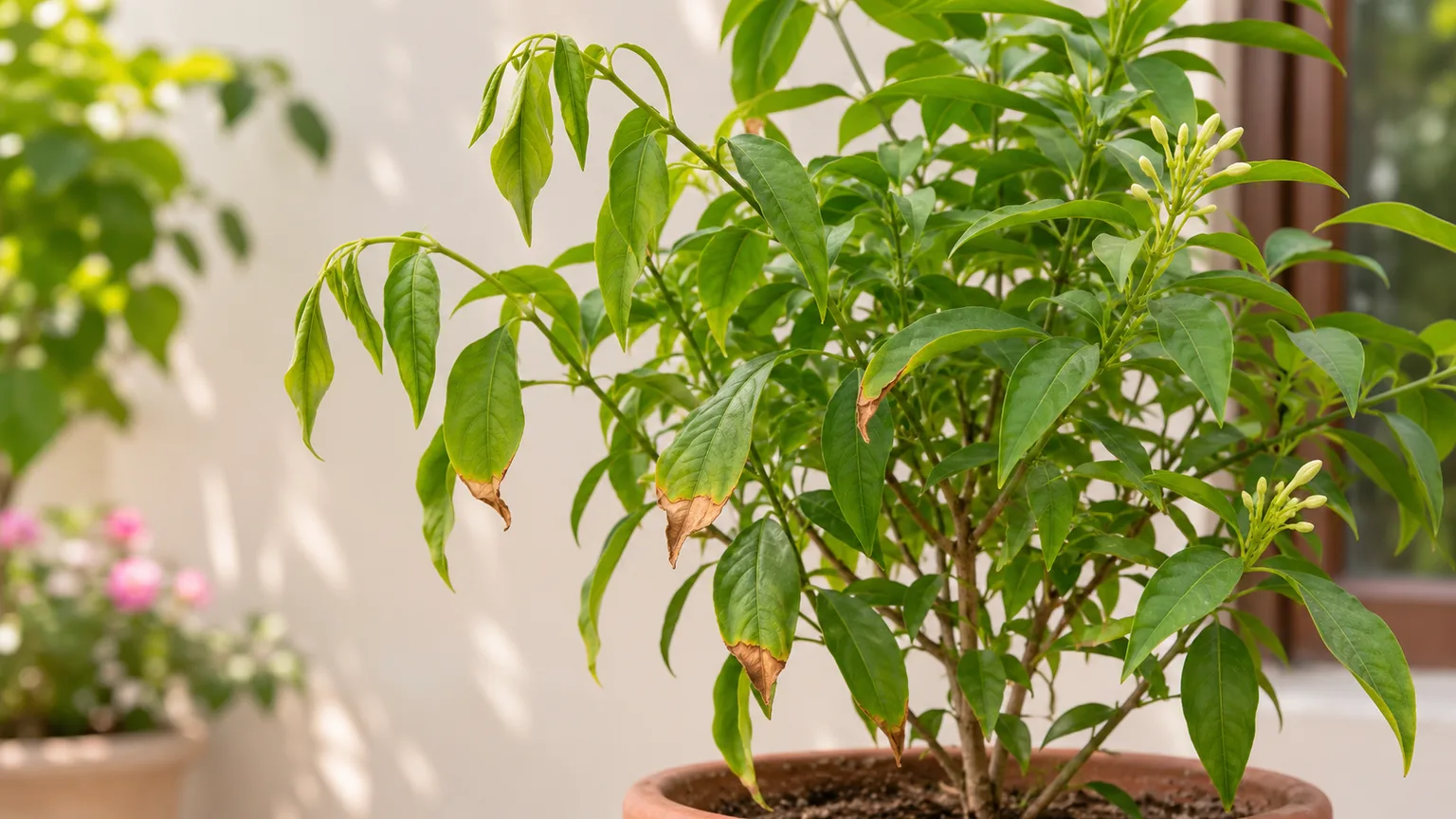
Underwatering on Raat Rani shows as limp leaves, soft shoot tips, crisp leaf edges, and flower buds dropping before they open, with dry mix pulling away from the pot. First step: soak the pot deeply until water drains freely, empty the saucer, then water only when the top 2-3 cm feels dry.
Underwatering on Raat Rani: Causes, Checks & Fixes
This guide covers underwatering on Raat Rani. See also the general Underwatering guide, watering, and light pages for this plant.
Underwatering on Raat Rani: Causes, Checks & Fixes
Quick answer
Underwatering on Raat Rani means its fast-growing root system has run out of reachable moisture: leaves turn limp, soft shoot tips flop, leaf edges crisp, and flower buds drop before they ever open for the night. The pot feels light and the mix may pull away from the walls. For how chronic dryness harms plants in general, see our underwatering guide. On Raat Rani, the pattern usually shows up as a thirsty-looking shrub whose buds abort just before the fragrant night flush.
First step: soak the pot deeply until water runs freely from the drainage holes, then empty the saucer. Do not fertilize, prune hard, or repot on day one. Recheck with a finger at 2–3 cm before every future watering instead of following a fixed schedule.
What underwatering looks like on Raat Rani
Raat Rani (Cestrum nocturnum) is not a true jasmine at all but a member of the nightshade family, a Central American native evergreen shrub (UF/IFAS Assessment) that grows fast in warm weather and spends water freely. Because it is a genuine moisture lover, drought symptoms arrive quickly once the root zone dries:
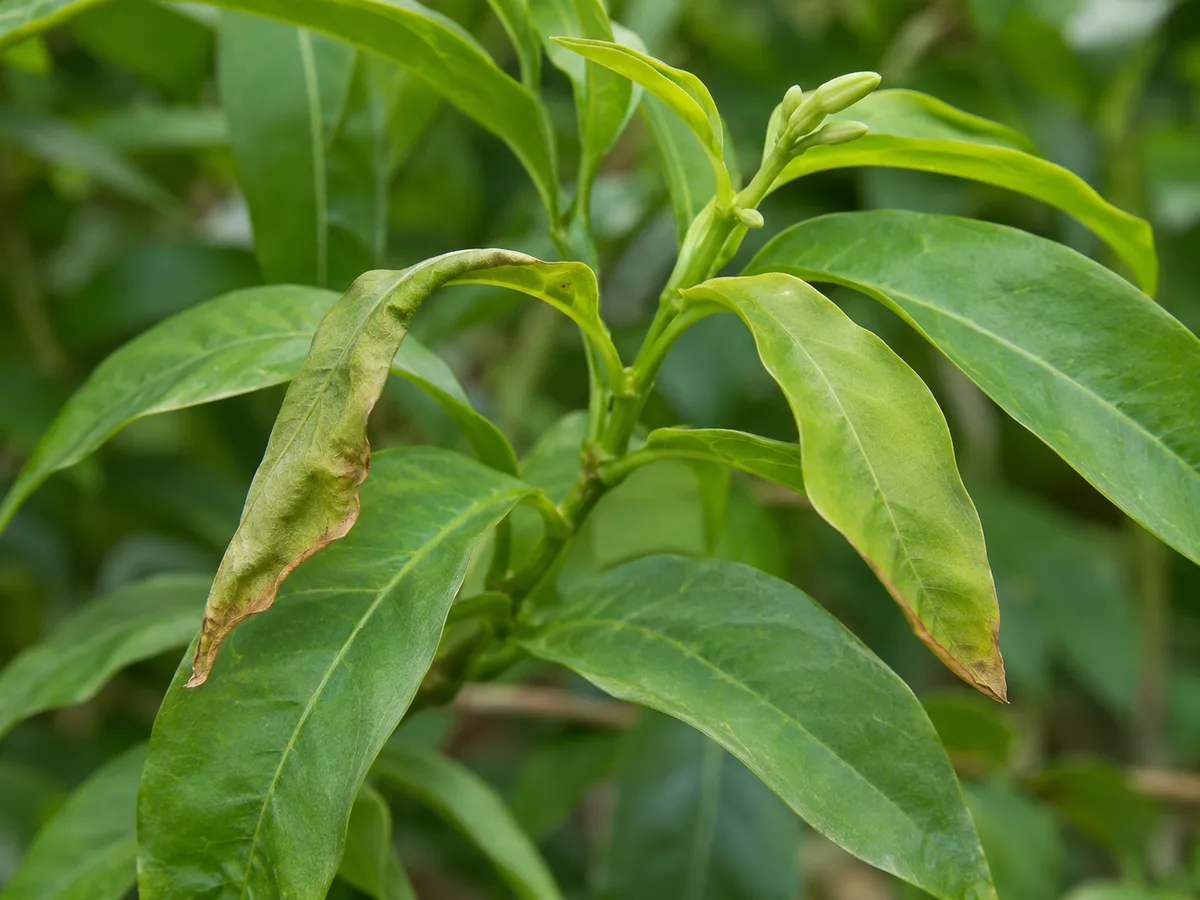
Limp leaves and crisp margins point toward thirst when the mix is dry at root depth.
- Limp leaves with soft, flopping shoot tips — the earliest and most reliable signal, distinct from the yellowing of wet-soil stress.
- Crisp brown leaf edges on leaves that otherwise stay green, starting at margins and tips.
- Buds dropping before opening — clusters of narrow greenish-white buds yellow and fall instead of opening after dusk.
- Soil shrinking from the pot walls, sometimes with water racing down the gap and out the bottom without wetting the core.
- Dull, slightly gray-green foliage that perks visibly within hours of a thorough drink.
Established plants in the ground are relatively drought tolerant, so when a mature shrub suddenly wilts, suspect a container, a root-bound pot, or a heat wave rather than ordinary garden soil.
Why this shrub dries out
Raat Rani wants moist, well-drained, loamy soil and full sun to partial shade — a combination that drinks hard in summer. Four traps cover most home cases:
Small pots on hot terraces. A fast shrub in full sun can empty a small container within a day or two of a deep watering. Black plastic pots on sunny balconies bake the root zone, so the top looks fine in the morning and the plant collapses by afternoon.
Calendar watering through changing weather. A rhythm that worked in spring fails in peak summer when growth and evaporation both surge. Containers may need checking every 2–3 days in heat, while the same schedule in cool winter weather would drown the roots.
Root-bound channeling. When roots pack the pot, water runs straight through gaps without soaking the mass — the classic “I watered yesterday but the pot is light again” complaint. If water exits within seconds and the core stays dusty, the root ball is the problem, not your generosity.
Fear of overwatering. Growers warned about rot let the mix stay dry too long. Raat Rani genuinely dislikes soggy soil, but extended dryness costs buds and shoot tips; the goal is steady moisture with drainage, as the normal Raat Rani watering rhythm describes.
Bud blast: the Raat Rani signature
The most plant-specific symptom is bud abortion. Raat Rani flowers on new growth in flushes, and developing buds are the first tissue sacrificed when water runs short — they yellow, dry at the stem joint, and fall before ever opening after dusk. A shrub can look leafy and almost healthy while silently shedding its entire coming flush.
This matters because lost buds never reopen. Do not judge your fix by fallen buds; judge it by whether the next set of shoot tips stays firm and carries buds to opening night. If buds keep aborting after you corrected watering, recheck depth moisture and pot size before blaming light or fertilizer — and review the Raat Rani light needs only once moisture is confirmed right, since weak light also thins flowering.
How to confirm before you water
Work through these checks in order, using the Raat Rani watering routine as your baseline:
- Finger test at 2–3 cm. A dry surface is not a reliable signal on its own — push past the crust into the root zone. Dry at depth means thirst; damp at depth means look elsewhere.
- Lift the pot. Compare its weight against how it feels right after a full soak-and-drain. A suspiciously light pot confirms the finger test.
- Note the time of day. Most plants wilt in hot afternoon sun and recover by evening even on moist soil. Wilt that vanishes by dusk is heat; wilt that persists into a cool morning is drought.
- Inspect buds and shoot tips. Soft flopping tips plus aborting buds on dry mix seal the diagnosis. Firm tips with dropping buds suggest a different stress.
- Watch the first watering. If water races down the inside wall and out the bottom while the core stays dry, the root ball has shrunk and needs slow rewetting, not a bigger flood.
The first fix to try
Soak deeply once: water slowly until excess flows freely from the drainage holes, empty the saucer completely, and stop. For a shrunken root ball, pour in small rounds ten minutes apart, or set the pot in a shallow tray of water for 15–20 minutes so the core wicks moisture back, then drain fully.
This single deep drink is the whole first fix because mild drought is a supply problem, not a disease. Turgid leaves within hours confirm you read it right. Only escalate if the pot refuses to gain weight after slow soaking — that means the mix has turned hydrophobic or roots have fully packed the container.
Step-by-step recovery
If leaves perk up after one soak:
- Resume watering only when the top 2–3 cm feels dry — specialist guidance for this species is to water when the top layer begins to dry out.
- Leave crisped leaf edges alone; trim only fully dead tissue, cutting just outside living green.
- Pick up fallen buds from the soil surface so they do not rot against the stem base.
- Hold fertilizer until new shoot tips grow firm for at least a week — feeding drought-stressed roots risks burn, per the Raat Rani fertilizer schedule.
If the root ball repels water or the plant is clearly pot-bound:
- Rewet slowly as described above; do not assume one flood fixed a hydrophobic core.
- If water still channels through, plan a repot into the next size up with fresh free-draining mix, following the Raat Rani soil setup — but only after the plant has perked up, never on collapse day.
- Tease the outer root mat lightly at repotting so new mix contacts feeder roots.
Recovery timeline
Mild cases stabilize within one to two proper watering cycles. Judge progress by new growth, not old damage: firm shoot tips within days, fresh bud clusters within two to three weeks in warm weather, and a new flush opening normally after dusk.
Crisped leaf edges stay crisp — old tissue does not re-green. If shoot tips stay soft after correct soaking, or whole stems darken from the base upward, roots have died back beyond what watering restores; restart from a healthy stem cutting taken in warm weather rather than nursing dead wood.
Lookalikes: what else mimics thirst
| What you see | More likely | How to tell |
|---|---|---|
| Yellow leaves while mix stays wet, heavy pot, sour soil | Overwatering or root rot | Depth check finds damp mix; wilt ignores a drink |
| Afternoon droop that recovers by evening on moist soil | Heat stress | Pot weight normal; plant rebounds as temperatures fall |
| Sticky leaves, curling new growth, tiny insects underneath | Aphids or whiteflies | Pests visible on leaf undersides; honeydew stickiness, not dry crispness |
| Pale new growth on well-watered mix, no bud drop | Nutrient shortfall | Moisture and roots check out fine; see the fertilizer schedule |
| Winter leaf shed with slowed growth | Seasonal rest | Cool weather, firm stems, no crisping; reduce water without letting the ball go bone dry |
Droop alone never settles the question — moisture at depth plus pot weight separates thirst from saturation every time.
Mistakes to avoid
- Watering because leaves droop. On wet mix, droop means roots cannot drink. Check depth first.
- Daily sips. Light daily watering wets the surface while the core never fully hydrates. Soak thoroughly, then wait for the 2–3 cm check.
- Feeding a wilted shrub. Fertilizer does not fix empty soil moisture and can burn drought-stressed roots. Rehydrate first, feed later.
- Repotting on collapse day. A wilted plant plus root disturbance equals double shock. Rehydrate, confirm recovery, then repot.
- Pruning away the evidence. Do not shear soft shoot tips the day they flop — many recover turgor within hours, and Raat Rani blooms on new growth you would be removing.
- Handling without care. All parts of Cestrum are toxic if ingested, so wear gloves when pruning and keep fallen berries away from children and pets.
How to prevent it next time
Water the root zone, not the calendar. Pot size, sun, wind, and season all change drying speed, so the finger check plus pot weight beats any fixed-day rule for this moisture lover, which needs saturating several times a week while establishing and at least weekly through the growing season (The Spruce).
Keep the setup honest: a pot matched to the root mass with open drainage holes, fertile free-draining mix, and an emptied saucer every time. Mulch the surface lightly to slow evaporation while keeping it off the stems. Count monsoon rain as watering and skip irrigation until the depth check passes. When cool weather slows growth, stretch the interval — steady moisture in summer, restraint in winter, never bone dry.
When to use this page vs other Raat Rani guides
Use this page when depth checks show dry mix plus a light pot with limp tips or aborting buds. Start from the Raat Rani watering guide when you want the normal rhythm rather than a rescue. Browse the full Raat Rani problems hub when several symptoms overlap and no single pattern fits.
Related Raat Rani guides
- Raat Rani watering — the normal soak-and-check rhythm this page’s rescue plugs into.
- Raat Rani soil — free-draining yet moisture-holding mix ratios for containers.
- Raat Rani light — sun needs for compact growth and reliable bud flushes.
- Raat Rani fertilizer — when feeding resumes after drought recovery.
- Raat Rani problems hub — entry point when you are unsure which problem page fits.
Related tool
Use the Plant Watering Calculator to narrow causes for underwatering on this plant before changing multiple variables at once.