Brown Tips on Raat Rani: Causes, Checks & Fixes
Quick answer
Brown tips on Raat Rani most often trace back to uneven watering, accumulated fertilizer salts, dry heat, or a cold snap on this fast-growing shrub. First, flush the pot deeply with room-temperature water until it drains freely, empty the saucer, and let the top few centimetres dry before watering again.
Brown Tips on Raat Rani: Causes, Checks & Fixes
This guide covers brown tips on Raat Rani. See also the general Brown Tips guide, watering, and light pages for this plant.
Brown Tips on Raat Rani: Causes, Checks & Fixes
Quick answer
Brown tips on Raat Rani most often trace back to uneven watering, accumulated fertilizer salts, dry heat, or a cold snap on this fast-growing shrub. First, flush the pot deeply with room-temperature water until it drains freely, empty the saucer, and let the top few centimetres dry before watering again.
Do not trim, feed, or move the plant on the same day. One deep flush answers the most common causes at once, and the plant’s response over the next two weeks tells you whether anything else is needed.
What brown tips look like on Raat Rani
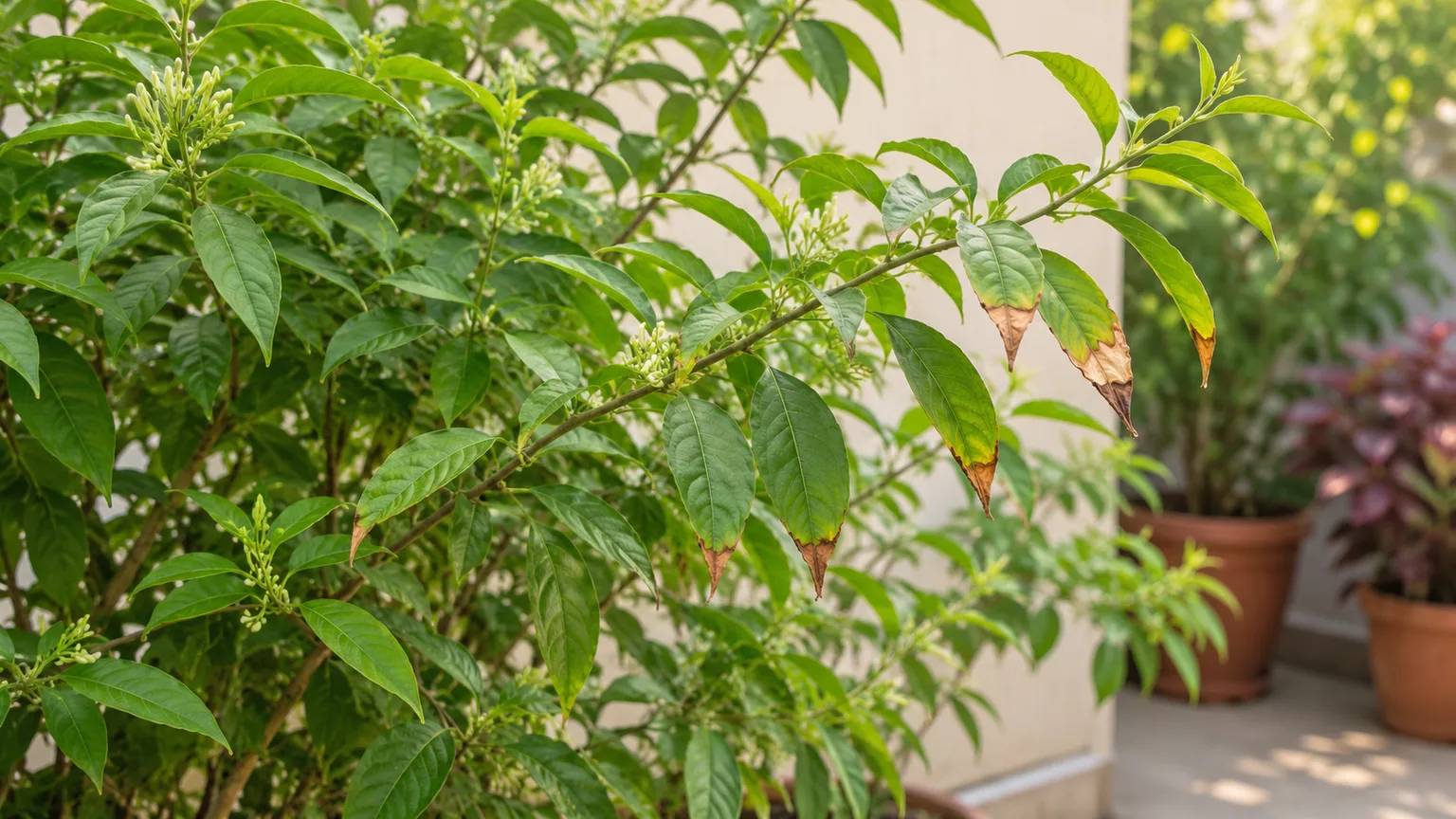
On Raat Rani, browning starts as a dry, papery point at the leaf apex and creeps inward along the margins. The damaged edge feels crisp, while the rest of the blade usually stays green and supple for a while. Because this shrub carries many thin, ovate leaves on arching stems, a single stressed branch can show a dozen crisped tips at once while neighbouring branches look untouched.
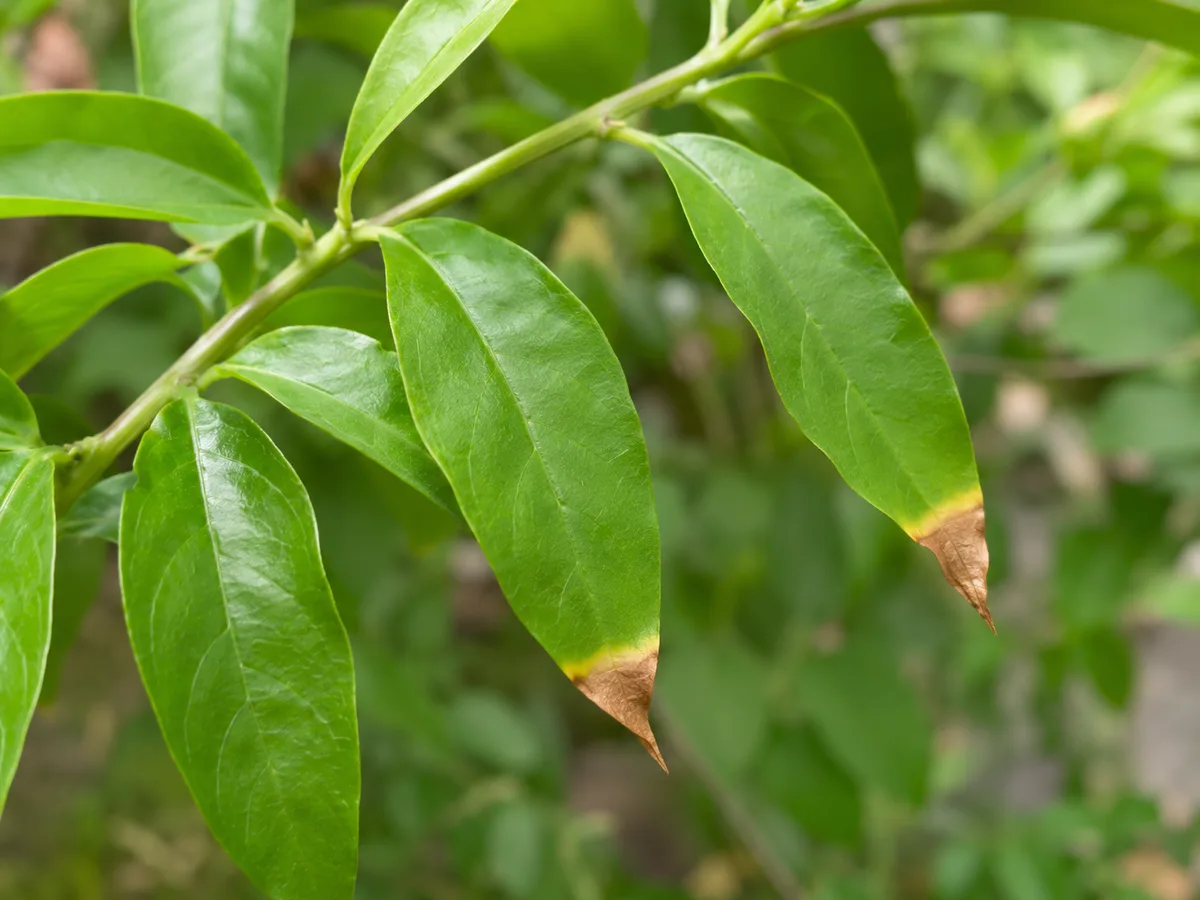
Brown tip scorch begins at the pointed leaf apex and edges, while most of each Raat Rani leaf remains green.
Salt-related tips often appear evenly across the sunniest, most actively growing shoots, sometimes with a faint yellow band between brown and green tissue. Drought-related tips follow missed waterings: the whole leaf may droop first, then the tip crisps. Cold damage looks different again, with darkened, almost water-soaked edges on the outermost leaves after a chilly night, while inner foliage stays fine.
Why Raat Rani gets brown tips
Raat Rani (Cestrum nocturnum) is a fast-growing evergreen shrub in the nightshade family, not a true jasmine, and its speed is the root of most tip trouble. A plant pushing out long, soft shoots through the warm months drinks heavily and gets fed heavily, so the pot accumulates fertilizer salts faster than a slow grower’s would. Those dissolved salts travel with water to the leaf margins, where water evaporates and leaves the salts behind to scorch the tip.
The watering rhythm matters just as much. The species wants a moist but well-drained root zone, watered freely in summer and kept just moist in winter. In practice this means the top few centimetres should dry between waterings, a trigger regional growers also recommend for established plants. When watering swings between drenching and neglect, fine root hairs die back during the dry phase, and the leaf tips, furthest along the water pipeline, crisp first when uptake falters.
Two seasonal stresses complete the picture. Dry, hot air pulls moisture from thin leaves faster than roots can replace it, especially beside a heat-reflecting wall or a warm indoor vent. And Raat Rani is tender: it needs a sheltered position and suffers when frost nips the exposed shoot ends, a pattern Indian growers know well, since frost can burn the tips and the remedy is trimming them off in late winter. For the general mechanics of why leaf tips brown before the rest of the blade, see our brown tips guide. On Raat Rani, the usual story is a fast canopy outrunning uneven roots, salts, or shelter.
How to confirm the cause
Work through these checks in order before changing anything.
- Soil moisture through the pot. Push a finger 3 to 4 cm deep and lift the pot. Damp surface with a light pot, or water that races down the inside edge and out the base, means the core root ball may be dry despite regular watering.
- Salt crust. A white or yellowish film on the mix surface or pot rim, plus a history of frequent liquid feeds, points to fertilizer buildup. Extension guidance warns that fertilizer applied too strongly or left unwatered-in can injure stems and roots, which is why mixing to label strength and watering until solution drains out matters.
- Feeding history. Raat Rani in active growth is often fed every couple of weeks. If feeds continued into cool, slow months, or doses crept upward for more flowers, salts are the prime suspect.
- Water type. Consistently hard or heavily treated tap water leaves minerals behind with every watering. Switching the flush to rainwater or distilled water, and periodically leaching the existing soil with clean water, is the standard correction.
- Recent cold. If browning followed clear winter nights, especially on outer leaves of an outdoor or balcony shrub, cold is likelier than salts. Note which side of the plant is worst.
- Newest growth. Clean new leaves with browning confined to older foliage suggest a past episode now passing. Tips browning on unfolding leaves mean the stress is still active.
The first fix to try
Flush the pot. Pour room-temperature water slowly and evenly over the surface until a generous volume flows from the drainage holes, wait ten minutes, and repeat once so the whole root ball wets through and excess salts wash out. Then empty the saucer or cachepot completely so the roots are not left standing in the leachate.
After that single flush, do nothing else for at least a week except checking moisture. Resume watering only when the top few centimetres dry out. This restraint is diagnostic: if new growth comes in clean, salts or dry pockets were the cause and no further treatment is needed.
Step-by-step recovery
- Flush and drain as above, on a mild morning so the plant dries by evening.
- Pause feeding for two to three weeks. A salt-stressed root system cannot use extra nutrients, and feeding now deepens the injury.
- Move only if the position is clearly wrong. A shrub scorched against a hot wall or chilled in a frost pocket benefits from shelter, but do not shuttle the pot around daily.
- Trim for looks, not for cure. Once no new browning has appeared for about two weeks, snip dead edges with sharp scissors, cutting at an angle to follow the leaf’s natural point. Never cut into green tissue.
- Resume feeding lightly. When fresh leaves hold green tips, restart at half to full label strength only while the plant is actively growing, as container-feeding guidance recommends following label directions rather than improvising stronger doses.
Recovery timeline
Browned edges never revert, a limit worth accepting early: the damaged portion will not turn green again, so progress is measured in new foliage. Within one to two weeks of the flush, existing damage should stop advancing. Within three to four weeks, new shoots should unfurl with clean tips.
If browning keeps spreading to new leaves after a month of corrected watering and paused feeding, unpot and inspect the roots. Pale, firm roots mean the canopy needs more time; widespread brown, mushy roots mean rot has joined the picture and dead tissue must be removed into fresh, airy mix per the Raat Rani soil guide and the Raat Rani repotting guide.
Lookalike symptoms
- Yellow leaves with green veins point toward nutrient uptake issues rather than tip scorch; the fix centres on roots and feeding, not flushing alone.
- Drooping whole leaves that recover after watering indicate simple underwatering episodes. Tips may crisp as a side effect, but the headline problem is frequency, covered alongside moisture checks in the Raat Rani watering guide.
- White stippling or fine webbing on undersides suggests sap-feeding pests rather than salts. Confirm with a lens before spraying anything.
- Blackened shoot ends after cold nights are frost injury on this tender shrub. Shelter first; cosmetic pruning waits until the cold risk passes, since the damaged tips are best trimmed in late winter.
Mistakes to avoid
- Feeding a stressed plant. Fertilizer cannot repair salt-burned or dry-damaged roots. Hold all feeds until new growth looks healthy.
- Daily sips instead of deep watering. Small top-ups wet the surface while the core stays dry, concentrating salts exactly where they burn. Water deeply, then wait.
- Repotting on day one. A flush, not a repot, is the first response unless roots are clearly rotten. Unnecessary repotting adds shock to injury.
- Shearing off every brown edge immediately. Trimming before the cause is stable hides the signal you need to read and opens wounds on an already stressed shrub.
- Blaming humidity alone. Dry air contributes, but on a heavily fed, fast-growing Raat Rani, salts and watering rhythm are guilty far more often.
How to prevent it next time
Tie care to the shrub’s pace. During warm, active growth this is a thirsty, hungry plant that still demands drainage: rich but open mix, deep watering on moisture checks, and label-strength feeds. In cool months, growth slows and both water and feed must step down to just-moist maintenance, since a winter-fed pot accumulates the salts that burn spring tips.
Flush the container with plain water every month or two during the feeding season so minerals never build to scorching levels. Site the shrub where it gets full sun to part shade with shelter from frost and scorching reflected heat, matching its need for a warm, protected position. And keep the canopy proportionate: a fast grower left unpruned carries more leaf than stressed roots can supply, so light, regular pruning steadies the root-to-shoot balance. The Raat Rani fertilizer guide and the Raat Rani light guide set the seasonal feeding and placement detail.
When to worry
Most tip browning is cosmetic and correctable. Escalate when several shoots brown within days, young tips blacken rather than crisp, stems turn soft, or the mix smells sour. Those signs mean root injury or cold damage beyond surface dryness. Inspect roots promptly, remove only dead tissue, and shelter the plant. If the whole canopy collapses or the base stem softens at soil level, the shrub may not be salvageable, and a healthy cutting taken earlier is the better path forward.
Related Raat Rani guides
- Use this page when leaf edges crisp brown while the blade stays mostly green.
- Use the Raat Rani problems hub when several symptoms overlap and you need to narrow the cause first.
- Use the Raat Rani watering guide when the core question is how often and how deeply to water.
- Use the Raat Rani fertilizer guide when feeding strength and schedule are the suspects.
- Use the Raat Rani soil guide when water lingers, crusts, or runs through without wetting the mix.
Related tool
Use the Brown Tips Diagnosis Tool to rank the likely causes for brown tips on this plant before changing multiple variables at once.