Raat Rani Repotting Guide: Timing, Pot and Soil
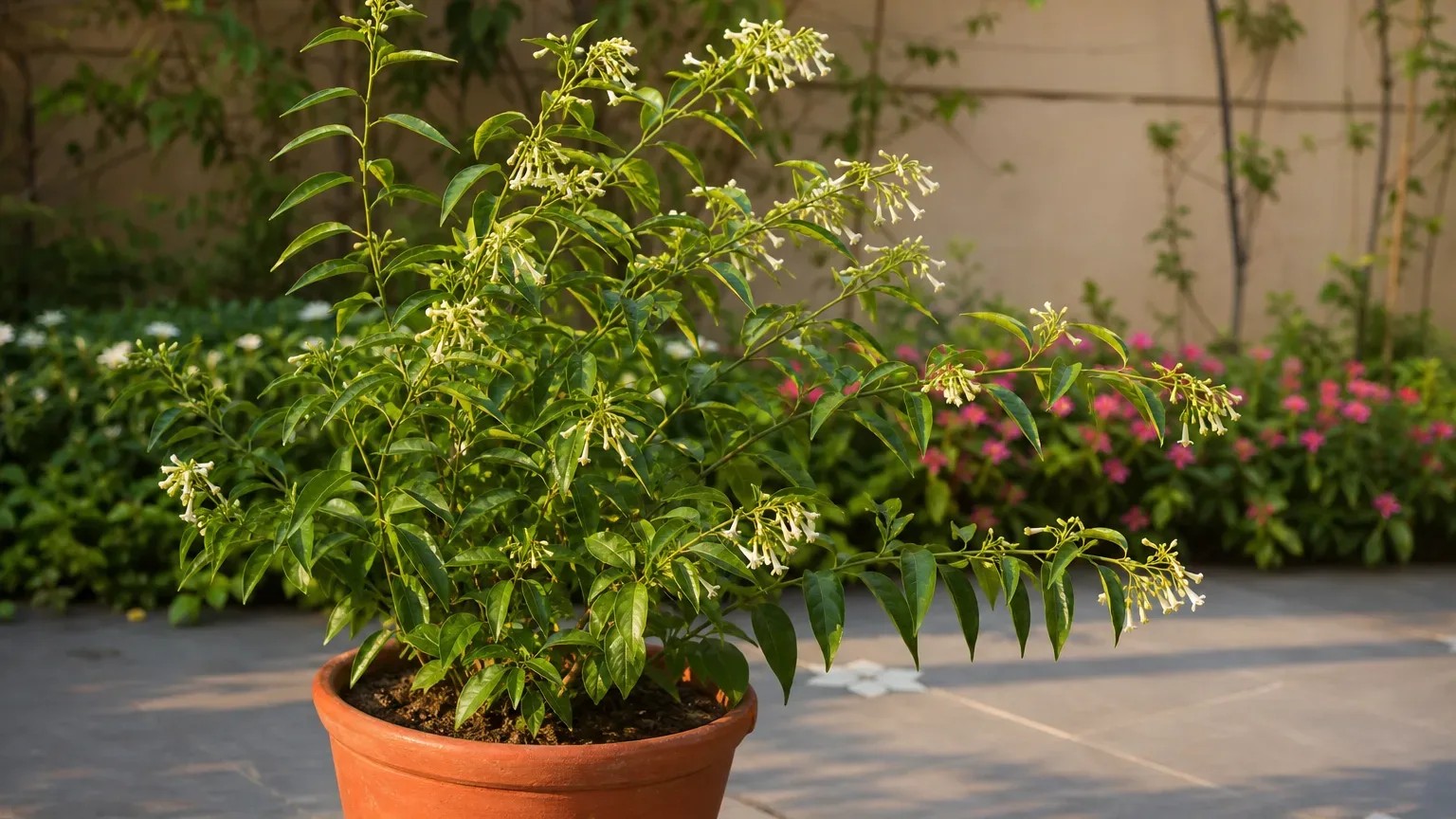
Raat Rani Repotting Guide: Timing, Pot and Soil
Raat Rani Repotting Guide: Timing, Pot and Soil
Raat Rani (Cestrum nocturnum) is a fast-growing woody shrub, not a true jasmine: Kew places it in the nightshade family, Solanaceae, while true jasmines belong to Jasminum. The Royal Horticultural Society records a mature height of roughly 2.5–4 metres. In a container, that vigorous top growth eventually produces a dense root ball, but a large plant does not automatically need a much larger pot.
The useful question is not “Has one year passed?” It is “Can this root ball still take up water and support active growth without the mix staying dangerously wet?” Young plants may need repotting every one to two years, while an established shrub can remain in one container longer if drainage, watering response, and growth remain healthy.
Decide whether Raat Rani actually needs repotting
Slide the plant from its pot and look before buying a larger container. Penn State Extension recommends examining the root ball to decide whether a plant is pot-bound, rather than relying only on roots visible at a drainage hole. One exploratory root is not proof of severe crowding.
Repot when several clues agree: a thick net of roots wraps the outside of the root ball, little loose mix remains, water races down the pot wall without wetting the centre, or a thoroughly watered plant becomes dry again within a day in moderate weather. Warm-season growth that has stalled despite suitable Raat Rani light and feeding is another useful clue.
Reliable signs in the roots, soil and growth
A root-bound Raat Rani often lifts out as one firm mass. Circling roots may be concentrated at the base, and the old mix can feel compacted or resistant to water. Colorado State University Extension advises removing the container to inspect roots directly, which is more dependable than judging from canopy size alone.
Also consider stability. Raat Rani develops long, arching woody shoots; NC State Extension describes Cestrum nocturnum as an evergreen shrub reaching about 3–13 feet. A top-heavy container that repeatedly tips in wind may justify moving to a slightly wider, heavier pot even when the roots are not severely crowded.
Problems that repotting will not fix
Do not repot simply because leaves are yellowing. Wet soil, low light, pests, cool weather, or a watering mismatch can produce the same symptom. If the root ball is loose and smells fresh, diagnose moisture with the Raat Rani watering guide before disturbing healthy roots.
Repotting also will not make a shaded plant flower, and a larger pot will not correct excess nitrogen. If the mix drains well and roots have room, check fertilizer practice and sun exposure first. Combining repotting, hard pruning, and strong feeding on the same day adds avoidable stress.
The best season to repot Raat Rani
Late winter to early spring, just before strong new shoots appear, is the easiest window. Penn State Extension identifies spring active growth as the best general time to repot, because new roots can move into fresh mix as the canopy resumes growth. For Raat Rani, choose a mild spell after cold stress has passed but before extreme heat.
Emergency repotting is different. Act promptly if the mix smells sour, stays saturated for many days, or roots are black and soft. In that case the goal is to remove failing mix, trim only dead roots, and restore aeration—not to make a routine size upgrade.
India-specific timing around heat and monsoon
In much of India, February to early March is practical; in cooler northern locations, wait until frost risk has eased. Avoid shifting the plant during a severe May heat wave, when disturbed roots and high transpiration create a difficult recovery. During monsoon, repot only where you can shelter the container from repeated rain until the new mix begins drying normally.
Warm coastal climates allow more flexibility, but use the plant’s growth as the signal. Fresh buds and lengthening shoots indicate that the root system can recover. A cool-season plant that has paused or shed leaves should usually wait.
Choose the next container
Move up by one practical size—usually about 5–8 cm wider at the rim for an established patio specimen. A dramatic jump leaves a broad ring of wet, unused mix around the old roots. That increases the time the centre remains damp and makes watering harder to judge.
The container must have unobstructed drainage holes. NC Cooperative Extension advises selecting a container with drainage and only a modest size increase. Never compensate for a hole-free decorative pot with stones at the bottom; use it as a cachepot and remove the planted inner pot for watering.
Pot size, material and drainage
Terracotta loses moisture faster and can help during humid monsoon weather, but it demands more frequent checks in hot, dry wind. Plastic and glazed ceramic dry more slowly and reduce watering frequency in exposed summer positions. Choose according to the site, then keep the drainage opening clear with mesh rather than a thick gravel layer.
A broad, stable profile suits this shrub better than a tall, narrow pot. If the plant lives on a balcony, consider the filled weight and wind exposure before choosing ceramic. Pot material matters less than drainage, correct sizing, and an appropriate mix.
Prepare a fresh, free-draining mix
Use a fertile, airy medium that retains moderate moisture without becoming dense. A practical mix is 50% quality potting soil, 30% compost or coco coir, and 20% perlite or coarse horticultural grit. Adjust the coarse fraction upward if your base mix is fine or the plant receives heavy seasonal rain.
The RHS lists loam and sand among suitable soil types for Cestrum nocturnum and requires a moist but well-drained growing medium. Do not pack garden clay into a container. See the Raat Rani soil guide for mix adjustments in dry and humid sites.
How to repot Raat Rani step by step
Water the plant lightly the day before if the root ball is very dry; it should be cohesive, not sodden. Prepare the pot, mix, clean pruners, and support stake before removing the shrub; the RHS advises wearing gloves and protective equipment when handling it. Raat Rani is toxic if eaten, and the Queensland Poisons Information Centre says all parts are toxic, especially the fruit, so keep berries and trimmings away from children and animals.
- Lay a large plant gently on its side and support the stem base and root ball.
- Ease off the pot; do not pull by a branch. Tap rigid sides or cut a disposable nursery pot if necessary.
- Inspect the roots and smell the mix. Healthy roots are firm; remove only dead, mushy, or clearly broken tissue with clean tools.
- Loosen the outer root layer with fingers. For a severely circling root ball, make a few shallow vertical scores rather than tearing the centre apart.
- Add enough fresh mix to keep the original soil line level with the new rim allowance.
- Centre the shrub, fill around it, and firm gently to remove large voids without compressing the medium.
- Water thoroughly once, allow complete drainage, and add mix if settling exposes the upper roots.
Inspect and manage the root ball
Do not wash all soil from healthy roots during routine repotting. Preserving the core reduces disturbance and makes recovery more predictable. Root washing is reserved for contaminated, hydrophobic, or badly decomposed media where leaving the old material would perpetuate the problem.
If rot is present, remove failed tissue conservatively and disinfect tools afterward. Do not assume every dark root is dead; texture and smell matter more than colour. Focus on restoring drainage and changing the watering pattern.
Set the shrub at the correct depth
Keep the stem base at the same depth it occupied before. Burying woody stems can keep bark damp and obscure early signs of decay. Leave a watering lip below the rim so a full irrigation soaks the mix instead of running over the balcony floor.
Stake only if the root ball shifts. Tie loosely and remove the support once roots anchor the plant; a permanently rigid stake can hide an unstable planting depth.
Post-repot watering and placement
After the initial thorough watering, wait for the upper 2–3 cm of mix to dry before watering again. Fresh mix around a smaller old root ball stays moist longer than the previous packed medium, so the old calendar is unreliable. Empty saucers and shield the pot from persistent rain.
Keep the shrub in bright, sheltered light for about a week, then return it gradually to its normal sun. Delay fertilizer for roughly four weeks unless the potting mix manufacturer has already included controlled-release nutrients. Freshly disturbed roots need oxygen and steady moisture more than extra salts.
Normal recovery versus warning signs
A little midday softness or one or two dropped leaves can occur during the first several days, especially after root manipulation. Recovery looks like firm leaves by morning and eventually fresh shoot growth. Keep conditions stable instead of repeatedly moving, feeding, and watering the plant.
Persistent collapse in wet mix, a sour smell, rapidly yellowing foliage, or a soft stem base is not normal transplant shock. Check drainage immediately and slide the root ball out if deterioration continues. Wilting with a dry centre can mean the first watering travelled around, rather than through, the old root ball.
Repotting a mature Raat Rani without a larger pot
When a mature shrub has reached the largest safe balcony container, refresh it in place. Remove the plant during active growth, trim a limited layer from the outer and lower root ball, replace exhausted mix, and return it to the same cleaned pot. Reduce the canopy modestly only if necessary to balance substantial root removal.
This is maintenance, not rescue surgery. Spread root and shoot work over time when possible. Because C. nocturnum has invasive potential in some warm regions—the UF/IFAS assessment does not recommend it for general use in Florida—collect flowers, berries, roots, and discarded mix rather than dumping them where they can establish.
When to use this page vs other Raat Rani guides
Use this guide when choosing a container, inspecting roots, moving the shrub, or managing recovery. Use watering when the main question is how dry the mix should become, soil when formulating the medium, and propagation when you want additional plants rather than a larger specimen.
For canopy size and flowering wood, use the Raat Rani pruning guide. The main Raat Rani care page connects placement, safety, flowering, and seasonal care.
Related Raat Rani guides
- Raat Rani overview — identity, growth habit, safety, and whole-plant priorities.
- Raat Rani light — sun exposure before and after the move.
- Raat Rani watering — moisture checks as fresh mix settles.
- Raat Rani soil — base mix and drainage amendments.
- Raat Rani fertilizer — when to restart feeding after recovery.
Conclusion
Repot Raat Rani because the roots, mix, or stability show a real need—not because a date appears on the calendar. Work just before active spring growth, choose a container only modestly larger, preserve healthy roots, and keep the original planting depth. The most important aftercare is restrained watering: fresh mix dries differently, and giving a recently moved shrub repeated “recovery” drinks is more dangerous than letting the surface begin to dry.