Raat Rani Propagation from Cuttings and Seeds
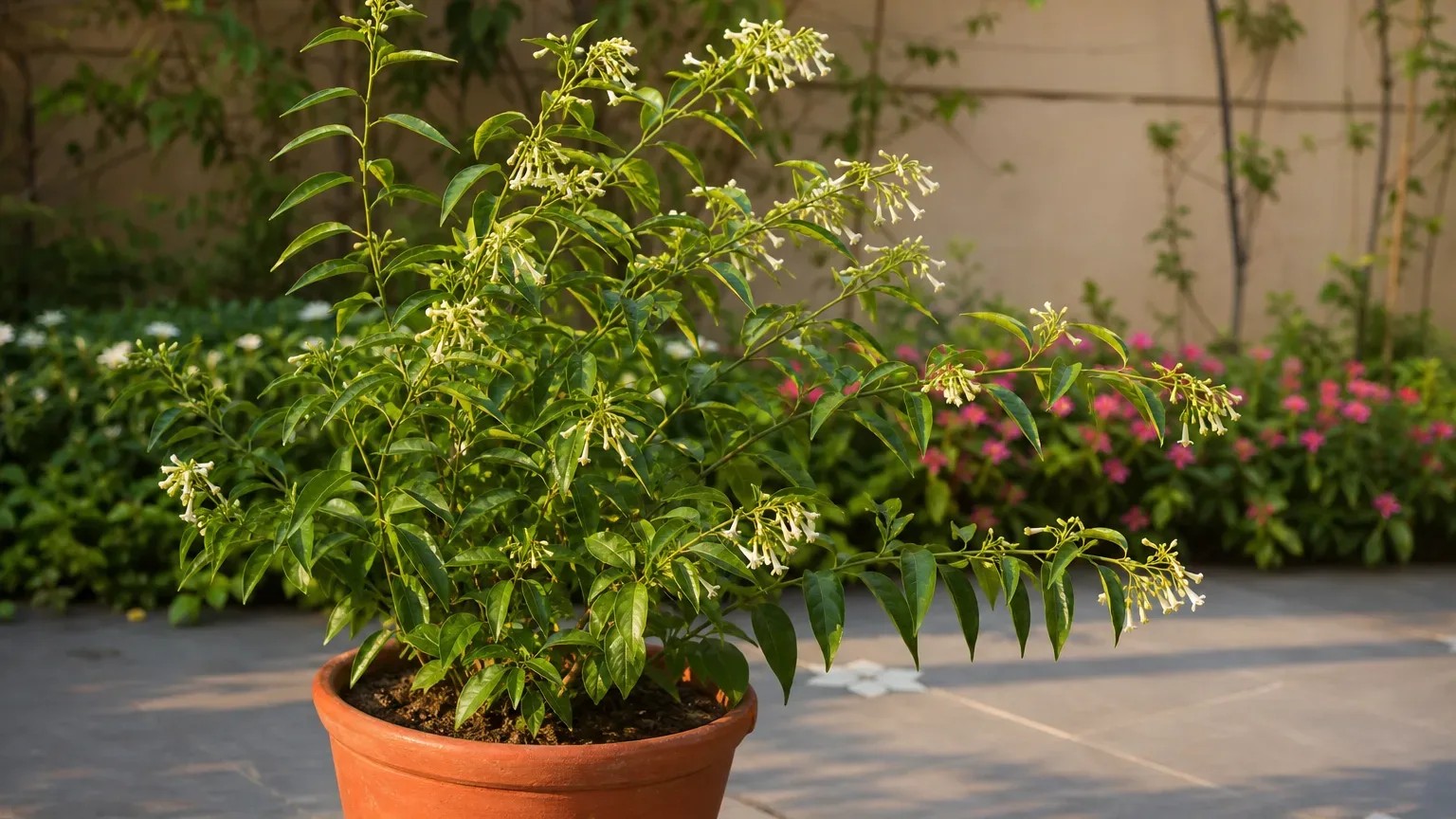
Raat Rani Propagation from Cuttings and Seeds
Raat Rani Propagation from Cuttings and Seeds
Raat Rani is usually easiest to reproduce from a healthy stem cutting, not from seed. The plant is Cestrum nocturnum, a woody nightshade shrub rather than a true jasmine, and the Royal Horticultural Society lists softwood and semi-ripe summer cuttings as standard methods. Seeds are possible, but they are slower, produce less predictable seedlings, and create an avoidable dispersal risk in climates where this species escapes gardens.
This guide uses “Raat Rani” for Cestrum nocturnum. Do not apply the same steps blindly to true Jasminum species sold as jasmine; their growth cycles and cutting responses can differ.
The best way to propagate Raat Rani
For most home growers, the best method is a 10–15 cm stem cutting rooted in a sterile, airy medium. Choose soft but mature spring growth or a semi-ripe summer shoot: either offers living tissue that can form roots without the long wait and genetic variation of seed.
Cuttings also let you copy a parent whose fragrance, flowering, and growth habit you already know. Cestrum nocturnum can reproduce vegetatively in the landscape, including from root material, according to the Global Invasive Species Database, but digging or dividing roots is unnecessarily disruptive in a pot and can spread unwanted shoots.
Best season for taking cuttings
Take softwood cuttings when Raat Rani is pushing firm new growth, usually from late winter through spring in warm Indian regions. In cooler or strongly seasonal areas, wait until nights are reliably mild and the parent is growing rather than merely holding leaves.
Semi-ripe cuttings suit summer, when the shoot base has begun to firm while the tip remains flexible. RHS guidance for this species specifies seed in spring at 13–18°C and softwood or semi-ripe cuttings in summer. In very hot plains climates, work early in the morning and root cuttings in bright shade; in the monsoon, ventilation matters more than adding humidity.
Softwood or semi-ripe: choosing a shoot
A useful softwood shoot bends easily but does not collapse between your fingers. Avoid the palest, floppy tip, flowering stems, and shoots carrying aphids, scale, whiteflies, spots, or distorted leaves. The parent should be hydrated, but do not take material from a waterlogged or yellowing plant.
Semi-ripe wood has a lightly firm or brownish base and a still-green upper section. It loses water more slowly than very soft tissue and is often the safer choice during humid summer weather. General RHS semi-ripe cutting guidance supports taking current-season growth as it begins to firm.
Tools and rooting medium
Use clean bypass pruners or a sharp blade, small pots with drainage holes, labels, and a clear cover or ventilated propagator. Clean the blade before the first cut and between plants. Gloves are sensible because this is a toxic nightshade, especially if sap contacts broken skin.
Make a low-nutrient medium that holds a little moisture while leaving air around the stem: equal parts coco coir and perlite works well. Fine compost-rich potting mix stays wet too long under a humidity cover. Rooting hormone is optional; it may improve consistency, but clean material, correct shoot maturity, and oxygen at the stem base matter more.
Step-by-step Raat Rani cutting method
Work with one cutting at a time so the cut end does not dry. Prepare more than one cutting because losses are normal, but keep the number limited to plants you can responsibly grow or give away.
Preparing the parent plant and cutting
- Water a dry parent plant the evening before, then select a non-flowering side shoot.
- Cut 10–15 cm of stem just below a node, with two to four nodes in total.
- Remove leaves from the lower half and any flower buds. Keep one or two upper leaves; halve very large leaves if they crowd the cover.
- Recut a bruised base cleanly. If using rooting powder or gel, apply only the labelled amount and tap away excess.
Softwood loses moisture quickly after removal. RHS softwood-cutting guidance emphasises collecting vigorous young shoots and preventing cut material from drying before insertion.
Inserting and covering the cutting
Pre-moisten the medium so it feels evenly damp, not dripping. Make a hole with a pencil, insert at least one bare node below the surface, and firm gently so no air gap surrounds the stem. Water once to settle the mix and let it drain.
Cover the pot loosely with a clear bag held away from the leaves, or use a propagator with vents. Open it daily. In humid monsoon weather, leave larger vents or skip the bag if leaves remain turgid; stagnant saturated air encourages decay faster than it helps a woody tropical cutting.
Light, warmth, and moisture while rooting
Place the pot in bright filtered light without hot midday sun. The medium should remain lightly moist around the buried node, never continuously soggy. Check with a fingertip or the pot’s weight before adding water; misting the cover does not correct a waterlogged root zone.
Warmth supports active growth, but a closed plastic bag in Indian sun can overheat within minutes. Keep the cutting sheltered from drying wind and air-conditioner exhaust. Kew records the species as a shrub of the wet tropical biome, yet that habitat association does not mean a severed stem tolerates stagnant, oxygen-poor mix.
How to tell whether roots have formed
Do not judge success by a fixed date. A cutting may stay green on stored moisture before it has roots, while another may root without producing an immediate new shoot. Look for several signs together: the stem remains firm, new leaves begin to expand, and gentle resistance is felt when you test it without pulling hard.
The most reliable check is roots visible at a drainage hole or along the side of a clear propagation pot. Do not repeatedly lift the cutting to inspect it; each disturbance breaks fresh root initials. Begin opening the cover for longer periods only after the cutting remains upright between checks.
Moving a rooted cutting into its first pot
Pot on when there is a small branching root system, not merely one fragile white root. Use a container only slightly wider than the rooted plug and a fertile but free-draining mix. Keep the original stem depth, settle the mix once, and place the plant in bright shade for about a week.
Increase light gradually, then follow the Raat Rani light guide for its permanent position. Do not combine transplanting, hard pruning, and fertilizer. Wait for clear new growth before beginning the feeding routine in the Raat Rani fertilizer guide.
Water rooting versus rooting in mix
Raat Rani cuttings may form roots in water, and the transparent container makes progress easy to see. The drawback is that water-grown roots are adapted to a continuously aquatic environment and can be damaged when transferred to an aerated potting mix; water also turns stale unless changed regularly.
Direct rooting in coir and perlite avoids that transition and is the better default. If you use water, submerge one lower node, keep all leaves above the surface, change cloudy water, and pot the cutting while roots are still short and pale rather than waiting for a tangled mass.
Growing Raat Rani from seed
Use seed only when you specifically want seedlings rather than a copy of the parent. Sow fresh seed in spring on a clean seed-starting medium, cover lightly, and keep it evenly moist at the species-specific RHS range of 13–18°C. Germination and seedling traits can vary, so do not promise that a seedling will match the parent’s flowering performance.
Avoid allowing berries to develop casually. The Global Invasive Species Database reports that the plant produces bird-dispersed seeds and can colonise disturbed sites. Sow in contained pots, dispose of unwanted berries securely, and never discard viable seed or potting medium in open ground.
Common propagation failures
Most failures trace to one of four causes: material that was too soft, a medium that stayed saturated, excessive heat under the cover, or moving the cutting before it had enough roots. Diagnose the stem and mix before adding water or fertilizer.
Black stem bases and rot
A dark, soft base with a sour smell is rot, not normal callusing. Discard that cutting and its medium; do not cut away the black section and return it to the same contaminated pot. Start again with a clean container, fresh medium, a disinfected blade, and more ventilation.
Seedlings that narrow or collapse at the soil line may have damping-off. The University of Minnesota Extension identifies damping-off as a disease of seeds and new seedlings associated with soilborne pathogens; clean containers, clean medium, drainage, and airflow are more useful than repeatedly spraying a failing tray.
Wilted cuttings and stalled growth
Immediate wilting usually means excessive leaf area, dry air, a damaged stem base, or direct sun. Reduce stress by trimming one large leaf, restoring bright shade, and checking that the medium is lightly moist. Do not flood the pot.
A firm green cutting that has not grown may simply be forming roots. Give it time if the base is sound. A rooted cutting that stalls after potting often has too large a container, harsh sun, or persistently wet mix; review Raat Rani soil guidance and Raat Rani watering guidance before feeding.
Safety and responsible propagation
Keep cut stems, leaves, berries, and propagation water away from children and animals. Queensland Poisons Information Centre states that all parts are toxic, especially the fruit. Label every pot and wash tools and hands after handling; seek appropriate medical or veterinary advice after ingestion rather than using home remedies.
Propagate only as many plants as you can contain. Its ability to reproduce vegetatively and by bird-dispersed seed has helped it escape cultivation in tropical and subtropical regions. Do not plant it near natural areas or grazing land, and remove flower clusters before berries mature.
Invasive status depends on location, so check local weed and nursery rules before propagating or sharing plants. For example, the New Zealand Plant Conservation Network identifies Cestrum nocturnum as an environmental weed and a National Pest Plant Accord species there. That designation does not automatically apply in India, but it shows why berries, rooted waste, and surplus plants should never be released beyond cultivation.
When to use this page vs other Raat Rani guides
- Start with the Raat Rani overview if you need species identity, placement, toxicity, and whole-plant care.
- Use the Raat Rani pruning guide when choosing healthy shoots or shaping the parent after cuttings are taken.
- Use the Raat Rani repotting guide once a young plant has filled its first pot.
- Use the Raat Rani watering guide for an established plant; a rootless cutting needs lighter, more controlled moisture.
Related Raat Rani guides
- Raat Rani light — acclimatise a newly rooted plant without scorching it.
- Raat Rani soil — move from a low-nutrient rooting medium to a long-term mix.
- Raat Rani fertilizer — learn when active new growth is ready for feeding.
- Raat Rani repotting — recognise when the first pot has become too small.
- Raat Rani care overview — check mature size, flowering, and safety before keeping another shrub.
Conclusion
The dependable route to a new Raat Rani is a clean softwood or semi-ripe cutting rooted in an airy, lightly moist medium. Match timing to active growth, keep hot sun off the covered pot, ventilate aggressively during humid monsoon weather, and wait for firm evidence of roots before transplanting.
Seed propagation is possible but slower, variable, and less responsible where Cestrum nocturnum can spread. Whichever method you use, label the toxic material, contain berries and waste, and raise only the number of shrubs you can manage safely.