Raat Rani Soil Mix, pH and Drainage Guide
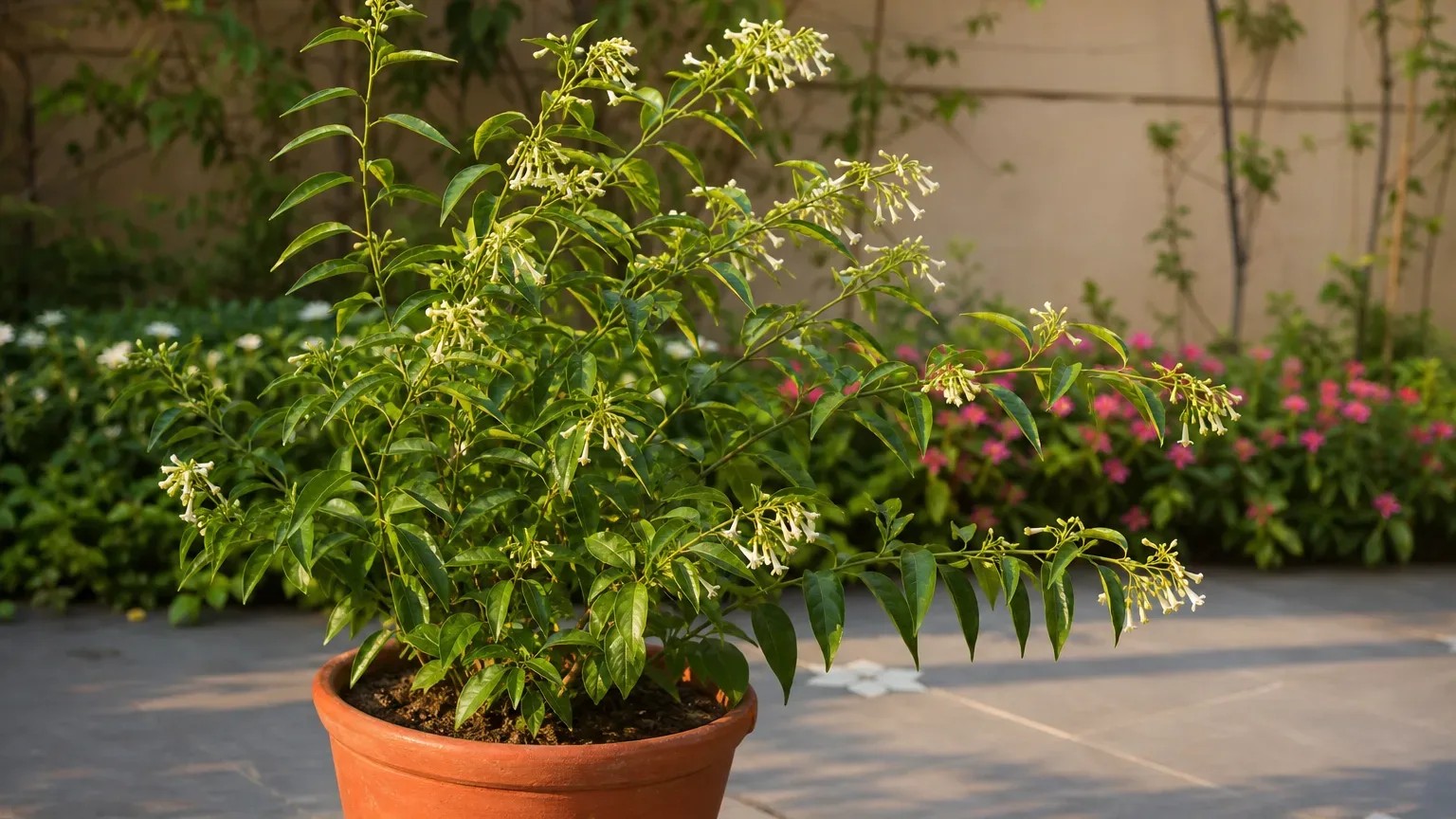
Raat Rani Soil Mix, pH and Drainage Guide
Raat Rani Soil Mix, pH and Drainage Guide
Raat Rani soil should be fertile enough to support a fast-growing flowering shrub, open enough to admit air after watering, and moisture-retentive enough that roots do not swing from swamp to dust. Despite names such as night-blooming jasmine, Cestrum nocturnum is a nightshade-family shrub, not a true Jasminum jasmine. The RHS species profile describes moist but well-drained or well-drained soil and recommends a peat-free, loam-based potting compost for containers.
That combination matters more than any branded bag or rigid recipe. If your current pot remains heavy, dark and sour-smelling for a week, adding fertilizer will not solve it. If water races down a gap at the pot wall while the centre stays dry, watering more often will not solve that either. Read the root zone first, then change its structure.
The short answer: fertile, airy and never stagnant
For a container, start with 50% quality potting soil or screened loam-based mix, 30% mature compost or buffered coco coir, and 20% perlite, pumice or coarse horticultural sand. Treat this as a starting formula, not a laboratory-tested requirement for the species. Local loam, compost fineness, pot material, light and monsoon exposure all change how the same ratio behaves.
Aim for a mix that feels crumbly and springy rather than sticky. It should accept water evenly, release excess through open drainage holes, then retain mild moisture deeper in the pot. Clemson Extension says a quality container medium must allow water and air to pass readily while still holding adequate moisture and nutrients; that is the practical target for Raat Rani.
Why this shrub needs both moisture and oxygen
Raat Rani grows quickly in warm weather and carries a broad canopy on woody stems. Its active roots therefore need access to water, but roots also respire. When fine particles collapse together or a pot remains saturated, water occupies the pore spaces that should contain air. NC State’s soils guidance explains that good root-zone structure depends on a balance of water-filled and air-filled pore space.
This is why “well-drained” does not mean bone-dry or mostly rocks. A pot full of coarse grit may drain beautifully yet force repeated drought stress in Indian summer heat. Conversely, pure garden clay or fine cocopeat may hold plenty of water while excluding oxygen. Raat Rani performs best between those extremes: steady moisture after a deep soak, followed by a genuine return of air.
A practical DIY Raat Rani soil mix
Measure ingredients by volume in a bucket:
- 5 parts quality potting soil or screened, friable loam-based mix
- 3 parts mature, sieved compost or washed and buffered coco coir
- 2 parts perlite, pumice, fine pine bark or coarse horticultural sand
If your base mix already contains abundant perlite and bark, reduce the extra aeration material. If it is dense and fine, increase the coarse fraction. UConn Extension describes useful potting media as combining support, drainage, aeration, and storage of water and nutrients; judge the finished blend by those functions rather than ingredient names alone.
What each ingredient contributes
The base mix anchors a 1–2 m container shrub and buffers nutrients. Compost contributes organic matter and modest fertility, while coco coir retains water without the weight of field soil. Perlite, pumice and bark create persistent macropores; coarse horticultural sand adds weight and drainage but can compact when mixed with clay or used too finely.
Do not use fresh manure, half-finished compost, construction sand, or soil dug from an unknown site. Clemson notes that garden soils are generally unsuitable in containers unless amended because their physical structure differs from manufactured media. If you use coco coir, rinse low-quality material because coir can carry soluble salts.
Test the finished mix before planting
Moisten a handful and squeeze it. It should form a loose clump, then break apart when pressed; a slick ribbon indicates too much clay, while a mix that will not hold any shape may dry too fast. Next, fill the intended pot, water slowly and watch the base. Free outflow should begin without water pooling on the surface for several minutes.
Recheck after two normal watering cycles. The upper 2–3 cm should start drying while deeper mix remains lightly moist, matching the decision method in the Raat Rani watering guide. A one-time drain test cannot reveal a mix that settles into a dense plug after repeated soaking.
Can you use commercial potting mix?
Yes, but inspect the texture. A balanced loam-based or general container mix with visible bark, perlite or other coarse particles can work directly. A fine, peat-heavy “moisture control” blend often needs 20–30% extra perlite, pumice or bark, especially in plastic pots, humid rooms or monsoon-exposed balconies.
Commercial mixes may already contain lime and starter fertilizer. Do not automatically add more compost, fertilizer and dolomite at planting. Check the label, then coordinate feeding with the Raat Rani fertilizer guide after the plant settles. More inputs can raise salts and water retention without improving root structure.
Can Raat Rani grow in garden soil?
In the ground, yes—if the site drains. The RHS lists loam, sand and chalk and accepts acidic, neutral or alkaline conditions for C. nocturnum, showing that the shrub tolerates several soil chemistries when structure is suitable. A raised, amended bed is safer than a low spot where monsoon water collects.
In pots, do not use unamended garden soil. Fine field soil compacts in the confined container and becomes much heavier than potting media. If local loam is your base, screen out stones and debris, use it as only part of the recipe, and add compost plus a persistent coarse material. For heavy black cotton soil or clay, a commercial container base is more predictable than trying to correct a sticky mass with a little sand.
Does Raat Rani need acidic soil?
No narrow acidic target is established by the strongest species-specific source. The RHS accepts acid, neutral or alkaline soil. For home containers, a practical mildly acidic to neutral range around pH 6.0–7.5 is reasonable because most complete potting mixes and compost blends function there, but the exact number is less important than drainage and healthy growth.
Test pH when leaves show persistent interveinal yellowing despite sound watering and roots, when irrigation water is very hard, or when repeated amendments have changed the mix. Do not add lime, sulphur, coffee grounds or vinegar by guesswork. Replace degraded media or obtain a simple soil test before forcing chemistry.
Choose a pot that lets the mix work
Drainage holes are non-negotiable. University of Georgia container guidance calls adequate drainage holes the most important container feature. Keep holes clear, raise a terrace pot slightly if it seals against the floor, and empty any saucer after runoff finishes.
Do not put a thick gravel layer beneath dense soil. It does not transform the upper mix into a well-drained medium and can leave water perched above the textural boundary; UMass Extension explains this perched-water effect. Use one consistent, airy mix from top to bottom and a small mesh screen only if particles wash through holes.
Choose the next pot only 2–5 cm wider than the root ball. A much larger container leaves a ring of wet, unused medium around sparse roots. Penn State’s repotting guidance likewise warns against moving houseplants into excessively large pots. Follow the Raat Rani repotting guide when roots circle tightly or fresh mix is genuinely needed.
Handle Raat Rani safely during soil work
Keep children and pets away while you unpot, refresh soil or clear fallen fruit. Queensland Poisons Information Centre identifies Cestrum nocturnum as a Solanaceae shrub and states that all parts are toxic, especially the fruit. Wear gloves, collect every loose berry and plant fragment, and discard them where animals cannot retrieve them; do not add them to an accessible home compost pile.
Wash tools and hands after the job, and keep old potting mix out of vegetable beds or children’s play areas when it contains fallen berries or plant debris. Suspected ingestion needs urgent medical or veterinary advice rather than a home remedy. These precautions matter because the common name “night-blooming jasmine” can invite a false comparison with true jasmines, but Raat Rani has a different botanical identity and safety profile.
Adjust the mix for Indian seasons
A single formula behaves differently in Jaipur May heat, a shaded Bengaluru balcony and a Mumbai monsoon. Change the coarse fraction, pot material and rain exposure gradually. Do not rebuild healthy soil merely because a calendar says the season changed.
Hot, dry summer balconies
In hot, windy conditions, retain the 30% compost/coir fraction and avoid an excessively gritty cactus blend. Plastic or glazed pots slow evaporation compared with terracotta. Mulch the surface lightly with coarse compost or bark, keeping it clear of the stem, and check moisture according to the plant rather than watering by date.
If the pot dries fully within a day while roots are not crowded, the mix may repel water or contain too much coarse material. Rewet slowly in two passes. At the next refresh, increase coir or fine compost modestly instead of jumping to a dense moisture-control product.
Monsoon and humid coastal conditions
Under prolonged rain, shelter the pot from daily refilling, remove saucers and increase airflow. Add another 5–10% perlite, pumice or bark when rebuilding a mix that repeatedly remains saturated. UGA notes that peat-heavy media can retain excessive moisture during extended rainy weather.
Do not add fine sand to wet clay and expect a cure. Lift and inspect the root ball if soil smells anaerobic, stems soften or multiple leaves yellow while the pot remains wet. In-ground shrubs in flood-prone soil may need a raised mound or redirected runoff rather than repeated surface amendments.
Signs the soil is staying too wet
The clearest pattern is symptoms plus persistent moisture: widespread yellowing, sudden leaf drop, soft lower stems, stalled growth, fungus gnats, or a sour smell while the pot stays heavy. Missouri Botanical Garden explains that waterlogged roots may be unable to absorb oxygen, and oxygen-starved soil can smell sour or rotten.
Stop watering and clear drainage first. If the plant is stable, let the mix approach normal dryness and observe. If stems are soft or roots smell foul, unpot promptly, remove loose rotten material with clean tools, and repot into fresh airy mix. Do not fertilize damaged roots.
Signs the mix is compacted or exhausted
Compacted soil may pull from the pot wall, channel water straight down one side, crust at the surface, or resist a wooden skewer. Exhausted organic media can collapse, hold water longer than before, or become difficult to rewet. Roots emerging from holes and a pot that dries in a day may instead indicate crowding.
Separate soil failure from light, watering and nutrition before acting. Sparse flowering in otherwise healthy soil is often better investigated through the Raat Rani light guide and pruning timing than by adding richer compost. Soil replacement is disruptive and should solve a root-zone problem, not every above-ground symptom.
How to correct the soil without overreacting
For mild surface compaction, loosen only the upper centimetre without stabbing major roots and restore correct watering. For channeling, soak slowly in stages so the root ball rewets evenly. For a healthy but root-bound plant, repot one size up with fresh mix around the existing root ball.
Replace most of the medium when it is sour, chronically saturated, badly compacted or contaminated with excessive salts. Work in late winter or early spring before strong growth when possible, then keep the plant sheltered from harsh midday sun while roots recover. Avoid combining a full soil change, hard pruning and heavy feeding on the same day.
When to use this page vs other Raat Rani guides
Use this soil page to choose ingredients, correct drainage, interpret texture and decide whether the root medium itself is failing. Use Raat Rani watering when the mix is suitable but you need a dryness test or seasonal watering rhythm. Use Raat Rani repotting for pot size, timing and root handling.
For weak flowering with healthy roots, start with Raat Rani light and Raat Rani pruning. For feeding rates and salt management after the soil is stable, use the fertilizer guide. Soil is foundational, but it is not an explanation for every symptom.
Related Raat Rani guides
The Raat Rani care overview connects soil with placement, flowering and year-round care. The fertilizer guide helps you feed an established shrub without turning the root zone saline, while the propagation guide covers the finer medium and steadier moisture needed by cuttings.
Conclusion
Give Raat Rani a fertile, loam-based but airy medium, not dense garden mud and not a dry cactus blend. Start near 50% potting soil, 30% compost or coco coir and 20% coarse aeration material, then adjust by observing drainage and dry-down in your climate. If the pot stays wet and smells sour, restore oxygen first; if it dries in a day, improve moisture retention or check for crowded roots. Structure, drainage holes and seasonal observation matter more than chasing a perfect bag label or pH number.