Low Humidity on Rangoon Creeper: Causes, Checks & Fixes
Quick answer
Move the pot out of direct dry airflow, water deeply so the root zone is evenly moist, and check leaf-level humidity with a hygrometer. Rangoon Creeper is a tropical Asian vine that shows dry air as crisp brown leaf margins and dropped buds, and grouping containers or a nearby humidifier holds gains that misting alone cannot.
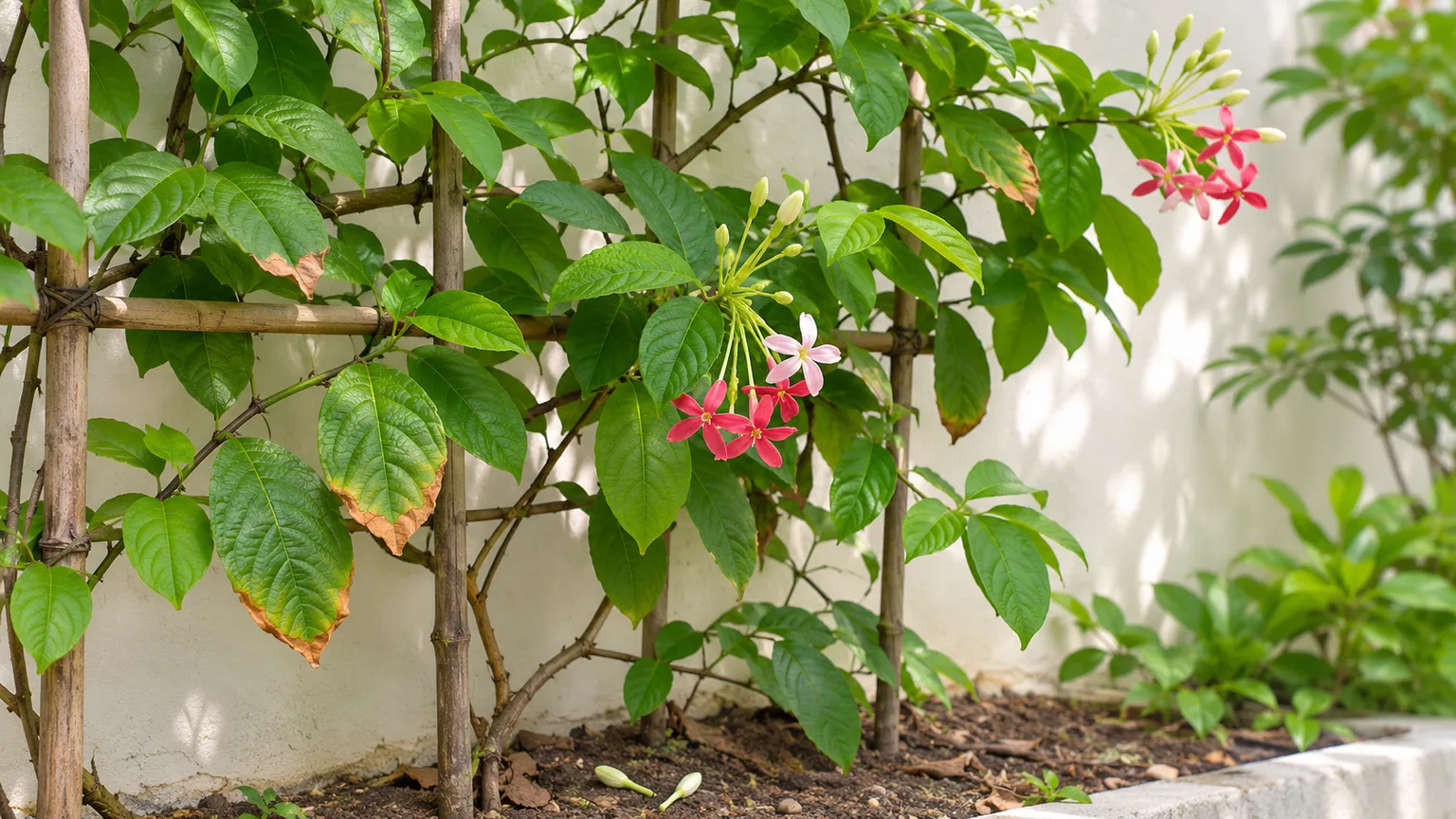
Low Humidity on Rangoon Creeper: Causes, Checks & Fixes
This guide covers low humidity on Rangoon Creeper. See also the general Low Humidity guide, watering, and light pages for this plant.
Low Humidity on Rangoon Creeper: Causes, Checks & Fixes
Quick answer
Low humidity on Rangoon Creeper shows up as dry, papery brown margins on the lance-shaped leaves, buds that stall and drop, and new shoots that emerge smaller than the last flush. This plant is a fast-growing woody vine originally from tropical Asia where it grows on trees and along riverbanks, so long spells in heated indoor air, air-conditioned rooms, or hot drying wind push it outside what its foliage handles gracefully.
First fix: move the container out of direct dry airflow, water deeply until excess drains, and measure humidity at leaf level with a hygrometer. For how dry air stresses plants in general, see our low-humidity guide. On Rangoon Creeper specifically, the pattern usually traces back to placement and watering rhythm rather than a mysterious disease, and one relocation plus steady moisture tells you more than a week of misting.
What low humidity looks like on Rangoon Creeper
Damage starts at the leaf margins and tips, which turn tan to brown, feel crisp, and sometimes curl inward. The rest of the leaf often stays green and firm, and the vine keeps extending — a useful clue, because a plant with dead roots or severe disease usually stalls first. On a vine that grows up to 25 feet long and is native to Asia, the outer, most exposed leaves on the windward side of the trellis brown first while sheltered interior leaves stay clean.
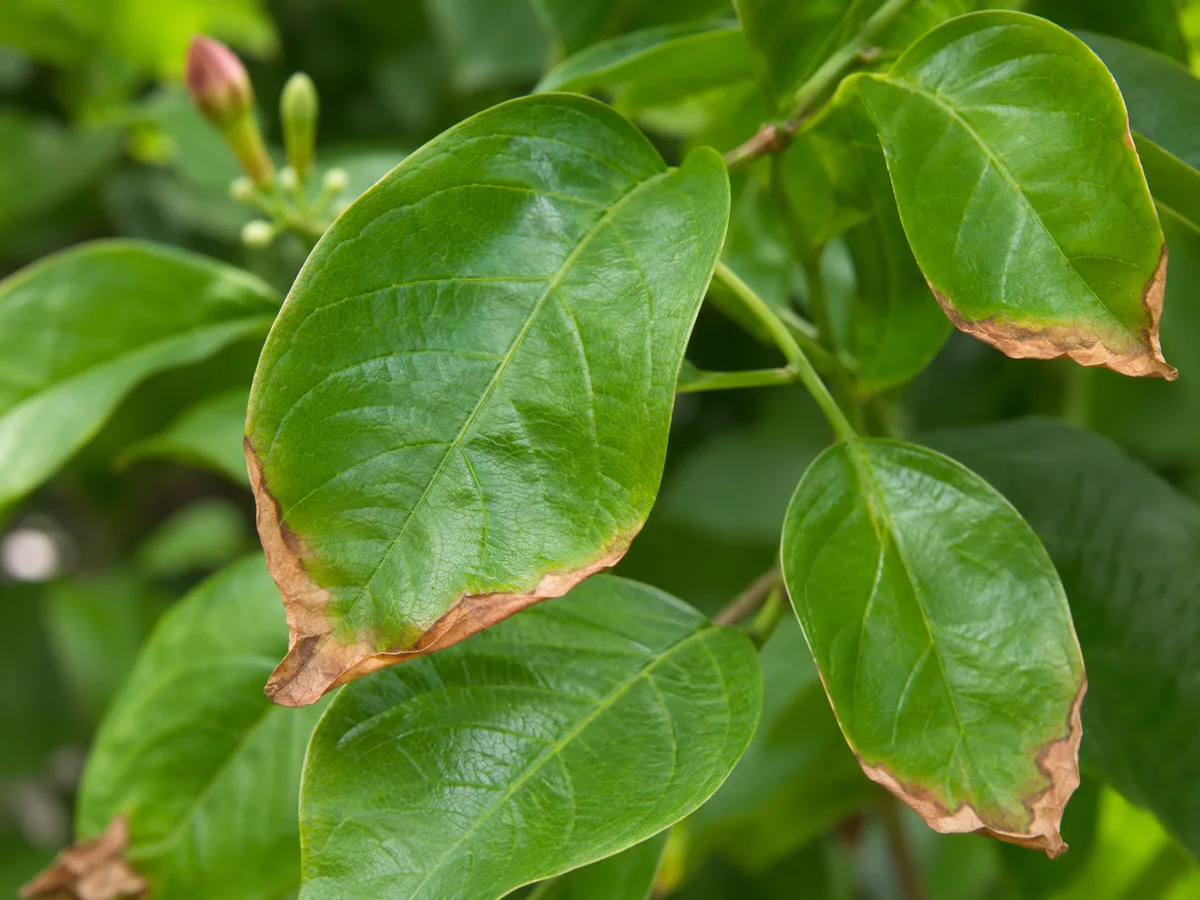
Dry-air damage starts at exposed leaf edges, while most of each leaf can remain green and firm.
Buds are the second tell. Flower clusters that should open white and age through pink to red may abort as small dry nubs during hot, dry spells, and fresh shoots unfurl undersized with pale edges. If instead whole leaves yellow and drop while the mix stays wet, or stems soften at the base, you are looking at a root-zone problem rather than dry air — cross-check with the watering guide before doing anything for humidity.
Why a tropical riverbank vine runs into dry air
Rangoon Creeper evolved for warm, moist, bright conditions: its recorded native range spans the Philippines, India and Malaysia with a preference for full sun, moderate water, and well-drained soils. A balcony container in a hot windy corridor, a patio beside a reflective wall, or a living room with winter heating all invert that bargain — bright and warm, but with air far drier than a tropical riverbank.
Containers amplify the problem. A woody vine in a pot carries a large transpiring leaf area over a small soil reservoir, so drying wind empties both the air and the root ball at once. Indoor overwintering is the other classic setup: the plant is cold hardy only in USDA zones 10 and 11 and defoliates with even light frost, so cold-climate growers bring pots inside just as heating drives indoor humidity down. That combination — tropical foliage plus heated dry air — is when margins crisp fastest.
Regrowth flushes after cold damage are especially vulnerable. Where freezes occur the vine dies back and resprouts, and those soft new shoots have thin cuticles that lose water quickly. Arkansas extension notes the roots survive in zone 8 in sheltered positions but the top freezes back below freezing, so spring regrowth often meets dry continental wind before it hardens.
How to confirm it is really humidity
Work through this order before changing anything:
- Map the airflow. Is there a heating vent, air conditioner outlet, or balcony wind corridor within a few feet? Damage concentrated on the side facing the draft points to dry air, not a uniform soil problem.
- Read humidity at leaf level. Place an inexpensive hygrometer among the foliage for a day and night. Sustained readings below about 40 percent alongside crisp margins support a humidity diagnosis; check the overnight low, since heating can crash humidity while you sleep.
- Check the root zone. Push a finger 2–3 cm into the mix. Evenly moist soil with crisp margins implicates the air; a bone-dry shrunken ball implicates watering rhythm instead.
- Look for salt crust. A white film on the mix surface or pot rim suggests fertilizer or hard-water salts, which burn tips in exactly the same pattern. Flush and adjust feeding rather than humidifying.
- Inspect leaf undersides. Fine stippling, dull bronzing, or wispy webbing means spider mites — a pest that thrives in dry air but needs its own treatment once confirmed.
If relocating the pot two to three feet away from the draft visibly slows new damage over two to three weeks, you found the cause without spending anything.
The first fix to try
Move the container out of the direct path of dry airflow and water it deeply once, letting excess escape through the drainage holes. That single relocation-plus-watering is the whole first fix: it removes the drying source and restores root-zone moisture at the same time, so the next flush of growth gives you a clean read on whether air was the problem.
Do not stack a repot, a hard prune, a fertilizer dose, and a pesticide spray onto the same day. Rangoon Creeper resents combined shocks, and bundled treatments make it impossible to tell which change helped. Give the plant one to two weeks in its calmer position, then judge the newest shoots.
Raising humidity in ways that actually last
Misting feels productive but barely moves the needle: water sprayed on leaves evaporates within about four minutes, returning the air to exactly where it started. Treat misting as leaf cleaning, not climate control. Methods that genuinely hold moisture around the plant include grouping containers so transpiration is shared — Iowa State extension notes that grouping plants can raise humidity in their immediate vicinity — and running a small humidifier near, but not blasting directly onto, the foliage through dry months.
A pebble tray (pot standing above the waterline, never sitting in it) adds a modest local lift in still indoor air and suits a single overwintering pot. Outdoors on a windy terrace, windbreaks beat gadgets: shift the trellis pot to the sheltered side of a wall, cluster it with other containers, and mulch the surface to slow soil drying. Keep air moving gently rather than stagnant, since wet, still air on damaged margins invites fungus.
Step-by-step recovery
Once the plant sits in calmer air with steady moisture, recovery is mostly patience plus hygiene. Trim only fully dead brown tissue with clean scissors, leaving a sliver of the dry margin so you do not wound living leaf. Clear fallen buds and spent leaves from the pot surface so they do not trap moisture against the stems.
Hold fertilizer until new shoots emerge clean and hold their color for at least two weeks — feeding a stressed vine pushes soft growth that crisps again. Resume the normal rhythm from the watering guide: deep soaks when the top 2–3 cm dry out, saucers emptied, lighter frequency as growth slows in cool weather. Train the recovering shoots loosely onto their support so air circulates instead of matting wet foliage together.
Recovery timeline
Existing brown margins will never regreen — once a leaf tip has turned brown and dry, that tissue is dead, and the goal is protecting everything newer. Expect the spread to halt within one to two weeks of relocation, with clean new leaves appearing over the following two to four weeks in warm weather.
Buds are slower: clusters aborted during the dry spell will not revive, so judge flowering by the next round of buds holding to opening. If three weeks of calmer air and steady water produce no clean growth, recheck drainage and roots — something beyond humidity is involved.
Lookalike problems on Rangoon Creeper
Several issues mimic dry air on this vine. Underwatering also crisps margins, but adds limp shoots and a feather-light pot; overwatering yellows whole leaves while the mix stays soggy. Salt or fertilizer burn copies tip browning exactly — the white surface crust is the giveaway. Spider mites stipple and bronze the leaves and favor the same dry conditions, so always check undersides before blaming the air alone. Frost damage blackens soft shoot tips after cold nights rather than crisping margins evenly. If the pattern does not fit humidity after your checks, browse the full symptom list on the problems hub and match the closest pattern instead of forcing this diagnosis.
Mistakes to avoid
Do not answer dry air by drowning the roots — extra water cannot humidify leaves and soggy mix rots them. Do not fertilize a crisping vine hoping food will fix the foliage; salts worsen tip burn. Do not rely on misting several times a day while the pot sits in front of a heater vent; you are treating the symptom for four minutes at a time while the cause runs all day. And do not strip every damaged leaf at once — partially brown leaves still photosynthesize, and a hard defoliation on top of environmental stress sets the vine back further.
Trellis placement and the vine microclimate
Because Rangoon Creeper climbs by hooks and sprawls across whatever it can grip, where you anchor the trellis decides its climate. A south- or west-facing wall gives the full sun it flowers best in, but bare windy corners on upper balconies desiccate foliage fast — tuck the pot behind a parapet, screen, or cluster of sturdier containers instead. In very hot regions, morning sun with light afternoon shade keeps blooms coming with less leaf scorch, a placement question the light guide helps settle.
Soil and pot choice matter as much as position. The fertile but free-draining loam described in the soil guide holds even moisture without waterlogging, which buffers leaves against short dry spells. Oversized heavy pots dry more slowly than small black nursery cans baking on concrete — another quiet humidity lever most growers overlook.
How to prevent it next time
Site new plants with wind in mind from day one: sheltered sunny wall, grouped containers, mulch on the surface. Track the seasons — bring pots in before frost, but park them away from heating vents and run the humidifier from the start rather than after margins brown. Keep the watering rhythm tied to the top-centimeters check rather than the calendar, and flush the mix occasionally if your tap water is hard. A weekly glance at leaf margins catches the next dry spell while it is still one leaf, not twenty.
When to use this page vs other Rangoon Creeper guides
Use this page when margins and tips crisp on otherwise green leaves, buds abort in dry heat or heated rooms, and the pattern follows drafts or seasonal heating. Reach for the main Rangoon Creeper hub when you need the whole care picture — sun, support, pruning, and feeding — rather than one symptom. If leaves yellow widely, stems soften, or the mix smells sour, the watering and root guides outrank this one.
When to worry
Treat it as urgent when new shoots crisp within days of emerging, buds abort flush after flush, or damage spreads across several leaves at once. The red flag combination is rapid browning plus visible pests, soft stems, or a root ball that stays wet and smells off — that means mites, rot, or cold damage riding alongside dry air. A single crisp margin on an old leaf of an otherwise vigorous vine is cosmetic; prune it and carry on.
Related Rangoon Creeper guides
- Rangoon Creeper hub — full care picture: sun, support, pruning, and flowering rhythm. Start here when several things look off at once.
- Problems hub — symptom matcher for every documented issue on this vine. Use it when the damage pattern does not fit dry air.
- Watering guide — deep-soak rhythm and drainage checks. Use it when soil moisture, not air, looks like the driver.
- Light guide — sun placement and shade trade-offs. Use it when flowering is weak or scorch overlaps the crisping.
- Soil guide — fertile free-draining mix and potting choices. Use it when the mix dries too fast or stays soggy.
Related tool
Use the Humidity Calculator to narrow causes for low humidity on this plant before changing multiple variables at once.