Yellow Leaves on Rangoon Creeper: Causes, Checks & Fixes
Quick answer
Yellow leaves on Rangoon Creeper most often mean too much water in a poorly draining pot, heat-driven underwatering, or weak light on a vine that wants full sun. First fix: push a finger 2 to 3 cm into the mix. If it feels wet, let it dry and empty the saucer. If it feels dry, soak thoroughly until water drains freely.
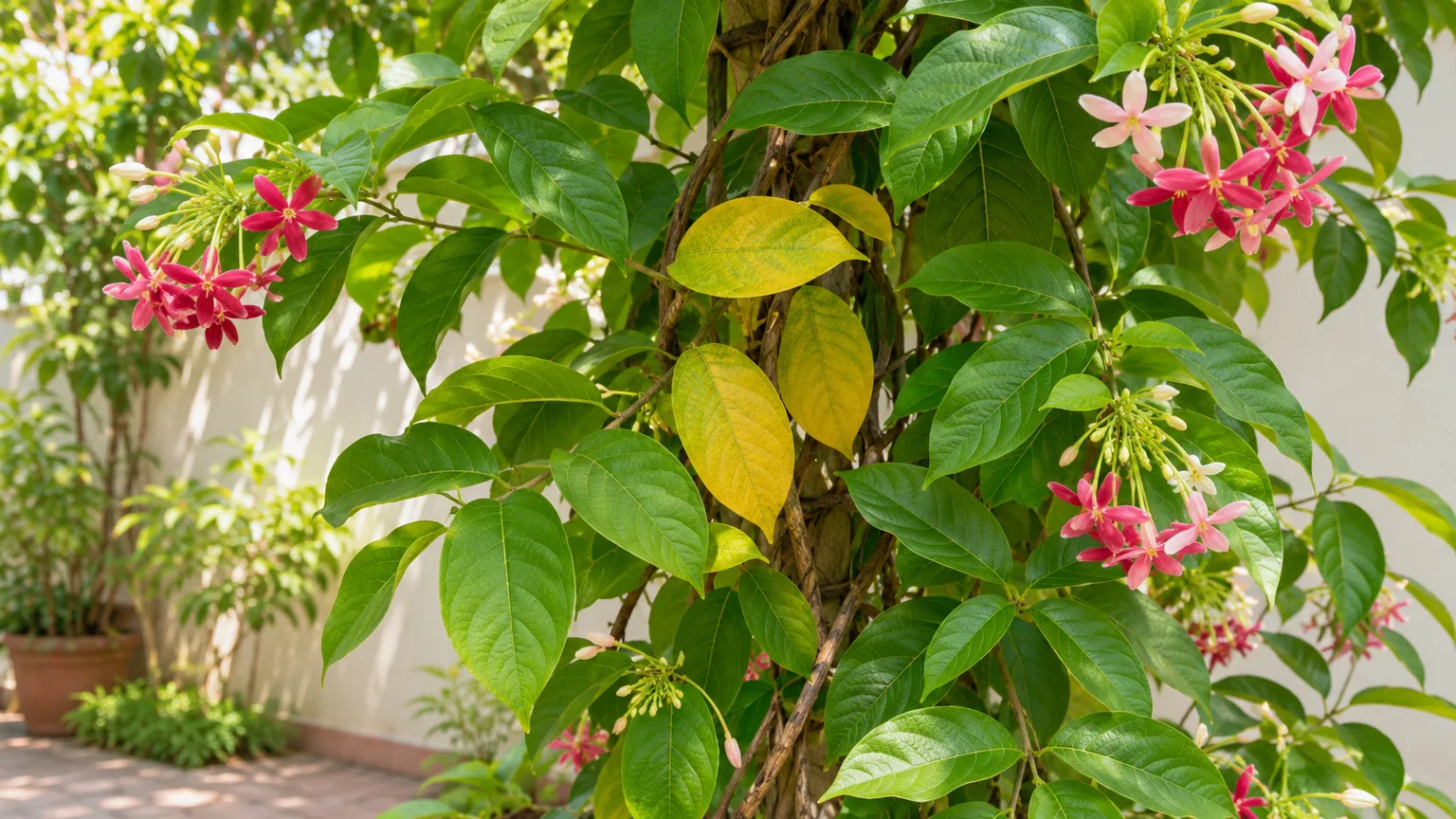
Yellow Leaves on Rangoon Creeper: Causes, Checks & Fixes
This guide covers yellow leaves on Rangoon Creeper. See also the general Yellow Leaves guide, watering, and light pages for this plant.
Yellow Leaves on Rangoon Creeper: Causes, Checks & Fixes
Quick answer
Yellow leaves on Rangoon Creeper (Combretum indicum, still widely sold as Quisqualis indica) most often trace back to water: a container mix that stays soggy, or a fast-growing vine that drinks its pot dry between hot days. Weak light and seasonal leaf shedding in cool weather come next, with nutrient lockout and pests further down the list.
First fix: push a finger 2 to 3 cm into the mix. If it feels wet, hold off watering, empty the saucer, and let the surface dry before the next soak. If it feels dry and the pot feels light, water deeply until it drains freely, then empty the saucer. Make that one correction and watch the next flush of growth before changing anything else.
What yellow leaves look like on Rangoon Creeper
This is a vigorous woody vine with opposite, elliptic leaves on twining stems, and its yellowing patterns read differently from a compact houseplant. Overwatered vines yellow broadly across many leaves at once, often with soft growth and leaf drop while the mix is still damp. Heat-stressed, underwatered vines yellow from the leaf edges inward, with limp young shoots, crisp brown margins, and buds or flowers dropping first.
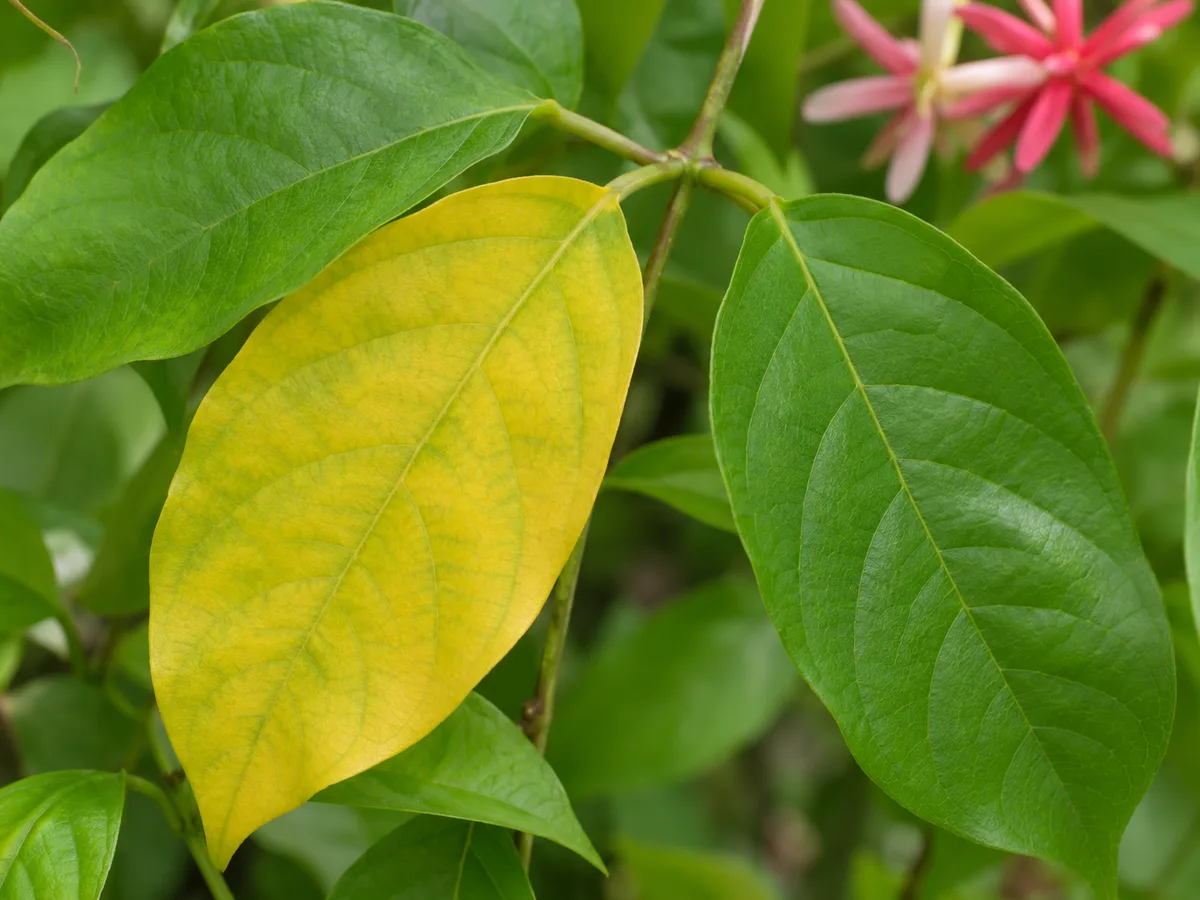
Older interior leaves may yellow with water stress, shade, or seasonal shedding; check soil moisture and the pattern across the vine before choosing a fix.
Pale new leaves with green veins point toward iron-type chlorosis rather than a watering fault. Lower-leaf yellowing alone, especially as nights cool, is frequently the vine shedding older foliage before a rest period. Rangoon Creeper is officially recorded for full sun and moderate water, so when the whole canopy pales in shade, light belongs at the top of the suspect list.
Why Rangoon Creeper leaves turn yellow
For how leaf yellowing works in plants generally, see our yellow leaves guide. On Rangoon Creeper, the pattern usually shows up through the six causes below, ordered by how often they strike this particular vine.
Too much water in a heavy or blocked pot
Container Rangoon Creepers are classic overwatering victims. The vine wants even moisture while establishing, but its roots must never sit waterlogged, and large pots with compost-rich mix can hold water far longer than the owner expects. Roots in saturated mix cannot absorb the oxygen they need, then die and rot, cutting off the whole canopy. Botanical garden diagnostics note that stunted slow growth with yellowing leaves is a symptom of over-watering.
Suspect this when many leaves yellow together, the stem base softens, the soil smells sour, or leaves fall while the mix is wet. Cachepots without drainage, blocked holes, and saucers left full are the usual accomplices. Review your rhythm against the Rangoon Creeper watering guide before deciding the plant needs anything stronger than air.
Too little water during hot active growth
The same vine that rots in soggy mix can parch in days during a heat wave. Summer containers in full sun transpire hard, and a root-bound plant may drink its pot dry daily while the owner waters on a cool-weather schedule. Regular watering matters most while the plant grows in heat, and underwatered vines announce it with limp shoots, crisp margins, and flower or bud drop ahead of full yellowing.
Suspect this when the mix pulls from the pot sides, the pot feels very light, and the worst leaves are at the sunniest, thirstiest end of the vine. A thorough soak that rehydrates the whole root ball, not a daily sprinkle, is the correction.
Weak light on a sun-demanding vine
Rangoon Creeper is not a shade vine that happens to flower. It needs at least five to six hours of direct sun to grow densely and bloom, and growers note that bloom is much more spectacular where there is more sun. Practical care references put the range at full sun to partial shade, with one detailed grow guide specifying six uninterrupted hours for reliable flowering.
In dim courtyards or behind other plants, the vine stretches long and leafy but pale, yellowing interior leaves it cannot afford to keep. If flowering has also collapsed while the stems keep reaching, light is the diagnosis. Compare placement against the Rangoon Creeper light guide and move the container before feeding anything.
Cool-season shedding and frost response
Some yellowing needs no treatment at all. This species is cold hardy only in the tropics and warm subtropics, and it will defoliate with the lightest of frosts, with roots surviving to resprout. As temperatures fall and growth slows, older leaves yellow and drop while the woody stems wait out the cool spell.
Treat this as normal when yellowing concentrates on older leaves, nights have turned cool, and stems stay firm with healthy buds. Cut watering back for the rest period instead of fertilizing a plant that is trying to sleep.
Nutrient lockout, alkaline mix, and salt build-up
Hungry-looking vines are usually locked out rather than unfed. Rangoon Creeper suits a slightly acidic to neutral mix around pH 6.0 to 7.5, and one grow guide specifies acidic to neutral soil for container plants. That range matters because micronutrient availability shifts with soil pH: iron, zinc, and manganese become hard for roots to take up as pH climbs, producing interveinal yellowing on the newest leaves first.
Two feeding mistakes compound the problem. Heavy nitrogen pushes leafy shoots at the expense of flowers, which is why experienced growers avoid fertilizers that are high in nitrogen around bloom time. And this vine is intolerant to soil salts, so repeated full-strength liquid feeds can burn root tips and yellow leaf margins. Check the Rangoon Creeper soil guide and the fertilizer guide before reaching for a stronger dose.
Sap-feeding pests
A vine covered in soft new growth invites sap feeders. Rangoon Creeper is documented as occasionally plagued by scale and caterpillars, and aphids, spider mites, and mealybugs also colonize the tender shoot tips and leaf undersides. Pest yellowing looks stippled or patchy rather than uniform, often with sticky residue, fine webbing, or visible bumps along stems.
Check shoot tips and leaf undersides with a lens before spraying. Small, early colonies come off by hand or with a firm water rinse, which keeps the vine’s fragrant flowers safer for the night pollinators that visit them.
How to confirm the cause
Work through these checks in order on the same day, and let the pattern name the cause:
- Finger test. Push a finger 2 to 3 cm into the mix. Wet plus yellowing means overwatering; dry plus crisp edges means underwatering.
- Pot weight and drainage. Lift the pot. Heavy and wet days after watering, water in the saucer, or nothing draining from the holes all point to soggy roots.
- Smell and stem base. Sour-smelling mix or a soft, darkened stem base confirms root-zone trouble rather than a light or nutrient issue.
- Which leaves. Oldest leaves only in cool weather suggests seasonal shedding. Newest leaves paling between green veins suggests pH-linked chlorosis. Patchy stippled leaves suggest pests.
- Light audit. Count direct-sun hours on the leaves. Under five hours with pale, stretched, flowerless growth confirms weak light.
- Recent history. A recent repot into dense mix, a fertilizer dose at full strength, or a move indoors before a cold snap each explain sudden yellowing on their own.
The first fix to try
Correct the watering error the finger test revealed, and nothing else yet.
If the mix is wet, skip the next watering, empty the saucer, and clear blocked drainage holes so the surface dries to 2 to 3 cm deep. If the mix is dry, soak the whole root ball until water flows freely from the holes, wait ten minutes, soak once more to rehydrate shrunken mix, then empty the saucer. For a severely root-bound pot that dries within a day, that thorough double soak is the single most useful action.
Give the vine one to two weeks after this correction. New shoots should emerge firm and green; if they do, the diagnosis was right and no spray, feed, or repot is needed.
Step-by-step recovery
Once the first fix is in and new growth looks promising:
- Trim spent yellow leaves. Snip fully yellow leaves at the petiole so the vine stops supporting dead tissue. Leave partly green leaves until the new flush hardens.
- Prune after the flush, not during stress. Shorten tangled or overlong stems after a flowering flush, when the vine rebounds fastest. Avoid hard pruning plus repotting in the same week.
- Refresh the surface. If water ponds on top, loosen the upper crust and top-dress with coarse compost and perlite or fine bark to reopen air channels without a full repot.
- Feed lightly and late. Only after watering and light are correct, apply a half-strength balanced feed during active warm growth. Where high pH is suspected, an iron chelate formulated for alkaline soils corrects interveinal chlorosis more reliably than extra general fertilizer.
- Treat pests narrowly. Dislodge early colonies with water or insecticidal soap aimed at the colony, then recheck in five days. Reserve broader sprays for confirmed, spreading infestations.
Recovery timeline
Yellowed leaves will not turn deep green again. Recovery means the spread stops and new growth arrives clean.
| Phase | What to expect |
|---|---|
| Days 3 to 7 | No new yellowing; shoots feel firmer; soil dry-down returns to a normal rhythm |
| Weeks 2 to 3 | Fresh green shoot tips and small clean leaves emerge from nodes |
| Weeks 4 to 6 | New foliage hardens to full size; next flower buds form in strong sun |
| Cool season | Slower rebound; firm stems with resting buds are success, not failure |
Worsening signs: spreading yellow while the mix stays wet, blackening stem bases, sour soil, or new leaves emerging pale and distorted. Unpot and inspect roots if two or more appear together.
Lookalike symptoms to rule out
| Pattern | Leaves | Stems and soil | Likely cause | Next step |
|---|---|---|---|---|
| Broad yellowing, wet mix | Many leaves yellow at once | Heavy pot, full saucer, sour smell possible | Overwatering | Dry-down correction, this guide |
| Edge yellowing, dry mix | Crisp brown margins, bud drop | Light pot, mix shrunken from sides | Underwatering in heat | Deep double soak, this guide |
| Pale stretched canopy | Uniform pallor, few flowers | Long gaps between leaves | Weak light | Brighter placement, this guide |
| Older leaves only, cool nights | Lower-leaf drop | Firm stems, resting buds | Seasonal shedding | Reduce water, no feed |
| Green veins, yellow between | Newest leaves worst | pH above neutral, salty crust possible | Iron-type chlorosis | pH check, light feeding |
| Stippled patches, sticky film | Speckled or distorted tips | Visible insects, webbing, or bumps | Sap-feeding pests | Targeted removal |
| Brown dry tips only | Tip burn, rest green | Recent heavy feeding | Fertilizer or salt stress | Flush, pause feeding |
Mistakes to avoid
- Fertilizing a stressed vine. Extra nitrogen on struggling roots burns tips and pushes weak shoots. Fix water and light first.
- Stacking repot, prune, and spray in one day. Each shocks the plant; combined they can finish a weakened vine. Space interventions a week or more apart.
- Watering by calendar. A vine that needs water every three days in summer may need ten in cool weather. The finger test beats any schedule.
- Force-feeding iron without checking pH. If alkaline mix locks nutrients out, more general fertilizer salts the problem. Test pH, then use a chelated form if needed.
- Treating seasonal shedding as disease. Defoliating a cool-resting vine with sprays wastes money and risks the buds that carry next season’s flowers.
How to prevent it next time
Site the vine where it earns its sun: a trellis, pergola, or sunny boundary with at least five to six hours of direct light. Plant in fertile loam that drains freely, in the largest stable pot the support can carry, and keep the mix near pH 6.0 to 7.5. Water when the top 2 to 3 cm dries, always draining and emptying the saucer, and ease off as cool weather slows growth. Feed modestly in the warm growing season, prune after major flowering flushes, and walk the vine weekly so pests, salt crusts, and blocked holes get caught while they are small.
When to worry
Worry when yellowing spreads across the canopy within days, stems soften or blacken at the base, or the root ball smells sour. Those point to advanced root damage and need unpotting, trimming of mushy roots, and repotting into fresh free-draining mix. A vine that loses every leaf but keeps firm green-wood stems can still resprout from the base in warmth, so keep the roots while there is firm wood above them. Give up only when stems are brittle or mushy from tip to soil line with no firm tissue left to regrow from.
Related Rangoon Creeper guides
Use this page for diagnosing and fixing yellow leaves. For the underlying care behind each cause:
- Rangoon Creeper hub - species baseline, growth habit, and support needs
- Rangoon Creeper watering - soil-check method and seasonal rhythm
- Rangoon Creeper light - sun hours and placement for flowering
- Rangoon Creeper soil - free-draining mix and pH range
- Rangoon Creeper fertilizer - light feeding and nitrogen caution
- Rangoon Creeper problems - full problem index when symptoms overlap
Related tool
Use the Yellow Leaves Diagnosis Tool to narrow causes for yellow leaves on this plant before changing multiple variables at once.