Mold on Soil on Rangoon Creeper: Causes, Checks & Fixes
Quick answer
White or gray fuzz on Rangoon Creeper soil is usually harmless surface fungus feeding on damp, compost-rich mix. Scrape off the top layer, let the surface dry before watering again, and fix the wet, airless conditions that grew it.
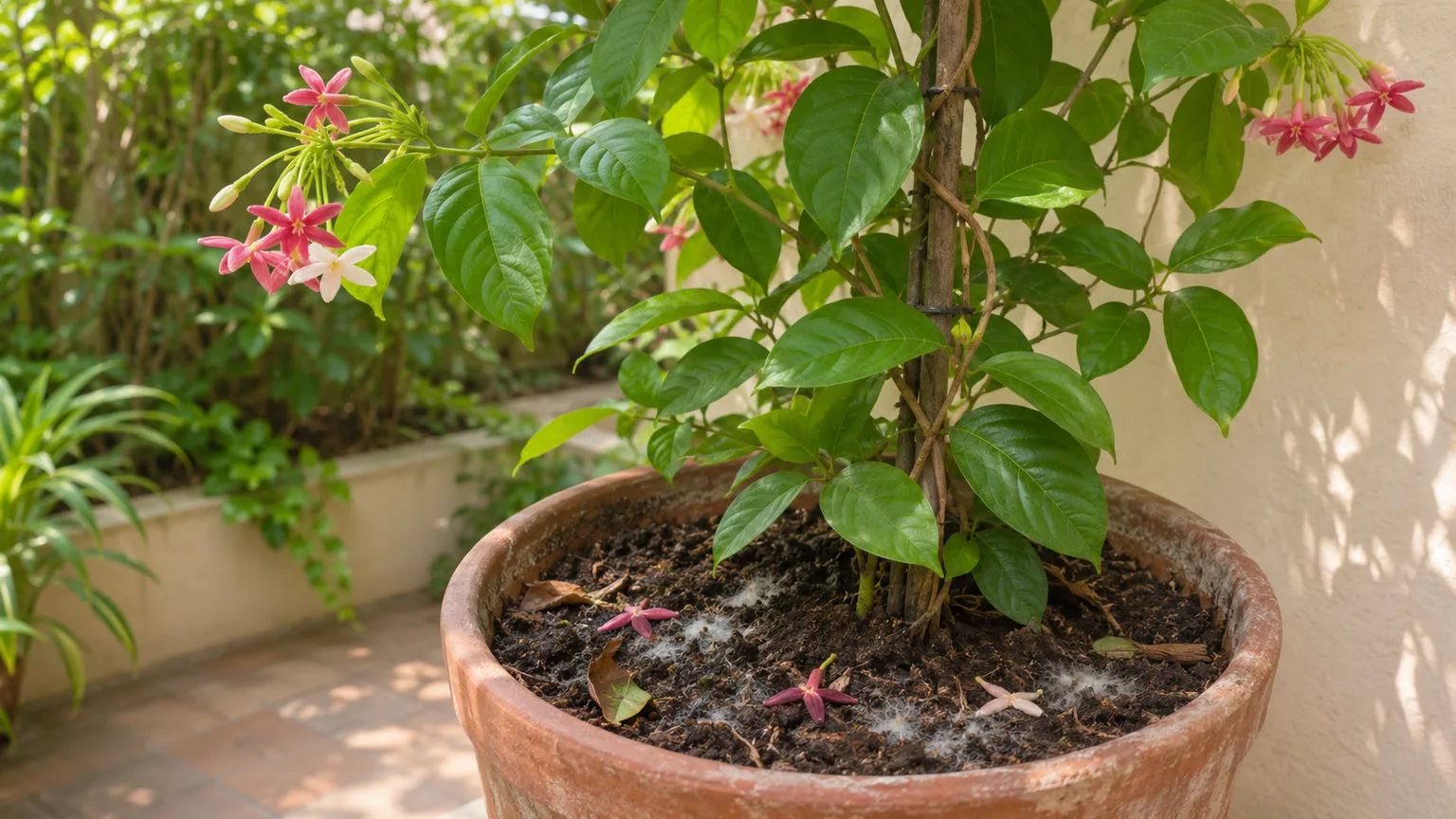
Mold on Soil on Rangoon Creeper: Causes, Checks & Fixes
This guide covers mold on soil on Rangoon Creeper. See also the general Mold on Soil guide, watering, and light pages for this plant.
Mold on Soil on Rangoon Creeper: Causes, Checks & Fixes
Quick answer
You watered your Madhumalti, glanced at the pot, and found a white or gray fuzzy film across the soil. On Rangoon Creeper this is almost always surface fungus feeding on a damp, compost-rich mix, not a disease attacking the vine itself. First step: scrape off the top centimetre of affected soil with a spoon and let the surface dry before watering again. If stems are firm and leaves look normal, you are correcting a moisture habit, not rescuing a dying plant.
What mold on soil looks like on Rangoon Creeper
Healthy Rangoon Creeper pots develop a pale, dry crust on the surface between waterings. Mold looks different: soft white, gray, or off-white fuzzy patches spreading across the top of the mix, often appearing a day or two after watering. The vine above usually looks completely fine at first, with firm stems and normal leaves.
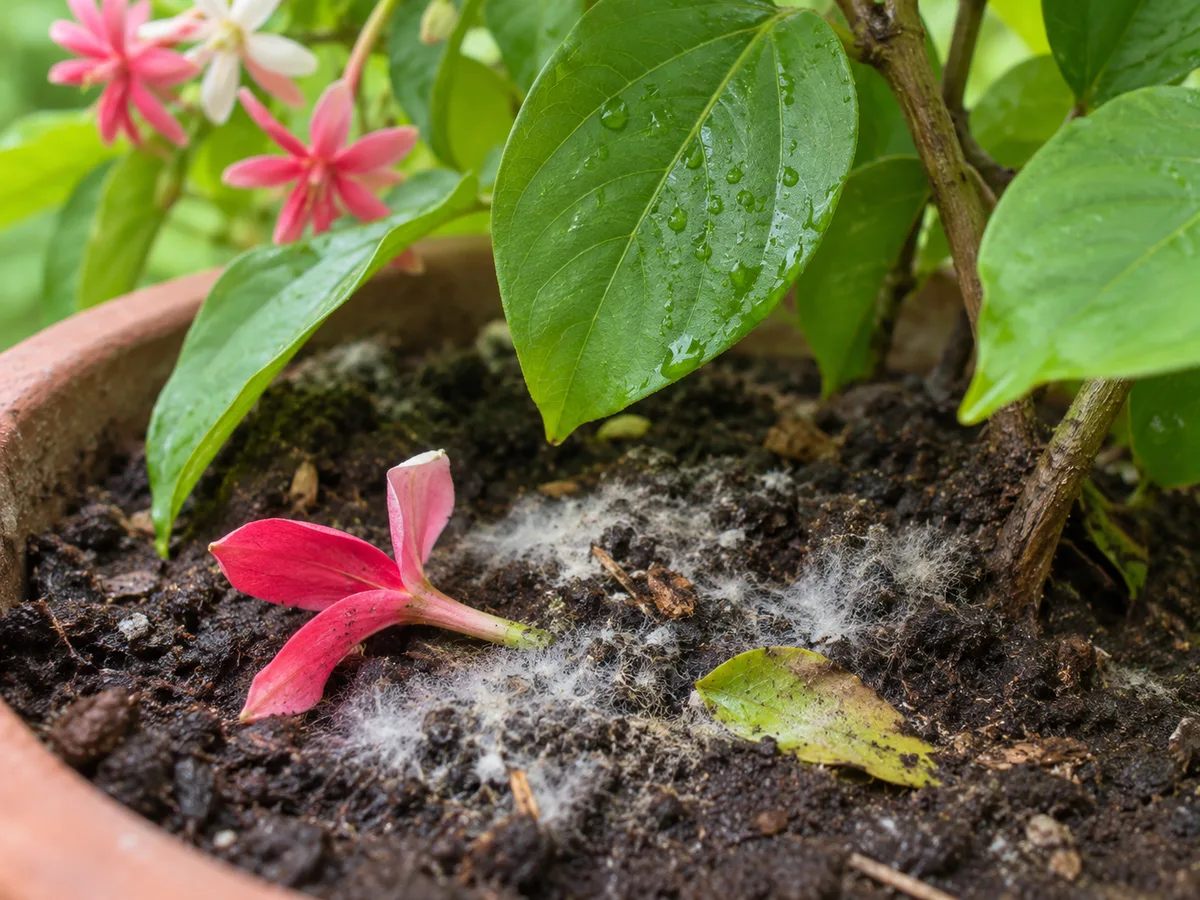
Soft white-gray fuzz on the soil surface, with healthy Rangoon Creeper stems above, usually signals excess surface moisture rather than vine disease.
Because this vine is grown for its fragrant flower clusters that open white and age through pink to red, fallen spent blooms and leaves often collect on the pot surface. That debris is prime fungal food, so mold on a Madhumalti pot frequently starts exactly where petals and leaf litter sit against damp compost. For how surface mold behaves on houseplant soils in general, see our mold on soil guide. On Rangoon Creeper, the pattern usually shows up as fuzz over debris-rich compost mix in an oversized or poorly drained container.
Why a compost-rich Madhumalti pot grows mold so easily
Rangoon Creeper (Combretum indicum) is a fast-growing woody vine, and growers feed that appetite with fertile, organic-heavy potting mix. The standard container blend for this plant runs about half potting mix with a large compost fraction plus coarse aeration material. That compost is excellent vine fuel, but it is also a buffet for decomposer fungi. The white fuzz you see is typically saprotrophic fungi breaking down dead organic matter in the mix, a normal recycling process that becomes visible when the surface never dries.
Kew describes this species as a climber of the wet tropical biome, so growers often keep its root zone generously moist, especially through hot summers when the vine drinks heavily. The trouble starts when generous watering continues into cooler spells, monsoon weeks, or slow-growth periods when the plant uses far less water. The compost stays wet, spores already present in the mix germinate, and the colony spreads across the surface within days.
Monsoon balconies and big pots: Rangoon Creeper’s mold trap
Three features of typical Madhumalti culture combine into a mold trap that other plants rarely face.
Heavy monsoon and balcony exposure. Rangoon Creeper usually lives outdoors on a sunny balcony, terrace, or courtyard tied to a trellis. During rainy weeks the pot takes repeated soakings with no dry interval, and roof runoff can add water the grower never scheduled. A surface that would dry in two days under summer sun stays continuously damp for a fortnight.
Oversized containers. A mature vine needs a large, stable pot so it does not topple, but a young plant in a large tub sits in a big volume of unused mix that dries very slowly. The surface stays moist long after the root ball has had enough, which is exactly the window surface fungi need.
Still, humid corners. Vines trained dense against a wall or crowded with neighbouring pots get little airflow at soil level. Editorial gardening guidance notes that increasing air circulation around plants helps keep mold growth at bay, because stagnant air lets humidity and spores build up over the surface.
How to confirm the cause
Work through these checks in order before changing soil or reaching for sprays:
- Surface moisture test. Press a finger into the top few centimetres. If it feels cool and clings to your skin several days after watering, the surface is staying wet long enough to grow fungus.
- Pot weight. Lift the container. A heavy pot long after watering means saturation through the whole column, not just a damp surface.
- Saucer and drainage check. Look for standing water in the saucer and confirm every drainage hole runs freely. Good container media need open pore space and working drainage, and blocked holes undo even a well-built mix.
- Debris layer. Note whether fuzz concentrates under fallen flowers, dead leaves, or mulch. Mold anchored to debris with dryish soil beneath is a surface feeding issue more than a watering emergency.
- Stem base and smell. Feel the stem where it meets the soil and sniff the pot. Firm wood with an earthy smell points to cosmetic surface mold. A soft or darkened stem base, yellowing leaves dropping while the mix is wet, or a sour swampy smell points to root-zone decay. Prolonged saturation creates conditions that favour Phytophthora root and crown rots, so a sour pot deserves root inspection, not another scrape.
- Gnat check. Tiny dark flies rising when you disturb the surface mean fungus gnats sharing the same damp habitat, manageable chiefly by correcting watering so the surface dries.
If stems are woody and firm, leaves are green, and the pot smells earthy, you are dealing with surface fungus on wet mix rather than vine disease.
First fix for Rangoon Creeper
Scrape off the top centimetre of moldy soil with a spoon, bag it, and bin it. Scraping the surface layer away with a spoon removes the visible colony and its food without disturbing the vine’s roots. Clear fallen petals and leaves off the surface at the same time, empty any saucer water, and move the pot out of direct rain if monsoon runoff is soaking it. Then hold water until the top 2-3 cm feels dry to a finger test.
This single action addresses both the symptom and its cause: the colony is gone and the surface finally gets the dry interval fungi cannot tolerate. Do not fertilize, repot, or spray anything on day one. One targeted correction lets you read the plant’s response clearly.
Step-by-step recovery
After the scrape and dry-down, follow the branch that matches what you found:
If mold was cosmetic and the vine looks healthy: wait until the top 2-3 cm is dry, then water deeply once and empty the saucer the same day. Resume the vine’s normal rhythm of deep watering when the surface layer dries, checked by finger rather than calendar. Full guidance lives in the Rangoon Creeper watering guide.
If mold returns within a week: the mix itself is holding too much water. Scrape again, replace the top few centimetres with dry, open mix containing perlite or fine bark, and confirm drainage holes are clear. When the whole column stays soggy and drainage is poor, starting fresh with new mix at repotting time is the simplest reset. The Rangoon Creeper soil guide covers the open, compost-balanced blend this vine needs.
If fungus gnats appear with mold: let the surface dry thoroughly between waterings to break the gnat cycle, remove surface debris so larvae have less to feed on, and use yellow sticky traps for adults while the soil dries.
If soil smells sour or the stem base softens: stop surface fixes. Unpot during warm growing weather, trim brown mushy roots back to firm white tissue, and repot into fresh open mix. Mold was the visible tip of a deeper saturation failure.
Mistakes to avoid
- Scraping without changing watering. The colony returns within days if the surface stays damp.
- Spraying cinnamon, peroxide, or fungicide first. Surface treatments do not fix drainage or watering rhythm. Correct moisture before chemistry.
- Watering on a fixed schedule through rain or cool spells. A vine that drinks every few days in hot sun may need nothing for a week or more during monsoon or winter slowdown.
- Piling mulch or fresh compost over mold. More undecomposed organic matter on a wet surface feeds the next bloom.
- Repot shock on day one for mild mold. Repotting a stressed, wet root ball into dense garden soil trades one problem for another. Reserve repotting for recurring mold, collapsed structure, or confirmed root decay.
- Ignoring a sour smell. Earthy is normal; sour or rotten means anaerobic decay that scraping cannot fix.
Recovery timeline
Surface mold usually stops returning within one to two weeks once the top layer dries properly between waterings. Expect a lighter pot before each watering, no new fuzzy growth, and continued firm green growth from shoot tips. Rangoon Creeper is fast in warm weather, so healthy vines show their recovery clearly through new leaves and buds.
Escalate when mold reappears within days of two consecutive scrapes, gnats multiply, or leaves yellow and drop while the mix stays wet. Those patterns mean the moisture fix is incomplete or roots are already damaged.
How to prevent it next time
Build the routine around this vine’s actual thirst. Check the top 2-3 cm with a finger and water deeply only when it reads dry, then empty the saucer. Keep the mix open with perlite or fine bark so it drains after heavy rain, and raise pots on feet during monsoon so holes stay clear. Site the vine where it gets at least five to six hours of direct sun with moving air; strong light both powers flowering and dries the surface between drinks, as the Rangoon Creeper light guide explains. Clear spent flowers and fallen leaves from the pot surface weekly so fungi lose their easiest food.
When to worry
Treat mold as urgent when it teams up with sour-smelling soil, a soft dark stem base, rapid leaf yellowing and drop on wet mix, or repeated return after proper dry-downs. Those combinations point to root-zone decay in a woody plant that cannot regrow its framework overnight. Inspect roots promptly in warm weather and be ready to prune decayed tissue and refresh the mix. If the vine is firm, green, and sweet-smelling with only surface fuzz, stay calm and fix the moisture habit. Browse the full Rangoon Creeper problems hub when symptoms overlap or you need to compare with other issues on this vine.
FAQs
How can I confirm mold on Rangoon Creeper soil is not root rot?
Surface mold sits on the top layer while stems stay firm and leaves stay green. Root trouble shows sour-smelling soil, yellowing leaves that drop while the mix is still wet, or a soft dark stem base. If the pot smells sour or the stem base softens, inspect the roots instead of scraping again.
What should I check first when I see mold on my Madhumalti pot?
Push a finger into the top few centimetres, lift the pot to judge its weight, and check whether the saucer holds standing water. Damp surface days after watering plus a heavy pot points to overwatering and poor drainage, which are the usual drivers on this vine.
Will moldy soil stop my Rangoon Creeper from flowering?
The surface fungus itself does not stop flowering, but the constantly wet soil behind it can weaken roots and reduce vigour during the warm growing season. Fixing drainage and watering rhythm protects the strong growth that flowering depends on.
When is mold on Rangoon Creeper soil urgent?
Treat it as urgent when mold returns within days of scraping, fungus gnats swarm the pot, soil smells sour, or leaves yellow and drop while the mix stays wet. Those signs mean the root zone may already be decaying and need same-week attention.
How do I prevent mold on Rangoon Creeper soil long term?
Water only when the top 2-3 cm feels dry, empty the saucer after every watering, keep the mix open with coarse material, and give the vine strong sun and airflow so the surface dries between drinks. Clear fallen flowers and leaves off the pot surface promptly.
Related Rangoon Creeper guides
- Watering — deep-watering rhythm and finger-test checks after mold clears
- Soil — open compost-balanced mix that drains yet feeds a woody vine
- Light — sun exposure that dries the surface and powers flowering
- All Rangoon Creeper problems
Related tool
Use the Plant Problem Diagnosis Tool to narrow causes for mold on soil on this plant before changing multiple variables at once.