Aphids on Scindapsus Treubii Dark Form: Causes, Checks &
Quick answer
Aphids on Scindapsus Treubii Dark Form gather on vine tips, unfurling leaves, and leaf undersides, leaving sticky honeydew and curled new growth. First step: isolate the plant and rinse every colony off with a firm stream of water, then recheck in 3 to 4 days before using any spray.
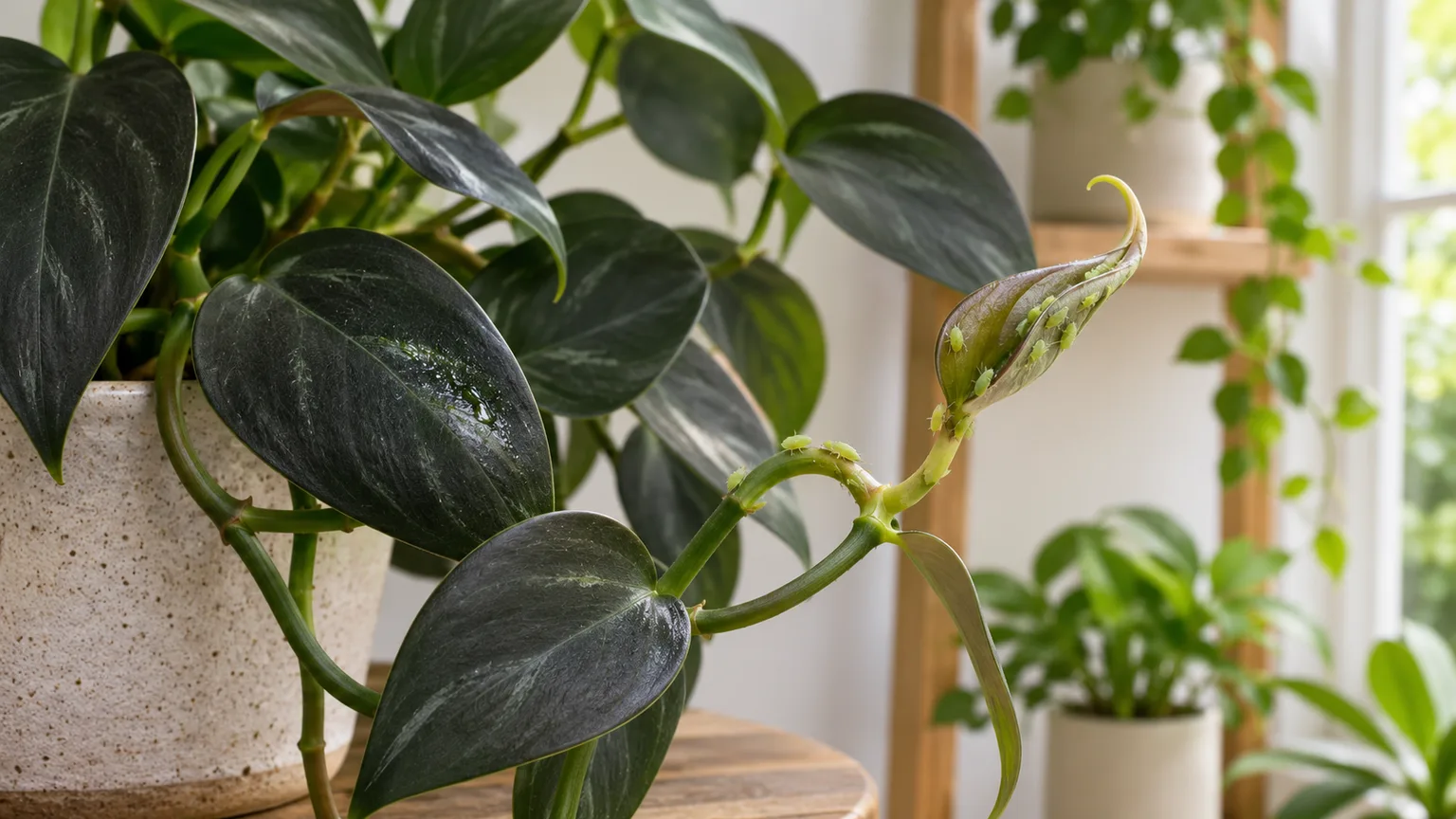
Aphids on Scindapsus Treubii Dark Form: Causes, Checks & Fixes
This guide covers aphids on Scindapsus Treubii Dark Form. See also the general Aphids guide, watering, and light pages for this plant.
Aphids on Scindapsus Treubii Dark Form: Causes, Checks & Fixes
Quick answer
Aphids on Scindapsus Treubii Dark Form gather on vine tips, unfurling leaves, and leaf undersides, leaving sticky honeydew and curled new growth. First step: isolate the plant and rinse every colony off with a firm stream of water, then recheck in 3 to 4 days before using any spray.
For the general mechanics of aphid feeding and spread, see our aphid pest guide. On Treubii Dark Form specifically, the problem shows up at the growing tips first, and the near-black leaves make sticky residue easy to spot once you know where to look.
What aphids look like on Treubii Dark Form
Aphids are sap-sucking true bugs ranging from about 1 to 7 mm long, in green, black, yellow, pink, or mottled shades. On this plant they appear as tight clusters of tiny pear-shaped insects, often with white shed skins stuck nearby.
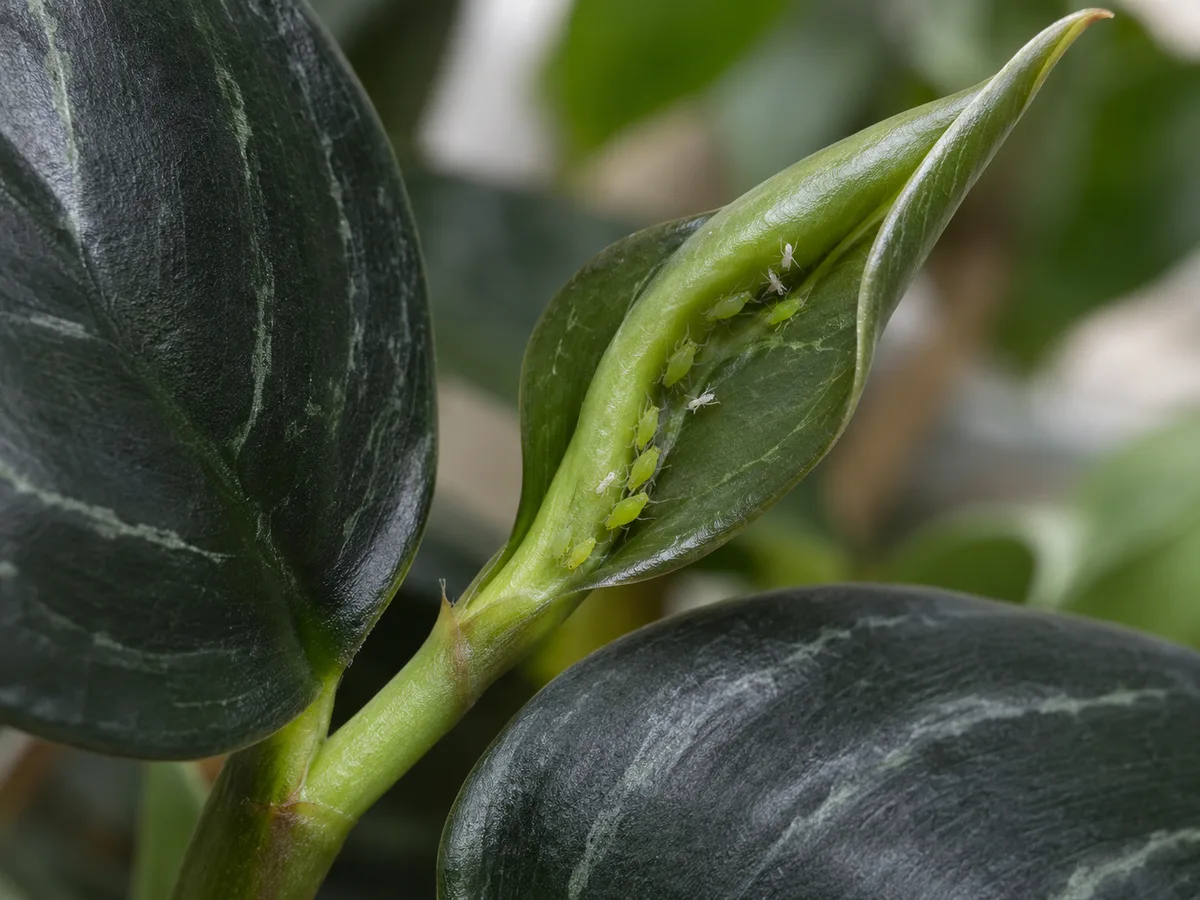
Aphids and shed skins cluster along the soft seam of a new Treubii Dark Form leaf.
NC State describes Treubii Dark Form as having thick, glossy, very dark leaves and a slow growth rate. Check three places in order: the soft vine tips, the seams of half-unfurled leaves, and the undersides of the youngest expanded leaves. Aphids cluster on new growth and leaf undersides, and curled or stunted tips can be an early sign. A sticky sheen on the dark leaf surface may be noticeable before you spot the insects themselves.
Why this plant gets aphids
Aphids feed on plant sap and are often found on soft new growth, so inspect each new vine tip as it appears. This is especially useful on a slow-growing Treubii Dark Form, where a small colony can be easy to overlook.
Indoors, aphids can remain active all year round, so keep checking through every season. A recently purchased plant or cutting is one possible route of introduction; inspect nearby plants as well, especially when their foliage touches. The Treubii Dark Form overview covers its normal care, but good care does not prevent pests arriving from elsewhere.
How to confirm the diagnosis
Work in this order:
- Examine vine tips with the naked eye, then a 10x loupe. Aphids are small, soft-bodied, pear-shaped insects; compare their shape with the clustered insects shown in the houseplant aphid identification guide.
- Unfold suspect young leaves gently and check the seams where aphids wedge themselves.
- Feel the leaf surface for stickiness and look for black films of sooty mold. Aphid feeding produces honeydew on which sooty moulds can grow, and that sticky residue plus sooty mold on plants signals an active infestation.
- Distinguish from lookalikes: mealybugs can leave fluffy white wax in leaf axils, while thrips feeding can cause silvery-white leaf discoloration. Confirm aphids by finding live, pear-shaped insects in clusters before spraying.
If you find only white cast skins with no live insects, keep watching but do not spray yet; old skins persist after a colony has been washed away.
The first fix to try
Isolate the plant and rinse every colony off with a firm stream of lukewarm water. Hold each vine so the spray hits the tips and leaf undersides directly, and use fingers or a soft cloth to dislodge insects wedged in unfurling leaves. A strong stream of water to rinse off adults and nymphs kills nothing chemically but physically removes most of the colony, which is the safest opening move on slow-growing foliage.
Do not prune tips, repot, fertilize, or spray on the same day. Make this one change, then recheck every vine tip in 3 to 4 days. A thorough rinse can remove many visible aphids from a light infestation; inspect again and repeat if live insects remain.
Step-by-step recovery
If live colonies remain after two rinses, consider a commercial insecticidal soap labeled for aphids and indoor plants. Follow its label exactly and test it on a small area first; avoid homemade dish-soap mixtures. Soap must contact the insects, so cover vine tips and leaf undersides as directed. The houseplant aphid treatment guide describes focused application and repeat treatments.
Repeat treatment every few days until the infestation is under control, inspecting before each application. Between sprays, wipe honeydew off the dark leaves with a damp cloth so light reaches the surface; sticky films collect dust and can support sooty mold that blocks photosynthesis.
Prune only tips that are dead, blackened, or so distorted they cannot photosynthesize. This plant replaces vine tips slowly, so keep every viable node and let clean new growth emerge rather than cutting back hard.
Where aphids hide on trailing Treubii vines
Use the trailing vines as an inspection map. Lift each strand, separate tangled sections, and check the points where leaves touch neighboring foliage or pots.
The thick leaves also hide the underside colonies that do the most damage. Flip every leaf near an affected tip rather than scanning from above; the dark upper surface can look perfect while the underside carries a full colony.
Why slow, dark growth changes the inspection
Treubii Dark Form grows slowly, so a damaged tip is not replaced in days. That makes early detection worth more here than on a fast pothos: one missed colony at a tip can distort a month of growth.
The dark leaf color is a diagnostic advantage. Honeydew shows as a glossy sheen under a lamp, and sooty mold reads as a dull gray film on near-black tissue. Angle leaves toward the light during weekly checks and wipe anything that looks unusually shiny.
Recovery timeline
Judge progress by the inspections: no live clusters and no fresh honeydew after treatment are better signs than the appearance of already-damaged leaves. A curled leaf may remain misshapen, so judge recovery by the next clean growth rather than expecting damaged tissue to straighten.
Treubii Dark Form grows slowly, so replacement growth may take time. If fresh distortion or sticky residue continues, inspect neighboring plants and repeat the diagnosis before escalating treatment.
Mistakes to avoid
- Using homemade dish-soap mixes or applying any spray without checking its label. Use a product labeled for indoor plants and aphids, and test sprays on a few leaves first before treating the whole plant.
- Changing light, fertilizer, watering, and soil at the same time. Keep placement consistent with the Treubii Dark Form light guide and review the fertilizer notes, watering guide, and soil guide only if those care factors also look wrong.
How to prevent it next time
Quarantine every new plant for two to three weeks before it joins the shelf, and inspect cuttings before potting them up. Space trailing vines so tips do not rest on neighboring plants, and route vines upward on a support where you can see the undersides.
Keep care steady rather than swinging between drought and flood. If growth has stalled, recheck your watering rhythm and soggy-mix risk first, and run a weekly tip check: vine ends, unfurling seams, leaf undersides, then neighbors. For anything that does not match aphids, browse the Treubii Dark Form problems hub to route to the right guide.
Related Treubii Dark Form guides
- Treubii Dark Form overview — baseline care for light, water, and soil when growth looks off overall.
- Treubii Dark Form watering guide — use when sticky residue could be masking an overwatering slowdown instead.
- Treubii Dark Form problems hub — use when symptoms point to mealybugs, thrips, or mites rather than aphid colonies.
Related tool
Use the Pest Identifier Tool to narrow causes for aphids on this plant before changing multiple variables at once.