Leggy Growth on Scindapsus Treubii Dark Form: Causes
Quick answer
Leggy growth on Scindapsus Treubii Dark Form — long vines, wide gaps between leaves, and smaller new leaves — often points to insufficient light, though naturally trailing older vines can also look sparse. First, move it to a brighter spot with indirect light; prune and root bare sections only after checking that the stems and roots are healthy.
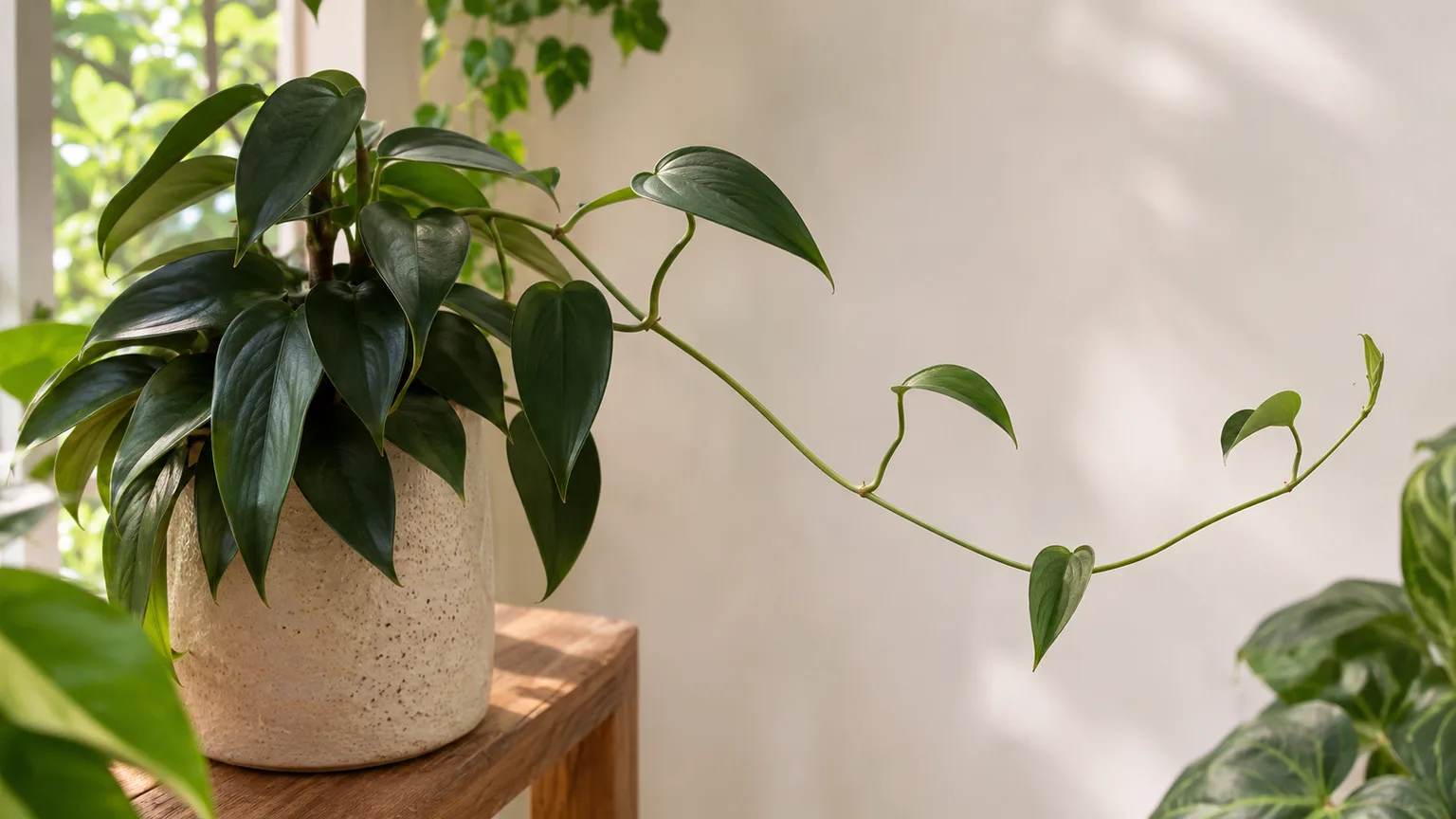
Leggy Growth on Scindapsus Treubii Dark Form: Causes, Checks & Fixes
This guide covers leggy growth on Scindapsus Treubii Dark Form. See also the general Leggy Growth guide, watering, and light pages for this plant.
Leggy Growth on Scindapsus Treubii Dark Form: Causes, Checks & Fixes
Quick answer
Leggy growth on Scindapsus Treubii Dark Form — long vines, wide gaps between leaves, and smaller new leaves — almost always means the plant is stretching for more light. First step: move it into medium to bright indirect light and prune the barest vine back to just above a node; root the cuttings to refill the pot.
For the general mechanics of why stems stretch in dim conditions, see our leggy growth guide. Everything below is specific to how this slow-growing, near-black trailing aroid behaves.
What leggy growth looks like on Dark Form
On this plant, legginess shows up as vines with long bare stretches between nodes, new leaves emerging noticeably smaller than older ones, and a duller charcoal tone instead of the usual satiny deep green. Its dark foliage still needs adequate indirect light for compact growth.
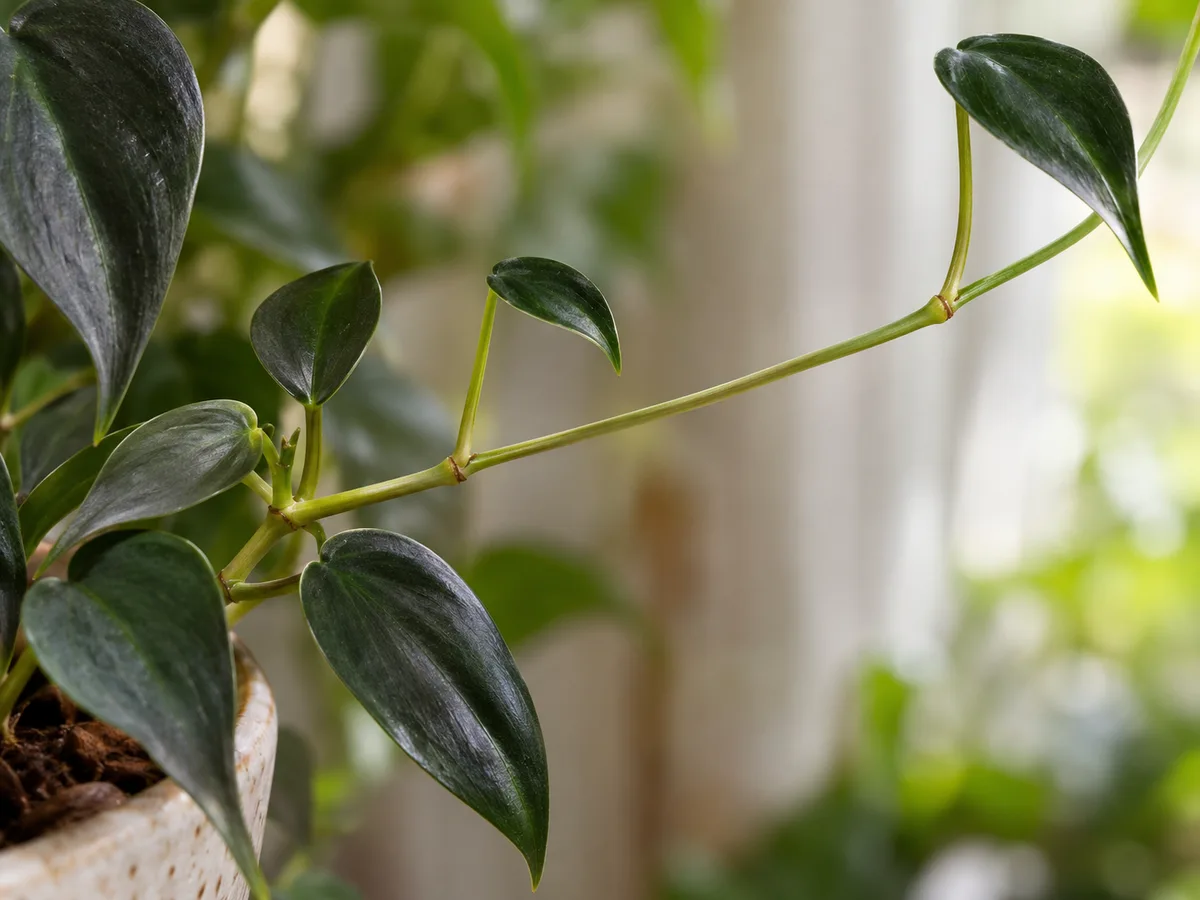
Long bare internodes and smaller, widely spaced leaves are visible signs of leggy growth.
A healthy Dark Form vine holds thick, closely spaced leaves along the stem. A light-starved one races outward with thin stems and sparse leaves, often growing fast in length while looking emptier — the plant spends energy reaching rather than filling in.
Why Scindapsus Treubii Dark Form gets leggy
The cause is usually simple: the plant sits where human eyes read the room as bright but the plant experiences it as dim. Corners several feet from a window, north-facing rooms in winter, and shelves under only ceiling lights are classic triggers. This species prefers bright indirect sunlight or filtered light, and while it can survive in low light, survival growth is exactly what looks leggy — slow, sparse, and poorly colored (HomeS Pursuit notes the color and vigor loss in low light).
Two secondary contributors matter on this plant. First, an unpruned vine: this is a trailing, vining, or climbing aroid that naturally runs, so a vine left to trail for a year or more will bare at the base even in decent light. Second, a winter light drop can expose a borderline placement as too dim. If your lighting setup has not changed but the vine stretched over winter, seasonal dimming is a likely trigger.
How to confirm the cause
Work through these checks in order before cutting anything:
- Map the light. Stand where the plant sits at midday: can it “see” a wide patch of sky without direct sun blasting the leaves? If not, light is suspect number one.
- Read the vine. Firm stems with evenly spaced but wide nodes and small leaves mean simple stretching toward light — the common, fixable case (stretching toward a light source widens node spacing). Soft, mushy, or yellowing stems point to wet roots instead.
- Check the pot. Lift it and probe the mix. Dark Form wants water only when the soil is half dry to almost completely dry; if the mix is soggy in dim light, overwatering may be compounding the problem. Our watering guide walks through the top-half-dry check.
- Compare new versus old growth. Uniformly sparse new growth signals environment; one suddenly bare vine while the rest looks tight suggests that single vine is just old and ready for pruning.
The first fix to try
Move the plant into brighter indirect light, such as near an east-facing window or set back from a bright south- or west-facing window. If you use a grow light, follow its placement and duration guidance and watch for leaf bleaching or heat. Make this the first change so you can judge whether new growth becomes more compact. Do not fertilize, repot, and prune on the same day; extra fertilizer will not correct low light, and stacked interventions make it harder to tell what helped.
Once the plant is stable and its stems remain firm, prune the barest vine and use healthy cuttings to refill the pot. Improving light first gives the new growth a better chance to develop compactly.
Pruning leggy vines back to nodes
Dark Form, like its pothos relatives, resprouts from nodes — the slightly swollen joints where leaves and aerial roots emerge. Using clean, sharp snips, cut each bare vine back to just above a node near fuller growth, just above the node to encourage compact regrowth. Never shear every vine at once on a weak plant; cut the worst third, wait for new buds to stir, then continue.
Save every healthy cutting with at least one node and one leaf. Strip the lowest leaf, set the node in water or moist mix, and keep it in bright indirect light — a cutting of about 8–10 cm cut just below a leaf joint, kept bright but out of direct sun, roots in 3–4 weeks. Our propagation guide covers the water-to-soil handoff. Once rooted, plant the cuttings back into the mother pot to rebuild a full crown, a standard rescue for bare pothos-like vines.
Bare stem sections left behind will not releaf along their length, so cut decisively rather than hoping gaps refill. Details on shaping cuts live in the pruning guide.
Training growth so it stays compact
Choose the form that suits your space: a trellis can keep climbing stems supported, while trailing vines can be shortened selectively if they become bare near the pot. Turn the pot occasionally if growth is leaning toward the window, and continue to check that each side receives similar indirect light.
Recovery timeline
Dark Form is a slow grower, so judge progress by the shape of new growth rather than a fixed deadline. If the brighter placement is suitable, new leaves may emerge with shorter gaps between nodes; the timing varies with season, temperature, and the condition of the roots. Rooted cuttings can be returned to the pot once they have established roots, but establishment time also varies with conditions.
Old bare sections will not refill along their length, so a fuller outline depends on pruning and new growth from viable nodes or rooted cuttings. If later growth remains stretched, reassess the light reaching the leaves and check that the potting mix is not staying wet in the dimmer conditions.
Lookalikes to rule out
- Normal slow growth. This cultivar is naturally unhurried; a plant making small but tight, well-spaced leaves in good light is simply slow, not leggy. Stretching means widening gaps, not just patience-testing pace.
- Overwatering and root rot. Yellow lower leaves plus mushy stems and a heavy, sour-smelling mix mean roots are failing — and a failing root system also produces weak, sparse growth. Dark Form pointedly does not tolerate overwatering, so check roots before blaming light alone. If this matches, start with our soil and drainage review instead.
- Pest-thinned vines. Mealybugs, aphids, and spider mites all trouble this species (documented pests of S. treubii) and can defoliate sections of vine so they look bare. If you find cottony clusters, sticky residue, or fine webbing, treat the pest first — pruning alone will not stop the thinning.
- Old-vine bareness. A single aging vine bare at the base while everything else is compact is maintenance, not a crisis: prune and reroot that vine.
If several of these patterns overlap, browse the full plant problems hub to pick the right starting page.
Mistakes to avoid
Do not compensate with fertilizer — feeding a light-starved plant forces more weak, stretched tissue. Do not move it into harsh direct sun to “catch up”; direct sunlight scorches the leaves, trading legginess for burns. Do not cut the plant to the soil line hoping for a flush restart; Dark Form rebounds from nodes, and a hard shearing on a slow grower can stall it for months. And do not repot at the same time as pruning unless the mix is genuinely failing — one stress at a time.
Related Scindapsus Treubii Dark Form guides
- Light guide — use when placement or seasonal dimming is the open question; this leggy-growth page assumes you have already decided light is the cause.
- Watering guide — use when the mix stays wet or stems feel soft; fix roots before pruning for shape.
- Soil guide — use when drainage or compaction keeps the root zone wet in low light.
- Pruning guide — use for shaping technique beyond this rescue cut.
- Propagation guide — use when turning rescued cuttings into new plants.
- Plant problems hub — use when symptoms span multiple issues and you need to re-triage.
Related tool
Use the Plant Problem Diagnosis Tool to narrow causes for leggy growth on this plant before changing multiple variables at once.