How to Prune Star Jasmine: Timing, Cuts & Recovery
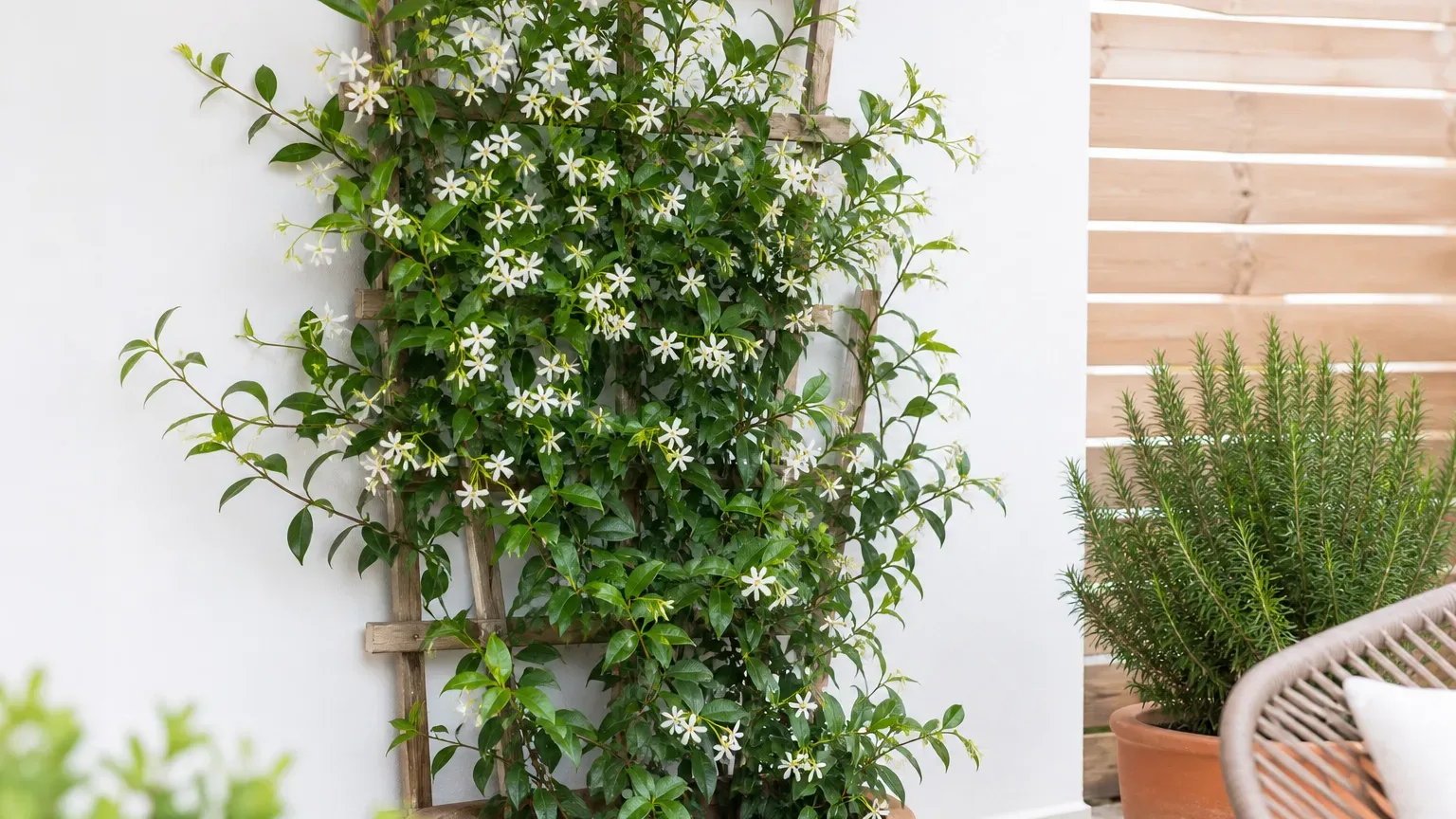
Star Jasmine Pruning Guide: When and How to Cut It Back
Star Jasmine Pruning Guide: When and How to Cut It Back
First, remove one clearly dead, broken, or damaged shoot back to healthy wood or to where it joins a larger stem. Do not shorten every long vine at once. Once that first cleanup cut is made, untangle the remaining shoots and decide which can simply be tied back onto the support.
Reviewed by LeafyPixels Review Board · Author: sai-ananth
Quick answer
Star Jasmine (Trachelospermum jasminoides) usually needs training more than heavy pruning. Thin weak, damaged, or congested growth in spring; shorten wayward shoots after the main flower flush if preserving bloom matters; and use early spring for major renovation. The RHS Star Jasmine guide says established overgrown plants can have shoots reduced by up to two-thirds, cutting to a side shoot or flowering spur.
Keep the permanent woody framework unless it is dead or badly placed. Make each shortening cut just above a healthy leaf pair, bud, side shoot, or flowering spur, then tie retained stems loosely to their support. Pruning controls size and congestion, but it cannot correct sparse growth caused by poor Star Jasmine light or decline caused by damaged, waterlogged roots.
What pruning does for this woody twining climber
Star Jasmine is an evergreen climber with woody stems that twine through wires, trellis, arches, and nearby growth. It does not cling flat to masonry, so a long shoot that appears unruly may only need redirecting. The RHS describes it as a twining woody climber that generally requires little pruning once it has a suitable support.
Prune for a specific outcome:
- Cleanup: remove dead, broken, weak, or damaged stems.
- Training: keep strong young shoots and tie them where the framework needs coverage.
- Thinning: remove crossing or inward-growing shoots that make the centre difficult to inspect.
- Size control: shorten stems that have passed the top of a trellis, entered gutters, or crowded a doorway.
- Renovation: rebuild an established plant whose woody framework has become unmanageable.
Pruning can produce a neater, better-spaced framework and stimulate replacement shoots below cuts. It cannot make a shaded vine flower heavily or restore roots that are failing in wet soil. Diagnose those conditions through the light guide and watering guide before removing healthy canopy.
When to prune Star Jasmine
Spring maintenance
Spring is the main window for removing weak, damaged, or congested shoots and for correcting the framework before new extension growth becomes tangled. This is also the right time to tie young stems into open spaces. The RHS guidance for established climbers emphasizes keeping a sound framework while preventing climbers from becoming straggly or congested.
In warm Indian climates, use the plant rather than the calendar: choose the start of a clear growth flush, after cold or dry-season stress has passed. Delay structural pruning if stems are shrivelled, foliage is dropping rapidly, or the root ball remains wet for days.
After flowering for routine size control
If the plant is already carrying buds or flowers, wait until the main flush fades before shortening healthy flowering shoots. NC State Extension specifically recommends pruning after flowering to keep Star Jasmine within its allotted space. This timing lets you enjoy the current display before reducing shoots that may carry flowers.
Do not turn spent-flower cleanup into a full shearing job. Star Jasmine does not need every old flower removed individually. Clip only the stems that are out of bounds, crossing badly, or making the support unsafe.
Early spring for hard renovation
Renovate an overgrown but otherwise healthy vine in early spring. The RHS identifies early spring as the usual renovation time for evergreen climbers. A hard cut may greatly reduce that season’s flowers, so choose renovation only when access, support damage, severe tangling, or size makes light maintenance inadequate.
Check the framework before cutting
Trace stems from their tips back toward the base. Star Jasmine often loops behind itself, so cutting a single hidden stem can release a much larger section than expected. Mark the main woody stems that cover the support evenly; these form the framework you usually keep.
Then identify:
- brittle, leafless shoots that are dead all the way back
- cracked or rubbed stems
- thin shoots trapped behind the trellis
- stems crossing repeatedly through the centre
- healthy flexible shoots that can fill bare areas
- vines entering roofs, shutters, drains, railings, or neighbouring plants
- flower buds or open clusters you want to preserve
If most leaves are sparse and internodes are long, inspect placement before making a size cut. Shortening a vine without improving its light conditions often gives you a smaller but still sparse plant.
Tools and sap precautions
Use clean bypass secateurs for pencil-thick shoots, loppers for thicker woody stems, and a pruning saw only for branches too large for loppers. Sharp bypass blades make a clean cut without crushing the retained stem. Clean pruning blades before use and when moving from diseased tissue to healthy growth; Iowa State Extension provides specific guidance for sanitizing pruning shears.
Wear gloves and eye protection. Cut stems exude sticky white latex, and NC State records milky latex from bruised twigs and petioles. Keep a damp cloth nearby, wash sap from skin, and clean it from tools before it dries.
Star Jasmine is listed by the ASPCA as non-toxic to dogs, cats, and horses. That classification does not make pruning debris suitable to chew. Collect cut stems promptly so pets do not play with fibrous vines or contact fresh sap.
How to prune Star Jasmine step by step
- Make the first cleanup cut. Remove one dead, broken, or damaged shoot back to healthy green-white tissue or its junction with a live stem.
- Untangle before shortening. Ease flexible shoots apart and trace them to the framework. Tie useful stems aside so they are not cut accidentally.
- Retain the best framework. Keep sound woody stems that are well spaced and securely supported.
- Remove poor growth at its origin. Cut weak, crossing, inward-growing, or trapped stems where they join a stronger branch rather than leaving short, crowded stubs.
- Shorten wayward shoots. Cut just above an outward-facing leaf pair, visible bud, healthy side shoot, or flowering spur. Leave a small collar of stem, not a long bare stub.
- Pause and reassess. Step back after every few cuts. A redirected shoot may solve the next apparent problem without more pruning.
- Tie in retained growth. Use soft ties in a loose figure eight so stems can thicken without being girdled.
- Remove debris and clean tools. Sticky sap and hidden dead leaves are easier to clear before the vine is tied back.
Avoid hedge shears unless Star Jasmine is intentionally maintained as a clipped groundcover. Shearing the outer surface repeatedly creates many short cut ends while leaving a tangled woody interior.
How much can you safely remove?
Routine maintenance should be selective: remove only enough live growth to restore a clear, supported outline. For a healthy, established plant that genuinely needs renovation, the species-specific RHS guidance allows shoots to be cut back by two-thirds to a side shoot or flowering spur. That is a renovation limit, not a yearly target.
Keep more foliage when the plant is container-grown, recently planted, drought-stressed, root-bound, or recovering from cold. For a weak vine, spread renewal across two growing seasons: remove one badly placed old stem, train replacements, then reassess after they have leafed out. Do not combine a hard cut with same-day repotting unless a failing root system makes intervention unavoidable; use the repotting guide to separate cosmetic pruning from root work.
Renovating an overgrown Star Jasmine
Before renovation, inspect the trellis, wires, wall fixings, and ties. A mature vine can hide corroded wire or rotten timber. Retain several healthy main stems where possible, then shorten long secondary shoots to a live side shoot or flowering spur. Remove dead and badly crossing wood from the base, but do not cut every main stem to ground level by default.
The RHS advises that overgrown climbers may be cut back to a framework and that cutting to a bud or branch supports regrowth. Star Jasmine’s own RHS guide recommends a two-thirds reduction for overgrown shoots rather than indiscriminate ground-level cutting. Afterward, select the best-positioned new shoots and tie them into the repaired framework; thin duplicates only after you can see which shoots are strongest.
If the vine is dying back rather than merely overgrown, renovation is not the first fix. Check stem bases, drainage, and root condition. Pruning cannot reverse root rot or a failing support, and removing a large canopy from a plant with compromised roots may leave too little healthy growth to rebuild.
Aftercare and recovery
Return a container plant to the same bright position and avoid adding another abrupt change. Water according to soil moisture, not because pruning occurred: keep the root zone evenly supplied during active regrowth without leaving it waterlogged. Follow the plant’s normal watering checks and do not keep the mix constantly wet in an attempt to force shoots.
Do not apply wound paint. Keep the cut surfaces open and dry, and watch for:
- firm buds swelling below shortening cuts
- flexible new shoots suitable for tying in
- retained foliage staying glossy and attached
- no darkening or dieback travelling below a cut
- soil returning to its normal drying rhythm
Lightly pruned Star Jasmine should continue extension growth during its active season. A renovated plant may take most of the growing season to rebuild useful coverage, and flowering can be reduced while that happens. If a cut end turns dark and shrivels, recut to clean live wood just above the next healthy branch or leaf pair.
Common mistakes to avoid
- Cutting every long shoot before checking whether it can be tied in
- Hard pruning while the vine is in full bud when flowers are the priority
- Leaving long dead stubs above a live side shoot
- Cutting through an old tangle without tracing which stems it supports
- Removing the whole permanent framework during routine maintenance
- Shearing only the outer shell and allowing the centre to remain congested
- Hard pruning a recently planted, drought-stressed, or waterlogged vine
- Letting fresh cuts or new stems rub against wire or masonry
- Expecting fertilizer to replace lost light or repair unhealthy roots
Can pruning pieces be propagated?
Healthy material removed at the right stage can be useful, but old woody renovation debris is not the best choice. The RHS recommends semi-ripe cuttings in summer or autumn and layering in spring. Select clean, pest-free, partly matured shoots rather than brittle dead wood or thick old framework branches.
Use the Star Jasmine propagation guide for preparation and rooting steps. Do not keep diseased, blackened, or pest-infested trimmings for propagation.
Related Star Jasmine guides
- Star Jasmine overview — whole-plant identity, placement, support, and seasonal care
- Star Jasmine light — correct sparse growth before repeated structural pruning
- Star Jasmine watering — keep recovery steady without waterlogging roots
- Star Jasmine soil — check drainage when dieback is mistaken for a pruning problem
- Star Jasmine repotting — manage root crowding separately from major canopy cuts
- Star Jasmine propagation — use suitable summer and autumn pruning pieces
Conclusion
Star Jasmine pruning begins with one dead or damaged shoot, then a decision: tie, thin, shorten, or renovate. Preserve the sound woody framework, cut healthy wayward stems above a side shoot, bud, leaf pair, or flowering spur, and schedule major renovation for early spring. For ordinary size control, waiting until the main flowers fade preserves more of the display and keeps pruning proportional to the problem.