Underwatering Star Jasmine: Signs, Checks and Recovery
Quick answer
Star Jasmine is drought-tolerant once established, but young plants, containers, and vines in long dry spells can still need water. Confirm underwatering by checking the root-zone moisture before watering; don't use leaf symptoms alone or follow a fixed weekly schedule.
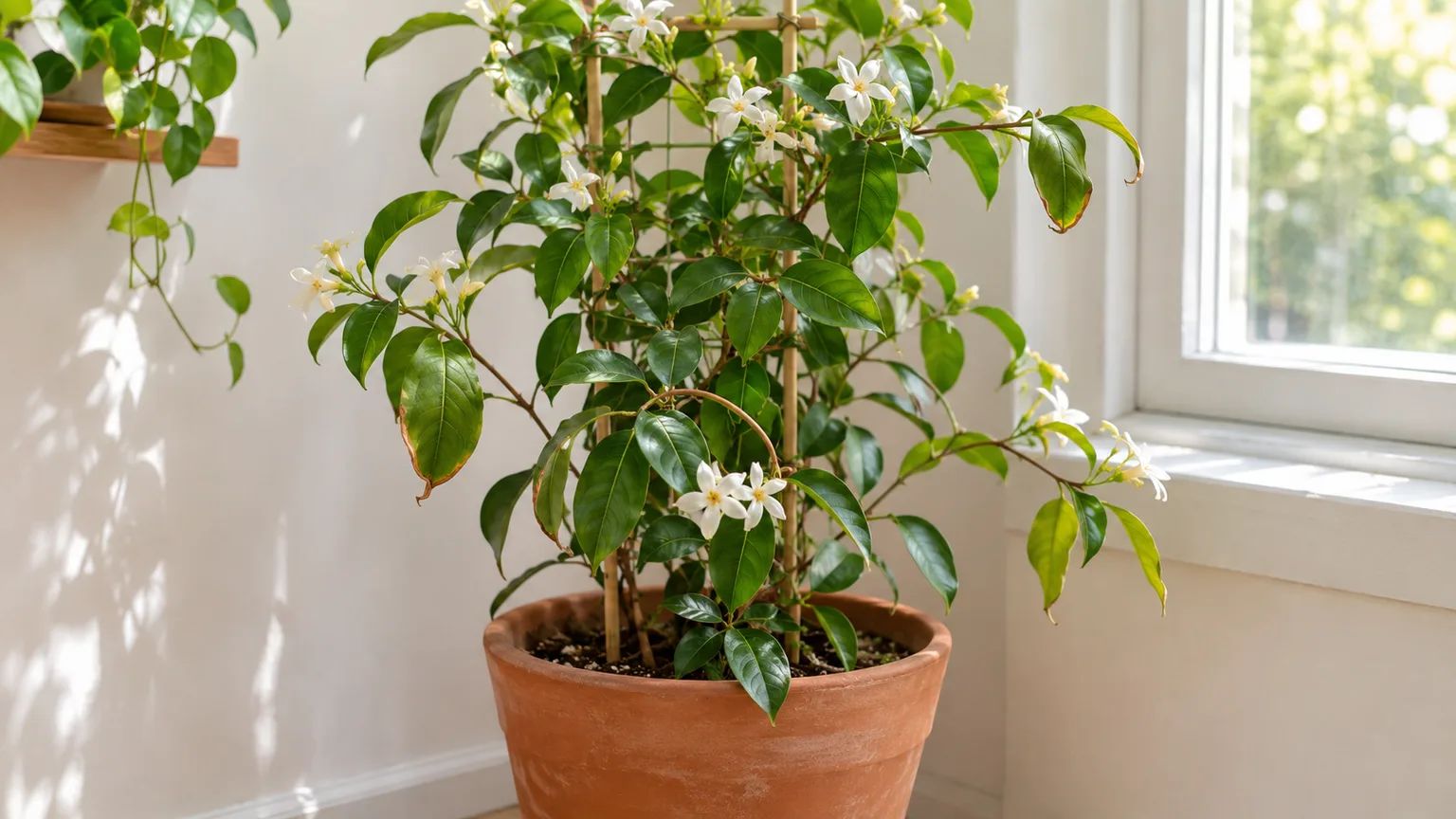
Underwatering on Star Jasmine: Causes, Checks & Fixes
This guide covers underwatering on Star Jasmine. See also the general Underwatering guide, watering, and light pages for this plant.
Underwatering on Star Jasmine: Causes, Checks & Fixes
Quick answer
Star Jasmine (Trachelospermum jasminoides) is a woody evergreen climber that tolerates dry conditions after it is established, but drought tolerance is not a reason to ignore a dry rootball. North Carolina Extension describes established plants as drought-tolerant, while the Royal Horticultural Society (RHS) recommends regular watering during the first year after planting and during long dry spells. Container-grown vines need extra checks because their compost dries faster than garden soil. North Carolina Extension’s plant profile and the RHS Trachelospermum growing guide support those different needs at different stages.
Check moisture where the roots are before deciding. If the root zone is dry, water it slowly and thoroughly; if the mix is wet, pause and investigate drainage or another cause instead of adding more. Leaf curl, dry edges, or drooping can prompt a check, but none proves underwatering by itself.
Dry leaf margins are a clue to inspect the root zone, not a diagnosis on their own.
Why Star Jasmine can run short of water
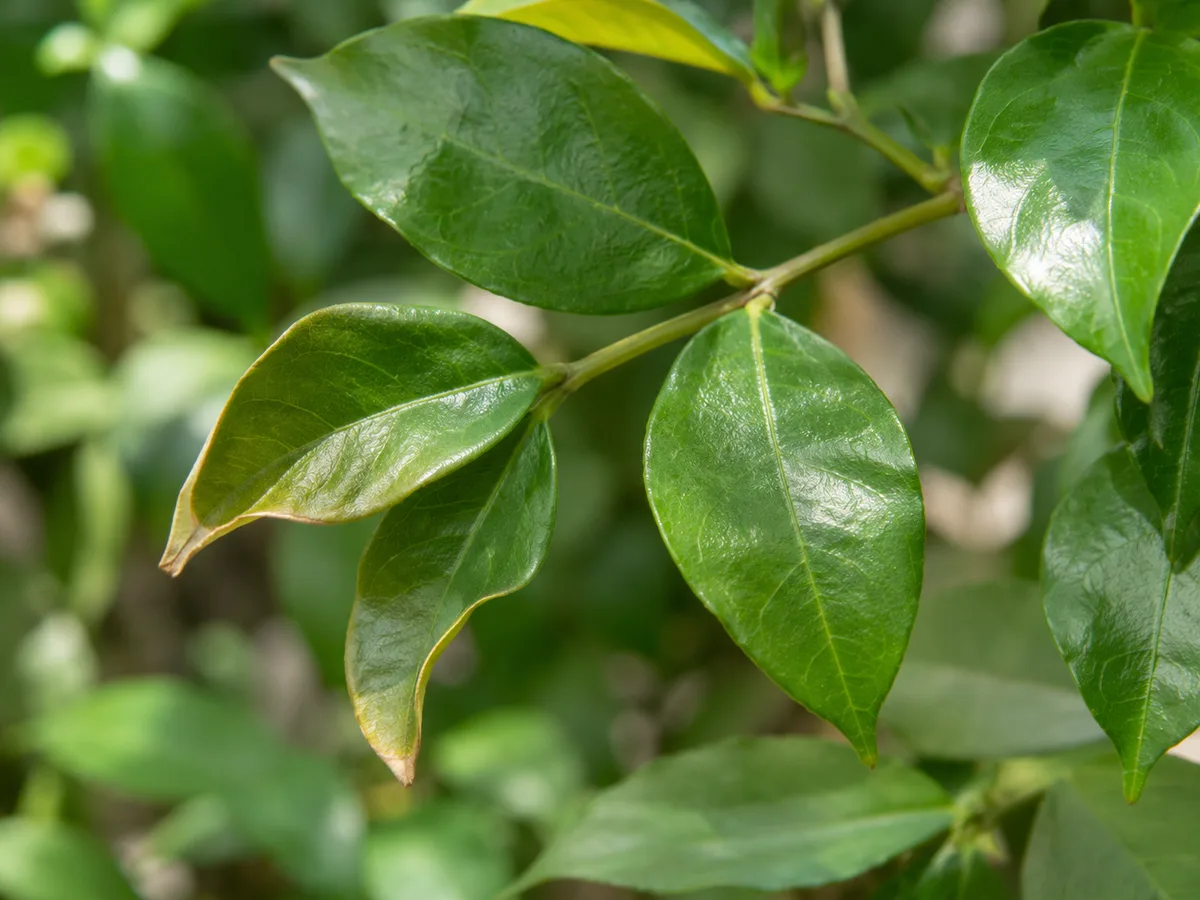
Dry leaf margins on Star Jasmine prompt a root-zone moisture check; the mix below the surface tells the real story.
Newly planted Star Jasmine has not yet settled into its site. The RHS recommends regular watering for at least the first year after planting and during summer dry spells. An established vine in the ground can tolerate more time between watering, but prolonged drought can still create a water deficit, especially where rain does not reach the root zone.
Pots change the equation. Their smaller volume of compost dries more quickly than garden soil, and containers near a warm wall, in sun, or exposed to wind can lose moisture faster. A brief shower may wet only the surface; the RHS watering guide notes that light rain and short showers may not reach far into compost. Check beneath the top layer rather than treating rainfall or a damp-looking surface as proof that the roots have enough water. The RHS container-watering guide recommends checking roughly a third of the way down the pot and watering according to the moisture found there.
Warm and windy weather can also increase water loss from leaves. That may raise the plant’s demand even when the watering routine has not changed; the RHS explains this relationship in its guide to how plants lose water. Avoid a calendar rule such as watering every Sunday; the RHS watering guide recommends adjusting to weather, soil, and establishment rather than following the same schedule for every plant.
Confirm the root-zone moisture first
For a potted vine, push a finger or a clean wooden stick into the compost to about a third of the pot’s depth, away from the main stem. If it feels dry there, the rootball may need water. If it is cool and damp, wait and check drainage before watering again. A pot that feels unusually light can support the moisture check, but do not rely on weight alone if the container or compost has recently changed.
For a vine in the ground, inspect the soil around the original rootball. Newly planted roots may still be concentrated in that area, so dry soil beside the stem or a damp surface does not tell you whether the rootball itself is moist. Check below the surface. For established plants, inspect deeper soil rather than judging only the top few centimetres; the RHS recommends watering newly planted shrubs slowly enough to moisten the root zone.
| What you find | What it means | Next step |
|---|---|---|
| Dry compost below the surface in a pot | Underwatering is plausible, particularly after warm or windy weather | Water the full rootball slowly, then allow excess to drain |
| Dry rootball around a recent planting | The new plant may need water even if nearby soil looks damp | Water slowly around the rootball and recheck moisture |
| Damp or saturated mix, especially for several days | Underwatering is not confirmed; excess water or drainage trouble needs consideration | Do not add water yet; review the overwatering guide and root-rot guide |
| Dry-looking leaf edges but moist root-zone soil | Leaf appearance alone does not establish the cause | Check light, recent temperature or wind changes, and other symptoms before changing watering |
The Star Jasmine’s preference for free-draining soil matters here: a dry symptom does not mean the plant should sit in water. The RHS growing guide notes that Star Jasmine can be susceptible to Phytophthora root rots in heavy, damp, or poorly drained conditions. For soil and pot drainage, see the Star Jasmine soil guide.
How to rewater safely
If a container’s root zone is dry, apply water slowly over the compost rather than pouring it all at the stem. Pause if water runs down the sides, then water again so the rootball has time to absorb it. The RHS advises checking moisture below the surface and wetting container compost thoroughly; let the pot drain freely afterward, and empty any saucer so it does not remain waterlogged. Don’t try to compensate with a series of tiny surface splashes that leave deeper compost dry.
For a newly planted vine, water around the rootball and allow the moisture to soak in. The RHS recommends slow, thorough watering for newly planted shrubs so the soil is moist down to the root zone. During the first year, check more often in warm, dry weather. After establishment, let conditions guide the next watering rather than maintaining the same frequency year-round.
Established Star Jasmine in a garden bed usually needs less routine watering than a new planting. NC State’s drought-tolerance note applies once the plant is established; it does not set a universal interval or eliminate watering during prolonged dry spells. Use the plant’s position, soil, recent rain, and a moisture check to decide.
What recovery looks like
After watering, give the root zone time to respond and avoid immediately adding fertilizer, repotting, and pruning all at once. Existing dry or brown tissue may remain damaged; assess recovery by whether the deterioration continues and whether later growth looks healthy. If the root zone is moist but the plant continues to decline, compare signs with drooping leaves, brown tips, and the root problems above rather than assuming that more water is the answer.
If roots are exposed, the soil stays wet, stems soften, or decline spreads despite correcting a confirmed dry root zone, stop repeated watering changes and reassess drainage and plant health. The Star Jasmine watering guide covers the normal seasonal routine; the Plant Problem Diagnosis Tool can help compare watering with other possible causes.
Prevent repeat drying
- For a new planting, check the rootball regularly through its first year, especially during dry weather.
- For container vines, check below the surface more often during summer and after warm or windy days; do not use a fixed weekly schedule.
- Water the soil or compost slowly and thoroughly when the root zone is dry, then let excess drain.
- Keep Star Jasmine in free-draining soil and avoid leaving a pot standing in water.
- Mulch garden soil where appropriate to slow moisture loss, leaving a gap around the stem; the RHS Trachelospermum guide recommends mulching damp soil and keeping mulch clear of the stem.
Related Star Jasmine guides
- Watering Star Jasmine explains the normal routine and seasonal adjustments.
- Star Jasmine soil and drainage covers well-drained planting conditions.
- Overwatering Star Jasmine is the relevant comparison when the root zone is wet.
- Root rot on Star Jasmine covers persistent wet conditions and root decline.
- Wilting Star Jasmine helps compare drooping with other forms of stress.
- Underwatering symptom hub provides general checks across plants.
FAQs
How do I know if Star Jasmine needs water?
Check the soil or potting mix below the surface, near the root zone. For a container, feel about a third of the way down the pot; for a newly planted vine, check the original rootball as well as the surrounding soil. Water when that zone is dry, not just because the surface looks pale.
How often should I water Star Jasmine?
There is no reliable fixed weekly schedule. Newly planted vines need regular attention while establishing, containers dry faster than garden soil, and warm or windy spells can increase water loss. Check the root zone and adjust to the plant’s setting and weather.
Is Star Jasmine drought-tolerant?
North Carolina Extension describes established Star Jasmine as drought-tolerant. That does not mean a new planting or a pot should be left dry for long periods; the RHS recommends regular water during establishment and during prolonged dry spells.
Can underwatering make Star Jasmine leaves turn brown or wilt?
Dry soil can be a reason to investigate, but leaf damage alone cannot confirm underwatering. Check moisture first; if the mix is already wet, compare the plant with the overwatering and root-rot guides before adding more water.
Should I fertilize or prune Star Jasmine after it dries out?
Correct the moisture problem first and let the plant settle. Fertilizer does not replace water, and removing healthy stems will not rewet the root zone. Remove only tissue that is fully dead once the cause has been checked.