Mealybugs on Star Jasmine: Identification and Control
Quick answer
Isolate Star Jasmine as soon as you find cottony clusters, then inspect the leaf joints and stem overlaps for the insects themselves. Remove a small number by hand; use only a labeled treatment if they are widespread.
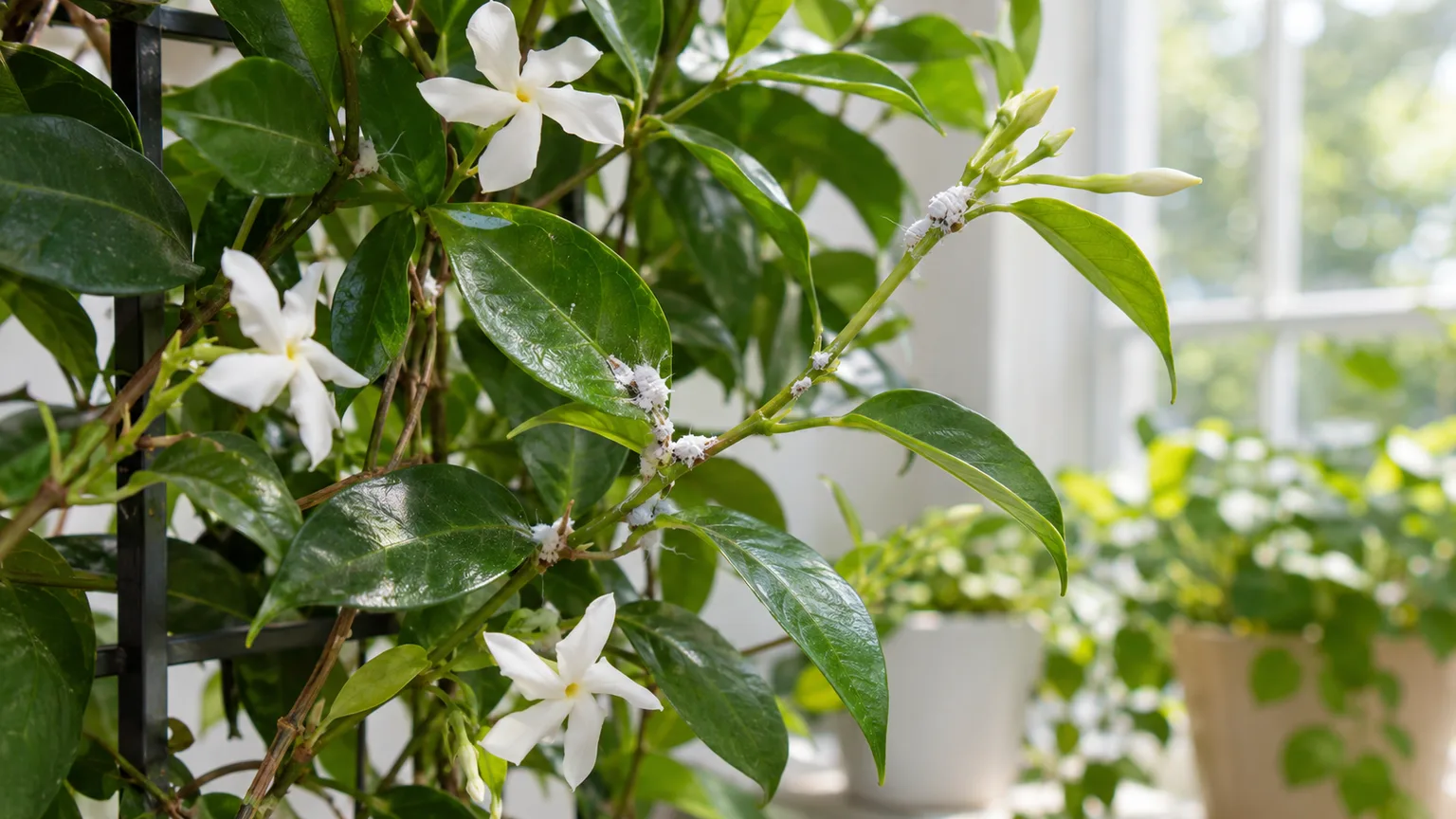
Mealybugs on Star Jasmine: How to Find and Remove Them
This guide covers mealybugs on Star Jasmine. See also the general Mealybugs guide, watering, and light pages for this plant.
Mealybugs on Star Jasmine: How to Find and Remove Them
Quick answer
First, move the affected Star Jasmine away from other plants while you inspect it; RHS recommends isolating new plants because pests can arrive on an infested specimen (RHS quarantine guidance). Then look for actual insects under the white wax; a fuzzy speck by itself could be lint or another pest. Star Jasmine’s long, twining stems create overlapping joints and support contact points where a small colony can stay out of view.
For the general signs and biology, see our mealybugs guide. This page focuses on finding them along Star Jasmine’s woody vine and choosing a treatment that reaches its sheltered leaf joints.
What mealybugs look like on Star Jasmine
The first sign is often a small white cottony patch where a leaf joins a stem, beneath a leaf, or at a sheltered stem crossing. Pull the wax gently aside with a damp cotton swab: live mealybugs are soft, oval insects, often pinkish beneath their white coating. The RHS describes the fluffy wax and concealed colonies as common signs on houseplants.
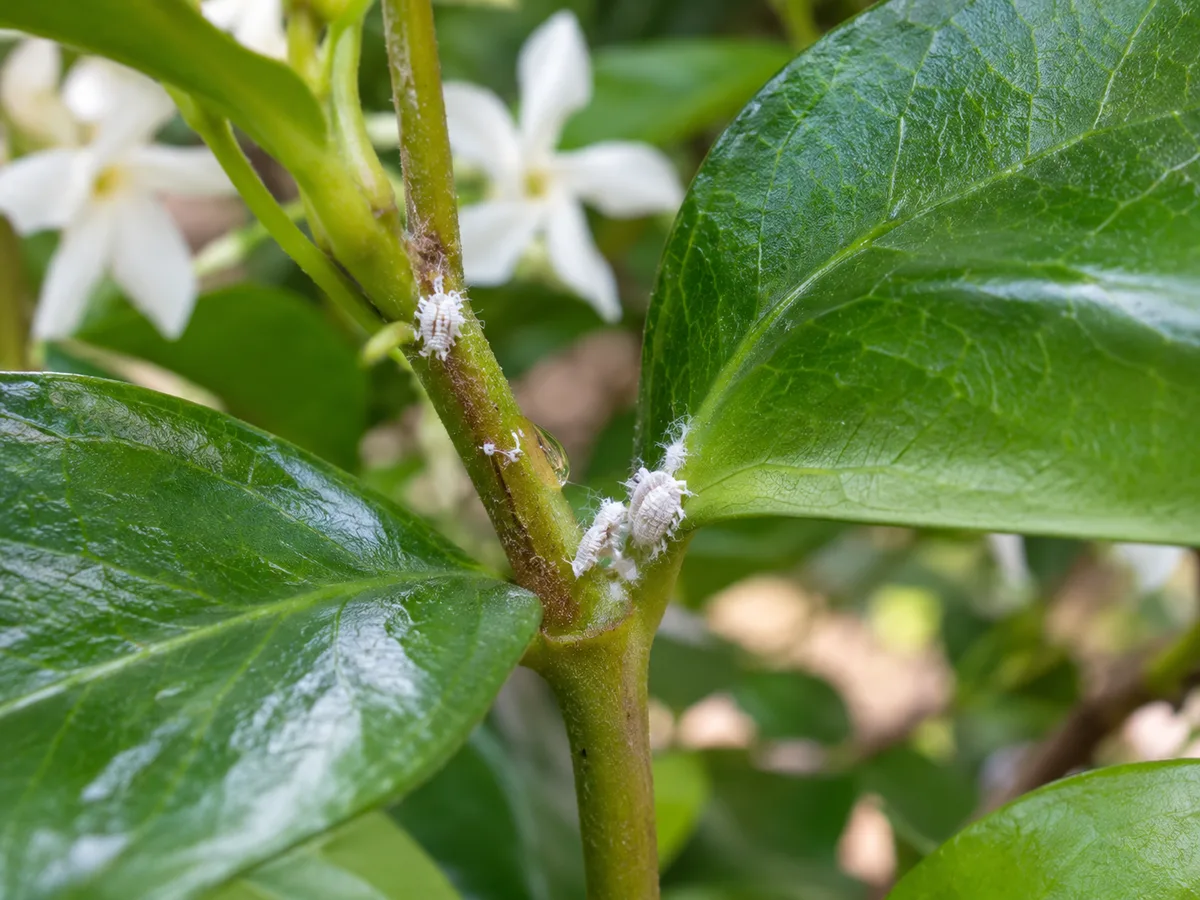
Inspect the sheltered joints of Star Jasmine’s twining stems, where white wax can hide the insects beneath it.
As they feed, mealybugs can leave clear, sticky honeydew on leaves and stems. A dark sooty coating may grow on that residue, and a larger infestation can weaken the plant or contribute to yellowing and leaf drop. RHS notes these feeding and honeydew signs; sticky leaves alone are not enough to identify the insect.
Inspect the sheltered joints of Star Jasmine’s twining stems
Star Jasmine is an evergreen, woody climber with twining stems and glossy leaves (RHS plant profile). Start at the freshest stem tips, then check each leaf base and the places where shoots cross or press against the trellis. Turn the leaves over and look beneath any overlapping growth; cottony material can be hidden from a front-on glance.
Follow sticky residue along the vine rather than assuming the first sticky leaf is the source. Check the plant’s support, ties, nearby leaves, pot rim, and the neighboring plant it was touching. Mealybugs can cluster in sheltered joints and other inaccessible plant parts (Colorado State University Extension).
If you find honeydew but no cottony insects or wax, inspect for aphids and scale before choosing a treatment. These sap-feeding pests can produce similar residue, and scale insects can also sit along stems; compare with the Star Jasmine aphids guide and yellow-leaves guide if the visible pattern does not match.
Why the protected parts of this vine matter
Mealybugs favor warm, sheltered growing conditions and often arrive on an infested plant. Star Jasmine is commonly trained against a wall, trellis, or other support; where dense evergreen growth overlaps, the inner side of a stem can be hard to inspect. RHS notes that glasshouse mealybugs are common on houseplants and can remain active year-round in protected growing spaces (RHS pest profile).
That makes indoor or conservatory vines worth checking more often, especially after a new plant has been placed nearby. Keep a new Star Jasmine apart while you inspect it, and don’t interpret a sudden flush of growth as proof that the pest is gone: colonies may remain at older joints even when the tips look healthy.
The first fix: isolate the affected Star Jasmine
Move the pot so its leaves and climbing stems no longer touch other plants. If the vine is attached to a shared trellis, separate the affected section as much as practical without tearing or sharply bending the woody stems. Isolation limits accidental contact while you inspect the entire plant and nearby foliage.
For a small colony, remove visible insects with a gentle rinse or damp cloth, then inspect the joints again. A gentle rinse can dislodge mealybugs and remove honeydew from the leaves (water rinse). On a container vine, protect the potting mix from becoming saturated and let the foliage dry in a bright, airy place. Star Jasmine’s tangled growth still requires a hand check of the hidden joints; check hidden leaf axils instead of rinsing only the exposed outer leaves.
When to prune or use a labeled treatment
If a few vine tips hold dense colonies, cut just below the infested section with clean pruners and discard the material in a sealed bag. Star Jasmine is a woody climber, so avoid cutting back long healthy stems simply to make inspection easier. Follow its pruning guide for routine shaping after the infestation is under control.
For insects that remain in several joints, use a commercial insecticidal soap only if its label permits use on ornamental plants and lists the target pest. Coat the insects and the protected leaf joints as directed, and test a small section first because some plants can be sensitive to soap or alcohol treatments; Colorado State University Extension specifically recommends a small-area test (Colorado State University Extension). Do not substitute dish detergent or increase the concentration beyond the product label.
Reinspect the same nodes and the stem backs after treatment, then follow the product label for any repeat application. The wax can shelter insects and eggs from contact, so one visible cleanup does not prove that the vine is clear. Remove fallen leaves and plant debris around the pot, and check neighboring foliage before returning Star Jasmine to its usual place.
Avoid confusing residue with a confirmed infestation
Cotton-like wax with an insect underneath is stronger evidence than a sticky leaf or a white mark alone. Mealybugs are related to scale insects, and both can hide along stems; look for the soft insect body beneath the mealybug’s wax rather than treating every bump as the same pest. Garden Design’s identification guide recommends examining the plant closely because other pests can produce similar signs.
If the vine wilts while the mix is still moist but you cannot find insects above the soil, avoid spraying leaves repeatedly. Some mealybug species feed on roots (RHS root-mealybug notes), but root inspection means disturbing the plant; consider it only when the symptoms and hidden-pest signs warrant lifting the root ball. If instead the mix stays wet or the roots smell sour, use the Star Jasmine watering guide and root-rot guide to separate pest damage from a root-zone problem.
Recovery and prevention on a trained Star Jasmine
Existing yellowed leaves may fall, and honeydew or sooty residue can remain after the insects are gone. Wipe the residue from the glossy leaves, then judge recovery by clean new growth and no new cottony clusters at the leaf joints. If colonies keep returning across many stems despite careful follow-up, remove the worst affected sections or consider whether the plant can be kept apart from the rest of the collection.
As you guide new shoots, leave enough room to inspect the stem crossings and ties. Check the underside of leaves and the inside of the vine every week during active growth, and inspect plants before placing them against the same support. The Star Jasmine care overview and problems hub provide the broader care context; changes to light or watering do not replace pest removal.
Related tool
Use the Pest Identifier Tool if the sign is not clearly cottony wax with an insect beneath it.
Related Star Jasmine guides
Use this guide when you can find a soft insect beneath cottony wax. If you see exposed clusters of small insects without wax, compare them with the Star Jasmine aphids guide; fine webbing or stippled leaves point toward spider mites. When leaves yellow but no pest is visible, use the yellow-leaves guide to check other causes, then return to the Star Jasmine care overview for the vine’s normal conditions.