Root Rot on Star Jasmine: How to Confirm and Respond
Quick answer
On Star Jasmine, suspect root rot when the vine wilts or yellows while its mix remains wet and roots are soft or dark. First, stop standing water and check moisture and drainage; inspect roots if the mix stays soggy or decline continues.
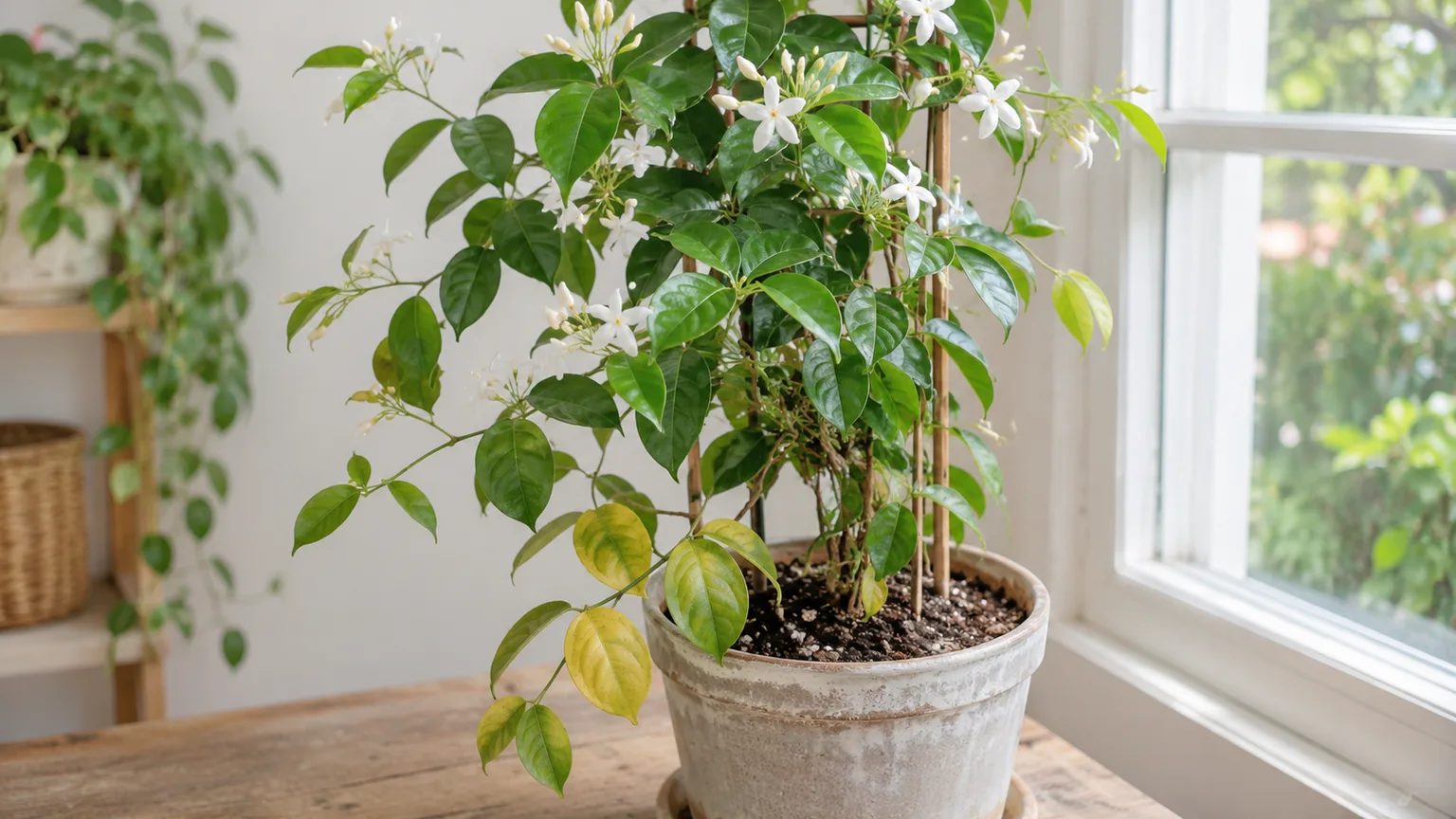
Root Rot on Star Jasmine: Causes, Checks & Fixes
This guide covers root rot on Star Jasmine. See also the general Root Rot guide, watering, and light pages for this plant.
Root Rot on Star Jasmine: Causes, Checks & Fixes
Quick answer
On Star Jasmine, suspect root rot when the vine wilts or yellows while its mix remains wet and roots are soft or dark. First, stop standing water and check moisture and drainage; inspect roots if the mix stays soggy or decline continues.
Star Jasmine (Trachelospermum jasminoides) is an evergreen, woody twiner that can grow in a border or a container. It needs moisture through active growth, but its roots also need free drainage; a wet root ball is a reason to investigate, not by itself proof of infection. The Royal Horticultural Society’s Star Jasmine guide calls for fertile, free-draining soil and notes that the plant does poorly in soggy ground.
For the general root-decay process, see our root rot guide. This page focuses on checks that make sense for a twining Star Jasmine and when to act on a container-grown vine.
What root rot looks like on Star Jasmine
The more useful warning pattern is persistent wilt, yellow or sparse foliage, or branch dieback while the soil is still wet. Those leaf and shoot symptoms can also follow drought, poor drainage without infection, or other root damage, so they cannot identify a pathogen on their own. The RHS root-rot profile notes that above-ground symptoms are nonspecific and often appear only after root decay has advanced.
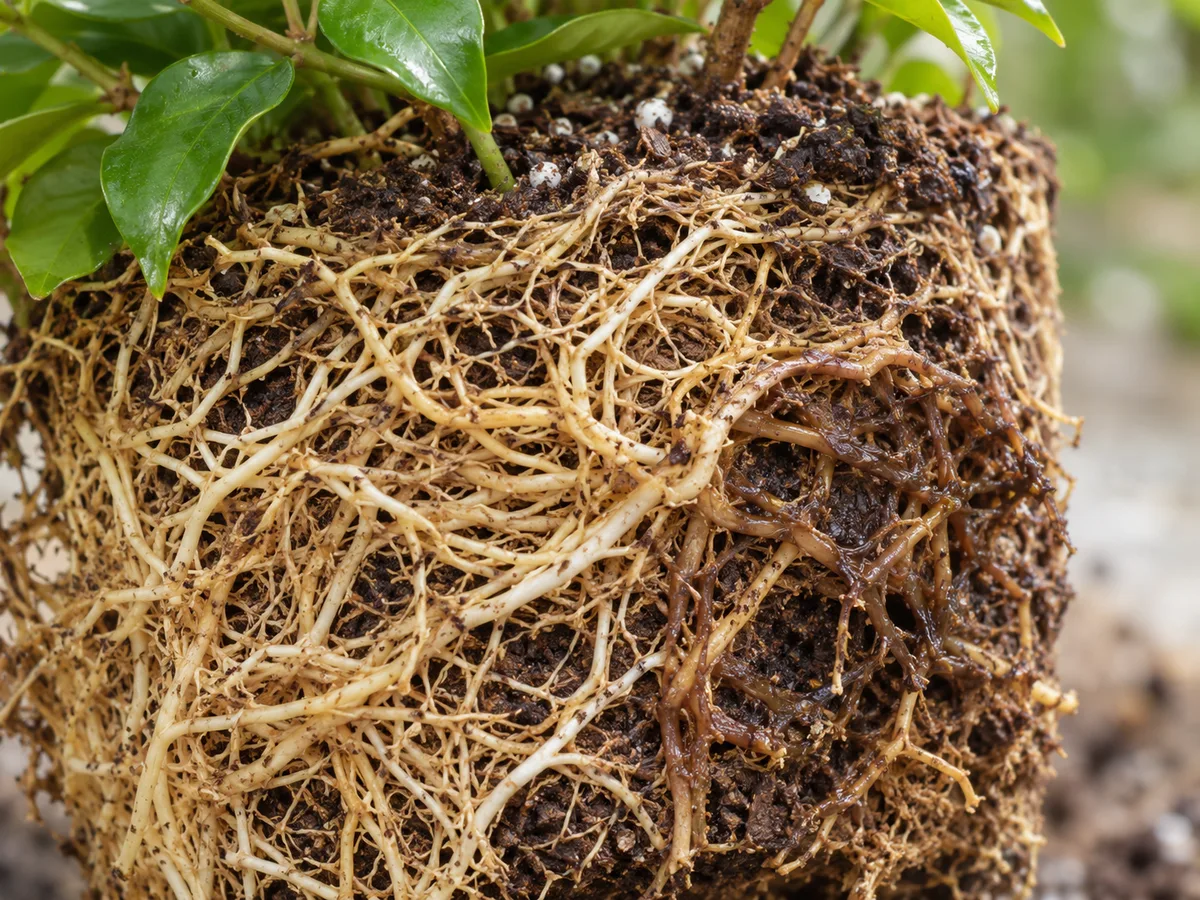
Compare root texture across the root ball: firm roots are more reassuring than soft, collapsing sections.
When the plant is in a pot and the mix has stayed soggy, gently slide the root ball out far enough to inspect it. Healthy roots should be firm; roots damaged by rot are commonly soft and brown, sometimes with a bad smell. The University of Wisconsin Extension root-rot guide describes this combination, while the University of Florida’s diagnostic guidance cautions that yellow leaves have many possible causes.
Check the moisture pattern before disturbing the vine
First, feel the mix below the surface and check whether the pot is sitting in drainage water or inside a cachepot that holds runoff. A Star Jasmine can wilt with either a dry root ball or damaged roots in wet mix, so watering again because the leaves droop can worsen the second situation. If the top 2–3 cm are dry, water thoroughly and let the pot drain; if the mix is still wet, pause routine watering and find out why it is not drying.
Compare the recent watering pattern with the plant’s Star Jasmine watering guide. Check the soil and drainage guide too if the container stays heavy and wet for many days. These clues narrow the cause but do not establish whether a pathogen is present.
Why containers can keep Star Jasmine roots too wet
Star Jasmine is often trained as a climber, so a large vine may be in a roomy pot or decorative outer container. That setup can hide standing runoff or leave a dense root ball wet longer than expected. Check for clear drainage holes, empty the saucer or cover pot, and make sure the container is not sitting in water. A pot without drainage or with persistently saturated mix needs correction before you adjust the trellis or prune the canopy.
Do not add a gravel layer at the bottom as a drainage fix. The University of Wisconsin Extension root-rot guide notes that gravel can inhibit drainage; use a pot with drainage holes and a suitable free-draining potting mix instead. If watering questions are the main issue, compare symptoms with the Star Jasmine guide to overwatering before changing the routine.
What to do if the root ball is soft or collapsing
If the root ball is wet and multiple roots are soft or slimy, remove the plant from the container carefully and examine the whole root system. With clean, sharp scissors, trim only tissue that is clearly dead or collapsing; keep roots that remain firm. Use a clean pot with unobstructed drainage and fresh, free-draining mix. Choose a pot only slightly larger than the healthy root system, as Melinda Myers advises for jasmine with slimy roots.
If most roots are still firm, return the Star Jasmine to bright conditions suitable for its normal care and water only when the surface layer dries. Avoid fertilizer while the roots are impaired; it will not restore damaged roots. For Star Jasmine that is declining despite a dry-down and clear drainage, ask a local extension or plant diagnostic clinic whether a sample can be examined. Root symptoms alone may not distinguish waterlogging injury from Phytophthora or another root disease.
Outdoor Star Jasmine: fix the wet site, not just the foliage
For a vine growing in the ground, look for a low spot, compacted soil, roof runoff, or repeated irrigation that keeps the root zone saturated. Star Jasmine is a supported woody climber, so avoid pulling hard on its established stems while checking the base. The RHS Phytophthora guidance explains that poor drainage and waterlogging can be associated with root decay, but similar symptoms can come from waterlogging alone. Improve the source of persistent wetness and avoid routine watering until the soil begins to drain and dry normally.
Do not apply fungicide just because the leaves are yellow or a root is brown. The University of Wisconsin Extension does not recommend home fungicides for houseplant root rots because available products are limited and often not practical; outdoor diagnosis and treatment depend on the actual pathogen and local conditions.
Recovery on a woody twining vine
When deciding whether to keep trying, check whether a substantial number of roots and the stem base remain firm. Severely soft roots cannot become healthy again, and dead or dry branches will not turn green; watch for stable foliage and later healthy shoot growth rather than expecting damaged leaves to repair. If the main stem base is soft or the roots have mostly collapsed, the plant may not be salvageable. Melinda Myers’ response about Star Jasmine dieback treats overwatering and possible stem or root rot as different explanations and recommends correcting watering before escalating.
Keep the climbing stems supported while the root system settles. Avoid combining a hard prune, a larger pot, and extra watering on the same day; changing one cause at a time makes it easier to see whether the vine is stabilizing.
Prevent root problems on Star Jasmine
- In a container, wait until the top 2–3 cm of mix feels dry, then water thoroughly and allow excess water to leave the pot. Do not use a fixed weekly schedule through changes in light, temperature, and season.
- Use a free-draining mix and a container with open holes; empty the saucer or decorative cachepot after watering.
- In a garden bed, choose a site where water does not collect around the woody base. Star Jasmine needs moisture in active growth, but soggy soil is a poor fit for this climber.
- If the vine repeatedly wilts, check the root zone before increasing water. Compare with yellow leaves on Star Jasmine and wilting on Star Jasmine to see which page fits the visible symptom.
When to use this page vs other Star Jasmine guides
Use this page when root-zone evidence—especially soft roots with persistently wet mix—points to damaged roots. Use the Star Jasmine problems hub to compare other patterns; the plant’s overview covers its regular climbing and seasonal care. Yellow leaves or wilt without a wet root ball are symptoms, not a root-rot diagnosis. The Root Rot Risk Checker can organize observations, but it cannot confirm a pathogen.
Related Star Jasmine guides
- Overwatering helps when the mix is repeatedly kept wet but root damage is not confirmed.
- Yellow leaves covers foliage discoloration when the roots remain firm.
- Wilting helps compare a dry root ball with a wet, damaged one.
- Watering and soil explain the routine drainage and moisture needs behind prevention.