Brown Tips on Star Jasmine: Causes, Checks & Fixes
Quick answer
Brown tips on Star Jasmine usually point to stress around water supply, roots, heat or cold exposure. Check the root zone first: if it is dry, water the root ball thoroughly; if it is wet, improve drainage and do not add more water.
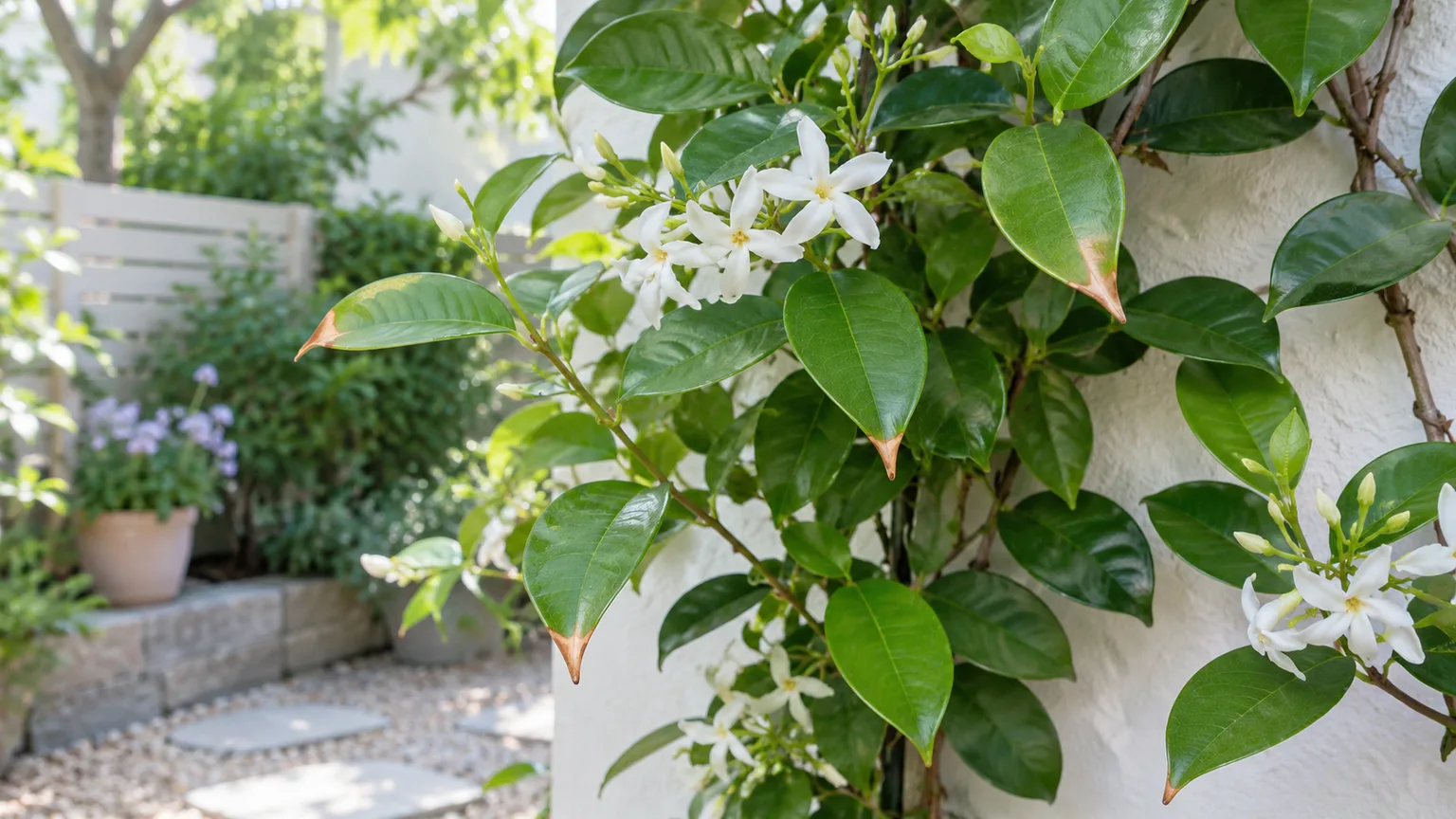
Brown Tips on Star Jasmine: Causes, Checks & Fixes
This guide covers brown tips on Star Jasmine. See also the general Brown Tips guide, watering, and light pages for this plant.
Brown Tips on Star Jasmine: Causes, Checks & Fixes
Brown tips on Star Jasmine: the first check
Brown, dry points on otherwise glossy Star Jasmine leaves are a symptom, not a diagnosis. The most useful first check is the root ball: feel the mix several centimetres below the surface and see whether water drains freely. If it is dry, water thoroughly once; if it is wet or sour-smelling, pause watering and check the drainage instead.
Star Jasmine is an evergreen woody climber that prefers a warm, sheltered position and fertile soil that drains well, in full sun or partial shade. It needs regular water while establishing and during long dry spells, while a container can dry faster than ground soil. The Royal Horticultural Society’s growing guide advises regular watering during establishment and dry weather, while warning against letting container compost become waterlogged.
What brown tips look like on this vine
With tip burn, the outermost point of a leaf becomes dry, tan or brown, often with a crisp edge. If several leaves on the sun- or wind-facing side are affected while shaded leaves remain green, exposure stress is plausible. If leaves yellow, wilt, or drop across the plant, look beyond the tips and inspect root-zone moisture and recent weather.
Use the close-up below to compare the dry, localized tip with your own leaves. It cannot identify the cause by itself.
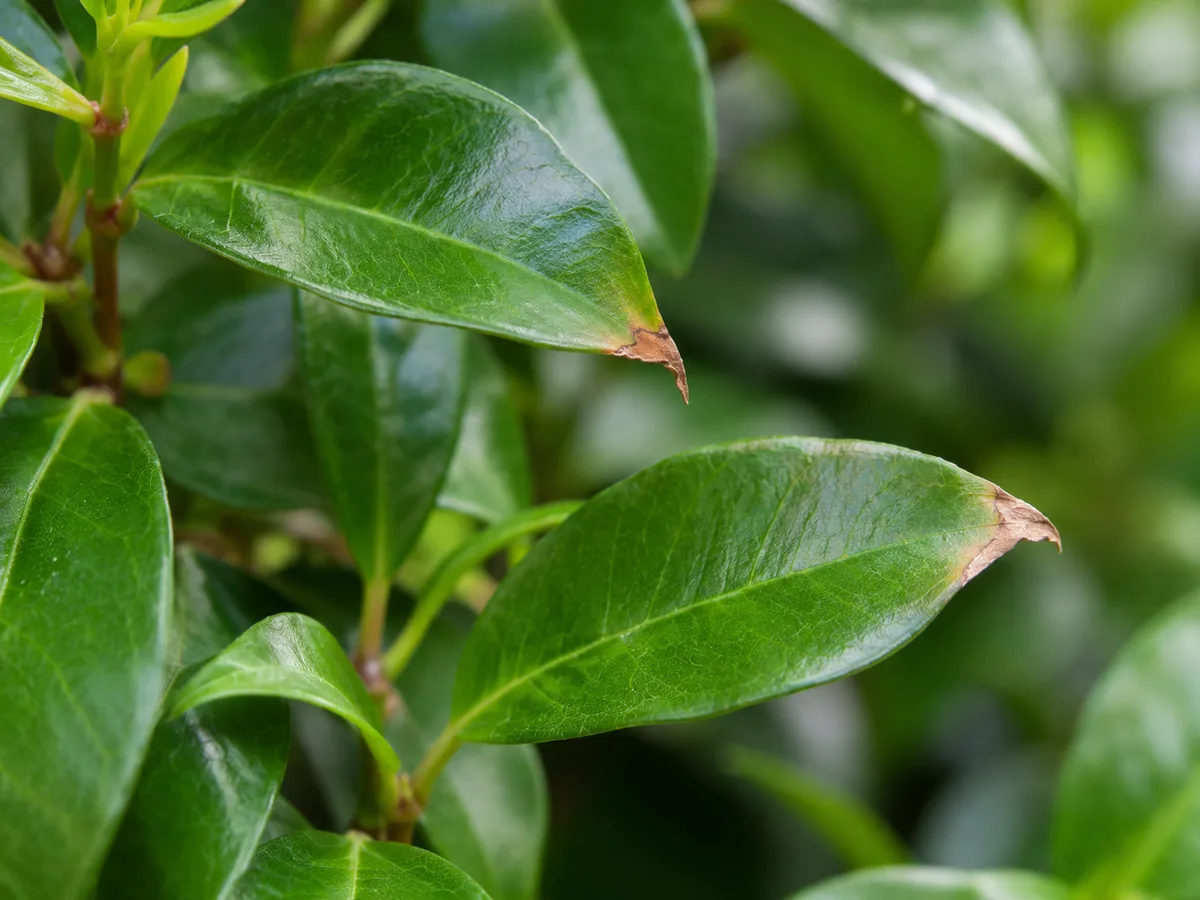
A few leaf tips are dry and brown while the rest of the Star Jasmine leaves remain firm and green.
Why Star Jasmine tips may turn brown
The root ball alternates between dry and saturated
Newly planted vines and container-grown Star Jasmine can run short of available water during hot weather, especially if the container is small, exposed, or crowded with roots. A very light pot, dry mix below the surface, and leaves that feel limp point toward a dry root ball. The RHS recommends watering Star Jasmine through its first year and in long summer dry spells; containers need closer attention because their compost dries quickly.
Excess water can produce similar leaf damage. In heavy or poorly drained soil, waterlogged roots may fail to take up enough water even when the soil is wet. The RHS notes that Star Jasmine in heavy, damp soil can be susceptible to Phytophthora root rots. Persistent wilt in wet mix, yellowing, a sour smell, or dark soft roots calls for a root and drainage check rather than extra watering.
A sudden change in sun, heat, or wind
Star Jasmine grows in full sun or partial shade, but a vine moved abruptly from shade into strong afternoon sun can scorch, particularly behind glass where heat builds. The RHS warns that direct summer sun can scorch leaves in a conservatory; Oregon State University recommends partial shade in hot areas. Acclimate a shaded plant gradually and provide shelter from hot afternoon exposure or drying wind while you observe new growth.
Cold or winter exposure
A cold snap can damage an exposed vine, especially in a frost-prone site or a pot whose roots cool quickly. The RHS describes leaf reddening, spotting, or drop during cold snaps and recommends shelter or winter protection where needed. Damage that appears after frost across exposed growth is different from a pot that has been drying out repeatedly; protect the plant, then wait to see whether the damage progresses.
Fertilizer or salt stress
Recent heavy feeding, fertilizer granules against the root ball, or repeated use of mineral-rich water may contribute to scorched margins. Colorado State University Extension lists excessive fertilizer among causes of leaf scorch, and UC IPM includes salt toxicity among the possible causes of leaf burn. Do not add fertilizer to “cure” brown tips; if excess feed is likely, stop feeding while you check the mix and drainage.
Confirm the cause before changing care
Check the plant in this order:
- Feel below the surface. If the root ball is dry several centimetres down, water it slowly and evenly. If it is wet, wait and inspect drainage rather than adding water.
- Check the pot and outlet. Confirm that drainage holes are open and the container is not standing in a saucer or cachepot full of runoff. Note how long the mix stays wet after watering.
- Look for a pattern. Damage concentrated on the sunward, windward, or frost-exposed side suggests an exposure event. Tips appearing across the canopy after a dry spell, heat wave, or feeding change point to a broader stress.
- Inspect roots only if other signs justify it. Unpot only if wet mix persists with wilt, yellowing, sour odor, or decline. Healthy roots should be firm; soft, dark roots support a rot diagnosis.
Brown leaf margins can follow drought, poor drainage, heat or sun, and salt injury, so tip color alone is not enough to select a treatment. UC IPM’s leaf burn and scorch guide lists irrigation problems, poor drainage, drought, excess light or heat, and salt or boron toxicity among possible causes. Match the pattern to the plant’s recent conditions before you change more than one variable.
The first fix for Star Jasmine brown tips
Correct the moisture problem only if the root-zone check confirms one. For a dry root ball, water slowly over the surface until water reaches the full root zone and drains from the pot; then let excess runoff escape. The RHS recommends regular watering for newly planted Star Jasmine and during extended summer dry spells, while allowing container compost to drain.
If the soil is already wet, do not water again. Empty standing runoff, clear blocked drainage holes, and move a container out of heavy rain while it drains. If it remains saturated or smells sour, inspect roots and correct the soil or pot problem; the Star Jasmine watering guide explains how to adjust watering for container dry-down and seasonal changes.
For sun or cold exposure, make one gradual location adjustment: give the vine shelter from the harshest afternoon heat or cold, drying wind, then avoid another abrupt move. If recent fertilizer use is the likely trigger, skip the next feed and wait for normal watering and new growth; do not attempt to flush a poorly draining pot that is already waterlogged.
What to expect during recovery
The brown tips will stay brown. Colorado State University Extension notes that scorched portions of leaves do not turn green again, although a plant can recover when water management improves. Wait until the cause is addressed before trimming for appearance; if you do trim, remove only the dry tip and follow the leaf’s natural outline rather than cutting into green tissue.
Watch the next flush of leaves and whether the damaged area continues to spread. Healthy new leaves and firm stems suggest the stress has eased. Worsening wilt, broad yellowing, stem dieback, or a root ball that stays wet are reasons to recheck drainage and roots; use the Star Jasmine soil guide if the medium is heavy or slow to drain.
Prevent another round of brown tips
Keep Star Jasmine in sun or light shade, sheltered from cold drying winds, and use free-draining soil. Water new plantings during establishment and established vines through long dry periods; in containers, check the mix and pot weight instead of following a fixed calendar. The Star Jasmine light guide helps distinguish normal bright exposure from a sudden move into hot sun.
Avoid repeated small sips that wet only the surface, but also avoid leaving roots in standing runoff. Follow the plant’s fertilizer schedule only when it is actively growing and do not increase the dose to repair damaged leaves. If wet soil and decline continue, compare the signs with the Star Jasmine root-rot guide; if the issue is only dry tips after a missed watering, use the underwatering guide instead.
Related Star Jasmine guides
- Use the care overview when several conditions changed at once and you need to reassess the whole growing setup.
- Use the watering guide to adjust moisture checks for a pot, sheltered wall, or hot spell.
- Use the soil guide when water drains slowly or the mix stays wet for too long.
- Use the light guide when brown tips are limited to the side facing intense sun or heat.
- Use the root-rot guide when wilt or yellowing appears while the soil remains wet.
Use the Brown Tips symptom hub for general leaf-tip patterns across plants. To compare likely causes on this vine, try the Plant Problem Diagnosis Tool.