Overwatered Star Jasmine: Diagnose Wet Soil and Root Stress
Quick answer
If Star Jasmine is wilting or yellowing while its potting mix is still wet, pause watering and empty any standing runoff. Check the root zone and drainage before watering again: this evergreen climber needs moisture but also free-draining soil.
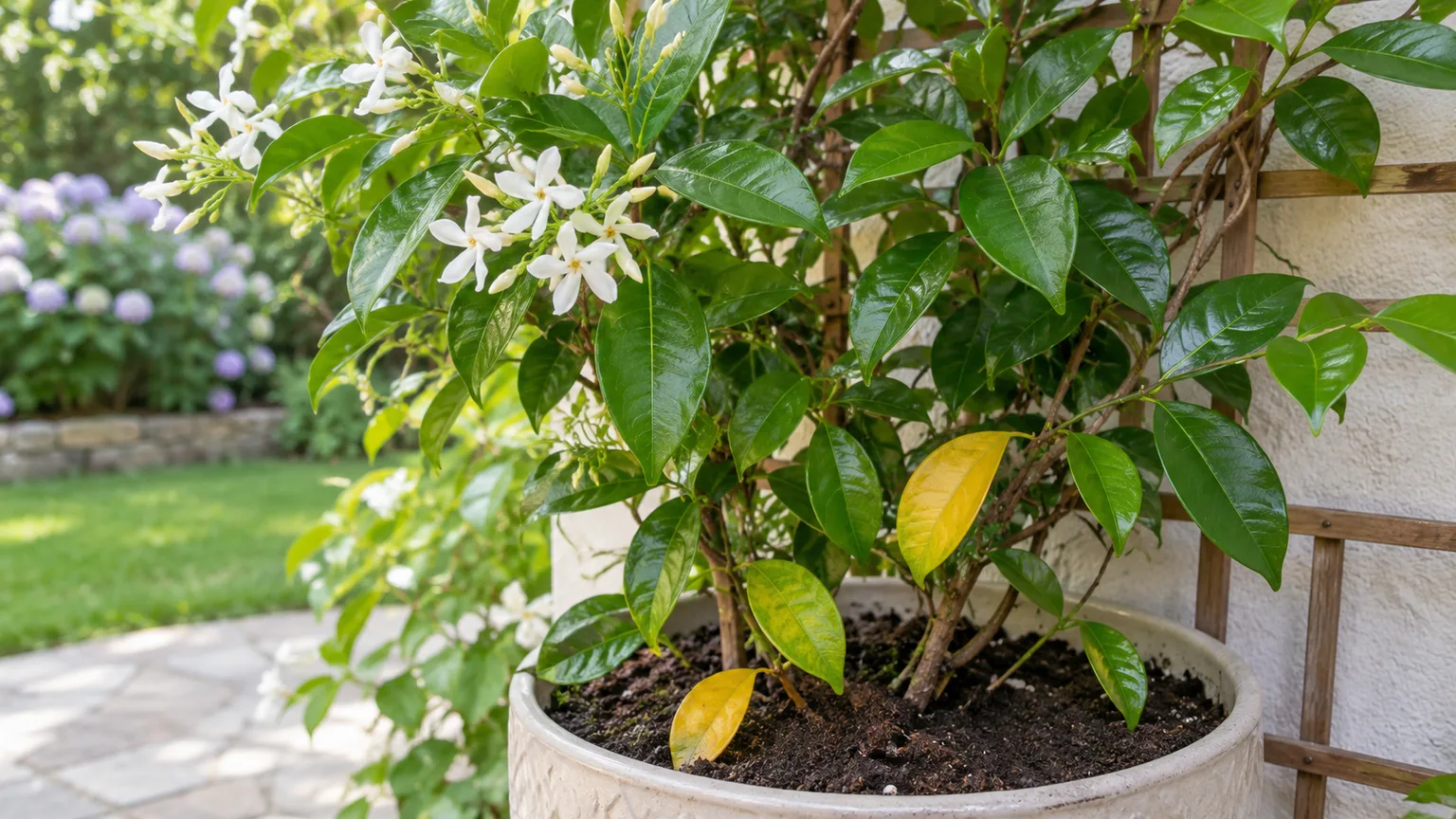
Overwatering on Star Jasmine: Causes, Checks & Fixes
This guide covers overwatering on Star Jasmine. See also the general Overwatering guide, watering, and light pages for this plant.
Overwatering on Star Jasmine: Causes, Checks & Fixes
Quick answer
If Star Jasmine is drooping or yellowing but its pot still feels heavy and the mix is wet below the surface, stop watering on schedule and empty any saucer or outer pot holding runoff. Confirm that water can escape through the drainage holes, then allow the root zone to lose some excess moisture before you water again. The aim is not to dry this evergreen climber like a cactus; it is to restore the moist-but-free-draining conditions it needs.
For the general mechanics of overwatering and wet roots, use this page to decide whether those signs fit Star Jasmine and whether a container or garden bed is keeping its roots too wet.
What overwatering looks like on Star Jasmine
Star Jasmine (Trachelospermum jasminoides) is an evergreen woody twiner, not a true Jasminum. It grows in garden soil as a climber or groundcover and is also kept in containers, where drainage and the pot’s dry-down matter more. NC State Extension recommends fertile, well-drained soil and notes that established vines tolerate drought; that combination points to steady moisture without a persistently saturated root zone. NC State Extension’s Star Jasmine profile and UC IPM’s Star Jasmine guide both emphasize drainage.
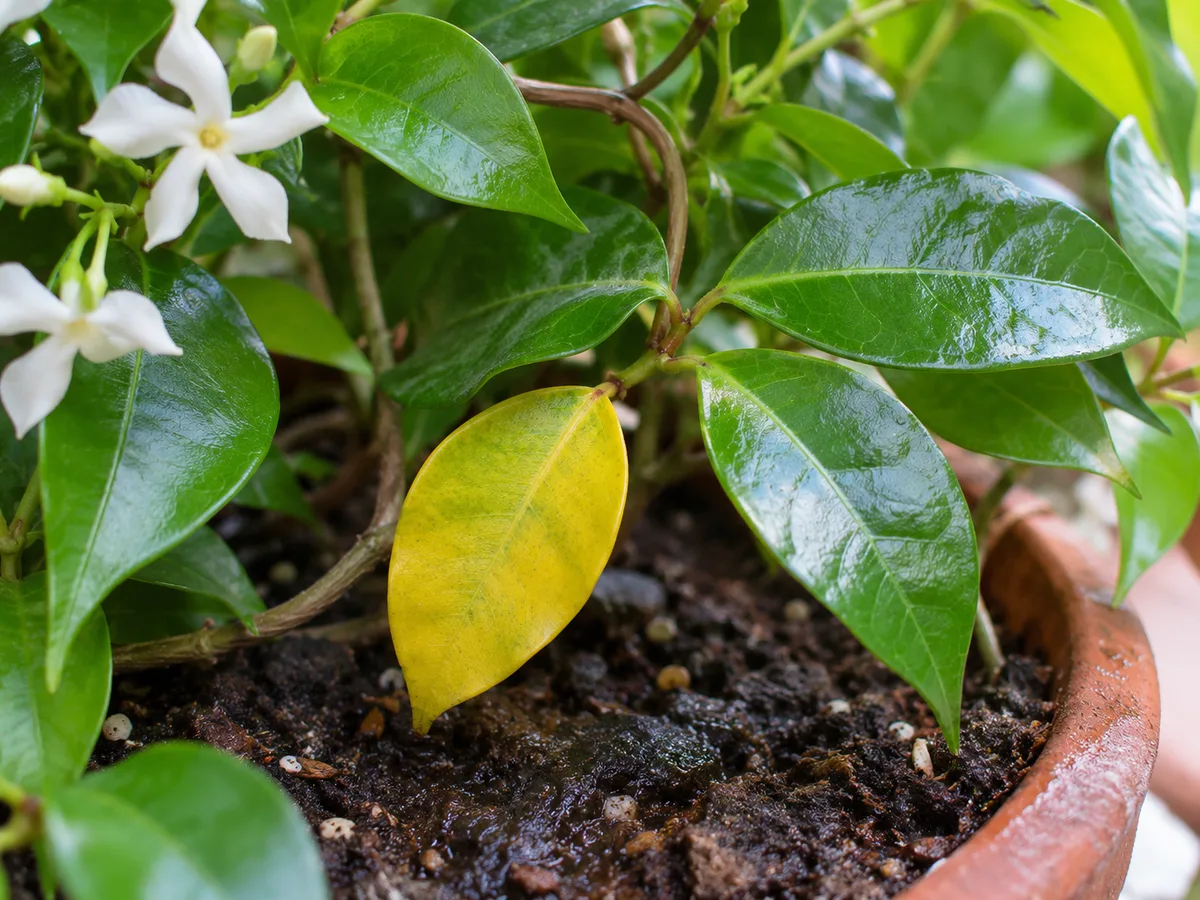
A yellow lower leaf above wet mix is a clue to check moisture and drainage, not proof of root rot by itself.
Watch for a pattern rather than one aging leaf: several leaves turning yellow, a vine that remains limp while the mix is wet, weak new growth, or leaves dropping as the pot stays heavy. Clemson’s guidance for Confederate Jasmine calls for moist but well-drained soil, so persistent wetness is a mismatch even though the plant should not be left dry for long periods. Clemson’s jasmine guidance describes that balance.
Overwatering is a watering and drainage problem; root rot on Star Jasmine is a possible disease outcome, not a synonym for every yellow leaf. Phytophthora and other root or crown rots need high soil moisture and are favored by poor drainage; their symptoms can include wilt, discoloration, premature leaf drop, and darkened or dying feeder roots. UC IPM’s root and crown rot guidance explains why wet conditions increase risk without proving that every wet pot is infected.
Check the Star Jasmine root zone before changing care
For a potted vine, feel the mix a few centimetres below the surface near the edge of the root ball. A dry surface can hide a wet lower layer. Lift or tilt the container if safe: a pot that remains unusually heavy after several days is a reason to wait and check drainage, not to add another small watering. The Missouri Botanical Garden notes that yellowing or wilt may follow either too much or too little water and recommends assessing the soil rather than diagnosing from foliage alone. Its indoor watering guide includes pot-weight and soil-moisture checks.
Check that the nursery pot has open holes and is not standing in a decorative cachepot or saucer of water. If water runs straight out but the center of the root ball remains dry, the mix may have pulled away from the pot or become uneven; that is not the same as a saturated root zone. In a garden bed, look for a low spot, compacted soil, a downspout, or irrigation that repeatedly wets the crown.
If the plant continues to decline while the root zone is wet, gently slide the container off and inspect only as much as needed. Healthy roots should feel firm; roots that are brown or black, soft, slimy, or breaking apart are more concerning for decay. UC IPM describes feeder roots killed by Phytophthora as dark and brittle, while Kerry Meyer’s container-plant guidance discusses dark, soft roots as a warning sign in advanced overwatering. Proven Winners’ recovery guide is useful for the container clues, but it does not establish that Star Jasmine has a specific pathogen.
First fix: remove standing water and pause the next watering
Start by tipping out water from the saucer or outer pot and making sure the drainage holes are clear. Do not water again just because the calendar says it is time. Keep the plant in its usual bright position while the mix begins to dry; moving a light-loving flowering vine into deep shade can add another stress. Recheck the upper mix and pot weight before watering, then water thoroughly only when the surface layer has dried and let all runoff escape.
Do not immediately fertilize or repot a plant that has only a few yellow leaves and firm roots. Melinda Myers’ Star Jasmine advice notes that overwatering can cause dieback and that watering correction may be enough; she recommends waiting to fertilize until recovery and new growth are evident. Myers’ Star Jasmine response supports a measured first response rather than stacking treatments.
When Star Jasmine needs a root and pot check
If the mix stays wet for many days, smells sour, or the vine is wilting despite a heavy pot, check the root ball and potting setup. Remove loose, mushy material with clean tools only where decay is clear. If much of the root system is firm, move the plant into fresh, free-draining mix in a container with drainage holes that is only large enough for the remaining roots. Do not put a small root system into a much larger pot: unused mix can stay wet longer. If the crown or most roots are soft and decayed, recovery is uncertain.
Avoid adding fungicide without a diagnosis. Root and crown symptoms can have different causes, and correcting excess moisture and poor drainage is central to managing Phytophthora risk. For severe or spreading decline in an established landscape vine, contact a local extension service or plant diagnostic clinic before treating the soil.
Container vines and garden-grown vines need different corrections
In a pot, remove standing runoff, verify the drainage holes, and adjust how often you check the mix. A loam-based, moisture-retentive but free-draining mix suits Star Jasmine better than soil that stays muddy. Use the plant’s watering guide to set a moisture-check routine, and the Star Jasmine soil guide to review container mix and drainage.
In the ground, do not dig up an entire established vine because one or two leaves yellow. Stop supplemental watering temporarily, redirect a sprinkler or downspout, and see whether the site drains after rain. If the bed remains waterlogged, improve drainage around the planting area where practical; persistent saturation is a site issue as much as a watering-schedule issue. Star Jasmine’s light and placement guide can help rule out a recent move to a darker, cooler position that slowed soil drying.
Tell overwatering apart from Star Jasmine lookalikes
| What you notice | More likely explanation | Next check |
|---|---|---|
| Limp growth while the pot is heavy and the mix is wet | Excess water or root damage | Check drainage and roots before watering again; use the root-rot guide if roots are decaying |
| Limp, curled leaves with dry, light mix | Underwatering | Compare with underwatering on Star Jasmine and recheck moisture below the surface |
| Yellow leaves, but the root zone dries normally and roots feel firm | Another stressor or normal older-leaf loss | Compare yellow leaves on Star Jasmine and review recent light, temperature, and feeding changes |
| Soil surface has a thin fuzzy growth, but stems and roots remain firm | Surface mold associated with damp mix | See mold on Star Jasmine’s soil and improve surface drying and airflow |
| Sticky residue, webbing, or insects on leaves | Pest damage may be involved | Inspect leaf undersides and new tips; compare mealybugs and spider mites before treating |
Missed watering can also leave leaves limp, so the key comparison is the root zone: wet and heavy versus dry and light. The Missouri Botanical Garden likewise cautions that yellowing and wilt can accompany both watering extremes. If moisture history does not match the symptoms, use the Star Jasmine problems hub to compare other causes instead of repeating a water correction.
Recovery and prevention
Existing yellow or collapsed leaves may not turn green again. Look instead for the decline to stop, the pot to dry at a reasonable pace, and later growth to remain firm. Recovery depends on how much healthy root tissue remains; neither a watering change nor a repot can guarantee that a severely damaged vine will recover. Avoid pruning heavily until you can see which stems are still firm and alive.
To prevent a repeat, water by soil condition rather than weekday. Newly planted Star Jasmine and container vines need closer checks; established garden vines are more drought-tolerant and usually need irrigation only through extended dry spells. In cool, cloudy, or rainy weather, a pot takes longer to dry than it does in warm sun. Keep the root ball moist but let excess drain away, and don’t leave the container sitting in runoff. For baseline placement and plant habits, revisit the Star Jasmine care overview.
When to use this page vs other Star Jasmine guides
Use this page when the soil has stayed wet and the plant is declining. If you have confirmed soft, decaying roots, follow the more specific Star Jasmine root-rot guide. If the mix is dry, start with underwatering; if yellowing continues in a normally drying pot, compare yellow-leaf causes. These guides separate overlapping symptoms so you can make one evidence-based change at a time.
Related Star Jasmine guides
- Use the watering guide for routine moisture checks and seasonal adjustments.
- Use the soil guide if a dense mix or poorly draining pot keeps the root ball wet.
- Use the Root Rot Risk Checker to organize drainage and watering clues; it cannot identify a pathogen.
- Browse the Star Jasmine problems hub when the symptoms do not fit a wet-root pattern.