Star Jasmine Light Needs: Sun, Shade and Placement
Star Jasmine Light Needs: Sun, Shade and Placement
Star Jasmine Light Needs: Sun, Shade and Placement
Star Jasmine needs a brighter position than its glossy evergreen leaves sometimes suggest. Trachelospermum jasminoides can remain green in partial shade, but the practical target is enough sun to keep shoots compact and support flowering, with protection from punishing afternoon heat where summers are extreme. A dim room may preserve old leaves for a while; it is not equivalent to garden shade.
That distinction matters in India and other warm climates. Outdoors, a vine can receive strong open-sky light even when a wall, pergola, or tree filters direct rays for part of the day. Indoors, light falls sharply with distance from glass, so a room that looks bright to you may still be too dark for a woody flowering climber.
How much light Star Jasmine needs
Use full sun to partial shade as the supported range. NC State defines the species’ useful exposure as full sun—six or more hours of direct sun—or partial shade with two to six hours, and recommends a sheltered sunny spot for the best flowers (NC State Extension). This is a flowering vine, not a low-light foliage plant.
A good starting target is four to six hours of gentle direct sun plus bright ambient light for the rest of the day. Established vines in the ground can take more where roots stay cool and watered. Container plants, recently purchased plants, and vines behind glass need a more cautious start because their leaves and root balls heat faster.
Full sun versus light shade
Full sun generally gives denser branching and more flower buds, provided heat and water are managed. Missouri Botanical Garden notes that Star Jasmine tolerates more shade but tends to grow thinly and flower less well there (Missouri Botanical Garden). That is the central trade-off: shade is tolerated, but deep shade usually costs flowers and structure.
Light shade is useful in places with intense summer afternoons. Oregon State specifically recommends full sun with partial shade in hot areas (Oregon State University). A vine receiving morning sun and open shade after lunch can outperform one that bakes against a west wall, especially in a dark pot on stone or concrete.
Best placement outdoors and indoors
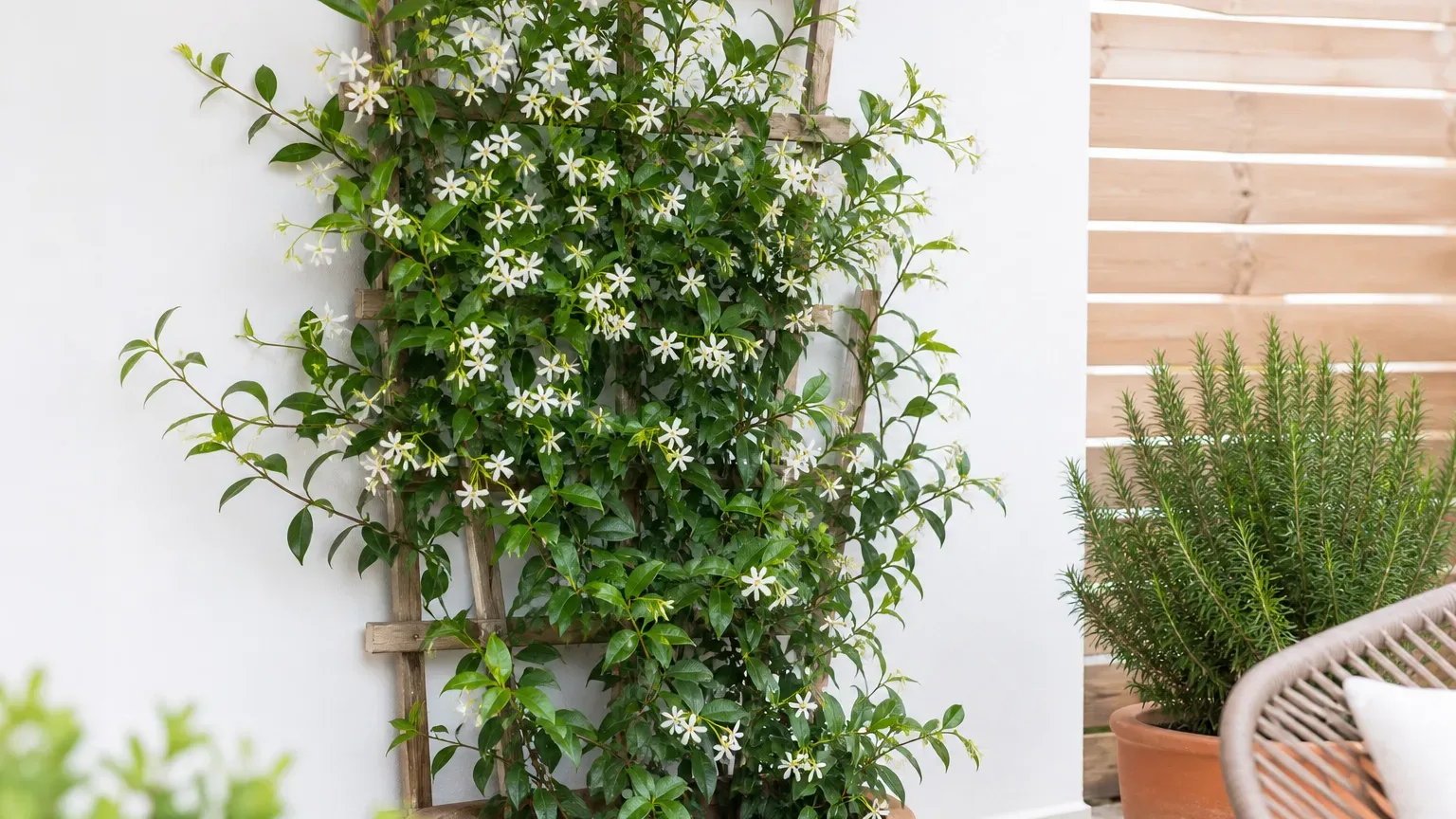
Outdoors is usually the better fit. Star Jasmine is a woody twiner that eventually wants a trellis, wire framework, arch, or railing and strong light across much of its canopy. Give the entire vine light rather than placing only the top shoots in sun while the container and lower growth sit in a dark recess.
RHS lists south-, west-, and east-facing aspects, but also calls for a sheltered position (Royal Horticultural Society). “Sheltered” does not mean dark. It means avoiding cold drying wind and, in hot regions, using a wall, screen, or overhead structure to moderate the harshest conditions without removing useful daylight.
Balconies and gardens in India
On an east-facing balcony, let the vine receive morning sun and bright light into midday. On a south-facing balcony, watch the hottest weeks before monsoon: reflected heat from tiles and glass can make a nominally suitable exposure much harsher. A west-facing balcony is workable when a shade screen, neighbouring structure, or deeper setback blocks the final hours of fierce summer sun.
In open ground, train shoots across a support where both sides receive some sky light. If the plant grows under a tree, choose high, broken canopy rather than dense overhead cover. During cloudy monsoon weeks, do not move the vine deeper into shade merely because temperatures are milder; total daily light has already fallen.
East, south, west and north windows
For indoor or conservatory culture, an east window is the safest default: direct morning sun with lower heat load, followed by bright ambient light. A south window can support better growth, but use distance or a sheer curtain during severe summer heat. At a west window, prevent leaves from pressing against hot glass.
A north window is usually a maintenance position, not a flowering position, unless it is unusually large and unobstructed. Clemson Extension explains that high-light plants generally perform near western or southern windows, while eastern exposures provide medium light; actual intensity changes with season, curtains, outdoor shade, and wall reflectance (Clemson Cooperative Extension). Keep the vine close enough to the window that the leaves see open sky.
Can Star Jasmine take direct sun?
Yes. Species references consistently place it in full sun to part shade, and Clemson’s jasmine guide says Confederate or Star Jasmine grows in sun or part shade (Clemson Home & Garden Information Center). The important qualifiers are climate, root temperature, water supply, and acclimation.
Direct morning sun is lower risk than direct late-afternoon sun. A mature, rooted vine on an open trellis can tolerate exposure that scorches a nursery-grown plant moved abruptly from shade. Heat injury is also more likely behind glass, where air movement is limited, and in small containers that heat and dry rapidly.
Acclimating a vine without scorching it
Increase direct sun over about two weeks. Begin with bright shade and one or two hours of morning sun, add roughly an hour every few days, and pause if fresh leaves bleach or develop crisp patches. Do not combine this move with repotting or a sudden fertilizer increase; the Star Jasmine repotting guide helps you schedule root work separately.
This gradual approach follows broader container guidance from NC State: plants moved outdoors should spend several days in shade before progressively brighter sunlight (NC State Extension Gardener Handbook). Old scorch will not turn green again, so judge the new position by undamaged new leaves and compact new shoots.
Low-light limits
Star Jasmine can tolerate partial shade; it cannot flower reliably in perpetual dimness. If direct sun is absent but the vine receives strong open-sky brightness for most of the day, growth may remain acceptable. If it sits across a room, behind an opaque balcony wall, or under dense tree cover, expect longer gaps between leaves, weaker side shoots, and fewer flowers.
Do not use survival as proof that the placement is good. Evergreen leaves can remain present while the vine slowly loses density. If a healthy, mature plant has not flowered and its newest growth stretches toward the brightest opening, improve light before adding fertilizer; the Star Jasmine fertilizer guide cannot compensate for inadequate photosynthesis.
How light changes growth and flowering
Flowering depends on more than light—plant maturity, pruning timing, root health, and season matter—but poor light is a common limiting factor. The RHS growing guide recommends sun or partial shade for climbing jasmines and describes Star Jasmine as best in full sun, while allowing conservatory protection from hot sun (RHS jasmine growing guide). This supports a useful rule: maximise useful brightness, then temper only the damaging heat.
Light also changes how quickly the pot dries. A vine moved from sun into shade uses water more slowly, so continuing the old schedule can leave roots wet. Re-check the mix rather than watering by calendar; use the Star Jasmine watering guide when light, season, or location changes.
Using a grow light
A grow light can maintain an indoor plant when windows are inadequate, but it must illuminate the vine’s canopy rather than one small patch. Use a broad full-spectrum LED bar or panel on a timer, positioned according to the manufacturer’s plant-light instructions. Start with about 12 hours daily, then adjust distance if new growth stretches toward the fixture or leaves directly beneath it pale.
Artificial light is most practical for a compact, regularly pruned container specimen. It becomes inefficient for a large climbing vine because upper, lower, and side shoots receive very different intensity. Clemson notes that artificial lighting can supplement or replace natural light and that longer duration can partly offset limited intensity, while plants still need a daily dark period (Clemson Cooperative Extension).
Warning signs of the wrong light
Read the pattern, not a single leaf. Light stress usually affects the exposed side first, follows a recent placement change, or alters new growth across the plant. Yellow leaves throughout wet soil point more strongly toward a watering or root problem, which is covered in the Star Jasmine overview.
Signs of too little light
Watch for long gaps between leaves, thin stems, sparse branching, shoots leaning strongly toward one opening, and a mature vine producing few flowers despite appropriate season and care. Soil may also remain wet much longer than it did in a brighter location. Move the plant nearer useful light in stages, then wait for new growth rather than expecting stretched stems to become compact.
Deep shade is especially misleading because the foliage can remain attractive. The plant may look “healthy but quiet” while making little energy for flowers. Compare the newest 20–30 cm of growth with older growth formed in a brighter position; internode length and leaf spacing provide better evidence than leaf colour alone.
Signs of too much sun or heat
Scorch appears as pale, tan, or brown patches concentrated on the window- or sun-facing side. Leaf margins may crisp, and foliage can wilt during the hottest hours even when the root ball is moist. If damage appeared soon after a move, step the plant back into bright shade and restart acclimation more slowly.
Do not confuse normal bronze-red winter colour with scorch. RHS describes the evergreen leaves as often turning deep bronze-red in winter (Royal Horticultural Society). Scorch is usually patchy and papery; seasonal bronzing is more even and occurs with cooler weather.
Seasonal light adjustments
Reassess placement at least three times a year. In the hottest pre-monsoon period, shade harsh afternoon exposure while retaining morning sun. During cloudy monsoon weather, maximise open-sky light and avoid chronically wet, dark corners. In milder winter conditions, a container may benefit from more direct sun, though cold-sensitive plants still need a sheltered site.
After any move, reassess water use for two weeks. Brighter, warmer exposure usually accelerates drying; shade slows it. The Star Jasmine soil guide explains how drainage and container mix affect that response.
When to use this page vs other Star Jasmine guides
Use this page when deciding between sun and shade, choosing a balcony or window, diagnosing stretched growth, or responding to scorch. Use the watering guide when leaves wilt or yellow and the main uncertainty is moisture. Use the fertilizer guide only after the placement supports active growth.
For a plant that needs new root space or dries abnormally fast, use the repotting guide. If the structure is overgrown rather than light-starved, the pruning guide covers training and cuts without confusing shade-induced sparsity with ordinary size control.
Related Star Jasmine guides
Start at the Star Jasmine care overview for the complete growing system. Pair light decisions with watering because every placement change alters dry-down, and check soil when a sunny container overheats or stays wet despite adequate brightness.
For long-term growth, continue with repotting, propagation, and pruning. These guides separate root, training, and propagation decisions from the placement question answered here.
Conclusion
Give Star Jasmine full sun to partial shade, aiming for several hours of gentle direct sun and strong day-long brightness. In hot Indian summers, morning sun with afternoon protection is a reliable starting point; indoors, keep a compact plant close to a bright east or moderated south window. If growth becomes thin and flowers disappear, increase light before feeding. If sun-facing leaves bleach or crisp, reduce heat and acclimate more gradually.