Star Jasmine Watering Guide for Pots and Gardens
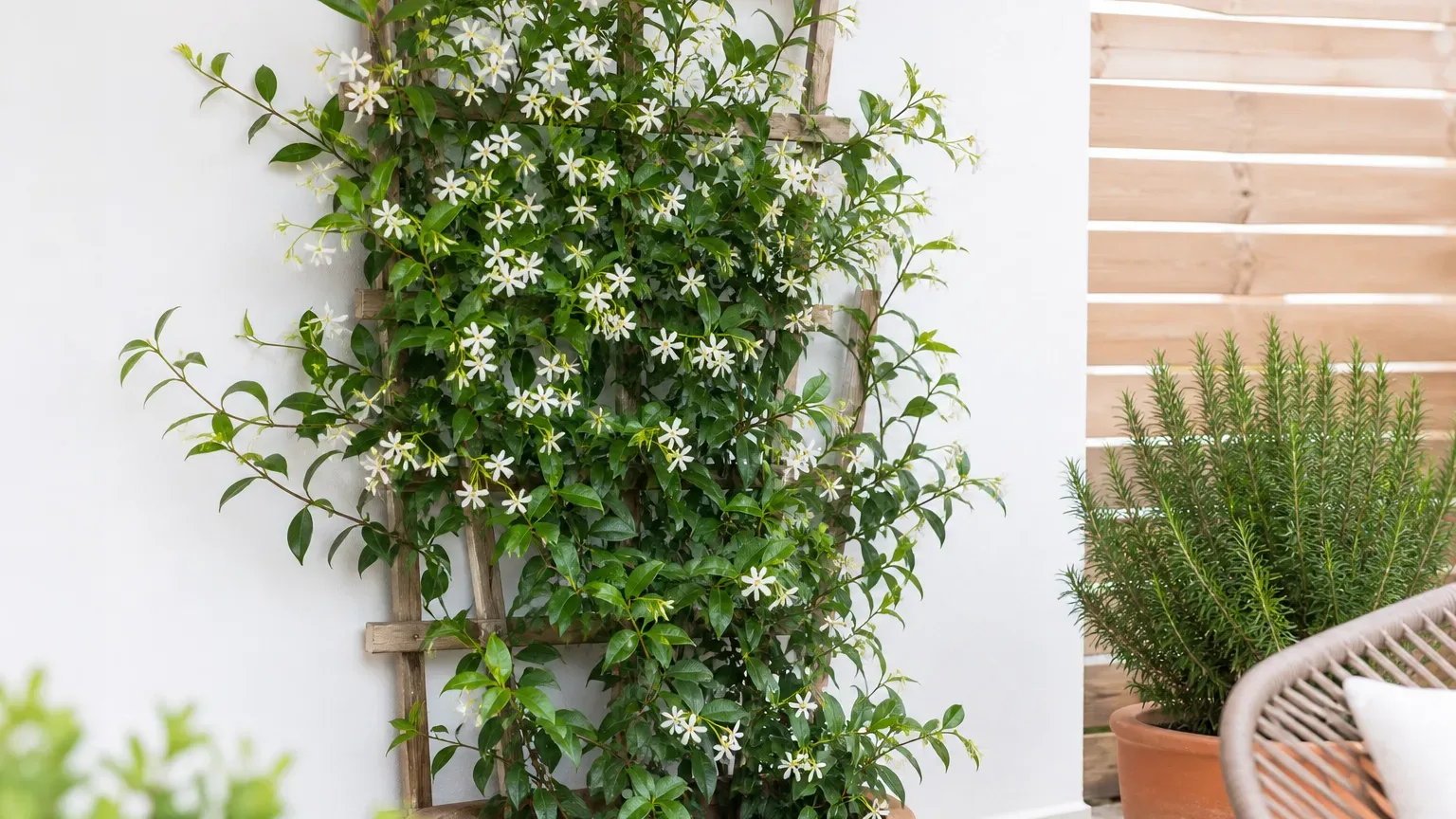
Star Jasmine Watering Guide for Pots and Gardens
Star Jasmine Watering Guide for Pots and Gardens
Star Jasmine (Trachelospermum jasminoides) wants a useful middle ground: roots should receive a complete drink, but they should not remain in stagnant, saturated mix. Clemson Extension describes the species-specific target as moist but well-drained soil, while NC State records both moisture and good drainage among its cultural conditions. That combination is more precise than either “keep moist” or “drought tolerant” on its own.
For a container, the practical trigger is a dry top 2–3 cm combined with a noticeably lighter pot. Water the whole root ball until excess leaves the drainage holes, empty the saucer, and then wait for the same checks to pass again. A young vine in the ground needs regular establishment water; a mature, rooted vine needs much less intervention and can tolerate dry periods better, a trait also noted by NC State Extension.
The quick answer: water by soil condition, not the calendar
There is no dependable “every three days” or “once a week” rule for Star Jasmine. A vine on a sunny Jaipur terrace in a terracotta pot can dry far faster than the same species in a large glazed container on a humid Kochi balcony. The right interval changes with root mass, pot material, light, temperature, wind, rainfall, and season.
Use a reminder to check, not automatically water. Missouri Botanical Garden advises matching watering to room conditions and notes that stronger light and higher temperatures can increase demand. Its indoor-watering guidance also explains that yellowing and wilt can result from either excess or insufficient water, which is why touching the mix matters more than reading the leaves alone.
When Star Jasmine actually needs water
Water a potted Star Jasmine when the top 2–3 cm has dried and the root ball no longer feels heavy with stored water. The mix below that surface layer should still be slightly cool rather than dusty throughout; this evergreen vine is not a cactus and does not need the entire pot to remain bone-dry for days. If the surface is dry but the pot is heavy, wait and check again.
For an established vine in open ground, inspect below any mulch and water during prolonged rainless weather when the soil is dry several centimetres down. New plants have a smaller working root zone, so check them more frequently through their first growing season. Even then, the goal is to wet the root area deeply and allow air to return, not to keep the planting hole continuously muddy.
Check the top 2–3 cm and the pot’s weight
Insert a finger into the mix away from the woody crown. If the upper 2–3 cm feels dry and little mix clings to your skin, lift or tilt the pot safely. A lighter container confirms that moisture has been used below the surface; a heavy one warns that deeper mix is still wet.
Pot weight becomes more reliable after you compare the same plant immediately after watering and again as it dries. Missouri Botanical Garden calls lifting the pot one of the best quick moisture checks and warns that a heavy pot may still be wet enough for another watering to create soggy conditions.
Use a skewer for deep or heavy containers
Large balcony planters may be impossible to lift. Push a clean wooden skewer partway into the root zone, leave it briefly, and withdraw it. Darkened wood with damp mix attached means wait; mostly clean, dry wood supports watering when the surface check agrees.
Probe more than one location in very wide containers because edges can dry while the middle remains wet. Moisture meters can supplement these checks, but salts, dense pockets, and uneven contact can distort a single reading. Treat the plant, finger test, skewer, and drainage history as a combined diagnosis.
How to water Star Jasmine thoroughly
Pour slowly across the potting surface rather than directing a hard stream at the stem. Pause if water races down a gap at the rim, then continue until the root ball is evenly wetted and runoff appears. Botanical-garden guidance recommends watering the root ball until water exits below, followed by disposal of the excess.
Let the container drain completely and empty the saucer or decorative outer pot. Do not leave the nursery pot standing in runoff, because water can wick back into the mix and displace air. Frequent small sips are also a poor substitute: they may wet only the upper roots and encourage an uneven root ball while deeper sections remain dry.
Ground-grown vines benefit from slow, deep irrigation over the root zone. Apply water broadly around the plant rather than only against the trunk, then let the upper soil begin drying before irrigating again. A shallow daily sprinkle keeps roots near the surface and is less resilient than a complete wetting followed by a reasonable interval.
Pots, new plantings, and established vines need different routines
Containers need the closest attention. Their limited mix heats quickly, roots cannot explore beyond the pot, and wind can dry a trained vine’s foliage rapidly. Check every two or three days during very hot weather, but water only when the moisture tests say the pot is ready. This is a checking frequency, not a watering prescription.
New ground plants need establishment support. Water after planting to settle soil around the roots, then monitor the original root ball because it can dry differently from surrounding soil. During the first warm season, intervene before the young vine wilts severely, while still allowing drainage between soakings.
Established ground vines are more forgiving. Once roots spread into suitable soil, Star Jasmine develops meaningful drought tolerance, but flowering and fresh growth can still suffer during long hot dry spells. A deep soak during sustained drought is more useful than routine light watering throughout the year.
Seasonal watering in India and similar climates
Star Jasmine uses water fastest when warmth, strong light, wind, and active growth coincide. In much of India, that means checks become frequent before the monsoon, especially for balcony pots exposed to reflected heat. Flowering plants should not be pushed into repeated severe wilt, because buds and tender shoots are the first growth you are likely to lose.
Seasonal change should alter how often you inspect the pot, not the amount used in a proper watering. When watering is required, wet the root ball completely. What changes is the length of the dry-down interval: it contracts in hot, bright, windy conditions and expands in cool, cloudy, or humid weather.
Hot summers, monsoon rain, and cooler winters
During extreme summer heat, check small pots daily and large pots every couple of days. Move a repeatedly wilting container out of harsh afternoon heat, verify that roots have enough room, and improve the watering setup before simply adding daily water. The Star Jasmine light guide helps separate excess heat exposure from a genuinely dry root ball.
During monsoon, stop routine irrigation when rain reaches the pot or bed. Confirm that balcony planters drain freely after each storm and remove saucers that collect rain. In humid, cloudy periods, evaporation slows even when the air feels warm, so a schedule carried over from May can waterlog roots in July.
In cooler winter weather, growth and dry-down usually slow. Check less often and allow the upper mix to dry before watering, especially for a vine receiving weaker light. University of New Hampshire Extension emphasizes that houseplant watering frequency changes with light, temperature, humidity, and growth, not the date alone.
Signs of overwatering
Overwatered Star Jasmine often shows several clues together: widespread yellowing, limp leaves while the mix is still wet, slow growth, a sour smell, and a pot that remains heavy for many days. Fungus gnats or green growth on the mix suggest chronic surface moisture, although neither proves root rot by itself. A single old yellow leaf is not enough evidence.
Saturated soil contains less oxygen for roots, and prolonged overwatering can lead to root decay. Missouri Botanical Garden’s overwatering guidance explains the low-oxygen mechanism and the misleading combination of yellowing or wilt with wet soil. If the pot is wet, do not answer wilt with another drink.
Stop watering, empty standing runoff, and improve light and airflow without baking the plant in sudden hot sun. If the mix is sour, the vine is collapsing, or the stem base is soft, inspect the roots and move to the Star Jasmine repotting guide for corrective steps.
Signs of underwatering
An underwatered vine usually has a light pot, dry mix, drooping or inward-curling leaves, crisp margins, and sometimes bud or flower drop. In severe cases, potting mix shrinks from the container wall and water initially runs through the gap. These signs overlap with root damage, so confirm dryness before acting.
Rehydrate with one slow, complete watering. If the mix has become water-repellent, apply water in two or three passes a few minutes apart so the root ball absorbs it rather than shedding it. Let excess drain, then return to moisture checks; do not compensate with small daily drinks.
If a fully watered pot stays limp after a day and remains heavy, the problem is unlikely to be simple thirst. Check for damaged roots, blocked drainage, intense heat, or a recently disturbed root ball before adding more water.
How soil, pot size, and light change the interval
Star Jasmine performs best in fertile soil that holds useful moisture while draining excess. Clemson’s species profile specifically pairs moisture with drainage, so adding more water cannot repair a compacted, airless mix. Use the Star Jasmine soil guide if water ponds on top, drains down the wall, or leaves the pot wet for an unusually long time.
Plastic and glazed ceramic generally dry more slowly than unglazed terracotta. Oversized pots also hold a larger reservoir of uncolonized wet mix; Missouri Botanical Garden advises choosing containers with drainage holes and notes that overly large pots can remain wet around small root balls. Never place a small rooted vine directly into a dramatically larger decorative planter just to reduce watering.
Brighter light, heat, and moving air shorten the interval, while shade, cool weather, humidity, and dense mix lengthen it. Fertilizer does not correct waterlogged roots; wait until the watering rhythm is stable, then use the Star Jasmine fertilizer guide for feeding decisions.
What to do when the symptoms are unclear
Start with the root-zone evidence. If the pot is light and the mix is dry at depth, water thoroughly. If it is heavy and wet, withhold water and let it drain. If the surface and deeper readings disagree, wait a day and check again unless the plant is in dangerous heat.
For persistent wilt in wet soil, tip the root ball out gently when practical. Healthy roots are firm; decaying roots are dark, soft, and may smell unpleasant. Do not repeatedly unpot a healthy vine, but inspection is justified when wet-soil wilt, sour mix, or rapid decline points below ground.
After a watering mistake, avoid stacking stresses. Do not fertilize a struggling root system, hard-prune the vine, and repot it all on the same day unless rot makes repotting unavoidable. Correct the moisture problem first and keep conditions steady while you watch for firm new growth.
Common Star Jasmine watering mistakes
The most common mistake is watering by weekday instead of dryness. Others include leaving runoff in a cachepot, giving frequent shallow sips, assuming every wilt means thirst, and continuing pre-monsoon frequency through weeks of rain. Each mistake separates the watering decision from the actual root-zone condition.
Another mistake is treating “drought tolerant once established” as “never needs water.” A mature landscape vine can survive dry spells better than a newly planted or container-grown specimen, but prolonged drought can still reduce flowering and damage tender growth. Conversely, “moist soil” does not mean permanently saturated soil.
Finally, do not use misting as root irrigation. Wet foliage changes neither the moisture stored in the root ball nor the need for drainage. Direct water to the mix, keep the crown area aerated, and let observations from the same pot guide the next check.
When to use this page vs other Star Jasmine guides
Use this guide to decide whether to water, how to water, and how to interpret wet-versus-dry symptoms. Start at the Star Jasmine overview when you need whole-plant identity, placement, size, or seasonal context. Use the soil guide when drainage or mix structure prevents a reliable dry-down.
Move to repotting when roots are crowded, the pot dries within a day, or wet mix and damaged roots require replacement. Consult light when heat and exposure are driving unusually fast water loss, and use propagation only if healthy material must be saved from a failing root system.
Related Star Jasmine guides
- Star Jasmine overview — species identity and complete care context.
- Star Jasmine light — sun, shade, heat, and placement.
- Star Jasmine soil — moisture retention balanced with drainage.
- Star Jasmine repotting — pot size, root inspection, and recovery.
- Star Jasmine fertilizer — feeding after roots and watering are stable.
- Star Jasmine propagation — starting replacement vines from healthy material.
Conclusion
Successful Star Jasmine watering is a repeatable decision, not a fixed interval. Let the top 2–3 cm dry, confirm that a container feels lighter, then soak the entire root ball and remove every bit of standing runoff. Check often in hot, windy weather, but reduce irrigation sharply during monsoon rain and cooler, slower growth.
Keep the distinctions clear: pots dry faster than beds, new plantings need more support than established vines, and wilt in wet soil calls for investigation rather than another drink. With free drainage and a moisture-triggered routine, Trachelospermum jasminoides can stay evenly supplied without living in saturated soil.