Star Jasmine Repotting: When and How to Do It
Star Jasmine Repotting: When and How to Do It
Star Jasmine Repotting: When and How to Do It
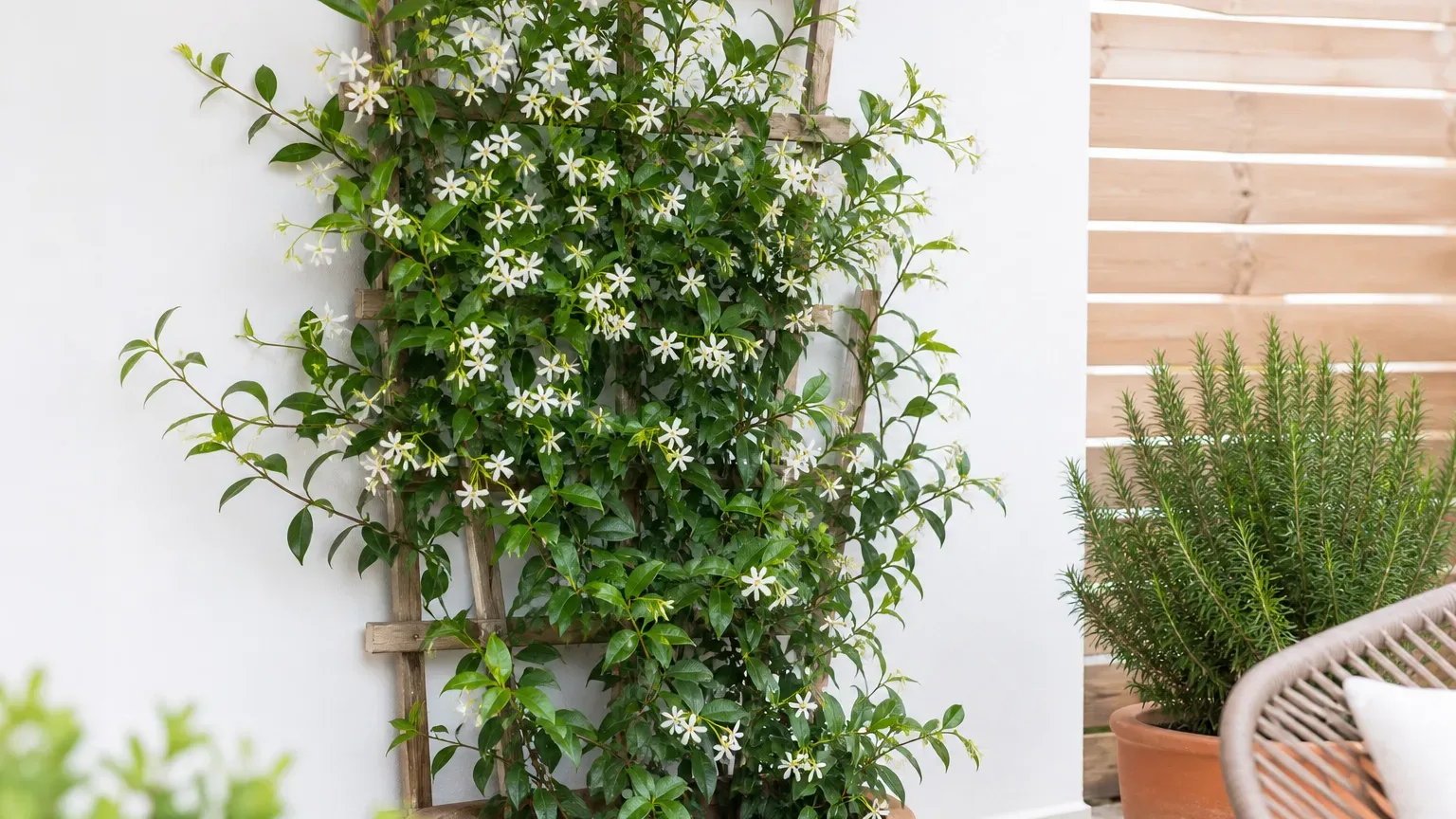
Repot Star Jasmine (Trachelospermum jasminoides) when the container has become a real constraint, not simply because another year has passed. A healthy plant commonly needs a larger pot or a full mix refresh every two to three years, but the decisive evidence is a crowded root ball, unusually fast drying, poor drainage, or an unstable vine. This is a woody, self-twining climber rather than a true Jasminum; the Missouri Botanical Garden describes it as an evergreen woody perennial that can be trained as a vine, shrub, or ground cover.
Container-grown Star Jasmine presents one complication that small houseplants do not: its stems may already be tied across a trellis or balcony frame. The safest repot preserves most of the root ball, moves up only one pot size, and keeps the support stable while fresh, free-draining mix is worked around the roots. If the plant is growing well, drains predictably, and remains steady in its pot, waiting is often better than disturbing it.
Signs Star Jasmine needs repotting
Start with the root zone. Repot when roots form a dense mat around the outside of the root ball, emerge repeatedly from drainage holes, or leave so little mix that the pot dries within a day in warm weather. Penn State Extension likewise identifies roots through drainage holes or a pot-bound root system as practical reasons to move a plant into a larger container.
Growth symptoms are less conclusive by themselves. A Star Jasmine that has stalled despite suitable light, seasonal warmth, and sensible feeding may lack root room, but sparse growth can also come from shade and yellow leaves can come from overwatering. Slide the root ball partway out and inspect it before deciding. The plant’s natural habit matters here: authoritative profiles describe it as a vigorous, self-twining woody climber, so a top-heavy plant may need a wider, heavier container even before roots block every hole.
Root and drainage clues
A root-bound Star Jasmine usually lifts from its pot as one firm cylinder, with thick roots circling the wall and few loose crumbs of mix visible. University of Georgia Extension defines root-bound woody container plants by roots that overlap, circle the bottom, and turn upward along the wall; its repotting guidance also notes that restricted roots can reduce water and nutrient uptake. One circling root is not an emergency, but a continuous outer mat means fresh room is overdue.
Watch how water behaves. If water races down gaps at the pot wall while the centre stays dry, the old root ball may be compacted or difficult to rewet. If drainage has become slow and the mix remains sour-smelling and wet, do not assume a bigger pot is the cure: check for dark, soft roots and treat the move as a rot rescue. Review the Star Jasmine watering guide before changing both pot size and watering frequency at once.
When not to repot
Do not repot for one yellow leaf, a short pause after flowering, or normal bronze-red foliage in cool weather. NC State Extension records both the plant’s evergreen climbing habit and bronze-red winter colour, so seasonal colour alone is not evidence of failed soil. Diagnose light, temperature, pests, and moisture first.
Top-dressing is enough when the root ball still has space and drainage is sound but the surface has crusted or settled. Remove the loose upper 3–5 cm of mix without exposing major roots, replace it with fresh mix, and water it in. This buys time; it cannot correct circling roots, a broken container, root rot, or a vine that repeatedly tips.
Best time to repot Star Jasmine
Early spring, just before strong new growth, is the safest routine window. Roots can colonise fresh mix while temperatures and light are increasing, and the vine has a full growing season to regain its grip. Spring is also the normal time to inspect supports and redirect stray stems, although a full repot and hard pruning on the same day can impose more disturbance than necessary.
Urgent problems override the calendar. Repot immediately if the container cracks, the plant cannot stand safely, or roots are rotting in persistently wet mix. Use the smallest effective intervention outside spring: retain healthy roots, avoid an oversized pot, and keep the plant in stable light and temperature while it recovers.
Timing in India and tropical climates
For much of India, choose a mild period from late winter into early spring, before severe pre-monsoon heat. Repotting during a 38°C balcony heat wave raises water stress, while moving into a moisture-retentive oversized pot just as sustained monsoon rain begins can keep roots saturated. In cooler hill climates, wait until nights are reliably mild; in warm coastal climates, use plant growth and the weather forecast rather than a temperate-month rule.
Repot in morning or late afternoon and protect the disturbed plant from hard afternoon sun for several days without moving it into deep shade. The University of Minnesota Extension treats spring as a useful time to inspect and repot actively growing houseplants; for outdoor Star Jasmine in India, the same growth principle applies, but local heat and rain determine the exact week.
Choose the right container
The new container needs unobstructed drainage holes, enough base width for the trained vine, and room for a modest ring of fresh mix. A decorative cachepot without drainage is not a planting pot. Keep Star Jasmine in a draining inner container and empty collected runoff if you want to use one.
Check the support before choosing a pot. A trellis fixed to the old container may need to move with the root ball, while a vine trained onto wall wires needs enough slack to let you lift the pot. Do not select a tall narrow pot solely for appearance; once wet mix, foliage, and a trellis act as levers, a broad base is safer.
Use the one-size-up rule
Choose a pot about 2–5 cm wider in diameter than the current one. University of Arkansas Extension recommends that a new houseplant pot be no more than 2 inches wider, with a drainage hole and the root ball kept at its original level. A similar increment suits Star Jasmine because it adds usable root room without surrounding the old root ball with a large mass of slowly drying mix.
Measure the inside rim rather than the decorative outer width. If the existing container is 30 cm across, a new pot around 33–35 cm is usually sufficient. A plant that is extremely root-bound may still need only one size up after outer roots are loosened; using a much larger pot is not a substitute for correcting the root mat.
Match pot material to moisture and stability
Unglazed terracotta loses moisture through its porous wall, which can help in humid or rainy conditions but demands more frequent checks in dry heat. Plastic and glazed ceramic retain moisture longer. A heavy ceramic, terracotta, stone, or concrete container can stabilise a mature trained vine, while a plastic nursery pot is easier to lift and can sit inside a weighted outer pot.
Choose according to your conditions, not a universal “best” material. A west-facing terrace in Jaipur may make unglazed clay dry very quickly; a sheltered monsoon balcony in Kochi may benefit from its faster moisture loss. Whatever the material, drainage holes and a stable footprint matter more than the label.
Soil mix for repotting Star Jasmine
Star Jasmine needs a mix that holds useful moisture but releases excess water and retains air after repeated irrigation. The species is adaptable to several soil types, and RHS lists moist but well-drained conditions across acid, neutral, and alkaline soils. In a container, structure is more important than chasing an exact pH number.
A practical blend is 50% loam-based potting mix, 30% peat-free multipurpose compost or fine composted bark, and 20% perlite, pumice, or coarse horticultural grit. Mix the ingredients evenly rather than putting stones in a “drainage layer.” The blend should compress lightly in your hand but separate again when touched; sticky garden soil alone is too dense for long-term container use.
Discard sour, waterlogged mix and any material taken from a rot case. If the old mix is healthy and roots are only moderately crowded, keep the central root ball intact rather than washing every particle away. Fresh mix belongs around and beneath that core, with the original stem level preserved.
How to repot Star Jasmine step by step
Prepare the new pot, mixed medium, gloves, clean pruners, soft ties, and a second pair of hands for a large trained vine. Water a very dry plant the day before so the root ball is lightly moist and cohesive, but do not begin with saturated soil. Then follow this sequence:
- Release the support. Photograph the tie points, loosen only the stems that prevent movement, and support long shoots so they do not kink.
- Remove the pot. Lay a manageable plant gently on its side or have a helper hold the trellis. Squeeze a flexible pot or run a blunt knife around a rigid rim; never pull by the vines.
- Inspect the roots. Healthy roots should be firm. Tease out the outer layer of circling roots; trim only dead, broken, or soft dark tissue with clean tools.
- Set the height. Add mix beneath the root ball so the old soil line remains 2–3 cm below the rim. Do not bury woody stems deeper.
- Backfill. Hold the plant centred, add mix around the sides, and work it into large gaps with your fingers or a chopstick. Firm gently without compacting it.
- Reconnect support. Refit the trellis or retie stems loosely to fixed wires before the pot becomes awkward to move.
- Water once thoroughly. Let water run from the holes, allow the pot to drain, and empty the saucer.
Inspect and manage the root ball
Treat root work proportionally. A few circling roots can be teased outward by hand. A dense woody mat may need several shallow vertical cuts around the outer edge with a clean knife, but aggressive removal of healthy roots increases stress and is unnecessary in a routine move. Penn State’s guidance on woody container plants explains why circling roots should be corrected rather than left to continue around the container.
Root rot requires a different standard. Remove collapsing, brown-black roots and contaminated mix, clean the tool between cuts, and repot into fresh airy medium in a container that matches the reduced root system. Do not automatically move up a size after substantial root loss.
Protect the vine and support
Star Jasmine stems twine; they do not attach to a wall with adhesive pads. Keep the trellis aligned with the root ball and avoid using stems as handles. Where vines are already spread across fixed wires, bring the new pot close, lift only as far as the slack permits, and have one person manage stems while another handles the root ball.
Retie with soft, loose loops that allow thickening. Check that the root ball does not rock when the trellis moves; add and lightly firm mix beneath low spots rather than pressing hard on the surface. If a fixed support makes a full repot impossible, replace the upper mix and seek help before tearing established stems free.
Care after repotting
Place the plant in bright, sheltered light for about a week, protected from intense afternoon sun and strong drying wind. Do not hide it in a dark room: Star Jasmine still needs enough light to resume growth. Return it gradually to its normal exposure once leaves hold firm and the pot is drying predictably; see the Star Jasmine light guide for placement details.
After the first thorough watering, check the mix rather than following the old calendar. The extra soil volume usually dries more slowly, so water when the upper 2–3 cm is dry and then drain fully. Hold fertiliser until the plant shows stable new growth, especially if the fresh mix contains nutrients; the Star Jasmine fertilizer guide explains how to restart feeding without stacking root disturbance and salts.
Slight droop for a few days can reflect handling, but worsening wilt in wet soil, spreading yellow leaves, a sour smell, or a loose stem base is not normal recovery. Check drainage and root condition instead of adding repeated small drinks. Do not promise flowers immediately after a repot: renewed vegetative growth and a stable watering rhythm are better early signs.
Common repotting mistakes and recovery
The most common error is an oversized pot. Correct it if the outer mix stays wet for many days while the original root ball remains small: move back to a closer-fitting draining pot before roots decline. Other frequent mistakes are burying stems, compacting the mix, leaving runoff in a cachepot, fertilising immediately, and placing a disturbed plant in harsh midday sun.
Over-handling the roots can cause a limp canopy even when moisture is correct. Keep conditions steady and avoid “fixing” the plant every day. If healthy roots were retained, patience and careful moisture checks are usually safer than another immediate repot. For compacted or poorly draining media choices, use the Star Jasmine soil guide to correct the mix rather than altering light or fertiliser at random.
When to use this page vs other Star Jasmine guides
- Use the Star Jasmine overview for whole-plant identity, placement, support, and seasonal care.
- Use the watering guide when roots look healthy but the pot alternates between drought and saturation.
- Use the soil guide to adjust ingredient ratios for a hot, dry terrace or a humid monsoon balcony.
- Use the propagation guide if you want another plant; routine repotting is not a reason to divide this woody vine.
- Use the pruning guide for overgrown shoots, but avoid combining severe pruning and unnecessary root reduction in one session.
Related Star Jasmine guides
- Star Jasmine care overview
- Star Jasmine light
- Star Jasmine watering
- Star Jasmine soil
- Star Jasmine fertilizer
- Star Jasmine propagation
- Star Jasmine pruning
Conclusion
Successful Star Jasmine repotting begins with evidence: dense circling roots, exhausted or poorly draining mix, very rapid drying, or an unstable trained vine. Move it in early spring when possible, choose a draining container only 2–5 cm wider, preserve the original planting depth, and use a moisture-retentive but airy loam-based mix.
The plant’s support deserves as much planning as its roots. Prepare ties and help before lifting, disturb only the roots that need correction, then let light, careful watering, and time do the recovery work. If the root ball still has space and the plant is stable, top-dressing and waiting may be the better intervention.