Wilting on Star Jasmine: Causes, Checks & First Fix
Quick answer
Wilting on Star Jasmine does not automatically mean it needs more water. First feel the root ball: water only if it has dried; if it is wet, check drainage and roots before adding more.
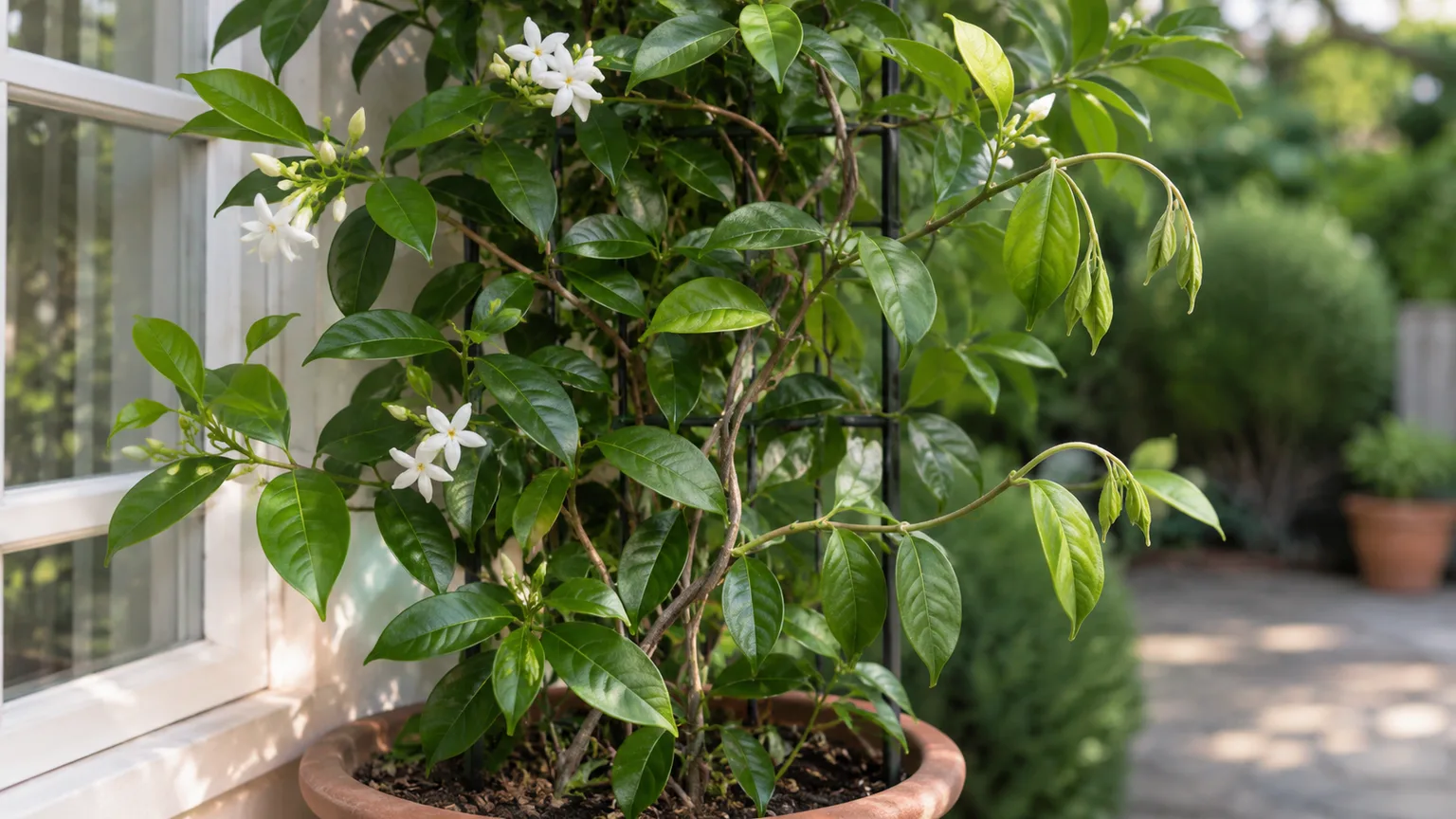
Wilting on Star Jasmine: Causes, Checks & First Fix
This guide covers wilting on Star Jasmine. See also the general Wilting guide, watering, and light pages for this plant.
Wilting on Star Jasmine: Causes, Checks & First Fix
Quick answer
Check the root ball before you water. Wilting on Star Jasmine is a sign that the shoots are not maintaining their usual firmness, but it does not identify the cause. If the mix has dried through, water it thoroughly; if the root zone is still wet, stop adding water and check drainage instead. Wilting can follow dry soil, but plants can also wilt when hot, windy conditions increase water loss or when wet soil leaves roots in poor condition (Wisconsin Horticulture explains the different causes).
Star Jasmine (Trachelospermum jasminoides) is an evergreen twining vine, not a true Jasminum. It grows best in fertile, well-drained soil and, once established, can tolerate some drought (NC State Extension’s species profile). That drought tolerance is not a reason to ignore a newly planted vine, a container whose root ball dries quickly, or a plant that is wilting in wet soil.
What wilting looks like on Star Jasmine
The newest shoots and leaves may hang below their normal position, while older leaves can look limp or curled. Some leaves may later yellow or dry at the edges if the stress continues. A few drooping tips do not prove that the entire vine is failing: compare affected shoots with the rest of the plant and note whether the symptom began after watering, repotting, a hot afternoon, or a change in exposure.
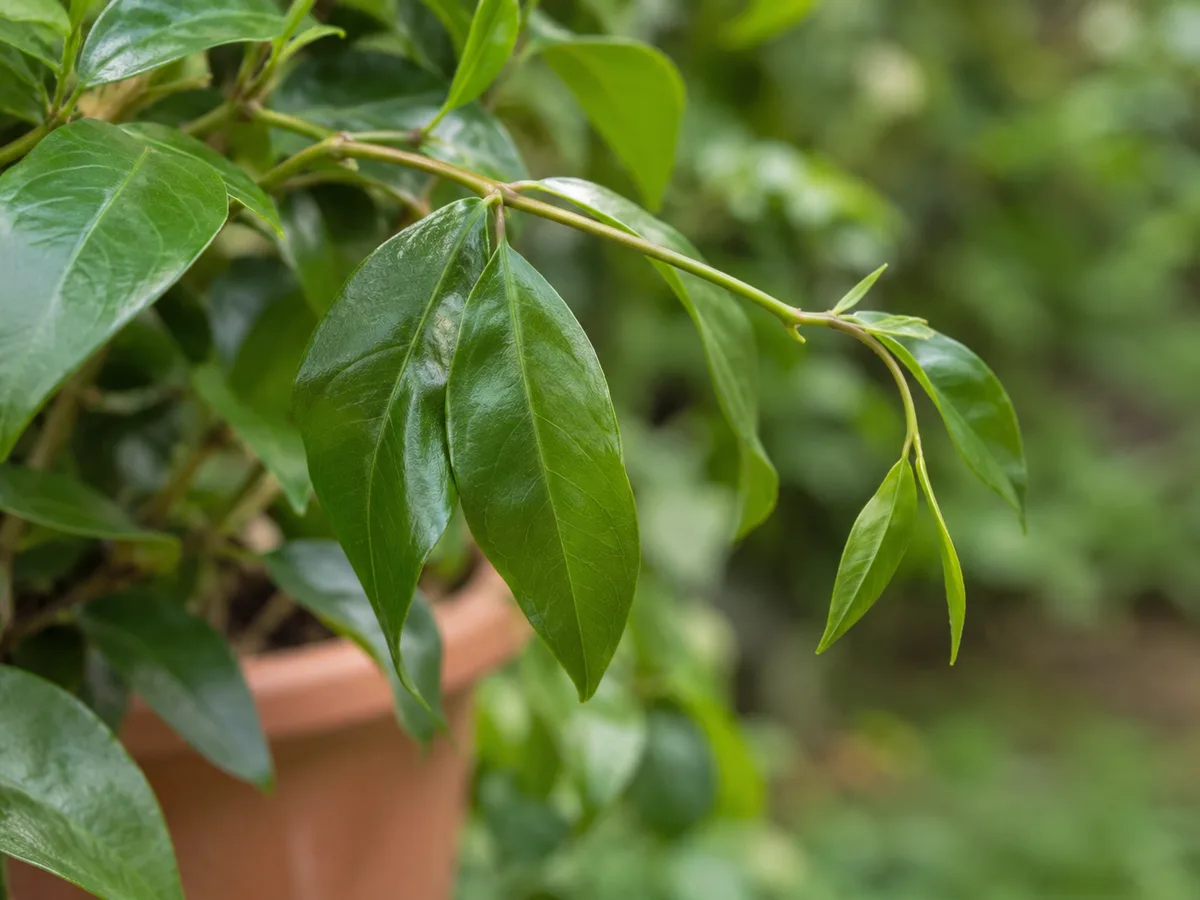
Drooping Star Jasmine shoot tips can reflect dry soil, heat stress, or impaired roots; check the root zone before watering.
Why Star Jasmine wilts
The root ball has dried out
A dry root zone cannot supply water quickly enough to keep leaves and shoots firm. This is more likely in a pot, after a recent planting, or during a hot or windy period. Established Star Jasmine is drought-tolerant, but that describes a settled vine, not a guarantee that every container or young plant can go without water.
The soil is staying wet
Wilting in wet soil is a warning to look below the surface rather than water again. Roots need oxygen as well as moisture; excessively wet soil can reduce oxygen and root function, leaving the shoots short of water even while the mix feels damp (Wisconsin Horticulture). Persistent saturation can also contribute to root rot. Affected roots may be dark and soft rather than firm, and the plant can continue wilting despite repeated watering (Gardening Know How’s root-rot guide).
A blocked drainage hole, a pot left in a full saucer, compacted soil, or frequent watering before the root zone dries can keep the roots too wet. Star Jasmine prefers well-drained soil; it should not sit in standing water.
Heat or wind is increasing water loss
A vine can droop in the hottest part of a sunny, windy day even when the soil still contains moisture. Heat, wind, and low humidity can speed water loss from leaves; some plants recover when conditions cool (Wisconsin Horticulture). Star Jasmine tolerates sun, but Oregon State University notes that partial shade can suit it in hot areas (Oregon State Landscape Plants).
If only exposed tips droop at midday and firm up later without extra water, heat or wind is more likely than a dry root ball. If the whole vine stays limp overnight, inspect the soil and roots rather than assuming the weather is the only cause.
How to confirm the cause
- Check below the surface. Feel the mix several centimetres down near the root ball, not just the dry crust. For a container, lift it and note whether it feels unusually light or heavy compared with after a normal watering.
- Look for a recent trigger. Recall the last thorough watering, rainfall, repotting, move, or unusually hot and windy day. A recent transplant can disturb roots, while repeated watering into damp soil can reduce root health (Garden Myths describes why wilting is not always a cue to water).
- Check drainage. Make sure water can escape from the pot and that the container is not standing in runoff. In the ground, check whether the site remains puddled or saturated after rain.
- Inspect roots only if the evidence points there. If the mix stays wet and the vine continues declining, slide the root ball out carefully. Healthy roots should feel firm; soft, dark, decaying roots and a persistently sour smell support root rot rather than thirst. Do not pull apart a stable root ball just to investigate a brief afternoon droop.
The first fix to try
Match the next action to the root-zone moisture. If the root ball is dry, water slowly and thoroughly until excess drains out, then empty the saucer. If it is already wet, do not add more water: clear the drainage path and let the mix begin to dry. This simple check avoids worsening root stress by treating every wilt as thirst.
For a vine wilting during a hot, windy afternoon while the mix is moist, temporarily shelter a container from the harshest exposure and reassess it in cooler conditions. For in-ground Star Jasmine, do not dig it up or drench it as a first response; observe whether it recovers and whether the soil drains. The species can grow in sunny conditions, with partial shade an option in hot areas.
Recovery and when to escalate
If the cause was a dry root ball, the leaves may regain firmness after watering, but badly dried or yellowed tissue may not return to its former appearance. Judge recovery by firm new growth and the end of symptom spread, not by expecting every affected leaf to become perfect again. If the vine stays limp while the mix remains wet, turns progressively yellow, or develops soft stems, inspect drainage and roots promptly.
When a container has extensive root rot, remove only clearly decayed roots with clean tools and repot into fresh, free-draining mix in a pot with open drainage. Do not apply fertilizer to a stressed vine or combine repotting, heavy pruning, and extra watering on the same day. If most roots are soft and the main stems are declining, recovery is uncertain; preserve healthy sections only if they remain firm.
Prevent wilting on Star Jasmine
Plant or repot Star Jasmine in a well-drained medium and a container with drainage holes. NC State Extension recommends fertile, well-drained soil for this vine, while Oregon State notes partial shade as an option for hot sites. Water the root zone when its moisture check calls for it instead of following a rigid calendar, and empty standing runoff.
During hot, windy spells, check container vines more often, especially if recently planted. For established in-ground vines, avoid routine watering while the soil is still moist; the species has some drought tolerance once established.
Related checks
- Compare with root rot on Star Jasmine if the soil stays wet and the vine continues to decline.
- Review overwatering on Star Jasmine and underwatering on Star Jasmine to compare root-zone patterns.
- Check yellow leaves on Star Jasmine if foliage is also yellowing.
- See the broader wilting symptom guide for shared diagnostic steps.
Related tool
Use the Plant Watering Calculator to review watering conditions for this vine before changing more than one care variable.