Aphids on Star Jasmine: Identify and Treat Them
Quick answer
Aphids on Star Jasmine cluster on soft shoot tips and flower buds, leaving sticky honeydew and sometimes curled new leaves. First rinse the affected shoots with a steady stream of water, then inspect the vine again in a few days.
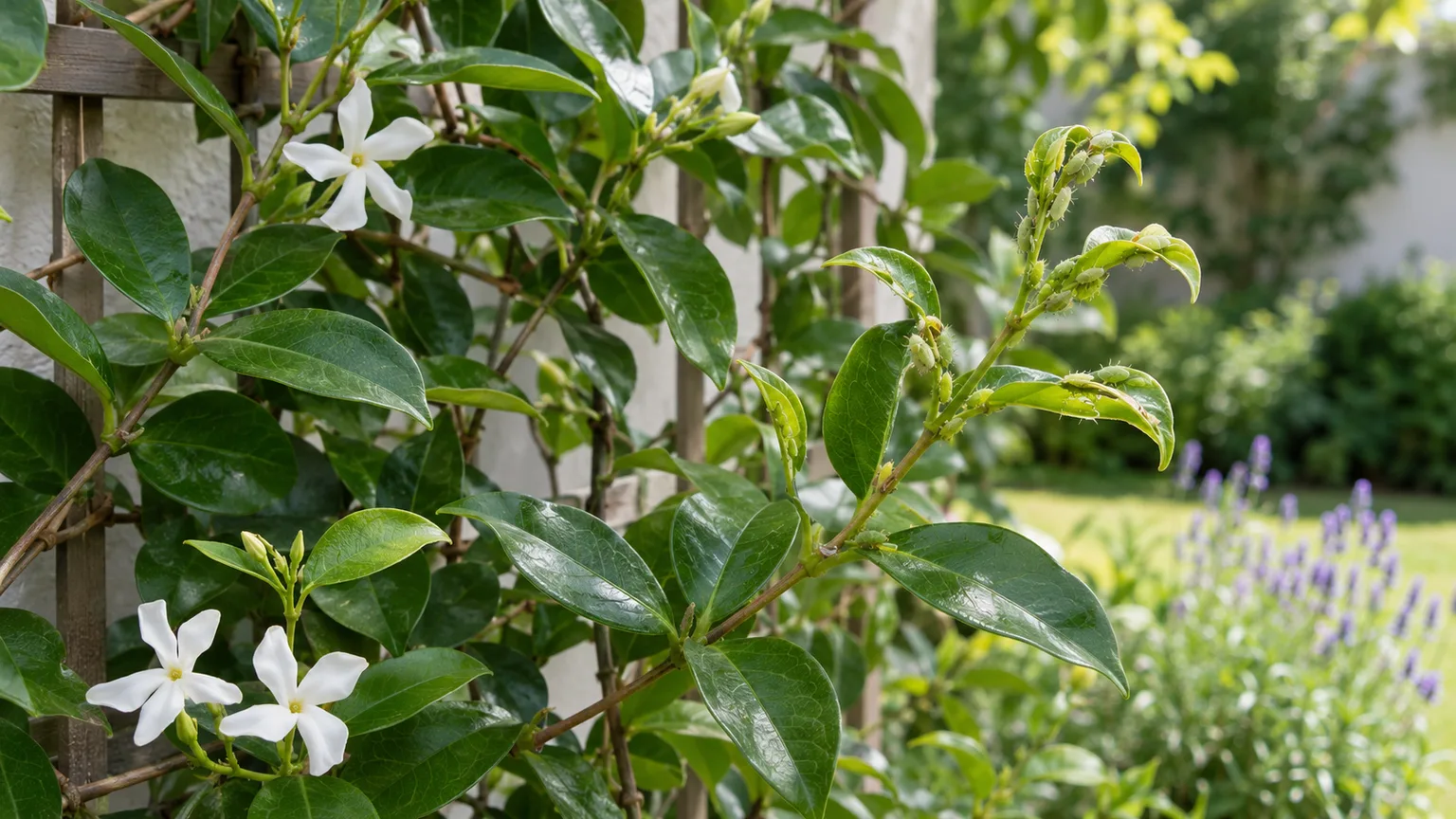
Aphids on Star Jasmine: Causes, Checks & Fixes
This guide covers aphids on Star Jasmine. See also the general Aphids guide, watering, and light pages for this plant.
Aphids on Star Jasmine: Causes, Checks & Fixes
Quick answer
Aphids are small, soft-bodied insects that gather on Star Jasmine’s soft new shoots, leaf undersides, and flower buds. Look for a cluster of pear-shaped insects, pale shed skins, sticky honeydew on leaves below them, or young leaves that have curled while expanding. Rinse the affected growth first; do not start with pesticide or a hard trim.
Star Jasmine (Trachelospermum jasminoides) is an evergreen, woody twining climber with glossy opposite leaves and stems that weave through a support. Its dense, layered growth gives aphids sheltered spots around the newest tips, especially during a flush of growth. The species is a twining vine rather than a true Jasminum; see the Star Jasmine overview if you need to confirm the plant identity.
Where aphids hide on a Star Jasmine vine
Begin at the softest, palest growth. Turn the youngest leaves over and inspect the tight junction where each leaf meets its shoot. Aphids often form colonies on tender stems and buds; the insects may be green, yellow, brown, red, or black, so color alone is not a reliable test. Their pear-shaped bodies, slow movement, and close grouping are more useful clues. UC IPM describes aphids as soft-bodied insects that feed in groups and leave sticky honeydew.
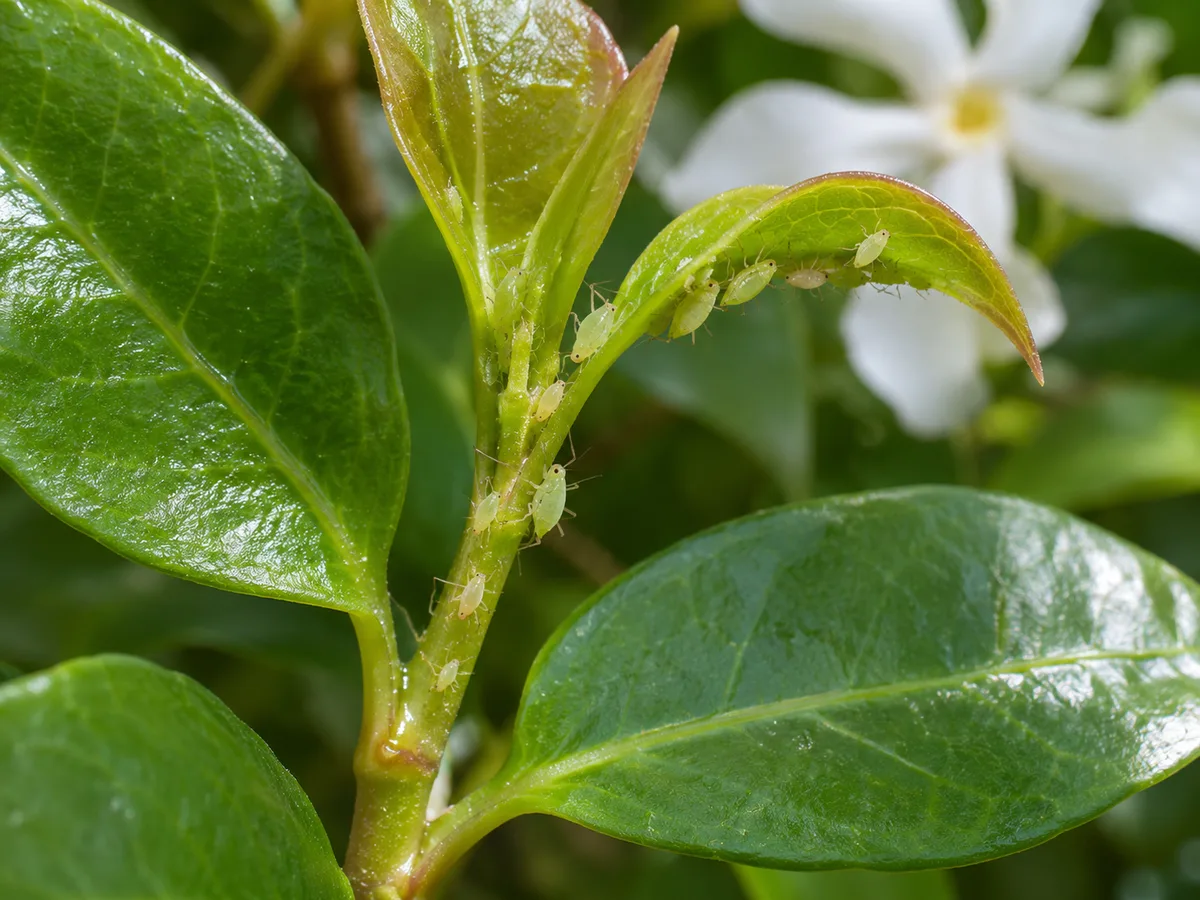
A colony gathered along a curled shoot tip is easier to spot than individual aphids on the older, glossy leaves.
Because Star Jasmine twines through trellis wires and its own older stems, check both sides of a support rather than just the outer surface. Follow sticky patches upward: honeydew falls onto leaves and surfaces beneath the colony. Ants may visit this sugary residue and can protect aphids from predators, so note where they travel, but ants alone do not confirm an aphid infestation. The RHS aphid guide explains the honeydew and predator relationship.
Confirm aphids before treating
Look for the insects themselves. Aphids are usually visible without magnification and may be accompanied by small white shed skins. A curled tip with no insects can have another cause; sticky residue plus clusters of live insects is stronger evidence. Sooty black growth on leaves below a colony may be growing on honeydew, but it does not identify which insect produced it.
| What you notice | What it suggests | Next check |
|---|---|---|
| Groups of soft insects on the newest tips | Aphids | Look for shed skins and honeydew below the group. |
| White cotton-like material at leaf joints | Mealybugs are more likely | Compare with the Star Jasmine mealybug guide. |
| Fine pale stippling or webbing, especially on leaf undersides | Spider mites are more likely | Inspect closely and compare with the Star Jasmine spider mite guide. |
| Sticky leaves but no visible insects | Aphids may be hidden, or residue may be old | Inspect the vine’s interior and check again in daylight before spraying. |
First fix: rinse the affected shoots
Move a container plant outside or to a place where runoff is manageable. On a sturdy in-ground vine, use a steady hose stream; for a pot, a shower spray can work. Support the flexible tip with one hand and rinse the insects from the top and underside of the new leaves. Work along the support a section at a time so the spray reaches colonies tucked behind stems. UC IPM recommends a forceful water spray for sturdy plants and notes that it also removes honeydew.
If a colony is confined to one badly curled tip, prune just that tip and discard it. Keep the healthy woody framework and flower-bearing sections. Star Jasmine can be trained and selectively pruned; the RHS growing guide recommends timing larger pruning around the flowering flush. For ongoing care, see the plant’s watering guidance and soil and drainage guide so the vine remains vigorous without sitting in waterlogged mix.
Check the same shoots again after two or three days, then inspect the whole vine weekly while it is putting out tender growth. Rinsing may need repeating as new colonies appear. A few aphids on an established vine do not automatically justify spraying: natural enemies such as lady beetle larvae, lacewing larvae, and parasitic wasps often feed on aphids. Avoid broad-spectrum insecticides that can also kill these beneficial insects; UC IPM outlines their role in natural control.
If rinsing does not control the colony
For a persistent infestation, first reach the hidden colonies and remove badly curled, crowded tips where practical. If live aphids remain, consider a product labeled for aphids and for the plant’s setting. Insecticidal soaps and horticultural oils act on insects they directly contact, so coverage of the infested shoot and leaf undersides matters; they do not protect new growth that appears later. Follow the product label, test a small area, and do not spray a drought-stressed plant or during hot conditions. UC IPM cautions that soaps and oils can injure sensitive plants and advises against applying them above 90°F (32°C).
Do not substitute dish detergent for insecticidal soap. Avoid spraying open flowers or active pollinators, and do not combine multiple products. If the vine is in bloom, rinse or prune localized colonies first and reserve any labeled spray for a suitable time and location. The Star Jasmine light guide can help distinguish a pest problem from general decline caused by poor placement; weak or yellowing foliage by itself is not proof of aphids.
What recovery looks like
Leaves that curled while they were unfolding may remain distorted after the aphids are removed. That damage is not a reason to cut back the whole vine. Look instead for no new clusters, less fresh honeydew, and clean shoot tips. If the new growth continues to deform after repeated inspections find no aphids, compare the symptoms with yellow leaves on Star Jasmine or review the plant’s light and watering conditions.
Prevent repeat outbreaks on climbing growth
Inspect shoot tips and flower buds whenever you guide stems along a trellis, especially during active growth. Avoid overfeeding: very lush, tender growth can attract aphids. Keep the plant appropriately watered and free-draining, but do not increase fertilizer to force recovery. In containers, check that the Star Jasmine watering routine matches the season rather than leaving the root ball constantly wet. When shaping the vine, use the pruning guide to preserve healthy framework and flower-bearing growth.
Related Star Jasmine guides
- Use this aphid guide when you see live, soft-bodied insects grouped on fresh shoots or buds.
- Use mealybugs on Star Jasmine for cottony clusters at leaf joints.
- Use spider mites on Star Jasmine for stippling or fine webbing without aphid colonies.
- Check Star Jasmine light or watering when there is leaf decline but no pest evidence.
Related tool
Use the Pest Identifier Tool to compare the insects you find before choosing a treatment.