Aphids on String of Turtles: Identify and Treat Them
Quick answer
Aphids are small, pear-shaped insects that cluster on soft new growth and leaf undersides. On String of Turtles, part the trailing stems and check tender tips for live insects, shed skins, curled growth, or sticky honeydew. Isolate the pot, remove a small colony by hand, and use a gentle rinse only if the plant can dry promptly.
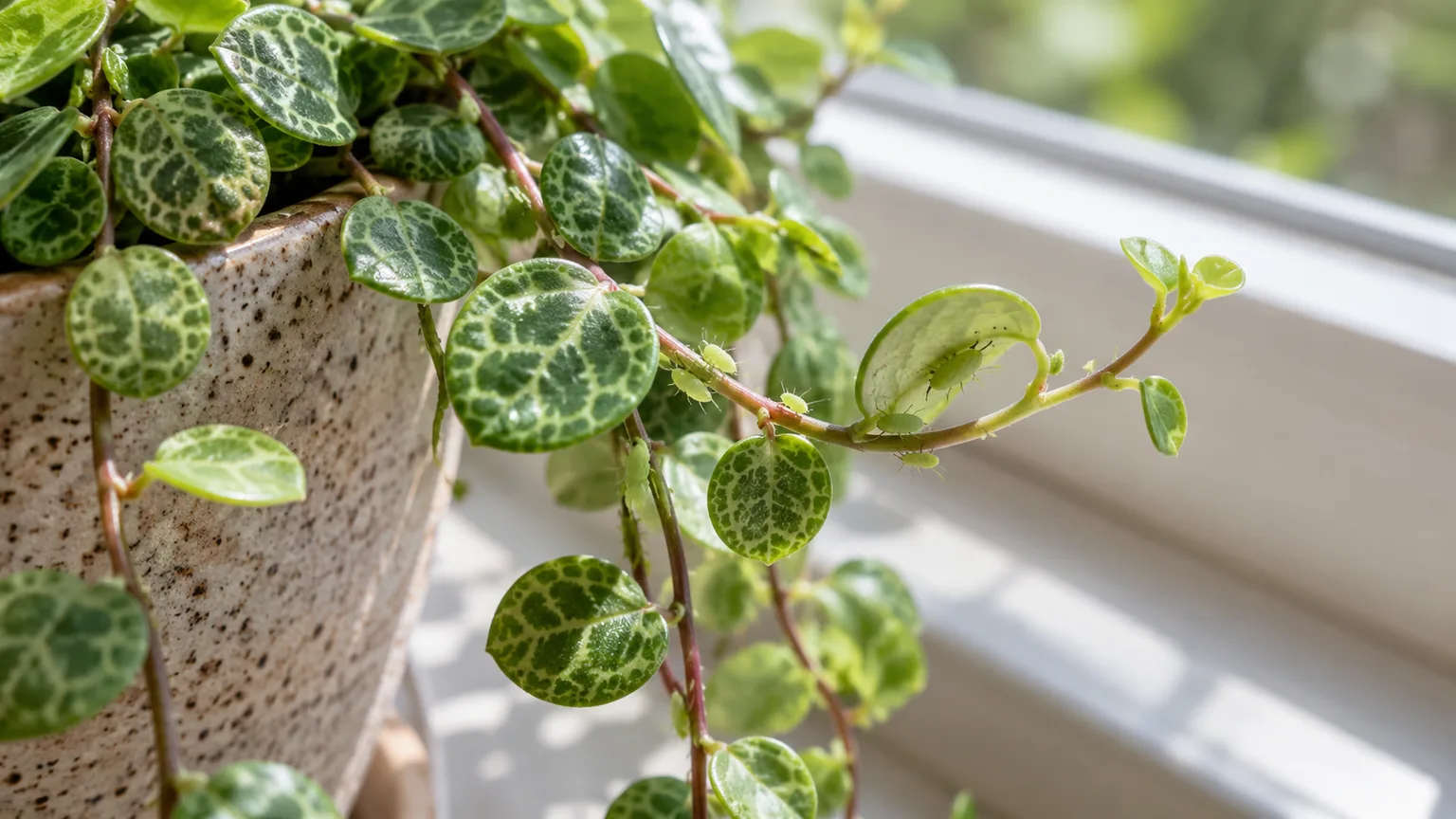
Aphids on String of Turtles: How to Spot and Treat Them
This guide covers aphids on String of Turtles. See also the general Aphids guide, watering, and light pages for this plant.
Aphids on String of Turtles: How to Spot and Treat Them
Aphids on String of Turtles: How to Spot and Treat Them
Quick answer
Aphids are small, soft-bodied insects that gather on tender growth. On String of Turtles, inspect the newest vine tips, the undersides of leaves, and the points where stems overlap. Look for live insects along with sticky honeydew, shed skins, or curled new growth. Isolate the pot, remove a small colony gently, then check the plant again over the next several days.
Where aphids hide on String of Turtles
Aphids feed on soft plant growth, so begin at fresh tips and small new leaves. Follow each trailing strand back toward the crown and inspect the underside of the leaves. The plant’s compact leaves and overlapping stems can conceal small groups, so move the vines gently rather than relying on a quick glance at the top surface.
Aphids are usually visible without magnification as soft, pear-shaped insects, often green but sometimes another color. They may cluster together and move slowly when disturbed. Their feeding can leave a sticky residue called honeydew; new leaves may curl or look misshapen when a colony is established. These signs are useful clues, but check for the insects themselves because sticky leaves have other possible causes. (UC IPM explains aphid identification and feeding signs; Bob Vila summarizes common aphid symptoms)
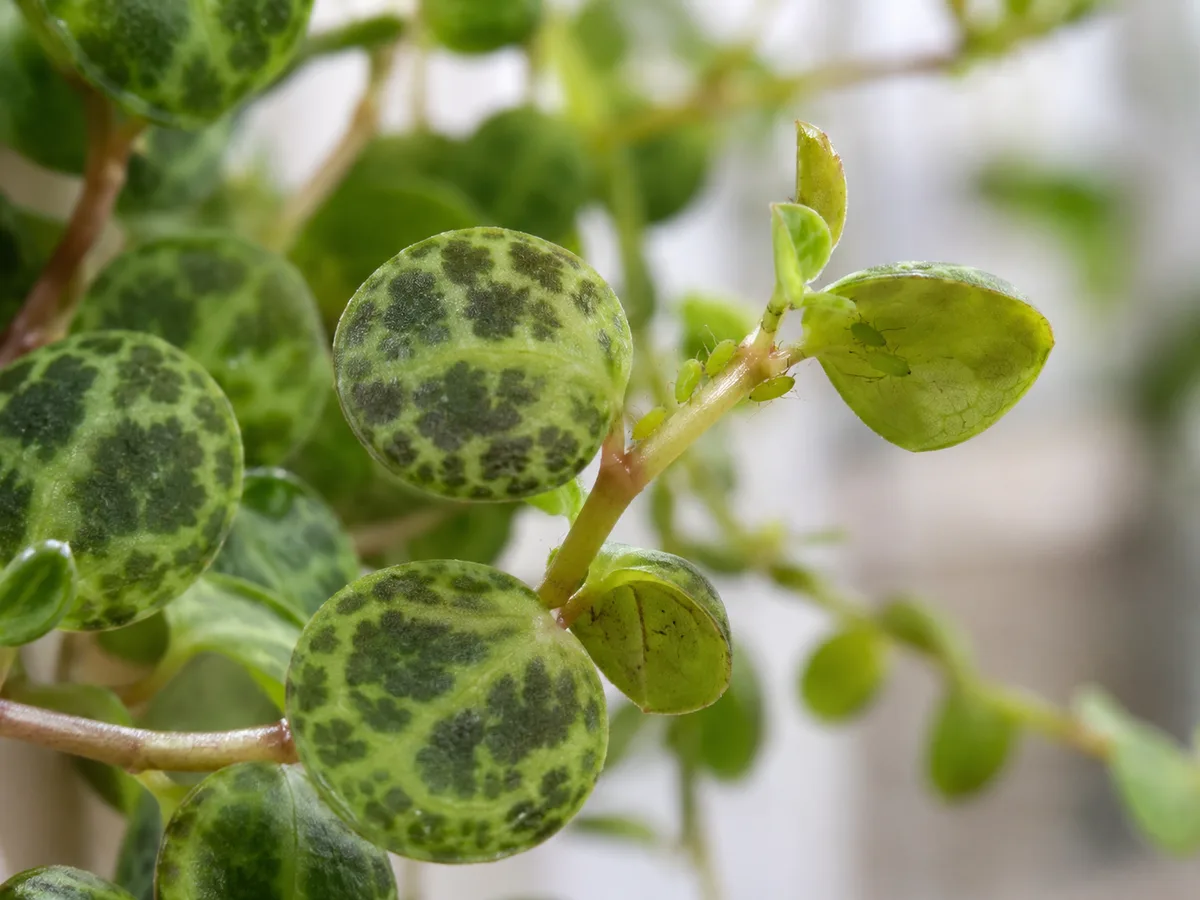
Check fresh growth and the sheltered junctions where round leaves meet the trailing stem.
Confirm aphids before treating
Use a bright light and inspect both sides of several leaves, especially the newest growth. Look for clusters of small insects, pale shed skins, and honeydew on leaves below the colony. Ants may visit honeydew, but ants alone do not prove that aphids are present. Compare multiple stems: a pest colony tends to be concentrated around growing tips, while watering or light stress usually affects a broader section of the plant. (UMN Extension’s aphid overview also describes aphids as common garden pests.)
Do not confuse the patterned silver and green markings of healthy String of Turtles leaves with pest damage. Aphids are raised insects on the surface; their feeding may distort or curl the youngest leaves. Fine pale stippling or webbing points toward a different pest, while soft or translucent leaves call for a check of watering and root conditions. See the String of Turtles spider mite guide if you find fine webbing or stippling.
Remove a small colony carefully
Move the plant away from neighboring pots while you inspect it. For a few aphids, wipe them away with a damp cotton swab or tissue and discard the material. Check nearby leaves and stems, since aphids can be missed in folds and overlapping vines. The Royal Horticultural Society’s aphid guidance also describes removing colonies and monitoring plants as part of control. Gardening Know How likewise describes wiping small indoor infestations away by hand in its houseplant aphid guide.
A rinse can dislodge aphids, but String of Turtles has closely spaced succulent leaves and a trailing habit. If you choose to rinse, support the vines, use a gentle stream aimed at the infested foliage, and keep the potting mix from becoming waterlogged. Let the foliage dry in good airflow. For a plant that is already damp or recovering from overwatering, use careful hand removal instead of adding more water. UC IPM recommends washing aphids off plants where practical, while noting that sprays only reach insects they contact. (UC IPM aphid control)
If aphids return or cover many tips, consider a product labeled for aphids and the intended indoor or ornamental use. Follow the label exactly. Contact products such as insecticidal soaps must reach the insects, and some plants can be sensitive; test a small area first and do not treat a stressed plant or during excessive heat. (UC IPM cautions about soaps and oils) UC IPM recommends starting with nonchemical controls and cautions that contact sprays may miss aphids hidden in curled leaves. Avoid homemade dish-soap mixtures, which can injure foliage.
Keep the infestation from spreading
Keep the affected pot separate while you monitor it. Inspect plants that were touching or sitting close by, including the undersides of their leaves and their growing tips. Remove dead leaves and debris from the pot surface, and avoid applying extra fertilizer to force growth; aphids favor tender new growth, and excess feeding can produce more of it. Check the plant every few days until you stop finding live aphids, then continue routine inspections.
Keep the plant’s regular care steady as you manage the pest. Follow the String of Turtles care overview and watering guide rather than changing light, watering, and fertilizer at once. If leaves remain sticky after the insects are gone, wipe them gently and watch for fresh residue or new clusters.
Watch new String of Turtles tips for recovery
The oldest distorted leaves may keep their marks after the aphids are gone. Judge recovery by whether new vine tips emerge without fresh clusters, honeydew, or curling. Because the strands are thin and closely layered, check each affected tip again after several days; a clear new leaf is a better sign than expecting existing damage to reverse.
When to use this page vs other String of Turtles guides
Use this page when you can see soft-bodied insects grouped on fresh tips or leaf undersides. If you see webbing or fine stippling instead, compare spider mites on String of Turtles. If the leaves yellow broadly without insects or sticky residue, check the yellow-leaf guide and review the plant’s light needs and soil and drainage.
Seek a second identification if the insects do not match the soft, pear-shaped aphid description or the damage continues after repeated inspection. A local extension service or experienced plant clinic can help distinguish aphids from other sap-feeding pests. If many stems are affected, isolate the plant and use the Pest Identifier Tool to compare symptoms before selecting a treatment.
Related String of Turtles guides
- String of Turtles overview — use this for routine placement and care once the aphids are controlled.
- String of Turtles watering guide — use this if the pot remains wet after rinsing or foliage begins to soften.
- String of Turtles problem guide — use this to compare aphids with other plant problems.
FAQs
How can I tell whether my String of Turtles has aphids?
Look for groups of small, soft-bodied, pear-shaped insects on tender tips and leaf undersides. Sticky honeydew, shed skins, or distorted new growth can support the diagnosis; confirm that live aphids are present.
Can I rinse aphids off a String of Turtles?
A gentle, targeted rinse can dislodge aphids, but this trailing succulent has closely spaced leaves. Avoid saturating the pot or leaving foliage wet for a long time; hand removal may be easier for a small cluster.
Are sticky leaves caused by aphids?
Aphids produce honeydew, which can leave a sticky film. Check above the residue for insects and inspect nearby leaves; residue alone does not confirm aphids.
Should I use insecticidal soap on this plant?
Start with physical removal. If you consider a labeled insecticidal soap, follow its label and test a small area first because some plants are sensitive; treat only when the plant is not drought-stressed or overheated.
How often should I check after removing aphids?
Recheck new tips, leaf undersides, and overlapping stems every few days at first. Continue until you no longer find live aphids or fresh honeydew, and inspect nearby plants as well.