Leggy String of Turtles: Causes and How to Fix It
Quick answer
Leggy String of Turtles usually means new vines are stretching in search of more light. Compare the newest internodes with older growth, move the plant gradually to brighter indirect light, and correct any watering or root problem before pruning. Existing gaps will remain; healthy compact growth can develop after conditions improve.
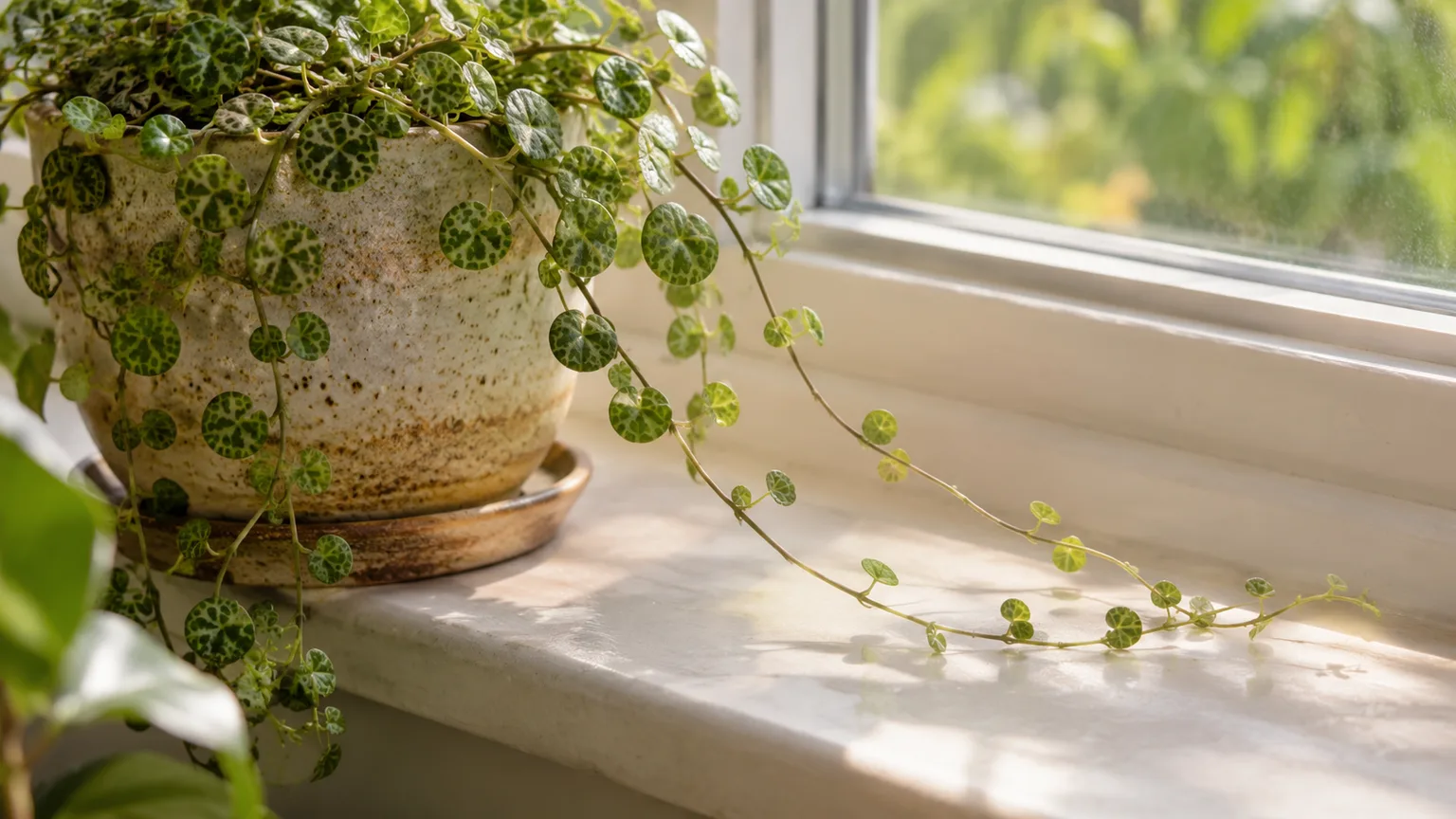
Leggy String of Turtles: Diagnose and Fix Stretched Vines
This guide covers leggy growth on String of Turtles. See also the general Leggy Growth guide, watering, and light pages for this plant.
Leggy String of Turtles: Diagnose and Fix Stretched Vines
Quick answer
Long spaces between leaves, smaller new leaves, and stems leaning toward a window can indicate that a String of Turtles is stretching for more light. The species is naturally a slow, trailing vine, so judge the pattern on fresh growth rather than its total length. Check the newest few nodes against older sections, then assess the plant’s actual light, soil moisture, and roots before changing several things at once.
What leggy growth looks like on String of Turtles
Healthy Peperomia prostrata naturally trails, and its stems can lengthen as they cascade from a pot. Leggy growth is a change in the pattern: newer sections have longer bare spaces between leaves, smaller or paler leaves, or a noticeable lean toward the nearest light. NC State Extension describes String of Turtles as a slow-growing trailing plant and notes that low light can reduce its leaf color. Look for a repeated change across recent nodes, not one unusually long strand. (NC State Extension describes the species and light response; Ideal Home summarizes common signs of leggy houseplants)
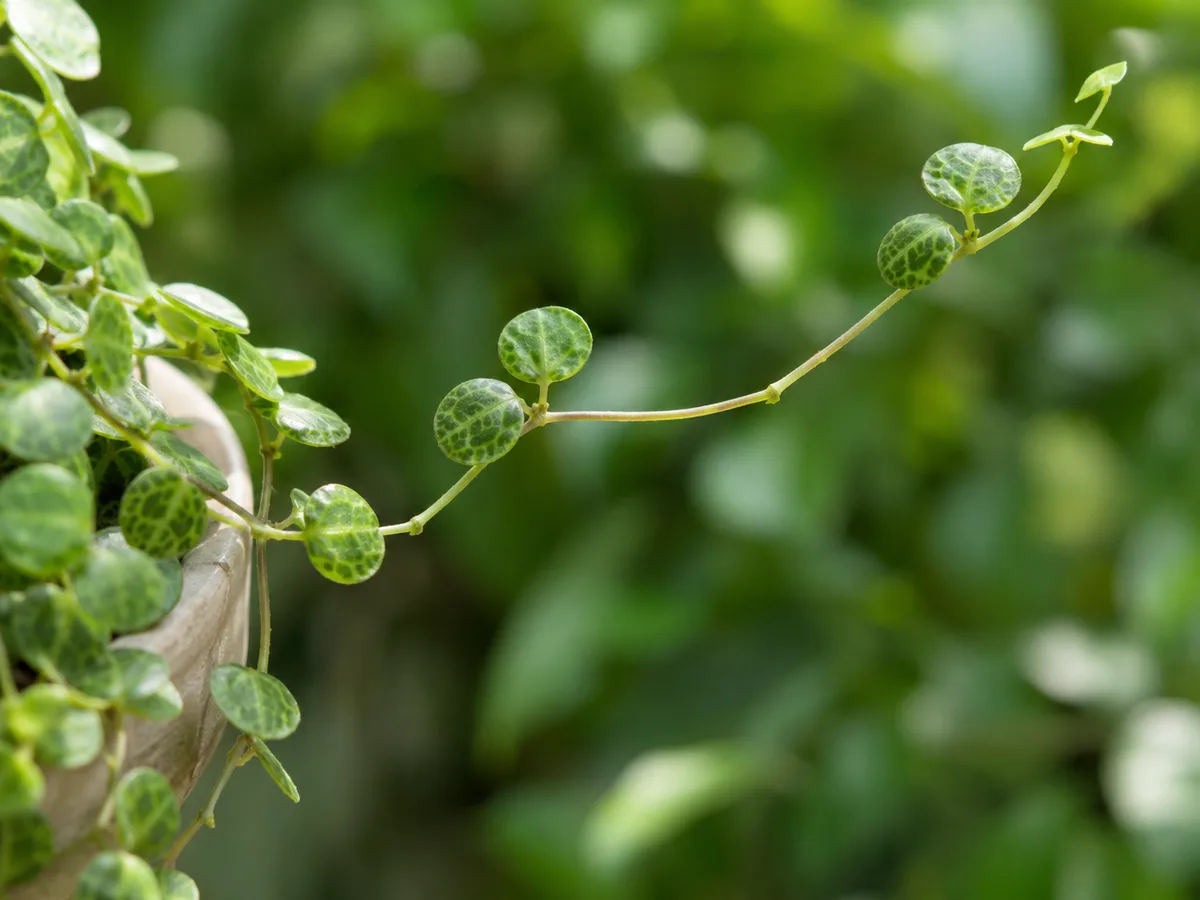
Compare fresh nodes with the plant’s older growth; naturally trailing stems are not automatically etiolated.
Why the vines stretch
Too little usable light
Insufficient light is the first thing to investigate when the newest stems are stretching toward a window. A plant can remain alive in a dim room while making thinner, less colorful growth. Check the position of the leaves and vines throughout the day: a shelf across the room from a window may look bright to you while receiving little direct sky light. Move the plant closer to a bright window or use filtered light, then give it time to respond. String of Turtles prefers bright indirect light, and abrupt exposure to stronger direct sun can scorch leaves. (NC State Extension on light requirements; Ideal Home on correcting light without sudden harsh exposure)
Care stress can make the diagnosis less clear
Slow growth or leaf loss can accompany root trouble, so do not respond to every sparse vine by watering more or feeding heavily. Feel the mix below its surface and check whether the pot drains freely. Wet soil that stays wet, soft stems, or widespread yellowing call for a root and watering check before pruning. NC State Extension notes that overwatering can cause root rot in this species; Clemson’s peperomia guidance also emphasizes suitable light, careful watering, and drainage. (NC State Extension on overwatering risk; Clemson Cooperative Extension’s peperomia care guide)
How to check the cause
- Compare recent nodes. Look at the last few inches of growth. Are the newest leaves smaller, paler, or separated by more stem than leaves farther back?
- Check the light path. Note how close the pot is to a window, whether a curtain or building blocks the light, and whether the vines consistently lean in one direction.
- Check moisture and drainage. Feel below the surface and lift the pot. Do not water just because the leaves look sparse; a persistently wet root zone can cause a separate problem.
- Look for other clues. Bleached or crispy patches on the window-facing side may point to too much direct sun. Soft, collapsing stems or leaves dropping across the plant suggest checking roots and watering rather than treating the plant as a light-only case.
Natural trailing growth is even and leafy enough for the plant’s usual pattern. Leggy growth shows a recent change in spacing or leaf size; a plant with wet soil and soft stems needs a root-zone diagnosis. If you also see yellowing or soft stems, compare the String of Turtles overwatering guide and root rot guide before pruning.
Fix light gradually
Move the pot to a brighter place with indirect or filtered light. A position close to an east-facing window often provides gentle light; at a brighter south or west window, keep the leaves back from hot glass or soften the sun with a sheer curtain. If the plant has been in a dim spot, increase its exposure over several days instead of placing it in strong midday sun all at once. Rotate the pot occasionally if growth is leaning consistently toward one direction. (NC State Extension lists bright indirect light for Peperomia prostrata; Ideal Home advises matching placement to the plant and avoiding sudden scorch)
Keep watering tied to the mix’s moisture, not the change in light. Let the appropriate portion of the mix dry before watering again, and empty standing runoff. If roots are healthy and the plant is actively growing, Clemson Cooperative Extension advises feeding peperomias only during the growing season; extra fertilizer cannot replace adequate light. (Clemson Cooperative Extension on watering and seasonal feeding)
Prune only after the plant is stable
Improved conditions help new growth; they cannot pull old internodes closer together. Once the plant has settled in a better-lit spot and the roots appear healthy, trim only the longest bare strands if you want a fuller silhouette. Clemson Cooperative Extension advises pruning above a leaf node to encourage branching in peperomias. Use clean scissors and make a small number of cuts at first. (Clemson Cooperative Extension on pruning above a node)
Healthy cuttings can be used to fill the pot. Keep a node on each cutting and place it in a suitable propagation medium; do not expect a bare stem section without a node to make a new shoot. This is optional: correct the light first so any replacement growth has a better chance to stay compact. (Happy Houseplants on pruning and reusing String of Turtles cuttings; Gardening Know How on leggy growth and trimming)
What recovery looks like
Existing long sections will remain long. Judge the correction by the next several leaves and nodes: growth should stop leaning so strongly, and new leaves should develop in the plant’s usual pattern. Because String of Turtles grows slowly, this is a gradual check rather than a day-to-day change. Avoid stacking a repot, heavy prune, fertilizer increase, and abrupt move into direct sun; changing one main condition at a time makes the plant’s response easier to read.
For the baseline conditions, see the String of Turtles light guide and care overview. Browse the String of Turtles problem guide to compare symptoms, or use the Plant Problem Diagnosis Tool if more than one issue may be present.
Frequently asked questions
Why is my String of Turtles growing long gaps between leaves?
The most common reason is inadequate light: newer stems extend toward a brighter source and may carry leaves farther apart. Compare recent growth with older vines and check the plant’s distance from a window. Since the species naturally trails and grows slowly, a long vine alone does not prove a problem. (NC State Extension on the species and light; Ideal Home on leggy growth signs)
Can leggy String of Turtles become compact again?
The stretched sections do not shorten or fill in, but healthier growth can follow after conditions improve. Pruning may tidy old bare portions once the underlying light issue is corrected. (Ideal Home on improving light and pruning)
Where should I put String of Turtles to fix leggy growth?
Choose a brighter position with indirect or filtered light, such as near an east-facing window or a little back from a brighter window. Increase exposure gradually and watch for bleaching or crispy patches if direct sun reaches the leaves. (NC State Extension on bright indirect light; Ideal Home on placement changes)
Should I fertilize a leggy String of Turtles?
Do not use extra fertilizer as a substitute for light. Check placement, drainage, and soil moisture first. If the plant is healthy and actively growing, follow a cautious peperomia feeding routine rather than increasing the dose. (Clemson Cooperative Extension on seasonal peperomia feeding)
Can I prune and propagate the long vines?
Yes. After conditions improve, trim selected vines just above a healthy node with clean scissors. Keep nodes on cuttings you plan to propagate, and avoid removing most of the plant at once. (Clemson Cooperative Extension on pruning above a node; Happy Houseplants on pruning String of Turtles)