Low Humidity on String of Turtles: Confirm and Fix Dry Air
Quick answer
String of Turtles can adapt to average indoor humidity, but it appreciates somewhat more moisture in the air than many succulent-like plants. Crispy or curled edges can be a clue, not a diagnosis. Check room humidity and recent care first; if the air is persistently dry, use a clean room humidifier and keep the potting mix well drained.
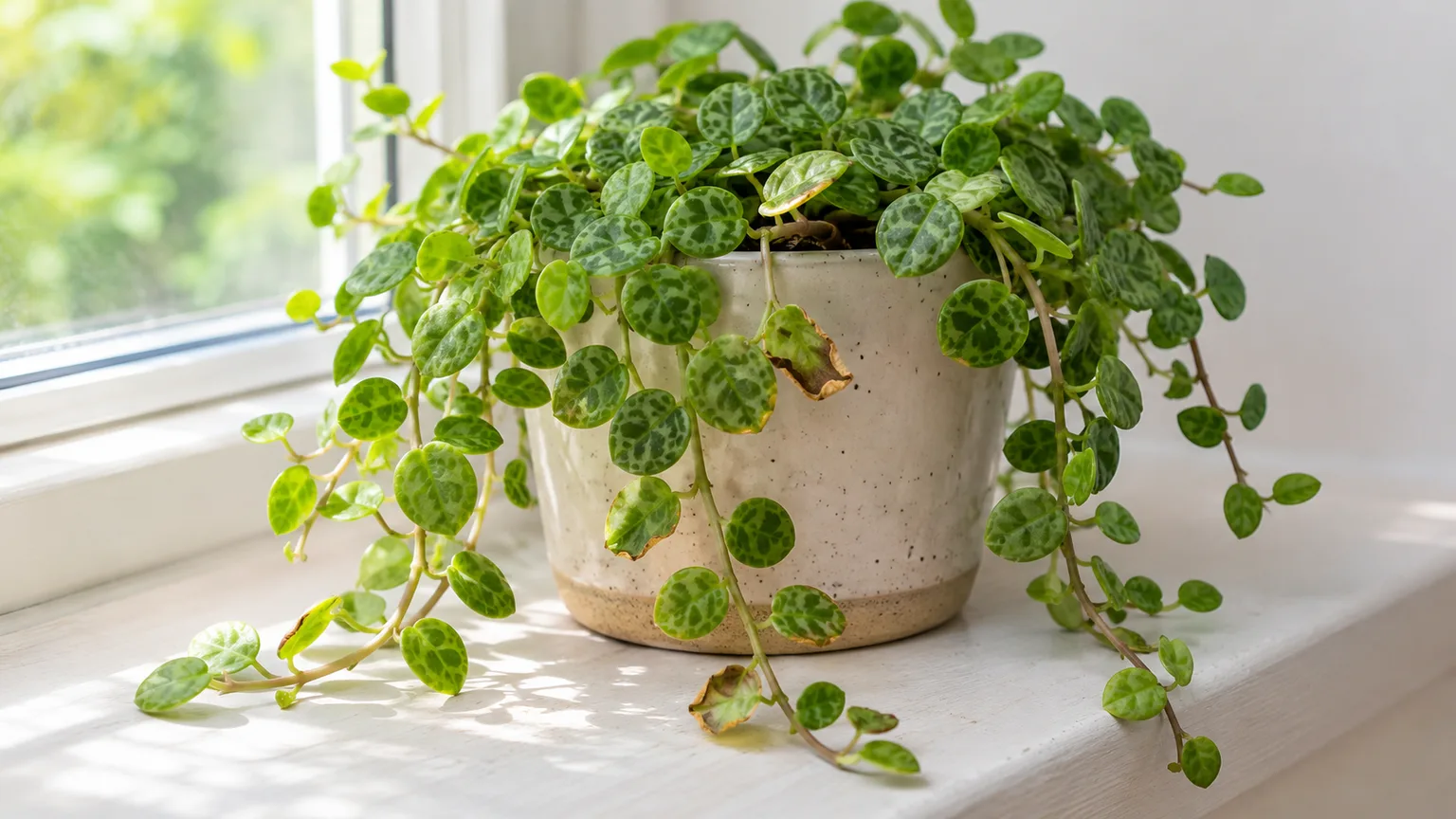
Low Humidity on String of Turtles: How to Confirm and Improve It
This guide covers low humidity on String of Turtles. See also the general Low Humidity guide, watering, and light pages for this plant.
Low Humidity on String of Turtles: How to Confirm and Improve It
Quick answer
String of Turtles (Peperomia prostrata) is a semi-succulent peperomia, not a desert cactus. It appreciates somewhat higher humidity than many succulent-like houseplants, yet can adapt to ordinary indoor conditions. A few crisp or curled leaf edges may fit dry-air stress, but they do not prove it. Measure the room and check watering, roots, light, and pests before changing care. (Healthy Houseplants describes its humidity preference and average-home tolerance; PLNTS notes that it adapts to average household humidity)
How dry air may affect String of Turtles
In a room with persistently dry air, leaf margins may become dry or crispy. The pattern matters: humidity is more plausible when several leaves develop dry edges during a period of low room readings, especially near a heater or air-conditioning vent. String of Turtles still tolerates typical household conditions, so do not assume that every brown margin means the room needs a humidifier. (Healthy Houseplants lists crispy edges among possible low-humidity signs; PLNTS recommends keeping the plant away from heaters and air conditioning)
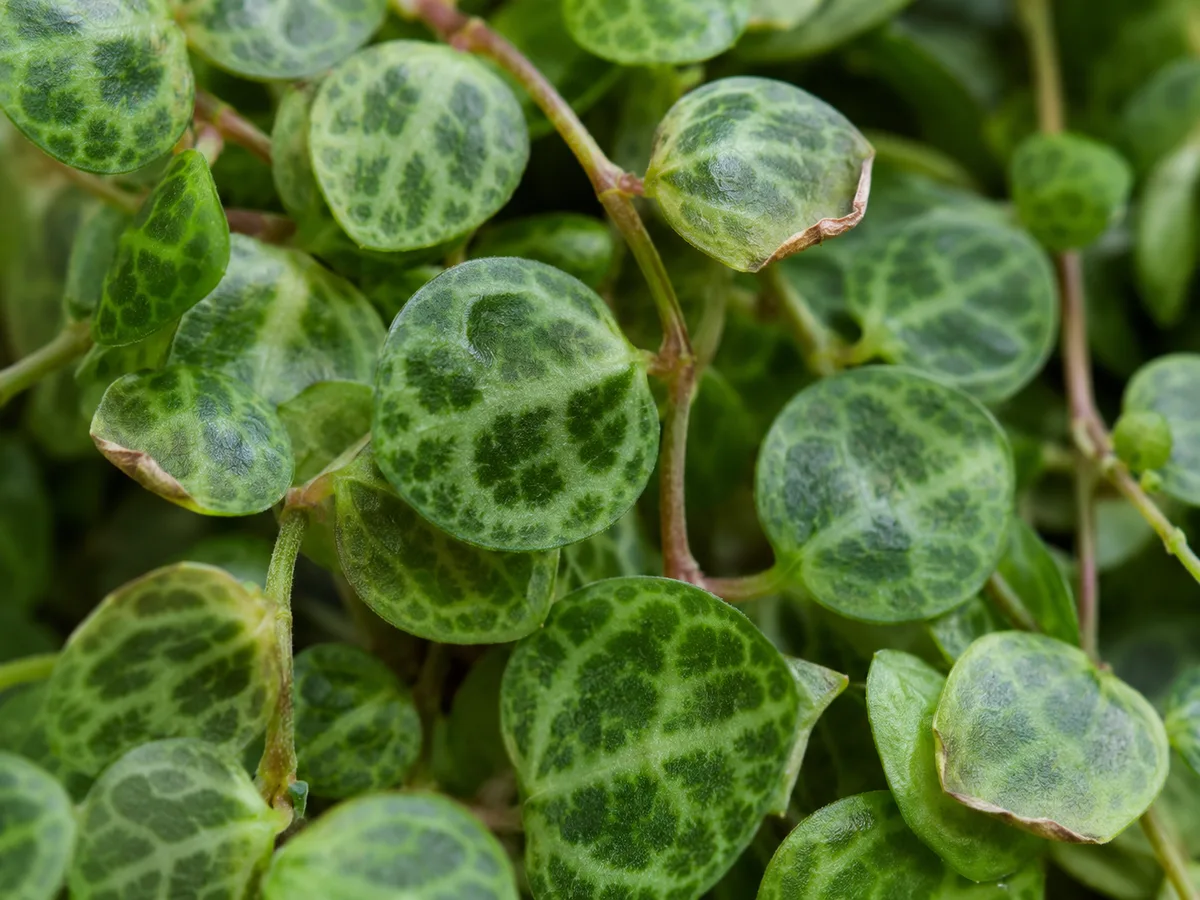
Dry edges can be consistent with dry air, but check the whole plant and its root-zone conditions before diagnosing.
The plant’s semi-succulent leaves can store some water, but that does not mean the pot should stay wet to make up for dry air. Species care sources describe a balance: allow the mix to dry appropriately between waterings while providing suitable room conditions. (Nationwide Plants describes the plant as semi-succulent and more humidity-loving than typical succulents; PlantoScan advises letting the soil surface dry between watering)
Confirm the cause before you change care
- Measure the air. Put a small hygrometer near the hanging pot or shelf, but away from direct sun, a window pane, or the humidifier outlet. Take readings at more than one time of day. Published String of Turtles guides give different humidity ranges, and its ability to adapt to average indoor conditions means a symptom alone cannot define a universal threshold. (PlantoScan publishes a species-specific humidity range; Healthy Houseplants notes it can survive average household humidity)
- Check soil and roots. If the mix remains wet, smells sour, or the stems are soft, investigate excess moisture and root health. If it is dry well below the surface and leaves are limp, check watering before blaming air humidity. Do not add water just because the room feels dry.
- Look at the light and location. Harsh direct sun, a cold draft, or hot airflow can also damage leaf edges. Move the plant away from heating and cooling outlets and keep it in bright, indirect light. (PLNTS’ care guide advises avoiding drafts, heaters, and air-conditioning units)
- Inspect the foliage. Look beneath leaves and along stems for webbing, stippling, or visible pests. Damage that spreads despite stable humidity may have another cause; compare with the String of Turtles problem guide.
Improve humidity without soaking the pot
If repeated readings show that the room stays dry and the plant continues to develop crisp margins, a room humidifier is the most direct adjustment. Place it so moisture disperses through the room instead of blowing straight onto the leaves or wall. Use the hygrometer to check the result and lower output if surfaces around the room stay damp. Humidifier guidance is more useful than reacting to a single reading or misting once. (The Plant Index explains that misting changes humidity only briefly and recommends a room humidifier for a steadier change)
Keep enough airflow around the trailing stems, remove fallen leaves, and avoid crowding plants against a cold window. Do not keep the soil wet, enclose the plant in a sealed container, or repeatedly spray the foliage as a substitute for measuring room humidity. Heavy misting can leave water among the dense leaves without maintaining higher room humidity. (Healthy Houseplants cautions against heavy misting between leaves; The Plant Index describes misting’s short-lived effect)
What recovery looks like
Existing brown, papery tissue usually remains marked. Judge the adjustment by whether new damage stops and new leaves emerge with healthy margins. Keep light, watering, and humidity steady for several weeks; changing multiple variables at once makes it hard to tell what helped. If the plant continues to decline, revisit root condition, light exposure, temperature, and pests rather than raising humidity further.
Avoid these common mistakes
- Do not water more to compensate for dry air. Check the mix first; persistent wet soil creates a separate root problem.
- Do not treat crisp edges as proof of low humidity. Sun scorch, inconsistent watering, cold or hot drafts, and pests can create overlapping symptoms.
- Do not rely on occasional misting to raise room humidity. The effect fades quickly. Measure the room and use a humidifier if a lasting adjustment is needed. (The Plant Index explains the brief change caused by misting)
- Do not push humidity higher without checking the room. Watch for damp surfaces and maintain airflow around the plant.
For a broader diagnosis, see the String of Turtles care guide and watering guide. The Humidity Calculator can help you compare your room reading with the plant’s needs.
FAQs
Does String of Turtles need high humidity?
It appreciates somewhat higher humidity than many succulent-like plants, but can adapt to average household conditions. Measure the room before adding a humidifier.
Can low humidity cause brown tips on String of Turtles?
Dry air may contribute to crispy margins, but it is only one possible cause. Check watering, drainage, light, drafts, and pests too.
How do I measure humidity around my String of Turtles?
Place a hygrometer near the plant but away from direct sun, a vent, or the humidifier outlet. Compare readings at different times of day.
Will misting fix low humidity?
No. Misting briefly wets the foliage but does not maintain higher room humidity. A humidifier is more consistent when readings show the room remains dry.
Should I water more when the air is dry?
No. Check soil moisture separately and water according to how the potting mix dries. Extra watering does not correct dry air.