Not Enough Light on String of Turtles: Signs and Fixes
Quick answer
String of Turtles may be getting too little light when new stems become weak and stretched, with leaves spaced farther apart than on older growth. Move it gradually to brighter indirect light, while checking the roots and watering pattern so low light is not confused with root stress.
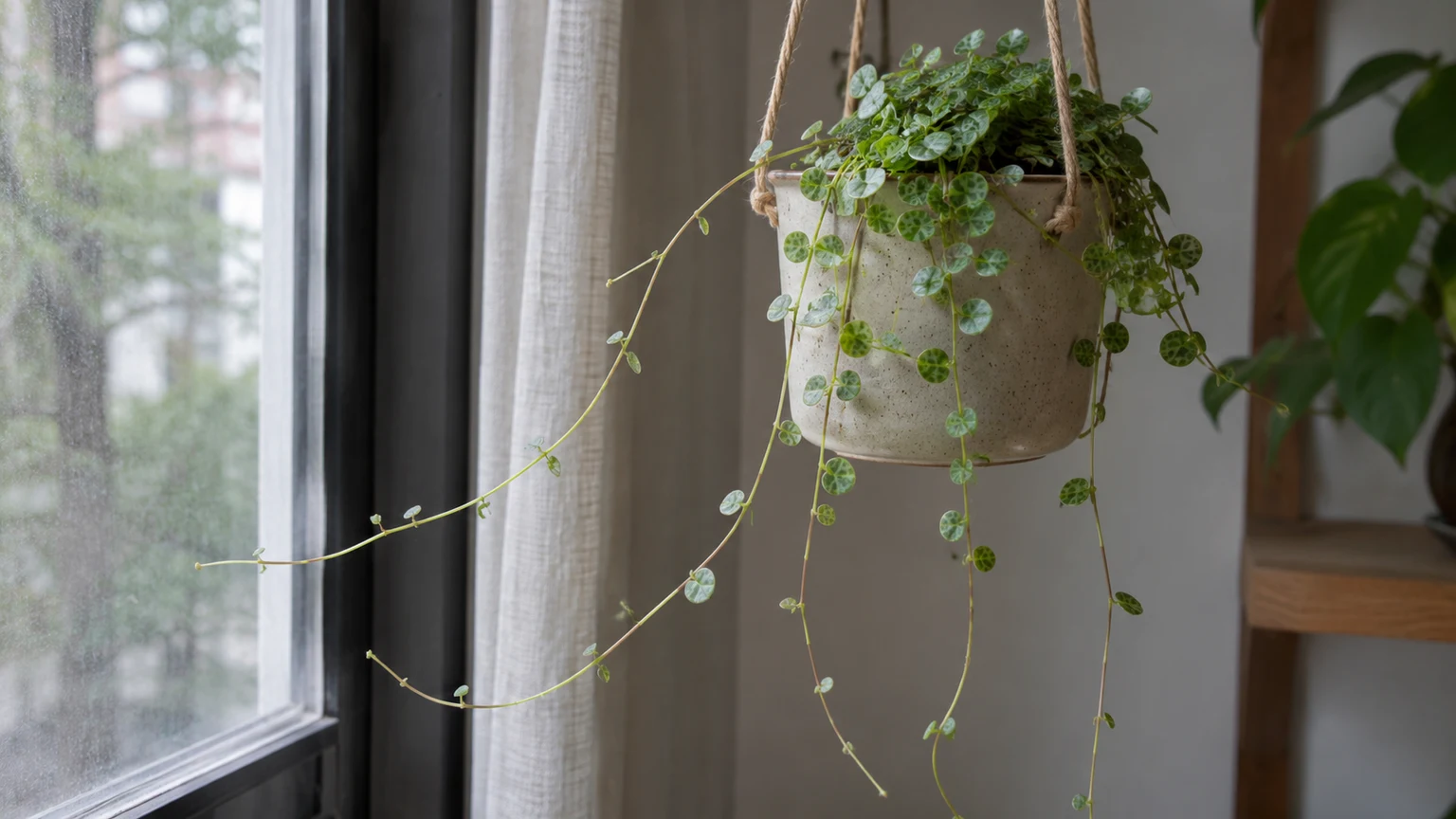
Not Enough Light on String of Turtles: Signs and Fixes
This guide covers not enough light on String of Turtles. See also the general Not Enough Light guide, watering, and light pages for this plant.
Not Enough Light on String of Turtles: Signs and Fixes
Not Enough Light on String of Turtles: Signs and Fixes
Quick answer
Check the newest stems. If they are becoming weak and stretched, with longer gaps between the small patterned leaves, the plant may be receiving too little light. String of Turtles (Peperomia prostrata) grows best in bright, indirect light. Move the pot gradually toward a brighter position, avoid harsh direct sun, and review watering and root health before changing several things at once.
Signs that light may be too low
String of Turtles naturally trails, so long stems alone do not prove a problem. Compare recent growth with the plant’s earlier pattern. Low light is more likely when new sections have conspicuously wider gaps between leaves, thin or weak-looking stems, and a sparse appearance. Very dim conditions can also make the leaf pattern less distinct. These cues fit the plant’s normal light needs: the Royal Horticultural Society recommends bright indirect light for Peperomia prostrata, and its broader peperomia guidance warns that deep shade can lead to weak, spindly growth. (RHS growing conditions for Peperomia prostrata; RHS peperomia guide)
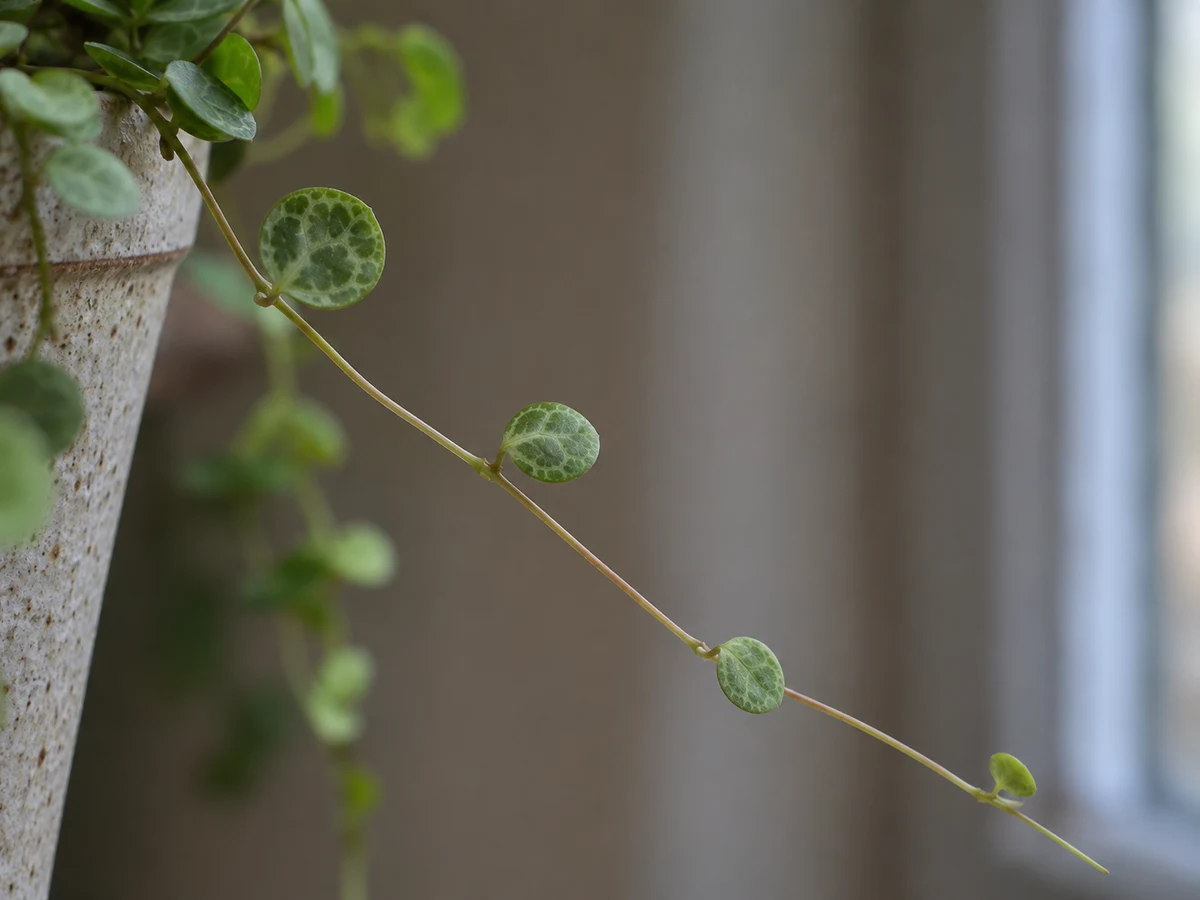
Compare the distance between leaves on new sections with the plant’s older growth; the species-specific care guidance describes stretched growth in very dim conditions. (Gardenish’s Peperomia prostrata light notes)
One symptom by itself is not a diagnosis. A single older leaf fading or dropping can have other causes, and new growth may be slower during a seasonal pause. Low light is a better fit when the change shows up repeatedly on new stems and the plant’s position is dim. Species-specific care references describe String of Turtles as tolerant of some lower-light conditions, while recommending brighter indirect light for stronger growth. (Healthy Houseplants’ String of Turtles care guide; My Floral Vault’s Peperomia prostrata notes)
Check the light where the pot sits
Look at the plant’s actual position, not just the room or window label. A bright room can still have a dark shelf, and a plant several feet back from a window may receive much less usable light than one near it. Note whether a building, curtain, balcony, or neighboring structure blocks daylight. Also consider whether the plant was recently moved, whether seasonal daylight has changed, or whether surrounding foliage now shades the pot.
String of Turtles is a trailing peperomia with small, patterned leaves. The RHS recommends bright indirect light during growth, while avoiding intense summer sun that can scorch foliage. A sheer curtain or a position slightly back from a sunny pane can soften harsh rays; a dim corner may need a brighter location or a suitable plant light. (RHS Peperomia prostrata growing conditions; RHS peperomia care)
Rule out watering, roots, and pests
Before moving the plant, check the potting mix and stems. Persistently wet mix, a pot without drainage, or softening stems point toward a root-zone issue that extra light alone will not correct. Conversely, a very dry mix can contribute to limp or shriveled leaves. Check the underside of leaves and the stem joints for pests if you see stippling, webbing, sticky residue, or visible insects.
If the soil stays wet and the plant is soft, compare with overwatering on String of Turtles and root rot symptoms. If leaves are yellowing broadly, see the yellow-leaf guide. Fine stippling or webbing may point to spider mites, rather than light alone. Keep the care pattern steady while you assess these signs.
Move it to brighter light gradually
Choose a brighter spot with indirect daylight and shift the plant over several days rather than placing it straight into strong midday sun. Watch the leaves for bleaching, crisp patches, or sudden scorch after the move. Bright indirect light is the goal; more direct sun is not automatically better. The RHS notes that deep shade can cause weak growth in peperomias and that direct summer sun can scorch their leaves. (RHS peperomia guide)
Turn the pot occasionally so the vines receive more even light. If natural daylight is limited, a plant grow light can help; follow its instructions for placement and duration rather than assuming that any lamp is suitable. Do not increase watering or fertilizer just because the plant has moved. The root ball may dry at a different pace in its new position, so check the mix before watering. See the String of Turtles light guide and watering guide for related care baselines.
What recovery looks like
Existing stretched sections will remain stretched. Judge improvement by future growth: new leaves should develop under the brighter conditions, and the plant should stop producing progressively weaker, more widely spaced sections. Peperomia prostrata is a compact, slow-growing species, so assess several new growth points rather than expecting a dramatic change in a few days. If the plant is otherwise firm and stable, give it time to adjust before pruning.
Once new growth is healthy, you can trim the longest bare stems to improve the shape. Keep healthy cuttings if you want to propagate them, and avoid removing a large amount of foliage while the plant is still stressed. For broader symptom comparisons, visit the String of Turtles problem hub or use the Plant Problem Diagnosis Tool.
Common questions
How can I tell if my String of Turtles needs more light?
Look at the newest vine sections. Weak, stretched growth with longer gaps between leaves is more suggestive than one older leaf changing color. Compare the plant with its earlier growth and rule out root or watering problems.
Does String of Turtles need direct sun?
It generally does best in bright indirect light. Deep shade can produce weak growth, while strong direct summer sun can scorch peperomia leaves. (RHS peperomia guide)
Can String of Turtles grow in a north-facing room?
Possibly, if the plant still receives bright ambient daylight close to the window. A dim corner far from the window may be too dark; judge the actual light at the plant rather than relying only on window direction.
Should I water more when my String of Turtles gets little light?
No. Low light does not mean the plant needs extra water. Check the potting mix and roots, then water according to how quickly the mix dries and the plant’s current conditions.
Will stretched stems become compact again after I improve the light?
Existing stem sections will not shorten. Better light can support healthier new growth; once the plant is stable, you can trim or propagate long bare sections if you want a fuller shape.