String of Turtles Slow Growth: What to Check
Quick answer
String of Turtles is naturally slow-growing, so a short vine or a quiet winter is not automatically a problem. First check whether it gets bright, indirect light; if it sits in a dim spot, move it closer to a bright window gradually. Compare new growth over several weeks before changing watering or feeding.
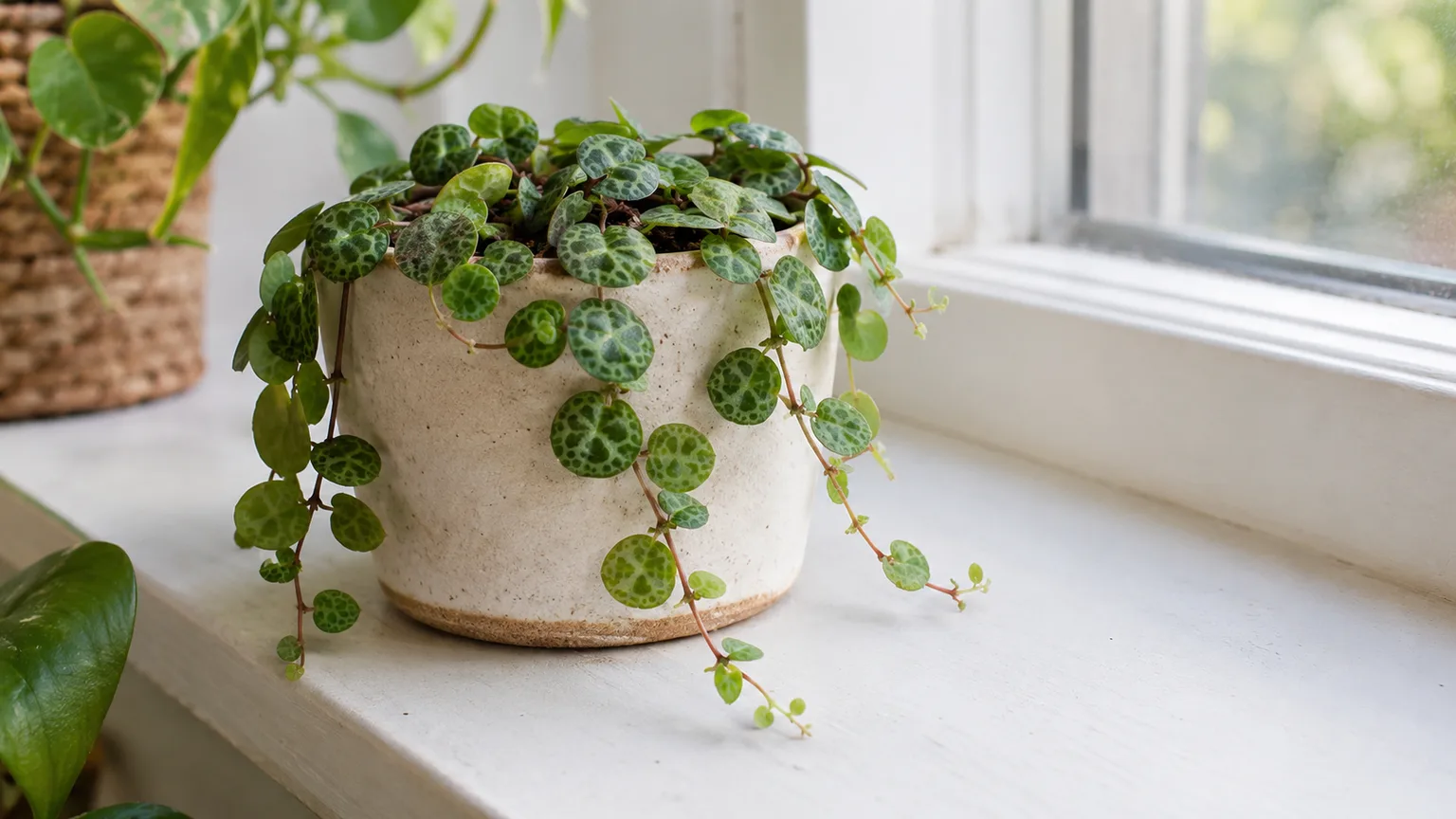
Slow Growth on String of Turtles: Causes and Care Checks
This guide covers slow growth on String of Turtles. See also the general Slow Growth guide, watering, and light pages for this plant.
Slow Growth on String of Turtles: Causes and Care Checks
- Search intent: understand whether slow String of Turtles growth is normal and identify a correct first check.
- Specific angle: distinguish this naturally slow, pot-bound-tolerant peperomia from light, seasonal, and root-zone problems.
- Reader outcome: measure new growth, check conditions, and make one proportionate adjustment.
- String of Turtles Slow Growth: What to Check
- Why Is My String of Turtles Growing Slowly?
- Slow Growth on String of Turtles: Causes and Care
String of Turtles Slow Growth: What to Check
- String of Turtles grows slowly by nature. Check light, season, roots, watering, and temperature before changing its care.
- Learn when slow growth is normal for String of Turtles and how to spot low light, wet roots, or a seasonal pause.
- Use these simple checks to diagnose slow String of Turtles growth and choose one measured first fix.
String of Turtles grows slowly by nature. Check light, season, roots, watering, and temperature before changing its care.
- H1: Slow Growth on String of Turtles: Causes and Care Checks
- H2: Why String of Turtles grows slowly
- H2: How to check whether growth is stalled
- H2: First fixes for String of Turtles slow growth
- H2: Should you fertilize a slow-growing String of Turtles?
- H2: What not to do
- H2: Related String of Turtles guides
- H2: FAQs
Quick answer
String of Turtles, or Peperomia prostrata, grows slowly by nature. North Carolina State Extension describes it as a slow-growing trailing plant that usually reaches about 12 inches in stem length at maturity. If the leaves remain firm and patterned and there is no decline, a stretch without obvious vine extension may simply reflect its compact habit or a seasonal lull. (NC State Extension on String of Turtles growth; RHS peperomia growing guide)
To check whether growth is unusually slow, compare the newest tips over several weeks and look for changes in light, temperature, watering, and soil drainage. Do not try to force faster growth with extra water, fertilizer, or a larger pot before you know what has changed.
Why String of Turtles grows slowly
Slow growth is part of this plant’s normal character. It makes small leaves and delicate trailing stems, so it will not extend as quickly as vigorous vines such as pothos. Growth can also become less noticeable during darker or cooler months, after a recent move, or when the plant is settling into a new pot. The RHS describes peperomias as slow-growing, and The Spruce notes that peperomias need little supplemental fertilizer during winter. (RHS on peperomia growth and repotting; The Spruce peperomia care guide)
Low light can slow new growth or make foliage less vibrant. NC State recommends bright, indirect light for this species and notes that it can tolerate lower light, though leaf color may be less vivid. Indoor light also drops quickly as you move away from a window; thin, stretched stems that lean toward the brighter side are clues that the plant needs more suitable light. (NC State Extension plant profile; University of Illinois Extension on indoor light)
How to check whether growth is actually stalled
Choose one or two healthy vine tips and take a dated photo from the same angle. Recheck in three or four weeks, looking for fresh leaves or a small amount of extension rather than expecting a large change overnight. This makes a naturally slow plant easier to assess than relying on memory.
Look at the overall pattern:
- Firm, patterned leaves with a stable plant: a pause in visible growth may be normal, especially in winter or after a change in location.
- Long gaps between leaves or stems leaning one way: the plant may be stretching toward limited light. Increase brightness gradually while avoiding harsh direct sun.
- Yellowing leaves with wet mix, mushy stems, or a sour smell: check drainage and roots. NC State notes that overwatering can cause root rot in String of Turtles, so do not add more water until the mix and roots have been checked. (NC State Extension on root-rot risk)
- A dry mix and limp or shriveling leaves: assess whether the pot has dried too far between waterings. Do not assume slow growth alone means thirst.
- No visible decline but no new growth for a while: review temperature and season before intervening. String of Turtles prefers stable warmth; NC State lists 68–75°F (20–24°C) as a suitable range and advises avoiding cold drafts.
For a close look at the newest vine tip, check for tiny fresh leaves rather than judging only by the length of older trails.
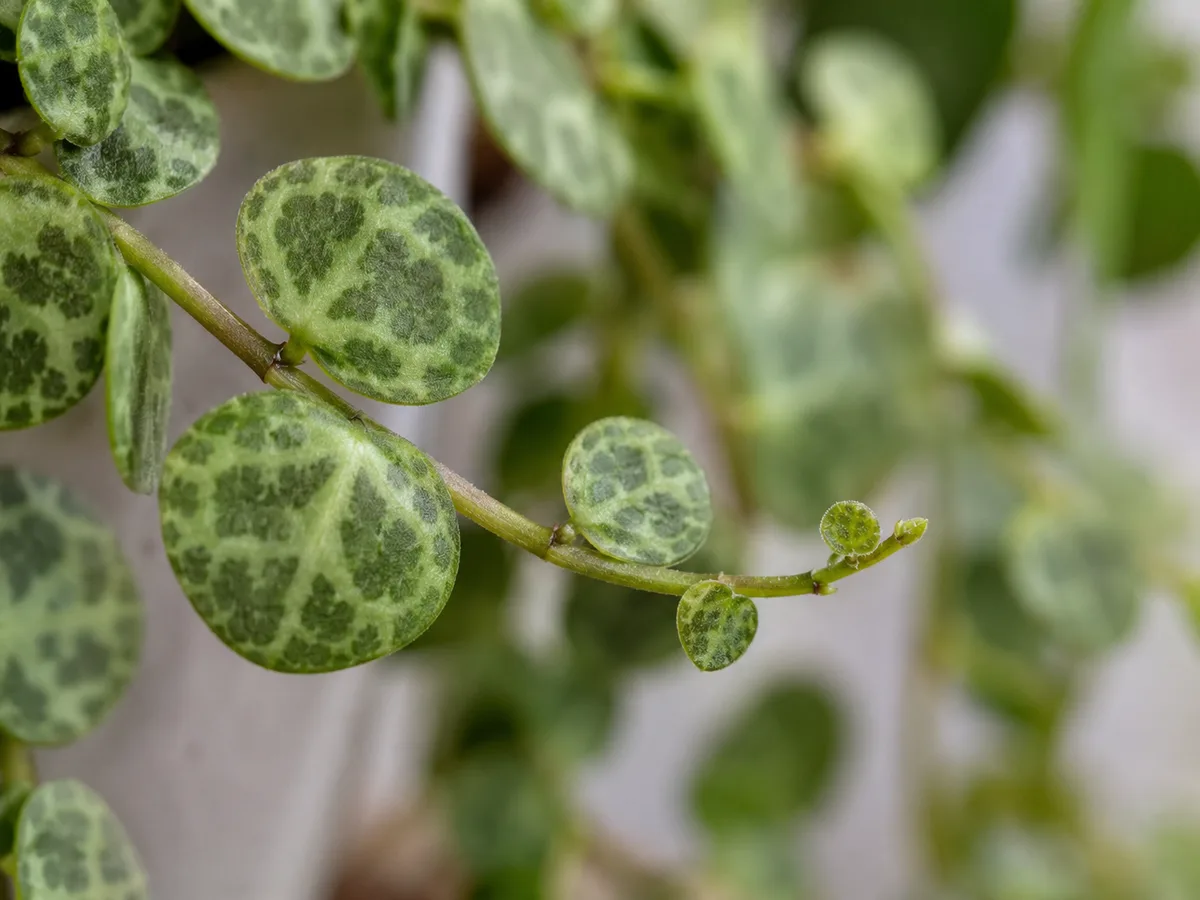
New leaves at the tip are a more useful sign of progress than rapid extension of the older vines.
First fixes for String of Turtles slow growth
Improve light gradually
Move the pot closer to a bright window or provide a grow light if the current location is dim. Aim for bright, indirect light, and avoid suddenly placing the plant in strong midday sun. If you use a grow light, follow its distance and timing instructions; keep the routine steady and assess new growth over the following weeks. The RHS notes that too much shade can lead to poor, straggly growth, while NC State notes that lower light can reduce the vibrancy of this species’ leaves. (RHS light guidance; NC State Extension plant profile)
Check water and drainage
Do not water by calendar or add extra water to accelerate growth. Feel the potting mix and lift the pot to judge whether it has become lighter. Water thoroughly when the mix has dried somewhat, then let excess drain away; avoid leaving the pot standing in runoff. String of Turtles prefers evenly moist conditions but is vulnerable to overwatering, so the goal is a measured dry-down rather than constant wetness or prolonged drought. (NC State Extension plant profile; Ohio Tropics care guide)
If the mix stays wet for a long time, check that the container has open drainage holes and that the potting medium has not compacted. Only unpot the plant if there are additional signs of root trouble, such as soft stems or persistent yellowing. Compare with root rot on String of Turtles before repotting.
Keep its conditions steady
Protect the plant from cold drafts and sudden temperature changes. NC State gives 68–75°F as a suitable range for String of Turtles; stable room warmth is more useful than repeated moves between windows, heaters, and cooler rooms. If growth slows in winter while the foliage remains healthy, use the mix’s actual drying as your watering cue instead of trying to stimulate a flush of growth. (NC State Extension plant profile; The Spruce peperomia care guide)
Repot only for a reason
String of Turtles can do well slightly pot-bound, and peperomias are slow to outgrow their pots. Do not move it into a much larger container just to encourage growth: excess mix can stay damp longer and put roots at risk. Consider repotting when the roots are densely packed or growing through drainage holes, or when the old mix has broken down and no longer drains. Choose a container only a little larger than the root ball. (NC State Extension plant profile; RHS repotting advice)
Should you fertilize a slow-growing String of Turtles?
Fertilizer is not a shortcut for poor light or damaged roots. If the plant is actively producing new leaves, the light and drainage are appropriate, and it has not been fed for a long time, use a balanced houseplant fertilizer only at the label rate or weaker. Do not fertilize dry or stressed roots, and pause if the plant is not actively growing. The Spruce describes peperomias as slow-growing and recommends restrained feeding during the growing season, with no winter feeding. (The Spruce peperomia care guide; Ohio Tropics species care guide)
What not to do
- Do not water more just because the newest vine looks unchanged.
- Do not repot a healthy plant into a much larger pot to “make room” for growth.
- Do not use strong fertilizer to compensate for low light or a wet root zone.
- Do not change light, watering, soil, and fertilizer all at once. Make one correction and observe the response.
- Do not expect old vines to lengthen quickly; check for healthy new leaves instead.
Related String of Turtles guides
Use this page when slow or absent new growth is the main concern. If stems stretch or lean toward a window, compare not enough light on String of Turtles; if yellowing accompanies wet mix or soft stems, follow the root-rot guide. For routine conditions, check the care overview, watering guide, and String of Turtles problem hub. If several symptoms occur together, use the Plant Problem Diagnosis Tool.
Investigate promptly if yellowing or leaf loss increases, stems soften near the soil, or the mix remains wet and smells sour. Those signs suggest a more specific watering or root problem than normal slow growth. If the foliage is firm and the only issue is a slow pace, continue stable care and compare new growth over a longer period.
FAQs
Is String of Turtles supposed to grow slowly?
Yes. It is naturally slow-growing. A short pause is not necessarily a problem if the leaves remain firm and patterned and the plant is not declining.
How much light helps String of Turtles grow?
Bright, indirect light supports healthy growth. The plant tolerates lower light, but it may grow less vigorously and its leaf pattern can be less vivid. Move it gradually if its current location is dim.
Should I water more when the plant is not growing?
No. Check soil moisture and drainage first. Persistently wet roots can be damaged, while watering on a calendar can also leave the mix too wet in winter.
Should I repot my slow-growing String of Turtles?
Not solely because it is slow. Repot when roots are densely packed or emerging from the drainage holes, or if the mix has stopped draining well. This peperomia tolerates being pot-bound.
When should I worry about slow growth?
Look for accompanying changes such as yellowing, soft stems, ongoing leaf loss, or persistently wet mix. Those signs justify checking the roots and watering conditions.