How to Grow and Care for Alocasia Odora Year-Round
Learn Alocasia odora care for a bright room or shaded garden, with advice on light, soil, watering, dormancy, propagation, frost, and common problems.
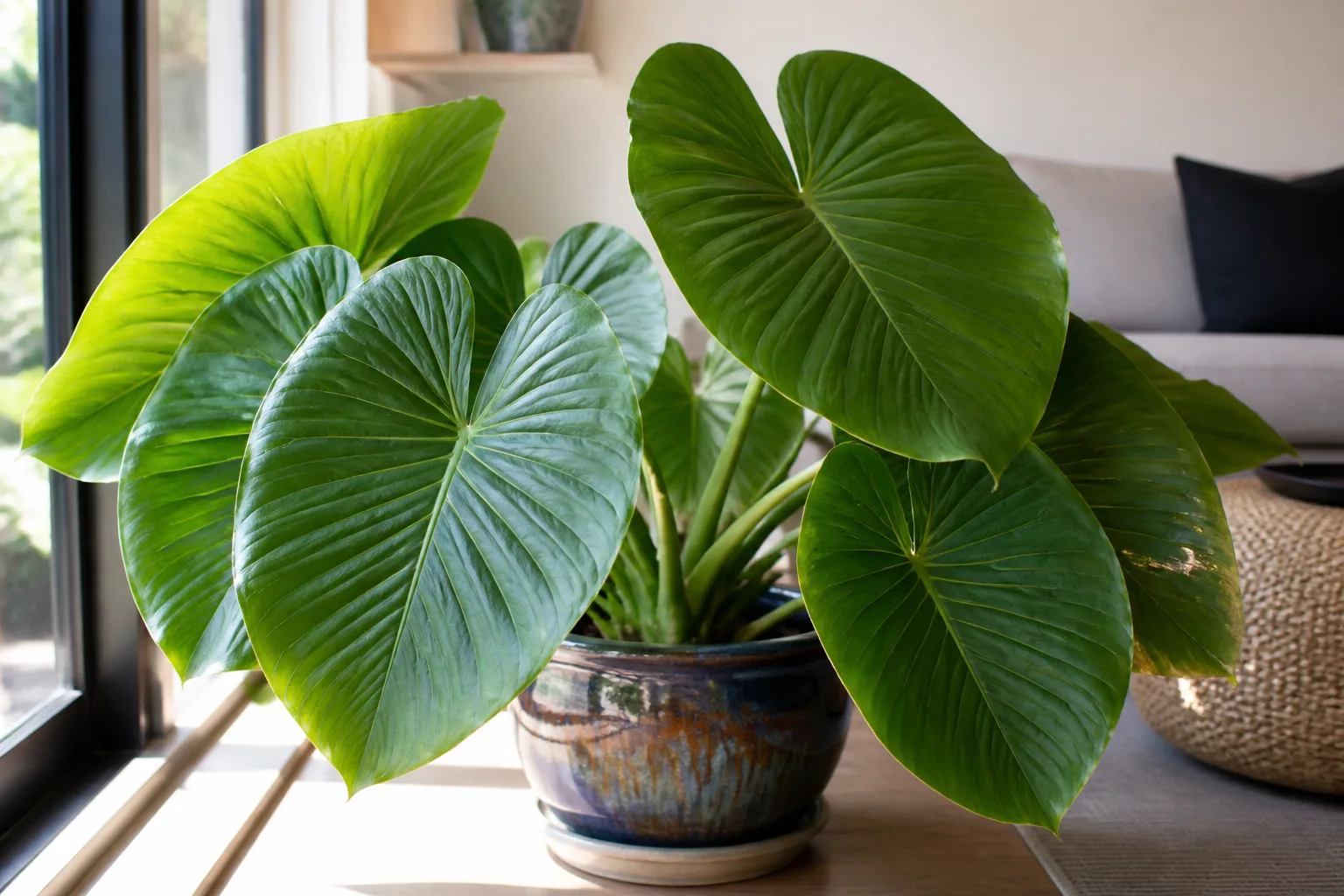
Alocasia odora is a tropical elephant ear with large, upright leaves that can make a bright room or sheltered garden feel lush. It is grown for foliage first; mature plants may also produce a pale flower whose scent is strongest at night, as noted in Gardenia’s species profile. The name “Asian taro” can be confusing: this is an ornamental Alocasia, not a plant to chew or treat as food.
Its care is easiest when you match water to growth. Give it warmth, bright filtered light, and a mix that holds some moisture while draining freely. When growth slows in a dim, cool season, water less and pause feeding. The key is to check the rhizome and roots before assuming that a leafless plant is dead or that drooping always means thirst.
Alocasia odora at a glance
| Care factor | Practical starting point |
|---|---|
| Botanical name | Alocasia odora, a rhizomatous tropical perennial in the Araceae family |
| Common names | Giant elephant ear, Asian taro, night-scented lily |
| Mature size | Large; often several feet tall and wide, smaller in a pot indoors |
| Light | Bright, indirect light indoors; filtered or partial shade outdoors |
| Soil | Rich, moisture-retentive mix with open drainage |
| Water | Water thoroughly when the top 1–2 inches dry during active growth; reduce in winter |
| Temperature | Warm growing conditions; protect from cold drafts and frost |
| Outdoor use | Best in warm, frost-free areas; ratings vary by reference and site |
| Propagation | Separate rooted offsets or divide the rhizome during active growth |
| Safety | All parts can irritate if chewed or swallowed; keep away from children and pets |
RHS describes Alocasia odora as a tropical, rhizomatous perennial with glossy leaves that can reach about 1.2 meters long, and lists it as a conservatory or greenhouse plant in cool climates. Its species profile also recommends bright indirect light and keeping the plant above 15°C. Houseplant Central notes that indoor specimens need room for substantial growth, so choose the location with mature height and leaf spread in mind rather than placing a young nursery plant wherever it fits today. (RHS species profile; Houseplant Central’s Alocasia odora guide)
Choose an indoor or outdoor growing setup
Use Alocasia odora as a houseplant if you can provide a warm, bright spot and enough floor space for its broad leaves. It works well as a statement plant in a sunroom or near a bright window, but a dim corner is not a substitute for a shaded outdoor site. Keep the pot away from cold glass in winter, air-conditioning vents, and doors that open onto chilly weather.
In warm climates, you can grow it in a sheltered garden bed or a large container on a patio. Consider wind as well as temperature: large leaf blades tear easily, and a plant beside an exposed path or windy corner can look ragged even when watering is right. A container gives you more control over drainage and lets you move the plant when nights cool.
Plan around the whole plant, not just the pot. Mature leaves can occupy several feet of space, and a heavy pot may be difficult to shift after the root mass grows. If children or pets can reach the foliage, choose a different location before bringing the plant home. For genus-wide room care, see our Alocasia growing indoors guide.
Give it bright, filtered light
Indoors, place Alocasia odora near an east-facing window or a few feet back from a bright south- or west-facing window. A sheer curtain can soften strong afternoon rays. The plant needs enough light to support large leaves, but hot direct sun through glass can bleach or scorch them.
Outdoors, filtered shade or morning sun followed by afternoon shade is a reliable starting point, particularly where summers are hot. The Missouri Botanical Garden recommends part shade or filtered sun and a site protected from strong winds for Alocasia. The RHS species profile lists full sun, while its general Alocasia growing guide recommends bright but indirect light for houseplant culture; that difference is a reminder to judge outdoor exposure by climate. Cooler, humid sites can tolerate more sun than a hot patio. (Missouri Botanical Garden plant profile; RHS Alocasia growing guide)
Turn an indoor pot a little at each watering if it leans toward the window. If new leaves get smaller and petioles stretch toward a light source, improve the available light before adding fertilizer. If pale, dry patches appear on the window-facing side, filter the direct rays and let damaged tissue remain until it is fully dry before trimming.
Use rich soil that still drains freely
Alocasia odora wants steady moisture around its roots, not soil that stays saturated. For a container, start with two parts quality potting mix and one part each orchid bark and perlite or pumice. This blend retains organic matter around the roots while leaving air spaces for drainage; adjust the bark or coir fraction if your home is unusually dry or humid.
Use a pot with drainage holes. A decorative cachepot is fine if you tip out the water that collects after watering. Avoid a heavy, dense garden soil in a container, and do not try to solve poor drainage by adding a layer of gravel at the bottom—the whole mix and drainage holes need to move water through the pot.
For an outdoor bed, choose organically rich soil that does not remain flooded after rain. Work compost into compacted soil and consider a raised planting area if water pools. NC State Extension describes Alocasia as preferring shaded sites and moist, well-drained, humus-rich soil; “moist” here means the roots have access to water while excess drains away, not that the planting hole stays full of water. (NC State Extension plant profile)
Water by checking the mix, not the calendar
During active growth, feel the top 1–2 inches of potting mix. When that layer is dry, water slowly until excess drains from the bottom, then empty the saucer or cachepot. Do not water again simply because a certain number of days has passed: a large pot in low light can stay damp much longer than a smaller pot beside a warm, bright window.
The plant should not be left bone-dry for long while it is pushing new leaves, but constant wetness is more dangerous than a brief delay. Check the weight of the pot as well as the surface. If the surface feels dry but the pot is still heavy, wait and check again; if water runs through very quickly, inspect whether roots have filled the pot or the mix has shrunk away from its sides.
Outdoor watering also depends on conditions. Rain, wind, heat, soil texture, and the size of the plant all change how quickly the root zone dries. Check soil with a finger or trowel near the root ball, and water deeply when the upper layer has dried rather than making frequent, shallow splashes.
In cool weather or during dormancy, stretch the interval between waterings. The RHS recommends watering Alocasias during the growing season after the top 5 centimeters of compost dry, then reducing water to a minimum during winter dormancy because excess moisture can rot the roots. (RHS Alocasia growing guide)
Keep temperatures warm and humidity steady
Aim for warm, stable conditions while the plant is producing leaves. A room around 65–80°F is a practical range; avoid cold drafts, chilly window glass, and direct blasts from heating or cooling equipment. The RHS recommends keeping Alocasia above 16°C during the growing season, while its Alocasia odora profile advises a minimum above 15°C. Those conservative thresholds matter more than chasing a precise daytime reading when the roots are cold and wet.
Medium to high humidity can help large leaves hold clean margins, especially in a dry heated home. If leaf edges repeatedly crisp while watering and light are otherwise stable, use a room humidifier or move the plant to a brighter naturally humid room. Grouping plants can modestly soften the air around them, but a small pebble tray will not transform the humidity of an entire room.
Misting is a short-lived measure, not a replacement for room humidity, and constantly wet foliage can leave leaves vulnerable to spots. Wipe dust from the broad leaves with a damp cloth so you can also check their undersides for mites or other pests. Good airflow around the plant helps leaves dry and reduces the time moisture sits on surfaces.
Understand seasonal dormancy
Alocasia odora may slow down or lose older leaves when light and temperatures fall. That seasonal rest is especially likely in a cool room or after the plant has spent summer outdoors. It is not a cue to keep watering on the summer schedule: with fewer leaves, the plant uses less water, so wet mix can persist and roots can rot.
An indoor plant kept warm and bright may continue growing instead of entering a full dormancy. Respond to what the plant is doing, not a fixed date. Keep watering when the mix begins to dry during active growth; reduce watering sharply when growth pauses and the plant has fewer leaves.
What to do if every leaf disappears
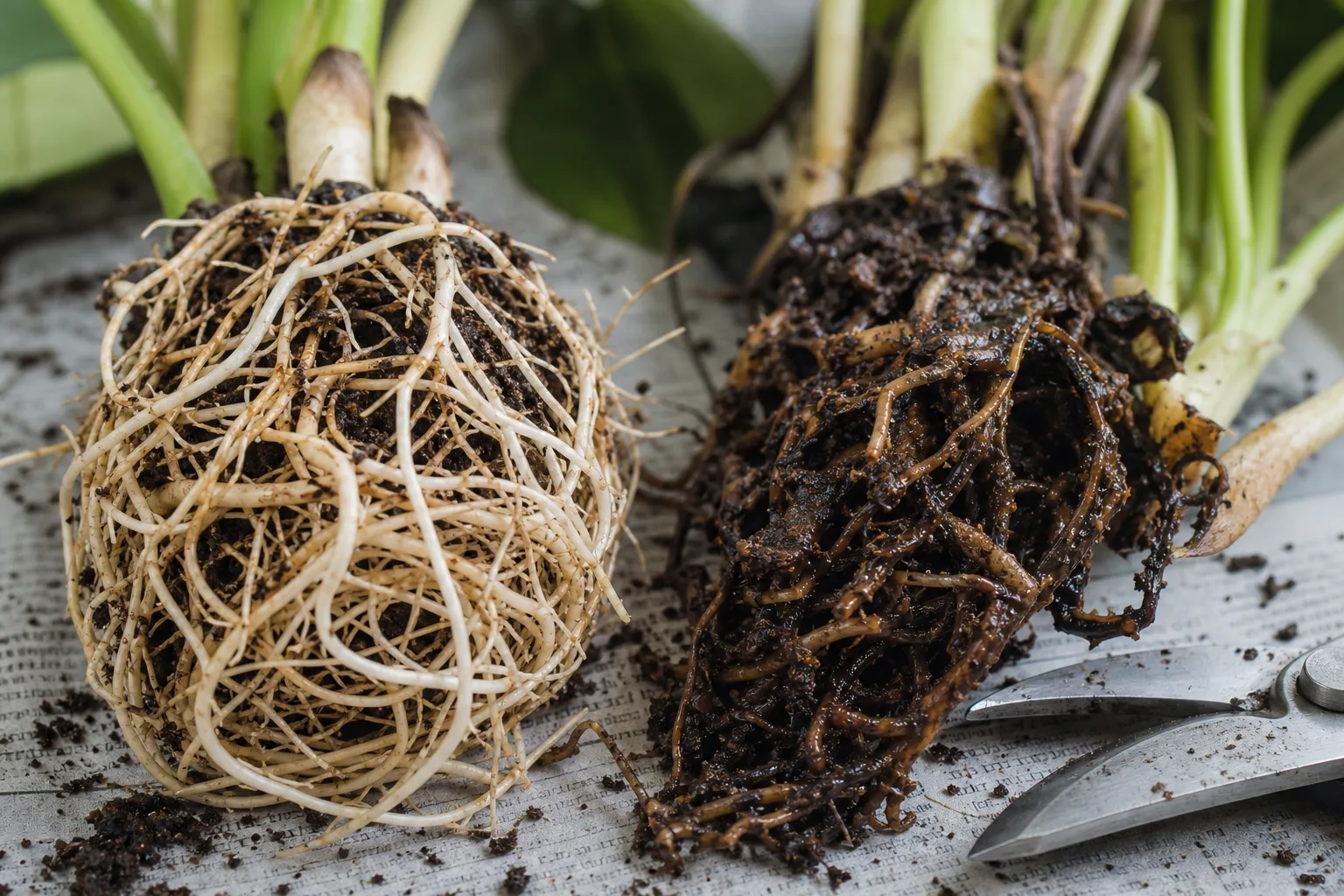
Do not discard the plant as soon as the last leaf fades. Check the base: a firm rhizome and firm roots suggest the plant may be resting, while a soft, dark, foul-smelling base points to rot. If it is firm, remove dead foliage, keep the pot warm and frost-free, stop fertilizer, and give only enough water to prevent the remaining root zone from becoming dust-dry.
Wait for renewed warmth and light before increasing water. Once a new shoot appears, return gradually to the active-growth routine and feed only after leaves begin to expand. If the rhizome is mushy, lift it to inspect the roots, remove decayed tissue with a clean tool, and repot what remains in fresh, airy mix.
Feed during growth and prune only when needed
Feed an actively growing plant with a balanced liquid houseplant fertilizer, following the label and using a conservative dilution if you are unsure how it responds. The RHS suggests a general liquid feed every two to three weeks from spring to autumn; a slower schedule is sensible in a dim home or when growth is modest. Do not fertilize a dormant or leafless plant, because it cannot use the added nutrients efficiently.
A salt crust on the potting mix or recurring brown tips can be a reason to flush the mix with plain water and reassess feeding. Do not raise the fertilizer dose to compensate for poor light, cold roots, or root rot. Outdoor plants can receive a balanced slow-release fertilizer in the growing season according to its label, but rich soil and compost may already supply enough nutrients.
Routine shaping is not necessary. Remove fully yellow, damaged, or dead leaves close to the base with clean shears; leave healthy green leaves in place because they still support the rhizome. Wear gloves if the sap irritates your skin, and clean the blades between cuts if you are removing diseased tissue.
Grow it outdoors and protect it from frost
Alocasia odora can be a dramatic outdoor foliage plant in warm regions, but published hardiness guidance is not identical.
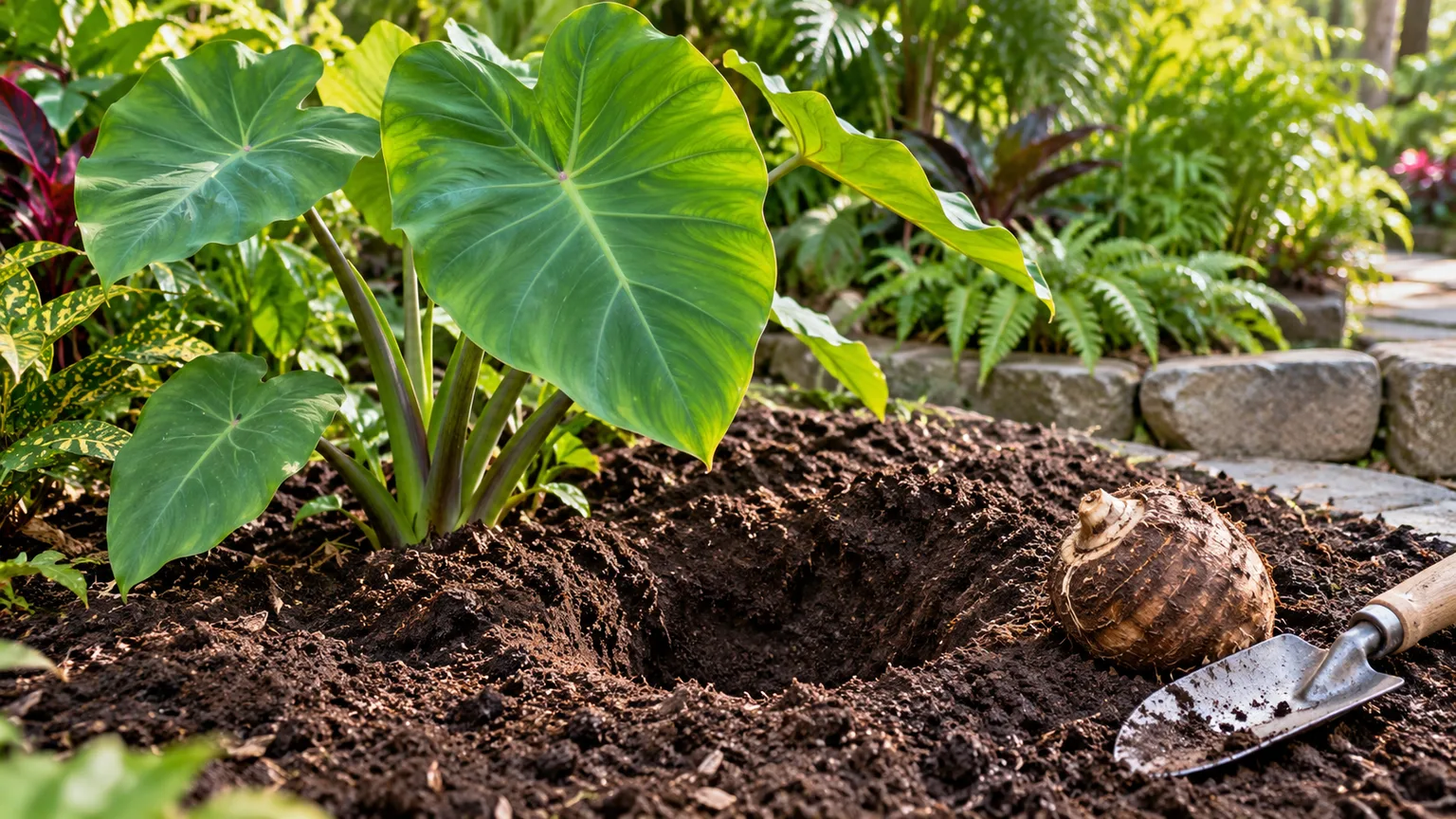
Gardenia lists the species for USDA zones 9–11; Missouri Botanical Garden gives zones 10–11 for its broader Alocasia group; and the RHS treats A. odora as a tropical conservatory or greenhouse plant in cool climates. Use those ratings as context rather than a promise: cold duration, drainage, wind exposure, and whether roots are in a pot all affect survival. (Gardenia species profile; Missouri Botanical Garden plant profile; RHS species profile)
Set outdoor plants out after frost danger has passed and the soil has warmed. Give them filtered light, regular moisture, and shelter from strong winds. A container can be sunk to its rim for a fuller garden display, but lift it before cold weather; roots in pots cool and freeze faster than roots protected by garden soil.
Before the first frost, move a container plant indoors or lift the rhizome from an in-ground planting. If storing the rhizome, remove loose soil, let the surface dry, and keep it in a cool, dry, frost-free place with some air movement. Check it occasionally for shriveling or soft rot. Replant outside only after frost risk has passed and spring temperatures are reliably warm. NC State Extension and Missouri Botanical Garden both describe starting Alocasia indoors and moving it outside after frost, then reducing winter water or storing tubers in cold climates. (NC State Extension plant profile; Missouri Botanical Garden plant profile)
Repot when roots need more room
Repot in spring or early summer when roots circle densely, emerge from drainage holes, or the mix dries unusually fast despite normal conditions. A plant that is simply growing slowly in winter does not need a larger pot. Slide it out gently and check whether the root mass is actually crowded before making a change.
Choose a container only one size larger, about 2 inches wider than the root ball, with drainage holes. A much larger pot holds a broad volume of wet mix that small roots cannot use quickly. Keep the crown at its original depth, refill around the roots with fresh airy mix, and water once to settle it before allowing excess to drain.
Because mature leaves can make the plant top-heavy, use a sturdy pot that will not tip easily. Repotting is also a convenient time to separate offsets, but avoid dividing a stressed or actively declining parent unless rot requires immediate attention. Wait until it resumes healthy growth if the only issue is seasonal rest.
Propagate from offsets or rhizome sections
The dependable way to multiply Alocasia odora is to separate an offset or divide a healthy rhizome. A leaf cutting alone will not make a new plant because it lacks the growing point and storage tissue needed to produce roots and shoots. Look for a small shoot or natural division at the base when you repot in spring or early summer.
RHS recommends separating offsets or dividing Alocasia rhizomes as new growth begins. Houseplant Central also describes division as the practical propagation route for this species. If you are planting a dormant elephant-ear storage organ outside, our guide to planting elephant-ear bulbs covers the basic setup. Choose a piece with at least one visible growth point and, ideally, a few roots; a tiny rootless section is more likely to dry or rot before it establishes. (RHS Alocasia growing guide; Houseplant Central’s Alocasia odora guide)
Divide an offset safely
Wear gloves, slide the plant from its container, and brush away enough mix to see where the offset joins the parent. If it releases with its own roots, ease it apart by hand; if not, use a clean sharp knife to separate the rhizome without crushing the growth point. Replant the parent promptly and pot the offset at the same depth it was growing before.
Use a small pot that fits the new roots and an airy, lightly moist mix. Keep the division warm in bright indirect light, but out of direct sun while it recovers. Water enough to keep the mix from drying completely, let excess drain, and wait for new growth before feeding. If the first leaf takes time, resist repeatedly unpotting the offset to inspect it.
Watch for pests and disease
Inspect the undersides of leaves, the creases where petioles meet, and the soil surface once a week. Spider mites favor dry conditions and may leave pale stippling or fine webbing; aphids gather on tender new growth, while mealybugs appear as cottony clusters. Isolate a plant with active pests, rinse or wipe the foliage, and repeat inspections so newly hatched pests do not go unnoticed.
Root rot is usually a moisture and drainage problem: soil stays wet for too long, roots lose function, and leaves may yellow or droop even though the pot feels heavy. Leaf spots may also develop when foliage remains wet or airflow is poor. Remove badly affected leaves with clean tools, improve airflow, and correct the soil and watering conditions before applying any treatment; if you use a pesticide, use only a product labeled for the plant and pest and follow its directions.
Diagnose yellow, brown, or drooping leaves
One old leaf fading while new growth appears can be normal turnover. A cluster of symptoms on several leaves calls for a closer look at soil, light, and the rhizome before changing more than one condition at a time.
| What you see | Check first | Useful next step |
|---|---|---|
| One oldest leaf yellows as a new leaf opens | Whether the rest of the plant is firm and growing | Remove it once it is fully yellow; keep the care routine steady |
| Several leaves yellow and the mix is wet | Drainage, pot weight, and the smell and firmness of the roots | Pause watering; inspect for rot if the base is soft or smells sour |
| Leaves yellow while the mix is very dry | Whether water is running around a shrunken root ball | Rehydrate slowly and resume checking the mix during growth |
| Brown, crisp edges | Dry room air, salt buildup, or repeated drying | Check humidity and feeding; correct one likely cause at a time |
| Pale or bleached patches on the window side | Direct sun through glass or sudden movement into stronger light | Filter the light and acclimate the plant gradually |
| Limp leaves in wet soil | Root health rather than lack of water | Inspect the rhizome and roots instead of adding more water |
Alocasia leaves can droop after a missed watering, but a plant with wet soil and limp foliage may have damaged roots that can no longer take up water. Check moisture first, then look for a cold draft or insufficient light. Avoid trimming a leaf that is only partly damaged; if it still has green tissue, it is still contributing energy to the plant.
Handle Alocasia odora safely around people and pets
Treat the plant as ornamental and keep it out of reach of children and animals that chew plants. The National Capital Poison Center explains that Alocasia contains calcium oxalate crystals; chewing or swallowing plant material can cause irritation and pain in the mouth and throat, with nausea or vomiting also possible. The RHS also advises wearing gloves because the sap may irritate skin. (National Capital Poison Center: Alocasia toxicity; RHS Alocasia growing guide)
Wear gloves when dividing, pruning, or handling damaged tissue, and wash tools and hands afterward. Do not let children taste any part of the plant or assume that a common name such as “Asian taro” makes this ornamental species safe to eat. If someone chews or swallows it, remove visible pieces and contact a poison center for guidance; contact a veterinarian if a pet is involved.
Avoid these common care mistakes
- Keeping the mix constantly wet: Water when the top layer begins to dry during growth, then let excess drain.
- Using a dark corner because the plant likes shade: Indoors, it still needs bright indirect light to grow sturdy leaves.
- Treating winter leaf loss as proof of death: Check whether the rhizome is firm before discarding a dormant plant.
- Leaving it outdoors until frost: Move the container or lift the rhizome before freezing weather arrives.
- Upsizing too aggressively: A pot much larger than the root ball stays wet and can encourage rot.
- Feeding through dormancy: Wait for active growth before resuming fertilizer.
- Using a fixed watering schedule: Season, pot size, light, and mix change how quickly the root zone dries.
Changing several conditions at once makes it hard to tell what helped. Start with the simplest check—soil moisture, light exposure, or the firmness of the rhizome—then give the plant time to respond before adjusting again.
Conclusion
Alocasia odora thrives when its growing season and resting season receive different care. Keep it warm in bright filtered light, use rich but airy soil, and water thoroughly when the upper mix dries; as growth slows, reduce water and stop feeding. Outdoors, give it a sheltered position and treat it as frost-tender unless your local conditions and a reliable species-specific rating say otherwise.
When leaves decline, read the whole plant before reaching for the watering can. A firm rhizome with a single aging leaf is different from a heavy, wet pot with a soft base. That simple check—combined with room for its mature size and protection from cold—prevents many of the problems that make this striking elephant ear seem harder to grow than it is.



