How to Grow and Care for Alocasia Silver Dragon
Grow a healthy Alocasia Silver Dragon with a better watering routine, airy soil, stable humidity, safe propagation, and symptom-by-symptom fixes.
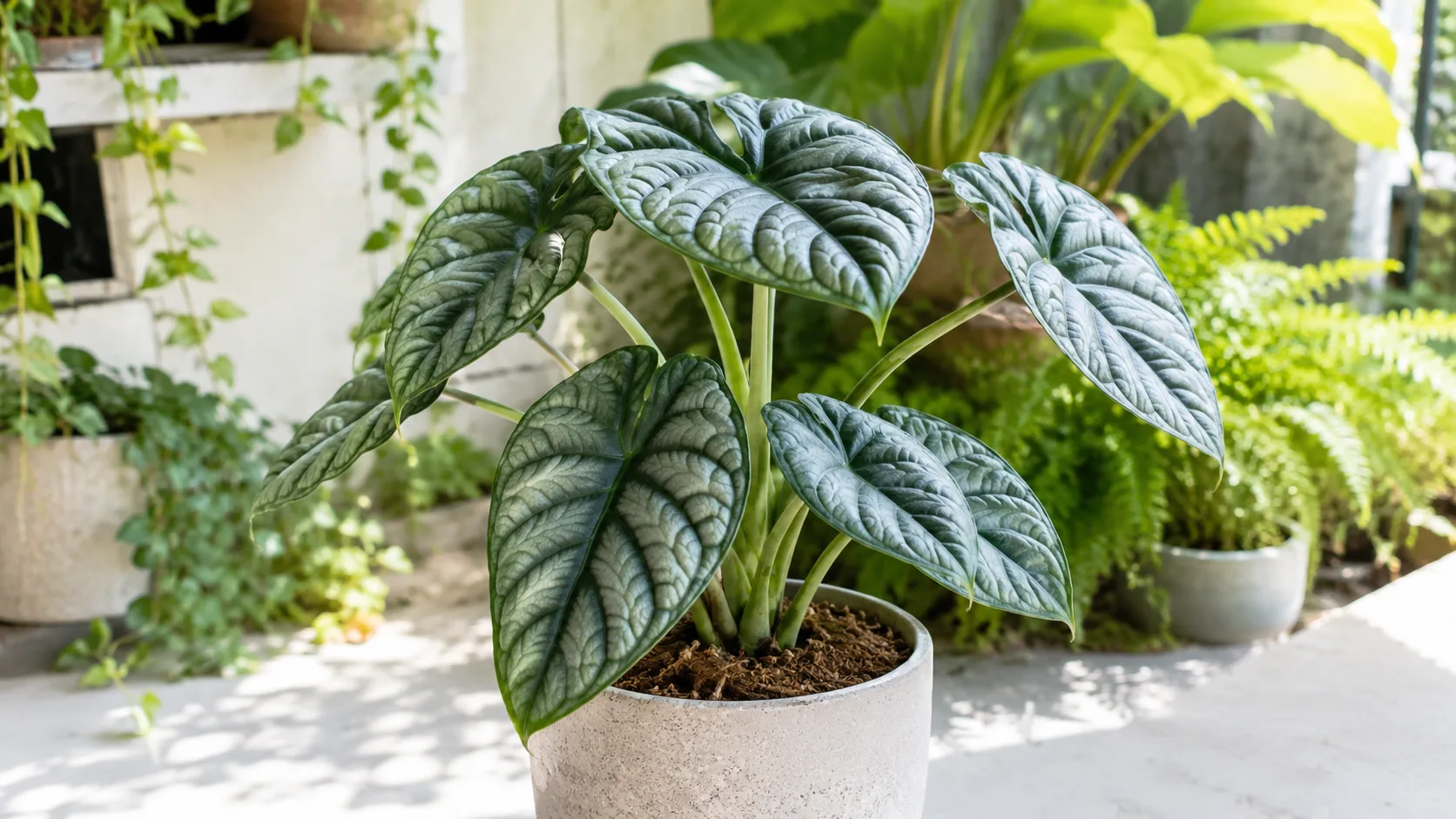
Alocasia Silver Dragon, usually sold as Alocasia baginda ‘Silver Dragon,’ is a compact jewel Alocasia grown for thick, quilted leaves that look silver over dark green veins. It stays much smaller than the giant elephant-ear types, but its roots and foliage still expect a warm, humid, filtered-light environment. The most useful way to care for it is to manage the whole root-and-air system together: a plant can sit in moist mix and still wilt if the roots are damaged, or curl its leaves in damp soil if the room is cold and dry.
This is a cultivar, so individual plants vary in vigor, leaf size, and tolerance. The broader genus guidance from North Carolina State Extension and the Royal Horticultural Society’s Alocasia growing guide provides a sound baseline, while the decisions below are meant to help you adapt that baseline to your home.
Why Silver Dragon Care Is a Balance, Not a Schedule
Silver Dragon is not difficult because it needs an exotic product. It is difficult because several ordinary household conditions can drift in opposite directions. A bright window may also be a hot window; a humid bathroom may have poor air movement; a chunky mix may dry too quickly in a small terracotta pot; and a plant that looked thirsty last week may be resting this week.
Think of the plant as having two linked zones. Below the pot rim, the rhizome and roots need oxygen as well as water. Above the rim, the leaves need gentle light, warm air, and enough humidity to lose water at a manageable rate. If you change one zone, reassess the other before reaching for fertilizer or a larger pot.
Silver Dragon and Dragon Scale are often confused because both are Alocasia baginda cultivars with raised, armor-like venation. They are not the same plant: Dragon Scale is usually deeper green, while Silver Dragon has a paler, more metallic cast. Their care is close enough that a proven Dragon Scale method can be a useful starting point, but the Epic Gardening comparison and care guide is right to treat the names as distinct rather than interchangeable.
Choose the Right Light, Temperature, and Humidity
These three conditions determine how quickly the pot dries and how well a new leaf unfurls. Set them first, then build the watering routine around what actually happens in that location.
Place it where light is bright but filtered
Bright, indirect light is the safest default. An east-facing window often provides gentle morning sun, while a south- or west-facing window can work a few feet back from the glass or behind a sheer curtain. The goal is enough light to support sturdy new leaves without exposing the silver surface to intense, unfiltered afternoon rays.
Direct sun damage looks different from a watering problem. Scorch usually creates a bleached, tan, or crispy patch on the side facing the window; it does not begin as evenly distributed yellowing across the plant. Move the plant farther back or diffuse the light rather than cutting off all light when you see scorch.
Low light causes a slower, less attractive decline. New leaves may be smaller, stems may lean toward the window, and the silver pattern can look duller. If the mix stays wet for a long time and growth has stalled, improve light and airflow before watering again. Rotating the pot a quarter turn every week or two helps keep the compact plant from leaning, but rotate gradually rather than changing its location every day.
Keep the plant warm and stable during active growth. A practical indoor target is about 65 to 80°F, with protection from cold windows, exterior doors, heating vents, and air-conditioning outlets. Prolonged exposure around or below 55°F can trigger a rest period, particularly when days are short. General Alocasia guidance from the RHS allows a cooler winter rest, but a Silver Dragon recovering from stress should not be left cold and wet.
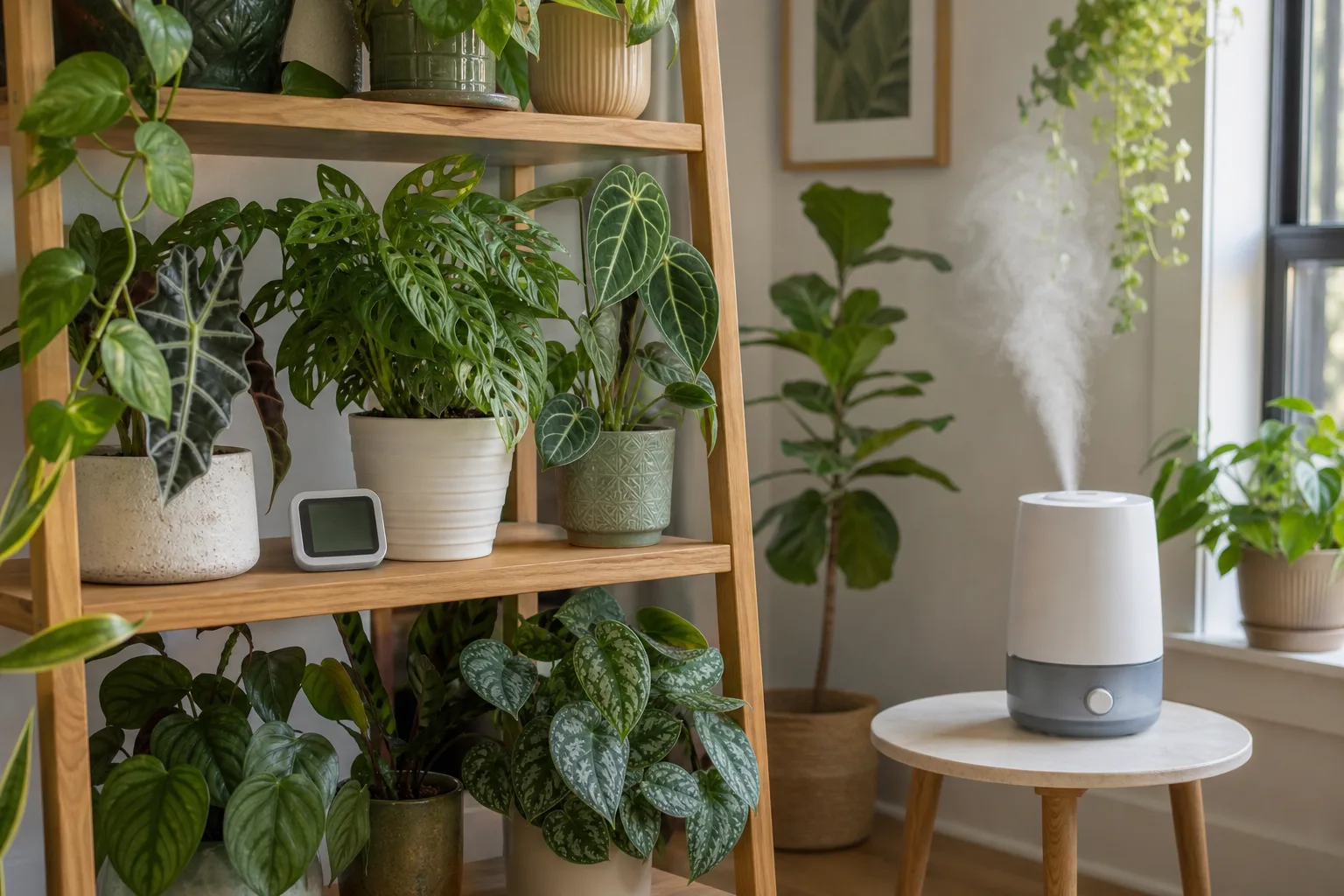
Humidity is worth measuring instead of guessing. Aim for roughly 60 to 80 percent when the plant is actively growing if you can provide that range with good airflow; a reading below 50 percent often shows up first as crispy margins or a leaf that will not unfurl cleanly. A small humidifier near, not blowing directly onto, the plant is the most dependable tool. Grouping plants can help, and a correctly built pebble tray may improve the immediate microclimate, but misting raises humidity only briefly and wet foliage that stays damp can encourage leaf spots. A practical Silver Dragon care reference from Healthy Houseplants likewise treats 60 to 80 percent as a target to measure, not a reason to ignore airflow.
The useful rule is high humidity plus moving air, not a sealed, stagnant box. Leave space between leaves and walls, avoid placing the plant directly beside a fogger, and use a small fan across the room if the air is still. If humidity is high but the leaves remain wet overnight, reduce surface moisture and improve circulation before increasing humidity further.
Build an Airy Root Zone and Use a Snug Pot
Silver Dragon needs a mix that holds a little water while leaving large air spaces around the roots. Straight garden soil or a dense, peat-heavy potting soil can remain wet around the rhizome long after the top looks dry. A loose aroid mix is easier to manage because it lets you water thoroughly without turning the pot into a reservoir.
Keep the rhizome high and the mix open
For a simple homemade mix, combine a moisture-holding base such as quality houseplant mix or coco coir with orchid bark and perlite or pumice. Start near equal parts, then adjust after you observe the plant: add more bark or pumice if the mix stays wet, or a little more base if water runs through immediately and the roots dry within a day. A premixed aroid mix is fine if the pieces remain visible and the mix does not collapse into a dense, muddy layer.
Use a pot with real drainage holes. A decorative cachepot without holes is safe only when the plant remains in a removable nursery pot that can drain completely over a sink. Set the rhizome and the bases of the petioles at the surface or just slightly above it; burying the crown deeply traps moisture where the stems meet the soil and makes basal rot more likely.
Choose a container only one size larger than the current root ball. Oversizing creates a large volume of mix that the roots cannot dry evenly, which is a common reason a plant becomes yellow and soft after an apparently helpful repot. Terracotta can dry faster than plastic, but the pot material matters less than the combination of drainage, mix texture, light, temperature, and your watering habits.
Water According to Growth and Root-Zone Conditions
Water when the top 1 to 2 inches of mix feel dry, then water slowly and thoroughly until excess comes from the drainage holes. Let the pot drain fully and empty the saucer or cachepot. Do not use “once a week” as a rule; it may be reasonable in one bright, warm room and disastrous in a cool, dim room.
Check in two places. Press a finger or wooden skewer into the mix near the edge of the pot, then compare that reading with the weight of the container. If the surface is dry but the pot is still heavy and the lower mix feels damp, wait. If the pot is unusually light and the top layer is dry, water now rather than adding a small splash that wets only the surface.
Use room-temperature water and keep the stream on the mix rather than the crown or leaves. Filtered water can be useful when your tap water leaves a white crust on the soil or repeatedly causes brown tips, but changing water is not a substitute for better drainage. Periodically watering to runoff can help move accumulated salts out of a well-draining pot; it cannot rescue roots already sitting in stagnant water.
If a plant dries unusually fast after watering, inspect the roots before simply watering more often. A root-bound plant may have a tight root mass that sheds water around the sides, while a hydrophobic or collapsed mix may repel water. Those are potting problems, not proof that Silver Dragon needs constant moisture.
Change the routine when the plant rests
In bright, warm months, Silver Dragon may produce leaves and use water steadily. As light and temperature fall, growth can slow sharply or pause. The RHS recommends reducing winter watering to a minimum for dormant Alocasias because wet, inactive roots are especially vulnerable to rot.
During a rest period, let more of the mix dry before watering, use much less water, and stop fertilizing. Do not keep the old summer schedule just because the calendar says it is watering day. If the plant has no leaves, the rhizome still needs protection from desiccation, but the correct response is occasional careful moisture around the root zone, not a saturated pot.
Feed, Clean, and Prune Without Overcorrecting
Feed only while the plant is making active growth. A balanced liquid houseplant fertilizer diluted to about half the label strength every 4 to 6 weeks is a conservative starting point for a potted Silver Dragon. Resume gradually when new growth returns rather than fertilizing a leafless or dormant plant.
More fertilizer will not compensate for weak light, cold roots, or damaged roots. Excess salts can burn margins and leave a pale crust on the mix, so pause feeding if tips brown soon after fertilizing, flush a well-draining pot with plain water, and correct the underlying routine. Do not add bone meal or concentrated supplements by default; a complete, diluted fertilizer is easier to control.
The textured leaves collect dust in their grooves. Every few weeks, support each leaf and wipe it with a soft, damp cloth, checking the undersides and petiole joints as you go. Remove fully yellow, dead, or badly damaged leaves at the base with clean scissors, but leave a partly green leaf attached while it is still contributing energy to the rhizome. Leaf-shine products can clog the textured surface and are unnecessary.
Repot Only When the Plant Is Ready
Repot in spring or early summer when the plant is beginning active growth, unless damaged roots require urgent action. Good reasons include roots circling densely or emerging from holes, a mix that dries immediately after watering, water that repeatedly sits on the surface, or a plant that is crowded and top-heavy despite otherwise good care. A routine date on the calendar is not enough reason to disturb a stable plant.
Slide the root ball out and inspect before choosing a new pot. Healthy roots are firm and pale; mushy, dark, hollow, or foul-smelling roots need to be removed with sterilized scissors. If the roots are healthy, preserve as much of the root ball as possible, move up one pot size, and keep the rhizome at the same height.
After repotting, water enough to settle the mix but do not keep the pot saturated. Return the plant to bright filtered light and stable warmth, protect it from intense sun for a short adjustment period, and expect some temporary droop. A plant may pause or shed a leaf after root disturbance; that is different from a soft, collapsing crown or a sour-smelling pot, which calls for another root inspection.
Propagate by Division or Corms
Silver Dragon cannot be reliably multiplied from a single leaf or ordinary stem cutting. Its useful starting points are rooted offsets from the rhizome or small corms found near the roots. Wear gloves, use a clean blade, and work when the plant is actively growing so each piece has warmth and time to recover.
Division is the dependable option
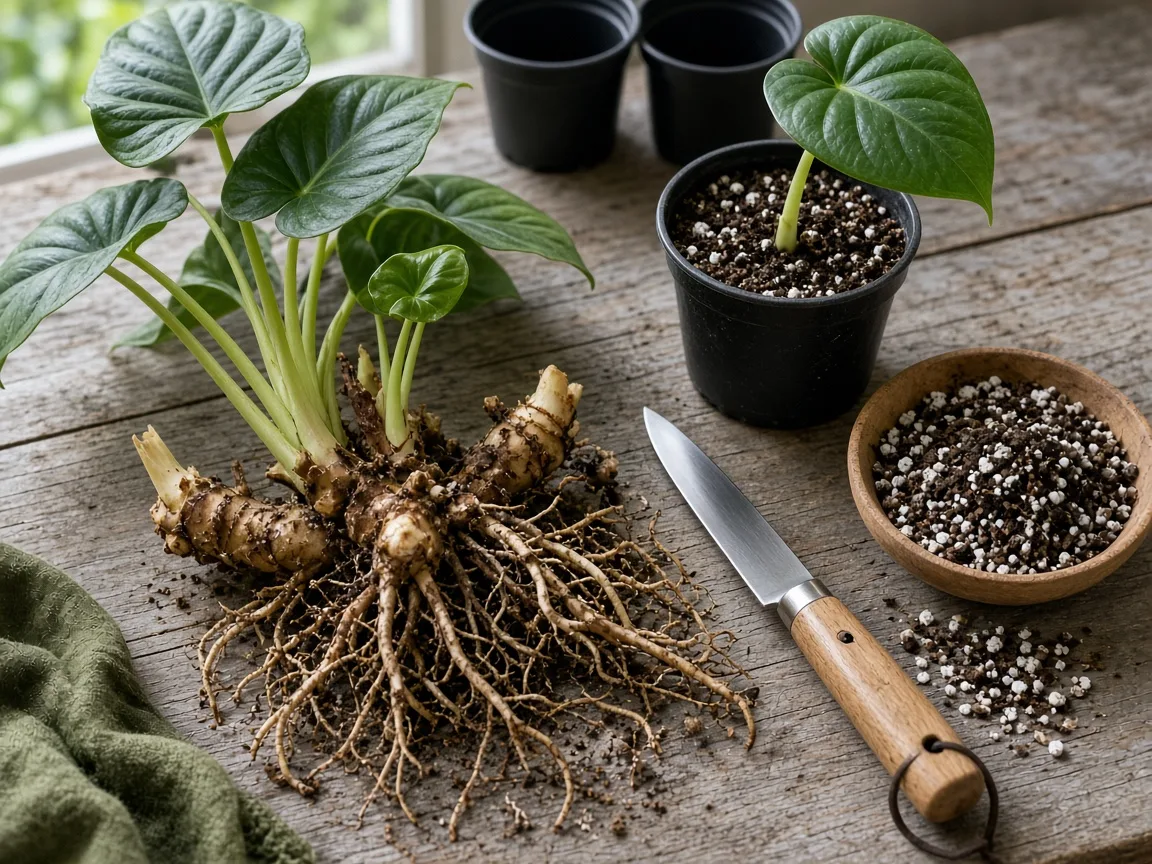
Division is the best choice when the mother plant has several clumps. Unpot it carefully, brush away enough mix to see where stems and roots join, and look for an offset with its own roots and at least one viable growth point. Separate by hand when possible; if the rhizome is joined, make one clean cut instead of sawing through it.
Pot the division into a small container of airy, lightly moist mix. Keep the growing point near the surface, provide bright indirect light, and maintain warm, humid air without keeping the pot wet. A small division may pause before it makes a leaf, so judge success by a firm rhizome and healthy roots rather than by immediate growth.
Do not divide a plant that is already declining from cold, root rot, or severe dehydration. Propagation adds another wound and another period of water stress. Stabilize the mother plant first, then divide when it has resumed growth.
Corms are slower but rewarding
Corms are small, firm, bulb-like storage structures that may be found around the root system. They are slower than rooted division and can take weeks or months to produce a visible shoot, so choose this method when you are comfortable maintaining a small, humid propagation setup.
Remove a corm gently without stripping the mother plant of every reserve. Peel away only loose outer material, place the corm in lightly moist sphagnum or a very airy medium with its top exposed, and cover it with a clear container or humidity dome. Bright indirect light and warmth matter more than a heavy fertilizer dose.
Vent the dome regularly and inspect for mold or rot. The medium should feel evenly damp, never waterlogged. Once roots and a leaf are established, move the young plant into a small airy mix and keep humidity changes gradual. A corm that turns soft or smells sour is rotting; discard it rather than spreading the problem to healthy propagations.
Troubleshoot Yellow, Brown, Curling, or Dropped Leaves
Start with a three-part check: feel the mix, inspect the undersides of leaves, and look at the newest growth. Symptoms overlap, so a single label such as “underwatering” is less useful than combining what the plant looks like with what the roots and air are doing.
Read yellow leaves with the soil and leaf age
One oldest leaf gradually yellowing while a new leaf looks healthy can be normal senescence. Alocasias often maintain a small number of leaves and recycle an older one as a new one emerges. Remove it only when it is mostly yellow or dry.
Several leaves yellowing at once, especially when the mix stays wet, points first to low oxygen or root trouble. Stop automatic watering, check drainage, and inspect the roots if the pot is heavy, the crown is soft, or the soil smells sour. If the mix is dry and the roots are firm, consider inconsistent watering, very low light, cold stress, or an insufficient feeding routine instead.

Separate crispy edges from scorch and salt damage
Crispy tips and margins are commonly linked to dry air, a pot that swings from bone dry to soaked, or fertilizer and mineral buildup. Move a hygrometer near the leaves, stabilize watering, and look for white residue before changing several variables at once. A humidifier helps if the room is genuinely dry; it will not repair a damaged root system.
A dry, bleached patch on the window-facing side suggests sun scorch, while dark, water-soaked patches suggest cold or prolonged leaf wetness. Damaged tissue will not turn green again. Improve the conditions for new growth, then trim the old damage gradually rather than removing a leaf that still has a large healthy area.
Leaf drop after a move, repot, cold draft, or abrupt light change can be a stress response. A warm, stable plant with a firm rhizome may regrow after a short rest, so reduce watering and avoid repeatedly unpotting it. Keep the crown dry and check for new growth at the soil line.
If all leaves collapse while the mix is wet, or the rhizome is soft, dark, or foul-smelling, treat it as possible rot. Remove the plant, cut back damaged tissue to firm material, repot into fresh airy mix, and water sparingly. If the rhizome is firm but leafless, patience is safer than feeding or watering heavily.
Manage Spider Mites, Scale, and Root Rot
Spider mites are easy to miss on Silver Dragon because the raised leaf texture hides fine webbing and stippling. Check the undersides, veins, and petiole joints every time you rotate the pot. Pale speckles, dull foliage, or a fine web are stronger clues than a single curled leaf.

Isolate a suspect plant. Rinse the foliage gently, wipe visible pests away, and use an insecticidal soap or other product only according to its ornamental-plant label; repeat as directed because one treatment rarely reaches every life stage. Improve humidity and leaf cleaning as prevention, but do not assume humidity alone will eliminate an established infestation. Scale and mealybugs need the same early isolation and repeated inspection.
Root rot is an environment problem before it becomes a pruning problem. It is most likely when a dense mix, oversized pot, low light, and frequent watering combine. The recovery sequence is to confirm the roots, remove soft tissue with clean tools, discard the old saturated mix, clean the pot, and restart in a smaller airy container. Leaf spots also call for dry foliage, better airflow, and removal of badly affected leaves; avoid spraying water over the leaves when the room cannot dry them quickly.
Understand Toxicity and Handle the Plant Safely
All parts of Alocasia contain calcium oxalate crystals. Chewing or swallowing plant material can cause immediate pain and irritation in the lips, mouth, tongue, and throat, with nausea, vomiting, or diarrhea possible. Poison Control’s Alocasia guidance recommends preventing exposure and rinsing visible plant material from the mouth while seeking case-specific advice; severe swelling or breathing difficulty needs urgent medical attention.
Wear gloves when dividing, pruning, or handling broken leaves, and wash your hands afterward. Keep the plant and fallen leaves away from children, cats, dogs, and other animals that may chew. Do not confuse the edible-food traditions of some prepared Alocasia species with the safety of a houseplant cultivar; home preparation is not a safe experiment with Silver Dragon.
Know When Outdoor Growing Makes Sense
Silver Dragon can spend warm months outdoors in a frost-free climate, but it is best treated as a container plant unless you have a consistently warm, sheltered growing space. Place it in bright shade or filtered light, acclimate it over several days, and protect the leaves from wind, heavy rain, and sudden temperature drops. Direct outdoor sun is much stronger than indoor window light and can scorch the foliage quickly.
Bring the container inside before cool nights or cold rain arrive. Inspect the leaf undersides, stems, and drainage holes before the move so pests do not come indoors with it. A seasonal outdoor stay can improve light and airflow, but it is not worth exposing the plant to cold simply to extend the growing season.
Conclusion
The reliable Silver Dragon routine is simple to describe and specific to execute: bright filtered light, warm stable temperatures, measured humidity with airflow, an airy mix in a snug pot, and thorough watering only after the top layer dries. Feed lightly during active growth, reduce water and stop fertilizer during a real rest period, and treat yellowing, curling, or leaf drop as evidence to inspect rather than as instructions to add more water.
If you remember one diagnostic sequence, use this: feel the mix, check the roots when the soil is wet and the plant is declining, inspect leaf undersides for pests, then adjust light, temperature, and humidity one change at a time. That approach protects the rhizome, preserves the silver foliage, and gives a stressed plant the best chance to return with a healthy new leaf.