How to Grow and Care for Alocasia Tiny Dancer
Learn how to care for Alocasia Tiny Dancer, adjust watering by season, troubleshoot leaf problems, and propagate corms without rotting them.
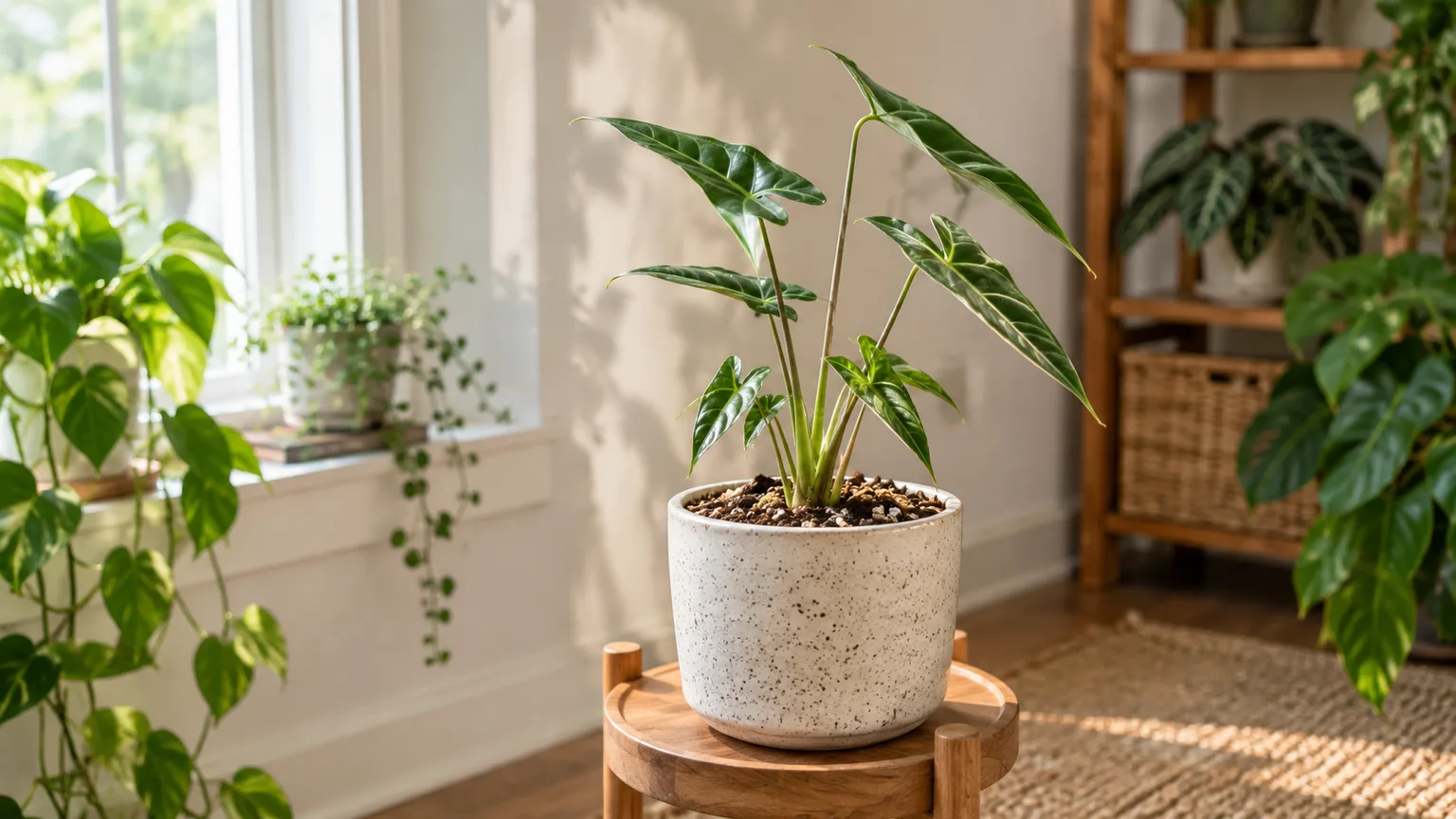
Alocasia ‘Tiny Dancer’ is a compact, unusual-looking aroid with slim stems that curve upward beneath narrow, pointed leaves. To keep it growing well, give it bright filtered light, steady warmth, and a potting mix that stays lightly moist while draining freely. The useful routine is to check the plant and mix before watering, not to follow a weekly calendar.
An Alocasia can look distressed for more than one reason: a dry pot and a waterlogged root ball can both lead to drooping or yellow leaves. Start with the root zone and recent changes to light or temperature before adding water or fertilizer. That sequence helps you protect the corms and roots while you correct the condition the plant is actually experiencing.
The quick care answer
Grow Tiny Dancer in a warm indoor spot with bright, indirect light. Water thoroughly when the top inch or two of mix has begun to dry, let all excess drain, and never leave the pot standing in water. Use an airy mix that retains some moisture, then reduce watering and stop feeding if growth slows in winter; do not let a resting plant dry into a crisp root ball.
| Care factor | Practical starting point | What to watch |
|---|---|---|
| Light | Bright, filtered light near a window | Long gaps between leaves can mean light is too low; scorched patches suggest too much direct sun |
| Water | Water when the upper layer begins to dry; drain completely | A fixed day count changes with pot size, light, temperature, and season |
| Soil and pot | Moisture-retentive, airy mix in a pot with drainage holes | Mix that stays saturated or smells sour needs attention |
| Temperature | Keep it warm and away from drafts | Cold windows, air conditioners, and heat vents can trigger stress |
| Humidity | Stable room humidity; add a humidifier if air is persistently dry | Misting is brief and does not replace room humidity |
| Feeding | Dilute houseplant fertilizer during active growth | Skip fertilizer when the plant is dormant, stressed, or dry |
Use this as a starting point, then adjust to your room. A small pot in a bright, warm spot dries faster than a large pot in a cool room; the same schedule will not suit both. NC State Extension describes Alocasia broadly as a warm-growing tropical genus that prefers shaded conditions and moist, well-drained soil, while Proven Winners’ Alocasia growing guide gives a practical indoor range and advises reducing water during winter dormancy. Those genus-level references help set the baseline, but your Tiny Dancer’s pot and growth rate determine the timing.
What makes Tiny Dancer different
The cultivar is grown for its light, compact silhouette: slender, arching petioles and smaller pointed leaves rather than the broad, heavy foliage many people picture when they hear “elephant ear.” A plant can still stretch in a dim room or lose leaves after a move, so its eventual size and fullness depend on growing conditions as well as the cultivar name. Sellers may describe mature dimensions differently; focus on the actual plant and pot in front of you rather than expecting a precise height.
Like other Alocasias, Tiny Dancer grows from an underground rhizome and can form small corms near the roots. It may replace an older leaf as it produces a new one, and it may slow or shed foliage when winter light drops. A single aging leaf is not automatically an emergency; several yellowing leaves in quick succession, soft stems, or a sour-smelling mix deserve a closer look.
Treat the label as a clue to its growth habit, not a promise that it has entirely different biology from the genus. A genus-level NC State Extension Alocasia profile covers its tropical growth, moisture preferences, tuberous habit, propagation by offsets, and common problems. Its size and leaf form vary widely across species and cultivars, which is why a Tiny Dancer care routine should stay responsive instead of relying on a single number for every plant.
Give it bright, filtered light
Set Tiny Dancer close to a bright window where the strongest sun is softened by a sheer curtain or the angle of the room. An east-facing window often offers gentle morning light; a west- or south-facing window may work if the plant sits back from direct afternoon rays. The compass direction alone is not decisive: a tree, overhang, tinted glass, or neighboring building can change how much light reaches the leaves.
If you are unsure, watch the spot for a day and look at the leaf surface at midday. A bright room where you can read comfortably without turning on a lamp is a better starting point than a dark corner. If direct sunlight paints a hot patch across the leaves for hours, move the plant farther back or filter that light. Some mild morning sun can be tolerated after a gradual adjustment, but a sudden move from indoor shade to intense outdoor sun can burn foliage.
Low light is not only a cosmetic issue. A plant that receives too little energy may stretch toward the window, produce smaller leaves, or use water more slowly because growth has stalled. If the new petioles are unusually long and lean, move it closer to the window or add a grow light on a consistent timer before increasing fertilizer. Turn the pot occasionally if the plant leans, but do not keep relocating it every few days; stable conditions make it easier to interpret its response.
Water to keep the mix lightly moist, not soggy
Forget “once a week” as a rule. Press a clean finger into the potting mix near the rim; when the upper inch or two feels partly dry rather than wet, water slowly over the surface until water runs from the drainage holes. Let the pot finish draining, then empty the saucer or decorative cachepot. This wets the root ball evenly without leaving the corm in stagnant water.
Ohio Tropics’ care guide for compact Alocasia Bambino recommends watering thoroughly, then checking the top inch of mix before watering again. Proven Winners gives a broader two- to three-inch dry-down for Alocasia generally. That difference is useful: pot size, mix, room conditions, and the individual plant all shift how much drying is appropriate. For a small Tiny Dancer in a well-aerated mix, start checking near the top inch; if the center is still wet, wait and check again instead of watering by date.
Lift the pot after watering and again as it dries so you learn its weight. A light pot plus dry mix points toward thirst; a heavy pot that stays wet for many days suggests slow drainage, low light, a pot that is too large, or cool conditions. Do not let a moisture meter overrule what the mix and pot are telling you unless you have calibrated it to your soil. If the plant is resting with little growth, it uses less water, so allow a little more time between drinks while keeping the root zone from becoming bone dry.
Build an airy, moisture-retentive mix
Tiny Dancer wants both air around the roots and enough moisture to avoid repeated drought. A practical starting blend is equal parts quality indoor potting mix, perlite, and fine orchid bark, an approach Ohio Tropics describes for Alocasias. The exact blend is adjustable: if it dries too fast in your warm room, increase the potting mix or add a little coco coir; if it stays wet, use more airy amendment and check whether the pot is oversized.
Use a pot with drainage holes. A decorative pot without a hole can be used as an outer cover, but keep the plant in a nursery pot inside it and empty water after each irrigation. Do not add gravel to the bottom as a substitute for drainage; it does not fix a dense mix or a sealed container. If the mix has compacted into a hard, water-repellent block, repotting into fresh medium may work better than repeatedly pouring water over the surface.
The goal is not a recipe with one perfect ratio. Proven Winners recommends a well-draining medium that still retains moisture and lists bark, perlite, peat, vermiculite, or coco coir as possible amendments. Use a mix that drains in seconds to a short minute, not one that leaves the roots sitting in a puddle or dries completely by the next day. If water rushes through without wetting the center, soak the root ball evenly in stages and consider replacing the mix.
Keep temperatures warm and stable
Aim for a comfortable, warm room rather than a temperature swing. Ohio Tropics recommends roughly 65 to 85°F for Alocasia Bambino, and Proven Winners cautions against dropping below 60°F for Alocasia generally. For Tiny Dancer, a steady household range in the upper 60s to low 80s is a practical target; colder conditions combined with damp soil make root problems more likely.
Keep the plant away from a drafty door, a cold pane of glass in winter, air-conditioning flow, and a heater that blows directly on the leaves. These spots create rapid changes even when the thermostat reading looks fine. If you move it outdoors for warm weather, wait until nights are reliably warm, acclimate it in bright shade over several days, and protect the leaves from wind and direct midday sun. Bring it inside before cool nights or any frost threat; it is a tropical plant, not a cold-season patio specimen.
Raise humidity without soaking the leaves
Alocasia often grows more comfortably in humid air, but a soggy pot is not a safe shortcut to higher humidity. If your room is dry and the leaf edges repeatedly crisp despite correct watering and light, check the relative humidity with a small hygrometer. A room humidifier near the plant can raise humidity more steadily than occasional misting; keep airflow gentle so leaves and soil surface do not stay wet for long periods.
Ohio Tropics suggests 50 to 60 percent humidity for its compact Bambino, while its care article also notes that average home humidity can be tolerated. Treat that range as a helpful target, not a pass/fail threshold for Tiny Dancer. A pebble tray may add a small local effect, but it will not reliably humidify an entire room, and the pot must sit above the water line. Do not mist as a substitute for correcting dry room air; the brief wetting does little to change the humidity over time.
Feed during active growth only
When Tiny Dancer is producing leaves in spring and summer, use a complete houseplant fertilizer at the label’s indoor rate. If you prefer a cautious start, dilute a liquid product to half strength and feed once or twice a month while growth is steady; Proven Winners recommends this frequency for Alocasia generally. Apply fertilizer to already-moist mix, not to a dry root ball, and do not increase the dose to force faster growth.
Stop or pause feeding if the plant is not growing, has just been repotted into fresh nutrient-containing mix, or is dealing with root rot or pest stress. Fertilizer cannot fix a dark location, chronically wet soil, or cold roots, and excess salts can damage leaf tips. Resume a light routine after you see healthy new growth. Follow the product’s label and avoid stacking liquid feeds with slow-release pellets unless you understand the combined rate.
Read winter slowdown and dormancy correctly
As days shorten, Tiny Dancer may put out fewer leaves, use water more slowly, or drop an older leaf. Some Alocasias become partly or fully dormant in winter; others simply pause. Proven Winners advises reducing water, keeping the plant warm, and stopping fertilizer during this period while avoiding a completely dry container. That is safer than keeping the summer schedule or withholding all water until spring.
First rule out an environmental shock. A sudden move, cold draft, a room that became much darker, or roots kept wet in cool soil can cause leaf decline that resembles dormancy. If just one of the oldest leaves yellows while a healthy new leaf is opening, trim it once it has mostly yellowed. If several leaves yellow rapidly or the petioles soften, check the roots and mix before assuming the plant is resting.
If all the leaves disappear
Do not throw away the pot the moment the last leaf falls. Gently feel the corm or rhizome if you can reach it without tearing the roots: a firm, healthy-looking base may still be alive, while a soft, collapsing, or foul-smelling base points to rot. Keep a viable plant warm and in bright indirect light, reduce watering because it has little foliage to use that water, and let the top of the mix dry more between light drinks.
Avoid both extremes: soaking a leafless pot as though the plant were in active summer growth, and leaving it dry for months until the corm shrivels. Check the mix periodically rather than watering on a timer. When a new shoot appears, gradually return to normal watering and resume fertilizer only after growth is underway. If the corm is soft throughout or the rot has spread into the whole rhizome, recovery may not be possible.
Repot only when the root zone needs space
Tiny Dancer does not need a larger pot every year. Repot when roots circle densely, emerge through drainage holes, the root ball dries unusually fast, the plant becomes unstable, or the mix has broken down and stays wet. A spring repot is easiest because active growth can help the plant reestablish, but a serious drainage problem should be corrected when you discover it rather than left until a season changes.
Choose a pot only about one to two inches wider than the root ball. A huge container holds more wet mix around a small set of roots and can lengthen the time the center stays saturated. Remove the plant gently by easing the pot away from the root ball instead of pulling on its leaves. Loosen only enough old mix to see the roots, trim mushy sections with a clean tool, and keep the healthy corm and roots intact.
Set the plant at about the same depth in fresh airy mix, water it through, and let it drain fully. Keep it in the same bright, warm spot while it recovers; changing its light, moving it into a colder room, and feeding it heavily at the same time makes it harder to tell what caused any setback. Wait to fertilize until you see signs of renewed growth, especially if the new potting mix includes fertilizer.
Propagate Tiny Dancer from corms
Alocasias are not propagated from an ordinary leaf cutting. Their new growth comes from the underground rhizome, and they may produce small corms among the roots. If your plant is healthy and mature enough to have a firm offset, the least disruptive moment to look for corms is during repotting, when you can see where one is attached without digging repeatedly through the pot.
Wear gloves, keep the work surface clean, and use a clean, sharp blade if a corm resists gentle separation. Preserve the parent plant’s main roots and do not pull off every tiny nub; wait for a firm, well-formed corm that can be handled without damaging the rhizome. NC State Extension notes that Alocasia can be propagated by offsets, and Epic Gardening’s horticulture-reviewed guide to Alocasia propagation by division or corms describes separating viable corms and rooting them in a humid setup.
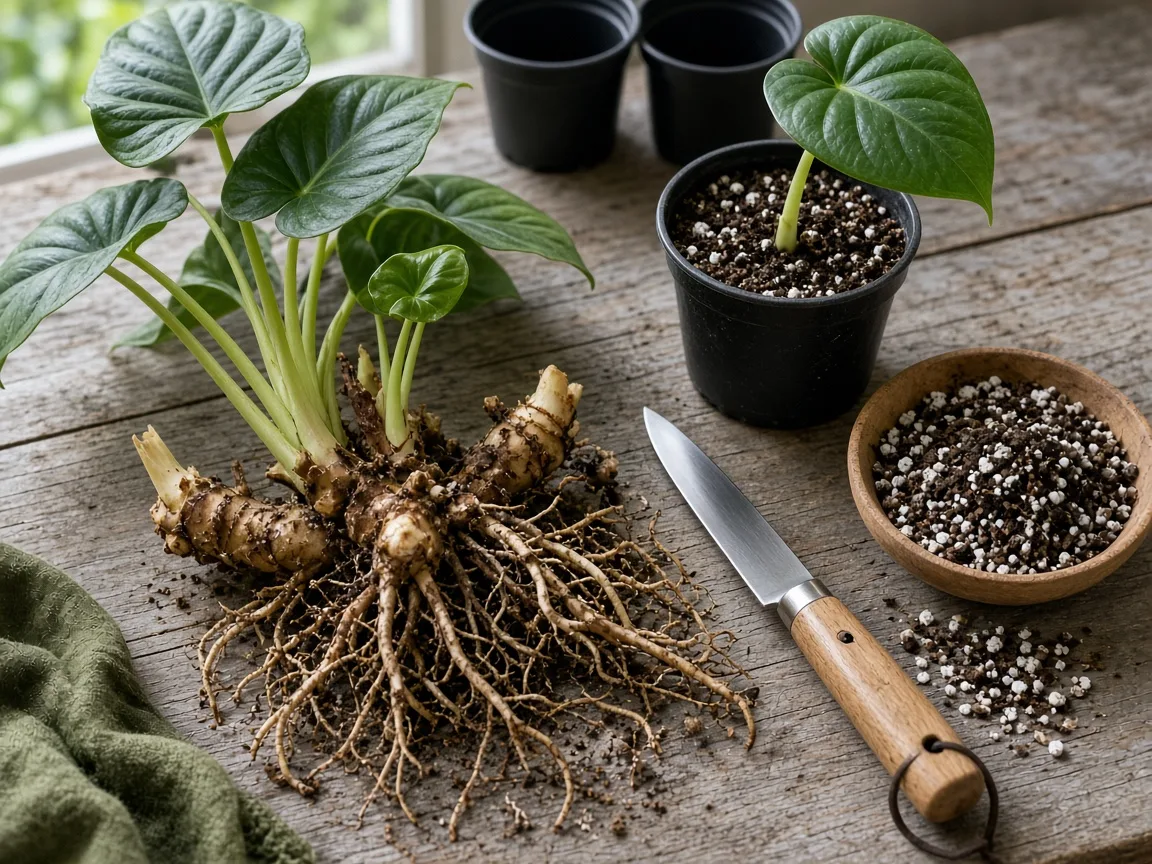
This propagation photo shows a related Alocasia, not Tiny Dancer; it illustrates the kind of root and underground growth to inspect gently.
Root corms with a simple humidity setup
Rinse loose soil from a firm corm so you can see its shape, but avoid scraping away healthy tissue. If you can identify the pointed growing tip, orient it upward; if its direction is unclear, lay it on its side rather than burying it deeply. Place the base in a shallow clean container with water or a lightly damp rooting medium, keeping the upper part exposed to air so the corm does not sit fully submerged.
Cover the container loosely to hold humidity, but open it daily for fresh air and inspect for cloudiness, mold, or softening. Change dirty water and discard a corm that turns mushy or smells rotten. Rooting time varies with warmth and the corm’s maturity, so wait for visible roots and a shoot instead of moving it after an arbitrary number of days. Once it has roots and a small leaf, plant it in a small draining pot with a lightly moist mix; a large pot makes it harder to manage water around a tiny root system.
Keep the new plant warm and in bright indirect light while it establishes. Do not fertilize a corm before it is growing in mix, and do not let a new pot dry out completely. If no growth appears after several weeks, check that the corm is still firm, warm, and not submerged or sitting in cold, stale water before declaring the attempt unsuccessful.
Troubleshoot yellow, brown, and drooping leaves
A symptom is a clue, not a diagnosis. Start with the number and age of affected leaves, then feel the mix and inspect the pot’s drainage. A single old leaf can fade as a new one opens; a sudden cluster of yellow leaves, a sour smell, or soft petioles means you should investigate the roots and recent care changes rather than reaching first for fertilizer.
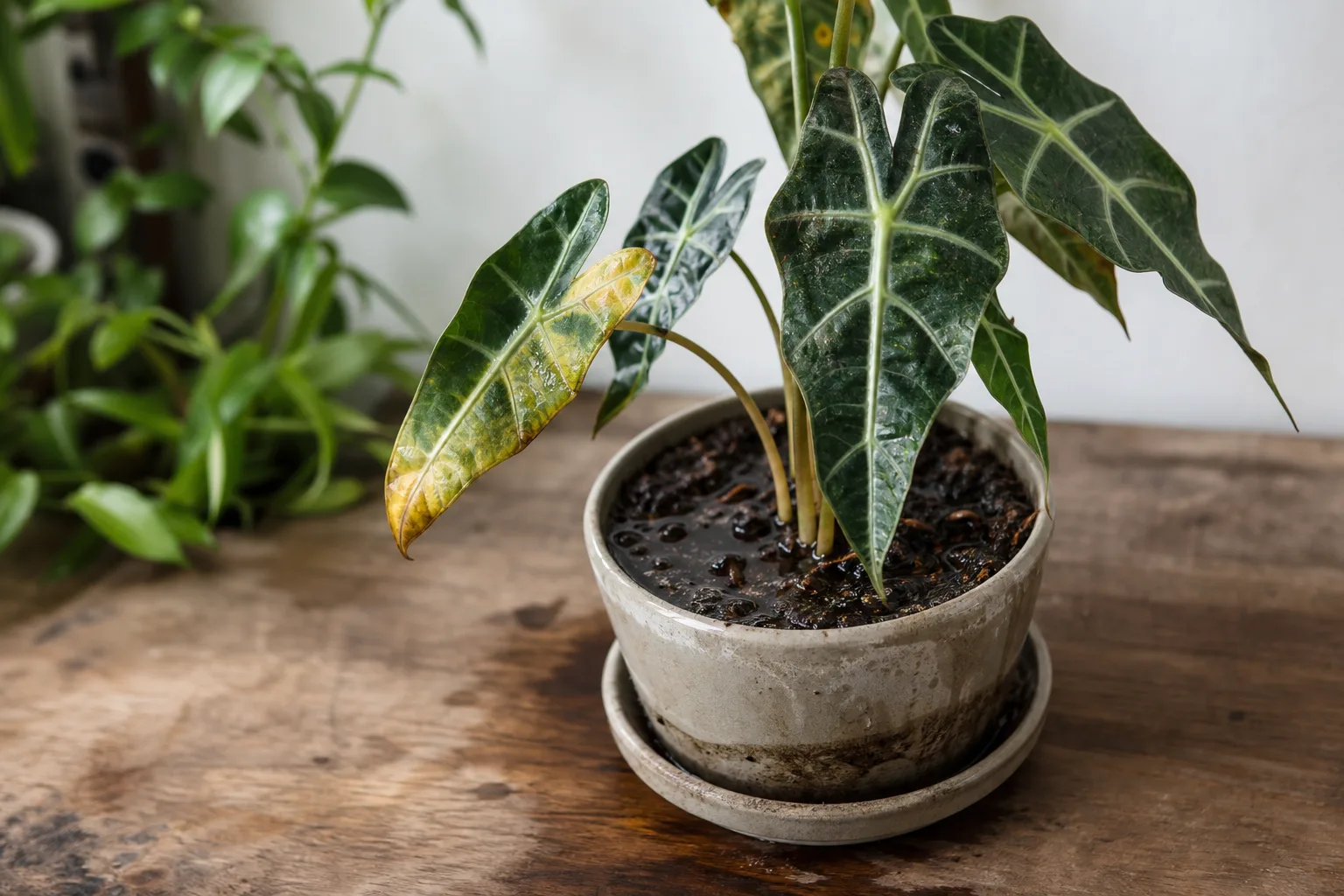
This is an Alocasia Amazonica showing a general overwatering scenario, not Tiny Dancer; similar leaf symptoms can have several different causes.
Check yellowing and brown edges
If one of the oldest leaves yellows slowly while new growth looks healthy, let it finish fading and remove it with clean scissors near the base. Do not strip a leaf that is still mostly green; it continues to supply energy. If several leaves yellow together, check whether the mix is wet deep in the pot, whether water drains, whether the plant recently moved to a darker or colder spot, and whether roots look firm rather than brown and mushy.
Dry brown edges can come from low humidity, inconsistent watering, salt buildup, or too much direct sun. Review those conditions one at a time. If the soil is damp, do not water again just because a leaf tip is brown. If the root ball is completely dry, water thoroughly and adjust your check interval. If leaf edges burn after moving to a sunny window, filter or soften the light. Trimming only the brown part is cosmetic; correcting the cause prevents new damage.
Separate thirst from root rot
A thirsty plant usually has a light pot and dry mix through the upper part of the root ball; after a thorough drink, leaves may recover if the roots are healthy. With root rot, the pot stays heavy and wet, the mix may smell sour, and roots or petioles can become soft. Both conditions can cause drooping, so watering a wet plant is likely to make the damage worse.
For a dry plant, water until the mix is evenly damp and excess drains. For a persistently wet plant, empty standing water, improve light and warmth, and inspect roots if the decline continues. Cut away only mushy roots with a clean blade, then repot into fresh airy mix and a correctly sized draining pot. Do not fertilize a damaged root system. Give it stable conditions and judge recovery by new growth, not by expecting already-yellowed leaves to turn green again.
Prevent pests and protect pets and children
Inspect the undersides of leaves, petiole joints, and the soil surface each week. Alocasias can attract spider mites, aphids, and mealybugs; NC State Extension also lists root rot and leaf spots among common problems. Fine webbing, tiny moving specks, cottony clusters, or sticky residue call for different responses, so isolate the plant and identify the pest before applying anything. Rinse or wipe the leaves first, then use only a treatment labeled for indoor ornamental plants and follow its directions exactly.
Keep Tiny Dancer away from nibbling pets and small children. Poison Control’s Alocasia safety guidance explains that all parts of Alocasia contain calcium oxalate crystals that can irritate the mouth and throat if chewed or swallowed; nausea or vomiting can also occur. Wear gloves when handling damaged tissue or repotting, wash your hands afterward, and clean fallen leaves from the floor. If someone chews the plant or develops symptoms, contact Poison Control in the United States at 1-800-222-1222; for a pet, call a veterinarian or an animal poison service promptly.
Conclusion
Give Alocasia Tiny Dancer bright filtered light, warm stable conditions, and a loose mix that stays lightly moist without trapping water. Check the soil and pot before watering, reduce moisture and pause fertilizer when growth slows, and treat several yellowing leaves or a soft base as a reason to inspect the roots rather than guessing.
Repot only when the root zone needs room, and use that moment to look for mature corms if you want to propagate. With a firm corm, a clean tool, and a humid but ventilated rooting setup, you can start another plant while protecting the parent. Keep the plant out of reach of pets and children, and use the actual growth and moisture in your home to fine-tune the routine.