Annuals to Sow in April for Pollinator Color
Sow nine fast-growing annuals in April for summer color and steady pollinator traffic. Soil-temp checks, direct-sow steps, and spacing for each flower.
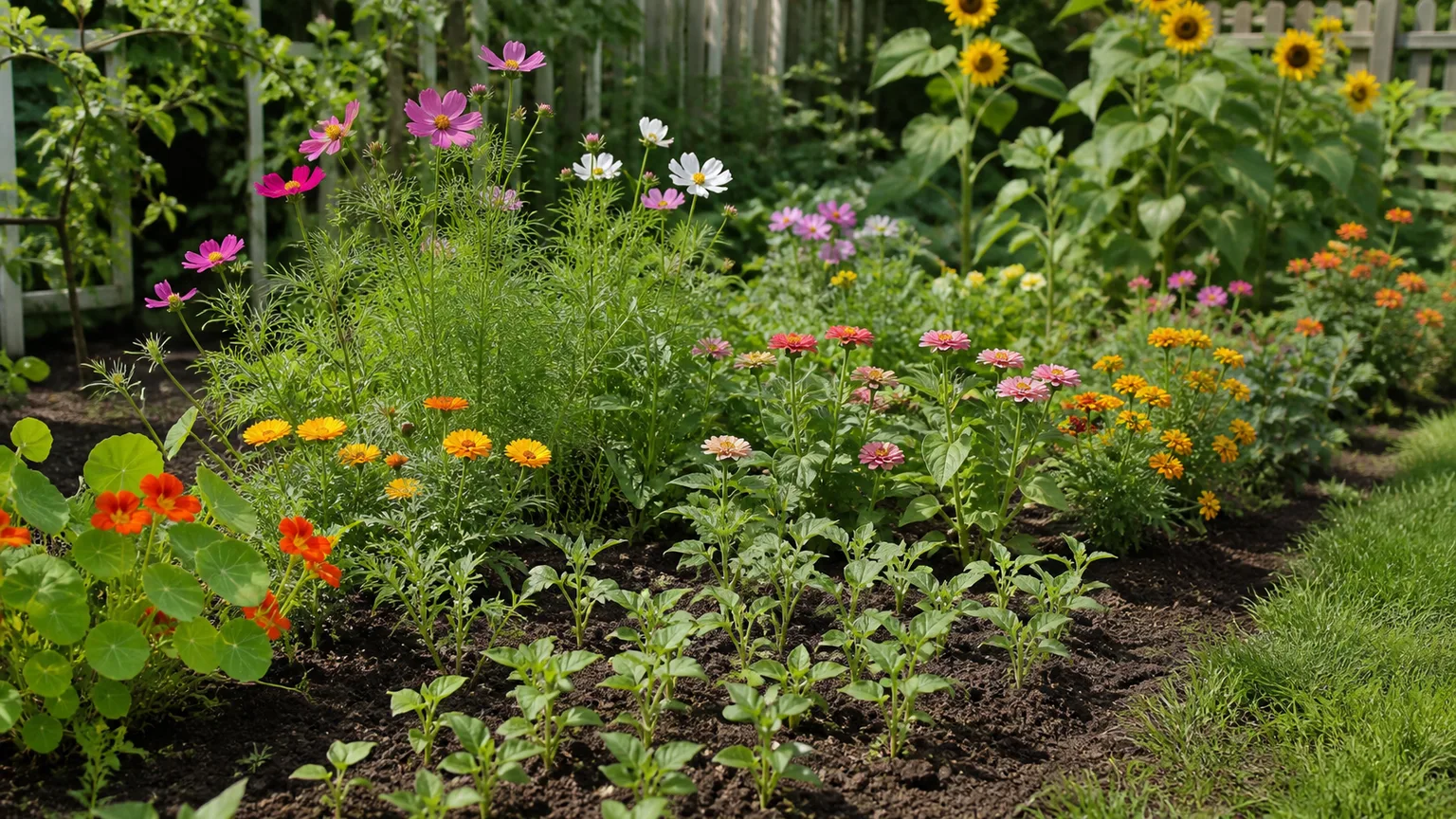
April sits in the hinge between cool spring soil and the first reliable warm spells — exactly when hardy and fast-germinating annual flowers reward direct sowing. You do not need grow lights or a greenhouse bench for the nine crops below. Scatter or drill seed where plants will live, keep the top inch evenly moist for two weeks, thin once, and you can have color climbing from late spring through the first fall frost while bees, butterflies, and hoverflies work the blooms.
This guide goes beyond a seed catalog recap. You will learn when April soil is actually ready, how to direct sow without crusting or rot, how to arrange these flowers for pollinators, and what to expect from each species on a realistic timeline. If you are still deciding whether the ground is warm enough, pair this with our articles on how long seeds take to sprout and easiest seeds to direct sow this spring.
Why April Is the Sweet Spot for Direct-Sown Flower Seed
Hardy annuals complete their life cycle in one season and tolerate cool germination — many prefer it. April gives them enough frost-free days to establish roots before summer heat, yet soil is finally workable after winter compaction. The RHS notes that weed seedlings appearing in spring often signal soil warm enough for direct sowing — a practical cue when your calendar and thermometer disagree.
Half-hardy annuals like zinnias and marigolds also go in during April in most U.S. gardens, but only after your last frost date or with row cover ready for surprise cold snaps. The mistake I see most often is treating every packet the same: sowing heat-lovers into 45°F mud because the calendar says April. Split your sowing into two April windows — cool-tolerant first, frost-sensitive second — and you avoid both rot and leggy indoor starts.
Direct sowing beats transplanting for these nine flowers because they germinate quickly outdoors, dislike root disturbance, or simply take up too much space to justify cell trays. A $4 packet of cosmos or zinnias can fill a border; the trade-off is less control over spacing until you thin.
Two-window April calendar: In most USDA zones 5–8, treat the first two weeks of April as your cool-annual window (calendula, cornflower, alyssum) and the last two weeks as your warm-annual window (zinnia, marigold, sunflower, cosmos, nasturtium, California poppy). Zone 9–10 gardeners often reverse the sequence — warm soil arrives early, but a surprise late cold snap still nukes zinnia seedlings overnight. Keep lightweight row cover or old sheets within reach for the first month after any sowing.
How to Know Your Soil Is Ready to Sow Outdoors
Calendar dates lie. Two neighbors with the same last-frost date can have soil that differs by 10°F depending on slope, mulch, and whether the bed bakes on a south-facing wall. Workable soil crumbles when you squeeze a handful and falls apart when you open your fist — not sticky mud, not dust.
Wait until you can rake the top inch to a fine texture without pulling up wet clods. Pull weeds, remove rocks larger than a golf ball, and mix in 1–2 inches of compost if the bed is lean. Most direct-sown flowers do not need heavy fertilizer at planting; excess nitrogen pushes leaves at the expense of bloom.
Soil Temperature and the Last-Frost Buffer
Germination speed is driven by soil temperature at seed depth, not air temperature on your porch. Slide a soil thermometer one inch deep — or dedicate an instant-read kitchen probe to the garden. The Iowa State germination requirements chart for annuals and vegetables shows wide ranges by species.
| Flower | Approx. minimum soil temp | Sow relative to last frost |
|---|---|---|
| Calendula, cornflower, alyssum | ~45–50°F | 2–4 weeks before to just after |
| Sunflower, nasturtium | ~55°F | 1–2 weeks after |
| Cosmos, California poppy | ~55–60°F | After frost, mid-April onward |
| Marigold, zinnia | ~60–70°F | 1–2 weeks after last frost |
Colorado State University Extension marks calendula, California poppy, cosmos, bachelor’s button, marigold, nasturtium, sweet alyssum, and zinnia among annuals best suited for direct seeding about two weeks before to just after your average frost-free date — with the warmer-end species on the later side of that window.
If seed sits in cold, wet soil for more than two weeks without sprouting, it may rot. Warm a raised bed faster with black plastic for a week, then sow when you remove it.
Bed Prep That Speeds Germination
Seeds need continuous moisture from sowing until seedlings have true leaves — not flooding, not a crusted surface. Water the bed deeply the day before planting so soil is evenly damp at seed depth. After sowing, use a gentle rose on your watering can or a fine mist daily until green appears.
Heavy rain on bare soil can form a hard cap that blocks tiny seeds like alyssum or poppies. A light dusting of fine compost or vermiculite over the row, or floating row cover laid loosely on hoops, prevents crusting without blocking light for species that need darkness to germinate.
Direct Sowing Technique That Actually Works
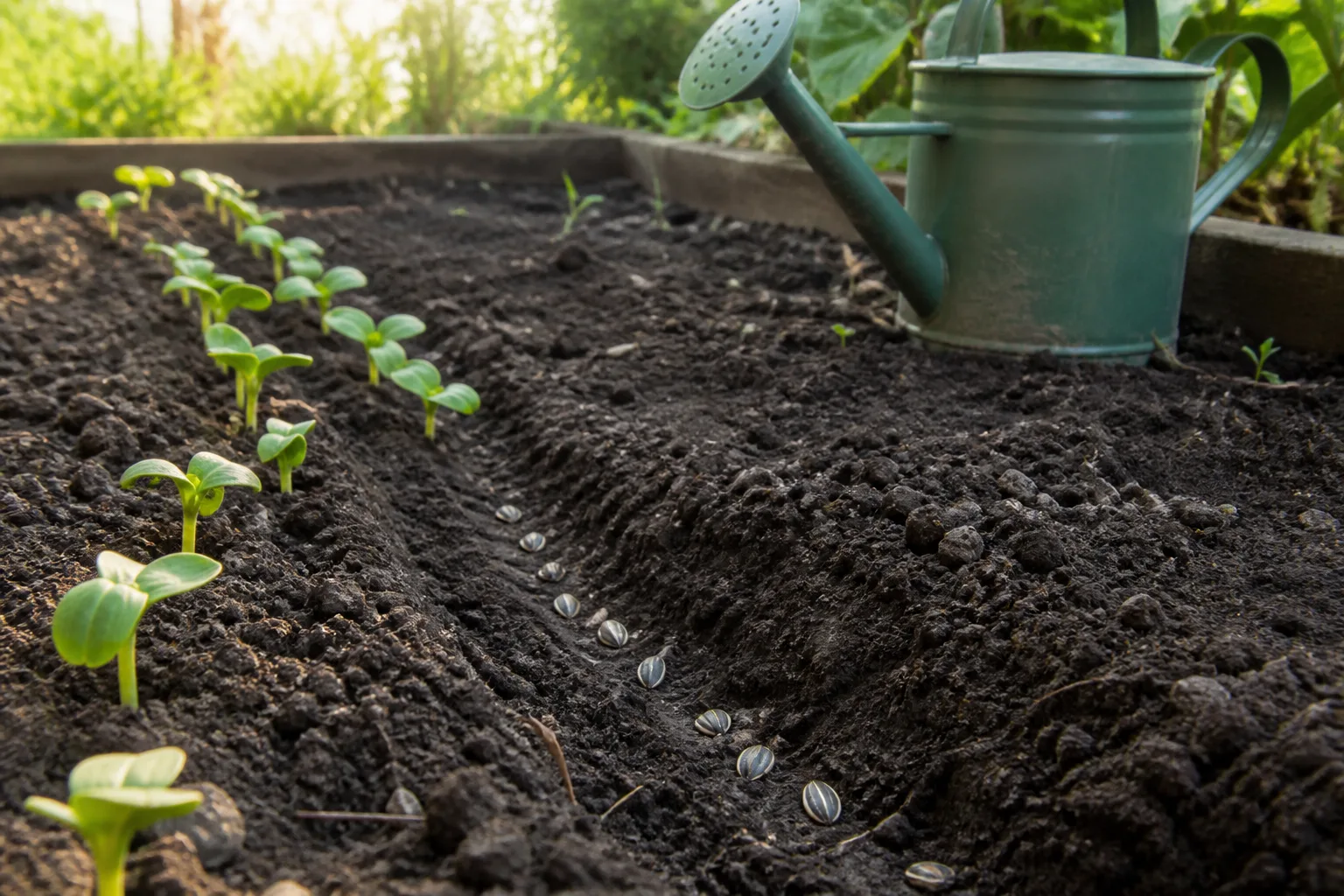
Outdoor sowing is simpler than indoor starts — and easier to mess up with a heavy hand on the hose. The RHS direct sowing guide recommends marking irregular patches, changing drill direction between areas, and keeping drills shallow for small seed.
Drills, Broadcast Patches, and Spacing
For rows along a path or vegetable edge, draw a shallow drill with a hoe handle, dampen the base, drop seed at packet spacing, cover lightly, and label both ends. For cottage-garden drifts — cosmos mixed with cornflowers, or poppies scattered through gravel — roughen a patch, broadcast seed thinly, rake in with your fingertips, and firm gently with the back of a rake.
Depth rule: plant at roughly two to three times the seed’s smallest dimension. Large sunflower kernels sit about 1 inch deep; dust-fine alyssum barely gets covered. When in doubt, err shallow — buried too deep, seed runs out of energy before it reaches light.
Moisture, Thinning, and First-Week Care
Check seeded areas every day for the first ten days. Snails, birds, and crusted soil are the usual enemies — not “bad seed.” If birds scratch rows, cover with lightweight row cover until seedlings stand two inches tall.
Thinning is not optional. Overcrowded seedlings compete for light and air, producing weak stems and more disease. When plants have one or two true leaves, cut extras at soil level with scissors, leaving the spacing on the packet — typically 6–12 inches for bush zinnias, 12–18 inches for branching sunflowers, 4–6 inches for calendula. Many thinnings of nasturtium and calendula are edible if you have not treated the bed with systemic chemicals.
If germination is patchy after ten days, resist the urge to re-sow on top of the row — you may bury sprouting seed. Instead, scratch bare patches lightly, sow fresh seed at proper depth, and shade with row cover until the second wave emerges. Label each patch with the date; succession notes save you from guessing whether slow zinnias are dead or merely waiting for warmth.
Build a Pollinator-Friendly Layout Around These Nine Crops
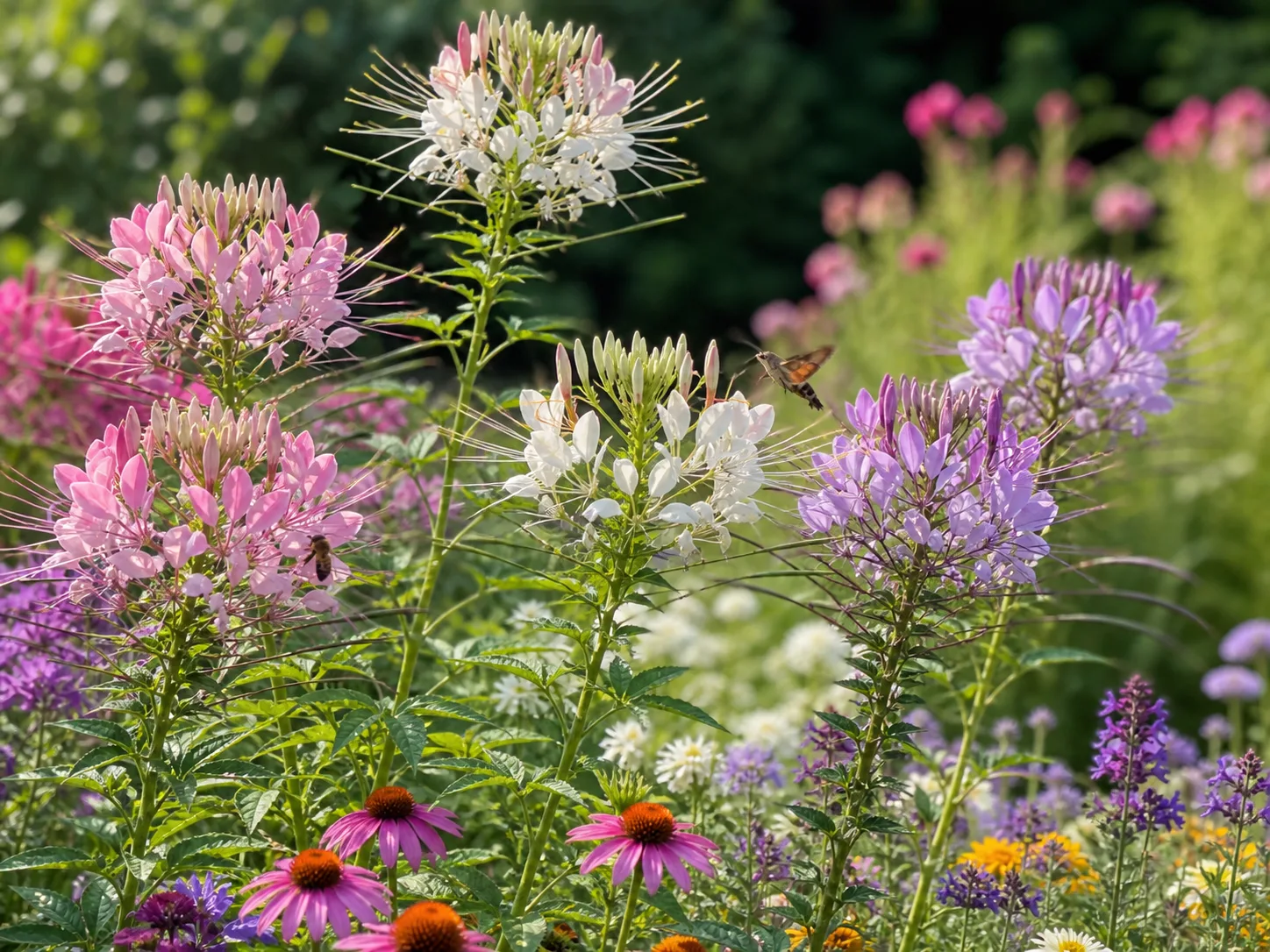
Pollinators do not read plant lists — they follow nectar volume, bloom sequence, and landing platforms. Stack this April sowing in three tiers for maximum traffic.
Back row (height): Sunflowers and cosmos draw bees and butterflies to tall landing pads. Stagger sunflower sowings every two weeks in April and May for blooms from July into fall — see our when to plant sunflowers guide for succession timing.
Middle band: Zinnias, marigolds, calendula, and cornflowers offer flat, composite heads that native bees and hoverflies exploit efficiently. Mix warm and cool colors; blue cornflowers contrast with orange marigolds and give long-tongued bees a visual target.
Front edge: Sweet alyssum carpets the rim with tiny nectar-rich flowers that hoverflies and parasitic wasps love — beneficial insects that also hunt aphids. Nasturtiums spill forward, feeding hummingbirds and acting as a trap crop for some cabbage worms when planted near vegetables.
Add a shallow water dish with pebbles so insects can drink without drowning, and avoid spraying open blooms with broad-spectrum insecticides. A single April sowing of these nine annuals will not replace native perennial habitat — but it fills the first-year color gap while slower perennials establish.
Sunflowers — Tall Beacons for Bees and Butterflies
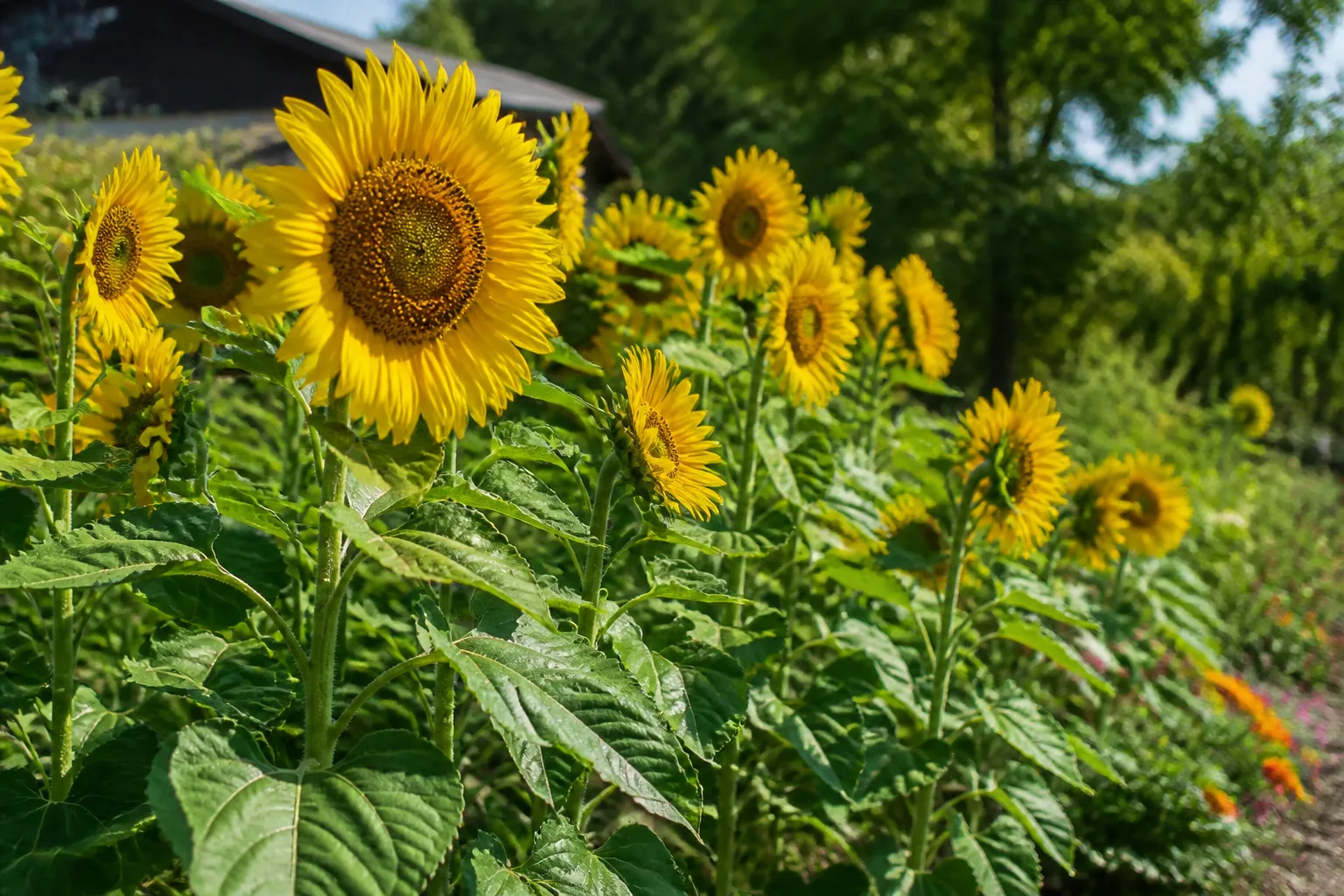
Sunflowers (Helianthus annuus) are the poster crop for summer pollinator gardens — and one of the most forgiving direct-sow flowers in April once soil holds 55°F or warmer and frost is unlikely. Single-flowered varieties expose pollen and nectar better than fully double “teddy bear” types bred for florists.
Sow 1 inch deep, 6–12 inches apart for multi-stem branching types or 12–18 inches for giant heads, in full sun. Keep soil moist until seedlings have four true leaves, then water deeply once or twice weekly during bloom. Expect first open flowers 8–12 weeks after sowing — often July in northern gardens, late June in warm zones. Blooms last weeks, and finches will raid seed heads in fall if you leave them standing.
Pollinators: native bees, bumblebees, honeybees, butterflies, beetles, and syrphid flies. For deeper culture and harvest tips, see growing sunflowers.
Calendula — Cool-Season Color That Keeps Blooming
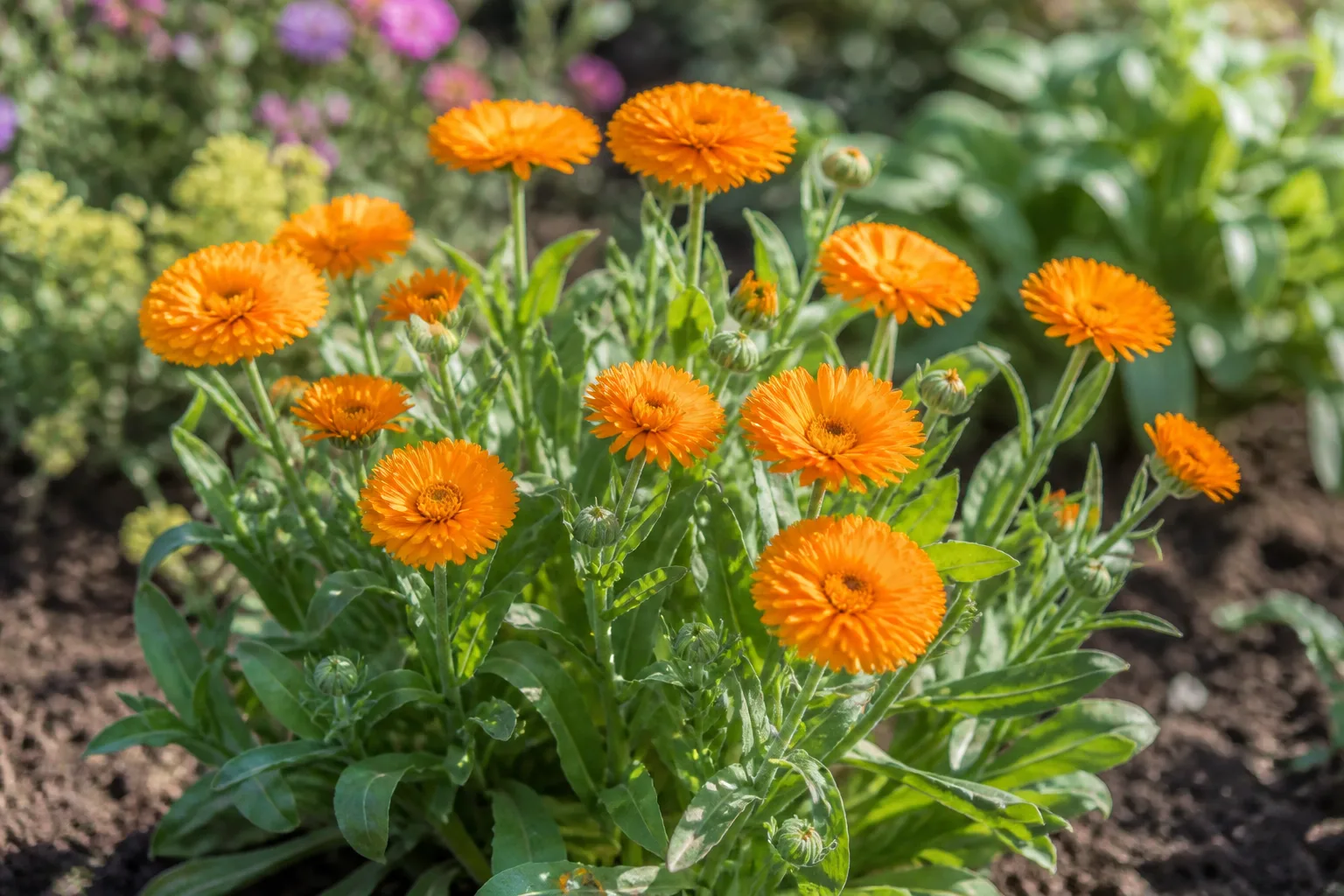
Calendula (Calendula officinalis) — pot marigold — is not a true marigold (Tagetes). It is a cool-season annual that often blooms 6–8 weeks after an April sowing, sometimes while nights are still chilly. That makes it invaluable for early pollinator forage when little else is open.
Direct sow ¼ inch deep in full sun to light afternoon shade. Thin to 6–8 inches. Calendula prefers evenly moist soil until established, then tolerates short dry spells. Deadhead spent blooms to push flowers into early fall; plants may pause in midsummer heat and rebound when nights cool.
Pollinators: honeybees, bumblebees, hoverflies, and small native bees. Petals are edible in moderation if unsprayed — a nice salad garnish, not a meal.
Marigolds — Reliable Gold and Orange From Mid-Spring On
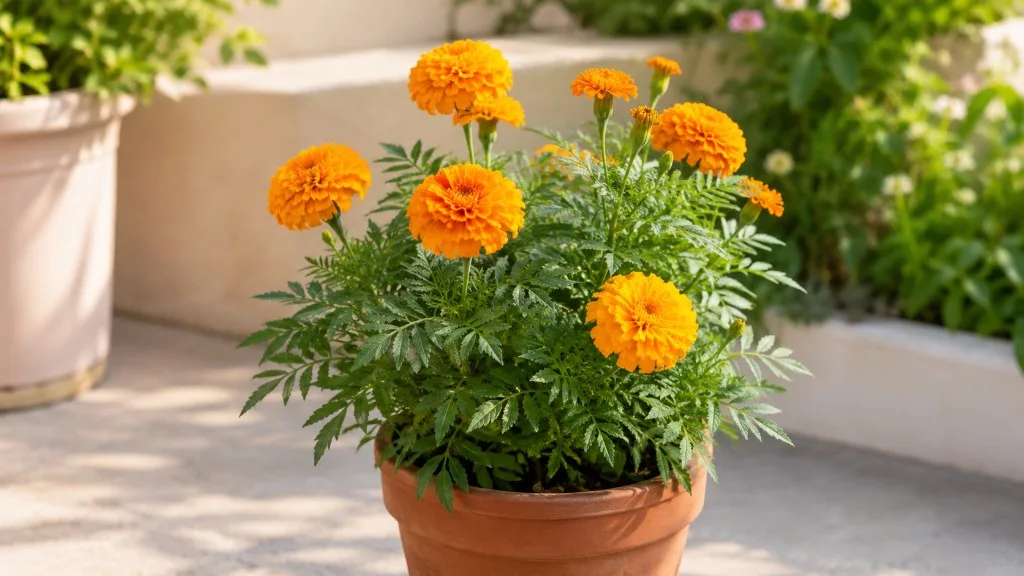
French and African marigolds (Tagetes) germinate best when soil reaches 70°F — sow them in the second half of April in most temperate gardens, or immediately after your last frost date. They are workhorse annuals: fast from seed, dense with bloom, and tolerant of ordinary garden soil.
Sow ¼ inch deep, thin French types to 8–10 inches and larger African types to 10–12 inches. Water at the base to reduce foliar disease. Expect color 8–10 weeks from sowing. Marigolds attract bees, butterflies, and syrphid flies; they are also classic companion plants near vegetables, though scientific support for pest suppression varies by pest and species.
California Poppies — Drought-Tough Native-Style Orange
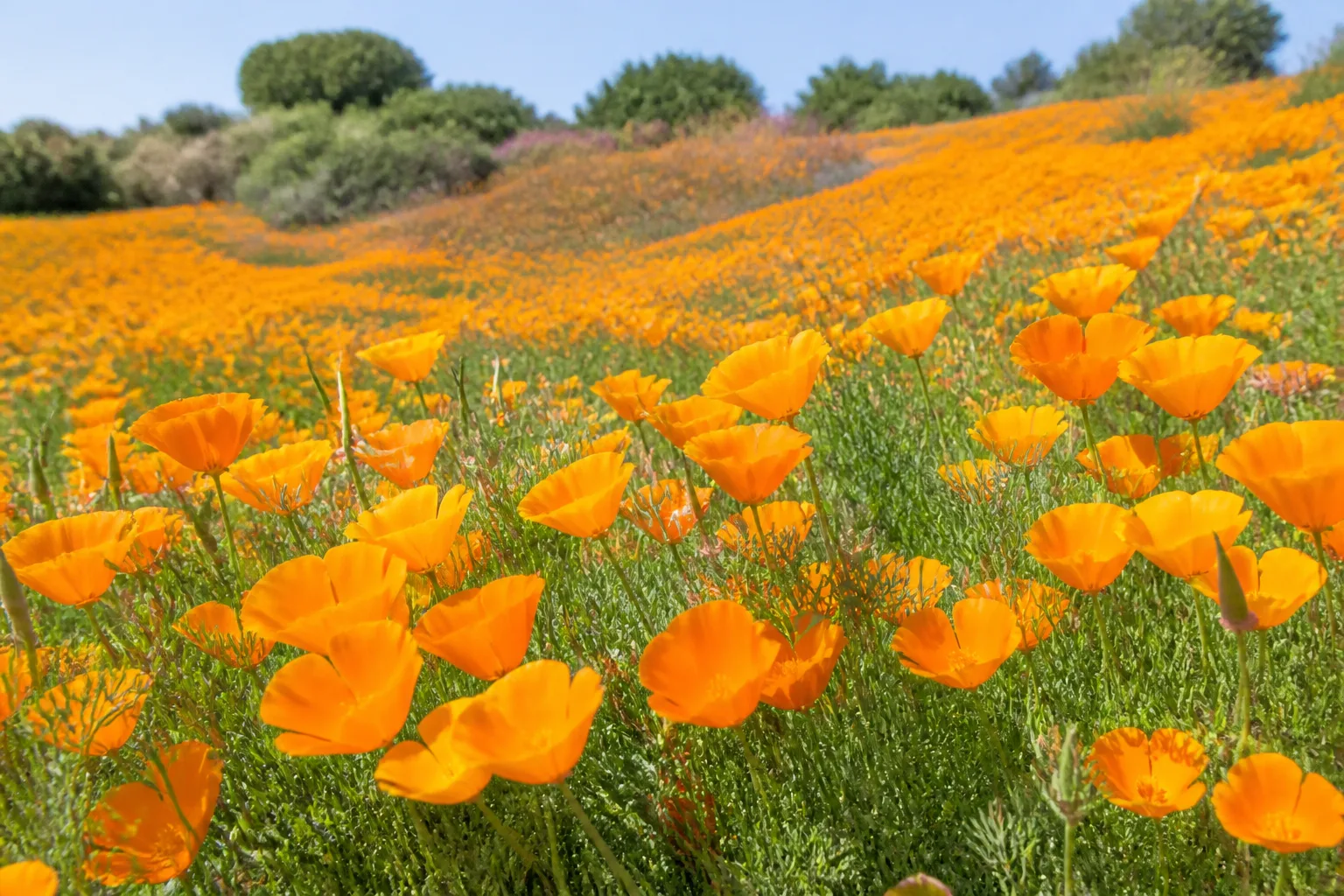
California poppy (Eschscholzia californica) thrives in full sun and lean, well-drained soil — the opposite of a heavily fertilized vegetable bed. Sow in mid to late April when soil is 55–60°F; in hot-summer regions, a late-April sowing often outperforms an early one that bolts in heat.
Scatter seed on raked soil, press in, and cover lightly. Do not overwater: poppies rot in soggy seedbeds. Once seedlings have several true leaves, hold back on irrigation except during extreme drought. Blooms typically open 6–8 weeks after sowing and close each afternoon — a normal behavior, not a problem.
Pollinators: native bees, bumblebees, mining bees, hoverflies, and beetles. Outside the West, treat them as annuals; they self-sow gently in gravel paths and dry borders. Full culture notes live in our California poppies guide.
Zinnias — Cut-Flower Quality on a Fast Timeline
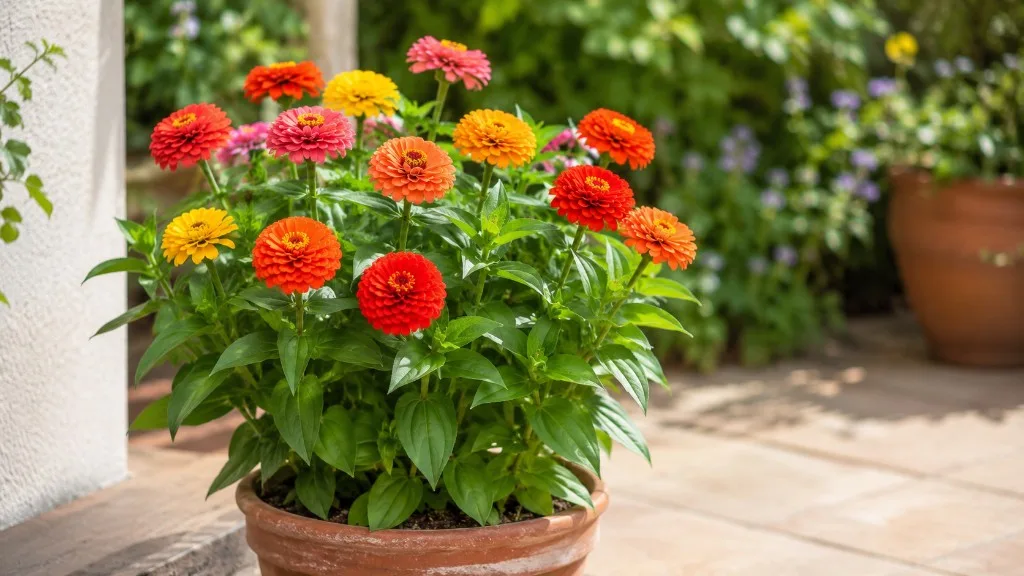
Zinnias (Zinnia elegans and hybrids) are among the fastest routes to armloads of cut flowers — but they are ** frost-sensitive** and dislike cold, wet soil. Direct sow one to two weeks after your last frost when soil is 65–70°F, or start indoors only if you must; they transplant best when young and never root-bound.
Sow ¼ inch deep; thin dwarf types to 6–8 inches, tall cutting varieties to 12–18 inches. Good air circulation prevents powdery mildew — do not cram zinnias into deep shade. First blooms often appear 7–9 weeks from sowing and continue until frost if you cut or deadhead regularly.
Pollinators: butterflies (especially swallowtails and painted ladies), hummingbirds on some cultivars, and diverse bees. Single-flowered and “Zahara”-type series outperform pom-pom doubles for nectar access. For cutting, harvest stems when outer ray flowers have opened but the center disk is still tight — early-morning cuts last longest in a vase if you strip leaves below the waterline and refresh water daily.
Cornflowers — Blue Bachelor’s Buttons for Cottage Borders
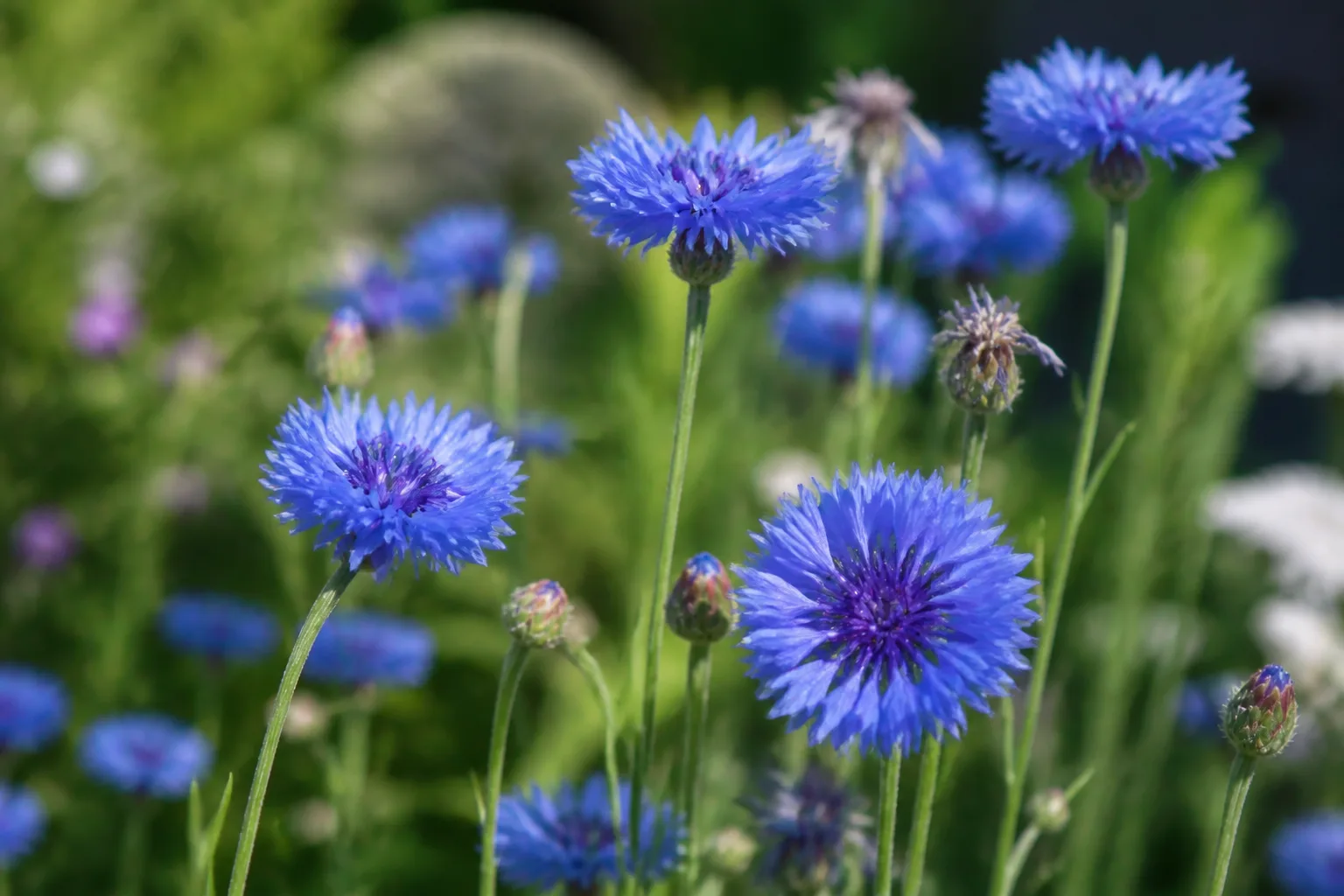
Cornflower, or bachelor’s button (Centaurea cyanus), is a cool-season hardy annual that germinates in soil as cool as 45–50°F — ideal for an early April sowing. It delivers true blue (plus pink and white cultivars) when many warm-season annuals are still weeks from bloom.
Sow ½ inch deep in full sun; thin to 6–9 inches. Plants reach 2–3 feet with wiry stems that sway in wind — stake only in exposed sites. Expect flowers 10–12 weeks from sowing, often June through September if you deadhead. Cornflowers dry well for winter arrangements.
Pollinators: bumblebees, honeybees, butterflies, hoverflies, and beneficial lacewings. They pair beautifully with orange calendula and pink cosmos in informal drifts.
Cosmos — Airy Daisies That Self-Sow Gently
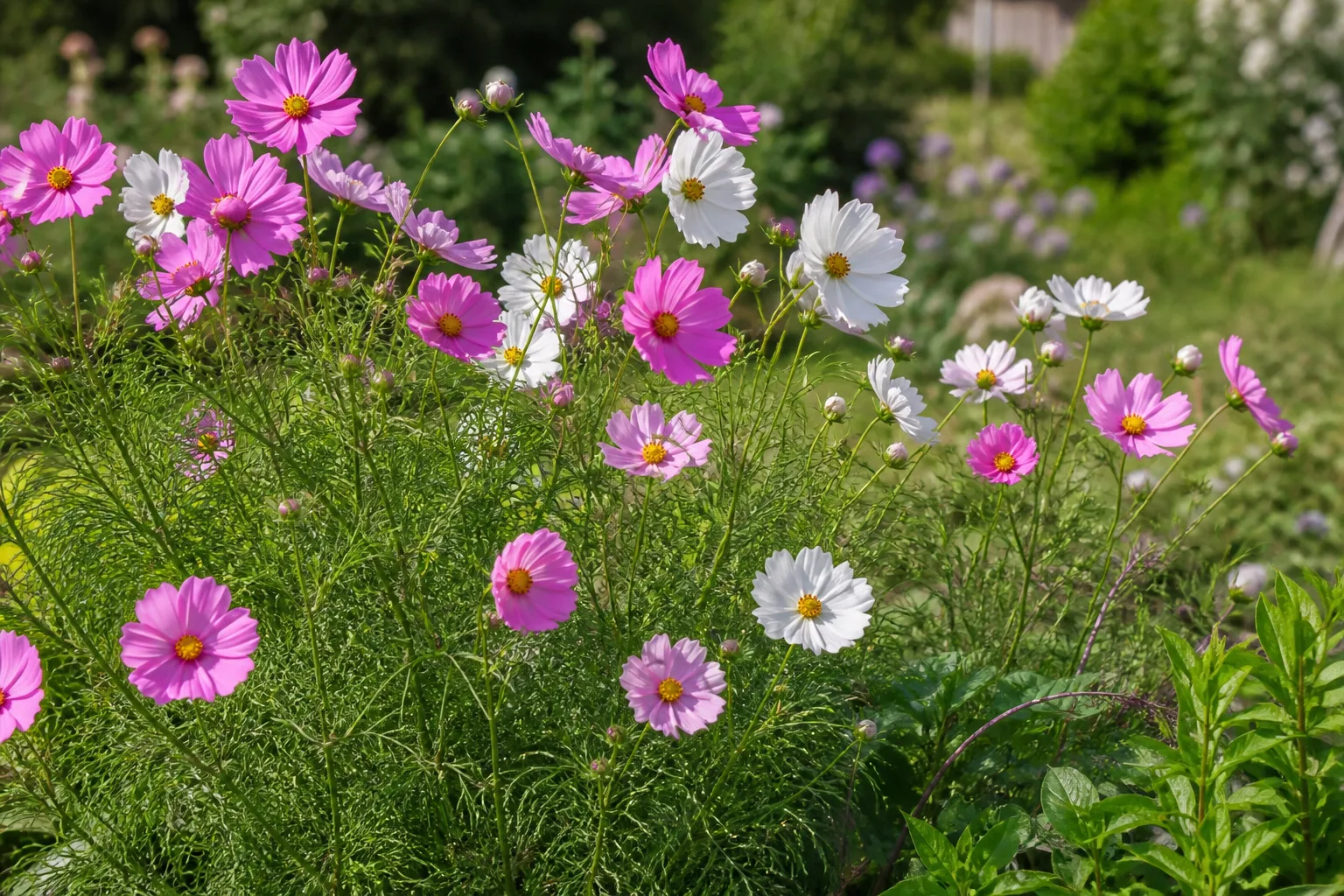
Cosmos (Cosmos bipinnatus) look delicate but grow fast from seed sown after frost in April. They tolerate poor soil — too much nitrogen yields foliage instead of flowers. Sow ¼ inch deep, thin to 12–18 inches for tall “Sensation” types or 9–12 inches for dwarf series.
Keep seedbed moist until plants are 6 inches tall; thereafter cosmos is surprisingly drought-tolerant. Blooms begin 8–10 weeks from sowing and continue until frost if you cut spent stems. They often self-sow the following year without becoming aggressive in most climates.
Pollinators: bees, butterflies, hoverflies, and hummingbirds on accessible single forms. Feathered foliage adds texture between blocky marigolds and broad sunflower leaves.
Sweet Alyssum — Low Edging That Feeds Hoverflies
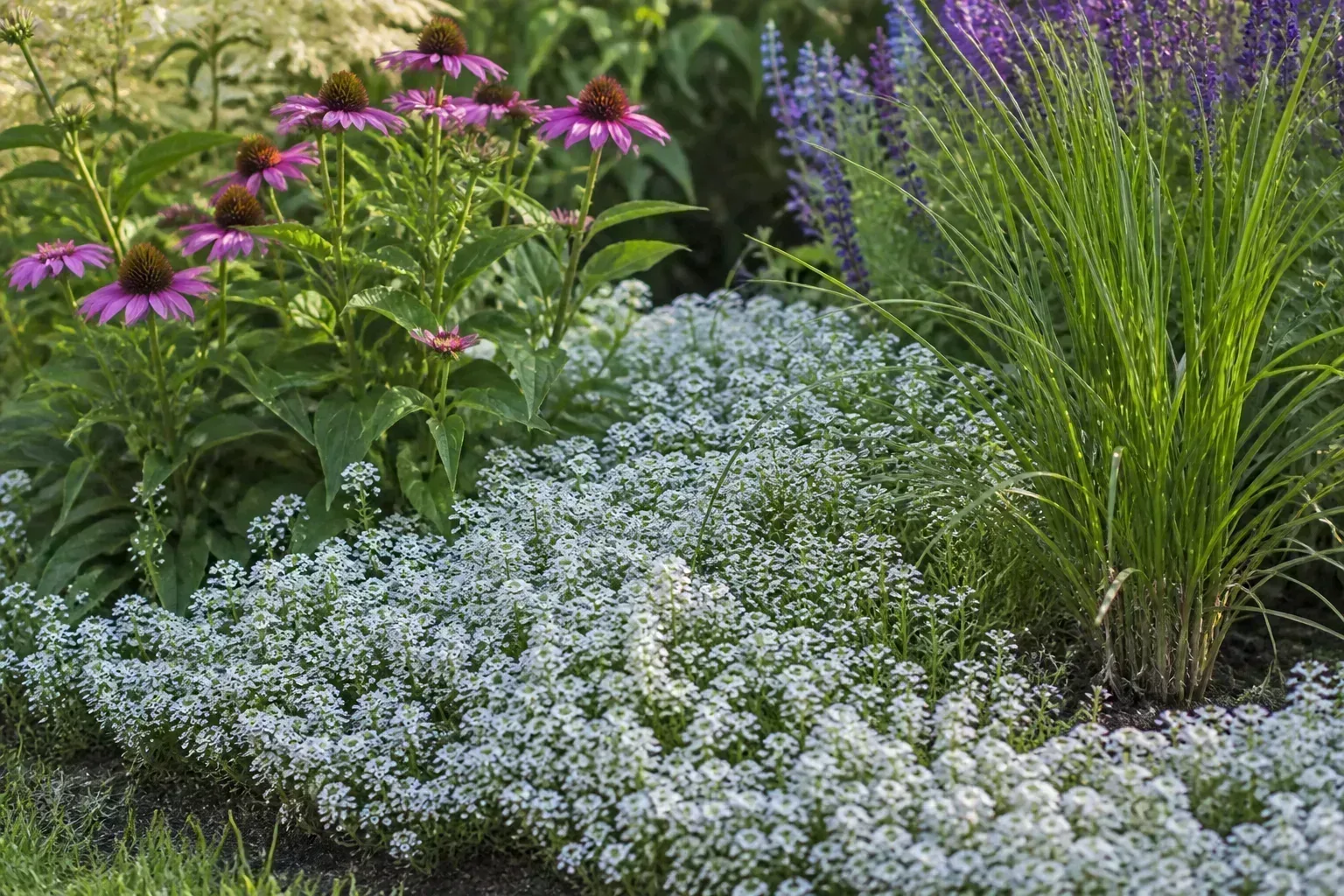
Sweet alyssum (Lobularia maritima) is the edging workhorse of this list — low, honey-scented, and blooming 4–6 weeks after an April sowing in cool soil. Direct sow by scattering on firm, moist soil and pressing in; barely cover. Thin to 6-inch spacing for a continuous carpet.
It prefers full sun with afternoon shade in hot inland gardens and needs moderate moisture — not boggy roots. Shear plants lightly if they stretch in heat; they rebound with fresh bloom in two weeks.
Pollinators: hoverflies, small bees, parasitic wasps, and butterfly adults nectaring at the rim. Regional caveat: In California coastal wildlands, alyssum has escaped cultivation; the California Invasive Plant Council rates it Limited invasiveness near sensitive habitat. In contained urban beds, deadhead before seeds mature, or grow in pots away from open dunes — a point we cover in low-maintenance April flowers.
Nasturtiums — Edible Blooms That Trap Some Pests
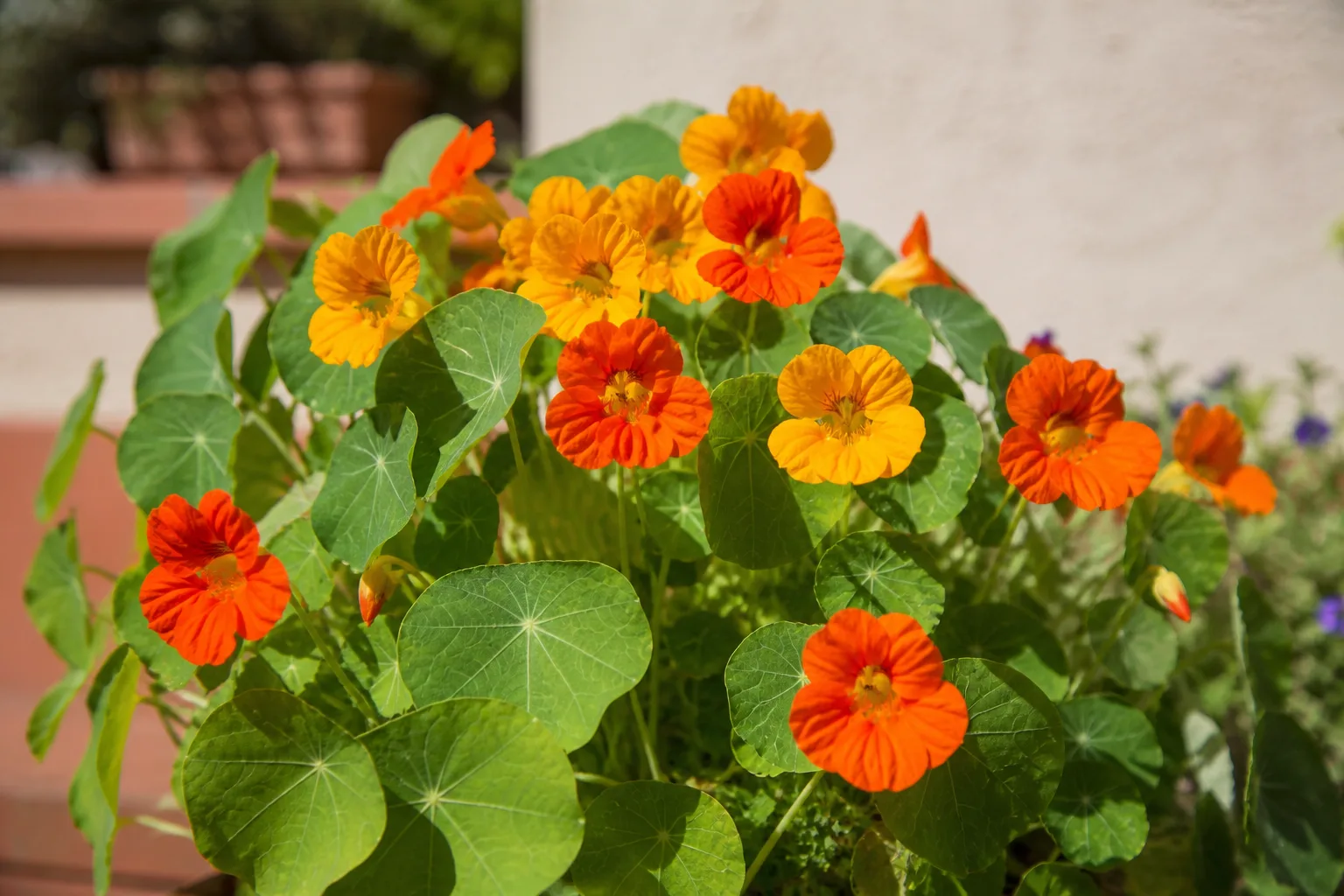
Nasturtiums (Tropaeolum majus) sow easily in April once soil passes 55°F and frost is past. They prefer full sun, lean soil, and moderate water — rich beds produce leaves, not flowers. Large seeds sow 1 inch deep, 10–12 inches apart; trailing types work in window boxes and along path edges.
Expect jewel-toned blooms 6–8 weeks from sowing through fall frost. Leaves, flowers, and seed pods are edible with a peppery bite if the garden is unsprayed. Many gardeners use nasturtiums as a trap crop near brassicas; aphids may colonize nasturtiums first, giving you time to intervene elsewhere.
Pollinators: hummingbirds, bumblebees, butterflies, and hoverflies. Unlike some catalog copy, nasturtiums are widely grown as annuals in cold climates (USDA zones 2–11 as summer annuals); only in frost-free zones do they persist as short-lived perennials.
Conclusion
April is when direct-sown annuals return the best ratio of effort to color — if you match seed to soil temperature and split cool-season sowings from frost-sensitive ones. Calendula, cornflower, and alyssum can go out early; sunflowers, zinnias, and marigolds follow once the ground truly warms. Keep the seedbed moist, thin without mercy, and stack heights so pollinators find nectar from late spring until frost.
You do not need every seed packet on this list. Even three species — say cosmos, zinnia, and sunflower — fill a bed with motion and insect life. Start with one prepared patch this week, label your rows, and sow again in two weeks for a longer bloom wave. Your future self — and the bees — will thank you when July arrives.



