Citrus Leaves Turning Yellow: Causes and Fixes
Citrus leaves turning yellow? Learn how to read the pattern, check roots and pests, fix watering and nutrition, and spot disease warning signs.
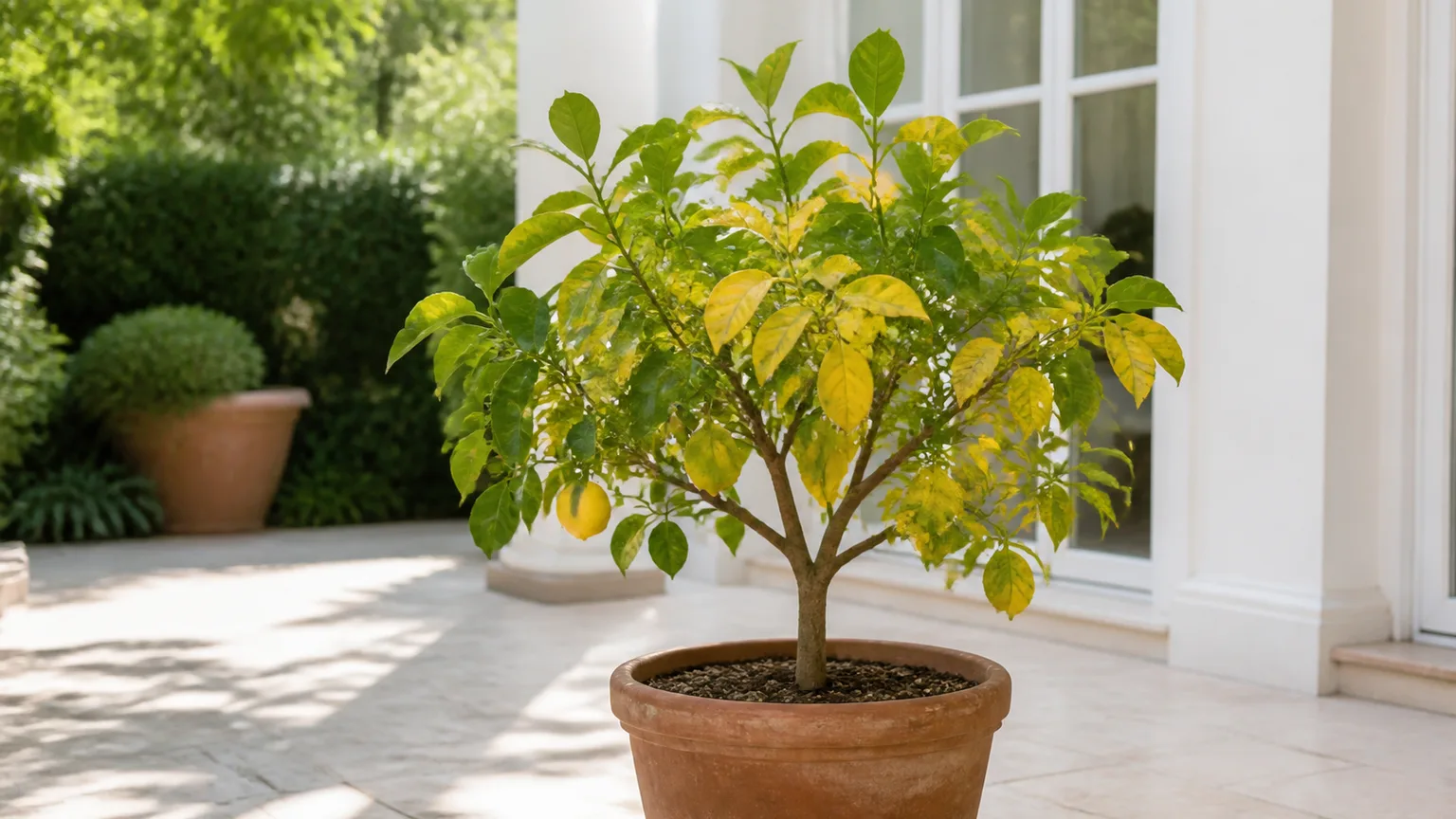
Yellow citrus leaves are a symptom, not a diagnosis. A lemon, lime, orange, mandarin, or grapefruit tree can lose its green color because its roots are suffocating, the soil has dried too far, nutrients are unavailable, cold has slowed uptake, pests are draining sap, or a disease is moving through the canopy. The right fix depends on the pattern and on what is happening below the leaves.
The safest approach is to inspect before you fertilize or spray. UF/IFAS Extension emphasizes that citrus problems often overlap and that adequate soil moisture, good drainage, appropriate fertility, and frequent monitoring work together; one yellow leaf rarely identifies the cause by itself. (UF/IFAS Extension: Citrus Problems in the Home Landscape)
Start with a 10-minute diagnosis
Read the pattern and root zone before changing the routine
Begin with four questions: Are the oldest leaves yellow, or is the newest flush affected? Are the veins still green? Is yellowing spread evenly, or is it mottled, spotted, or confined to one branch? Finally, is the root zone wet, dry, compacted, salty, or crowded? Write down what you see before moving the pot, adding fertilizer, or removing leaves; a quick note and a photo make it easier to tell whether the problem is improving.
| What you see | More likely first suspects | First check |
|---|---|---|
| Older leaves pale evenly, then drop | Nitrogen shortage, drought, cold, normal aging | Moisture, season, and feeding history |
| Yellow between green veins | Iron, magnesium, zinc, or pH-related lockout | New versus old leaves and soil pH |
| Yellow leaves droop while mix stays wet | Overwatering, poor drainage, root rot | Drainage hole, smell, and root condition |
| Fine stippling, dull leaves, or webbing | Spider mites or other sap-feeders | Leaf undersides with a hand lens |
| Raised spots with yellow halos | Canker or another leaf disease | Whether spots occur on both leaf surfaces and new growth |
| One branch mottled while the rest looks normal | Branch injury, root damage, or possible greening | Branch pattern, fruit, psyllids, and local disease guidance |
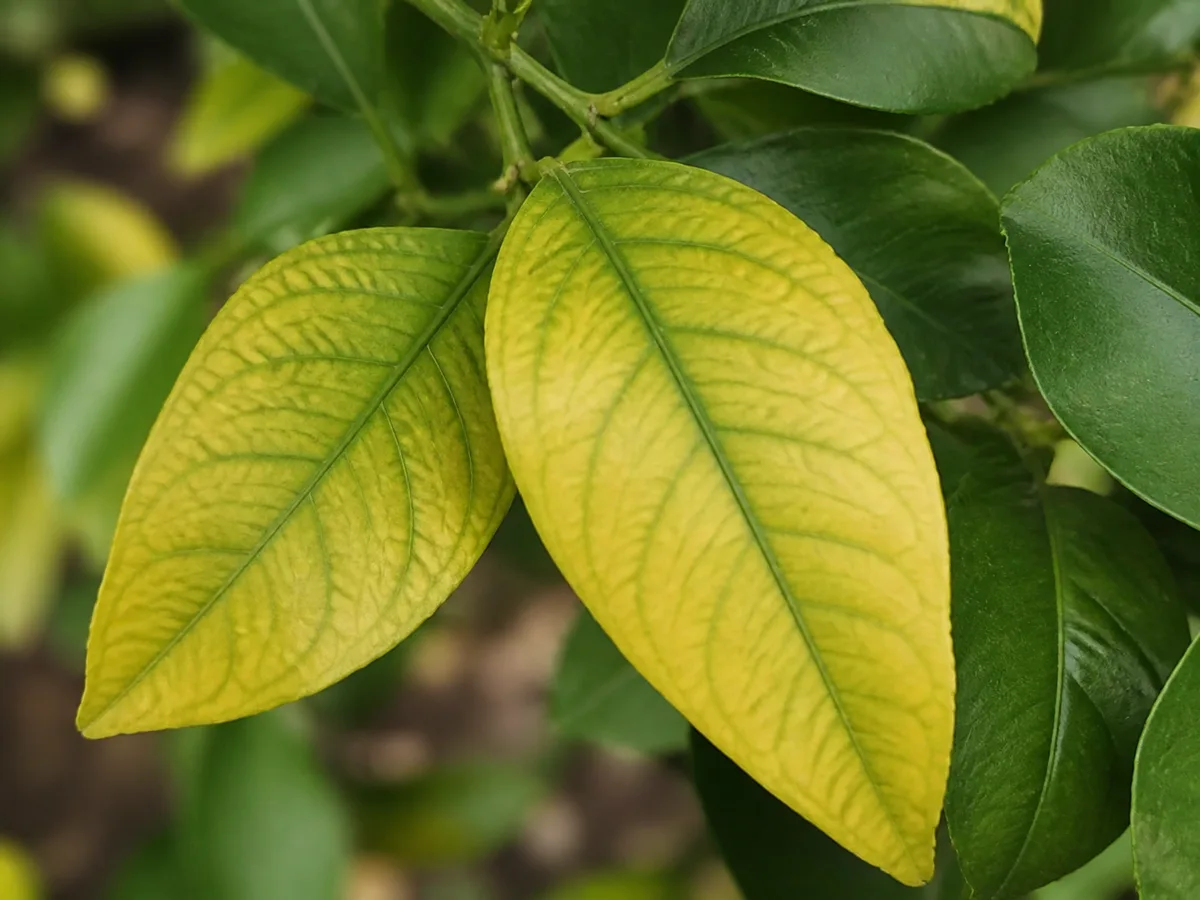
Look at both sides of several leaves and compare the newest flush with mature foliage. The RHS notes that citrus yellowing can come from roots that are too wet or too dry, drafts, low temperatures, or inadequate feeding, while its practical citrus guidance also warns that winter overwatering is especially easy to do. (RHS: Citrus problems)
Next, feel the soil several inches down rather than judging by the surface. A dry crust can hide damp soil below; a dry-looking container can also be hydrophobic and shed water down the sides. If the tree is in a pot, lift it if possible, confirm that the drainage hole is open, and check whether roots are circling densely at the bottom. In the ground, look for standing water, a low planting site, a downspout, or a compacted layer that keeps water near the roots.
1. Waterlogged roots and early root rot
Overwatering is not simply “too much water today.” It is a root-zone condition in which water remains around the roots long enough to displace oxygen. Citrus roots need both moisture and air. In a heavy mix, a pot without a free drainage hole, or a poorly drained planting site, the leaves may turn pale, droop, and fall even though the soil feels wet.
Root damage can also look like thirst. Injured roots cannot move water reliably, so the canopy wilts or yellows while the lower soil remains saturated. A sour smell, black or brown mushy roots, a pot that stays heavy for many days, algae on the soil surface, and leaf drop are stronger evidence of a root problem than yellow color alone.
Container citrus is especially vulnerable during cool or low-light periods. The plant uses less water when growth slows, but a watering routine that worked in summer can keep winter soil wet. The RHS recommends avoiding winter overwatering and advises checking roots when the reason for decline is uncertain; if roots are crowded, repotting is best timed for active growth rather than performed in a panic during the coldest part of the year.
For a mildly wet tree with firm roots, let the mix dry partially before watering again and move the container to bright light with good airflow. Do not compensate by placing it in hot direct sun or by adding fertilizer. If roots are mushy, unpot the tree, cut only clearly dead tissue with clean shears, remove the saturated old mix, and repot into a clean container with an open drainage hole and a fresh, airy citrus mix. Do not move a severely damaged root ball into a pot twice its size; a larger volume of wet mix can prolong the problem.
2. Drought, heat, or erratic watering
The opposite mistake can yellow citrus leaves too. A tree that dries too far may show curled or limp leaves, crispy edges, premature leaf drop, and a light pot. Heat, wind, a small container, a newly planted tree, or competition from grass can make the root zone dry much faster than the calendar suggests.
Drought stress often becomes more severe when a grower alternates between neglect and flooding. A very dry root ball may repel water, so the first irrigation runs around the outside of the soil instead of soaking the center. Repeated shallow sips wet only the top layer and encourage a cycle of surface moisture followed by deeper drought.
Water a dry container slowly until a little water exits the drainage hole, pause, and water again. For a ground-planted tree, apply water over the root zone rather than against the trunk, allowing it to penetrate deeply without creating a puddle. Use mulch to slow evaporation, but keep mulch several inches away from the trunk so the bark stays dry and visible.
Do not use a fixed “once a week” schedule as proof that the tree is watered correctly. Check the root zone, weather, container weight, canopy exposure, and recent growth. A citrus tree in a hot terracotta pot may need attention while a shaded tree in heavy soil still has too much water. After correcting a dry-down problem, expect existing yellow leaves to remain yellow; recovery is better judged by firmer leaves, stable leaf drop, and healthy new growth.
3. Nutrient deficiency or nutrient lockout
Citrus is a hungry, productive group of plants, but yellow leaves do not automatically mean “add fertilizer.” A shortage of nitrogen, magnesium, iron, zinc, or manganese can reduce chlorophyll, yet the same visual pattern can appear when roots are cold, damaged, waterlogged, salty, or growing in a pH range that limits nutrient availability. The RHS specifically notes that growing conditions can resemble deficiency and that plants in containers often show symptoms when nutrients run low. (RHS: Nutrient deficiencies)
Match the leaf pattern to the likely shortage
Nitrogen deficiency usually affects older leaves first because nitrogen is mobile inside the plant. The whole leaf may fade from green to pale green or yellow, and new growth can be small or weak. But a tree with wet or rotting roots can show the same pattern because damaged roots cannot take up nitrogen. Correct drainage and confirm the problem with a soil or leaf test before increasing the dose.
Magnesium deficiency often appears as yellowing between the veins on older leaves while the veins remain greener. Iron deficiency more often affects young leaves, with the newest leaves turning pale while their veins remain green. Zinc and manganese problems can cause smaller leaves, shortened internodes, or mottled chlorosis. These are useful clues, not home-lab certainty: cultivar, rootstock, season, soil chemistry, and overlapping stress can alter the pattern.
The California Department of Food and Agriculture’s citrus fertilization guidance and research literature on citrus nutrition both support a measured approach: nutrient symptoms must be interpreted in the context of soil, leaves, tree growth, and timing, not treated as a universal fertilizer recipe. (CDFA and UC Davis: California Crop Fertilization Guidelines for Citrus; Citrus nutrient-deficiency research in PubMed Central)
Use a fertilizer labeled for citrus and follow its label rate during the active growing season. Do not stack a citrus fertilizer, Epsom salt, chelated iron, compost tea, and foliar spray in the same week. Epsom salt only supplies magnesium and sulfur; it cannot fix root rot, nitrogen shortage, iron lockout, salt injury, or disease, and unnecessary salts can add stress. If the soil test does not show magnesium deficiency, skip it.
Fertilizer is most useful after the root zone is functioning. If leaves yellowed after repotting, flooding, drought, or cold, stabilize moisture and light first. New leaves are the best recovery signal because older yellow tissue may never regain its original color.
4. Cold roots, low light, or a seasonal slowdown
Citrus can look surprisingly unhappy when autumn or winter changes the balance between leaves, roots, light, and water. Cooler soil slows root activity; shorter days reduce photosynthesis; and wet soil dries more slowly. The result can be pale leaves even when the pot contains adequate nutrients.
The pattern is often gradual, beginning with older leaves, and the tree may otherwise look clean and pest-free. Leafland’s winter citrus guidance describes mild seasonal yellowing as a response to cooler soil, reduced sunlight, slower growth, and excess moisture, especially when the tree is carrying fruit. (Leafland: Why citrus leaves turn yellow in winter)
Before feeding heavily in winter, move a container citrus to the brightest frost-free location available, protect it from cold drafts, and allow the mix to dry more between waterings. Do not place it beside a heater; hot, dry air can stress leaves while the root ball remains cool and wet. If the tree is outdoors, protect tender cultivars from frost according to local guidance and avoid sudden moves from deep shade into hot afternoon sun.
Seasonal yellowing should improve when warmth and light return, but do not dismiss rapid decline as “winter.” Yellowing that spreads quickly, comes with root odor, affects new growth, or occurs with spots, webbing, branch dieback, or misshapen fruit needs a closer diagnosis.
5. Sap-sucking pests
Spider mites, scale, aphids, mealybugs, and citrus psyllids can remove enough sap to make leaves look dull, stippled, curled, or yellow. Many are easier to find on the underside of leaves than on the upper surface. A hand lens helps, but so does holding a white sheet of paper below a branch and tapping it gently; moving specks are worth investigating.
Spider mites may leave fine stippling or a dusty, bronzed appearance and sometimes delicate webbing. Scale insects look like fixed bumps on stems or leaves, while aphids cluster around tender growth and may leave sticky honeydew. Sooty mold on the honeydew can darken leaves, but it is a symptom of sap-feeding activity rather than the first cause.
Practical citrus-care guidance from PlantCareToday also emphasizes that yellowing and curling overlap, so both symptoms and the pest location matter. (PlantCareToday: Why lemon tree leaves curl and turn yellow) Inspect before spraying: identify whether the pest is present, estimate how widespread it is, and check whether beneficial insects are already controlling it.
For a small infestation, a firm water spray aimed at leaf undersides can dislodge pests, followed by repeat inspections. Prune only heavily infested shoots when removing them will not strip the tree. If a labeled horticultural oil, insecticidal soap, or other pesticide is appropriate, follow the product label exactly, test a small area, avoid heat and drought conditions, and protect pollinators. Household dish soap, essential oils, and concentrated DIY sprays can burn citrus foliage.
Treating mites will not correct yellow leaves caused by saturated roots, and feeding a pest-stressed tree will not remove the pests. Recheck after several days and again after new growth emerges; one spray rarely ends a population whose eggs or sheltered adults remain.
6. Leaf and root diseases
Diseases become more likely when yellowing comes with discrete spots, corky lesions, yellow halos, greasy-looking patches, leaf drop, fruit blemishes, twig dieback, or a decline concentrated in one part of the canopy. UF/IFAS describes citrus canker as raised lesions surrounded by yellow halos, while other diseases such as greasy spot and Alternaria brown spot have their own combinations of spotting, defoliation, and fruit symptoms. (UF/IFAS Extension: Citrus Problems in the Home Landscape)
Do not reach for a fungicide just because a leaf is yellow. Fungicides cannot revive dead tissue, cure root damage from waterlogging, or fix an incorrect diagnosis. Remove fallen diseased leaves when appropriate, keep irrigation off the foliage, disinfect tools between cuts, improve airflow, and photograph the plant before pruning so a local extension office or plant clinic can see the progression.
Root and foot diseases can begin below ground. Yellowing plus a wet planting site, trunk damage near the soil line, a sour smell, or sparse new growth deserves attention to drainage and root health. If the tree is declining despite sensible watering and feeding, stop adding amendments and seek an identification rather than layering treatments.
Know when yellowing may be citrus greening
Citrus greening, also called huanglongbing or HLB, deserves special caution because it is a systemic, economically serious disease with no simple home cure. UF/IFAS describes early symptoms as yellowing along veins or blotchy mottling that may begin on one sector or branch, along with small upright leaves, premature leaf drop, off-season flushing, decline, and misshapen or poorly colored fruit. Those symptoms can resemble iron or zinc deficiency, so appearance alone cannot confirm HLB.
If yellow mottling is asymmetric, stays concentrated on one branch or side, returns despite corrected care, or appears with lopsided bitter fruit, unusual flowering, twig dieback, or citrus psyllids, contact your local extension service or plant-health authority. USDA APHIS maintains current citrus-disease information and reporting context for the United States. (USDA APHIS: Citrus diseases) Do not move cuttings, budwood, or a suspect tree to another yard while you are trying to identify it.
7. Root restriction, poor soil, salt, or transplant shock
A citrus tree can have adequate fertilizer and still be unable to use it if the root environment is poor. In a container, circling roots may fill the pot, mix may collapse and become dense, or salts from fertilizer and irrigation water may accumulate. In the ground, compaction, construction damage, shallow fill, or a recent transplant can interrupt roots and create canopy yellowing.
Look for roots circling the outside of the root ball, water running straight through a dry container, a crust of white salts on the mix or pot rim, or leaf-edge burn after repeated feeding. Salt injury often starts at margins and tips before the tissue yellows or drops. If your water passes through a softener, check its sodium content; switching to a suitable water source may help more than adding another nutrient.
Repot only when the root condition or container clearly warrants it. Choose a pot just one size larger with a drainage hole, use a well-draining citrus mix, loosen only tightly circling outer roots, and keep the trunk at the same depth. A huge pot is not a recovery treatment: it holds more wet mix and can make a root problem last longer. For a recently transplanted tree, protect the root zone from drying and heat, remove competing grass, and give it time to rebuild rather than forcing new growth with heavy fertilizer.
A recovery plan that does not make the problem worse
Reset moisture and drainage first
Start with the least irreversible correction. If the mix is wet, pause irrigation, empty the saucer, confirm drainage, and inspect roots if yellowing or leaf drop continues. If the mix is dry, rehydrate slowly and deeply rather than applying repeated surface sips. In the ground, correct the water source, improve the planting area where practical, and use mulch to reduce swings without burying the trunk.
Give the tree a stable light and temperature setting for one to two weeks while you observe. Moving it, repotting it, pruning it, and fertilizing it all at once makes the result impossible to interpret. Mark a few affected leaves with a removable tag or photograph the same branch every few days; the direction of change matters more than the color of old damage.
Feed only after the roots can use it
Once moisture is reasonable and roots are firm, use a citrus fertilizer according to the label and season. If the pattern suggests iron, magnesium, zinc, or manganese, test soil pH and fertility where possible before applying a targeted product. Alkaline or waterlogged soil can make iron unavailable even when the total iron is present, and adding more iron will not correct low oxygen at the roots.
Avoid high-dose foliar experiments during hot, dry, or bright conditions. New growth should emerge with better color if the cause has been corrected, while old yellow leaves may remain damaged and fall naturally. If new leaves are still pale after the root zone, light, and pests have been addressed, the next step is a soil or leaf analysis—not a stronger dose.
Remove pests, diseased material, or damaged roots carefully
Prune only what you can identify as dead, broken, clearly diseased, or heavily infested. Make clean cuts back to healthy tissue, avoid stripping a large percentage of the canopy, and clean tools between trees. Yellow leaves without a spreading disease do not need to be removed immediately; the tree may still be withdrawing useful nutrients from them.
When the cause is uncertain, take clear photos of the whole tree, one branch, the top and underside of a leaf, the soil surface, and the roots if you have already unpotted it. Include the citrus type, whether it is in a container, recent weather, watering frequency, fertilizer products, and how quickly the change happened. That information can turn a vague “yellow leaves” question into a useful diagnosis.
Should you cut off yellow citrus leaves?
Usually, no—not right away. Remove leaves that are fully dead, diseased and spreading, or so heavily infested that keeping them would interfere with control. Otherwise, leave partly green leaves in place while you correct the cause; they may still contribute energy and the tree may shed them on its own.
Yellow leaves will not reliably turn green again once chlorophyll has been lost. That does not mean the tree is doomed. Look for fewer new symptoms, firm roots, stable moisture, clean new growth, and normal flowers or fruit. Those are better recovery markers than trying to recolor a damaged leaf.
If yellowing is rapid, affects most of the canopy, follows a freeze or flood, comes with severe leaf drop or dieback, or persists after two or three weeks of corrected care, get help. A local extension service, plant clinic, certified arborist, or plant-health authority can distinguish a manageable cultural problem from a disease or root failure that needs a different response.
Conclusion
Citrus leaves turn yellow when the tree cannot maintain normal chlorophyll production or when damaged roots and tissues can no longer support the canopy. The seven useful cause groups are waterlogged roots, drought or heat, nutrient deficiency or lockout, cold and low light, pests, disease, and root or soil problems such as crowding, salt, or transplant stress.
Read the pattern, check the root zone, and change one major variable at a time. Stabilize water and drainage before feeding, identify pests before spraying, and treat unusual mottling, one-sided decline, or misshapen fruit as reasons to seek a proper diagnosis. With steady care and a little patience, many citrus trees replace yellow, stressed foliage with healthier growth when the roots and growing conditions are brought back into balance.