The Biggest Tomato Growing Mistake in Summer Heat
Learn which tomato growing mistake causes summer problems, how far apart to plant varieties, and how to rescue crowded plants before heat cuts fruit set.
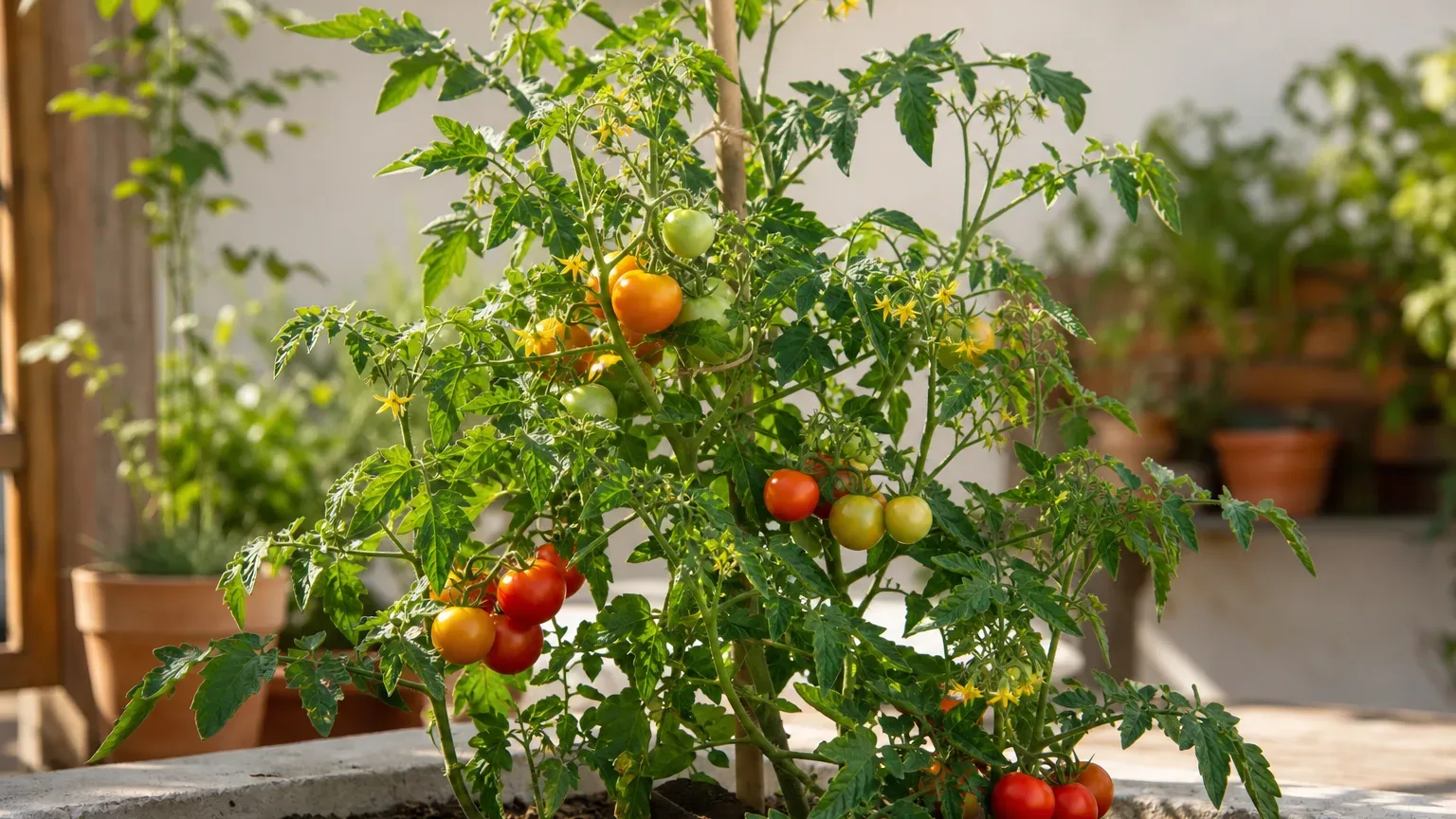
The tomato mistake that looks harmless in May can become a harvest problem by July: planting more vines than the bed, container, or support system can hold. Small transplants leave generous gaps, but indeterminate tomatoes can become a wall of leaves and stems before the first serious heat wave arrives.
Crowding does not guarantee that a tomato plant will fail. A well-pruned, single-stem vine on a strong trellis can use space efficiently, and compact determinate varieties are naturally easier to fit into a small garden. The trouble begins when the planting plan ignores the plant’s mature size, keeps foliage pressed together, or puts a vigorous vine in a container that dries out before its roots can recover.
The practical fix is to plan for the August canopy, not the seedling you are holding today. Give each plant enough room for air to move through the leaves, enough soil to buffer a hot afternoon, and enough support that its fruit and branches do not collapse into the neighboring plant.
Why Crowding Hurts Tomatoes Most in Summer
Spacing is not about making a garden look tidy. It changes how quickly leaves dry, how evenly roots access water and nutrients, how much sunlight reaches fruit, and how easy it is to notice a hornworm, a spotted leaf, or a broken stem before the problem spreads.
Humidity and disease inside a crowded canopy
When tomato leaves overlap, the interior of the plant stays shaded and humid after rain, irrigation, or heavy dew. Water on the leaf is not itself a disease, but a dense, slow-drying canopy creates a longer window for pathogens to establish. Crowded plants also make it easier for soil splash, pruning tools, hands, and insects to move problems from one vine to the next.
Washington State University Extension recommends about four square feet per tomato plant as a home-garden benchmark and pairs spacing with support, well-drained soil, keeping water off leaves, and removing lower foliage. That area is not a magic disease-proof boundary; it is a useful reminder that a mature tomato needs more than the footprint of its transplant. (Washington State University Extension)
Crowding also changes the work of gardening. You cannot reach the center of the bed to tie a stem, check the underside of a leaf, or water the root zone without brushing against neighboring vines. By the time a problem is visible from the path, it may already be established in the hidden foliage.
Heat, roots, and fruit set are connected
Hot weather raises water demand and speeds the consequences of a small container or shallow, crowded root zone. Several plants competing in limited soil can go from adequately moist to stressed much faster than a single plant in a generous bed. Water stress can then compound heat stress during flowering and fruit development.
Heat can stop fruit set even when spacing is perfect. A University of Delaware Cooperative Extension update notes that sustained temperatures around 95°F days and 80°F nights reduce pollen production and viability; nights above 75°F can interfere with pollen-tube growth. The same source reports that three or more hours around 103°F on two consecutive days can cause fruit-set failure. Those are useful warning thresholds, not a promise that every cultivar responds identically. (University of Delaware Cooperative Extension)
That distinction matters. If flowers drop during a heat wave, do not assume the bed was spaced incorrectly or respond by stripping every leaf. Open airflow and consistent moisture reduce avoidable stress, but they cannot make pollen behave normally when temperatures exceed the plant’s fruit-setting range.
Space Tomatoes by Variety and Support
There is no single best distance for every tomato. Start with the variety’s growth habit, then adjust for the support system you will actually use and the climate in which the canopy will grow.
Determinate and indeterminate plants need different room
Determinate tomatoes grow into a more compact bush, set much of their crop over a shorter period, and usually stop extending after reaching their characteristic size. They are the more forgiving choice for a small bed or container, although “determinate” does not mean tiny. Read the seed packet or plant tag for the mature height and width before placing several together.
Indeterminate tomatoes keep extending and producing flower clusters until disease, frost, or a deliberate season-ending cut stops them. Many cherry and heirloom tomatoes are vigorous indeterminates. UF/IFAS describes them as sprawling plants that need pruning and support, while determinate varieties are more compact and useful where space is limited. (UF/IFAS Gardening Solutions)
For a practical starting plan, reserve about 18–24 inches between compact determinate plants when the variety is supported and the seed packet allows it. Give a large indeterminate at least 24 inches, and often 30–36 inches, between plants if it will grow in a full cage or be allowed several stems. If you are growing a cherry tomato, check whether it is determinate or indeterminate; fruit size does not tell you how large the vine will become.
The goal is not the widest possible spacing at any cost. The goal is enough room that mature leaves do not form a permanently wet, interlocked wall. If the packet gives a wider distance than this guide, follow the packet; cultivar and support-specific instructions are more useful than a generic number.
Cages, stakes, and sprawling plants change the footprint
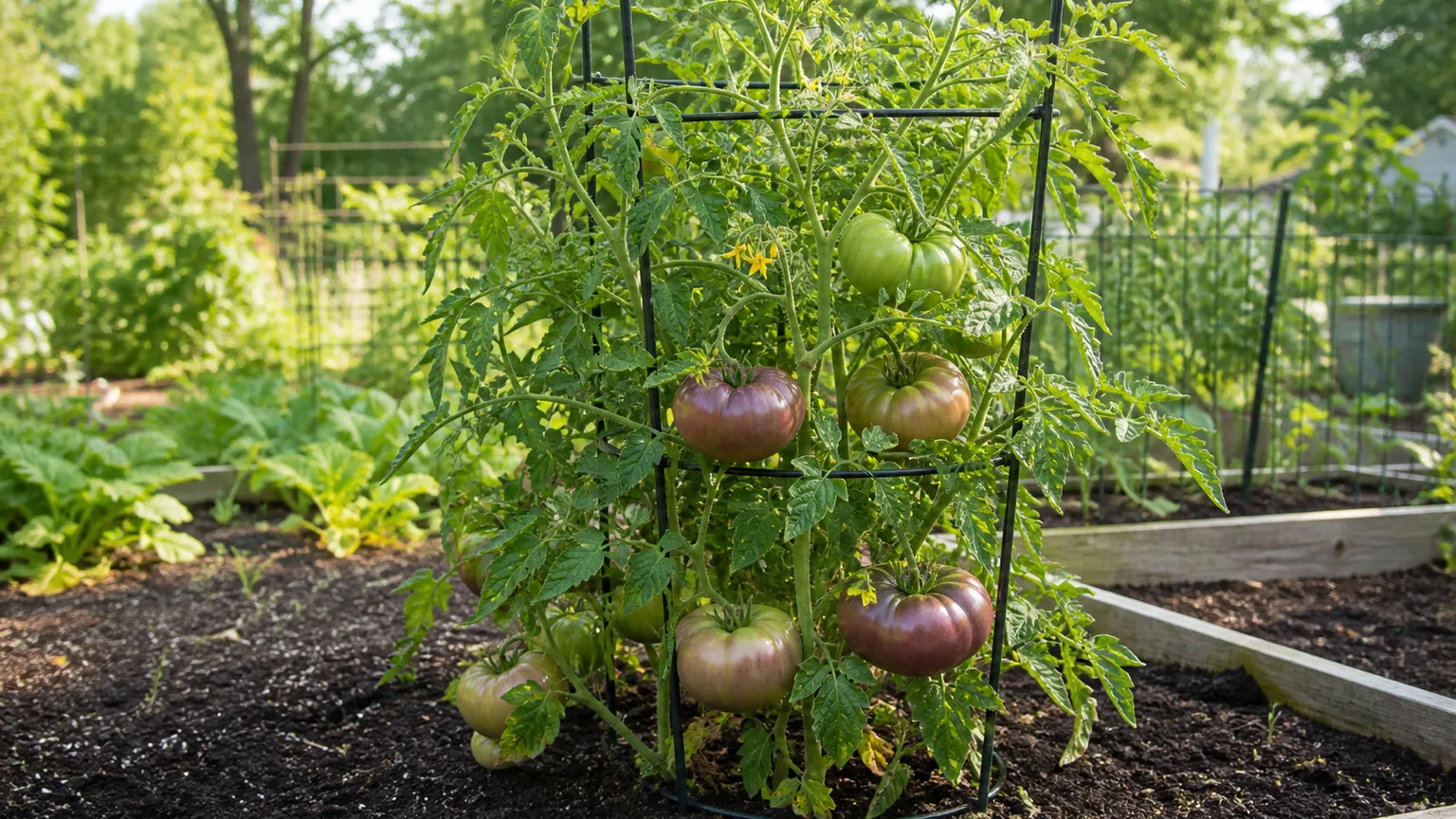
Support is part of spacing math. A single-stem indeterminate tied to a tall stake occupies a narrower vertical line than an unpruned plant inside a small cage. A broad, low cage needs more lateral room because stems will fill the entire circumference. A plant allowed to sprawl on mulch needs the most ground space of all.
Install the cage, stake, or trellis at transplanting, not after the stems have filled the bed. WSU Extension specifically warns that installing support later can damage roots. A strong support also keeps fruit and foliage off the soil and lets you guide stems away from their neighbors. (WSU Extension)
If you use a single-stem or two-stem system, keep the plant tied loosely at several heights and leave enough clearance for your hand to reach each side. If you do not want to prune regularly, use a larger cage and wider spacing. It is usually easier to grow fewer plants well than to grow a dense row that needs emergency surgery in the hottest part of summer.
Practical Spacing for Beds and Containers
Measure from the center of one plant to the center of the next, and include room to walk, water, harvest, and inspect the backs of the plants. The distance between stems at planting is only the beginning; the final canopy and the support structure determine whether the bed remains workable.
In-ground and raised-bed spacing
In an in-ground bed, use roughly four square feet per plant as a simple planning benchmark, then widen the layout for large indeterminate vines or humid, disease-prone conditions. Leave a working aisle where you can reach the root zone without stepping into the bed. A tomato row that is technically full but impossible to scout is not an efficient use of space.
Raised beds often drain and warm faster than surrounding ground. That can be an advantage early in the season, but it also means a shallow or sandy raised bed may need more frequent summer checks. Do not compensate for a too-dry bed by packing plants closer together; competition makes the moisture problem harder to manage.
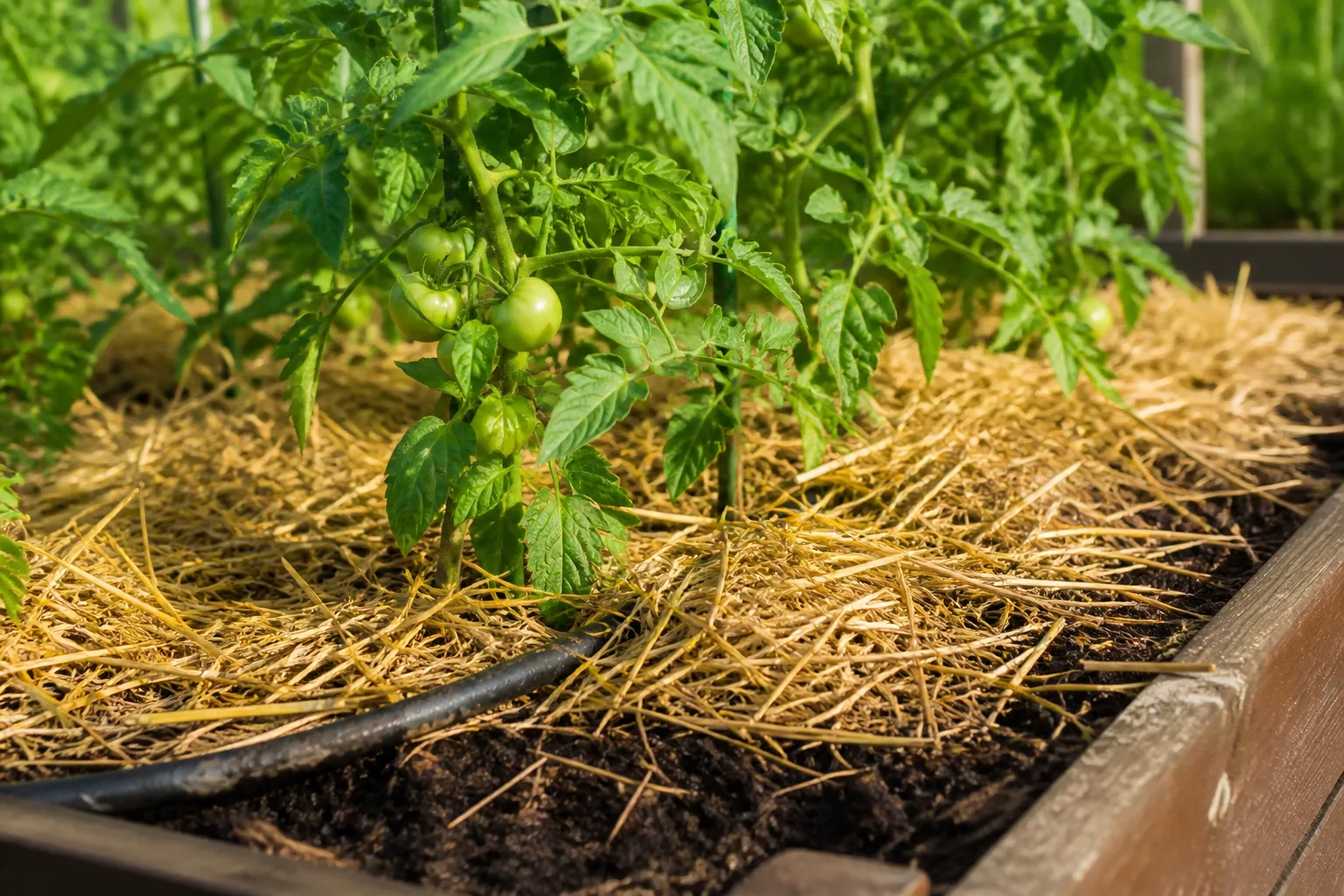
Space plants so lower leaves are not rubbing against the soil or the neighboring stem. Apply mulch after the soil has warmed, keep a small gap around each stem, and direct irrigation to the base. The combination of spacing, mulch, and dry foliage is more useful than any one practice alone.
Containers: one plant and enough soil
Container tomatoes are crowded when the root system and water supply are crowded, even if the leaves are not touching another plant. UF/IFAS says a five-gallon bucket with drainage holes can work for smaller-growing varieties in rich, well-drained potting media. That is a useful option for a compact determinate, not a universal recommendation for a full-size indeterminate. (UF/IFAS Gardening Solutions)
Grow one tomato per container unless the container is exceptionally large and the varieties are specifically suited to sharing. For a small determinate, a five-gallon container may be workable if it has open drainage, a stable cage, and a gardener who checks moisture consistently. For a vigorous indeterminate, a 10–15-gallon container is a more forgiving target because the larger soil volume slows drying and gives roots room to support a tall canopy. That is a practical buffer, not a guarantee of performance.
Container material and location matter. Terracotta and fabric dry faster than many plastic pots, dark containers in reflected heat can become hotter, and a pot against a sun-baked wall can need attention before a similar pot in an open bed. Use potting mix rather than garden soil, keep drainage holes clear, and water slowly enough to wet the entire root ball. Do not leave the container sitting in a saucer of standing water.
If a tomato in a small pot wilts every afternoon despite regular watering, the answer may be a larger container or a self-watering setup—not more frequent shallow splashes. A larger pot also gives you time to respond when a heat wave arrives, which is especially valuable if you cannot check plants several times a day.
How to Rescue a Crowded Tomato Patch Now
You cannot create new bed space without moving or removing plants, and moving a mature tomato during extreme heat can cause more root stress than it solves. Start with the least disruptive changes, then decide whether one plant is so weak, diseased, or buried in the canopy that removing it protects the rest.
Thin and prune without exposing fruit to sunscald
Work in the morning when foliage is dry and temperatures are lower. First remove dead, diseased, or soil-touching leaves and fruit, placing diseased material in the trash rather than carrying it through the bed. Clean your pruners between plants if you are cutting through suspect tissue.
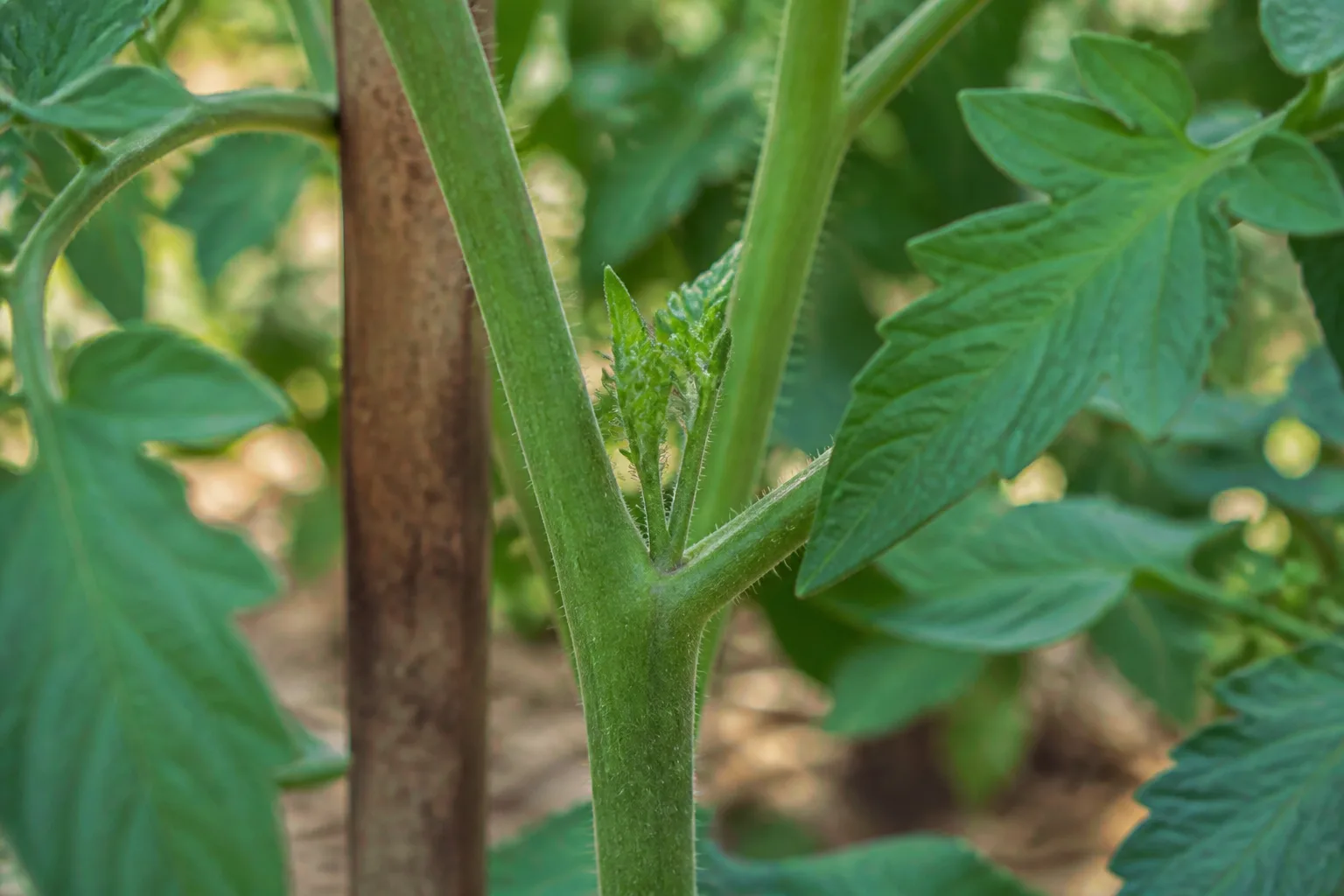
Next, remove only the growth that blocks the root zone, the path, or the main support. On an indeterminate plant, pinch small suckers that you do not want to train into additional stems. NC State Extension recommends removing lower leaves 6–12 inches above the soil to reduce splash and explains that determinate plants generally need less pruning than indeterminate varieties. (NC State Extension)
Do not strip a crowded plant bare in a heat wave. Leaves shade fruit, and newly exposed tomatoes are more vulnerable to sunscald. Do not remove every sucker from a determinate variety just because it is present; many of those stems can bear fruit. A good emergency prune makes an airflow window and opens a route to the stake. It does not aim for a leafless plant.
If two healthy plants are truly growing through each other, choose one or two main stems per indeterminate vine and train them in opposite directions. If the plants are diseased and touching, prioritize sanitation and removal of badly affected material over preserving every branch. A smaller, cleaner canopy is easier to protect than a dense canopy that looks productive but cannot be inspected.
Add support and reopen the airflow paths
Tie stems to their supports with soft material, leaving room for the stem to thicken. Lift heavy fruit clusters so they do not pull branches into neighboring plants. If a cage is too small, adding an outer stake or a horizontal string can keep the canopy from collapsing inward while you plan a better setup for next year.
Create three clear paths through the canopy:
- A lower path: keep leaves and fruit off the soil and leave the lowest 6–12 inches open where practical.
- A center path: separate the main stems so air can pass through rather than hitting a solid wall of leaves.
- A harvest path: leave enough room to reach ripe fruit and inspect leaf undersides without dragging one plant through another.
Do not expect spacing work to reverse leaves that already have extensive lesions. It can slow the spread and make scouting possible, but disease identification still matters. Remove affected material, avoid wetting foliage, and seek a local Extension diagnosis when symptoms do not match a simple moisture or crowding problem.
Summer Care That Keeps Crowding From Becoming Crop Loss
Spacing is the foundation, but summer success comes from keeping the whole system stable. A roomy plant can still drop flowers in extreme heat, crack fruit after drought, or grow leaves instead of tomatoes after an unnecessary nitrogen application.
Water and mulch for a stable root zone
Use 1–2 inches of water per week, including rainfall, as a starting benchmark for established tomatoes, then adjust for soil, weather, plant size, and container volume. UGA Extension recommends deep, timely irrigation and says one or two thorough waterings are better than many light sprinklings; it also recommends drip irrigation or soaker hoses to keep foliage drier. (UGA Extension)
Check the soil before running the hose. In a bed, probe below the mulch several inches from the stem. In a container, feel deeper in the mix or lift the pot to learn how its weight changes between a full watering and a dry one. A wilted plant in wet soil does not need an automatic rescue watering; it may have root stress, disease, or heat wilt.
Apply 2–3 inches of clean organic mulch once the soil is warm, leaving a small gap around the stem. Mulch reduces evaporation, buffers the root zone, and limits soil splash onto lower leaves. It cannot fix compacted soil or blocked drainage, so do not pile more mulch onto a bed that remains saturated after rain.
Fertilizer and soil testing
Excess nitrogen is another way to create a crowded plant—inside its own canopy. A plant that receives more nitrogen than it can use may produce dark, vigorous leaves and stems while delaying flowers and fruit. WSU Extension warns that excess nitrogen can reduce fruit production, and UGA Extension advises against overfertilizing with high-ammoniacal nitrogen fertilizers during hot conditions. (WSU Extension) (UGA Extension)
Do not choose a fertilizer because the label promises more tomatoes or because a neighboring plant looks greener. Start with a soil test, follow the product label, and avoid adding lime, calcium, or fertilizer without knowing what the soil needs. A nutrient problem and a watering problem can look similar, and a blind correction can create a second imbalance.
Gardeners’ World’s tomato-mistake guide also warns that feeding too early or too often can push leaf growth, delay flowering, and burn roots, especially in containers. Its practical timing is to wait until the plant is established and beginning to set fruit, then adjust feeding to the growing setup and season. (Gardeners’ World Magazine)
Heat, shade, pollination, and blossom drop
When a heat wave arrives, keep moisture steady, protect the root zone with mulch, and avoid hard pruning or heavy feeding. Temporary afternoon shade cloth can protect flowers and fruit during exceptional heat, but do not shade a tomato permanently in normal conditions; it still needs strong light for productive growth.
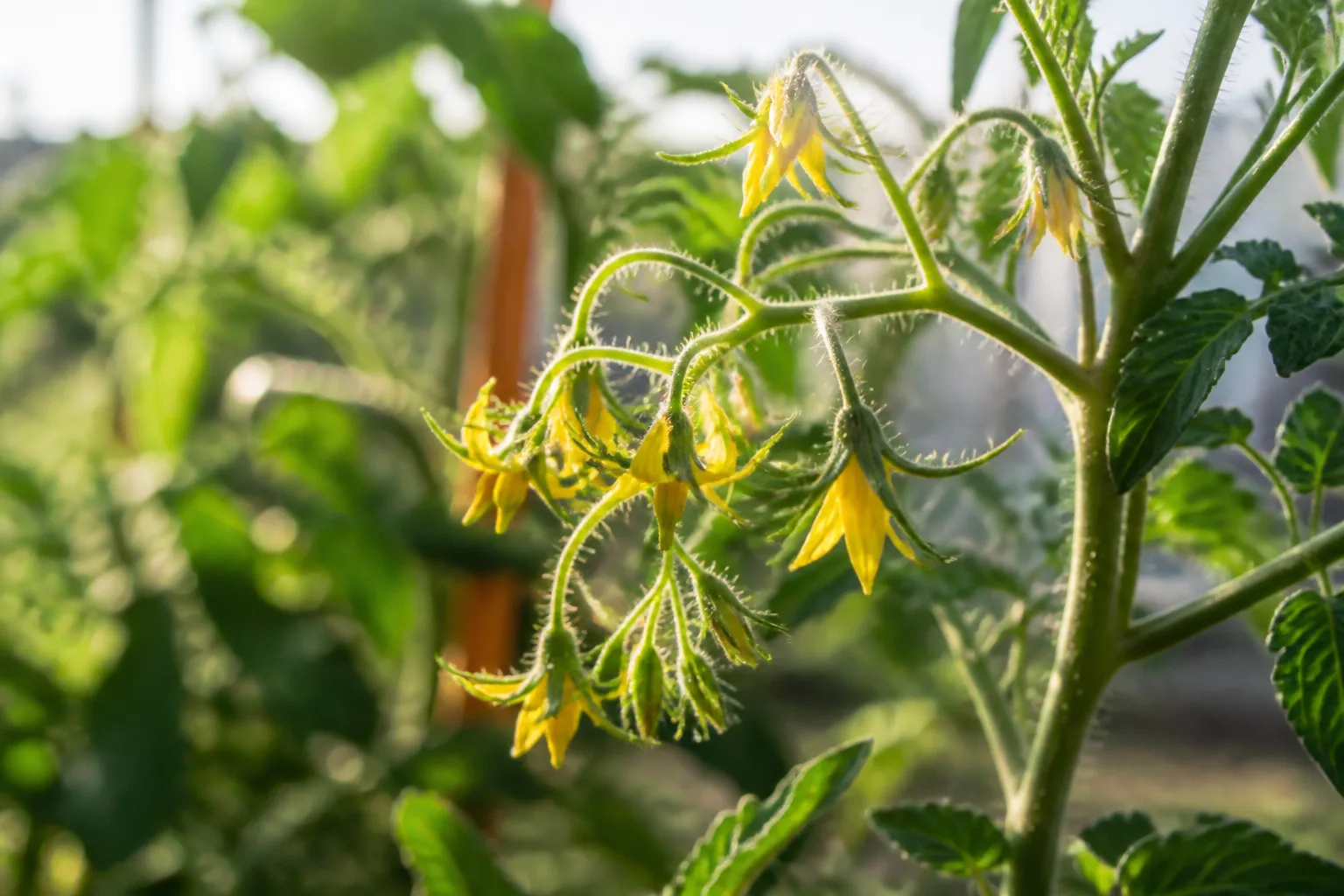
Tomato flowers are self-fertile, but pollen still needs to move from the anthers to the stigma. Missouri Extension explains that air movement, vibration, and bumblebee activity can move tomato pollen, while high or low temperatures, humidity, water stress, and excess nitrogen can interfere with fruit set. (University of Missouri Integrated Pest Management)
If flowers are open but no fruit forms, tap the support lightly late morning on a dry day to create gentle vibration. Do not mistake a few dropped flowers during a severe heat spell for a spacing failure; the plant may simply be waiting for temperatures to return to a range where pollen can function. Cherry and heat-tolerant cultivars may continue setting when large-fruited types pause, but cultivar performance varies by climate.
Quick Troubleshooting: What the Plant Is Telling You
Use the symptom and the site together. A crowded canopy is a risk factor, not a diagnosis.
| What you see | Check first | Best next action |
|---|---|---|
| Leaves stay wet inside a dense canopy | Plant spacing, irrigation, and morning dew | Tie stems apart, remove only strategic lower growth, water the soil, and improve air movement. |
| Flowers fall during a hot spell | Day and night temperatures, humidity, and moisture | Keep watering even, pause extra nitrogen, provide temporary afternoon protection if needed, and wait for better fruit-set weather. |
| Huge leaves with few flowers | Recent fertilizer and soil-test results | Stop unplanned feeding and correct the soil only from test guidance; do not keep adding tomato fertilizer. |
| Black, sunken spot on the blossom end | Moisture swings, root damage, drainage, and calcium availability | Stabilize watering and drainage first; test soil before adding lime or calcium. |
| Fruit cracks after rain or a heavy watering | Dry period followed by a rapid moisture increase | Mulch, water consistently during dry weather, and harvest ripe fruit promptly. |
| Afternoon wilt but moist soil | Heat exposure, root restriction, and disease symptoms | Recheck in the evening and next morning; do not water repeatedly until the soil is truly drying. |
| Lower leaves show spots after splashy rain | Soil splash, airflow, and leaf wetness | Remove badly affected leaves, mulch, keep foliage dry, and get a diagnosis if spots continue upward. |
The fastest improvement usually comes from correcting the first limiting factor you can verify. If the root zone is dry, water deeply. If the root zone is wet, stop watering and inspect drainage. If stems are lying on each other, support them. If the plant is green and leafy after repeated feeding, test before adding anything else. That order prevents the common mistake of treating every tomato problem as a request for more water or fertilizer.
Conclusion
The biggest preventable tomato-growing mistake in summer is crowding the plant beyond the space its mature canopy and roots can use. Crowding traps humidity, reduces airflow, makes disease and pests harder to spot, increases competition for water in hot weather, and turns pruning and harvesting into a wrestling match.
Plan around the variety and support system. Reserve about four square feet as a useful home-garden benchmark, give vigorous indeterminate plants more room when they will grow in broad cages, and use smaller determinate varieties for tight containers. If your plants are already crowded, add support, remove only strategic lower or diseased growth, mulch, water consistently, and avoid excess nitrogen or severe heat-wave pruning.
Spacing will not prevent every flower from dropping when nights stay hot, but it gives the plant the airflow, root-zone stability, and visibility it needs to recover when conditions improve. A little empty space in May is what keeps the tomato bed workable when summer reaches its most demanding stretch.



