16 Best Bean Companion Plants for Pole and Bush Beans
Choose bean companion plants by job: support, pollination, timing, or efficient bed space. Get realistic pest advice and a layout you can use this season.
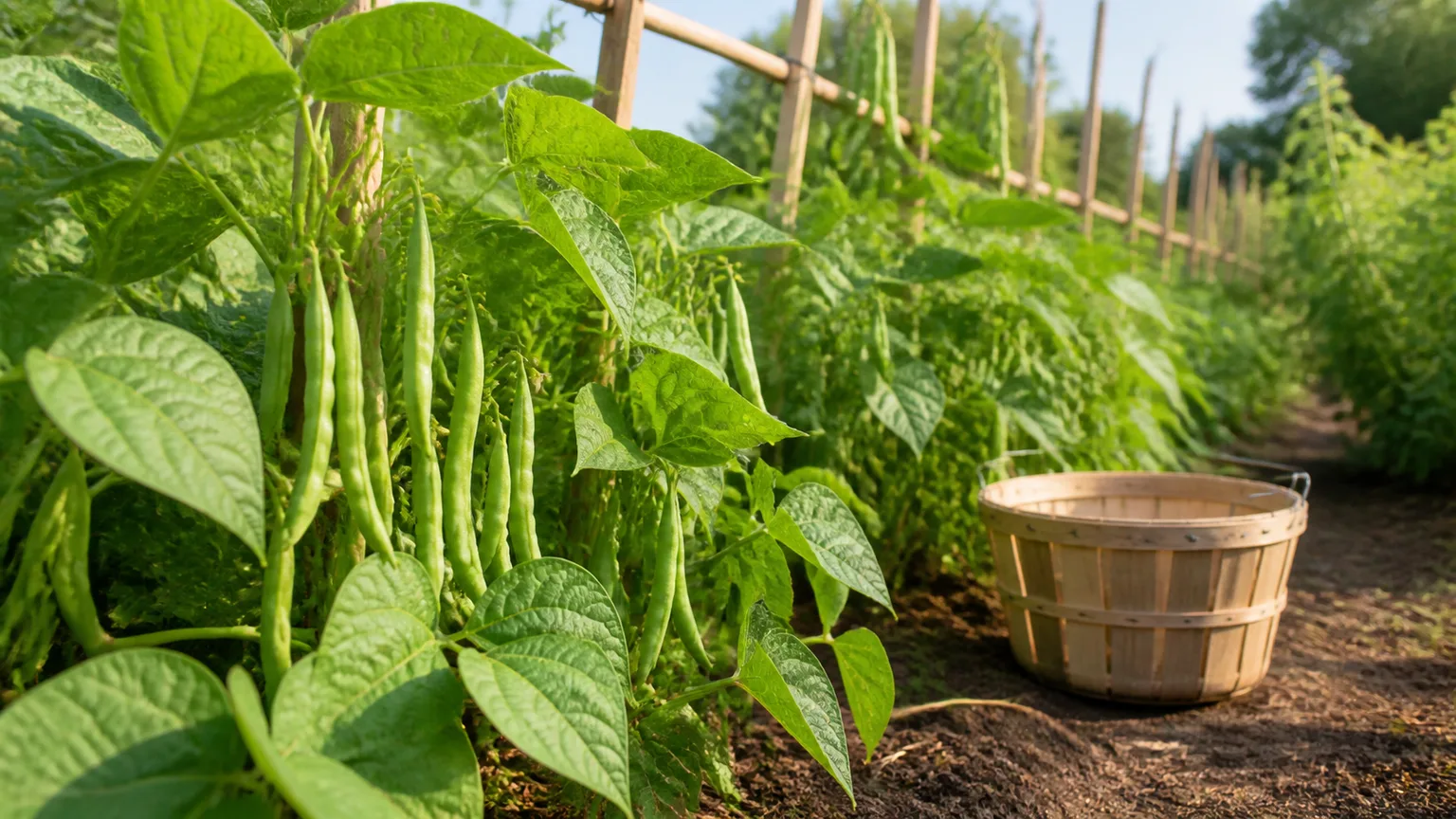
The best bean companion plants are not necessarily the ones with the most dramatic pest-repelling claims. They are the plants that fit the bean’s height, root zone, harvest window, and watering needs while adding a useful second job—support, early-season space, flowers for beneficial insects, or a crop you can harvest before the bean canopy closes.
Start with the bean you are growing. Bush beans stay relatively low and produce a concentrated crop, so they can share a bed with compact vegetables and flowers. Pole beans climb and keep producing for weeks, but their trellis, shade, and dense root zone make spacing decisions more important. The list below includes 16 workable choices, with the exceptions that keep a promising combination from becoming a crowded, pest-prone bed.
Choose a companion by the job it needs to do
Companion planting is best treated as garden design with biological side benefits. A mixed planting can make host plants harder for some insects to find, support predators and pollinators, use vertical and horizontal space at the same time, and let you rotate or succession-sow crops more efficiently. It can also create competition for light, water, and nutrients, so a companion earns its place only if its benefit outweighs that competition.
Bush beans: low, quick, and easy to succession-sow
Bush beans grow without a trellis and usually form a compact canopy. University of Illinois Extension describes them as upright plants that stand without support, while pole beans are vining plants that climb. That difference makes bush beans the easier partner for carrots, radishes, beets, strawberries, celery, and low annual flowers—as long as the neighboring plant does not shade the beans or demand a completely different watering schedule.
Bush beans also lend themselves to succession planting. A first sowing can be followed by another two or three weeks later, which spreads the harvest instead of giving you one overwhelming flush. Leave a narrow access strip so you can pick without stepping into the bed, and remove spent plants promptly when the crop is finished rather than letting old foliage become a shelter for pests and disease.
Pole beans: vertical, long-season, and support-dependent
Pole beans trade ground space for height. Their vertical habit is valuable in a small garden, but the support must be installed before sowing so you do not disturb roots later. Oregon State University Extension recommends a pole or trellis and notes that pole beans can be planted around a support; a rigid trellis is usually more dependable than asking a neighboring plant to carry a full crop.
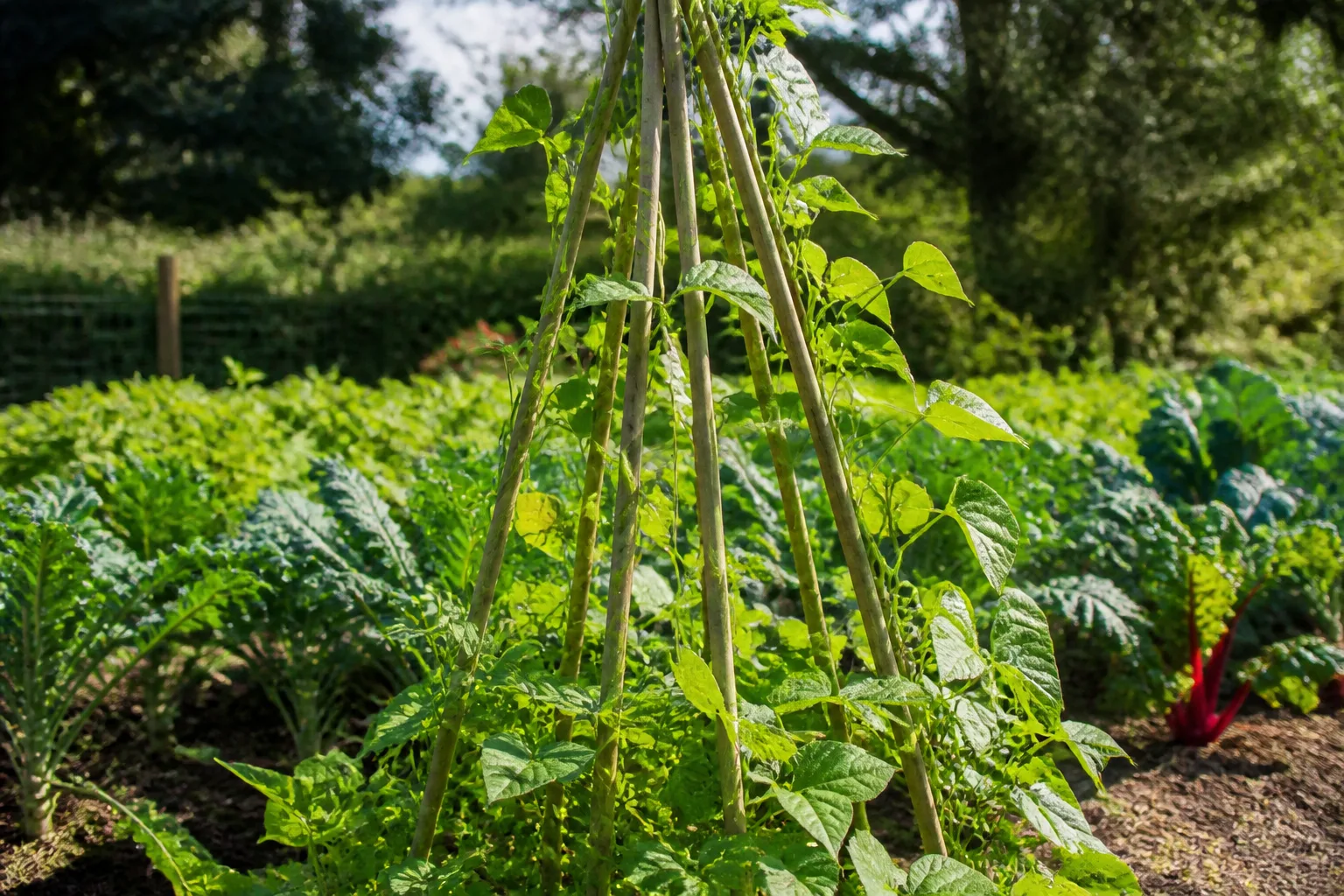
Plan the shadow before you plan the companion. A pole-bean trellis can shade lettuce, beets, carrots, or strawberries by afternoon, so place it on the north side of the bed in the Northern Hemisphere, or choose crops that tolerate the shade it will cast. Keep low companions outside the bean crown, where they can be harvested without tugging bean roots or trapping wet foliage.
What companion planting can really do for beans
Beans are legumes, and rhizobia bacteria in root nodules help them convert atmospheric nitrogen into a form the bean can use. That does not mean a living bean plant immediately fertilizes every plant beside it. Much of the nitrogen is tied up in the bean’s own growth; the contribution to a following crop is more meaningful when roots and residues remain in the soil and decompose.
This is why a bean-and-corn combination can make sense as a space-sharing system, but it is misleading to treat beans as a free fertilizer dispenser. University of Delaware Cooperative Extension explains that legumes can contribute to soil nutrition in rotation and that diverse plantings can disrupt some pest-finding cues, while also warning that companions compete for light, water, and nutrients. The practical takeaway is simple: keep the bean well fed and well watered, and choose companions for their fit rather than assuming nitrogen will solve every fertility problem.
The evidence for scent-based protection is also uneven. The Royal Horticultural Society describes companion planting as a potentially useful way to use space, habitat, and physical support, but notes that claimed benefits do not work for every crop in every situation. Flowers and aromatic herbs are worthwhile additions when you want biodiversity, food, or beauty; they should not replace scouting, row cover, rotation, or sanitation.
The best bean companion plants, grouped by job
The 16 choices below are not a ranking. Pick two or three that solve your garden’s actual constraint, then leave enough room to walk, water, and harvest. A small number of well-placed companions usually performs better than a dense chart of every supposedly compatible plant.
Corn and peas for support or timing
1. Corn. Corn is the classic living support for pole beans, and it can make efficient use of a small plot. Oregon State Extension lists corn as a companion for bush and pole beans because the crops can occupy different soil depths, and the corn stalk can provide a climbing surface. The Three Sisters tradition also pairs corn, climbing beans, and squash for support and ground cover; the Royal Horticultural Society’s overview explains the structure of that system while cautioning that it needs sufficient space.
Treat corn as a conditional trellis, not a guaranteed one. University of Illinois Extension warns that cornstalks can be weak support once beans are carrying a heavy crop, and that growing both crops together can limit the potential of each. If you try it, grow a strong block of corn first, use a lightweight pole-bean variety, plant beans only after the stalks are established, and stake the corn in windy sites. A dedicated trellis is safer when a failed stalk would take the bean crop down with it.
2. Peas. Peas and beans are both legumes, but their best relationship in a home garden is usually timing rather than instant nutrient exchange. Sow cool-season peas early, harvest them before hot weather, then use the cleared support or bed space for warm-season beans. This succession gives you two crops from one section without forcing pea foliage and bean vines to compete in midsummer.
Keep pea vines and pole beans from forming one tangled canopy. If you use the same trellis, let the peas finish and remove their yellowing stems before the beans take over. A small amount of healthy root residue can remain in the soil, but do not leave diseased pea material in place.
Radishes, carrots, and beets for low root layers
3. Radishes. Radishes are fast, compact, and easy to harvest before bean foliage fills the bed. Sow them in the open soil between young bush beans or along the outer side of a pole-bean trellis, then pull them before their shoulders crowd bean stems. They are useful as a quick crop and soil marker; do not assume that a radish row will reliably lure bean pests away.
4. Carrots. Carrots occupy a lower canopy and can share the edge of a bean bed if the soil is loose and free of standing water. Plant them where you can pull them without digging through established bean roots. A pole-bean wall can eventually shade carrots, so favor the sunny south or east edge for carrots and the north side for tall supports.
5. Beets. Bush beans are the better match for beets because their low canopy is less likely to shade the beet row. Pole beans can still coexist in a wide bed, but the leaves may reduce light and the roots become difficult to harvest without disturbing the bean row. Treat the old rule that pole beans and beets “stunt” one another as a reason to avoid a cramped pairing, not as proof that every garden must keep them miles apart.
Cucumbers, eggplant, potatoes, and other edible neighbors
6. Cucumbers. Cucumbers and beans can share a warm-season bed when each has its own vertical direction. Let the cucumber climb one side of a trellis and the bean climb another only if you can still reach both crops; otherwise, give them separate supports. Cucumbers have shallow, moisture-hungry roots, so mulch the bed and water deeply at the soil line rather than creating a wet, tangled crown around bean stems.
7. Eggplant. Eggplant fits beside bush beans when the bed is sunny and fertile. The bean’s low canopy can occupy space near the eggplant’s base early in the season, but leave room for the eggplant to branch and for air to move through its leaves. Do not use pole beans as a living net around eggplant; vines can smother the plant and make harvesting difficult.
8. Potatoes. Potatoes and beans are often listed together because their canopies and harvest timing can complement each other. Give potatoes their own mound or container if possible, then grow bush beans along the edge rather than digging through bean roots every time you hill or harvest tubers. Both crops can attract bean-family or beetle pests in some regions, so sharing a bed does not remove the need to scout.
9. Tomatoes. Tomatoes can grow near beans if the bean support is independent. Keep pole vines off tomato cages and branches, because a fast-growing bean can pull on the plant, reduce airflow, and make both crops harder to prune or harvest. Bush beans at the sunny edge are the less troublesome option, provided the tomato does not cast afternoon shade over the beans.
Brassicas, celery, chard, and strawberries for mixed beds
10. Broccoli. Broccoli and other brassicas can share the broad conditions that beans prefer: sun, fertile soil, and steady moisture. Give broccoli the outer side of a bed or its own row so its mature leaves do not close around young beans. Because both crops appreciate consistent moisture, they are easier to combine than beans with drought-loving herbs.
11. Cabbage and Brussels sprouts. These large brassicas can occupy the slower, cooler side of a mixed bed while beans use warm-season space. Avoid planting pole beans directly through their crowns; the bean canopy can shade the brassica and the vines make it harder to inspect leaves for caterpillars. Bush beans belong at the edge or in a separate succession row.
12. Kale and Swiss chard. Kale and chard are practical low-to-medium companions when you harvest outer leaves regularly. Chard can tolerate some light shade, while kale is more forgiving of changing temperatures than many tender crops. Keep a service path between the crops so you can pick beans without stepping on damp soil or brushing foliage together.
13. Celery. Celery likes a consistently moist root zone, which makes it a better match for beans than rosemary or sage. It is slow to establish and can be crowded by pole-bean vines, so place celery on the sunny, open side of bush beans or beyond the trellis rather than inside the climbing canopy.
14. Strawberries. Strawberries make sense at the sunny edge of a bush-bean bed when runners are contained and fruit can be harvested without trampling the bean row. Do not bury strawberry crowns under bean mulch or let pole vines fall across the plants. Treat this as a space-sharing choice, not a proven pest-control partnership.
Marigolds, nasturtiums, and calendula for habitat and trap-crop value
15. French marigolds. French marigolds, Tagetes patula, add flowers and a compact edge that does not have to compete with bean roots. Their scent is often said to repel bean beetles, but that claim is not a reliable control program. Plant them where they receive sun and can be inspected; their practical value is the added diversity and the chance to support beneficial insects, not an invisible force field around the beans.
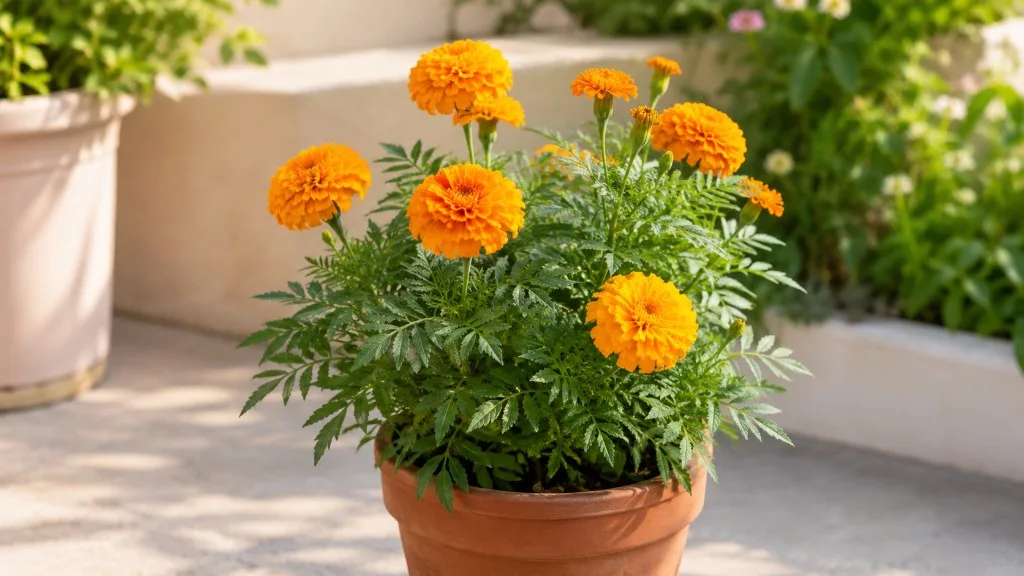
Do not confuse French or African marigolds with calendula, which is sometimes called English marigold. Calendula can attract beneficial insects and may function as a trap crop for aphids, but any plant used as a trap crop must be monitored and managed. If aphids build up on the flower row and you simply leave it beside the beans, you may be growing a pest nursery rather than protecting the crop.
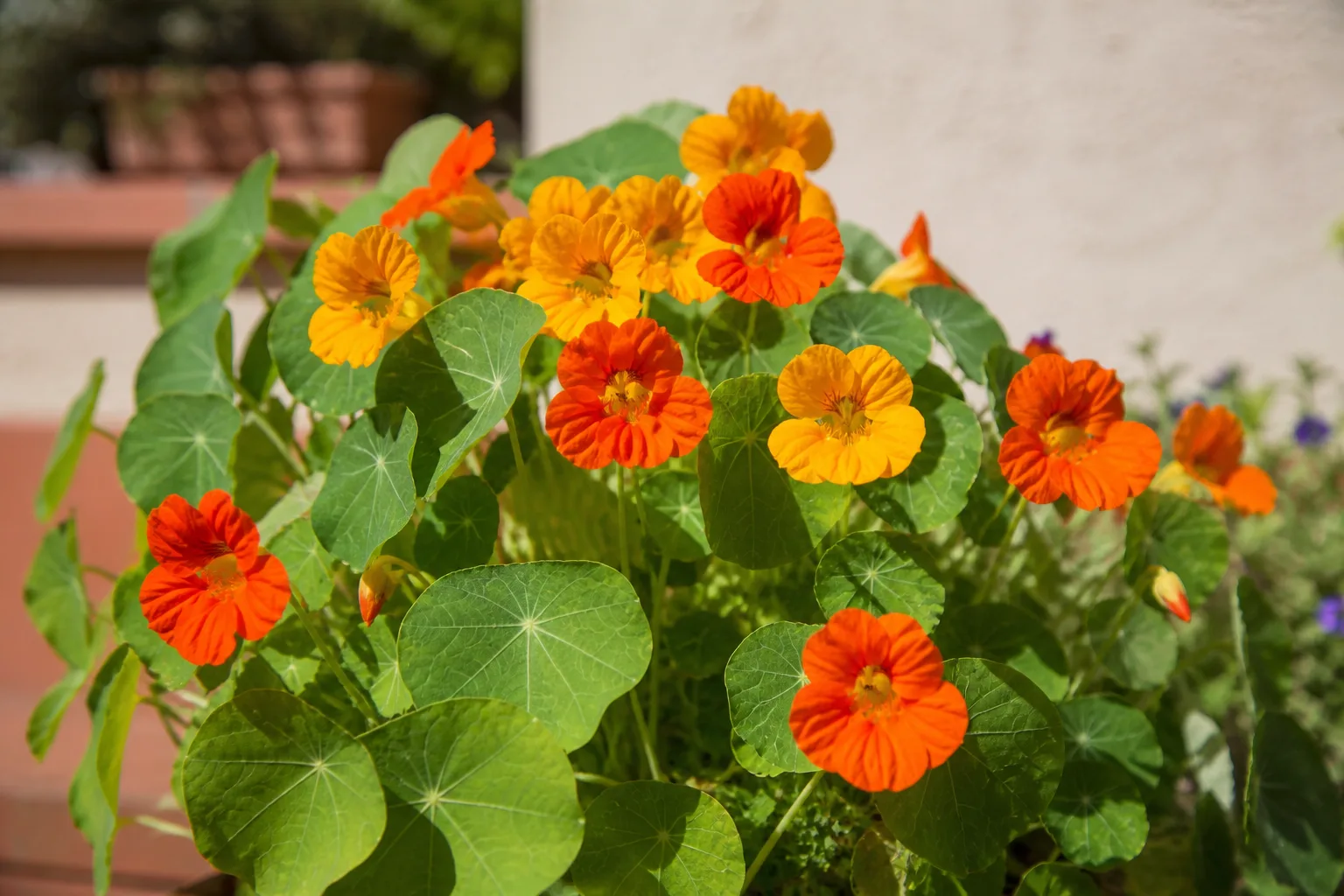
16. Nasturtiums. Nasturtiums bring edible flowers, broad leaves, and a trailing habit to the bed edge. They are often used as an aphid trap crop near beans, and the BBC Gardeners’ World companion-planting guide describes the pairing as a common practice. Give trailing types their own direction to spill, or they will climb into the bean support and turn harvesting into a knot.
Summer savory, rosemary, dill, and catnip as edge experiments
Summer savory is a traditional bean companion and stays smaller than many herbs, making it a sensible experiment at the bed edge. Rosemary can also share a sunny border, but its dry-site preferences conflict with the regular moisture beans need. Keep rosemary in a separate pot or a raised, sharply drained corner instead of watering the entire bed to suit both plants.
Dill and catnip can add flowers, scent, and habitat, but they are not automatic bean protectors. Dill becomes tall and can shade bush beans; catnip can spread and may attract neighborhood cats that flatten young plants. Use a pot or a contained edge for catnip, and let only a few dill stems flower so you gain habitat without surrendering the bed to self-sown seedlings.
The Oregon State University Extension companion-planting guidance makes the important distinction that strong-scented herb and flower pairings are popular but do not yet have enough research to support every traditional claim. That is the right mindset here: grow these plants because they have a second use, fit the site, or make the garden more diverse, then judge their pest effect by what you actually observe.
How to design the bed before planting
The same plant list can succeed in one garden and fail in another because the layout changes the light, water, and access. Draw the bed at mature size, not at seedling size, and include the path you need to harvest every other day during peak bean production.
Spacing, sunlight, and a support that will not fail
Use the seed packet as the final authority for the variety, but a practical starting point is 6 to 12 inches between bush-bean plants and about 4 inches between pole-bean seeds along a support. Oregon State’s home-garden guidance gives those same general spacing ranges and emphasizes that pole beans need a trellis or pole. Companion plants should sit outside the bean row far enough that mature leaves do not touch continuously.
Put the tallest crop on the north side of the bed in the Northern Hemisphere. A pole trellis, corn block, or sunflower row belongs where it will not cast its longest shadow across a low crop during the afternoon. If you garden in the Southern Hemisphere, reverse the direction; the rule is to keep the low crop on the equator-facing side of the tall support.
Anchor a trellis before planting. A bean teepee, cattle-panel arch, or rigid netting is preferable to a decorative stake that bends once pods begin to hang. Leave a gap below the lowest crossbar so you can mulch, inspect stems, and remove weeds without scraping the vines.
Water, fertility, timing, and crop rotation
Group companions by water needs. Beans, cucumbers, celery, and many brassicas can share a regular irrigation zone; rosemary, summer savory, and other Mediterranean herbs belong at a drier edge. Mulch the bean root zone to moderate moisture, but keep mulch a little away from the stems so wet material does not sit against the crown.
Do not overfertilize because a chart says beans enrich soil. Excess nitrogen can produce lush leaves at the expense of pods and can weaken the logic of growing a legume. Start with compost or a soil test, avoid disturbing bean roots once they are established, and leave healthy roots in the soil after harvest if you want their organic matter to contribute to the next crop.
Time companions around the bean harvest. Sow radishes and quick greens before beans shade the bed, finish peas before warm weather, and plant a second bush-bean row after the first crop is removed. Oregon State Extension also recommends avoiding overhead watering, removing dead plants, and rotating beans each year because crop residue and wet foliage can contribute to disease problems.
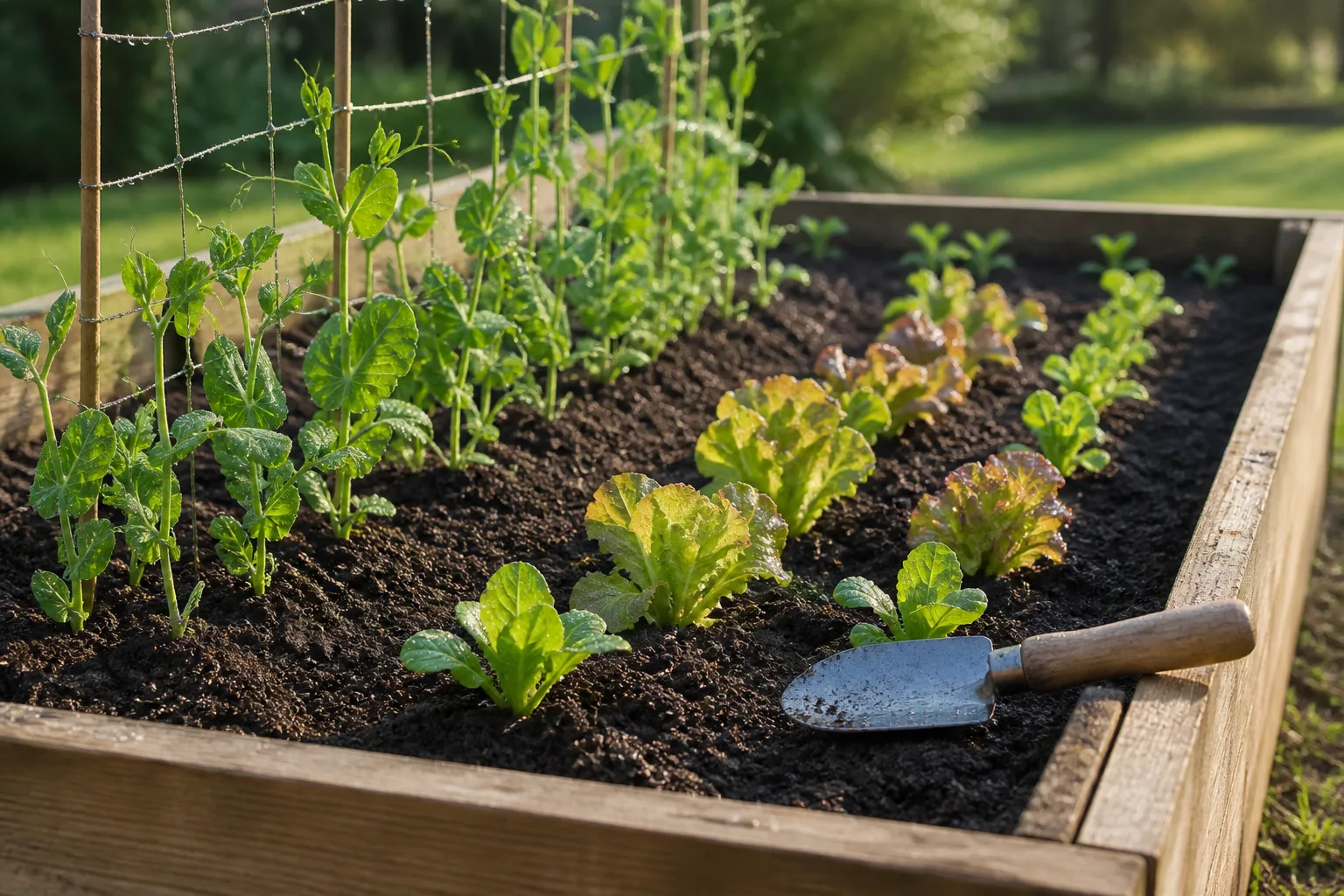
Rotation matters more than a companion chart when disease has become a recurring problem. Move beans to a different bed each year when possible, and do not turn the same crowded bean-and-companion strip into a permanent host block. A diverse bed can reduce the visual continuity of one crop, but it cannot erase soilborne disease or replace clean-up.
Plants to keep separate or treat cautiously
Onions and garlic, sunflowers, peppers, and aggressive spreaders
Onions, garlic, leeks, and shallots are frequently listed as poor neighbors for beans. University of Vermont Extension advises avoiding onions with peas and beans, but the exact chemical explanation repeated in many charts is not a settled home-garden fact. If you have plenty of room, separate alliums from beans because their irrigation schedules, root competition, and harvest timing are already different; if you have a small garden, a narrow gap and careful observation are more useful than panic over a hard boundary.
Sunflowers deserve distance from pole beans, especially when the bean is young. They can cast heavy shade, compete for water, and become difficult living supports. Allelopathy—the release of compounds that inhibit other plants—is a real research topic, but results vary by species, tissue, soil, and experiment; even Gardeners’ World notes that many “incompatible” pairings remain anecdotal. Treat sunflowers as a separate north-side feature, not a universal bean trellis.
Peppers can share a garden with bush beans when each has room, but pole vines can climb through and overwhelm the pepper. Mint, fennel, and other aggressive or strongly spreading plants are poor bed companions for a simpler reason: they can outcompete the bean or make the root zone impossible to manage. Use containers or a separate border for plants that spread faster than you can harvest.
What to do when pests still find your beans
If bean leaves look lacy or skeletonized, inspect the undersides before blaming a companion. Mexican bean beetle adults are copper-colored and ladybug-like; the larvae are yellow and spiny, and both stages feed between leaf veins. University of Maryland Extension notes that adults overwinter near plant debris, lay yellow egg clusters beneath leaves, and can produce one to three generations in a season.
Use a short integrated plan:
- Check the undersides of leaves twice a week once warm weather brings active growth. Look for yellow egg masses, yellow spiny larvae, copper-colored adults, and fresh skeletonized tissue.
- Cover young bean rows with insect netting or row cover after planting. The University of Delaware’s bean-pest guidance notes that common beans do not need insect pollinators to set pods, so a cover can remain in place when it is secured and checked regularly.
- Crush egg clusters and remove larvae by hand when the planting is small enough to inspect. Do not wait for marigolds or rosemary to solve an infestation that is already visible.
- Remove heavily infested plants and seal them according to local extension advice. Pull up spent beans after harvest and clear fallen foliage so the next generation has fewer places to persist.
- Rotate the bean block and avoid planting new beans immediately beside an old, declining row. If you use a pesticide, identify the pest first and follow the product label, crop restrictions, harvest interval, and local rules.
Healthy bean care still matters. Water at soil level, keep a mulch layer from touching stems, harvest pods frequently, and do not work among wet plants. A companion bed can make the garden more resilient and more productive, but the bean’s first defense is a well-spaced, well-monitored crop.
Conclusion
For most gardens, the best bean companion plants are corn used cautiously as support, peas as a cool-season predecessor, radishes and carrots as low crops, bush beans beside brassicas or celery, and marigolds or nasturtiums at the edge. Add potatoes, cucumbers, eggplant, chard, strawberries, summer savory, rosemary, dill, or catnip only when their mature size and water needs fit your bed.
Choose companions by function rather than folklore. A sturdy trellis, north-side placement, crop rotation, regular harvesting, and a plan for Mexican bean beetles will do more for your harvest than a crowded list of supposedly incompatible plants. Let flowers and herbs add diversity, use low crops to fill the open soil, and keep enough space to see what is actually happening in the bean row.



