The 6 Stages of Cucumber Plant Growth
Follow cucumbers from seed to harvest with a practical six-stage timeline, pollination checks, temperature guidance, and harvest cues.
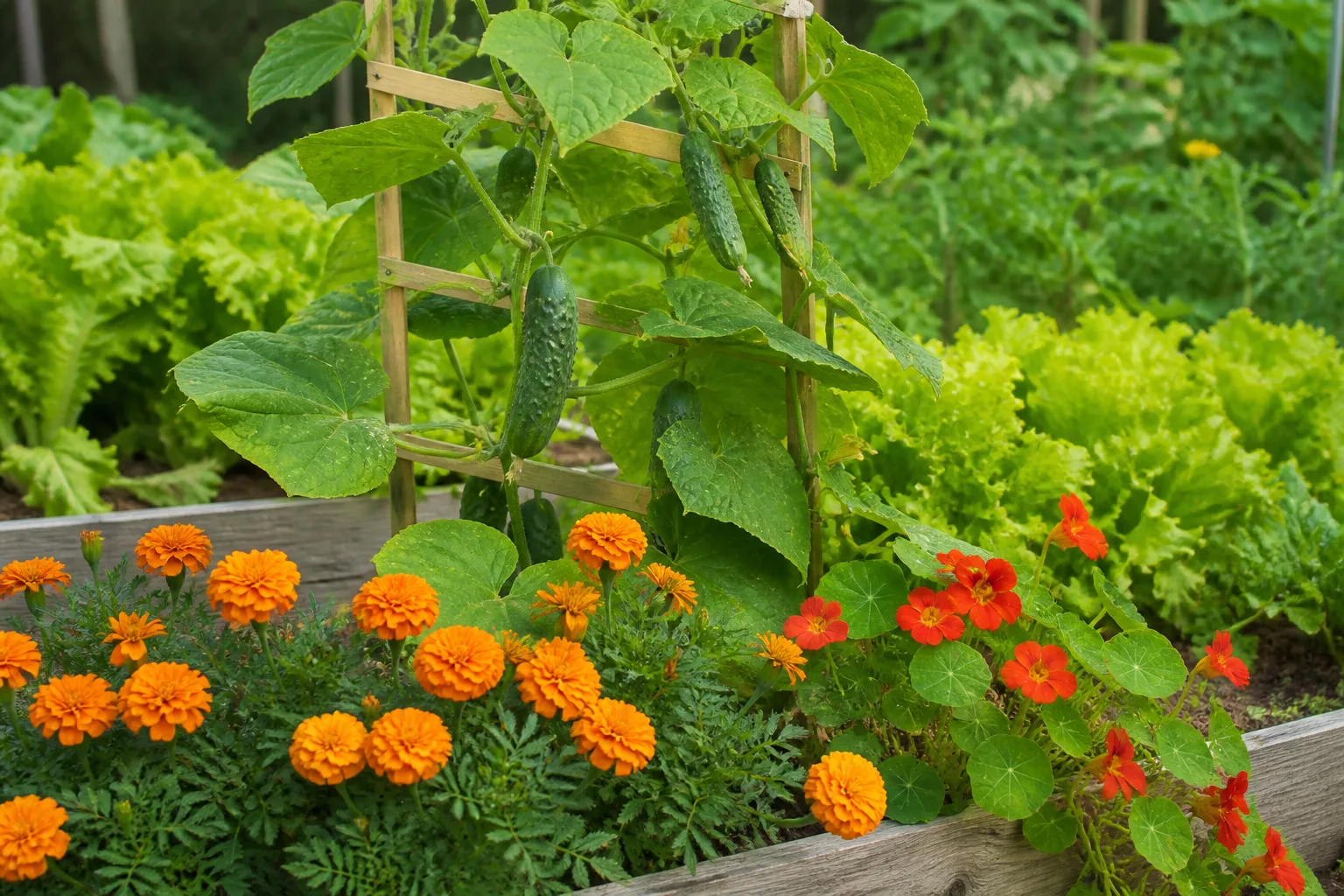
Most cucumbers move through six recognizable phases: germination, seedling growth, vine growth, flowering, fruit set, and harvest. The sequence is dependable, but the calendar is not. A cucumber planted in cold soil may sit still, while a warm, well-watered vine can go from first flower to harvestable fruit in little more than a week.
The useful way to track cucumber plant growth is to pair a rough timeline with visible cues. Look for the first cotyledons, the first true leaves, new runners and tendrils, flowers with or without a swollen ovary, and fruit that matches the size promised for your variety. That approach is more reliable than treating “50 to 70 days” as a deadline for every cultivar and climate.
The cucumber timeline at a glance
| Stage | What you see | Main job |
|---|---|---|
| 1. Germination | The seed coat splits and a shoot emerges | Keep the seed zone warm and evenly moist |
| 2. Seedling | Cotyledons appear, then true leaves | Give light, protect roots, and avoid cold |
| 3. Vine growth | Larger leaves, runners, and tendrils develop | Provide space, support, water, and airflow |
| 4. Flowering | Yellow male and female flowers open | Protect pollinators and identify flower type |
| 5. Fruit set | A tiny cucumber swells behind a female flower | Maintain steady moisture and successful pollination |
| 6. Harvest | Fruit reaches the variety’s eating size | Pick often and remove fruit carefully |
Why the calendar shifts by variety and weather
Count from the event your seed packet uses—usually sowing or transplanting—and treat the listed days to maturity as an estimate. Pickling cucumbers often reach a usable size before long slicing varieties, bush types may begin bearing earlier than large vining types, and parthenocarpic greenhouse varieties follow a different pollination pattern from standard outdoor cucumbers.
Temperature has an outsized effect. Cornell University’s cucumber growing guide describes cucumbers as warm-season plants, with emergence taking roughly 3 to 10 days depending on soil warmth, while Utah State University Extension recommends planting when soil reaches about 65°F. If nights are cold, the plant may remain alive but make little progress, so a calendar estimate becomes misleading.
Stage 1: Germination begins underground
Germination starts when the seed absorbs water and the embryo resumes growth. The seed coat splits, a small root anchors downward, and the shoot pushes upward. In good conditions, cucumber seeds commonly emerge in about 3 to 10 days; Utah State University Extension gives a 5-to-10-day range at 65–85°F, and Seed Savers Exchange lists 4–10 days.
The first decision is where to sow. Direct sowing is usually the least stressful option because cucumbers dislike root disturbance. Sow into loose, well-drained soil after frost danger has passed and the soil has warmed. Cornell notes that seed may not germinate below 50°F and recommends waiting until soil is around 65°F; that is a better guardrail than planting by the calendar alone.
Keep the top inch of soil evenly moist during this stage, but do not turn the seedbed into mud. A crusted or repeatedly dried surface can produce a patchy row. If you are starting indoors, use a container that allows the root ball to move with minimal disturbance and do not hold seedlings in a small cell for weeks after they are ready.
The calendar also starts differently for a direct-sown crop and a transplant. A purchased transplant has already completed germination and part of the seedling stage, but it may lose several days if its roots are disturbed. A container crop can move faster because its soil warms sooner, then slow down just as quickly when the pot dries out. Mark the date of emergence or planting and record the first flower; those two notes make next season’s timing much more useful than a generic number.
The seed does not need fertilizer as soon as it is planted. Its first food supply is stored inside the seed. Fertilizer becomes relevant after the plant has leaves and is actively growing; feeding a dormant or barely emerged seed only increases the chance of salt stress without solving a temperature or moisture problem.
Stage 2: Seedlings build their first leaves
The seedling stage begins when two smooth, rounded cotyledons unfold above the soil. These are seed leaves, not the final leaf shape. Soon after, the first true leaves appear with more recognizable cucumber texture and shallow, serrated edges. The plant is still small, but its leaves are now becoming the engine that powers the vine.
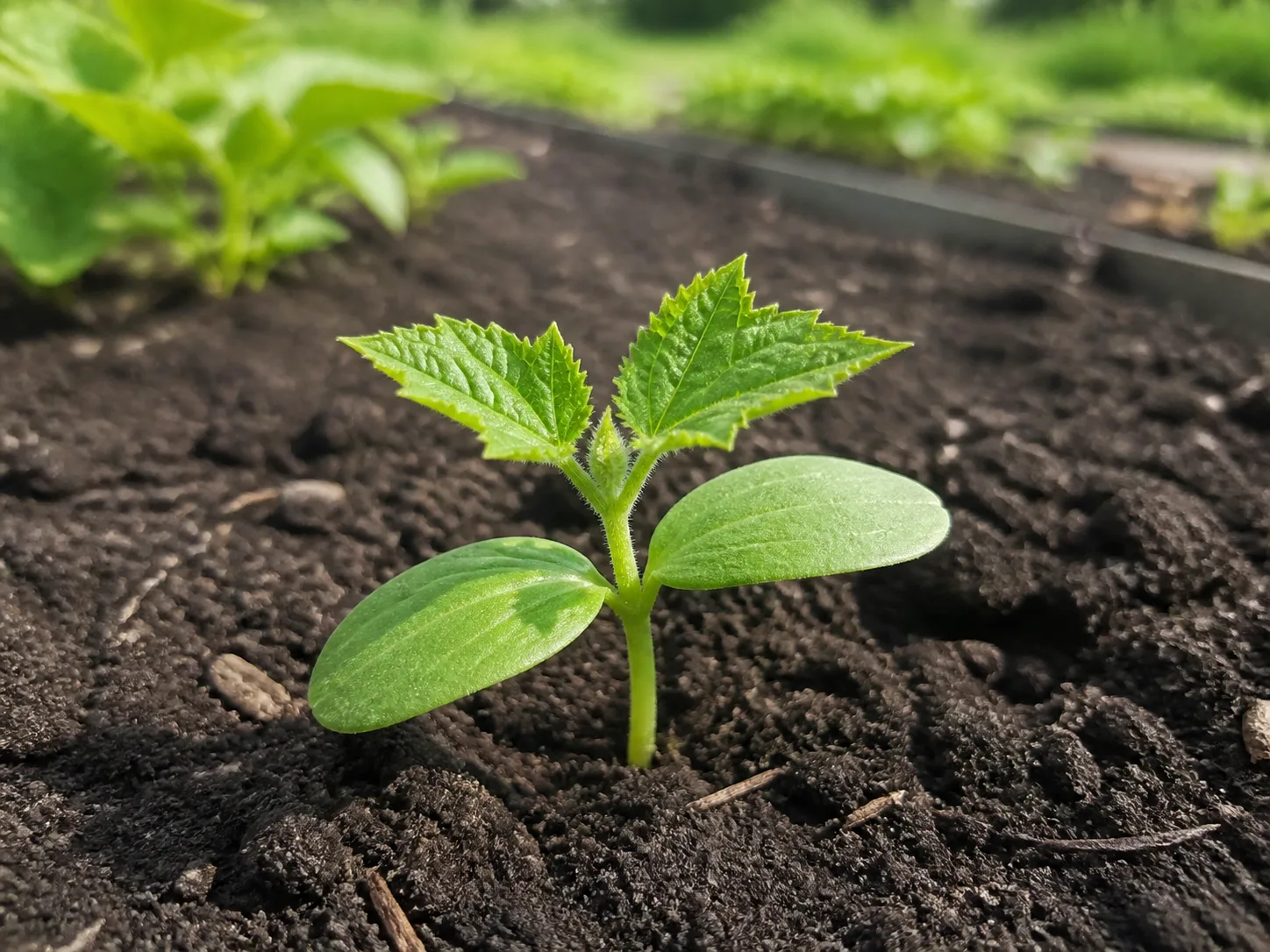
Give seedlings the brightest light available and protect them from cold wind, frost, and saturated soil. A stretched, pale seedling usually needs more light; a seedling that suddenly wilts in wet soil may have damaged roots rather than a simple thirst problem. Water at the base and let excess water drain freely.
Thin direct-sown seedlings according to the variety and the growing system. A trellised row can be much closer than a sprawling hill, while bush cucumbers need room to form a short canopy. Remove extra seedlings by snipping them at the soil line instead of pulling and disturbing the roots you plan to keep.
When a seedling is ready to transplant
If you start cucumbers indoors, move them outside after frost danger has passed, the soil is warm, and the plant has a small but sturdy root system. Utah State University Extension describes transplants with two or three mature leaves as ready to move, while Cornell warns that one- or two-true-leaf plants transplant best and should be hardened off carefully.
Those recommendations are not contradictory: the safest transplant is a young plant that has established roots but has not become root-bound. Harden it over several days by increasing outdoor exposure gradually. Plant at the same depth, handle the root ball gently, and water it in. A transplant that stalls for a few days after rough handling has suffered a setback; adding extra fertilizer immediately will not repair broken roots.
Stage 3: Leaves, runners, and tendrils take over
Once the seedling is established, cucumber growth becomes visibly faster. Leaves enlarge, the main stem lengthens, side shoots appear, and curling tendrils begin searching for something to grip. The plant shifts from building a compact seedling to capturing enough light to support flowers and fruit.
This is the stage where space and support matter most. A vining cucumber can sprawl several feet, shade its neighbors, and develop poor airflow if it is left in a dense heap. A trellis is not essential, but it keeps foliage and fruit off the soil, makes pests easier to spot, improves harvest access, and uses vertical space. Seed Savers Exchange’s cucumber guide recommends trellising for those reasons and suggests close spacing for supported plants, while ground-grown hills need much more room.
Water deeply at the root zone rather than wetting the leaves every day. The surface can look damp while the deeper root zone is dry, especially in a container or raised bed. Mulch helps conserve water after the soil has warmed; keep it a little away from the stem so the crown does not stay constantly wet.
Feed based on the soil and the plant’s growth, not on a weekly race to make the vine larger. Utah State University Extension recommends a sidedress after runners develop and before flowering, while Cornell notes that pale foliage can indicate nitrogen deficiency. A lush vine with very few flowers may be receiving too much nitrogen, too little sun, or simply be too young.
Why early trellising changes the whole season
Install the trellis before planting or while seedlings are small. Pushing stakes or panels into the bed after the root system has spread can damage roots and compact the soil. Guide young vines toward the support without tying them tightly; tendrils will do much of the gripping once they make contact.
The best support is sturdy enough to hold wet foliage and a crop of fruit in wind. Trellising cannot fix a plant that is chronically dry or diseased, but it can reduce soil contact, improve air movement, and make daily inspection practical. If you let vines sprawl, place fruit on mulch or another clean barrier rather than directly on wet soil.
Support also changes how you read the plant. On a trellis, a new leaf, tendril, flower, or fruit is easier to see, so you can catch a wilted shoot or cucumber beetle before the canopy hides it. On the ground, growth can look slower simply because runners spread sideways; judge progress by new leaves and flower production, not by the distance between the plant and the end of the bed.
Stage 4: Flowers reveal the next decision
Yellow flowers mark the transition from vegetative growth to reproduction. Standard outdoor cucumbers usually produce separate male and female flowers on the same plant. The first flowers are often male, so a run of blossoms without fruit is not automatically a problem. Female flowers commonly appear later and are easy to identify because a tiny cucumber-shaped ovary sits behind the bloom.
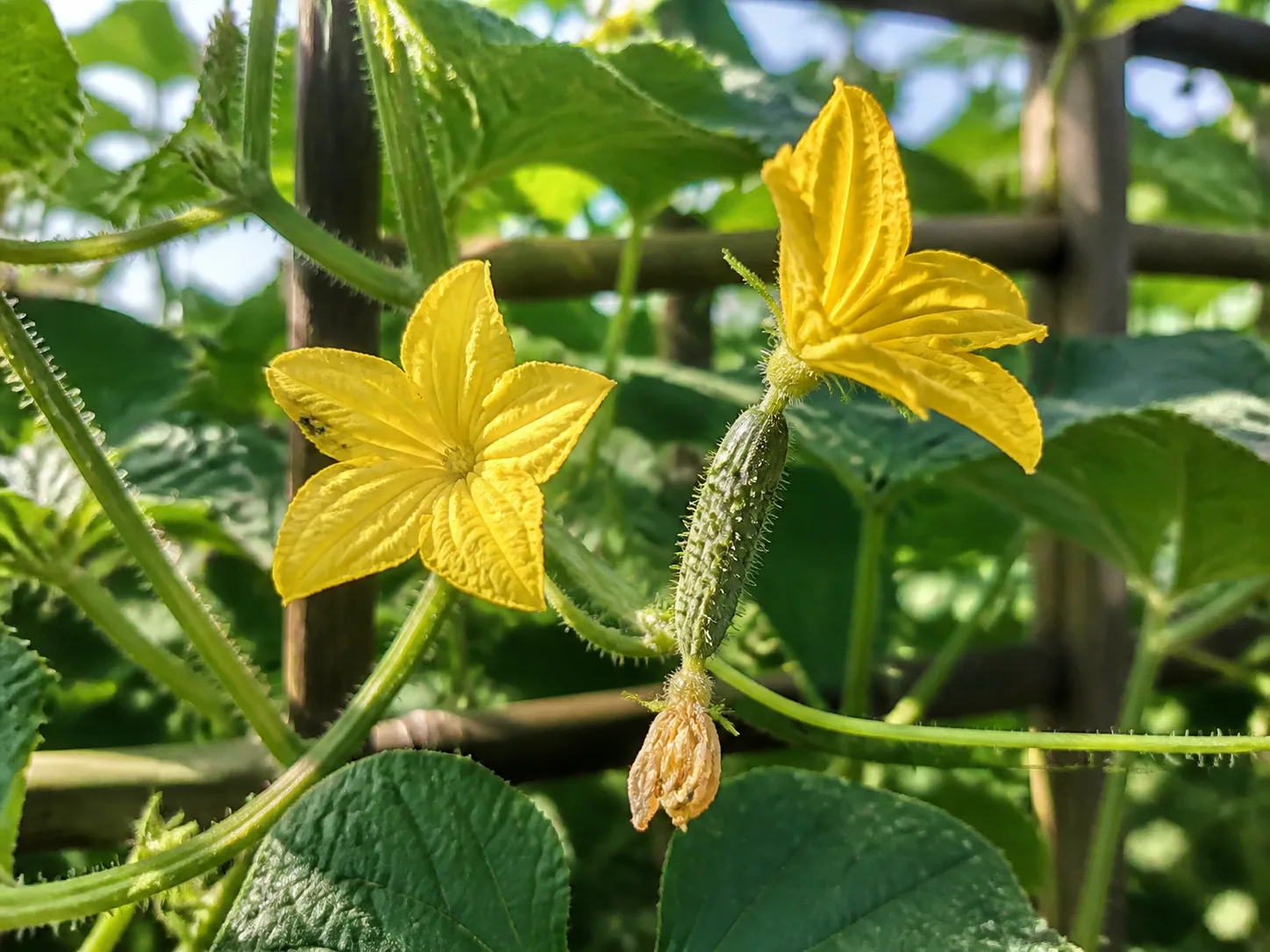
Do not remove early male flowers just because they cannot become cucumbers. They supply pollen for later female flowers. Also check the seed packet before assuming that every plant needs a bee visit: gynoecious varieties produce mostly or only female flowers and need a compatible pollen-producing plant, while parthenocarpic varieties can set fruit without pollination in the conditions for which they were bred.
Male, female, monoecious, and gynoecious flowers
The flower’s stem is the quickest clue. A male flower usually sits on a thin stem with no swollen cucumber behind it. A female flower has a miniature fruit between the stem and the flower. In a monoecious variety, both flower types occur on one plant. In a gynoecious variety, the plant is predominantly female, so the packet may identify a pollinator variety that must be planted nearby.
Pollinators do the transfer outdoors, but cool weather, heavy rain, closed greenhouse sides, and insecticides can interrupt the process. The Utah State guide notes that row covers need ventilation as temperatures rise and should be removed once plants begin flowering; a cover that protects a young seedling can become a barrier to pollinators and a heat trap at bloom time.
If several female flowers appear and then yellow and drop, inspect conditions before blaming the plant. Look for a lack of male flowers or pollinators, prolonged rain, cold nights, extreme heat, water stress, and a variety that requires a pollinator. Do not keep adding fertilizer as a substitute for pollen.
Stage 5: Pollinated flowers become tiny cucumbers
After a successful pollination, the small ovary behind the female flower continues to swell. The flower may wilt and fall away while the fruit remains attached. This is the moment when the plant’s water supply, root health, leaf area, and pollination success come together.
The first fruit may be only an inch or two long, but it can grow quickly in warm weather. Check the vine every day or two. A tiny cucumber that stays firm and enlarges is progressing; one that turns yellow, shrivels, or drops often was not pollinated or was stressed before it could develop.
Water consistently through fruit set. Utah State University Extension advises deep irrigation and warns that water stress can contribute to bitter, pointed, or misshapen fruit. The practical rule is to check the root zone and water deeply when it is beginning to dry, adjusting for container size, heat, wind, rain, and plant canopy rather than following a rigid “once a day” schedule.
Keep leaves as dry as practical when watering and give the vine room to breathe. Wet foliage that stays damp overnight, crowded growth, and soil splash can increase disease pressure. A trellis, drip line, soaker hose, or careful morning watering is more useful than spraying the canopy repeatedly.
How to protect fruit set from water and heat stress
Mulch the soil after it has warmed, inspect containers more often than garden beds, and use shade only as a response to truly excessive heat—not as a way to keep a full-sun crop permanently dim. In hot weather, a plant may wilt briefly in the afternoon and recover by evening; check the soil before watering again so you do not replace heat stress with waterlogged roots.
If a female flower is open in a greenhouse or a place with no insect activity, hand-pollination is an option. Use a clean, soft brush to pick up pollen from a male flower and touch it to the center of the female flower, preferably in the morning while the flowers are open. Harvest to Table’s flowering and pollination guide explains the ovary clue and the difference between monoecious and gynoecious cucumbers.
Hand-pollination is not a cure for every fruit-set problem. It will not correct a damaged root system, severe heat, missing compatible pollen in a gynoecious planting, or a disease that is already shutting down the vine. If hand-pollinated fruit still fails, review the seed packet and the plant’s growing conditions instead of repeating the same brush stroke.
Stage 6: Harvest by variety, not color alone
Cucumbers are usually eaten as immature fruit, so “mature” means the right eating size for your variety—not a yellow, fully seed-filled fruit. Utah State University Extension says many cucumbers are ready about 5 to 7 days after flowering, but the packet’s expected size and the fruit’s intended use are better guides than that number alone.
Pickling types are often harvested small and slender. Slicing types may need more length and a fuller body. Some varieties are pale, white, striped, round, or yellow when ready, so a deep green color is not a universal test. The reliable cues are the seed packet, firm texture, the fruit’s expected diameter and length, and a taste test from the first few fruits.
Overgrown cucumbers can become seedy, tough, watery, or bitter, and leaving them on the vine signals that reproduction is complete. Check plants daily once harvest begins. Cut the stem with clean pruners or a knife rather than twisting and pulling, and avoid knocking off nearby flowers or damaging the vine.
Do not wait for every cucumber on the plant to reach the same size. Harvest pickling fruit while it is slender, take slicing fruit when it reaches the packet’s target, and leave only the smallest developing fruit to size up. A single oversized cucumber can hide behind leaves and continue drawing resources while several younger fruits are forming nearby.
The daily picking habit that keeps vines productive
Frequent harvest does not create fruit by magic, but it removes large sinks of water and nutrients and prevents the plant from putting all its remaining energy into an oversized fruit. Tui Garden’s cucumber growing guide likewise recommends regular picking and cutting fruit from the vine.
Harvest in the morning when the plant is hydrated and the fruit is cool. Handle cucumbers gently; bruises can become soft spots in storage. Keep varieties separated if you are saving seed: the fruit eaten for lunch is immature, while a cucumber reserved for seed must remain on the vine much longer and eventually change color as the seeds mature.
Troubleshoot a cucumber plant that is stuck between stages
Match the symptom to the first correction
Seeds do not emerge: Check soil temperature, planting depth, surface moisture, and seed age. Cold, wet soil can delay emergence or rot a seed before it sprouts. Re-sowing into a warm, well-drained bed is often more effective than waiting indefinitely.
Seedlings are tall and pale: Increase light and reduce crowding. A weak stem will not become sturdy because it is fertilized; it needs stronger light, moving air, and careful watering.
The vine grows leaves but no flowers: Confirm that it receives full sun and is not being pushed by excess nitrogen. Give it time if it is still young, but do not let a sprawling vine become so crowded that flower inspection and airflow are impossible.
Flowers appear but no fruit develops: Identify the flowers first. A male-only flush can be normal early on, while female flowers that drop point toward pollination failure, cold or wet weather, heat, water stress, or a missing pollinator variety. Check the packet before hand-pollinating.
Tiny cucumbers turn yellow or fall off: The fruit may not have been pollinated, or the plant may be under water stress, root-stressed, diseased, or overloaded by a competing mature fruit. Remove failed fruit, correct the root-zone moisture, and inspect flowers and leaves for the next several days.
Fruit is pointed, curved, or bitter: Irregular shape is often a stress signal rather than proof that the plant needs a special additive. Check for uneven moisture, poor pollination, overcrowding, and fruit that has stayed on the vine too long. Correct the growing condition and harvest the next fruit at the variety’s intended size before changing the fertilizer program.
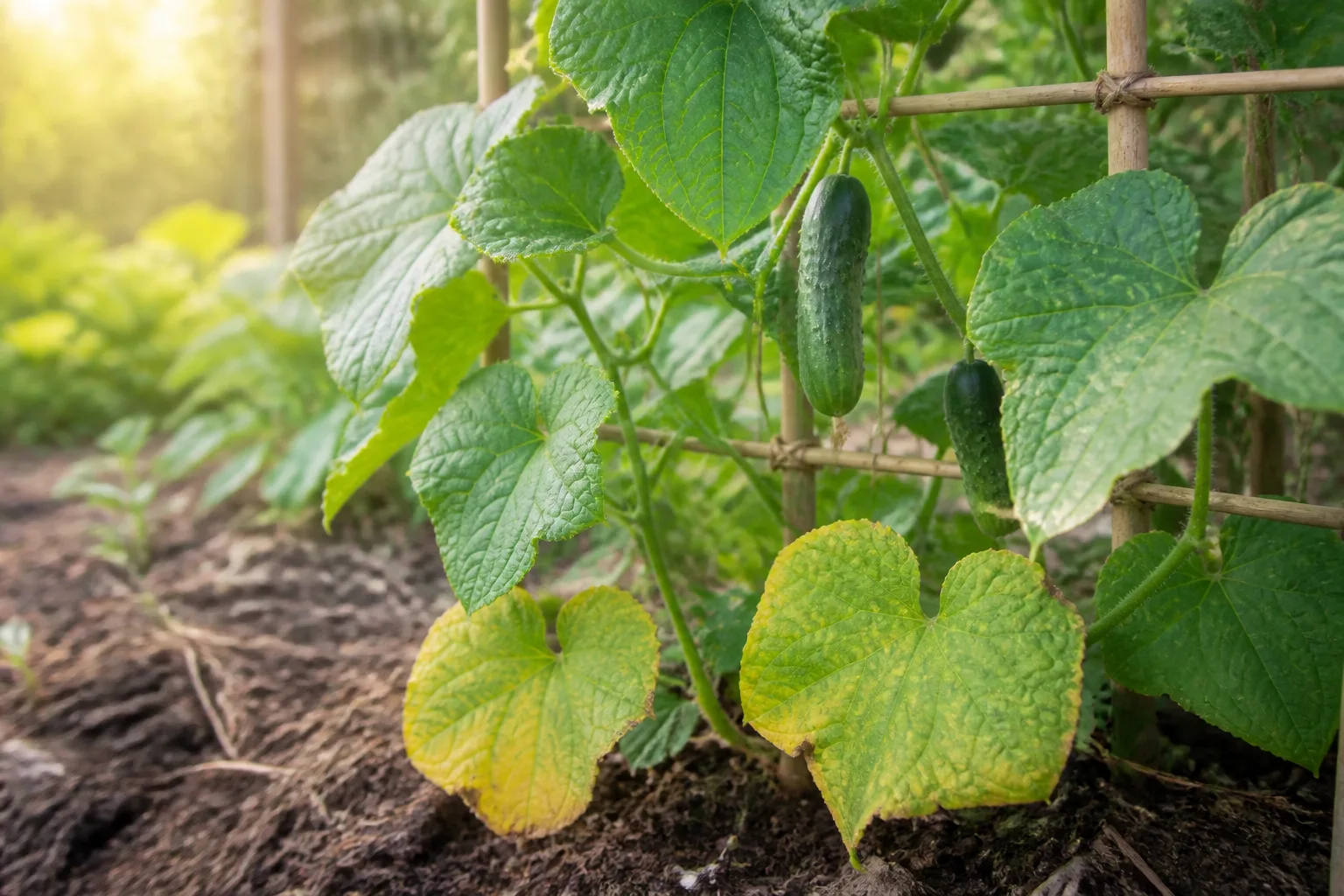
Leaves yellow from the bottom upward: Older leaves can age naturally, but widespread yellowing can also follow overwatering, poor drainage, nitrogen deficiency, or disease. Feel the soil, inspect roots if the plant is container-grown, and look for spots, wilt, insects, or a sticky residue before adding fertilizer.
The plant wilts suddenly on one vine: Cucumber beetles can transmit bacterial wilt, and a damaged root or stem can create a similar pattern. Look for striped or spotted beetles and stem symptoms. Remove a severely affected plant rather than composting diseased material, and improve pest exclusion and crop rotation for the next planting.
Cornell’s guidance recommends crop rotation, disease-resistant varieties, good spacing, and trellising to reduce recurring pest and disease pressure. Those measures do more over a season than reacting to one yellow leaf with a spray or a scoop of fertilizer.
Conclusion: read the plant, then use the calendar
Cucumber plant growth is easiest to understand as a sequence of visible checkpoints. Warm soil starts germination; cotyledons and true leaves establish the seedling; runners and tendrils build the vine; flowers announce the pollination window; a swollen ovary confirms fruit set; and the harvest stage arrives when each fruit reaches its variety’s eating size.
Use the seed packet for the first estimate, but let the plant tell you whether it is on schedule. Keep young roots warm and undisturbed, trellis early when you can, water the root zone steadily, protect pollinators, and inspect flowers and fruit often. When the first cucumbers are ready, pick them cleanly and keep checking—the next stage is not the end of the plant’s work, but the beginning of its repeat harvest.



