Does Vinegar Kill Ants? Limits, Safety, and Better Fixes
Vinegar won't kill an ant colony, but it can erase trails fast. Learn when it helps, the safest mix, and what UC IPM-backed baits work better indoors.
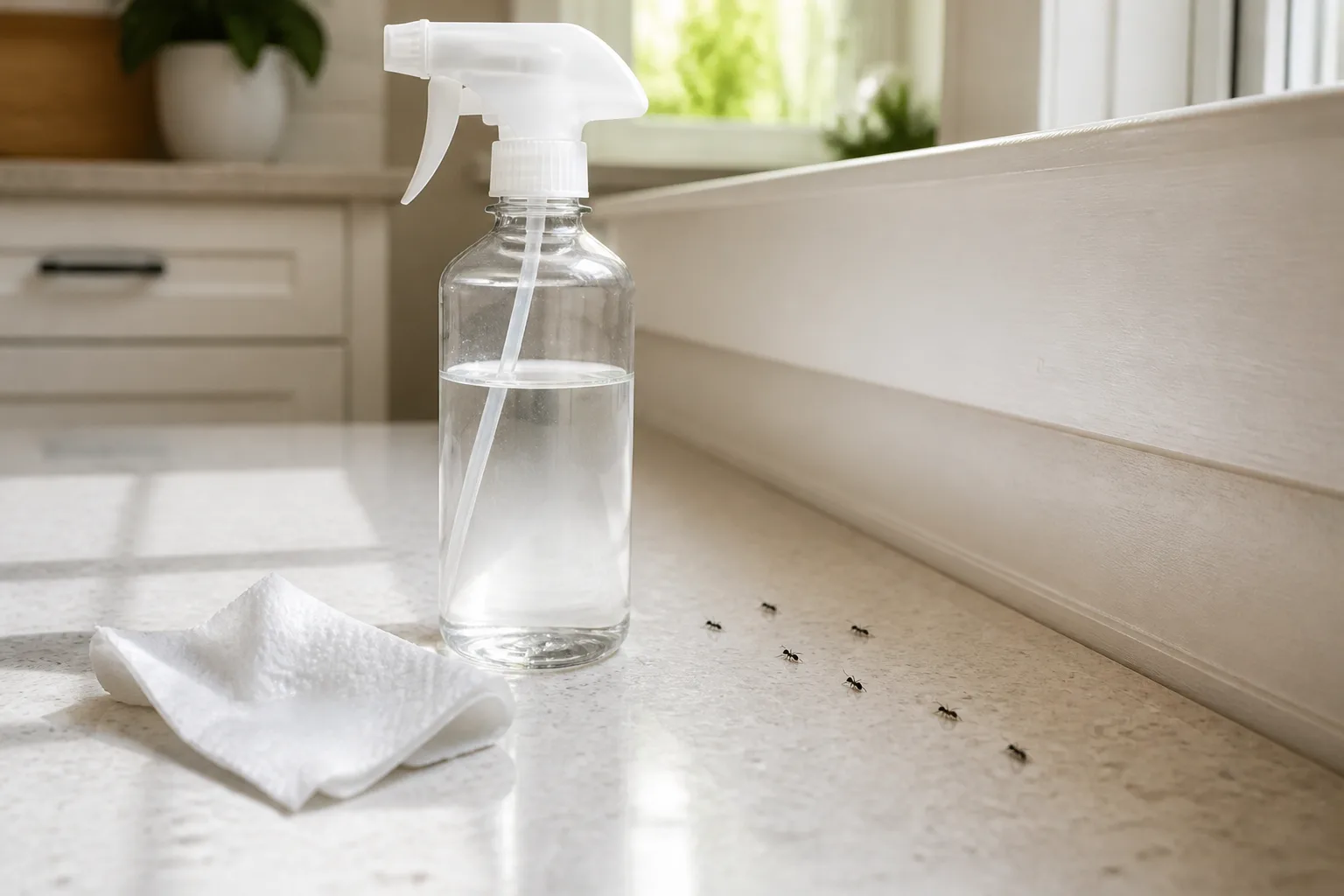
You spot a line of ants marching across the kitchen counter, grab the vinegar bottle, and spray. The trail scatters. For a few hours, the counter looks clear. Then the ants return from a different crack, often in greater numbers. That cycle is exactly why pest professionals treat vinegar as a trail tool, not a colony killer.
If your goal is to stop the visible march long enough to clean, seal entry points, and set bait, vinegar can help. If your goal is to eliminate the nest behind the wall, vinegar will disappoint you. The difference is not whether vinegar “works”—it is whether you are trying to disrupt communication or destroy a colony.
The Short Answer: Vinegar Disrupts Trails, It Does Not Eliminate Colonies
Vinegar does not reliably kill ants at the colony level. Household white vinegar is roughly 4–6% acetic acid diluted in water, according to the National Pesticide Information Center’s vinegar guidance. That acidity can irritate or drown individual ants you hit directly, but it does not reach the queen, brood, or hidden nest chambers where reproduction happens.
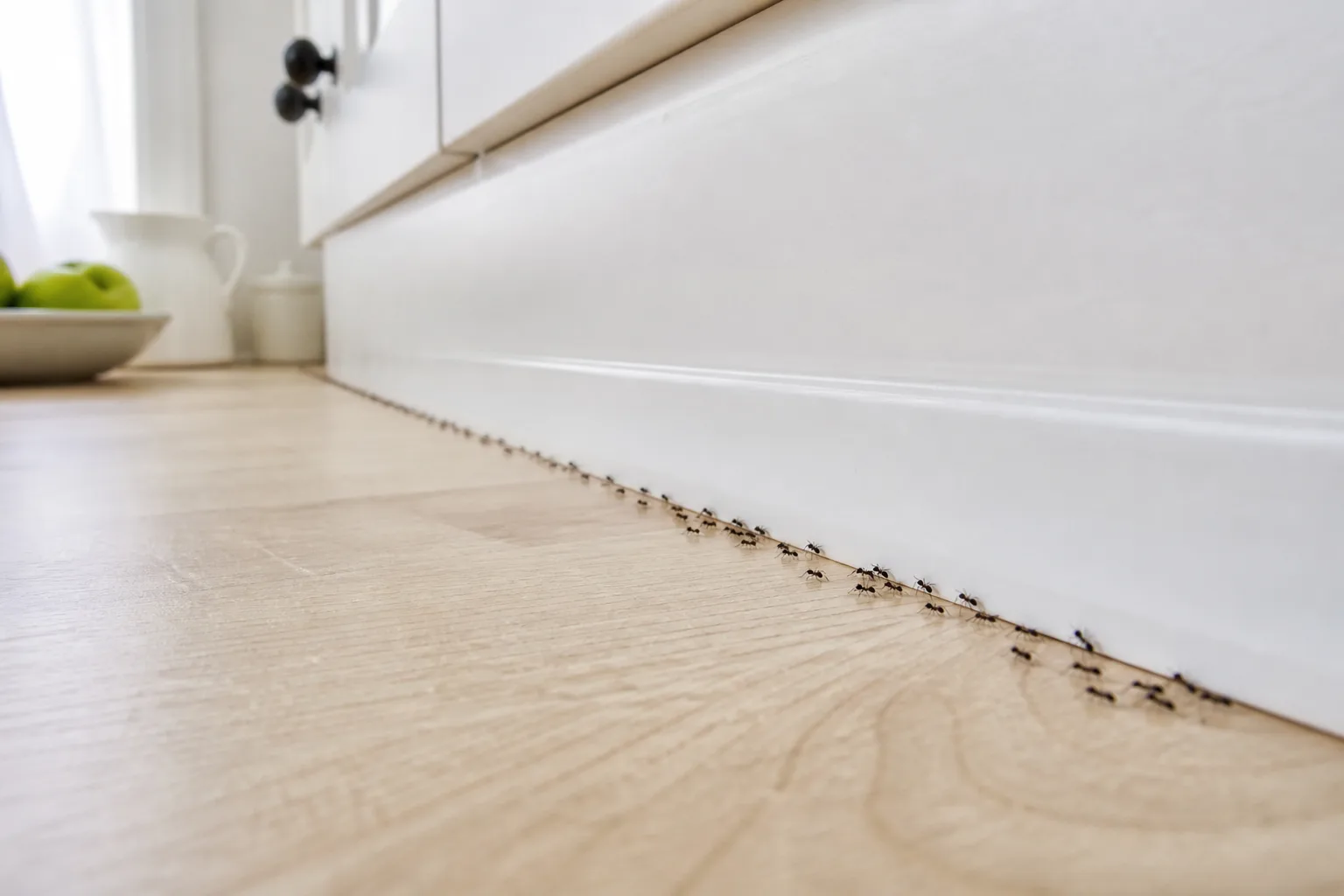
What vinegar does well is mask pheromone trails—the invisible chemical lines foragers lay down so other workers can find food and find their way home. Wipe or spray a trail, and nearby ants lose the map. They wander, regroup, and eventually establish a new route if the food source and nest remain.
University of California Integrated Pest Management emphasizes that spraying ants indoors does not prevent more from entering and that baits, not perimeter sprays, are the primary tool for colony reduction. Vinegar fits the “clean up the trail” step in that framework. It does not replace bait.
What Happens When You Spray Ants With Vinegar
When vinegar contacts ants, two things occur at once. The acetic acid can damage the waxy outer layer of exoskeleton on direct contact, which may kill a few workers immediately—especially if you use undiluted vinegar in a puddle. More importantly for your kitchen, the strong odor overwhelms trail pheromones on the surface.
That is why the line seems to “break.” You have not removed the nest. You have removed the GPS. Scouts will eventually lay down fresh pheromones once the vinegar smell fades, which can happen within hours on a warm counter or open floor.
How Ant Pheromone Trails Work (and Why Vinegar Temporarily Breaks Them)
Ant colonies run on chemistry. When a forager finds sugar syrup under the coffee maker or grease along the stove backsplash, it eats, returns to the nest, and deposits pheromones along the route. Other workers follow that reinforced trail, creating the disciplined lines that feel so alarming indoors.
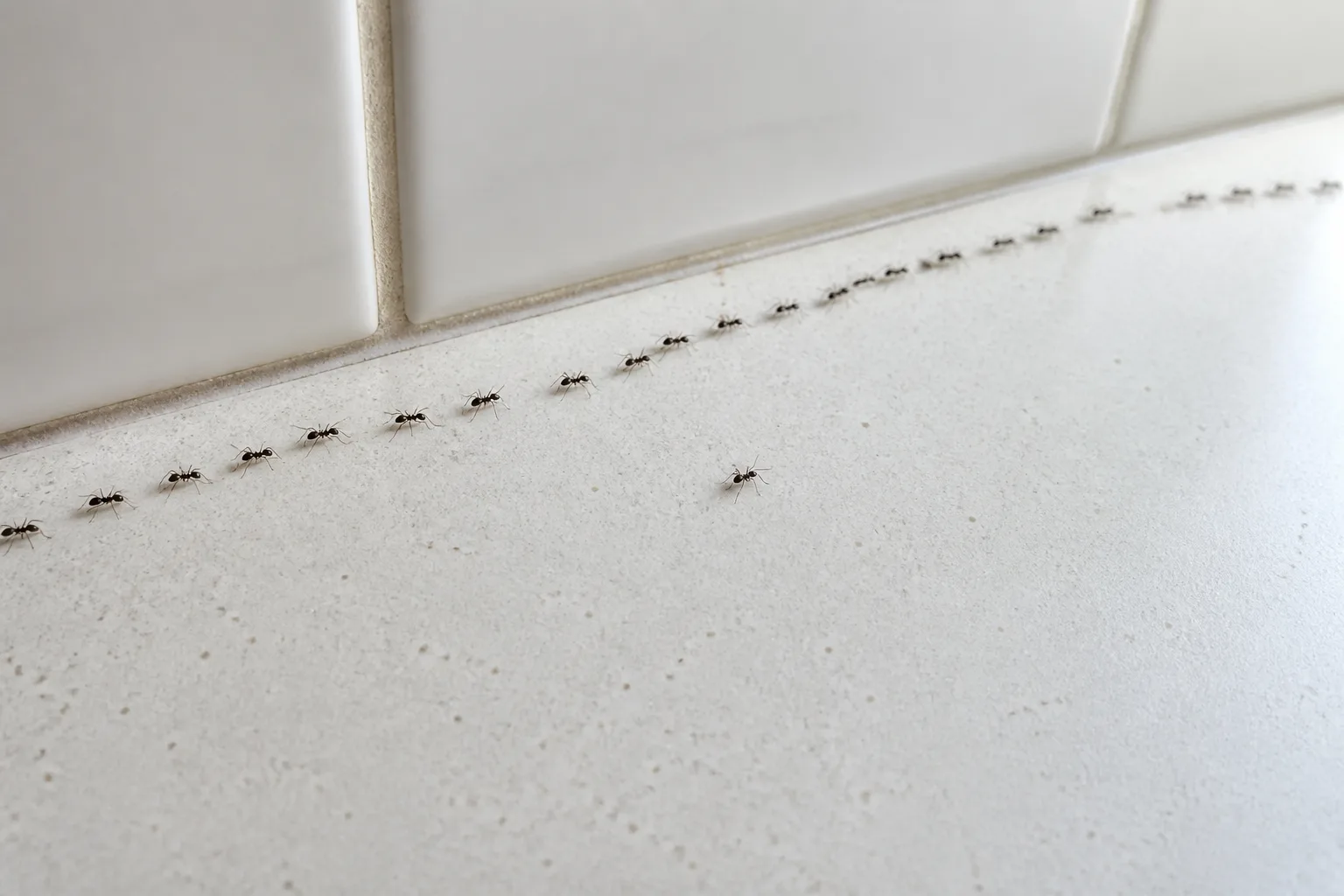
Strong-smelling substances—including vinegar, citrus, peppermint, coffee, and many essential oils—can disrupt those chemical cues. UC IPM’s ant management guidance recommends removing invading ants with soapy water or cleaning products as soon as they appear specifically to eliminate scent trails. Vinegar serves a similar function with a sharper smell.
The limitation is structural. Trail disruption is a delaying tactic. Unless you remove the food attractant, block the entry point, and address the colony with a slow-acting bait, new trails appear. Think of vinegar as erasing chalk marks on a sidewalk while the chalk factory—the nest—keeps operating.
When Vinegar Is Worth Using—and When It Wastes Your Time
Use this quick decision filter before you soak the baseboards:
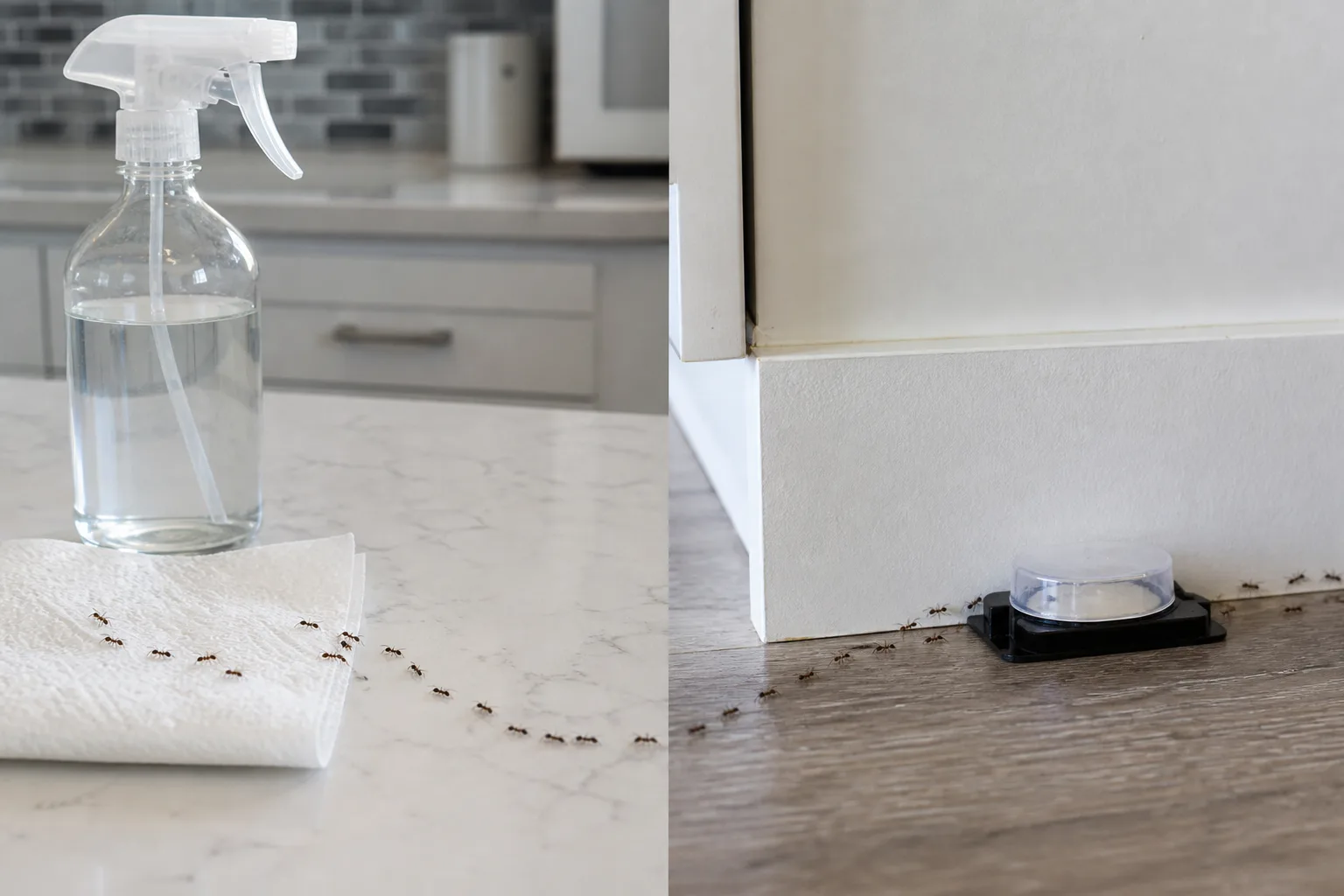
| Your situation | Vinegar? | Better first move |
|---|---|---|
| Fresh trail across counter; no bait out yet | Yes, to wipe trail | Clean surface, remove food, then set bait |
| Ants around pet food bowl once | Yes, short-term | Elevate bowl, clean floor, bait outdoors if nest is outside |
| Recurring trails every morning for a week | No as sole treatment | Identify entry + bait; vinegar alone is looping |
| Carpenter ants in wood | No | Document damage; professional inspection |
| Fire ant mounds or painful stings | No | Species-specific control; keep people away |
| You already placed gel or liquid bait | No | Sprays and strong odors can repel foragers away from bait |
Good Uses for Vinegar in an Ant Emergency
Vinegar earns its place in the first 30 minutes of a kitchen invasion. Mix equal parts white distilled vinegar and water in a spray bottle. Spray the active trail—not random walls—and wipe with a cloth or paper towel. Follow with plain soapy water if the surface is greasy; ants often follow lipid residues as well as sugar.
Vinegar also helps when you need a non-residual cleaner on hard surfaces after removing food debris. It is not a registered pesticide, but it can be part of sanitation when you are not simultaneously running a bait program.
Situations Where Vinegar Will Not Help
Vinegar fails as a standalone strategy when:
- The nest is indoors and large. Odorous house ants, pharaoh ants, and some moisture-loving species can nest inside wall voids. Trail sprays do not penetrate there.
- You are treating wood-destroying carpenter ants. They require nest location and often professional intervention; repellents scatter workers and complicate inspection.
- You have stinging fire ants. Outdoor mound treatments and safety planning differ completely from pantry vinegar.
- You need long-term control. Vinegar’s smell dissipates; colonies do not.
If ants have been recurring for more than a few days, shift effort from the spray bottle to exclusion, sanitation, and bait—the sequence UC IPM recommends for lasting control.
The Safest Household Vinegar Spray Recipe and How to Apply It
For trail cleanup and short-term deterrence, keep the recipe simple:
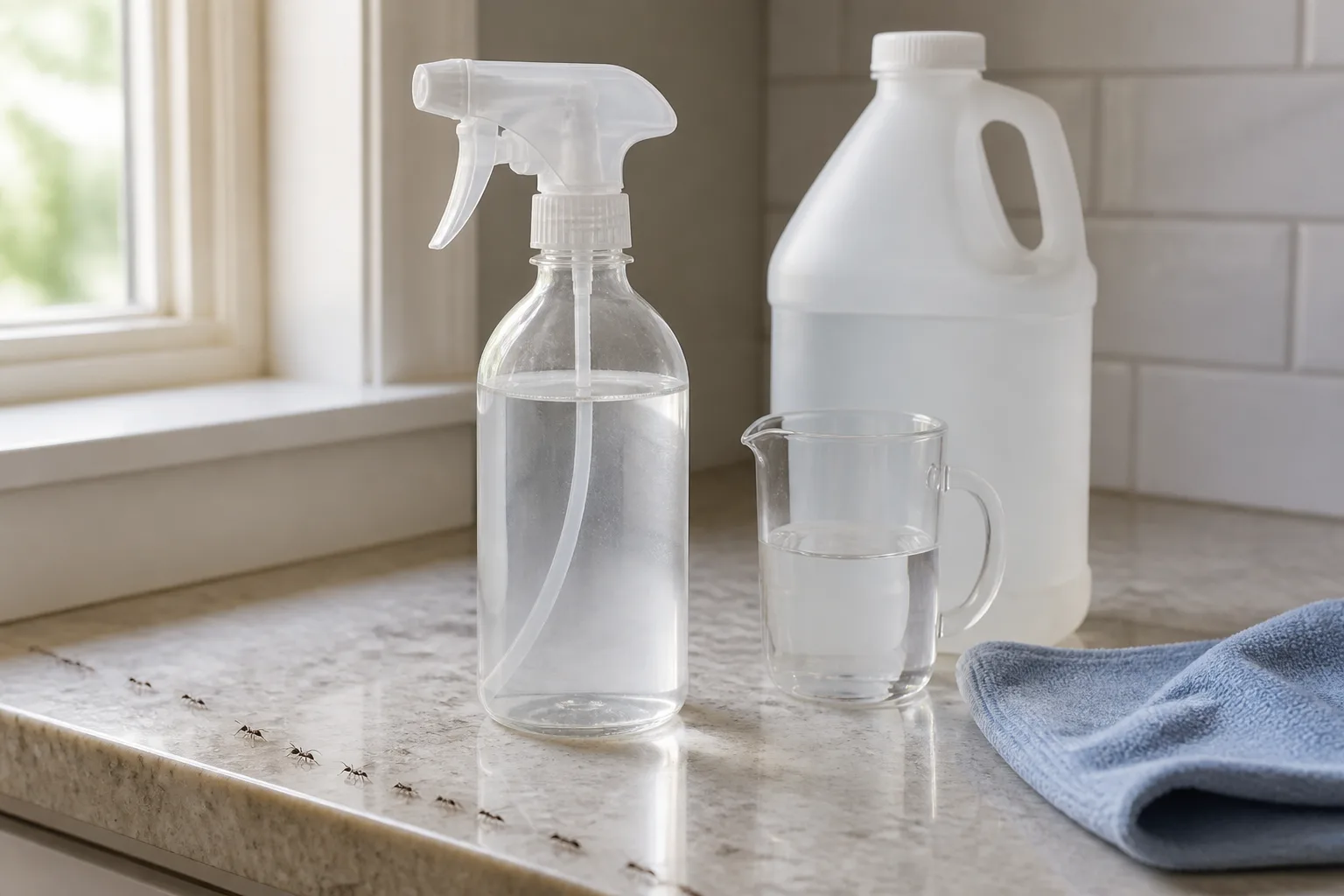
- Mix 1 part white distilled vinegar with 1 part water in a labeled spray bottle.
- Spot-treat the trail and entry edge where ants cross, not entire rooms.
- Wipe after 30–60 seconds on food-prep surfaces; do not leave pools on grout overnight.
- Reapply only when new scouts appear; daily blanket spraying is unnecessary and can damage some finishes.
Optional: a drop of dish soap helps the solution cling to smooth surfaces. Avoid mixing vinegar with bleach—those combinations release irritating chlorine gas.
Do not reach for horticultural vinegar (often 20% acetic acid or higher) for indoor ants. NPIC notes that concentrations above household strength can be extremely irritating or corrosive to skin and eyes and are formulated for weed control, not kitchen pest management. The higher the concentration, the higher the risk—with little added benefit for trail wiping.
White Vinegar vs Apple Cider Vinegar vs Horticultural Vinegar
White distilled vinegar is the practical choice: high acidity, minimal staining, and predictable 4–6% acetic acid. Apple cider vinegar can work for trail wiping but may leave color or sugar residues that attract other pests if not rinsed. Horticultural vinegar belongs outdoors, with protective gear, and is inappropriate for routine indoor ant trails.
Surfaces, Stone, and Finish Risks You Should Know
Acetic acid can etch or dull marble, limestone, unsealed stone, and some waxed floors. Test an inconspicuous spot first. On stainless steel, rinse after wiping to prevent dulling. Natural stone countertops near cooktops are a common casualty of aggressive vinegar spraying—soap and water often suffice for trail removal on those surfaces.
How Long Vinegar Repels Ants—and Why They Come Back
Expect hours, not days, of disruption on a busy kitchen counter. Warm air, cooking, and ventilation dissipate odor quickly. In a closed cabinet crevice, the smell may linger slightly longer, but foragers from an established colony will still recruit.
Ants come back because:
- The nest is intact and continues producing workers.
- Food or moisture remains available.
- Entry points are still open.
- New pheromone trails form once the mask fades.
That is not vinegar “failing.” It is vinegar doing a temporary job while the underlying attractants remain. The fix is not stronger vinegar. It is removing attractants and adding slow bait so workers carry toxicant to the colony.
What Works Better Than Vinegar for Indoor Ants
Slow Baits Beat Contact Sprays for Colony Control
UC IPM explains that ant baits combine attractants with a slow-acting toxicant so foragers survive long enough to share bait with nestmates, larvae, and queens. That mouth-to-mouth transfer is how you shrink a colony instead of endlessly killing replacement workers on the counter.
Effective bait active ingredients include borates, fipronil, avermectin, and hydramethylnon, among others—always choose a product whose label matches your site (indoor, outdoor, or both). Prepackaged bait stations are the easiest entry point for most homes. Liquid borate baits in refillable stations can be more effective for large outdoor colonies such as Argentine ants, though they take five to ten days before you see fewer ants, and complete control may take several weeks.
For a deeper look at how boron-based baits work, see our guide on does borax kill ants. If you prefer a desiccant barrier approach outdoors, does diatomaceous earth kill ants covers dry-application limits.
Sanitation and Trail Cleanup Without Sabotaging Bait
Sequence matters. On day one:
- Remove the food source (sticky jar ring, crumbs, pet kibble on the floor).
- Wipe trails with soapy water or a mild vinegar solution if no bait is out yet.
- Place bait stations along travel routes or near entry points per label directions—not on top of the hottest part of the trail if the label advises otherwise.
- Stop spraying repellents near bait. Vinegar, strong essential oils, and contact insecticides can repel ants away from bait they need to consume.
UC IPM also warns against using pyrethroid sprays outdoors on hardscapes near foundations; those products can pollute waterways and do not solve indoor trails. Keep indoor control focused on vacuuming or wiping scouts plus bait.
Vinegar vs Bait vs Contact Spray: A Quick Comparison
| Method | Best for | Kills queen/colony? | Speed | Downsides |
|---|---|---|---|---|
| Vinegar trail wipe | Breaking visible lines; quick cleanup | No | Minutes (visual); hours (odor) | Smell; surface risk; ants reroute |
| Slow bait | Colony reduction | Often yes, when accepted | Days to weeks | Requires patience; pets/kids need placement care |
| Contact spray | Killing foragers on sight | No | Immediate on contact | Does not reach nest; may repel bait foragers |
| Professional service | Recurring species, wood damage, stings | Yes, with correct diagnosis | Varies | Cost; still needs your sanitation help |
Vinegar belongs in the first row. Lasting relief usually requires the second.
Species Matters: Carpenter Ants, Sugar Ants, and Fire Ants
Not all ants respond the same. Odorous house ants and many small kitchen invaders are bait-responsive if you remove competing sweets. Pharaoh ants may need protein or grease baits and are notorious for budding into multiple nests when disturbed—avoid broad repellent spraying.
Carpenter ants excavate wood and signal moisture or decay problems. Vinegar does not treat structural infestations. Look for coarse sawdust, rustling in wall voids, and large black or bicolored workers. Call a professional if damage is suspected.
Fire ants sting and require outdoor mound strategies and safety planning—vinegar is irrelevant. Our fire ant control guide covers a different playbook entirely.
If ants are outdoors in garden beds but not damaging plants, tolerance may be smarter than warfare. See how to get rid of garden ants without killing plants before you treat soil around vegetables.
Prevention Checklist: Exclusion, Moisture, and Food Storage
Defense reduces how often you reach for any spray:
- Caulk cracks around windows, doors, pipe penetrations, and foundation gaps.
- Trim vegetation so branches do not bridge to the roof or siding.
- Store firewood away from the house and off the ground.
- Fix leaks under sinks, around windows, and in gutters; many ants seek moisture.
- Use airtight containers for pantry goods; wipe honey jars and syrup caps.
- Take trash out frequently and rinse recycling bins.
- Wash pet bowls and sweep kibble debris daily during invasions.
UC IPM notes that ants outdoors often tend aphids and scale for honeydew, which can worsen plant problems. If ants are climbing stems, inspect for sap feeders before you blame the ants alone.
Safety Around Kids, Pets, and Sensitive Lungs
Household vinegar is safer than many synthetic sprays, but it is not harmless. Acetic acid fumes can irritate eyes and airways, especially in small bathrooms with poor ventilation. Keep children and pets out of the area until surfaces are dry.
If you move to bait stations, read the label for placement height and tamper resistance. The American Association of Poison Control Centers notes that ant baits generally contain low concentrations of insecticide, but ingestion by toddlers or pets still warrants a call to Poison Control—save the product label.
Never leave any pest product, vinegar spray included, in an unlabeled bottle. NPIC’s broader pesticide safety guidance applies even to “natural” cleaners: natural does not automatically mean safe, especially at high concentrations.
Your First-Week Ant Plan (30 Minutes, Day 3, Day 7)
First 30 minutes: Remove obvious food. Wipe trails with soapy water or a 50/50 vinegar solution. Vacuum scouts along baseboards. Place labeled bait stations on the path to entry, not inside food cabinets unless the label allows it.
Day 3: Check bait consumption. If ants ignore bait, try a different attractant type (sugar vs protein) per UC IPM’s species notes. Refresh wiped areas only if new trails bypass bait. Do not add vinegar near active bait.
Day 7: If traffic is unchanged, inspect outdoors for trailing along the foundation, under mulch, or around downspouts. Consider a refillable outdoor bait station for heavy species. Persistent indoor activity with wood shavings or electrical buzzing warrants professional inspection.
Other pantry myths—baking soda, cinnamon, and coffee grounds—share vinegar’s core weakness: they may annoy or distract foragers without reliably killing the nest. Use them only as adjuncts, not substitutes for bait.
For a full indoor workflow beyond vinegar, our how to get rid of ants guide walks through identification, bait selection, and when to escalate.
When to Call a Pest Control Professional
DIY bait and vinegar cleanup handle many seasonal kitchen invasions. Call a licensed professional when:
- Ants return every season despite consistent baiting and exclusion.
- You see large workers and wood debris, suggesting carpenter ants.
- Anyone experiences allergic reactions or painful stings.
- Ants nest inside electronics, wall voids, or insulation you cannot access.
- You rent and need documentation for landlord-required treatment.
Professionals should prefer baits and targeted treatments over monthly perimeter sprays, per UC IPM’s recommendations for residential service. The EPA’s DIY ant control guidance also stresses sanitation, sealing entry points, and using baits before broad spraying. Your job still includes sanitation and sealing—vinegar will not replace that partnership.
Conclusion
Using vinegar to kill ants is a bad idea if you expect colony death. Using vinegar to erase a trail, clean a food line, and buy time while you deploy slow bait and fix entry points is a smart, low-toxicity move—when you understand its limits.
Keep household vinegar at a 50/50 dilution, protect stone and sensitive finishes, and stop spraying once bait is down. Measure success by fewer ants over a week, not by how many die on contact. When trails keep returning, the nest—not the vinegar—needs your attention.