9 Low-Maintenance Indoor Trees for Small Spaces
Find low-maintenance indoor trees for apartments and small rooms, with honest notes on light, watering, pruning, and which picks need extra space.
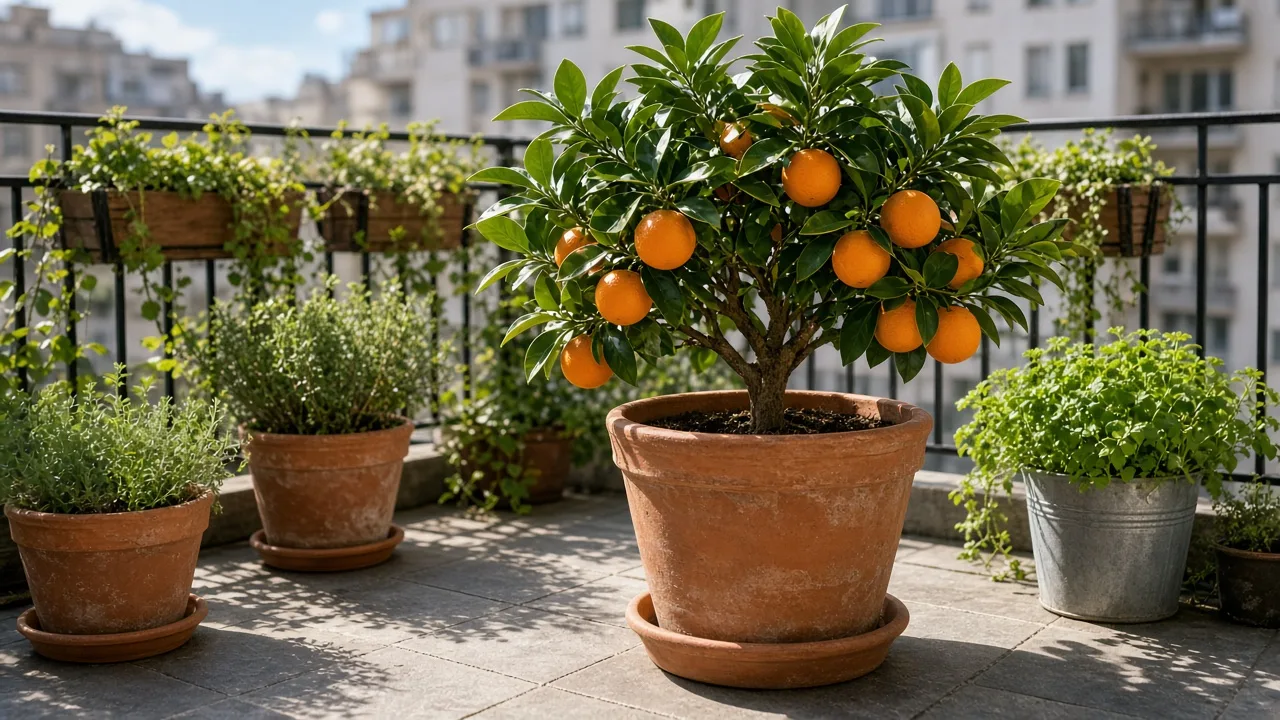
An indoor tree can make a room feel finished without turning it into a jungle. The trick is to shop for growth habit and mature behavior, not the height of the plant on the day you bring it home.
“Indoor tree” is a useful decorating category, not a promise that a species stays miniature. Some plants on this list are true trees or palms that can live in containers; others are tree-shaped houseplants selected because they grow slowly, tolerate ordinary home conditions, or respond well to pruning. A container limits root space, but it does not cancel a vigorous plant’s genetics.
The best choice depends on three things: how much light the spot receives, how often you can check soil moisture, and how much vertical and horizontal room you can spare. Start with those constraints, then choose a plant whose natural habits already resemble the result you want.
What counts as an indoor tree in a small home?
For a living room, entryway, bedroom, or office, an indoor tree usually means a floor plant with a woody trunk, cane, or palm-like crown. It may be one large stem, several canes, or a leafy canopy rather than a botanical tree in the strict sense. That distinction matters because many “dwarf trees” sold for patios need seasonal outdoor sun, winter protection, or dormancy and will not be happy beside a radiator year-round.
The reliable small-space strategy is to buy a naturally moderate grower, keep it in a pot with a real drainage hole, and accept a little maintenance to preserve its shape. The Royal Horticultural Society recommends slow-growing or compact choices for container trees and warns against putting a small plant into an oversized container; the same logic protects indoor roots from staying wet too long. RHS container-growing guidance is a useful reference when a “tree” is really an outdoor specimen you plan to move seasonally.
Choose by light and growth habit first
Measure the light, not the plant label
“Bright indirect light” is not a room category. A plant several feet from a bright window may receive far less usable light than one directly beside the glass, especially behind a sheer curtain. Watch the spot over a day: note the direction of the window, whether direct sun reaches the leaves, and whether a building or tree blocks the sky.
If a plant grows tall and thin, leans toward the glass, or makes much smaller new leaves, assume light is the first suspect. Move it closer to a bright window before increasing fertilizer. A grow light can rescue a dim location, but it is better to choose a plant that naturally fits the light you already have.
Give the tree a size budget
Measure the space from the pot’s footprint to the ceiling, then leave clearance for new growth and for turning the pot. A tall plant that fits today but blocks a walkway, touches a curtain, or cannot be lifted for watering is not low-maintenance in practice.
Look for a named compact cultivar when available, but treat “dwarf” as a relative term. Rootstock, pruning, pot size, light, and time all change the result. The most useful purchase question is not “How tall is this now?” but “How tall and wide is this likely to become in this container, and can I prune it without ruining its form?”
That fit-first approach also works for ordinary apartment houseplants: Savvy Gardening’s apartment-plant guide puts mature size, light, and care demands ahead of an impulse purchase. For an indoor tree, add one more question: can you physically move the pot to a sink, shower, or brighter window when the routine changes?
Also separate height from bulk. A narrow yucca can be taller than a rounded money tree and still feel smaller in a tight room because it uses less floor width. A parlor palm may stay below the ceiling but spread its fronds into a walkway, while a single-cane dracaena can occupy the same height with a much smaller footprint. Look at the plant from above as well as straight on, and measure the widest leaves, not just the pot. This simple floor-plan check prevents the common mistake of choosing a plant that fits vertically but makes the room harder to use.
1. Dwarf umbrella tree (Schefflera arboricola)
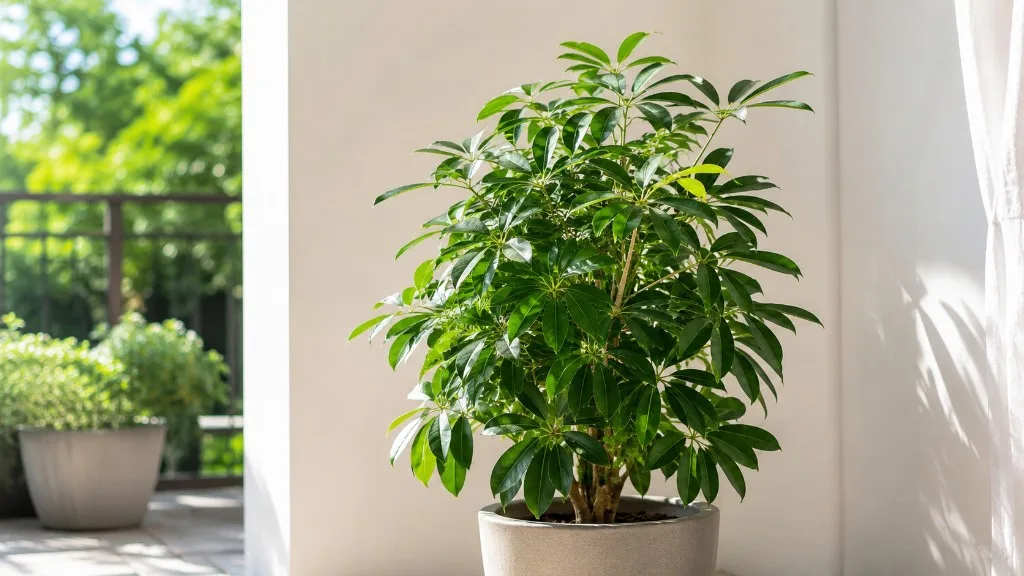
The dwarf umbrella tree is one of the best all-around choices for a first indoor tree. Its leaflets form a rounded canopy on flexible stems, and it can be kept as a single-trunk standard or allowed to fill out from the base. Bright, filtered light produces denser growth, while a lower-light room may keep it alive but encourage a looser, more top-heavy shape.
Let the upper layer of potting mix dry before watering thoroughly, then empty the saucer. Do not keep adding small drinks because the surface looks dry while the lower pot remains wet. Pinch or shorten the longest stems in the growing season to encourage branching; this is more effective than waiting until the plant has reached the ceiling.
Choose it when you want a leafy silhouette and can offer bright to medium-bright light. Skip it for a dark corner or if you want a plant that can be ignored for weeks.
2. Money tree (Pachira aquatica)
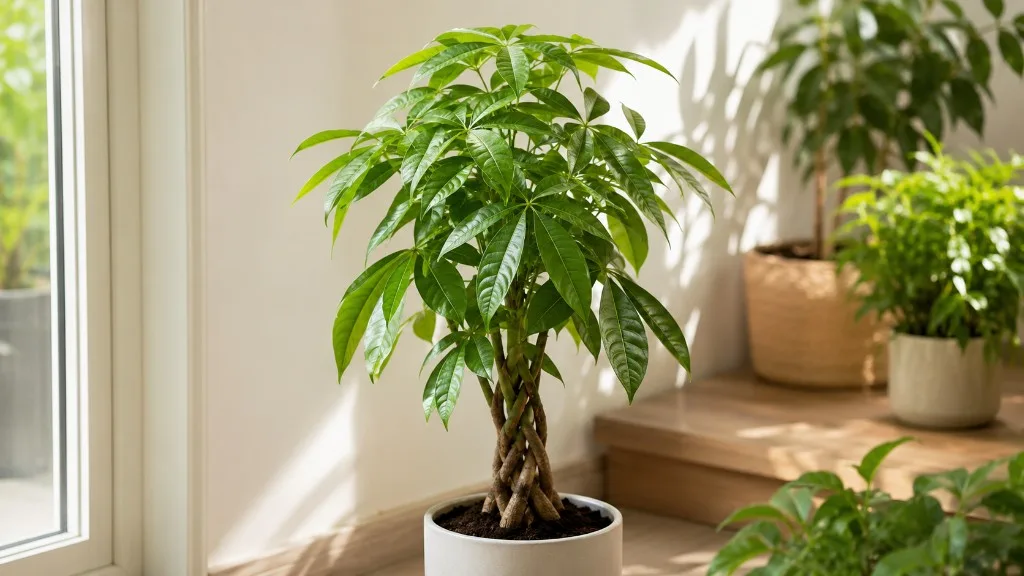
Money trees have a clear trunk-and-canopy look, especially when sold with braided stems. They are forgiving about ordinary indoor humidity and can recover from an occasional missed watering, but they are not a license to keep the root ball wet. Place one in bright, indirect light and rotate it every week or two so the crown does not lean.
Water when the top portion of the mix is dry, and make sure the pot drains quickly. If the plant sits in a decorative cachepot, lift the nursery pot out to water and let it drain before returning it. That simple step prevents the hidden reservoir of water that causes many “easy” money trees to decline.
A money tree is a strong pick for a medium-bright room where you want height without an aggressive, sprawling canopy. Select a smaller braided specimen if you have a low ceiling, and prune new shoots rather than repeatedly cutting thick, old branches.
3. Corn plant (Dracaena fragrans)
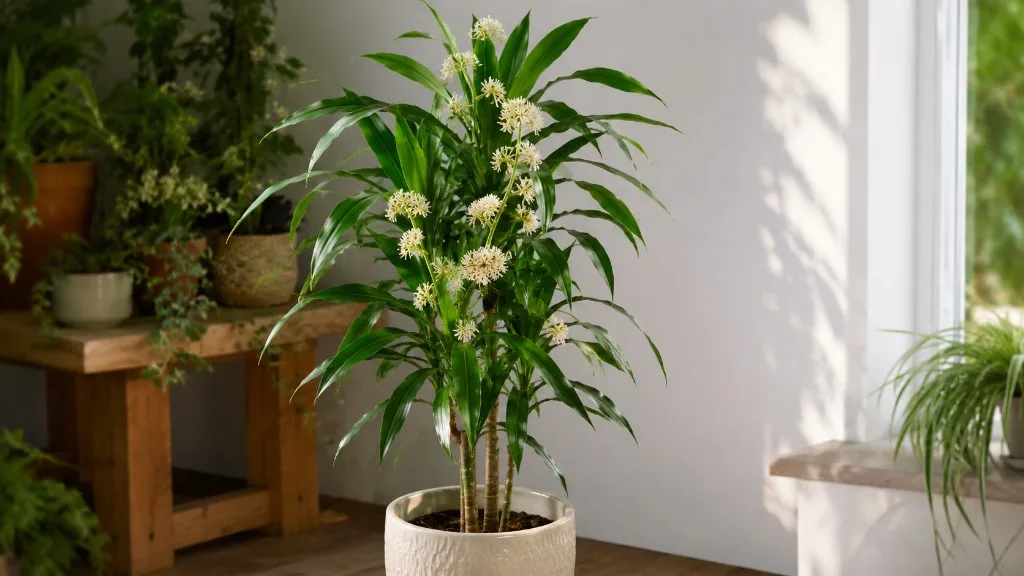
Corn plants create a tree-like shape from one or more sturdy canes topped with strap-shaped leaves. They grow slowly indoors and tolerate medium light better than many broad-leaved trees, which makes them useful for apartments where a sunny window is already occupied. They will still grow more evenly and hold their color in brighter filtered light.
Allow the mix to dry partly between waterings, especially in winter or in a dim room. Watering frequency changes with pot size and light, so a fixed weekly schedule is less useful than checking the pot’s weight and the moisture several inches down. Brown tips can come from several stresses, including dry roots, salt buildup, low humidity, or inconsistent watering; respond by checking the whole routine rather than misting automatically.
Choose a single-cane plant for a narrow footprint or a multi-cane form for fuller height. If a cane becomes too tall, it can be cut back to produce new shoots, but make the cut deliberately because the replacement growth will change the silhouette.
4. Ponytail palm (Beaucarnea recurvata)
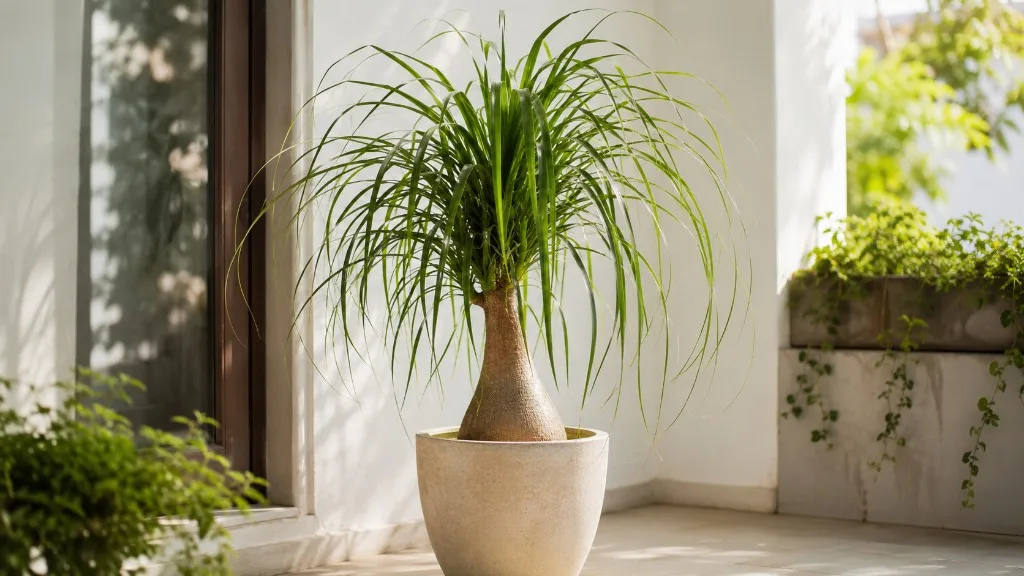
The ponytail palm is a succulent-like tree for people who regularly forget to water. Its swollen base stores water, and its narrow leaves make a sculptural crown that takes up little floor width. It is not a true palm, and it does not want the same constantly moist mix as a tropical palm.
Give it the brightest window you can, let the potting mix dry deeply, and then water thoroughly. A gritty, fast-draining mix and a pot with a drainage hole matter more than a humidity tray. In low light, the plant may survive but use water more slowly, so watering on a summer calendar is a quick route to root problems.
This is one of the best compact choices for a sunny office, kitchen, or living room. Its main limitation is vertical patience: old plants can become tall, but their narrow crown and slow pace make them easier to budget for than a fast, broad canopy.
5. Jade plant (Crassula ovata)
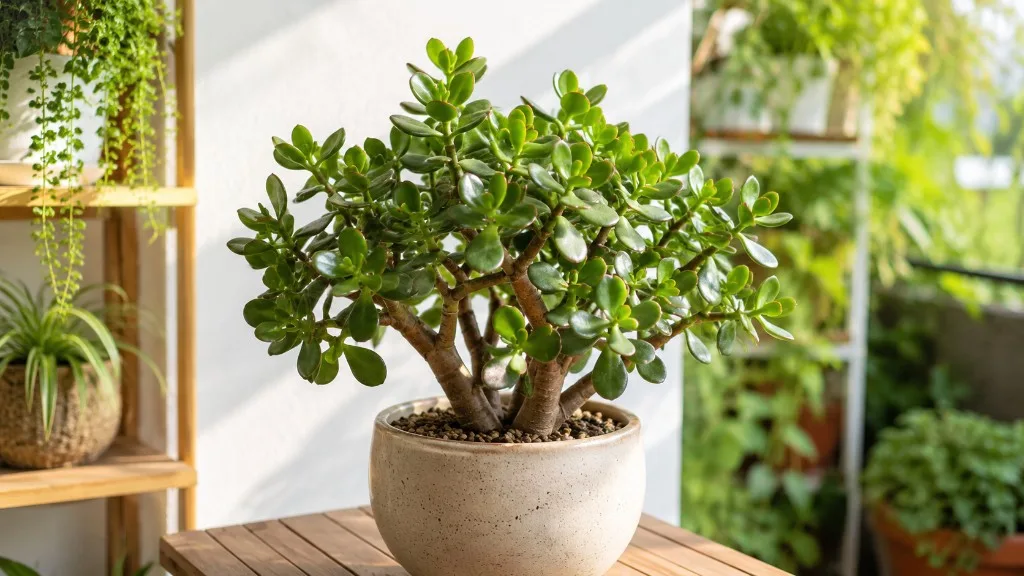
Jade plants can be trained into attractive miniature trees with woody stems and a rounded crown. They prefer a bright window and a dry-down between waterings, so they suit a grower who is more likely to overwater than forget a plant. Thick leaves that feel firm usually indicate the plant is holding water; soft, wrinkled leaves or a persistently wet mix call for a closer root and drainage check.
Use a heavy pot for stability because a mature jade can become top-heavy even when the plant itself stays compact. Turn it periodically for even growth, and remove weak or crossing branches with clean pruners. Avoid frequent light watering, which keeps the lower mix damp without fully hydrating the roots.
Jade is a good match for a bright room and a restrained, bonsai-like look. It is a poor choice for a dark shelf or a household routine built around watering every day.
6. Yucca cane (Yucca gigantea)
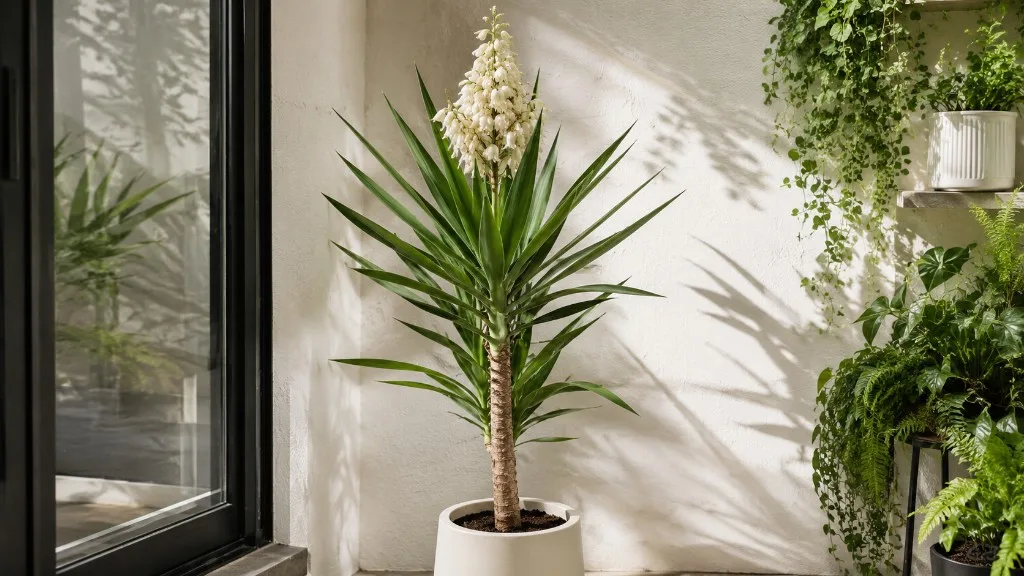
Yucca cane gives you a strong vertical accent without a delicate canopy. Its stiff, sword-like leaves emerge from one or more canes, and the plant handles dry indoor air better than many tropical-looking trees. Bright light is ideal, though it can adapt to medium light if watering is reduced to match slower growth.
Let the mix dry well before watering, then drain the pot completely. Do not use a very large pot to make a small yucca look more substantial; the extra soil stays wet longer and makes the plant harder to stabilize. A heavy container with a modest rootball is safer and easier to move.
Choose yucca when you need height, narrow width, and low watering demand. Keep it away from a tight walkway where stiff leaf tips can brush people, and cut only damaged or dead leaves rather than repeatedly shearing the crown.
7. Rubber plant (Ficus elastica)
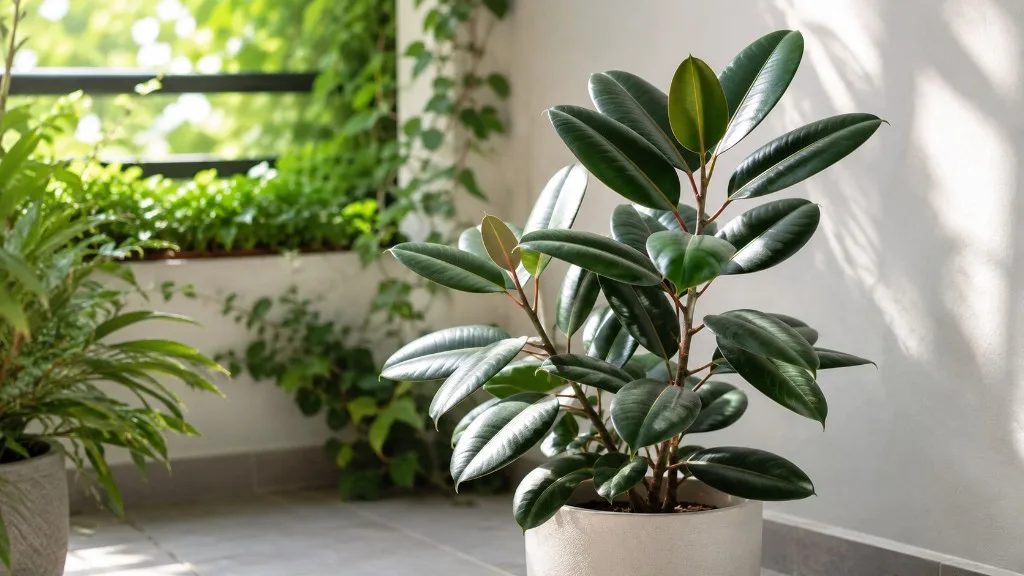
Rubber plants are excellent indoor trees when you want a broad-leaved statement without jumping immediately to a huge fiddle-leaf fig. Their glossy leaves look best in bright, indirect light, and a plant with one central stem can stay relatively narrow for years. Variegated forms usually need brighter light to maintain their pattern.
Water when the top section of mix has dried, and rotate the plant so new growth does not all face one direction. Dust broad leaves gently so you can spot scale or other pests early. If the plant reaches the height limit, cut above a leaf node during active growth to encourage branching lower on the stem; do not keep moving it farther from the window after pruning, because weak light will produce thin replacement growth.
Rubber plants are not the smallest option on this list, but they are among the easiest to keep visually organized. Buy a young, single-stem specimen and set a height limit before it becomes a floor-to-ceiling project.
8. Parlor palm (Chamaedorea elegans)
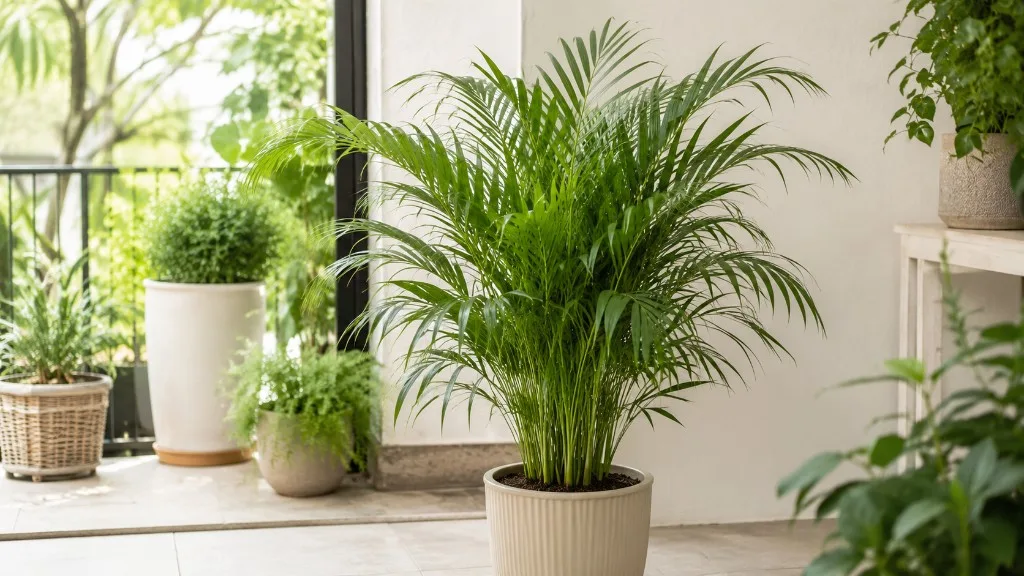
Parlor palm reads as a small indoor tree because its slender stems rise into a soft canopy, yet it generally stays more manageable than large palms sold for patios. It tolerates medium to bright indirect light and prefers an evenly but lightly moist mix rather than the deep dry-down used for jade or ponytail palms.
Check moisture with a finger or a wooden skewer before watering. If the pot remains wet for many days, increase light and airflow before adding more water. Trim only fully brown fronds at the base; cutting healthy green tips creates a blunt edge and does not fix the underlying stress.
This is the best pick here for a softer, tropical shape in a room without harsh direct sun. It is less forgiving of repeated drought than the succulent-like choices, so it suits someone who can check the pot every week.
9. Meyer lemon or calamondin (Citrus)
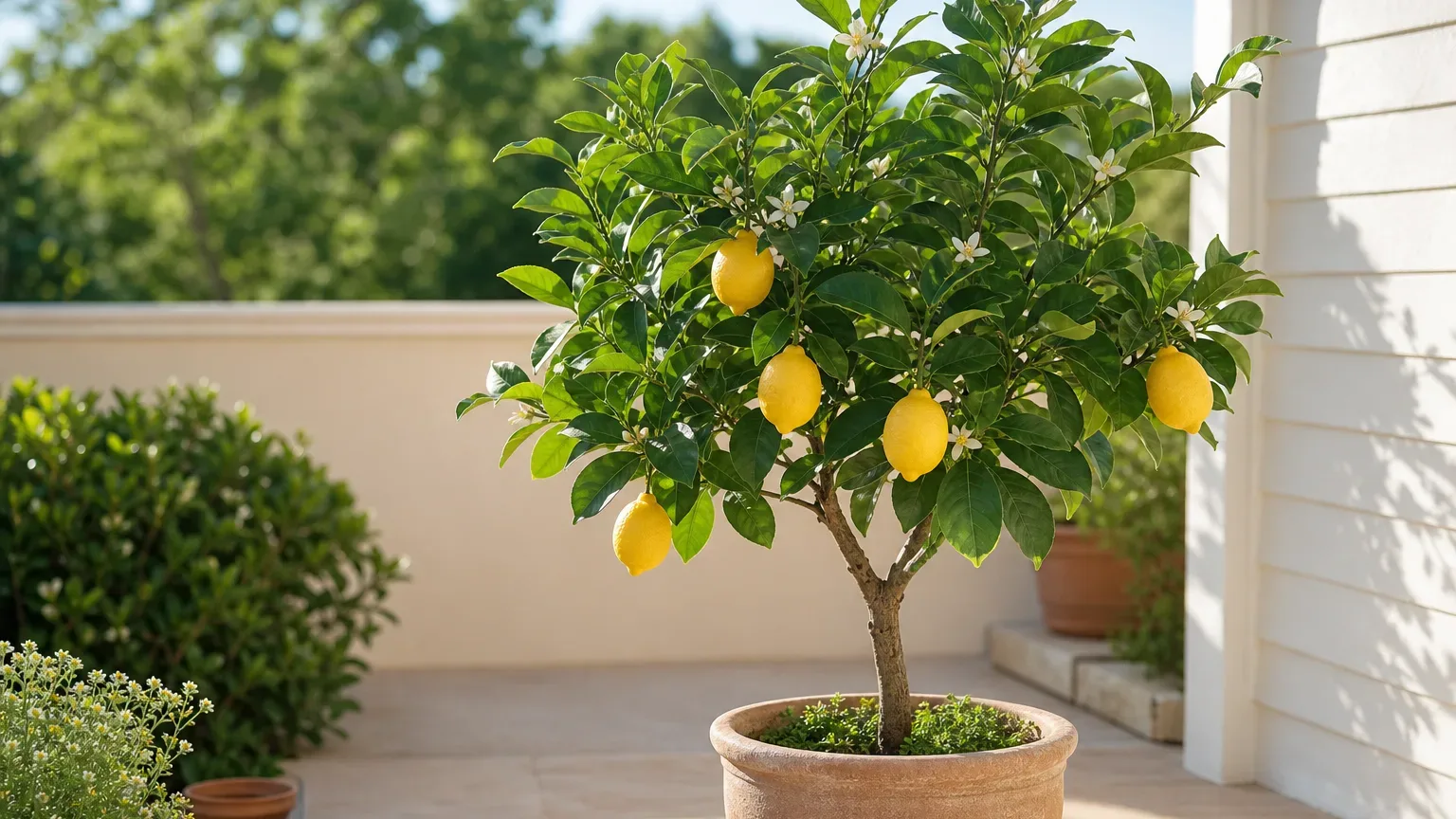
Choose a dwarf Meyer lemon or calamondin only if you want a bright-window project, not a plant you can ignore. Dwarf citrus can stay around 3 to 5 feet in a container, but fruiting requires much more light and consistency than foliage alone. University of Wisconsin–Madison Extension notes that citrus grown indoors needs the brightest available window, and fruit production is unlikely without about six hours of direct light or supplemental lighting. Read the extension guidance on indoor citrus.
Use a fast-draining mix, keep it moderately moist but not soggy, and fertilize during active growth according to the product label. A single citrus plant can set fruit, but it may carry more fruit than it can support; thinning protects the plant. Citrus also dislikes abrupt moves: acclimate it gradually when moving outdoors for summer and bring it back before cold nights. The RHS citrus guide gives the same practical warning about light, temperature shifts, winter humidity, and overwatering.
Meyer lemon is rewarding if you have a sunny south- or west-facing window and enjoy seasonal care. If you want the same fragrant, glossy-leaved effect with less work, choose a dwarf umbrella tree or money tree instead.
How to keep any indoor tree compact
Water by the pot, not the calendar
Watering frequency is a result, not a care instruction. Light, temperature, pot material, root mass, soil texture, and plant size all change how quickly the pot dries. Push a finger or wooden skewer into the mix, lift the container to learn its dry weight, and water thoroughly when the plant’s preferred dry-down has been reached.
Always let excess water escape. A decorative pot without a drainage hole can work as a cachepot only when the plant is kept in a draining nursery pot and the outer pot is emptied after watering. Yellow leaves, fungus gnats, a sour smell, and soil that stays wet for a week are reasons to inspect roots and drainage before adding fertilizer.
Repot only when the roots have earned more room
The goal is not the biggest possible pot; it is a stable container with enough root room and a mix that can dry at a reasonable pace. Move up one pot size when roots circle densely, emerge from drainage holes, the plant dries out unusually fast, or growth stalls despite suitable light. A much larger pot can keep the lower mix wet and make a small indoor tree harder to move.
For container trees, both the RHS and BBC Gardeners’ World Magazine emphasize adequate root room, regular feeding, and staged potting rather than an instant jump to a huge container. Gardeners’ World’s potted-tree guide also recommends compact or dwarfing forms and notes that vigorous trees are poor fits for long-term pot culture.
Prune for branching, not panic
Pruning works best as a small, planned adjustment. Remove a dead or crossing branch first, then shorten a long shoot just above a leaf node if you want new branching. Never remove so much foliage that the plant cannot support the roots, and do not compensate for low light by repeatedly cutting a weak, stretched plant.
If the tree is becoming lopsided, rotate it and improve the light before pruning. If it is healthy but too tall, shorten the leading shoot during active growth and watch where new buds break. Keep the cuttings and the new growth in proportion to the plant’s root system; a tiny rootball cannot support an enormous crown indefinitely.
What to do when a “small” tree starts stretching
First, identify whether the problem is stretching, normal growth, or root stress. Long gaps between leaves, leaning, and small new leaves point to insufficient light. A sudden wilt with wet soil points in the opposite direction: inspect drainage and roots before moving the plant into brighter sun.
Use this sequence: move the plant closer to an appropriate window; wait for new growth to show whether the light improved; prune only healthy, leggy shoots; and rotate the pot regularly. Do not fertilize a dim, stressed plant to force growth. Fertilizer can add salts and encourage weak shoots when the real missing ingredient is light.
If a plant loses leaves after a move, check for a sudden change in light, temperature, watering, or drafts. Citrus is especially sensitive to abrupt environmental changes, while tropical houseplants may need time to adjust to a different humidity and window. Stabilize the conditions for several weeks before making another major change.
Conclusion
For the easiest path to a compact indoor tree, start with a dwarf umbrella tree, corn plant, money tree, ponytail palm, or jade plant based on your light and watering habits. Yucca gives a narrow, architectural shape; rubber plant gives broader leaves; parlor palm gives a softer canopy; and Meyer lemon or calamondin is the high-light choice for someone who wants flowers and fruit.
Buy for mature habit, keep the pot only as large as the roots need, let the mix dry at the plant’s preferred pace, and prune while the plant is healthy. Those four decisions do more to prevent an indoor tree from outgrowing your space than any label promising “dwarf” or “low maintenance.”



