How to Grow and Care for an Avocado Tree Indoors
Grow an avocado tree indoors with clear light, watering, and pruning steps—plus honest guidance on seed vs grafted trees and when fruit is realistic.
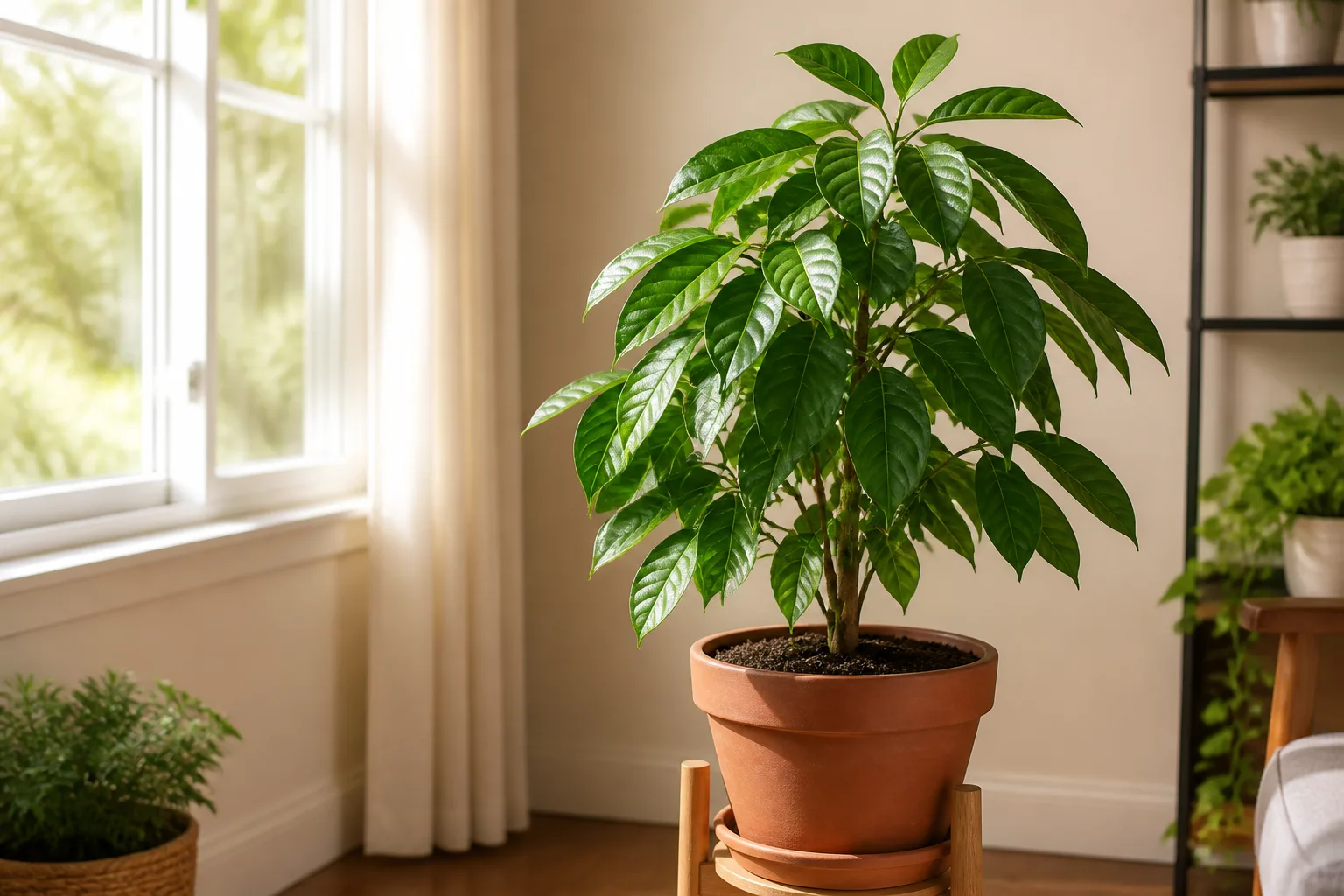
Avocado (Persea americana) is the houseplant people start on a whim and keep for years out of stubborn affection. A pit suspended over a water glass is one of the most recognizable kitchen experiments in gardening. With patience, that pit can become a glossy-leaved tree that fills a bright corner. With exceptional light, a grafted dwarf, and a decade of consistency, it might even produce avocados you can eat.
The mistake is treating every indoor avocado like a short path to guacamole. Seed-grown trees are often beautiful foliage plants first and fruiting trees much later—if ever. Grafted dwarfs such as Wurtz (Little Cado) shorten the timeline but still demand more sun than most living rooms provide. This guide separates those goals, then walks through sprouting, light, water, soil, feeding, pruning, varieties, summer patio moves, and the problems that actually show up on windowsill avocados.
Avocado Indoors Quick Reference
Use this table before you change three variables at once. Avocados punish stacked mistakes.
| Factor | Indoor target | First sign you missed it |
|---|---|---|
| Light | Six to eight hours bright light; south or west window | Leggy stems stretching toward glass; sparse leaves |
| Temperature | 60–85°F; coolest bright room beats warm dim room | Leaf drop after cold drafts or AC blasts |
| Water | Deep soak when top 1–2 inches of mix are dry | Yellow leaves with wet soil = too much water |
| Humidity | 50%+ near foliage; pebble tray or grouping helps | Brown leaf edges with otherwise correct watering |
| Soil | Fast-draining cactus or citrus mix; never heavy garden soil | Sour smell, black roots, persistent wilting |
| Fertilizer | Dilute balanced or citrus food in active growth only | White crust on soil; burnt leaf tips = salt buildup |
| Repotting | Every 1–2 years while young; only one pot size up | Roots circling, water runs straight through |
| Fruit timeline | Seed: up to 10 years; grafted dwarf: 3–5+ years | No fruit with perfect foliage = normal for seedlings |
| Pets | ASPCA lists toxicity mainly for horses; dogs/cats may have mild GI upset | Keep pits and chewed leaves away from nibblers |
Can You Really Grow an Avocado Tree Indoors?
Yes—as a houseplant in any climate-controlled home. UC IPM describes avocados as evergreen fruit trees that grow best in warm, frost-free regions outdoors. Indoors, you recreate a slice of that climate: bright light, stable warmth, good drainage, and air movement without cold shocks.
What changes indoors is scale and outcome. Outdoor avocados can reach 40–80 feet in favorable climates. Inside, you are managing a container tree that may top out near 6–10 feet even with pruning—and often less if light is mediocre. That is still a substantial houseplant, not a tabletop curiosity after year two.
What Indoor Avocados Can and Cannot Do
They can: sprout reliably from grocery pits; produce attractive glossy foliage; live for many years in a pot; summer on a patio in warm weather; and fruit if you start with the right grafted cultivar, supply strong light (often supplemental), and wait several seasons.
They usually cannot: fruit quickly from a seedling; stay compact without pruning; tolerate dim north windows; survive overwatering; or pollinate reliably in a dry, still apartment without help. The University of Washington Elisabeth C. Miller Library notes that indoor avocados are often gangly and sparse because light is insufficient and warmth pushes weak stretch at the stem tips. That is normal—not a sign you failed—until you correct placement.
Seed-Grown Pit vs Grafted Dwarf Tree
Your starting method determines timeline, size, and fruit odds more than any single fertilizer product.
| Starting method | Cost | Time to fruit | Typical indoor height | Best for |
|---|---|---|---|---|
| Grocery pit in water | Free | 8–13 years (often longer) | Tall, single-stem unless pruned hard | Learning, foliage, kids’ projects |
| Grafted dwarf (Wurtz, Gwen, etc.) | Higher upfront | 3–5+ years with excellent care | 6–10 ft manageable with pruning | Serious fruit attempts |
| Nursery seedling (ungrafted) | Mid | Similar to pit | Variable | Usually poor value vs grafted |
Nursery avocados sold for fruit are cloned from mature wood onto rootstock, which is why they crop years earlier than seedlings. A Hass pit may grow into a tree genetically capable of fruiting, but it will not inherit the compact habit or disease resistance breeders select on commercial rootstock.
When a Grocery-Store Pit Makes Sense
Start a pit when you want an engaging project, accept a tall plant, and do not need fruit on a schedule. Pits are free, sprout reliably in water, and teach watering discipline. Gardening Know How notes that seed-grown plants make lovely houseplants even when fruit is unlikely—an honest framing competitors often skip.
Choose a ripe Hass or other supermarket avocado, rinse the pit, and expect variability. Fruit quality and tree size from seed do not match the parent fruit.
When to Buy a Grafted Dwarf Instead
Buy a grafted dwarf when you have a south- or west-facing window (or grow lights), ceiling height for a 6–10 foot plant, and a multi-year commitment to fruit. Look for labels such as Wurtz (Little Cado), Gwen, or Holiday—cultivars selected for smaller stature and earlier bearing. Confirm the graft union near the base: a sudden change in bark texture or a slight bend in the trunk is normal.
If your brightest spot is more than 6 feet from a window or blocked by neighboring buildings, invest in lights before investing in a fruiting tree.
How to Sprout an Avocado Pit
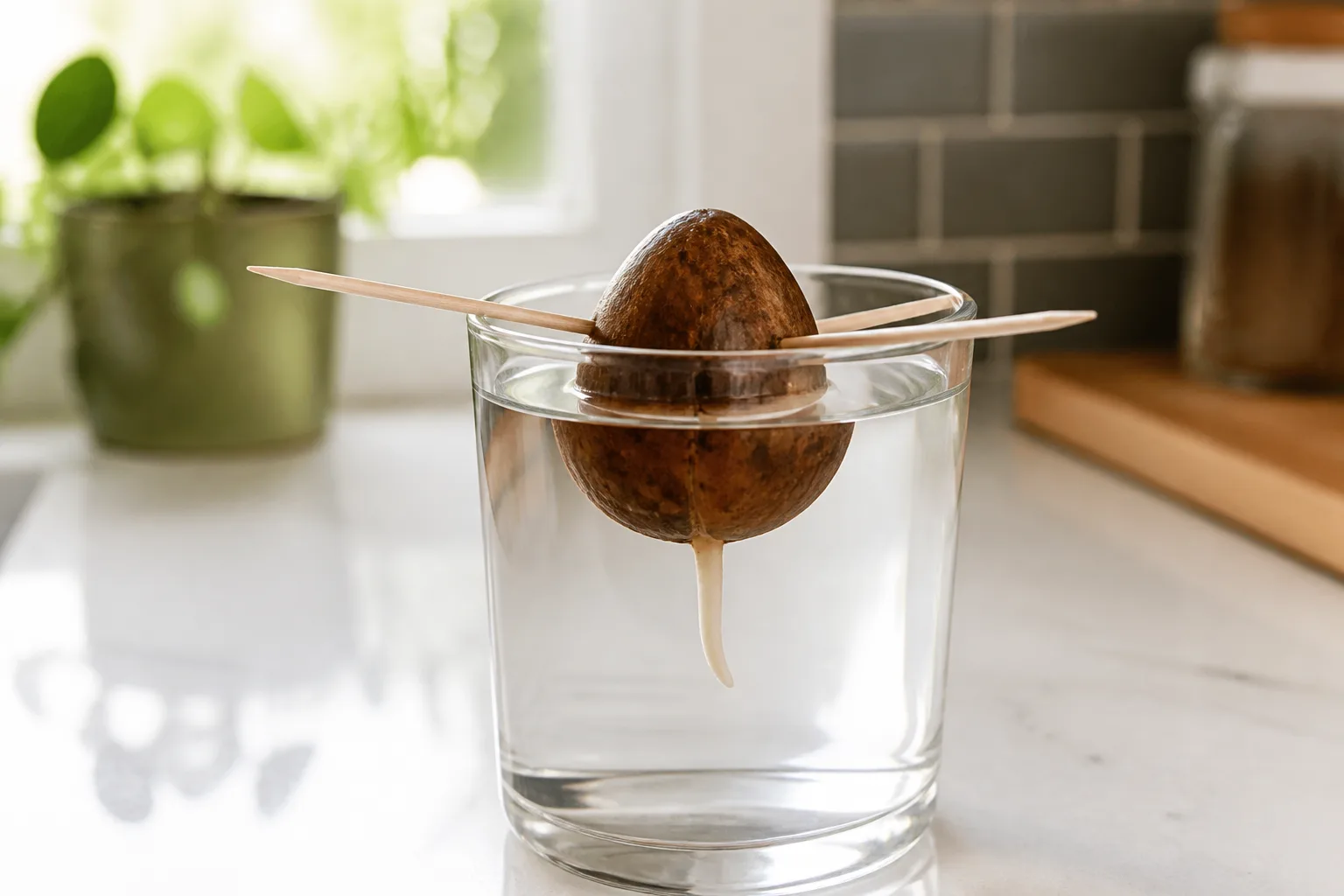
The toothpick-and-glass method works when you respect timing and hygiene.
- Rinse the pit after eating the fruit. Identify the broad end (root end) and pointed top.
- Insert three toothpicks evenly around the pit’s middle so it suspends on a glass rim.
- Submerge the broad end about 1 inch in room-temperature water. Keep the top exposed to air.
- Place the glass in a warm spot (65–75°F) with bright indirect light—not hot direct sun, which can heat the water and encourage algae.
- Change the water every two to three days to limit bacteria.
- Wait two to eight weeks for root and shoot growth. If nothing happens by eight weeks, discard and try a fresh pit.
- When the stem reaches 6–7 inches, cut it back to 3 inches to force stronger roots and side shoots.
- After roots thicken and new leaves appear, pot in a 10-inch terra-cotta or plastic container with drainage holes. Use fast-draining mix. Leave the top half of the pit above soil.
- Water until drainage runs free, empty the saucer, and move to the brightest window available.
Stake seedlings once they pass 2 feet to prevent snapping. Brittle stems are common on fast spring growth.
Light Requirements for Indoor Avocados
Avocados are full-sun trees by nature. Indoors, that translates to the brightest location you have for at least six hours daily—ideally eight during the growing season. South- and west-facing windows outperform east exposures. North windows rarely sustain healthy avocados long term without supplemental lighting.
The Miller Library’s guidance, citing indoor fruit-growing experience, recommends the brightest window in the coolest room. Warmth plus low light produces the classic leggy avocado: a thin stem, leaves clustered at the tip, and bare lower branches. Cooler air slows weak stretch while you maximize photons.
Young seedlings with thin bark can sunscald in harsh direct afternoon glass. Until a leafy canopy shades the stem, use sheer curtain diffusion or morning sun only. Established plants with dense foliage tolerate stronger direct light, especially if acclimated gradually.
Grow Lights When Windows Fall Short
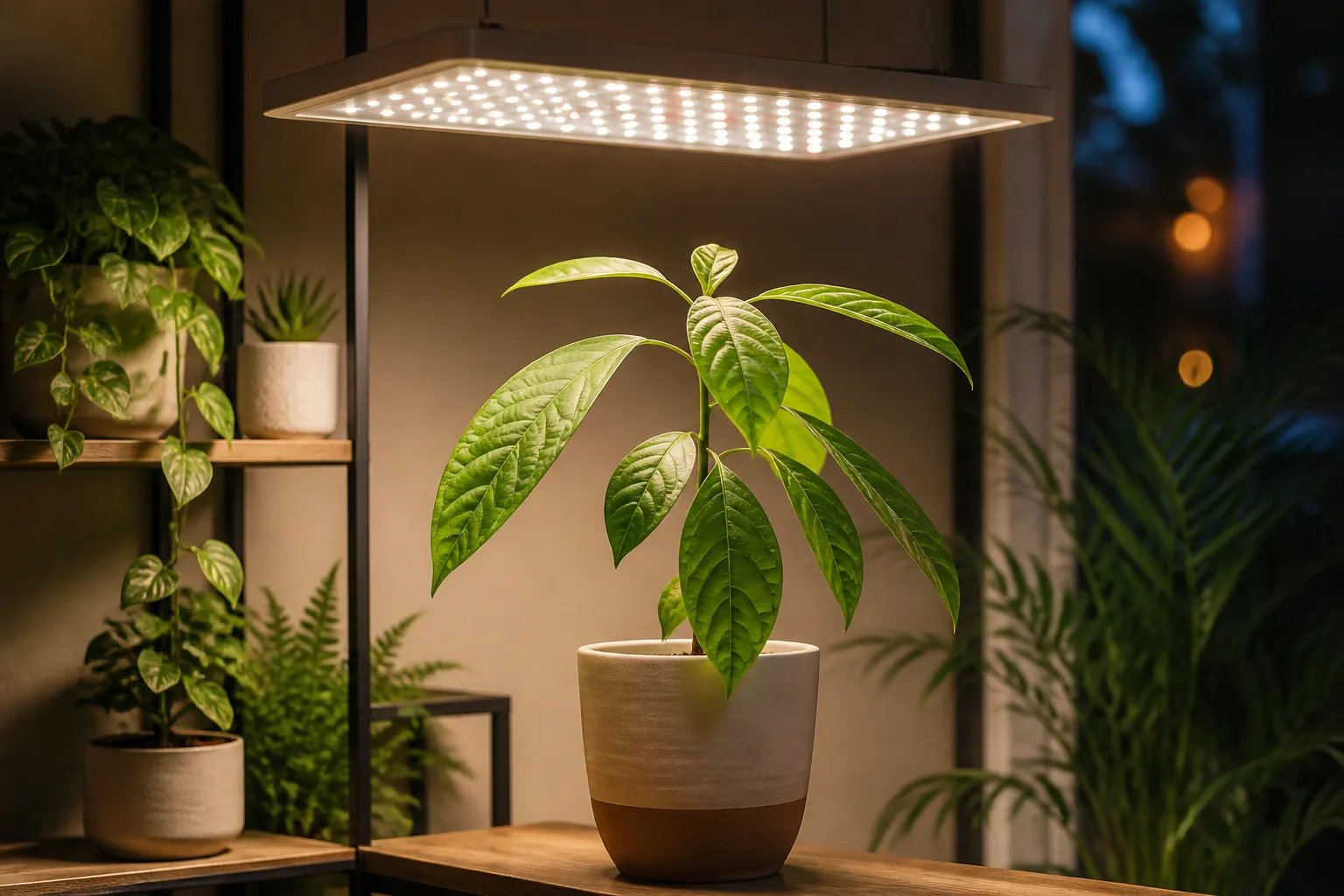
If leaves look pale, internodes lengthen, or new growth points only toward the glass, add a full-spectrum grow light positioned 12–18 inches above the canopy for 12–14 hours daily. Fruit attempts indoors almost always require supplemental light in winter, even with good windows.
Rotate the pot a quarter turn weekly for even growth. A ceiling fixture alone is rarely enough for a tree-sized plant unless it is a dedicated high-output panel.
Watering, Humidity, and Air Circulation
Overwatering kills more indoor avocados than any pest. Avocados want moisture without saturation: roots need oxygen as much as water.
Watering method: When the top 1–2 inches of mix feel dry—or leaves just begin to droop—soak until water runs from drainage holes. Empty the saucer within 30 minutes. In winter, stretch intervals as growth slows. Yellow leaves with wet soil mean back off immediately and verify drainage holes are open.
Humidity: Target 50% relative humidity or higher near foliage. Group plants, use a pebble tray (pot above waterline), or run a humidifier in dry heating season. Mistings help briefly but do not replace humidity at the leaf surface overnight.
Air circulation: Gentle airflow reduces fungal issues on crowded leaves. A small fan on low in the same room is enough. Do not confuse this with “cool nights for fruit” myths—indoor fruiting depends on light and pollination more than blowing cold air on the canopy.
Water quality: Hard tap water leaves mineral salts in the pot. If leaf tips brown while soil moisture is correct, suspect salts (see Fertilizer section).
Soil, Pots, and Repotting
Avocado roots are shallow and brittle. They need loose, aerated mix that drains in seconds after a soak.
Best mixes: Commercial cactus and succulent blends, or citrus container mixes amended with extra perlite or coarse bark. Avoid heavy peat-only mixes that stay waterlogged. Garden soil in a pot is a root-rot guarantee.
Pot material: Unglazed terra-cotta dries evenly and suits avocados well. Plastic works if you adjust watering downward. Every pot needs multiple drainage holes; decorative cachepots without drainage are not acceptable long term.
Repotting schedule: Repot every spring for the first several years while the tree is actively growing, moving up only one pot size (about 2 inches wider). Jumping to a huge pot keeps excess soil wet and encourages rot. For mature container trees, Gardening Know How suggests a 15–20 gallon final container for long-term growth—plan floor space accordingly.
When repotting, handle the root ball gently. Tease only the outer circling roots; breaking thick roots sets the tree back months.
Fertilizer and Preventing Salt Buildup
Feed only during active growth (roughly spring through early fall). Young trees benefit from citrus or avocado-formulated fertilizers with micronutrients including zinc, manganese, and boron—deficiencies show as pale new leaves or tip burn on outdoor trees and can appear indoors on heavily leached pots.
First-year seedlings: Dilute balanced or 7-9-5 water-soluble fertilizer monthly at half label strength, or follow citrus-tree label rates conservatively. Never fertilize dry, stressed soil.
Salt flush protocol: Indoor pots accumulate fertilizer and hard-water minerals. California Rare Fruit Growers note leaf tip burn from salt accumulation in container culture. If you see white crust on soil or burnt leaf tips with otherwise good watering:
- Place the pot in a sink or tub.
- Run lukewarm water through the mix for several minutes until it flows clear from the bottom.
- Let drain fully before returning to the saucer.
- Repeat monthly in hard-water areas or after heavy feeding.
Reduce fertilizer until new growth looks clean. Rainwater or filtered water for routine watering slows buildup.
Pruning and Training for a Bushy Plant
Unpruned indoor avocados become single tall wands. Pruning redirects energy to lateral buds the tree would otherwise shed along the stem.
First hard pinch: When the seedling reaches 12 inches, cut the stem back to 6 inches above soil, just above a node. New side shoots should follow within weeks.
Ongoing shaping: Pinch soft new tip growth in summer to force branches. Remove shoots emerging below the graft union on purchased trees—these are rootstock suckers that steal vigor.
Maintenance timing: Light pruning in late winter or after a flowering flush avoids removing buds you want. Thin congested centers to improve airflow. Always use clean, sharp pruners.
Staking remains useful until the trunk lignifies. Tie loosely with soft material that will not cut bark as the stem thickens.
Pollination and Fruit Expectations Indoors
Avocado flowers are unusual: trees carry Type A or Type B flowers that open as female or male at different times of day. Many cultivars are partially self-fertile, but cross-pollination between types improves fruit set outdoors.
Indoors, low humidity, still air, and absence of pollinators reduce set further. If you keep one tree, shake branches gently during bloom to release pollen. A second compatible dwarf in the same bright room helps but is unrealistic for most apartments.
Fruit timeline:
- Seed-grown: commonly 8–13 years before first fruit; some never fruit indoors.
- Grafted dwarf: 3–5+ years with excellent culture; tree height often 6–8 feet before meaningful crop.
Harvest note: Avocados do not ripen on the tree. Texas A&M AgriLife Extension explains fruit is picked mature and softens indoors over days. Pick one test fruit; if it shrivels or never softens, wait longer next time.
Expect fruit drop when a young tree sets more than it can support—normal thinning, not always crisis.
Best Avocado Varieties for Containers
Choose cultivars bred for manageable size and container culture:
| Cultivar | Type | Indoor notes |
|---|---|---|
| Wurtz (Little Cado) | A | Most popular true dwarf; 8–10 ft possible; well suited to pots |
| Gwen | A | Semi-dwarf; rich flavor; needs strong light |
| Holiday | A | Compact; sometimes sold as indoor avocado |
| Fuerte | B | Larger than Wurtz; cross-pollinates Type A partners outdoors |
| Bacon | B | Cold-hardier genetics; still needs warmth indoors |
| Hass (grafted, not seed) | A | Standard grocery flavor; tree size large unless on dwarfing rootstock |
Supermarket Hass pits grow into unknown genetics—often vigorous and tall. For fruit, buy a labeled grafted Wurtz or Gwen from a reputable nursery.
Moving Your Avocado Outdoors for Summer
Warm-season patio time accelerates growth when done carefully. Wait until nights stay above 50–55°F consistently.
Acclimation: Start in bright shade for several days, then move to morning sun, then full sun if the tree has a leafy canopy. Seedlings with bare stems burn in direct outdoor afternoon sun.
Watering outdoors: Soil dries faster outside. Check daily in heat. Saucers off the ground prevent standing water after rain.
Return indoors: Before first frost threat, move back when indoor and outdoor temperatures are similar—ideally over a week of cooling evenings. Inspect leaves for pests before crossing the threshold. Hose off dust and check leaf undersides for spider mites.
Troubleshooting Common Indoor Problems
Leggy, sparse plant: Increase light and move to a cooler bright room. Pinch tips to activate lower buds. Add grow lights if windows max out.
Older leaves dropping: Often normal senescence, especially after a move or seasonal change. Worry if new growth also yellows or wilts.
Brown leaf tips and edges: Usually salt buildup or inconsistent watering—not “low humidity” alone. Flush the pot; switch to rainwater; reduce fertilizer.
Yellow leaves: Overwatering first suspect. Let soil dry; verify drainage. If soil smells sour, unpot, trim black mushy roots, repot in fresh mix.
Wilting with wet soil: Root rot or compacted mix. Stop watering; improve drainage; repot if roots are brown.
Brown spots after cold draft: Avocados dislike below 50°F. Move away from doors and single-pane winter glass contact.
Pests, Diseases, and Pet Safety
Indoor avocados escape most outdoor avocado pests but share common houseplant attackers:
- Spider mites: Fine webbing, stippled leaves—rinse foliage; increase humidity; horticultural soap if persistent.
- Mealybugs: Cottony clusters in leaf axils—dab with alcohol on a swab; inspect neighboring plants.
- Scale: Brown bumps on stems—scrape gently; repeat treatments weekly.
Root rot from overwatering is the primary “disease” indoors. Outdoor laurel wilt and ambrosia beetles are not indoor threats but matter if you summer trees in avocado-growing regions.
Pet safety: The ASPCA lists avocado as toxic to horses (persin in leaves, fruit, seeds, and bark). ASPCA guidance on pets and avocado notes dogs and cats may experience mild vomiting or diarrhea if they ingest enough, but severe poisoning is uncommon in those species. Still keep pits and chewed leaves away from curious pets—blockage risk from the large seed is a separate hazard.
Conclusion
Growing an avocado tree indoors succeeds on two tracks. For most people, a sprouted pit or young seedling is a rewarding foliage plant: prioritize the brightest, coolest window, water deeply only when the top mix dries, pinch early for bushiness, and flush salts when tips burn. For fruit, start with a grafted dwarf such as Wurtz, add supplemental light, plan for years—not months—and accept that pollination indoors is the hardest hurdle.
Check your tree weekly: new growth color, soil dryness at depth, and whether stems are stretching. Those three observations tell you more than any generic “water weekly” calendar. Adjust one factor at a time, and an indoor avocado can stay handsome long after the original kitchen experiment is forgotten.



