How to Grow and Care for Calla Lilies Indoors and Out
Grow calla lilies indoors or outdoors with clear guidance on light, watering, rhizomes, bloom cycles, winter storage, troubleshooting, and safe handling.
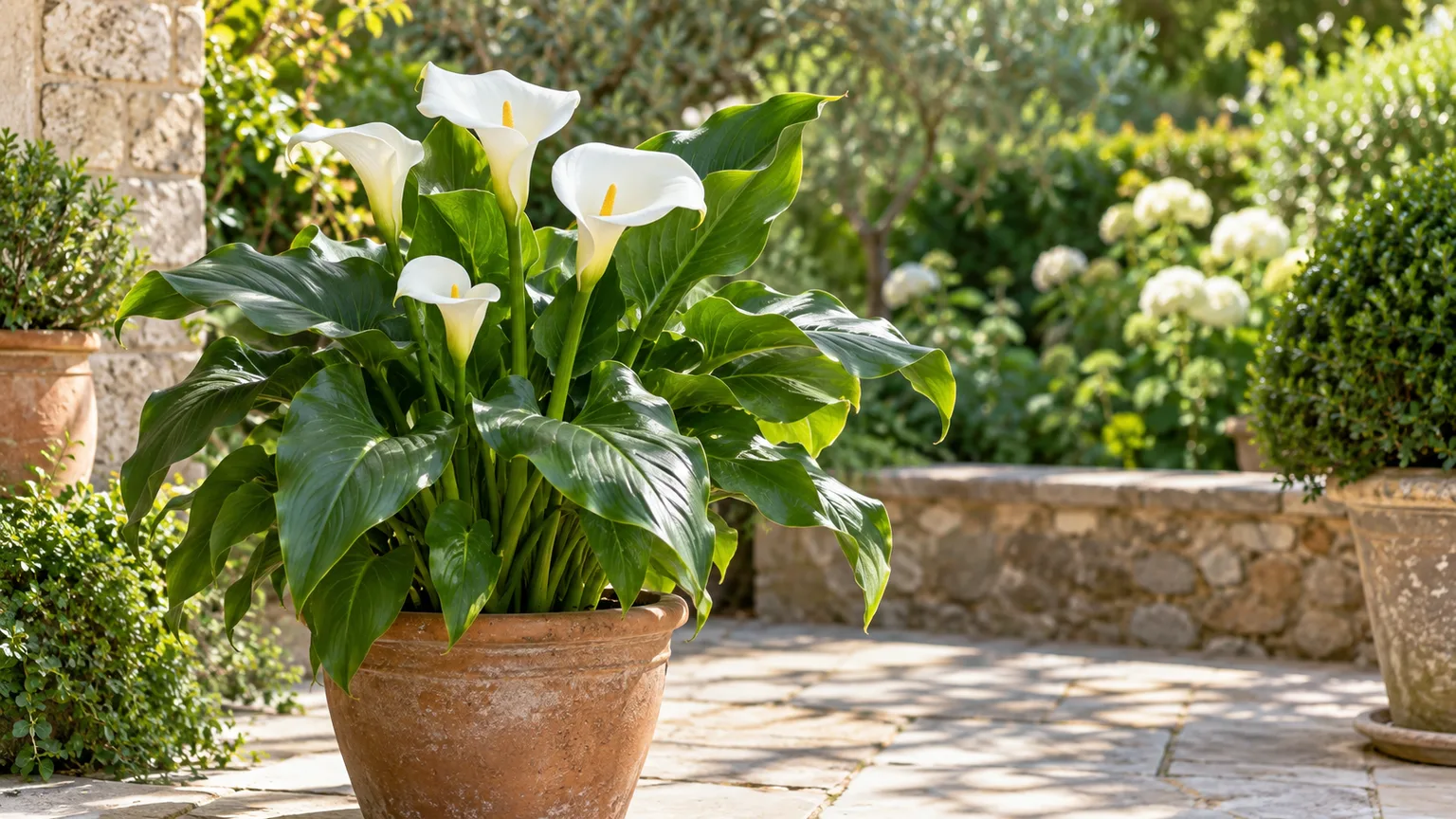
Calla lilies are easiest to grow when you first identify which kind you have. The familiar white calla, Zantedeschia aethiopica, can tolerate wetter garden conditions and is hardier than the compact, brightly colored hybrids commonly sold in pots. Those differences affect where to plant, how much water to give, and whether the underground storage organ can stay outside in winter.
For most callas, provide bright light, warmth during active growth, and evenly moist but oxygenated soil. Then change the routine when growth slows: a dormant rhizome or tuberous rhizome needs far less water than a plant carrying leaves and flowers. The details below help you choose a setup first, then care for it through bloom and winter.
What “Calla Lily” Means—and Which Kind You Have
Calla lily is the common name for plants in Zantedeschia, a genus in the arum family, Araceae. Despite the name, callas are not true lilies in the genus Lilium. Their flower is also different from a conventional petaled bloom: the showy, curled funnel is a spathe, a modified leaf that surrounds a central spike called the spadix. The spadix carries the tiny flowers.
Start with the label. A tall plant with large glossy leaves and a white spathe is often Z. aethiopica, the white arum lily. Many smaller pots with yellow, pink, orange, red, or purple spathes are tender hybrids, often involving Z. elliottiana or Z. rehmannii. NC State Extension describes several species and cultivars with different colors and habits, while the RHS growing guide specifically separates hardy white arum lilies from tender colored callas.
This is more than a naming detail. A hardy Z. aethiopica may be suitable for a moist border or a shallow pond margin in a mild climate; a colored hybrid is generally better treated as a container plant that needs frost protection. If the nursery tag only says “calla lily,” keep the original label and ask the seller for the cultivar or species before leaving a tender plant outdoors for winter.
Rhizome, Tuber, or Bulb? Read the Plant Label Before You Plant
“Calla lily bulb” is common retail shorthand, but a true bulb is not what you are buying. Zantedeschia grows from underground storage structures described by horticultural references as rhizomes, tuberous rhizomes, corms, or tuber-like organs, depending on species and context. A rhizome is a modified underground stem with growing points; it is not a swollen root. The useful gardening point is simple: identify the buds and orient the storage piece correctly, rather than expecting the layered shape of a tulip or onion bulb.
White Z. aethiopica typically forms a thick, creeping rhizome. Many colored callas are sold as firm, compact tuberous rhizomes. Labels and supplier instructions may use “tuber” or “bulb” for these, so do not reject a healthy planting piece because the word differs. Look for a firm, unrotted piece with visible buds or eyes, and keep it dry and cool until planting time. The NC State Extension profile notes that callas can be propagated by separating cormels, and its storage guidance treats the underground organs as rhizomes or tubers.

Keep the rhizome label with the plant through dormancy. Storage depth, spacing, and winter behavior vary by species and cultivar, so the supplier’s cultivar-specific directions are more useful than an assumed one-size-fits-all “bulb” rule.
Choose Indoor, Container, Bed, or Pond Growing
An indoor pot is the most controllable option in a cold climate, and it lets you move a tender hybrid away from frost and harsh weather. Choose it if you can provide strong window light or a bright conservatory and are prepared to adjust watering during dormancy. A pot also suits gardeners who want a flowering accent near a patio without committing a frost-tender rhizome to the ground.
An outdoor bed works for a hardy white calla where winter temperatures, drainage, and local growing guidance support it. In warm regions, give plants morning sun or light shade from punishing afternoon heat and keep the soil reliably moist. Z. aethiopica can also grow at a pond edge; this does not mean every colored calla should be submerged. The RHS restricts shallow-water planting to Z. aethiopica and describes a pond basket set no more than about 30 cm (1 ft) deep.
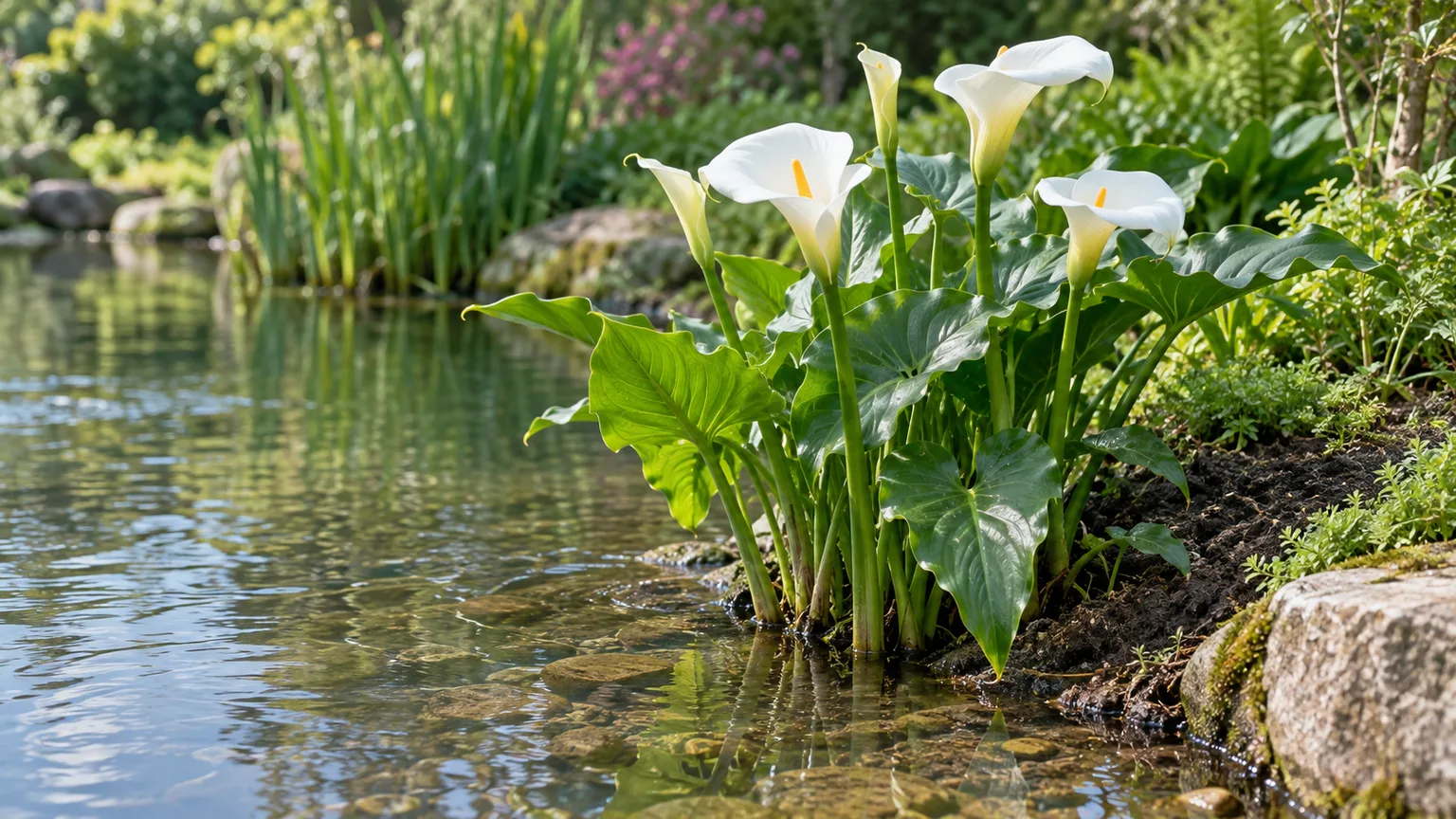
In a humid, rainy climate, a pot with free drainage may be safer than a low bed that stays saturated. In a dry-summer garden, the reverse may be true: a moisture-retentive bed can be easier to keep evenly damp than a small pot. Make the choice from your climate and your ability to manage winter, not from the plant’s tropical appearance alone.
Give Calla Lilies Enough Light to Flower
Callas need bright light to build strong leaves and flowers. Outdoors, full sun to partial shade can work; cooler summers usually allow more sun, while hot afternoon exposure can scorch foliage or make a container dry too quickly. A spot with several hours of morning sun and some afternoon protection is a useful starting point in a hot-summer area. If the plant is in deep shade, expect fewer flowers even if the leaves look lush.
Indoors, place the pot close to a bright window where it receives strong indirect light or gentle morning sun. A dim corner may keep a plant alive for a while, but it is a poor place to expect reliable flowering. Rotate the container occasionally if shoots lean strongly toward the glass, and keep leaves from pressing against cold panes in winter.
Use the plant’s response to refine the spot. Long, weak stems and lots of leaves but few flowers suggest insufficient light, though dormancy, overcrowding, and excess nitrogen can produce a similar result. Pale patches or crisp brown areas on the window-facing side point toward too much direct sun or heat. Move the pot gradually rather than shifting it abruptly from shade to intense afternoon sun.
Use Moisture-Retentive Soil and a Drainage-Safe Pot
Callas like soil that holds moisture, but a regular container should still have a drainage hole. Use a rich, free-draining potting mix that retains some water without packing into an airless mass. A good commercial potting mix amended with compost or another stable organic component is usually simpler than garden soil in a pot; heavy garden soil can compact and stay wet around the rhizome.
Choose a sturdy pot with enough weight for the mature foliage and a diameter that leaves room around the rhizome. Oversizing is not a shortcut: a large volume of unused mix stays wet longer, raising the risk of rot before roots occupy it. If you place the pot inside a decorative cachepot, empty standing water after watering. Do not let the drainage pot sit in a full saucer for days.
In a garden bed, work in organic matter if the soil drains too quickly or is low in humus. A Z. aethiopica intended for a bog garden is an exception to ordinary “well-drained” advice; it tolerates wetter conditions, and selected plants can grow at shallow pond margins. That tolerance belongs to the appropriate species and setup, not to every calla in a houseplant pot. When you cannot identify the cultivar, use moist, aerated soil rather than standing water.
Plant Dormant Rhizomes Without Rotting Them
Plant dormant calla rhizomes in spring, after the risk of hard frost has passed if they will go outdoors. You can start them in a pot indoors earlier, then harden off actively growing plants before moving them outside. Inspect the storage piece first: it should be firm, with no wet, foul-smelling, or collapsing patches. Discard severely rotted material rather than burying it and hoping it recovers.
For a dormant colored calla, set the rhizome with its buds or growing points facing up, following the supplier’s depth directions. Many growers cover it with a few inches of mix, while the RHS recommends planting dormant rhizomes near the surface with the top just showing; White Flower Farm’s outdoor guide instead describes horizontal planting with growing points up and gives a deeper container depth. That difference reflects variations in stock and planting practice, so follow the cultivar supplier’s directions, use a modest depth, and avoid packing wet mix tightly over a slow-to-sprout rhizome. A nursery-grown, actively growing plant should be placed at the same soil level it had in its pot.
Water lightly after planting, just enough to settle the medium. Until shoots appear, keep the mix barely moist rather than saturated; the storage organ cannot use much water before it is actively growing. Once leaves emerge and roots are working, increase watering gradually. Starting with a soggy pot is a common way to lose an otherwise sound rhizome before the season begins.
Water by Growth Stage, Not by a Fixed Calendar
During active leaf and flower growth, aim for evenly moist soil. Water thoroughly, let excess drain, and check the top inch or two of mix before watering again. The exact interval changes with pot size, light, temperature, and airflow: a small terracotta pot in sun can dry quickly, while a large plastic pot in a cool room may remain wet for days. A weekly schedule is only a reminder to check, not a rule to pour water.
Outdoor plants in ordinary beds need water when rainfall is not keeping the root zone moist. Container plants often need more frequent checks because their limited soil volume dries faster; Harvest to Table’s calla lily guide likewise separates consistently moist garden growth from the reduced watering needed during a potted plant’s rest. For an established Z. aethiopica in a bog garden or planted as a marginal aquatic, follow the requirements of that species and planting system. Do not translate that pond guidance to a tender hybrid in a standard flowerpot.
Reduce watering as growth fades and the plant enters rest. A dormant rhizome in storage should be dry; an indoor plant that is merely slowing down should receive less water and should not sit in a wet saucer. If leaves yellow while soil remains wet, stop watering and check for drainage or rot before adding more. Wilting is not proof of thirst when roots are damaged by saturated soil.
Match Temperature and Humidity to the Cultivar
Callas grow best in warm conditions during active growth and are damaged by frost. The RHS notes that many tender colored callas will not survive temperatures below about 5°C (41°F); bring them inside before frost and wait until frost danger has passed before returning them outdoors. This is a practical warning for tender hybrids, not a universal hardiness rating for every Zantedeschia species.
White Z. aethiopica is more cold-tolerant than most colored selections, but “hardy” still depends on cultivar, soil moisture, exposure, and local winter lows. NC State Extension advises mulch and lifting/storage where cold winters threaten. Use a locally tested hardiness recommendation for the exact plant rather than assuming that the whole genus is hardy to one USDA zone.
Average household humidity is usually workable. Good light and airflow matter more than trying to create a tropical greenhouse around an indoor pot. Keep the plant away from heating vents that rapidly dry leaves and from cold drafts that chill wet roots. Outdoors, shelter from strong wind protects tall stems and reduces torn foliage.
Feed for Flowers Without Pushing Soft Foliage
A fertile mix and modest feeding during active growth support flowering. For a container, use a balanced liquid fertilizer at the label rate while the plant is producing leaves and buds; a potassium-forward flowering feed is another option if its label is suitable for flowering ornamentals. The RHS recommends feeding tender callas during the growing season, especially in containers, and stopping when flowers fade. A plant in rich garden soil may need much less supplemental fertilizer.
Do not feed a dormant rhizome or a plant with badly damaged roots. Fertilizer cannot compensate for poor light, waterlogged soil, or an overcrowded pot, and a nitrogen-heavy feed can favor leafy growth at the expense of flowers. If the leaves are unusually lush but blooms are scarce, first review light, dormancy, and the plant’s age before adding more fertilizer.
Follow the product label and avoid leaving fertilizer solution in a saucer. If you have recently repotted into fresh, pre-fertilized mix, wait before adding another feed. A gentle, consistent routine is more useful than alternating between strong doses and neglect.
Encourage Flowering and Handle Cut Stems Cleanly
Flowering usually follows a period of healthy active growth, not a single fertilizer treatment. Give the plant the right amount of light, keep the root zone moist while it is growing, and allow the seasonal rest required by its cultivar. A recently divided or newly purchased rhizome may spend time establishing before producing a full display. Do not dig it up every few weeks to check whether it is ready to bloom.
Calla “flowers” last because the spathe is a showy bract surrounding many small flowers on the spadix. On the plant, remove a faded bloom by cutting or pulling its stem close to the base with clean pruners. If you grow the flowers for a vase, cut a mature stem at the base when the spathe is open and firm, and place it in clean water. Keep cut stems and plant debris away from children and pets; the plant is not edible.
The white arum lily and colored hybrids can differ in bloom timing. NC State Extension describes bloom from late spring to early summer across the genus, while cultivars and climate can extend or shift the display. Treat local weather and the plant’s active growth as better signals than a fixed calendar date.
Remove Spent Growth at the Right Time
Callas need little routine pruning. Remove yellow, collapsed, or spent flower stems at their base with clean shears, and take away dead leaves that are loose or clearly finished. Do not strip healthy green foliage simply because flowering has ended. Those leaves continue photosynthesis and replenish the underground storage organ for the next growth cycle.
If a tender calla begins its normal dormancy, allow the foliage to yellow and dry naturally before cutting it back. Early removal can reduce the reserves available for next season’s growth. For a hardy white calla in a mild climate, cut only dead or damaged growth and leave healthy leaves in place; the plant may not follow the same dormancy pattern as a tender potted hybrid.
Wear gloves if the sap irritates your skin, and wash tools after trimming. Keep cut material out of reach of animals that chew plants. A clean, selective cut improves tidiness without forcing the plant into rest before it is ready.
Repot Clumps and Divide Them Carefully
Repot when roots or rhizomes have filled the container, the mix has broken down, or water runs straight through because the rootball has become dense. Move up only one pot size and use fresh mix; a container that is far larger than the root system holds excess moisture. Spring, as new growth starts, is usually the easiest time to refresh a dormant or crowded plant.
Division is the fastest way to multiply an established clump. Lift it when dormant or just as growth resumes, brush away loose mix, and separate the rhizome into sections that each retain a healthy bud or growing point. Use a clean, sharp knife, discard soft or damaged tissue, and let cut surfaces dry briefly before replanting if they are wet. Replant at the appropriate depth and water cautiously until shoots and roots resume.
Do not divide a small new plant solely because it has not flowered yet. Every division loses some roots and stored energy, so a tiny piece may take longer to recover than the original clump. If the plant is healthy and has room, leaving it intact is often the better route to a stronger display.
Grow Calla Lilies from Seed Only If You Have Patience
Seed is possible, but it is slower and less predictable than buying a rhizome or dividing a clump. Seed-grown plants may take several seasons to flower, and seedlings may not come true to the named hybrid. Choose seed if you are curious about raising plants and can wait; choose a named cultivar or division when you want a predictable flower color sooner.
Sow fresh, mature seed in a clean pot of seed-starting mix and keep the medium evenly moist, not waterlogged. Germination time varies, so keep the pot labeled and do not discard it after a short wait. Once seedlings are large enough to handle, pot them individually and grow them on in bright light. Protect young plants from cold and from drying out while their roots are small.
Wear gloves when handling berries or seed if children or pets might reach them. Calla lilies are toxic if eaten, and seed is not a food crop. There is no reason to collect seed from an invasive or unwanted garden planting; remove flower or seed-bearing stems safely and dispose of them according to local guidance.
Overwinter According to the Plant You Own
First decide whether the plant is a tender colored hybrid in a pot, a hardy Z. aethiopica in a suitable garden, or an unidentified calla. Tender callas need frost-free winter protection. The RHS growing guide advises a cool, dry, frost-free rest for tender types after foliage dies back; NC State Extension gives dry storage around 50–60°F (10–16°C) for the underground organs. Exact recommendations vary by cultivar and supplier, so use the plant label where it is available.
For a potted tender calla, let foliage fade naturally, then reduce or stop watering when it is dormant and move the pot to a cool, dry, frost-free place. For a garden-grown tender cultivar in a cold region, lift the rhizome after foliage dies back and before the ground freezes. Brush off loose soil, allow the piece to dry in a ventilated shaded place, label it, and store it in dry peat-free packing material or paper in a cool location. Check periodically and discard any piece that becomes soft or moldy. Do not seal damp storage organs in an airtight plastic bag.
In spring, inspect the rhizome and pot it in fresh mix. Water sparingly until shoots appear, then increase moisture as active growth resumes. A hardy white arum lily may remain in the ground where local conditions allow it, with mulch over the root zone; if winters are severe or wet, a protected container may be more dependable. Do not assume a climate-zone number alone settles the question.
Prevent Rot, Gray Mold, and Common Pest Problems
Rot is the main preventable threat to a dormant rhizome and a common consequence of keeping an indoor pot wet when growth has slowed. Start with a container that drains, use a medium that does not stay airless, and water according to growth stage. Avoid injuring the rhizome during planting and division; damaged tissue is more vulnerable to decay. A soft, foul-smelling base is not a normal dormancy sign.
Gray mold can develop in cool, humid conditions when leaves and flowers remain crowded and wet. Space outdoor plants for airflow, remove spent flowers, and water the soil rather than repeatedly wetting foliage. If a plant has a spreading disease problem, isolate a potted specimen, remove affected material with clean tools, and check a local extension diagnostic before applying a pesticide. Never use a chemical or home spray contrary to its label.
Slugs and snails may chew leaves in damp gardens; aphids or spider mites can appear on stressed plants, especially indoors. Inspect leaf undersides and new growth before treating. A rinse or manual removal may be enough for a small infestation. For a persistent pest, identify it first and use only a product labeled for that pest and setting, following its directions and safety precautions.
Diagnose Yellow Leaves, Droop, and Missing Flowers
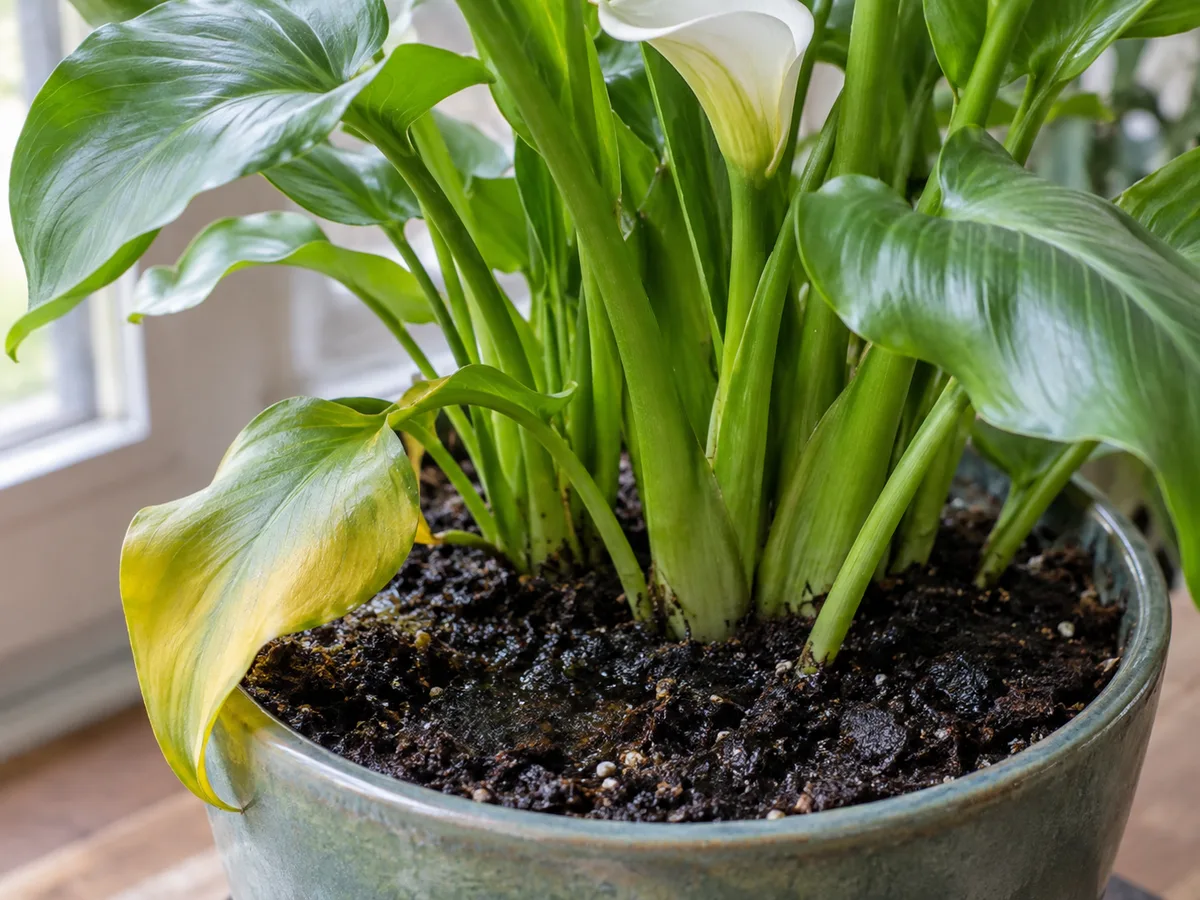
Yellow leaves are not a diagnosis by themselves. A single older leaf yellowing as the plant finishes its season may be normal; several leaves yellowing while the mix stays wet point toward poor drainage or rot. Check the soil below the surface, smell for sourness, and inspect the rhizome only if the plant is declining. If the medium is saturated, stop watering, empty the saucer, and improve drainage rather than adding fertilizer.
Drooping can follow either drought or root damage. A dry, lightweight pot with firm roots may need a thorough watering; a heavy, wet pot with yellowing leaves needs less water and better aeration. Brown, crisp edges after a hot sunny period suggest heat or drying, while pale, stretched growth and few blooms suggest inadequate light. Change one condition at a time so you can see whether the plant responds.
If the plant has healthy foliage but no flowers, check these causes in order: the cultivar may be in its first season or recently divided; the plant may be resting; light may be too low; the rhizome may be crowded or weak; or fertilizer may be too nitrogen-rich. Give it a full growth cycle under improved conditions before deciding that it has failed. Do not keep feeding a dormant plant to force a bloom.
Protect People and Pets; Check Regional Invasive Guidance
Calla lily is toxic if chewed or swallowed. The ASPCA’s calla lily entry identifies insoluble calcium oxalates and lists oral irritation, intense burning in the mouth, drooling, vomiting, and difficulty swallowing in cats and dogs. NC State Extension also warns that eating the plant can cause serious irritation. Keep pots and cut foliage where pets and small children cannot reach them, and do not use any part of the plant as food or a home remedy.
If a person or animal chews the plant, remove any visible material from the mouth without putting yourself at risk and contact an appropriate medical professional, veterinarian, or poison-control service for case-specific advice. Do not wait for symptoms to become severe before asking for guidance, and do not induce vomiting unless a professional tells you to. Wear gloves if the sap irritates your skin, then wash hands and tools.
Also check local planting guidance before putting callas in naturalized outdoor areas. The California Invasive Plant Council profile documents Z. aethiopica spreading through rhizomes and seed in coastal California wetlands and prairies, while its rating is regional rather than a blanket designation for every cultivar or location. Do not dump rhizomes, soil, or seed-bearing cuttings into wild areas or waterways. If the plant is unwanted, bag the material and follow local green-waste or invasive-plant disposal instructions.
Conclusion
To grow calla lilies successfully, match the care to the plant you have: white Z. aethiopica is more tolerant of wet garden conditions and mild winters, while many colored hybrids need better drainage and frost-free dormancy. Give active plants bright light and evenly moist soil, keep dormant storage organs dry, and avoid treating a pond-margin calla like a standard indoor pot. When you identify the cultivar and adjust care through the season, the plant is easier to place, safer to overwinter, and more likely to bloom again.