How to Grow and Care for Jackfruit Trees
Grow jackfruit in the right climate, protect its roots, choose seed or grafted trees, and harvest fruit at the right maturity stage.
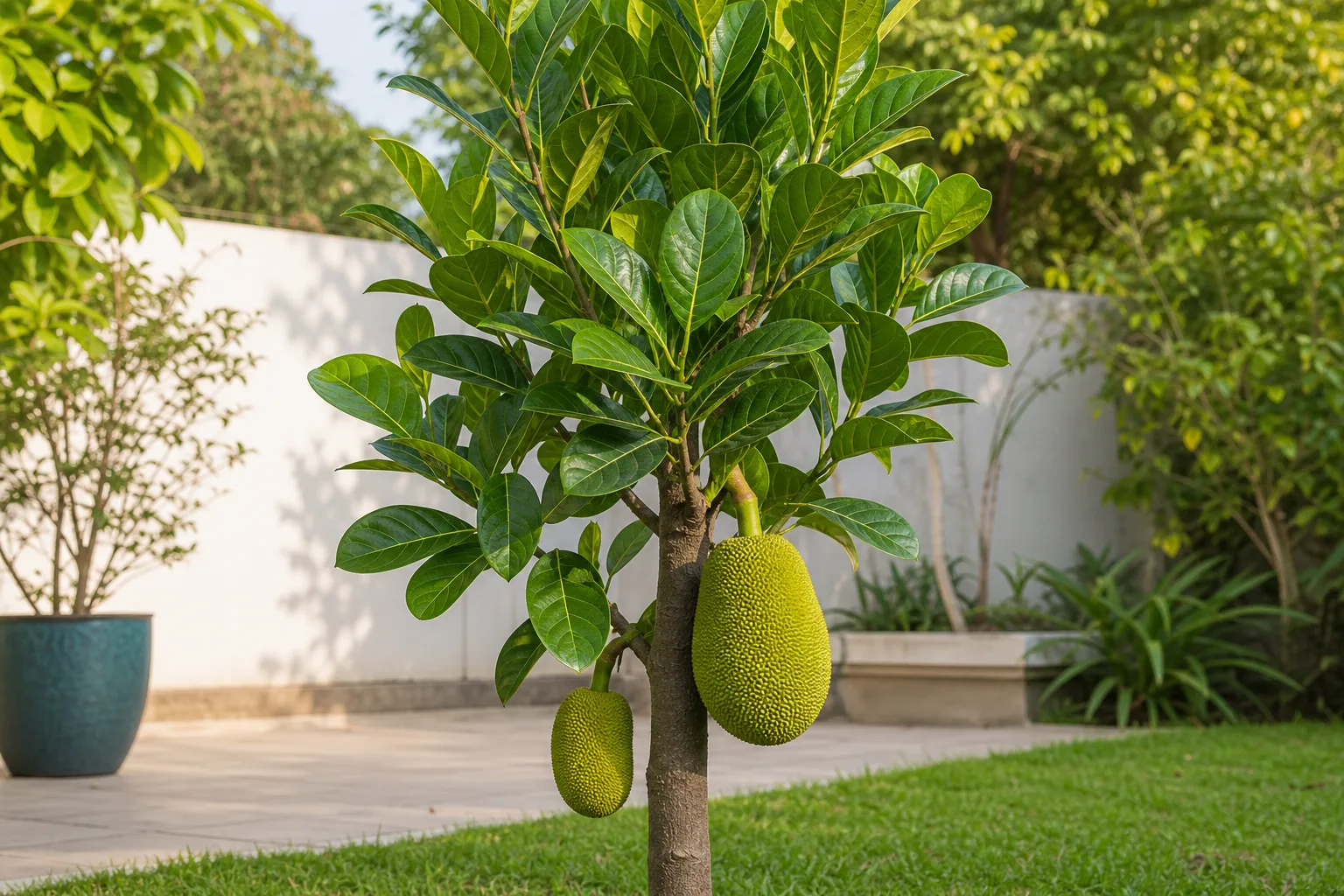
Jackfruit (Artocarpus heterophyllus) is an evergreen tropical tree that can produce fruit directly from its trunk and older branches. It is also a long-term space commitment: a tree left unpruned can become far too large for a typical yard, and its fruit can be heavy enough to damage weak limbs. The most important question is not which fertilizer to buy. It is whether your site can provide warmth, humidity, full sun, and fast drainage for years.
In a suitable climate, the care routine is straightforward. Give the tree room, keep young roots evenly moist but oxygenated, feed during active growth, prune after harvest, and thin heavy fruit loads before they strain the tree. If you live outside a frost-free tropical or near-tropical region, you may still grow jackfruit as a protected container specimen, but reliable outdoor fruiting is a much bigger claim than simply keeping the tree alive.
Is jackfruit right for your climate and yard?
Jackfruit grows best in continuously warm, humid conditions with regular rainfall or irrigation. The University of Florida IFAS guide to jackfruit reports that the tree is grown in south Florida and Hawaii in the United States, while the Crop Trust crop overview describes a preference for warm climates, well-drained sandy loam, and roughly 1,000–2,400 millimeters of annual rainfall. That range is a useful climate picture, not a watering quota for every garden.
Jackfruit is often listed for USDA Zones 10–12, but a zone number cannot tell you whether your yard floods, dries out in winter, or experiences cold pockets. UF/IFAS reports leaf damage at 32°F (0°C), branch damage around 30°F (-1°C), and possible death of branches or the whole tree at 28°F (-2°C). Young trees are the least forgiving, so a site that experiences regular frost is a poor outdoor fruit-tree site even if summer heat is excellent.
Use this quick decision rule before buying a tree:
- Plant in the ground if your site is frost-free or nearly so, humid, sunny, and naturally well drained.
- Use a protected container if you can move or shelter the tree during cold weather and mainly want an ornamental tropical plant.
- Skip the project for fruit production if the site floods, stays cool for long periods, or cannot provide enough light and humidity.
Space matters as much as temperature. A mature jackfruit has a dense canopy, roots beyond the drip line, and heavy fruit. Keep the tree away from overhead power lines, buildings, driveways, septic systems, and other large trees. A one-foot nursery tree can become a difficult pruning and harvest problem surprisingly quickly.
Choose a grafted tree or grow from seed
Buy a grafted tree when you want predictable fruit quality, a named cultivar, and the shortest reasonable path to a harvest. Start from seed when you enjoy experimentation and can accept that the resulting tree may differ from the parent in fruit size, texture, aroma, yield, and maturity season. Seedlings can fruit in the third or fourth year under very good conditions, according to UF/IFAS, but the timeline varies with climate, care, and genetics.
When shopping for a nursery tree, look for healthy new growth, an undamaged trunk, clean leaves, and roots that have not formed a tight circling mat. A small, vigorous tree in an appropriately sized pot is generally a better choice than a tall tree jammed into a shallow container. The UF/IFAS guidance notes that jackfruit is strongly affected by root restriction and that large trees in undersized containers may establish poorly after planting.
Why fresh seeds matter
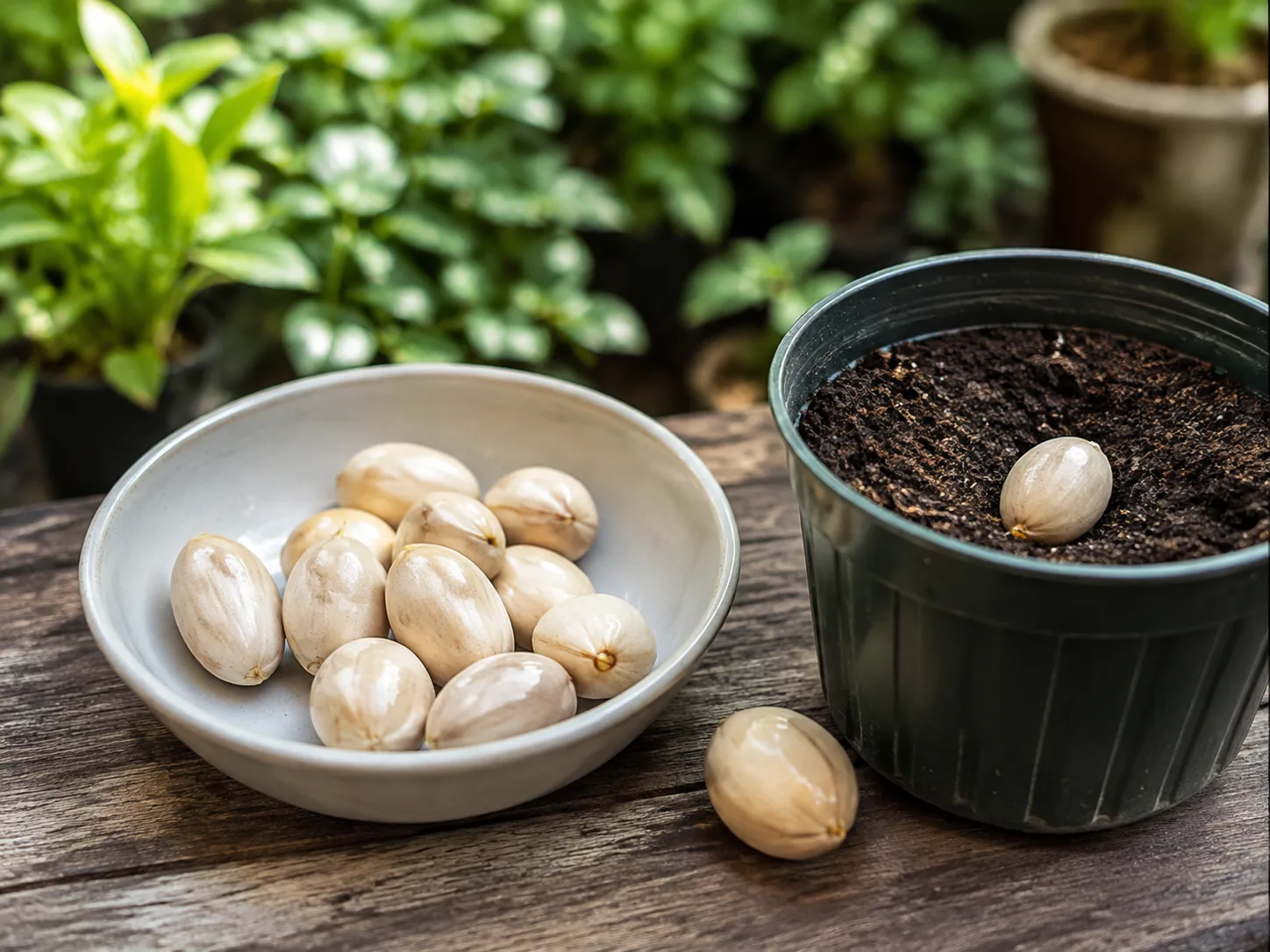
Jackfruit seeds lose viability quickly. Use seeds from a fully mature, healthy fruit and plant them as soon as you can; both UF/IFAS and Gardening Know How’s seed-propagation guidance emphasize that storage is short, with about a month being a practical upper limit in ordinary conditions. A seed that has dried hard or sat for weeks is a poor candidate even if it looks intact.
Rinse away the slippery fruit residue, soak the seeds overnight, and sow them about an inch deep in a warm, airy medium. Use a deep pot with drainage holes because the developing taproot is long and delicate. Keep the medium lightly moist, never saturated, and expect germination in roughly three to eight weeks.
If you start seeds in a tray or shallow pot, transplant while the seedling is still young and has no more than about four leaves. Lift from the soil rather than pulling the stem, and disturb the taproot as little as possible. Once a seedling has filled a small container, the root can become difficult to move without a setback; a deep individual pot is safer than repeated shallow-pot transfers.
Grafting is best left to a nursery or experienced propagator. Side-veneer grafting, chip budding, cleft grafting, and approach grafting are all used, but the practical home-garden decision is usually whether to buy a healthy grafted tree rather than which technique to attempt. Cuttings can root under controlled mist and rooting-hormone conditions, but they are less common and less dependable for a backyard tree than seed or grafted stock.
Plant jackfruit in the right site
Plant in late spring or at the beginning of the rainy season once the soil is warm and you can provide irrigation. In a frost-free area with dependable water, planting time is more flexible, but the tree still benefits from a period of warm weather to establish roots before any cool or dry season.
Choose the sunniest practical part of the yard, with shelter from persistent strong wind and no standing water after a normal storm. Full sun supports the strongest growth and best chance of fruiting. Light shade may protect a young tree in intense heat, but a permanently shaded site usually produces a leafy tree with disappointing fruit production.
Space, drainage, and planting depth
Allow about 25–30 feet between an unpruned tree and buildings, power lines, or other trees. If you commit to regular selective pruning, UF/IFAS gives a narrower 20–25-foot spacing range for a home landscape, but tighter planting increases the work and the consequences of missed pruning. Do not use a small spacing number as permission to plant beneath a roof or beside a utility line.
Prepare a broad planting area rather than filling a narrow hole with rich imported soil. A hole several times wider than the container helps roots enter surrounding soil, while the root-ball top should finish level with or slightly above the surrounding grade. Keep the trunk flare visible, backfill with the native soil you removed, and water slowly to settle air pockets. Avoid putting a concentrated layer of fertilizer at the bottom of the hole.
If your soil is shallow, heavy, or close to a seasonal water table, plant on a broad mound. UF/IFAS describes mounds about 2–3 feet high and 4–10 feet across for flood-prone Florida sites; the general principle is to raise the root zone so rain can drain away. A mound is not a cure for a permanently flooded site, but it can create enough oxygenated soil for roots during ordinary heavy rain.
Mulch a wide ring with about 2–6 inches of wood chips or another suitable organic mulch. Keep mulch 8–12 inches away from the trunk, because a damp mulch collar can hide injury and keep bark wet. Maintain a grass-free area around the trunk and protect it from mower and string-trimmer damage; even a small wound can become an entry point for insects or decay.
Set up a watering routine that protects roots
Water newly planted trees regularly during dry weather, applying the water slowly over the root ball and the loosened soil beyond it. The right frequency depends on rain, soil, temperature, wind, and tree size, so a fixed daily schedule is more likely to overwater one yard and underwater another. Check the soil several inches down before irrigating; the top can look dry while the root zone remains wet.
During active fruit development, consistent moisture becomes especially important. Mature trees tolerate some drought once established, but prolonged dryness can reduce growth and fruiting. The Crop Trust notes that the tree’s deeper roots provide some drought tolerance, while UF/IFAS recommends irrigation during dry periods and considers water particularly important from blooming through fruit development.
Use a hose at low flow, a drip system, or a properly placed soaker line. Let water soak deeply, then allow excess to drain before applying more. Avoid lawn sprinklers on a timer that wet the tree every day; UF/IFAS specifically warns that frequent overwatering from lawn irrigation can contribute to root decline. Move irrigation away from the trunk as the tree grows so the wetted area follows the expanding feeder roots.
After extreme rain, stop adding water and inspect the site. If the root zone stays saturated, improve drainage or plan a mound before planting. UF/IFAS reports that continuously wet or flooded soil can cause jackfruit decline or death after only a few days.
Feed for steady growth and fruiting
Start with a soil test when possible, particularly if the ground is calcareous, very sandy, or has been heavily fertilized for a lawn. Jackfruit needs nitrogen, phosphorus, potassium, magnesium, and micronutrients, but a deficiency diagnosis based only on leaf color is unreliable. Poor light, root damage, excess water, and high soil pH can all look like a feeding problem.
For a young tree, use a complete fruit-tree fertilizer at the label rate and split applications across the active growing season rather than dumping a large dose beside the trunk. UF/IFAS describes small, repeated applications for the first year and two or three mature-tree applications from flowering through just after harvest and pruning. That regional schedule is more useful as a pattern than as a universal dose; soil type and local recommendations should decide the product and rate.
Organic matter can support the soil system, but it is not a license to apply unlimited manure. In an eight-year Hainan field experiment, organic manure increased yield by 32% over an unfertilized control, while chemical fertilizer increased it by 15%, alongside changes in pH, nutrients, carbon, and soil organisms. The peer-reviewed study supports soil building under tested conditions, not a universal backyard recipe.
Stop treating fertilizer as the first response to every pale leaf. Apply feed only when the tree is actively growing, keep granules off the trunk, water after applying dry products, and reduce routine feeding when the tree is cool, dormant, or stressed. In the UF/IFAS cultural calendar, nitrogen fertilizer is not applied after August in Florida because late vegetative growth can interfere with seasonal flowering; adapt the timing to your local climate rather than copying a month from another hemisphere.
Prune and train for safe harvests
Young jackfruit trees need structural guidance more than heavy cutting. In the first year, remove only dead, diseased, or broken growth unless a light tip prune is needed to encourage lateral branching. In the second season, select a strong framework and remove overly upright shoots that will push the canopy beyond a safe harvest height.
For mature trees, prune after harvest or at the end of the main fruiting season. Remove dead wood, crossing branches, weak interior growth, and selected vigorous upright shoots so light and air reach the center. Old flowering shoots can also be removed after harvest. Make clean cuts just outside the branch collar, and avoid leaving long stubs that die back into healthy wood.
Selective pruning can keep a tree around 8–14 feet in a home landscape, according to UF/IFAS, but that is a maintenance goal rather than a one-time topping cut. Remove no more than one-third of the canopy in a year. Severe topping creates a flush of weak upright shoots, removes productive wood, and can leave large wounds that are slow to seal in a humid climate.
Prune for the way you will actually harvest. Reducing a tree after fruit is already high above a roof or driveway is harder than setting a height limit while branches are young. Use ground-based tools, and hire an arborist for large limbs, climbing, utility-line conflicts, or unsafe cuts.
Thin fruit before the weight becomes a problem
Jackfruit can carry fruit on the trunk, thick limbs, and older branches, but a young tree should not be asked to carry a full crop. UF/IFAS recommends limiting young trees to one fruit per tree or major limb because heavy fruit loads have been associated with limb decline, limb death, and stunted growth. On mature trees, thinning to one fruit per major limb can improve the size and quality of the remaining fruit.
Thin early, when fruit is small enough to remove cleanly. Keep the healthiest, best-positioned fruit on a strong branch and remove crowded, damaged, low-hanging, or poorly supported fruit. This is also a good time to consider access: one fruit that can be monitored and harvested safely is worth more than several that overload a limb or mature beyond reach.
Understand flowering, pollination, and fruit timing
Jackfruit is monoecious, which means a single tree bears separate male and female flowers. The small flower clusters form on short flowering twigs from the trunk and older branches rather than only at the tips of new shoots. Wind and insects move pollen, and UF/IFAS reports that cross-pollination between cultivars or seedlings can improve fruit set and quality.
One tree can flower without setting a useful crop. Before assuming pollination is the problem, check whether the tree is mature enough, whether it receives full sun, whether cold or drought interrupted flowering, and whether excess nitrogen is pushing soft vegetative growth. If your site can support two trees, different cultivars may broaden the pollination and harvest window, but adding a second tree will not fix a flooded or shaded planting site.
From flowering to mature fruit, expect roughly 150–180 days in the UF/IFAS landscape guide, with cultivar and weather affecting the result. The main harvest season is commonly summer and fall in suitable subtropical conditions, though local timing can differ. Mark the date when flowers or very young fruit appear so you can start checking maturity based on elapsed time instead of guessing from color alone.
Know the jackfruit types worth growing
Choose a cultivar around your yard, harvest habits, and preferred fruit texture rather than choosing only by a dramatic fruit-size claim. Cultivar performance varies by region, and the UF/IFAS variety tables note that local experience remains limited in some areas.
| Cultivar | Useful home-garden distinction |
|---|---|
| Black Gold | A fast, spreading tree that can be pruned to a relatively small size; medium fruit with sweet, aromatic pulp. |
| Gold Nugget | Smaller fruit and an early season in the UF/IFAS evaluation; thinning is recommended. |
| Dang Rasimi | Vigorous and productive, but annual pruning is needed to keep its height and spread moderate. |
| Kun Wi Chan | Large fruit and heavy production potential, paired with a vigorous tree that needs room and regular pruning. |
| Lemon Gold | Medium-small fruit with yellow flesh and a moderate yield; plan for annual size control. |
| NS1 | Dense, upright growth with small to medium-small fruit and a need for moderate yearly pruning. |
Ask a local nursery which cultivars perform reliably in your climate and whether the tree is grafted. A named grafted tree gives you a better chance of reproducing the advertised fruit traits; a seedling is genetically variable even when the seed came from an excellent jackfruit.
Harvest at the right maturity stage
You can harvest jackfruit at two useful stages. Pick immature green fruit for savory cooking when it is still firm and the seeds are not fully developed, or let a mature fruit finish its ripening process for sweet edible bulbs. The harvest decision changes the signs you are looking for and the way you handle the fruit afterward.
For mature fruit, use several clues together:
- the skin may shift from deep green toward light green or yellowish-brown, depending on the cultivar;
- the short spines become more widely spaced, flatter, and slightly softer;
- the fruit develops a noticeable aroma;
- a tap changes from a solid sound on green fruit to a duller, hollow sound on mature fruit;
- the leaf nearest the fruit stalk may begin to yellow.
Color alone is not reliable because cultivars change at different rates. Gardening Know How’s harvest guide also recommends combining sound, aroma, spine texture, and seasonal timing. If the fruit is high, do not climb an unstable ladder or stand beneath a heavy fruit while cutting; use a safe ground-based method or get help.
Handle latex and ripen fruit safely
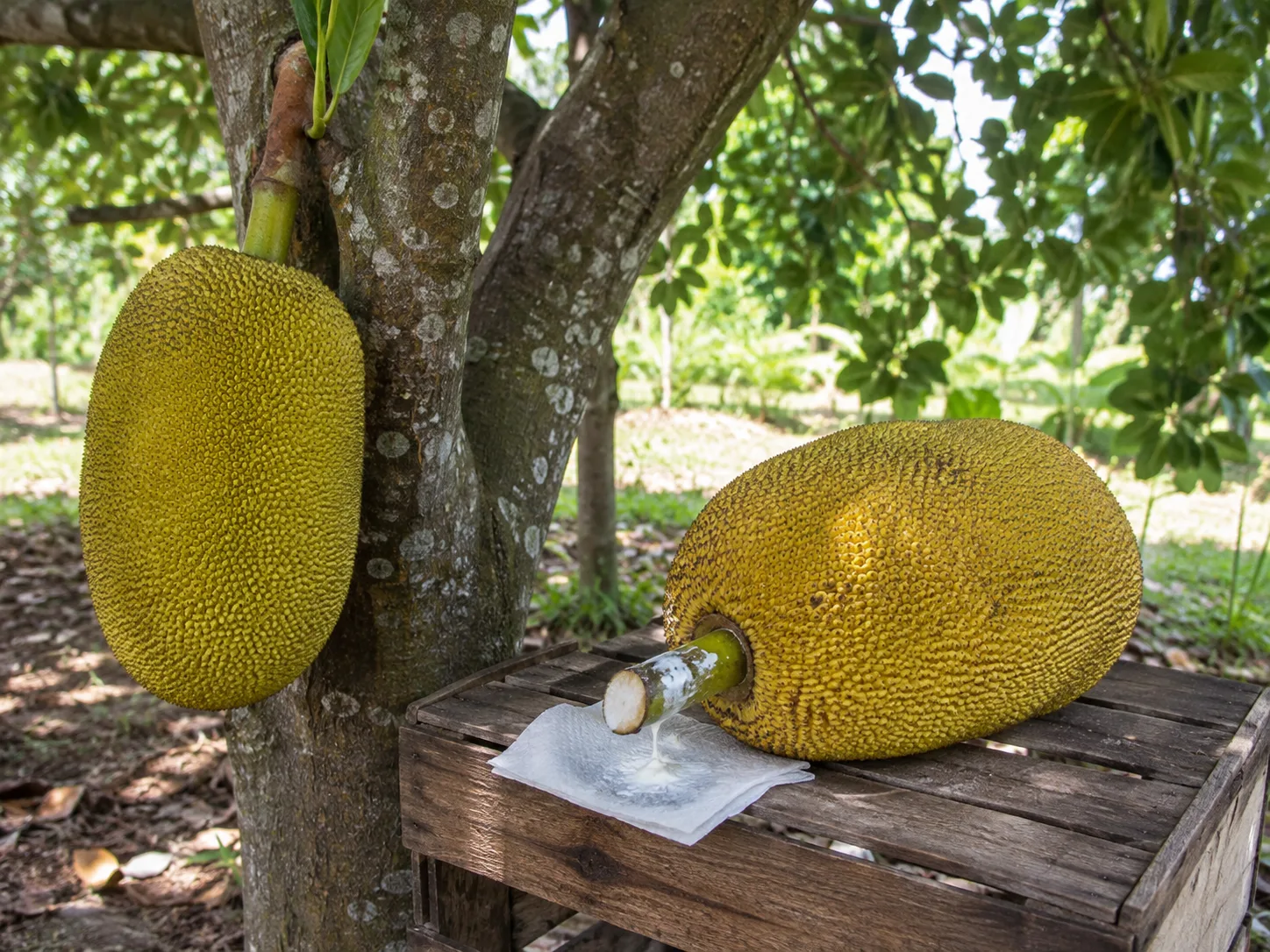
Jackfruit latex is thick, white, and extremely sticky. Wear gloves and old clothing, support the fruit before cutting, and use sharp clippers or loppers to cut the stalk rather than tearing the fruit from the branch. The cut stem will continue to ooze latex, so wrap it with paper or place the fruit on its side in a shaded spot until the flow slows.
Some growers make shallow cuts before harvest to drain latex, but that breaks the protective skin on the tree. For a home harvest, keeping the skin intact and managing the cut stem afterward is the lower-risk default, especially in warm, wet weather.
A mature fruit generally ripens in about three to ten days at 75–80°F (24–27°C). Keep it out of direct sun while it softens, and refrigerate ripe bulbs or freeze them for longer storage. To clean the fruit, oil your hands, knife blade, and work surface—not the knife handle—then halve the fruit, remove the central core, and separate the edible bulbs, seeds, and fibrous rag. The latex can stain permanently and remains troublesome on cutting surfaces, so prepare the work area before opening the fruit.
Troubleshoot pests, diseases, and environmental stress
Jackfruit has fewer routine pest problems than many fruit trees in a suitable climate, but “few serious problems” does not mean problem-free. Inspect new shoots, the trunk, flower clusters, and developing fruit at least monthly during warm, wet weather. Early detection is more useful than a calendar spray, especially because permitted products and effective controls differ by location.
Scale insects and mealybugs may cluster on stems, young shoots, and fruit, while borers can enter wounded or dead wood. Remove dead branches promptly, avoid trunk injuries, and keep fallen, damaged fruit from lying beneath the canopy. If you need a pesticide, identify the pest first and follow the product label and local extension guidance; never guess at a rate from a general tropical-fruit article.
A practical Epic Gardening jackfruit overview also lists soft fruit rot, leaf spot, rust, and borers as inspection prompts. Treat a symptom list as a reason to look closer, not as a diagnosis; weather stress and root damage can create similar decline.
Root rot and flooding
Root problems usually begin below ground. A tree with yellowing leaves, weak new growth, sudden wilt, or branch decline may be thirsty, but it may also have roots damaged by flooding. Check the soil moisture and drainage before watering again. If the root zone smells sour or remains saturated, irrigation is part of the problem rather than the solution.
UF/IFAS lists Pythium, Phytophthora, Fusarium, and Rhizoctonia among organisms associated with root rot, particularly after flooding. You cannot diagnose a specific pathogen from a leaf photograph, so start with the site: stop excess water, redirect runoff, improve grade or drainage, and raise future plantings on a mound. If the tree continues to decline, have a local extension office or qualified arborist examine roots and soil.
Fruit rot and trunk problems
Warm, rainy flowering and fruiting periods can favor soft rot such as Rhizopus and other fungal problems. The first practical defense is to keep fruit skin intact, remove badly affected fruit, improve airflow with selective pruning, and avoid leaving wet plant debris under the tree. Do not compost obviously diseased fruit in a small home pile if it can spread the problem back into the orchard.
Darkened bark, dying shoot tips, holes, sawdust-like material, or sticky exudate may indicate borer injury or dieback. Trace a declining branch back toward healthy wood and remove affected material with sanitized tools where the cut is safe and appropriate. UF/IFAS advises contacting a local extension agent for current control options, which is especially important before using any insecticide or fungicide on edible fruit.
Plan seasonal care year-round
Think of jackfruit care as a cycle rather than a list of unrelated chores. During the active warm season, check moisture, weeds, new shoots, pests, flower clusters, and fruit load. During the flowering-to-harvest period, prioritize consistent irrigation, fruit thinning, support through safe access, and frequent maturity checks.
After harvest, do the major pruning: remove dead wood, thin the interior, lower selected upright shoots, and clear fruiting debris. This is also the best time to reassess whether the canopy is too large for the site. If the tree regularly grows above a safe harvest height, reduce it gradually and choose a smaller cultivar for the next planting rather than relying on severe topping.
In the dry season, water young trees and mature trees when the soil profile actually dries, then watch for drought stress during flowering. In the cool season, protect young trees from frost and stop pushing soft new growth with late nitrogen. Mulch helps buffer the root zone, but it cannot make a freezing, dry climate suitable for reliable fruit.
Keep a short annual log of first flowering, fruit set, harvest dates, fertilizer applications, severe rain, and cold injury. After two or three seasons, that record is more useful than a generic calendar because it shows how your cultivar responds to your actual weather.
Can you grow jackfruit in a container?
Yes, but container growing is mainly a way to protect a young tree or enjoy tropical foliage. A container limits roots, dries quickly in hot weather, and makes a naturally large tree dependent on careful pruning. Fruit production is possible in a large, deep container under excellent light and warmth, but the yield and size will be much less predictable than for a well-sited in-ground tree.
Start with a deep pot that has generous drainage and a free-draining, organic-rich mix. Avoid keeping the tree in a small nursery pot for years; root restriction can weaken later establishment. Repot when roots have filled the container, moving up one size at a time so new soil does not stay wet around a small root ball.
Keep a potted tree outdoors in warm weather only after acclimating it gradually to stronger sun. Before cold weather, move it to a bright protected space well ahead of frost. A warm greenhouse can preserve a tree in a marginal climate, but humidity, ventilation, pollination, and light may still limit fruiting. Treat container fruit as a bonus, not a guarantee.
Conclusion
Growing jackfruit successfully starts with a realistic site decision. The tree wants heat, humidity, full sun, deep but well-drained soil, and enough room for a canopy that can be pruned and harvested safely. If your site floods or freezes, solve that limitation before buying a tree; fertilizer cannot compensate for damaged roots or cold injury.
For the best odds of fruit, choose a healthy grafted cultivar, plant it slightly high in a broad well-drained site, water deeply during establishment and fruit development, feed in active growth, and prune after harvest. Thin young trees to a manageable fruit load, combine several ripeness cues before cutting, and prepare for sticky latex before opening the fruit. With those decisions in place, jackfruit becomes a long-term edible landscape tree rather than an oversized tropical experiment.