How to Grow and Care for Weeping Fig Indoors
Learn how to grow and care for weeping fig indoors with practical guidance on light, watering, soil, pruning, propagation, pests, and leaf drop.
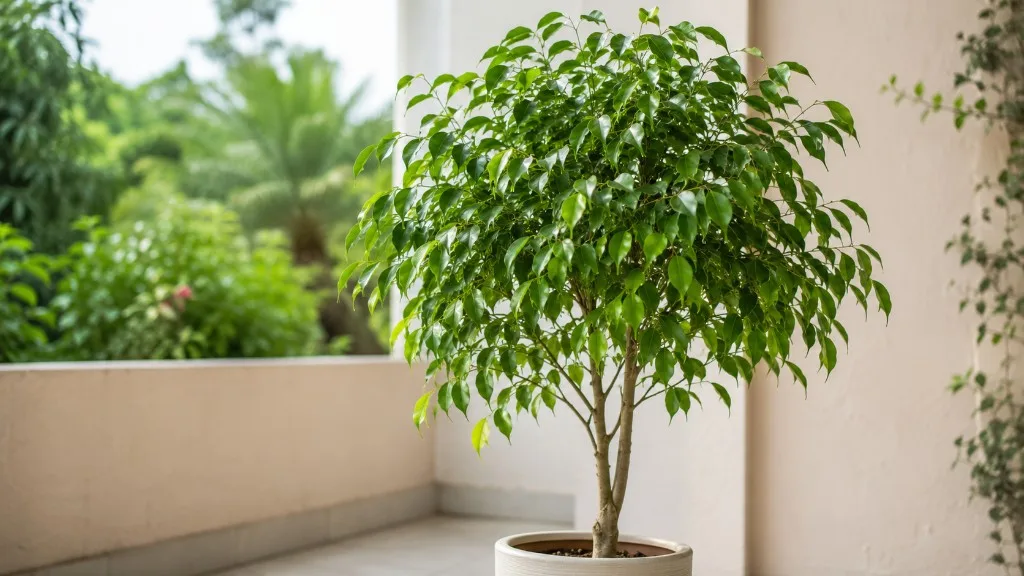
The weeping fig (Ficus benjamina) is an indoor tree with a simple care requirement that is easy to underestimate: once it likes a place, leave it there. Bright filtered light, a pot that drains freely, and a repeatable watering check matter more than misting rituals or a shelf full of supplements. The plant’s reputation for sudden leaf drop comes mainly from abrupt changes in light, temperature, moisture, or location—not from a mysterious need for perfect care.
This guide gives you a practical system for growing a weeping fig indoors, including how to bring one home, when to prune or repot, how to propagate it, and how to read the difference between normal leaf thinning and a failing root system.
Weeping Fig at a Glance
Ficus benjamina is a broadleaf evergreen tree in the mulberry family, Moraceae. Its narrow, pointed, glossy leaves hang from arching branches, which gives the plant its “weeping” name. The RHS profile lists it as an evergreen shrub or tree that can reach several metres outdoors, while the Missouri Botanical Garden notes that indoor specimens are more commonly kept in the 2- to 10-foot range.
Outdoors, this is a warm-climate plant for roughly USDA Zones 10–12, depending on the source and local exposure. Indoors, the zone label matters less than the room: a bright, draft-free space with temperatures that stay above the mid-60s°F is a much better predictor of success than the number on a plant tag. It may be sold as a single trunk, braided standard, compact shrub, bonsai, or variegated cultivar.
| Care factor | A useful indoor target | Why it matters |
|---|---|---|
| Light | Bright filtered light; gentle morning sun is usually fine | Supports dense growth and helps the soil dry predictably |
| Water | Water after the upper 1–2 inches dry, then drain fully | Avoids both drought swings and saturated roots |
| Soil | Airy, soil-based houseplant mix with drainage amendments | Keeps oxygen around roots after watering |
| Temperature | About 65–80°F, with no abrupt cold or hot drafts | Sudden changes commonly trigger leaf drop |
| Humidity | Average home humidity is workable; avoid HVAC blasts | Dry air increases crispy edges and mite pressure |
| Feeding | Balanced houseplant fertilizer during active growth | Supports new foliage without salt overload |
| Repotting | Only when roots are crowded or mix has degraded | Extra soil in a large pot stays wet too long |
Choose a Location Before You Bring It Home
The best place is not merely the brightest empty corner. It is the brightest spot where the plant can remain for months without being brushed, rotated daily, parked beside a vent, or moved for cleaning. A weeping fig can tolerate a range of conditions after acclimation, but it handles repeated change poorly.
Put the tree near an east-facing window, several feet back from a bright south or west window, or behind a sheer curtain that softens intense afternoon sun. Leave enough room for the canopy to expand and for you to inspect the undersides of leaves. If a new plant arrives from a dim store, give it a stable bright location and let it adjust before you start pruning, repotting, or fertilizing.
How Much Light Does a Weeping Fig Need?
Aim for bright, indirect light for much of the day, rather than a dark corner described as “low light.” The UF/IFAS ficus guidelines explain that ficus can be produced under very different light levels but are sensitive to radical changes in intensity. That production insight translates directly to a home: a plant moving from a bright nursery to a dim room may shed leaves even if it was technically “acclimated” somewhere else.
Low light produces long gaps between leaves, pale or smaller new foliage, and soil that stays wet for too long because the plant is using water slowly. Harsh direct sun through hot glass can bleach or scorch leaves. If the only workable spot is dim, add a grow light on a timer rather than compensating with more water. Turn the pot occasionally—every few weeks, not every day—so the canopy develops evenly without making relocation a constant stress.
Build an Airy Soil Mix and the Right Pot
Use a high-quality indoor potting mix that holds some moisture but does not collapse into a dense, wet mass. A practical starting point is ordinary houseplant mix amended with perlite and a little fine bark. You are aiming for a root ball that can be thoroughly watered and then gradually dry, not a mix that becomes hydrophobic or remains muddy at the bottom.
The RHS recommends a peat-free, loam-based compost with added fine bark for protected culture, while UF/IFAS lists combinations including sphagnum peat, pine bark, vermiculite, or perlite for ficus production. At home, the exact recipe is less important than the result: water should travel through the pot, and the mix should contain visible air spaces after it drains.
Choose a container with a real drainage hole. If you use a decorative cachepot, keep the ficus in its draining grow pot and lift it out to water. Do not create a permanent water reservoir in the bottom unless the container is designed for that purpose and you understand how its wicking system works. A large pot is not a kindness to a small root ball; it creates a large volume of slowly drying soil and raises the risk of root rot.
Water by Root-Ball Moisture, Not by Calendar
Water when the upper 1–2 inches of mix feel dry, then pour slowly until water begins to leave the drainage hole. Let the pot drain completely and empty the saucer. This “soak, drain, wait, check” rhythm is more reliable than watering every Sunday because the plant’s demand changes with light, pot size, season, and airflow.
In a bright warm room, you may check weekly during spring and summer. In winter, a large tree several feet from a window may need much less frequent watering. Do not let a calendar force water into a pot that is still cool and damp. Conversely, do not give a few spoonfuls to a pot that has dried deeply; shallow sips can leave the center of the root ball dry while the outer mix stays wet.
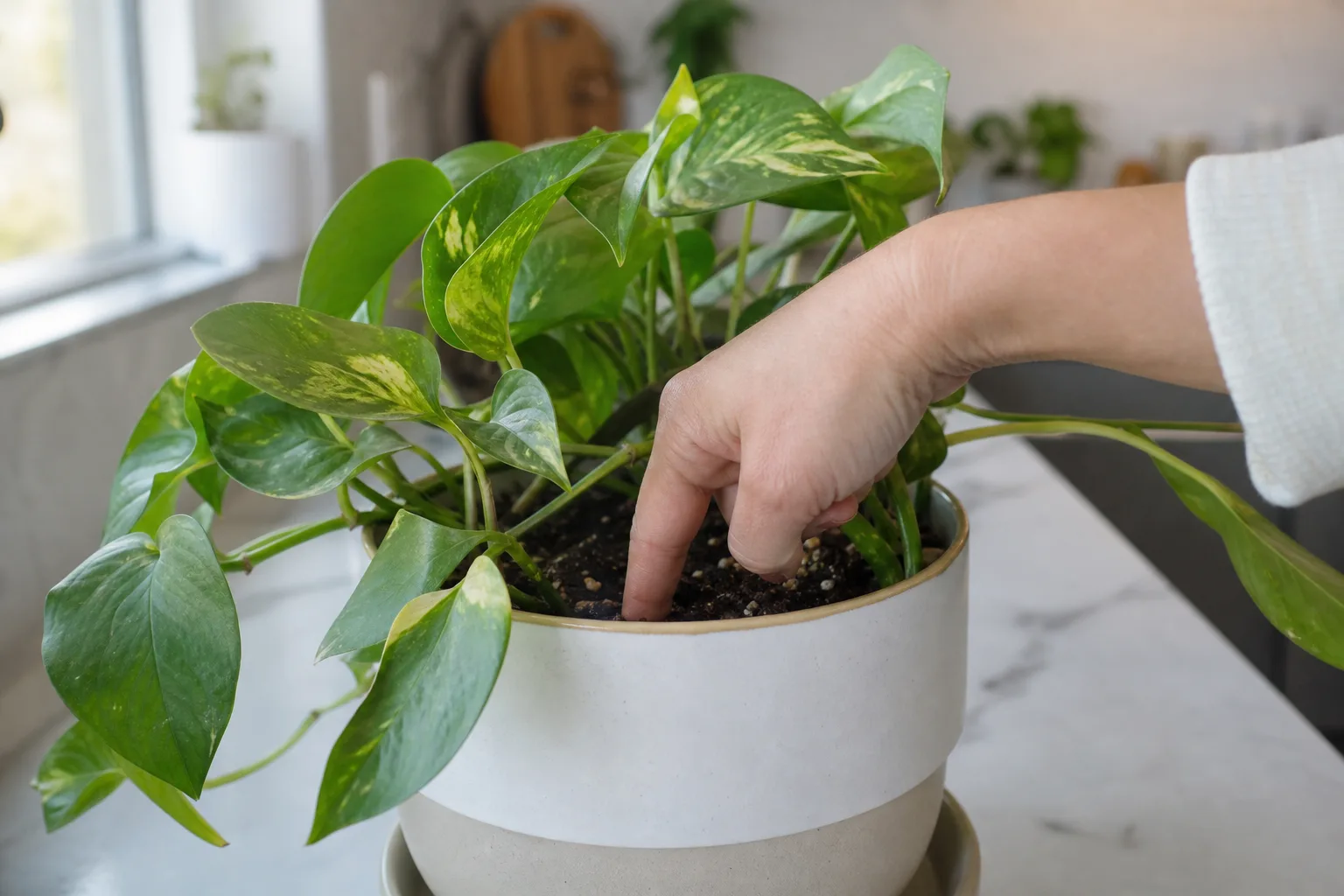
Use your finger, a wooden skewer, and the weight of the pot together. Dry mix feels loose and the pot is noticeably lighter. Wet mix clings to a skewer and the container remains heavy. If the surface is dry but the pot stays heavy, wait and check deeper. If the soil pulls away from the pot wall and water runs straight down the sides, rehydrate in two or three slow passes rather than flooding it once.
Room-temperature tap water is usually acceptable. If you see a persistent white crust on the soil or leaf surfaces, periodically flush the pot with plenty of clean water and allow it to drain; salt buildup can injure roots and leaf margins. Do not add fertilizer to compensate for a watering problem.
Set Temperature and Humidity Without Chasing Perfection
Keep the tree away from forced-air vents, exterior doors, radiators, and cold glass. A stable 65–80°F room is a sensible target, but a steady temperature just outside that range is often less damaging than repeated hot-cold swings. The Missouri Botanical Garden specifically warns that ficus may lose foliage when moved between environments, and UF/IFAS gives 65–80°F as an appropriate interior range.
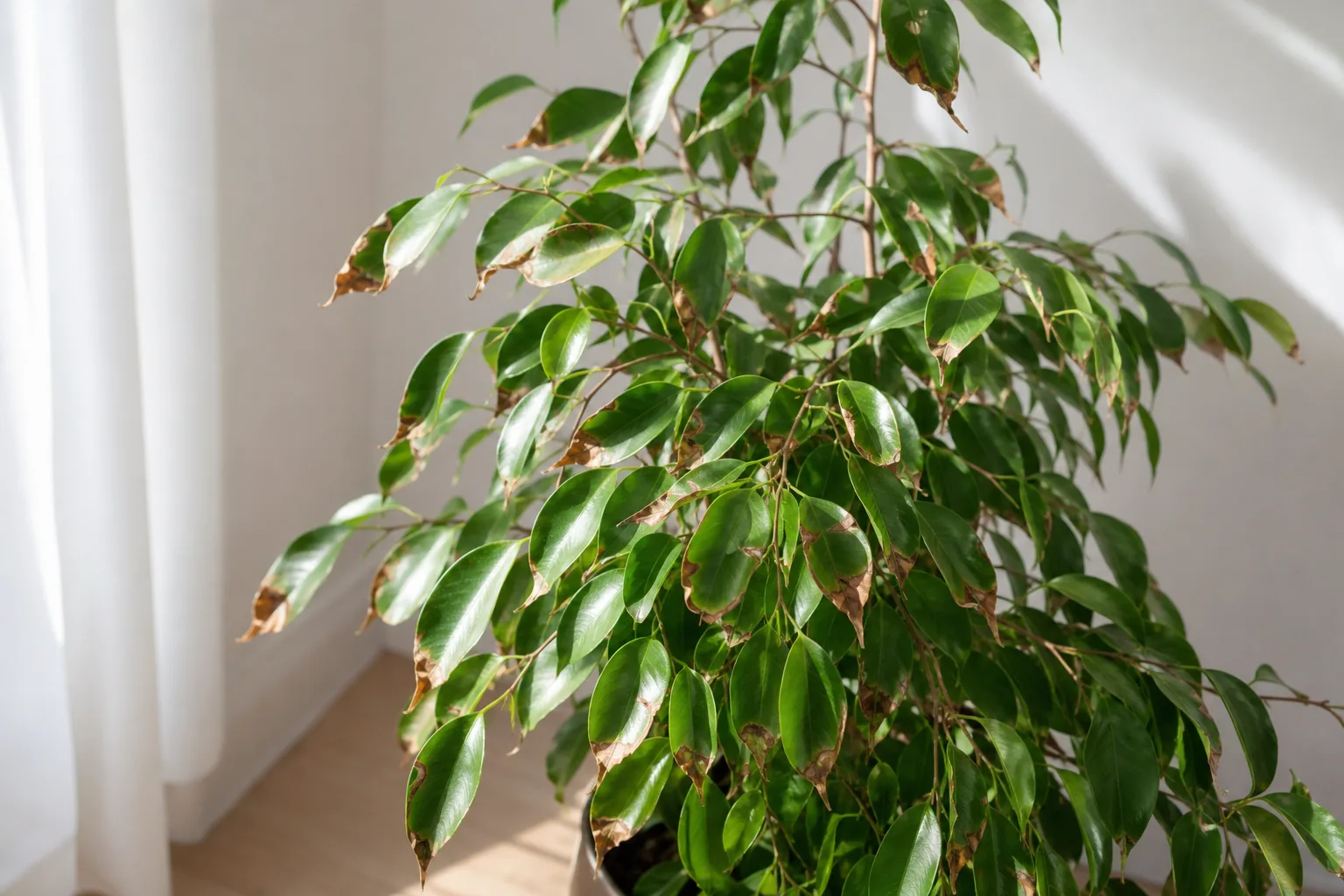
Moderate humidity is enough for many homes. If leaf edges become crispy during heating season, first check for a vent blowing directly on the canopy and confirm the root ball is not cycling from bone-dry to soaked. A small humidifier near the plant can raise humidity more consistently than daily misting. A hygrometer is useful if you are guessing, but do not turn a weeping fig into a laboratory project; airflow, light, and roots still matter more than a single humidity number.
Misting can temporarily wet the foliage but does not reliably change the room’s humidity for long. Repeatedly wet leaves in stagnant air can also encourage spotting. Pebble trays are acceptable as a local humidity aid only when the pot sits above the waterline on the stones; they do not replace drainage and they should never leave the root ball standing in water.
Fertilize During Active Growth
Feed a growing weeping fig in spring and summer with a balanced liquid houseplant fertilizer diluted according to its label, or use a controlled-release product as directed. The UF/IFAS guidance recognizes both controlled-release and water-soluble fertilizers with micronutrients for ficus production, but a home plant does not need commercial-production rates.
Do not fertilize a plant with cold, waterlogged soil, active root rot, a major pest outbreak, or severe leaf drop after a move. Fertilizer cannot repair damaged roots, and excess salts can burn roots and produce brown margins that look like low humidity. In fall and winter, reduce or pause feeding if growth has slowed. Resume when you see healthy new growth and the plant is using water normally.
If leaves are pale, check light, roots, and recent watering before diagnosing a nutrient deficiency. A weeping fig in dim light may be unable to use water and nutrients efficiently. Adding magnesium or a micronutrient product without evidence can create a second problem and makes the original diagnosis harder.
Prune for Shape, Height, and New Branches
Prune to remove dead or damaged wood, control height, thin crowded growth, and shape the canopy. Pruning cannot make a severely dark, leafless plant full overnight; it works best after light and root moisture are stable. The RHS classifies weeping fig under a light pruning group, while UF/IFAS notes that pruning helps maintain form, improve light penetration, and remove dead branches.
Use clean, sharp pruners. Make a cut just above a healthy leaf node or branch junction, and avoid leaving long stubs. Expect white milky sap from fresh cuts. It can irritate sensitive skin and stain surfaces, so wear gloves if needed, keep children away during the work, and wipe tools clean afterward.
A Safe Pruning Sequence
Start with dead, broken, diseased, or crossing branches. Step back and look at the whole canopy before taking more cuts. Then shorten the longest shoots by a modest amount, keeping enough foliage that the plant can continue photosynthesizing. If you want a bushier form, cut just above outward-facing nodes so new growth has somewhere to go.
For a large indoor tree, remove no more than roughly 10 percent of healthy canopy in one session unless you are correcting an emergency. Let the plant recover for several months before major reshaping. Prune more aggressively only when the tree is growing strongly, the root system is healthy, and the light is sufficient to support replacement growth. Disinfect pruners between plants, especially when removing suspicious or diseased tissue.
Repot Only When the Roots Need It
Repot in early spring when the tree is beginning active growth, but do not repot automatically every year. Check the drainage hole and root ball first. Roots circling densely, protruding from the hole, a pot that dries unusually fast, or a mix that has decomposed into a dense layer are stronger reasons than a date on the calendar.
Select a container only 1–2 inches wider than the current root ball. Water the plant the day before if the mix is moderately dry, slide it out gently, and inspect the roots. Healthy roots are generally firm and pale to tan; mushy, dark roots with a sour smell point toward root damage. Trim only clearly dead tissue with clean scissors, then replant at the same depth in fresh airy mix.
Expect some leaf drop after repotting. Keep the tree in the same stable light, water according to the new pot’s moisture—not the old schedule—and delay fertilizer until it shows active recovery. Do not combine repotting, drastic pruning, moving, and feeding in one weekend unless the plant is in immediate danger. Stacking stresses is a reliable way to lose more foliage than the original problem caused.
Move a Weeping Fig Outdoors Without a Leaf-Drop Crash
You can place a weeping fig outdoors in warm weather where nights stay safely above chilling temperatures, but treat the move as an acclimation project. Start in bright shade or a sheltered covered location. Over one to two weeks, increase exposure gradually while protecting it from strong midday sun and wind.
The same rule applies in reverse when autumn arrives: bring it indoors before cold nights, inspect for pests, and transition it back to the brightest stable indoor spot. UF/IFAS describes ficus as highly sensitive to changes in light intensity, and Gardener’s Path makes the practical point that moving a weeping fig can trigger leaf drop even when the new location is better.
Do not move it outdoors just because it is dropping leaves indoors. First check roots, light, drafts, and watering. A second abrupt relocation may remove the clue you needed and add another stress event.
Propagate from Stem Cuttings
Stem cuttings are the most accessible way to make a new weeping fig. Spring and early summer are ideal because warmth and active growth improve the odds, although a healthy plant can sometimes root at other times.
- Prepare a small pot with a drainage hole and a moist, airy rooting medium.
- Cut a healthy 4–6-inch shoot just below a node using clean pruners.
- Remove the lower leaves, leaving two or three at the tip.
- Optional: dip the cut end in rooting hormone according to the product label.
- Insert the cutting so at least one node is below the surface, then firm the mix around it.
- Cover the pot with a clear bag supported above the leaves, or use a clear propagation cover.
- Keep it warm in bright indirect light. Open the cover briefly each day and keep the medium lightly moist, never muddy.
The UF/IFAS propagation guidance lists cuttings and air layering among the main methods for ficus, while Gardener’s Path recommends warm conditions around 65–75°F and a protected humid environment for cuttings. Rooting time varies. A gentle resistance when you tug after several weeks is more useful than a fixed promise of exactly two or four weeks. Once roots are established, remove the cover gradually and begin normal care.
When Air Layering Makes More Sense
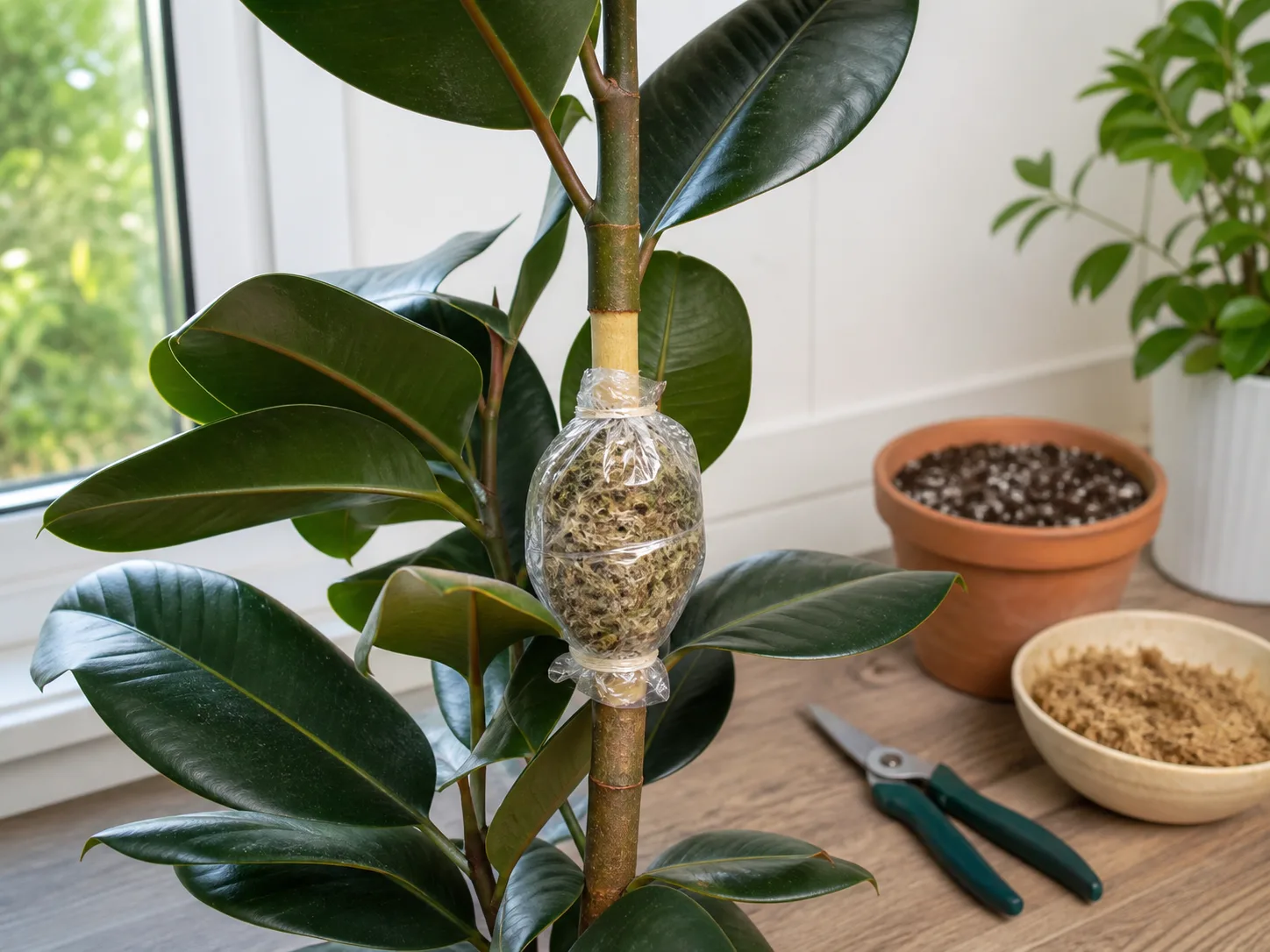
Air layering is worth considering when you want a larger new plant or a tall branch is already available. Choose a healthy pencil-thick stem, make a shallow wound through the bark and cambium, wrap the area with damp sphagnum moss, and secure it with clear plastic. Keep the moss as damp as a wrung-out sponge and check it regularly.
When you can see a substantial cluster of roots—rather than a few tiny threads—cut below the rooted section and pot it. Air layering is more invasive and less forgiving than a cutting, so do it only on a vigorous parent plant. Do not take cuttings from a tree that is already shedding heavily from drought, root rot, or a pest outbreak.
Recognize Normal Leaf Drop vs a Problem
Some leaf drop is normal for a weeping fig, especially after purchase, repotting, a change of room, or a seasonal shift in light. One or two oldest lower leaves turning yellow and falling while the stems stay firm and new growth looks healthy is usually routine turnover.
Treat leaf drop as an investigation when many green leaves fall rapidly, new growth is affected, branches become soft, the soil stays wet for days, or the plant is losing foliage from one side. Missouri Botanical Garden lists moving indoors for winter or changing the plant’s environment as common triggers. The first response should be stability: stop moving the plant, check moisture at depth, inspect roots if the mix remains wet, and look closely for pests.
Avoid the common spiral of “leaf fell, so add more water.” Ficus often drops leaves after stress, and overwatering a plant that is already losing roots can accelerate the decline. Give the plant a steady location and a measured routine for several weeks before deciding that a second major intervention is needed.
Diagnose Yellow, Brown, or Crispy Leaves
Read the leaf pattern together with the soil and the recent history. A single old yellow leaf is different from pale new leaves across the canopy. Crisp edges are different from soft brown spots. A plant that is wilting while its soil is saturated may have damaged roots rather than a simple thirst problem.
| Symptom | Check first | Sensible first response |
|---|---|---|
| Multiple yellow leaves and wet soil | Pot weight, drainage, root smell | Stop watering until the mix dries; inspect roots if it stays wet |
| Crisp edges and very light pot | Soil depth and recent missed watering | Rehydrate slowly, then shorten the dry interval modestly |
| Bleached or scorched patches | Direct afternoon sun through glass | Filter the light and remove damaged leaves only when fully dead |
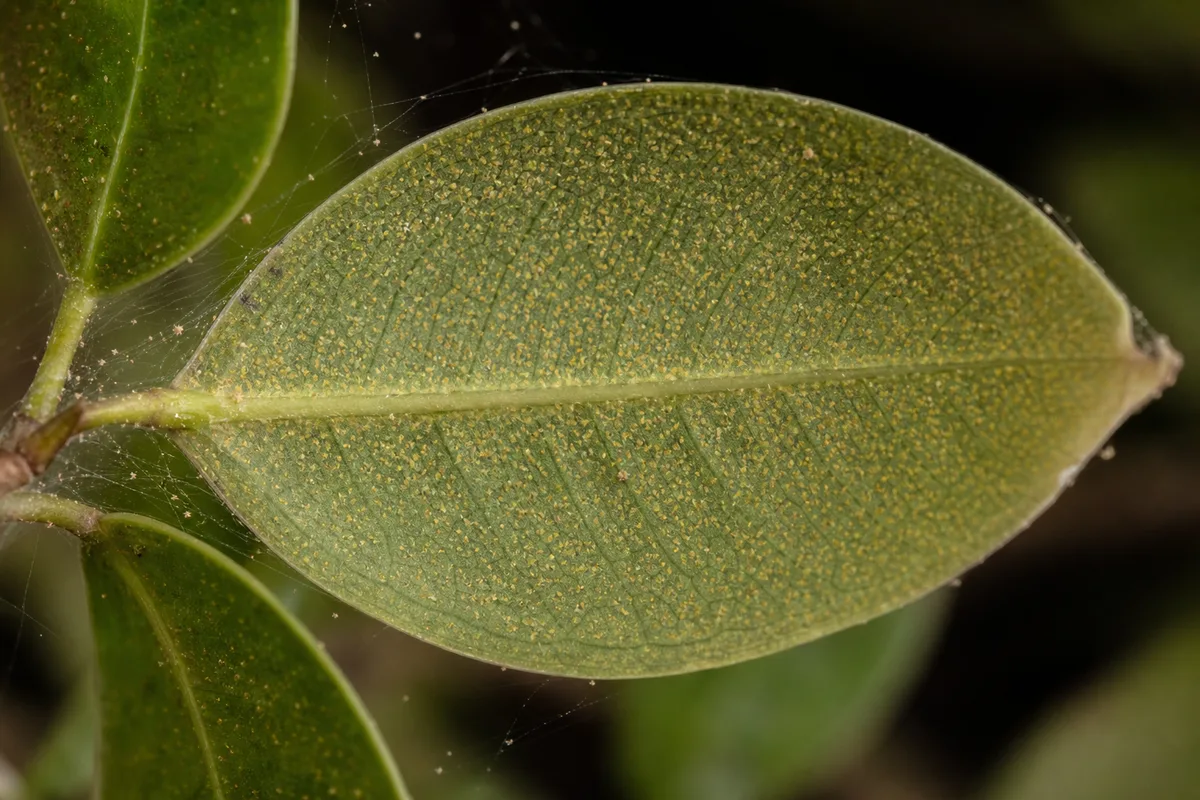
| Fine webbing and stippled leaves | Leaf undersides and stem joints | Isolate, rinse or wipe foliage, and begin a label-directed treatment |
| White cottony clusters | Nodes, petioles, and undersides | Isolate and remove visible insects before treating the whole plant |
| Pale new growth with slow growth | Light, roots, and salt buildup | Improve light and root conditions before adding fertilizer |
For suspected root rot, unpot the tree and examine the root ball rather than guessing from a leaf alone. Remove mushy roots, sanitize the container, and repot into fresh, airy mix. Severe root loss may require pruning the canopy to match the remaining roots, but do not combine that rescue with a decorative reshaping session.
Control Pests and Prevent Disease
Common ficus pests include scale, aphids, mealybugs, thrips, and spider mites. The RHS lists red spider mite, thrips, mealybugs, and scale as pests that may affect weeping fig under glass, and the Missouri Botanical Garden profile includes scale, aphids, mealybugs, thrips, and spider mites among problems to watch for.
Inspect new plants before they join your collection. Look along the midrib, leaf undersides, branch forks, and trunk crevices. Spider mites often create fine webbing and pale stippling; scale looks like fixed bumps; mealybugs resemble small cottony clusters; honeydew can leave a sticky surface and encourage dark sooty growth.
Quarantine and Inspect First
Move a suspect plant away from other plants and correct the underlying stress at the same time. For a small infestation, wipe or rinse visible pests away, then use an insecticidal soap or other product only according to its label. Test any spray on a small area first, keep the plant out of harsh sun while wet if the label advises it, and repeat only at the stated interval.
Do not use homemade pesticide concentrations or assume that a “natural” product is automatically harmless. Avoid wetting foliage late in the day when airflow is poor. Remove badly damaged leaves, keep tools clean, and continue checking weekly because eggs and hidden insects can outlast one treatment.
Good drainage and clean pruning tools reduce disease pressure, but they do not make a plant immune. Dark leaf spots, rapid dieback, or a spreading lesion deserve a closer diagnosis before you keep spraying. If the trunk or crown is collapsing, isolate the plant and consider advice from a local extension service rather than treating blindly.
Safety Around Pets and Children
Keep weeping fig away from leaf-chewing pets and young children. The ASPCA lists weeping fig as toxic to dogs, cats, and horses and identifies ficin and psoralen-related compounds among its toxic principles. The plant also produces milky sap that can irritate sensitive skin.
Place the tree where a pet cannot reach fallen leaves, and wear gloves when pruning if you react to latex-like sap. Clean drips from floors and furniture promptly. If a pet may have chewed the plant, contact a veterinarian or an animal poison-control service promptly rather than waiting for symptoms to develop.
Conclusion
The most reliable weeping fig care routine is deliberately boring: choose bright filtered light, give the tree a permanent home, water only after checking the root zone, and use a pot that drains completely. Feed only when it is actively growing, prune in measured stages, and repot when roots—not anxiety—tell you it is time.
When leaves fall, pause before changing everything. Check what moved, how wet the soil is, whether the plant is near a draft, and what the roots and leaf undersides reveal. That sequence turns a dramatic-looking ficus into a manageable indoor tree—and gives it the stable conditions it needs to keep making new leaves.