How to Grow and Care for Lemon Cypress Trees
Learn how to grow lemon cypress indoors or outdoors with practical advice on light, watering, soil, pruning, containers, winter care, and brown foliage.
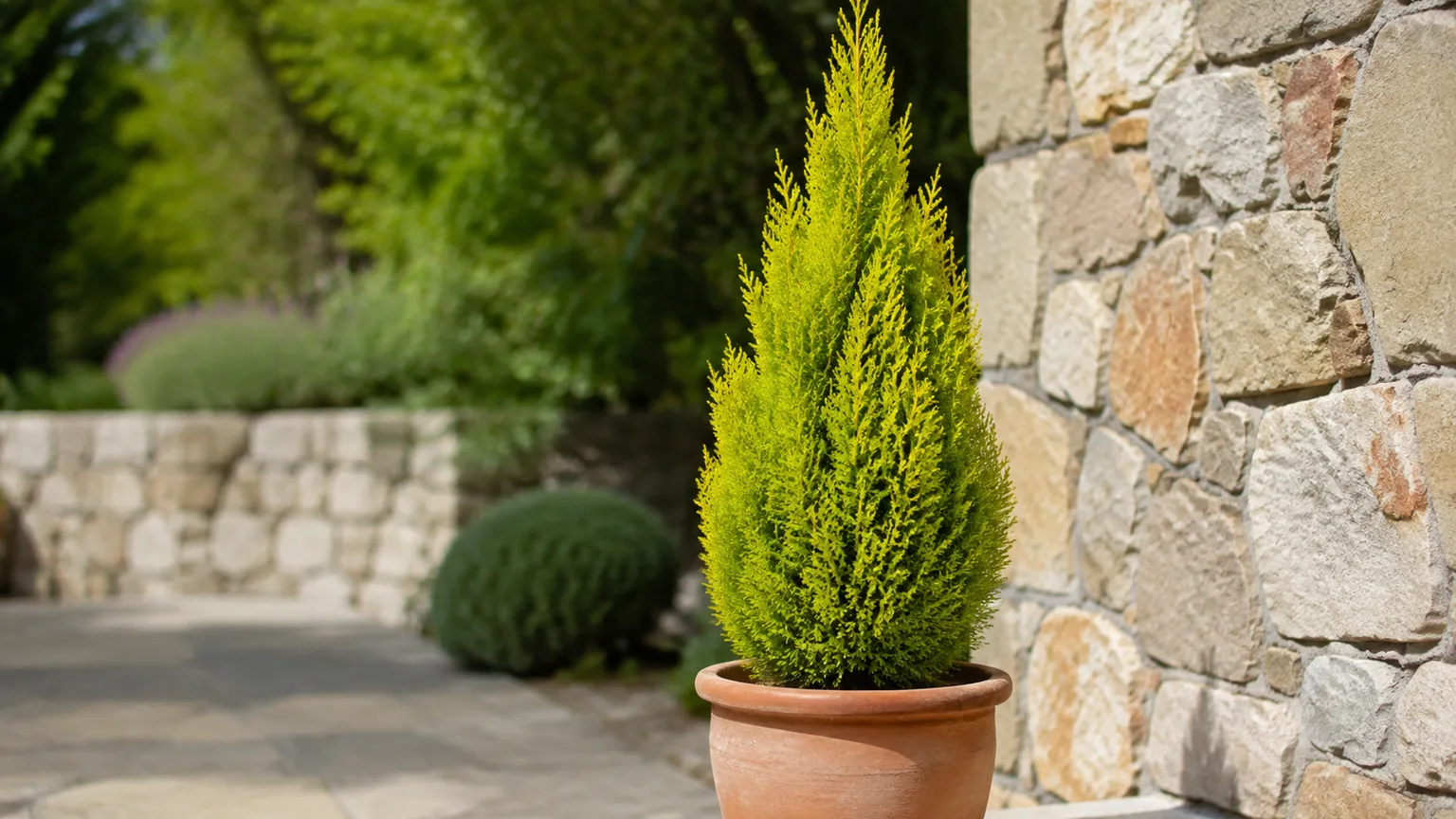
Lemon cypress is the bright, lemon-scented conifer sold as Goldcrest Monterey cypress, usually Cupressus macrocarpa ‘Goldcrest’ or Hesperocyparis macrocarpa ‘Goldcrest’. Its soft, scale-like foliage stays yellow-green year-round, and brushing the branches releases a citrus-like scent. That fragrance is real, but this is not a lemon tree and it will not produce edible lemons.
The plant is often bought as a small holiday container tree, then treated like a tropical houseplant. That is where many problems begin. Lemon cypress is a cool-climate, sun-loving evergreen that can live indoors temporarily, but it performs best outdoors when the climate, drainage, and mature size fit. The care plan below starts with that decision instead of pretending the same weekly routine works in every home and yard.
What Lemon Cypress Is and Where It Fits
Lemon cypress is a cultivar of Monterey cypress in the cypress family, Cupressaceae. NC State Extension describes ‘Goldcrest’ as an informal, columnar evergreen with bright yellow foliage, well-drained soil needs, and a lemony scent released when the foliage is crushed. Its profile also lists it for containers, borders, rock gardens, hedges, and specimen planting (NC State Extension).
The cultivar’s narrow outline is useful in a small bed, entry border, patio, or balcony, but “small” depends on the plant you bought and how long you keep it. NC State reports that ‘Goldcrest’ can reach about 7.5 feet in ten years, while the parent Monterey cypress is a much larger tree. A nursery plant that is only two feet tall is not proof that it will remain tabletop-sized.
The foliage can look more yellow in strong light and greener in shade. Cool weather may also change its tone slightly. These shifts are not automatically a nutrient deficiency; judge the plant by new growth, density, and the presence or absence of damage before reaching for fertilizer.
Choose Indoor or Outdoor Before You Buy
The right question is not “Can lemon cypress be grown indoors?” It can, for a time. The better question is whether you can provide a bright, cool, airy site and move a growing woody plant when it outgrows the container or the season changes.
| Growing situation | Best fit | Main risk |
|---|---|---|
| Mild climate, well-drained yard | In-ground specimen or informal screen | Heat, wet soil, and eventual size |
| Cold winter or small space | Container that can be moved | Drying out, low light, and root crowding |
| Bright, cool room for a season | Temporary indoor display | Warm dry air and insufficient light |
| Hot, humid site with heavy soil | Only with careful siting or a different plant | Root disease, scorch, and poor airflow |
As a working rule, grow it outdoors in climates commonly rated around USDA Zones 7–10 or 11, but check your local winter lows and summer heat rather than relying on a zone number alone. NC State’s ‘Goldcrest’ profile extends from 7a through 11b, while practical sources commonly recommend zones 7–11. Epic Gardening’s care guide likewise treats container culture as the flexible option for colder climates. Those ranges describe survival potential, not a promise that every exposed container or hot courtyard will look good.
If your winters are colder than the cultivar can tolerate, keep the plant in a container from the start. If you cannot provide a bright, cool location indoors, a seasonal display followed by replacement may be more realistic than trying to preserve a stressed tree in a dim, heated room.
Light That Keeps Goldcrest Bright
Outdoors, give lemon cypress full sun to partial shade, with the exact balance adjusted for climate. In a cool or mild coastal garden, more sun generally supports the dense, vivid foliage people buy the cultivar for. In a hot inland climate, morning sun with protection from the harshest afternoon heat can reduce scorch without putting the plant into deep shade.
Indoors, place it in the brightest cool window you have, ideally with morning sun or bright filtered light for much of the day. A few feet back from a hot west-facing pane may be better than pressed against the glass. Rotate the pot occasionally so one side does not stretch toward the window, but do not move it repeatedly between drastically different light levels.
Weak light produces a predictable chain: slower growth, a looser outline, greener foliage, and soil that stays wet longer because the plant is using less water. If an indoor lemon cypress is declining, check light before increasing water or fertilizer. More inputs cannot compensate for an unsuitable location.
Soil, Potting Mix, and Drainage
The non-negotiable requirement is well-drained soil. Lemon cypress tolerates sand, loam, clay, and a broad pH range according to the RHS profile for Monterey cypress, but tolerance of soil texture does not mean tolerance of standing water. A heavy site can be workable if it drains after rain; a low pocket that stays saturated is a poor planting place (RHS plant profile).
For an in-ground plant, do not automatically fill the planting hole with rich compost. A very fertile pocket can encourage lush top growth before the root system has anchored the narrow crown, especially in a windy site. If the surrounding soil is compacted or genuinely poor, improve structure across a broad planting area rather than creating a small, amended “pot” inside the ground.
For containers, use a quality potting mix that drains freely and contains bark, coir, perlite, or another material that keeps air in the root zone. Do not use garden soil in a pot; it compacts and drains unpredictably. Choose a container with several open drainage holes, and place it on feet or a surface where water can escape.
You do not need a gravel layer at the bottom of the pot to create drainage. The useful drainage system is an open container, a porous mix, and a watering pattern that lets excess water leave. A saucer is fine for protecting a surface, but empty it after the pot has drained.
Plant Lemon Cypress in the Ground
Plant in spring or fall when temperatures are moderate and the soil is workable. The RHS recommends late autumn to early winter or early spring for conifers in general, while container-grown plants can be planted more flexibly if you are prepared to water them through hot or dry weather. Avoid planting a newly purchased tree into frozen, waterlogged, or baking soil.
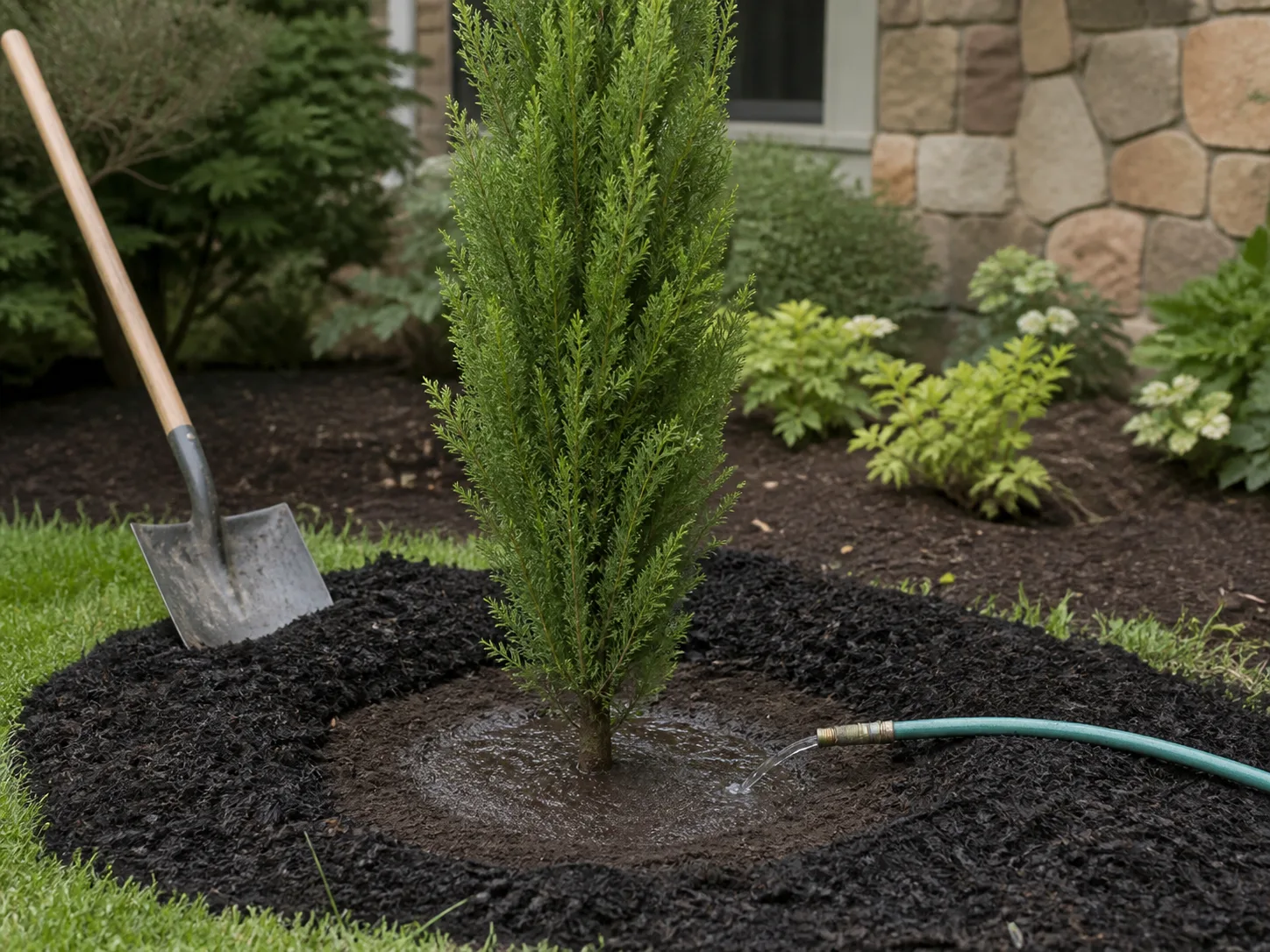
The planting sequence that prevents early stress
- Choose the site first. Allow for the cultivar’s mature height and width, a clear root zone, and enough air movement around the crown. Keep it away from a permanently wet downspout outlet.
- Water the root ball. A dry root ball can shed water around its edges, so hydrate the plant before planting.
- Dig wide, not deep. Make the hole roughly twice the root ball’s width and no deeper than the root ball. The trunk flare or original soil line should finish at ground level, not below it.
- Inspect circling roots. Gently loosen a few outer roots if they are circling tightly, but do not shred the root ball.
- Backfill with the soil you removed. Firm it lightly so there are no large air pockets, but do not stomp the soil into a hard layer.
- Build a shallow watering basin. Water slowly over the root ball and the surrounding soil, not just at the trunk.
- Mulch the root zone. Apply a thin, broad ring of bark or other suitable mulch, keeping it several inches away from the trunk.
Water deeply whenever the upper soil begins to dry during the first growing season. A large specimen may need temporary support in a windy site, but most small conifers develop stronger trunks when they are not rigidly tied for longer than necessary. Remove any stake once the root ball is holding the plant upright.
Watering Without Root Rot
Newly planted lemon cypress needs consistent moisture while roots move beyond the original container shape. That does not mean permanently wet soil. Water slowly enough to soak the full root ball and nearby soil, then let the surface begin to dry before watering again.
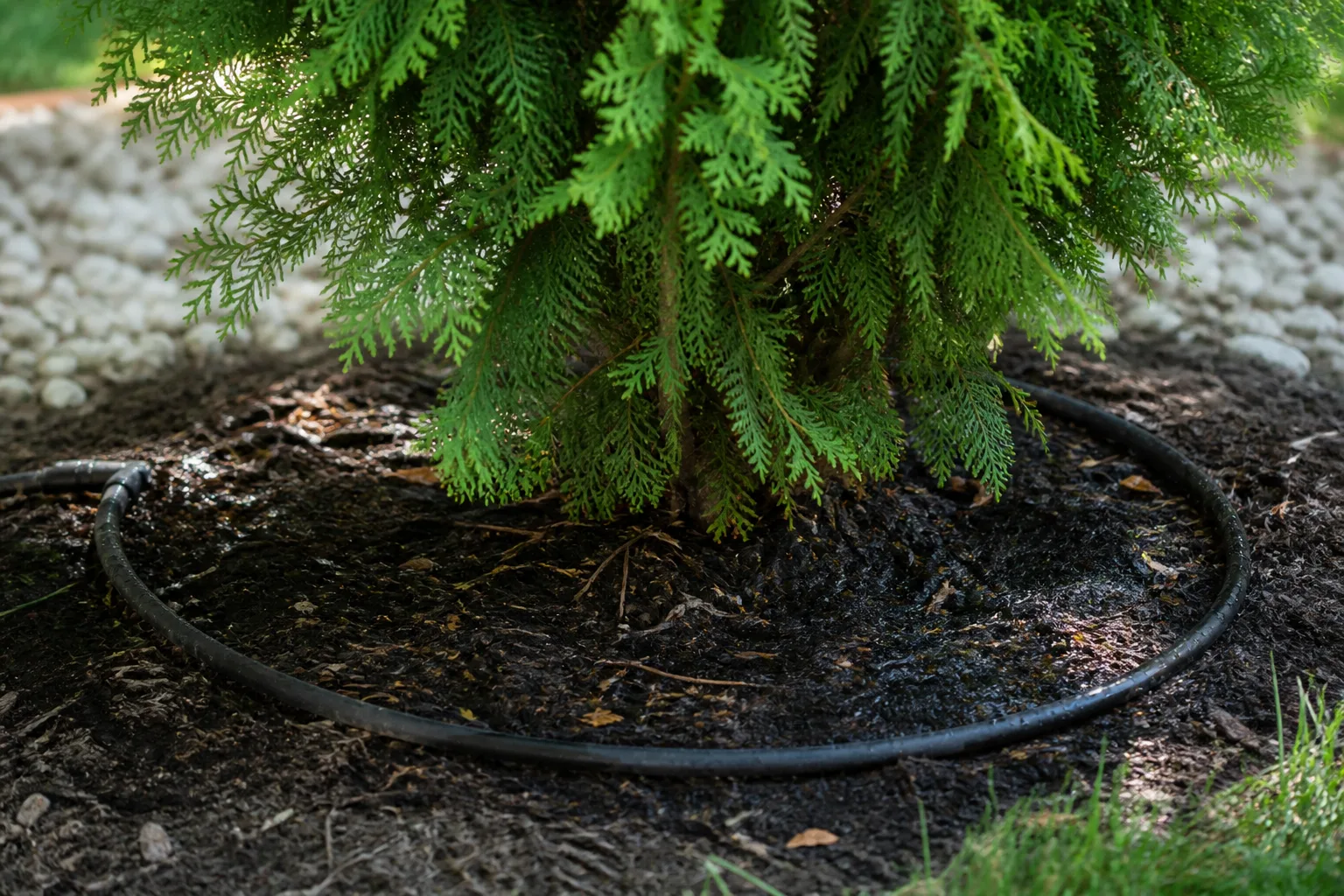
For a ground plant, check the soil with a finger or trowel several inches down near, but not against, the root ball. During hot, dry, windy weather, that may mean watering more than once a week; during cool rain, it may mean waiting longer. Once established, lemon cypress is more drought-tolerant, but prolonged drought can still cause tip dieback and make the plant less resilient to pests and disease.
For a container, water when the top inch or two of mix is dry and the pot feels noticeably lighter, then soak until water exits the drainage holes. A small holiday plant in a warm room may dry rapidly; a large pot in a cool room may stay wet for many days. The calendar is only a reminder to check, not a substitute for checking.
If the mix stays wet for a week, move the plant to brighter light, confirm that holes are open, and inspect the potting mix before adding more water. If the foliage is crisp and the pot is extremely light, water thoroughly rather than dribbling a small amount across the surface. Inconsistent wet-dry swings are harder on the roots than a measured, repeatable watering rhythm.
Temperature, Humidity, and Airflow
Lemon cypress comes from a Mediterranean-type climate with mild conditions, seasonal moisture, and moving air. It generally dislikes both extremes: repeated hard freezes and hot, stagnant, drying conditions. The RHS advises growing Monterey cypress in moist but well-drained soil and protecting it from cool, drying winds; it also notes that established plants tolerate dry conditions (RHS cultivation guidance).
Protect outdoor plants from drying winter wind, reflected heat, and abrupt exposure after moving them from a sheltered nursery. A temporary windbreak that still allows air movement is more useful than wrapping the whole plant in airtight plastic. In hot climates, afternoon shade and deep, well-timed watering are preferable to frequent shallow sprays over the foliage.
Indoors, choose the coolest bright room that is practical. Keep the pot away from heating vents, fireplaces, and air-conditioning blasts. Lemon cypress does not need tropical humidity, and constant misting can keep the foliage damp without solving a dry root ball or poor light. Good light, cool temperatures, drainage, and airflow usually matter more than chasing a humidity percentage.
Fertilizer: Usually Less Is Better
Do not fertilize a healthy lemon cypress automatically. It is adapted to relatively lean, well-drained conditions, and excess nitrogen can produce fast, soft growth that is poorly matched to the root system and more vulnerable to wind or water stress.
If an in-ground plant is growing steadily with good color, leave it alone. A thin layer of mulch is enough for many gardens. If new growth is weak despite good light, drainage, and watering, test the soil or ask a local extension service before diagnosing a nutrient deficiency by color alone.
A container plant may eventually exhaust the nutrients in its mix. In that case, feed in spring with a balanced, diluted fertilizer according to the product label, then stop by late summer. Never use extra fertilizer to compensate for low light, root rot, or a plant that has just been moved indoors.
Pruning and Training
Lemon cypress usually looks best in its natural upright form. Prune only to remove dead, broken, crossing, or clearly diseased growth, or to maintain a hedge, topiary, or bonsai. Make small, deliberate cuts while the plant still has green foliage beyond the cut.
Conifers are not forgiving of a hard haircut into old, brown, leafless wood. Many will not reliably produce new green shoots from those bare sections. The RHS recommends pruning conifers from about April through August in its climate and warns that browning is more likely when pruning at other times; local timing should be adjusted for frost, heat, and active growth (RHS conifer growing guide).
For a container tree, remove a stray branch at its point of origin rather than repeatedly shearing every tip. If the plant is getting too tall for the room, pruning may slow the problem but will not change the cultivar’s basic growth habit. Move it outdoors, repot into a better-sized container, or choose a naturally smaller cultivar before the plant becomes unmanageable.
Growing Lemon Cypress in Containers
Container culture is the most flexible option for gardeners outside the plant’s climate range. It allows you to give the tree bright outdoor light during mild weather and move it to shelter before damaging cold arrives. The trade-off is that the root ball is exposed to temperature swings and dries faster than a tree in the ground.
Use a heavy, stable pot with generous drainage holes. Terracotta can be useful because it breathes and shows moisture loss quickly, but it also dries faster than plastic or glazed ceramic. Choose based on how often you can check the plant, not on material alone.
Repot when roots circle densely, water runs straight through a shrunken root ball, the plant dries much faster than before, or the canopy is clearly top-heavy. Otherwise, a healthy lemon cypress may be comfortable for several years. When you repot, go only one size larger, loosen congested outer roots gently, and keep the trunk at the same depth. A much larger pot can hold wet mix around a small root ball and create the root-rot problem you were trying to prevent.
After repotting, water thoroughly and place the plant in bright, protected light for a few days. Do not fertilize immediately. Let damaged roots settle before asking for a flush of new growth.
Propagation from Cuttings
Cuttings are the practical way to reproduce a named lemon cypress cultivar because seed-grown offspring may not retain the parent’s color, form, or compact habit. NC State lists ‘Goldcrest’ as a cultivar, and the RHS recommends semi-hardwood or hardwood cuttings for conifers (NC State Extension profile; RHS conifer propagation).
Take a 4- to 6-inch cutting from healthy, non-flowering growth. Late summer through winter can work depending on whether the stem is semi-ripe or more mature and on your local conditions. Cut just below a joint, remove foliage from the lower portion, and keep the cutting from drying while you prepare the pot.
Fill a small pot with a sterile, moist, free-draining propagation mix. Rooting hormone is optional but can improve consistency; use it exactly as labeled. Insert the bare lower stem into a pencil-made hole, firm the mix around it, and cover the pot with a clear bag or dome that does not touch the foliage.
Cutting aftercare and the rooting signal
Place the covered cutting in bright, indirect light, away from hot sun. Open the cover daily for fresh air, keep the mix lightly and evenly moist, and remove any fallen foliage before it rots. Saturated mix is not a shortcut to rooting; it removes oxygen and encourages decay.
After several weeks, test gently for resistance. A firm hold suggests roots, but do not tug repeatedly. Once rooted, remove the cover gradually, increase light over a week, and pot the young plant into a normal well-drained mix. Seed propagation is possible for the species, but it is a poor choice when you want a true ‘Goldcrest’ duplicate.
Seasonal Care and Overwintering
In spring, move container plants back outdoors gradually, inspect for pests, and prune only the small amount of green growth you need to correct. Increase watering as light and temperatures rise, but do not switch from winter caution to a fixed daily schedule.
In summer, protect young plants from drying out, reflected heat, and hot wind. An established in-ground tree may need little supplemental irrigation in a mild climate, while a pot on a sunny patio may need frequent checks. Water the root zone rather than spraying the canopy as the main strategy.
In fall, decide where the container will spend winter before the first frost. Move it indoors or into an unheated but bright, sheltered space before freezing conditions threaten the root ball. Gardening Know How’s winter guidance also recommends treating container plants differently from established landscape trees. Bring it in gradually when possible, inspect the foliage, and wash off obvious pests before placing it near other plants.
During winter indoors, keep the plant bright and cool, reduce watering as growth slows, and keep it away from heaters. Do not let the root ball become bone-dry, but do not keep it constantly damp simply because the calendar says to water weekly. In spring, reverse the transition gradually: a few hours outdoors in shelter, then longer exposure as the plant acclimates.
Pests and Diseases
Cypress aphids, scale, mealybugs, and borers can appear, especially when a plant is stressed by drought, low light, heat, or a recent move. Inspect branch joints and the interior of the plant when watering. Sticky residue, clusters of small insects, cottony patches, or unusual dieback are reasons to isolate a container plant and look more closely.
For a light surface infestation, a firm water spray can dislodge some insects, followed by hand removal or a labeled horticultural soap or oil if appropriate for the plant and setting. Recheck after treatment because one application rarely catches every life stage. Avoid spraying in hot sun or on a drought-stressed plant, and follow the product label rather than improvising a concentration.
Root rots, Phytophthora, Armillaria (honey fungus), and coryneum canker are more serious than a few aphids. Prevention depends on drainage, sensible irrigation, clean cuts, and avoiding wounds to the trunk. The NC State profile specifically flags aphids, honey fungus, Phytophthora, root rot, and coryneum canker as problems associated with this plant (NC State Extension).
If a branch has a distinct lesion and dieback, cut it back into healthy wood with clean tools and discard the diseased material. If the trunk is affected, most of the crown is declining, mushrooms appear at the base, or the plant repeatedly collapses despite corrected watering, contact a certified arborist or local extension office. Do not keep adding water or fungicide without identifying the likely cause.
Brown foliage diagnosis: read the pattern first
Brown foliage is a symptom, not a diagnosis. Start by asking when it began, which side is affected, whether the soil is wet or dry, and whether the damage is on new tips, inner foliage, or whole branches.
| Pattern | More likely first checks | First response |
|---|---|---|
| Crispy tips after a hot or windy spell | Dry root ball, wind, heat, salt buildup | Check moisture several inches down, water deeply, and shelter from drying exposure |
| Brown foliage on the window side | Hot glass or intense afternoon sun | Move slightly back from the glass or filter the afternoon light |
| Whole branches declining from the base | Root disease, canker, severe root stress | Inspect roots and stems; remove diseased wood and seek diagnosis if spreading |
| Brown patches with insects or sticky residue | Aphids, scale, or secondary stress | Isolate a container plant, wash visible pests off, and monitor new growth |
| Brown tips immediately after shaping | Pruning injury and exposed cut ends | Stop cutting, keep the plant stable, and wait for healthy growth; do not cut deeper into old wood |
One brown tip does not mean the tree is dying, and more water is not always the fix. If the soil is already saturated, watering again can worsen the root problem. Correct the environmental cause first, then prune only tissue that is clearly dead or diseased.
Lemon Cypress Varieties and Mature Size
‘Goldcrest’ is the familiar bright, upright cultivar, but plant labels may also list ‘Goldcrest Wilma’, ‘Golden Cone’, ‘Golden Pillar’, ‘Donard Gold’, or other selections. These are not interchangeable in mature size. The RHS lists ‘Golden Cone’ as a narrowly conical golden-foliaged tree reaching 8–12 meters in its profile, while NC State describes ‘Goldcrest Wilma’ as a smaller cultivar suited to containers and reports that ‘Goldcrest’ reaches about 7.5 feet in ten years.
Ask the nursery for the full cultivar name and the expected height and width in your region. If you need a container plant that can stay manageable, choose a named dwarf selection rather than assuming every lemon cypress will remain a small holiday tree. If you want a hedge, calculate mature width, spacing, airflow, and pruning access before buying a row.
Conclusion: Match the Tree to the Site
Lemon cypress care becomes straightforward when the plant’s location matches its biology. Give it bright light, fast drainage, moderate temperatures, deep establishment watering, and only light pruning. Let the soil partly dry between waterings, keep containers from standing in runoff, and use a cool bright winter site when outdoor conditions are too cold.
The most important choice happens before the first watering: decide whether your climate and space support an in-ground tree or whether a movable container is the safer plan. If you make that decision honestly, watch the root zone instead of the calendar, and respond to brown foliage by reading its pattern, Goldcrest can remain a vivid, fragrant evergreen well beyond the holiday season.