How to Grow and Care for Mexican Bush Sage
Grow Salvia leucantha with a practical plan for planting, full sun, watering, cuttings, winter protection, and fixing sparse or flowerless plants.
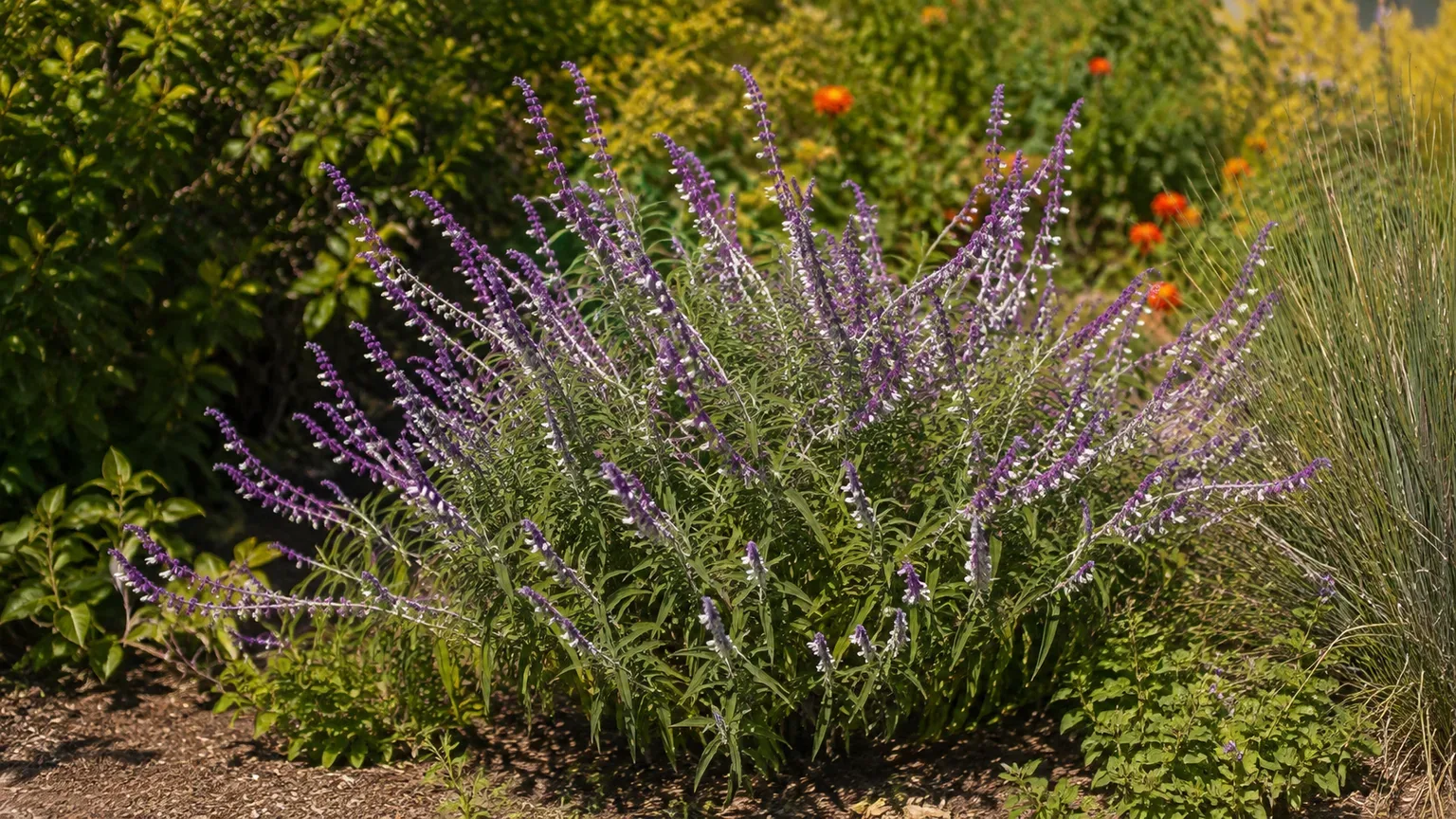
Mexican bush sage (Salvia leucantha) is a warm-climate perennial grown for its soft gray-green foliage and late-season flower spikes. The common form combines velvety purple calyces with short-lived white flowers, creating a two-tone display that can keep going from late summer into fall. Hummingbirds, butterflies, and bees find those tubular flowers useful when many summer perennials are fading.
The care is simple once you make two decisions correctly: give it enough direct sun and decide whether your winter is warm enough for the plant to return. In a mild, well-drained site, it becomes a broad, arching shrub with little fuss. In a cold or wet site, it is better treated as a seasonal annual or preserved as rooted cuttings than planted with the expectation that it will survive outdoors.
Is Mexican Bush Sage Right for Your Garden?
Mexican bush sage is a subshrub or herbaceous perennial in the mint family, native to Mexico and Central America. NC State Extension describes it as a plant that prefers rich, evenly moist, well-drained soil, tolerates some drought after establishment, and grows about 2 to 3 feet tall and wide under its conditions. In a generous bed, the arching stems can occupy more room than a nursery tag suggests, especially in warm regions or after several seasons.
The hardiness label needs context. The Missouri Botanical Garden’s plant profile lists Mexican bush sage for USDA Zones 8 to 10, while NC State Extension notes that extreme winters may kill it even within its recommended region. Protective mulch and excellent drainage help, but a wet crown in a cold pocket is much less forgiving than a plant in a sunny, raised bed.
Below Zone 8, most gardeners should plan for one of three outcomes: grow it as a frost-killed annual, grow it in a container that can be moved, or take cuttings before cold weather. Even in Zone 8, do not confuse “can survive” with “will survive every winter.” A plant that spends winter in saturated clay or receives repeated hard freezes may die back to the ground or fail entirely, while a protected plant may return from the crown.
It is also not the same plant as culinary garden sage. Mexican bush sage is an ornamental Salvia selected for flowers and foliage, not for seasoning. Choose it for a late pollinator display, a soft mass in a border, a cottage-garden texture, or a container near a sunny patio rather than for edible leaves.
What it looks like in bloom
The most useful identification clue is the flower spike. The showy, persistent part is the fuzzy calyx—the cup-like structure around the flower—not the inner corolla alone. In the usual bicolor form, purple calyces remain visible while white corollas emerge from them, so the plant can look colorful even as individual flowers fade.
The leaves are opposite, narrow to lance-shaped, gray-green, and soft to the touch. The stems are square in cross-section, which is typical of the mint family. Missouri Botanical Garden records terminal flower racemes that can reach roughly 10 inches, while NC State’s plant description places the main flower show in late summer and fall.
Do not judge the plant too early in the year. It may produce a large mound of foliage in spring and summer before it sends up its signature spikes. That late timing is part of the plant’s value, not evidence that it is failing. If frost arrives before the buds open in a cold region, the issue is usually the season length or winter strategy rather than a need for more fertilizer.
Choose the Site Before You Plant
The best planting site solves more problems than any feed or spray. Look for a warm position with direct sun, moving air, and soil that drains after rain rather than holding a puddle around the crown. A border, raised bed, gentle slope, or large patio container can all work; a low pocket that stays wet in winter is a poor match.
Light: prioritize direct sun
Give Mexican bush sage at least six hours of direct sun, with six to eight hours producing the strongest growth and most reliable flowering. The plant can tolerate some partial shade, especially afternoon shade in a very hot climate, but the trade-off is usually a looser form and fewer flower spikes. Savvy Gardening’s growing guide also recommends a hot, sunny location and notes that insufficient light can prevent a worthwhile bloom.
Morning sun with relief from the harshest late-afternoon heat is a sensible compromise in the hottest parts of Zones 10 and 11. In cooler climates, choose the brightest site available. If stems lean toward a window, fence, or open sky, or if the plant grows plenty of leaves but few terminal spikes, measure the light before changing the feeding program.
Leave space around the plant instead of wedging it between a wall and a dense hedge. Airflow dries foliage after rain and makes inspection easier. It also lets the arching habit read as part of the design rather than making the plant look like an overgrown, unsupported mound.
Soil and drainage: moisture without standing water
Mexican bush sage is happiest in soil that holds some moisture but drains freely. NC State lists clay, loam, and sand as workable textures, so you do not need perfect loam. The non-negotiable is avoiding persistent saturation around the crown and roots, especially through winter.
Before planting, test the site after a normal rain. If water remains pooled several hours later, move the plant to a raised position, build a modest berm, use a raised bed, or choose a different spot. Improve a heavy bed by working in mature organic matter across the planting area and correcting the grade; do not fill a single hole with a pocket of loose material that can collect water at the boundary with dense clay.
In a container, use a quality potting mix and a pot with a drainage hole. Do not place a drainage-challenged nursery pot inside a decorative cachepot where runoff collects. The roots need both water and air, and a saucer is useful only if it is emptied after irrigation.
Plant Mexican Bush Sage Correctly
Plant in spring after the last frost in cold regions, once the soil has warmed. That gives a nursery plant or rooted cutting time to establish before its first winter. In mild Zones 9 and 10, late winter or early spring is a good default; early fall can also work when the plant has enough mild weather to make roots before the hottest or coldest part of the year.
Dig a planting area about as deep as the root ball and at least twice as wide. Slide the plant out without pulling on the stems, loosen circling roots gently, and set the top of the root ball level with the surrounding soil. Backfill with the soil you removed, water slowly until the root zone is wet, and apply a light mulch layer over the soil.
Mulch is for the root zone, not the crown. Keep a small bare ring around the stems so wet mulch does not stay pressed against tender basal growth. This detail matters more in regions where winter rain and cool temperatures overlap.
Spacing and crown height
Space the straight species about 3 to 4 feet from neighboring plants when you want a full specimen with airflow. Compact selections may need less, while a vigorous plant in a long warm season can spread farther than expected. The Missouri Botanical Garden profile lists a typical height and spread of 2 to 3 feet, but cultivar, climate, pruning, and season length all change the final footprint.
Set the crown—the point where stems meet roots—at soil level or just slightly high in slow-draining ground. Do not bury the crown to stabilize a floppy plant. Use a discreet ring or support early in summer if the site is windy; planting too deeply trades a temporary stability problem for a chronic rot risk.
After planting, water thoroughly. The goal is to encourage roots to move into the surrounding bed, not to keep the surface constantly muddy.
Watering from Planting Through Drought
Watering should change as the root system changes. A new plant needs regular, deep irrigation because its root ball can dry faster than the surrounding soil. An established plant needs less frequent water, but it still benefits from a thorough soak during a long, hot, rainless period.
Use this sequence as a starting point, then adjust to soil and weather:
- Weeks 1–4: Check the root zone every few days. Water slowly when the top 1 to 2 inches has begun to dry, making sure the entire root ball is wetted rather than just the soil surface.
- After establishment: Stretch the interval between waterings. In summer drought, a deep soak about every 7 to 14 days is a reasonable starting range for a plant in the ground, with sandy soil and extreme heat requiring more frequent checks.
- During cool or rainy weather: Stop on a calendar schedule. Let rainfall and the soil determine the next irrigation, especially in fall and winter.
- In a container: Check more often because pots dry faster, but still water thoroughly and let excess drain. Do not compensate for a small pot by keeping it constantly wet; move the plant to a larger container if the root ball dries within a day.
Once established, Mexican bush sage tolerates short dry periods. That does not mean it wants severe drought while forming flower spikes. If leaves wilt in afternoon heat but recover by evening and the soil is moist, do not automatically add water; check the root zone first. Persistent wilt with dry soil calls for irrigation, while persistent wilt with wet soil points toward root trouble.
Avoid frequent shallow sprinkling and overhead irrigation late in the day; water at the soil surface so foliage can dry quickly, and use mulch without touching the crown.
Fertilizing Without Sacrificing Flowers
Mexican bush sage does not need a high-input feeding program. Missouri Botanical Garden describes it as a low-maintenance plant, and the practical reason to hold back is clear: a large flush of nitrogen-rich foliage does not guarantee earlier flowers. It can instead create soft, leafy growth that is more difficult to support and less useful if the plant is racing toward winter.
Start with a soil test if the plant is genuinely pale or stunted. In average soil, top-dress with a thin layer of compost in spring or use one balanced, slow-release application according to the product label. Skip routine feeding after the first year if growth and flowering are already strong.
Do not fertilize a drought-stressed, waterlogged, or newly transplanted plant in an attempt to force recovery. Correct the root-zone problem first. If the plant produces lush leaves but no spikes, stop adding nitrogen and review light, planting date, frost risk, and nearby night lighting before reaching for another product.
Pruning for a Full, Long-Lived Plant
The most useful pruning is a well-timed annual cutback, not repeated shearing for its own sake. In a frost-prone area, leave the old stems in place through the coldest part of winter; they add a little crown protection and make it easier to see where new growth is emerging. Cut back in late winter or early spring after the worst frost risk has passed and fresh shoots are visible at the base.
Use clean, sharp pruners and remove the old stems to about 6 to 12 inches above the crown, or lower if your climate is mild and the plant has strong basal shoots. The exact height matters less than cutting above living, emerging growth and leaving a short framework that does not shade the new shoots. The Good Life Permaculture pruning account illustrates the practical cue: wait for new shoots beside the older stems, then remove the old growth, while noting that frost timing varies by microclimate.
In a frost-free climate, prune after the main flowering period when new basal shoots are beginning. Do not make a hard fall cut in a place that still experiences cold snaps. Removing the stems too early can expose the crown just when the plant needs protection.
Pruning also fixes the common “green top, bare bottom” problem. If the plant has become woody and sparse, a hard late-winter cutback can reset the framework, but it will not make a shaded plant compact. Correct the light and spacing at the same time.
Deadheading and shaping during bloom
Deadheading is optional. The purple calyces often remain attractive after the white corollas fall, so removing every faded flower is not necessary for a good display. If you want a tidier look, snip individual spent spikes back to a branching point without shearing the whole plant.
Avoid a major haircut in early or midsummer unless you accept delayed flowering. Mexican bush sage flowers at the ends of new growth, and removing developing branches can push the display past the first frost in a short-season garden. Lightly remove dead, damaged, or crossing stems, and use a ring or stake when wind—not weak growth—is the reason stems are leaning.
Varieties Worth Growing
Choose the selection by mature size and flower color rather than by name alone. Plant labels sometimes list synonyms, and the same cultivar can perform at different heights in a long warm season.
| Selection | Flower look | Approximate habit | Best fit |
|---|---|---|---|
| Straight species | Purple calyces with white corollas | About 2–3 feet in many references; broader where summers are long | Borders, masses, and pollinator beds |
| ‘Santa Barbara’ | Deep purple calyces with rose-lavender flowers | About 3 feet | Containers, smaller borders, and mixed plantings |
| ‘Midnight’ / ‘All Purple’ | Dark purple display with little or no white contrast | Roughly 3–4 feet tall and potentially wider | A dramatic mass or back-of-border accent |
| ‘Danielle’s Dream’ | Pink and white flowers | About 2–3 feet | Softer color schemes and smaller spaces |
| ‘White Mischief’ | White flowers and calyces | Can become a large plant | A pale late-season focal point |
These selections are listed by NC State Extension and described in practical terms by Savvy Gardening. ‘Midnight’ may be treated as a synonym or near-synonym of ‘All Purple’ in plant listings, so compare the actual tag and mature size. If a compact container plant is the goal, ‘Santa Barbara’ is a more useful starting point than a vigorous, wide selection that will need frequent watering in a small pot.
Propagate by Cuttings or Division
Stem cuttings are the most dependable way to clone a named Mexican bush sage. Seed is less predictable for a cultivar, and seed availability is limited; vegetative propagation keeps the flower color and habit of the parent. NC State lists division, seed, and stem cuttings as possible methods, while practical growers commonly rely on cuttings for preserving a plant before a cold winter.
Division is useful for a large, established clump in a mild climate. Divide in early spring as new growth begins, lift the clump with a sharp spade, and separate sections that each contain roots and healthy shoots. Replant at the original depth, water thoroughly, and keep the divisions evenly moist while they re-establish.
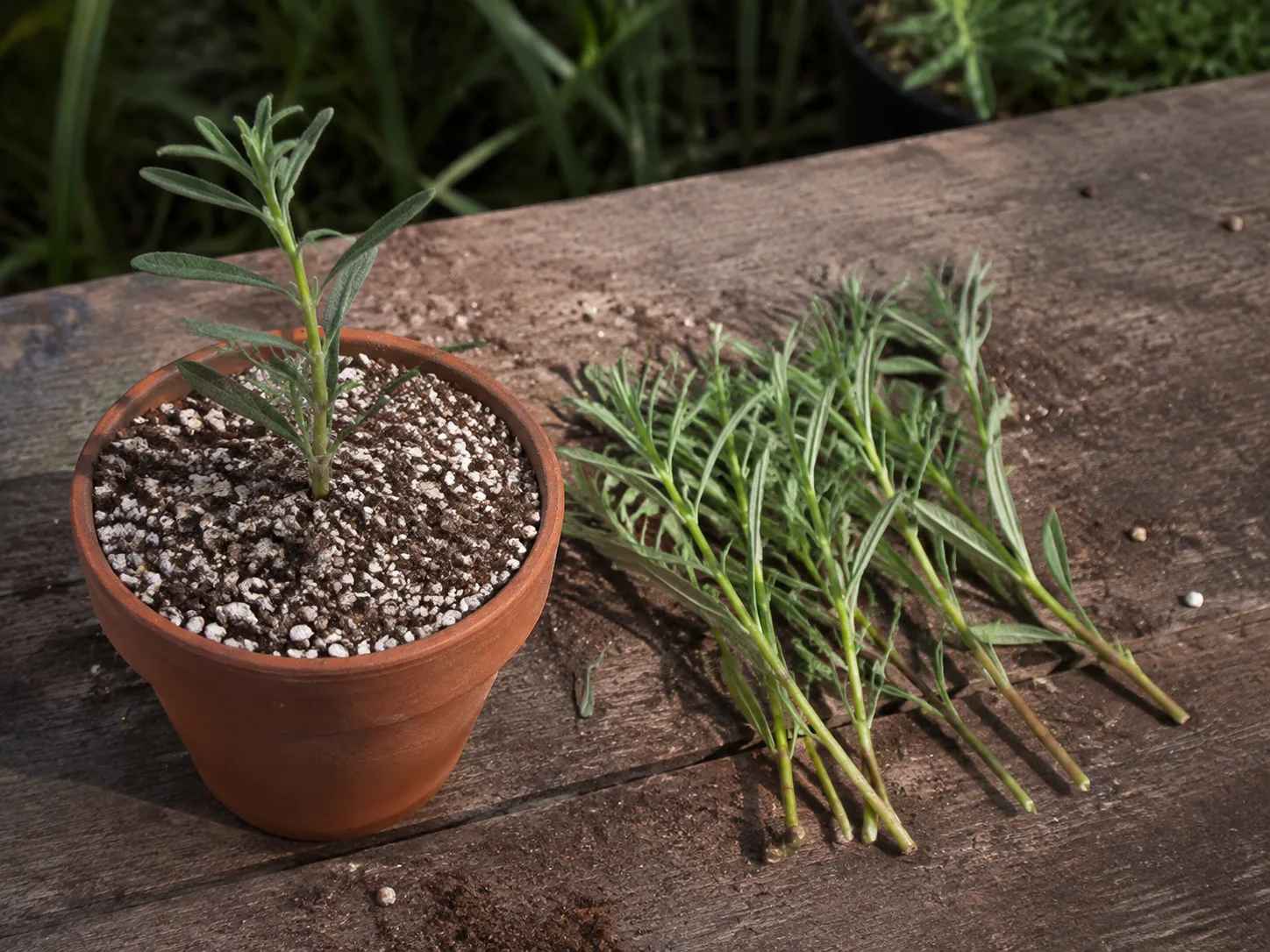
A firm stem cutting in a lightly moist, open mix has the best chance of rooting before the next planting window.
Step-by-step stem cuttings
Take cuttings in late spring through summer from firm, healthy, nonflowering stems. If you are saving a plant before frost, late summer cuttings can be more valuable than waiting for the flowering display to finish. Good Life Permaculture shows the useful structure clearly: a piece of stem with four or five nodes gives you several points from which roots or shoots can develop.
- Fill a clean 4-inch pot with a sterile, free-draining propagation mix. Pre-moisten it so the cutting does not have to be pushed into dry mix.
- Cut a 4- to 6-inch section just below a node using sanitized, sharp pruners. Avoid a stem carrying open flowers; it is using energy to bloom rather than root.
- Strip leaves from the lower half. Keep one or two small leaves at the top, and remove any that wilt or touch the mix.
- Dip the base in rooting hormone if you have it. It may improve uniformity, but clean material, warmth, oxygen, and correct moisture matter more than coating the stem heavily.
- Insert one cutting per cell or several around the edge of a pot, with at least one node below the mix. Firm the mix around the stem.
- Put the pot in bright, indirect light in a warm, draft-free place. Cover it with a clear bag or dome held above the leaves, and open the cover briefly each day so stale, saturated air does not encourage rot.
- Keep the mix lightly and evenly moist, never sodden. After about three to six weeks, test by giving the cutting a gentle tug; resistance, new leaves, or visible roots at the drainage hole indicate progress.
- Once rooted, remove the cover gradually, pot individual cuttings if needed, and grow them on before planting after the last frost.
The most common cutting failure is too much water. A cutting has no established root system to use the moisture, so a wet, airless mix can rot the base before roots form. If a cutting collapses at the soil line, discard it and start again with fresh material and a cleaner, more open mix.
Overwintering in the Ground or Indoors
Winter strategy should follow your exposure, not just the zone printed on a map. In Zones 9 and 10, a healthy plant in a sunny, well-drained site can often remain outside. In Zone 8, protect the crown and expect some dieback. In colder zones, preserving cuttings is usually more reliable than asking the whole plant to survive a freezing, wet winter.
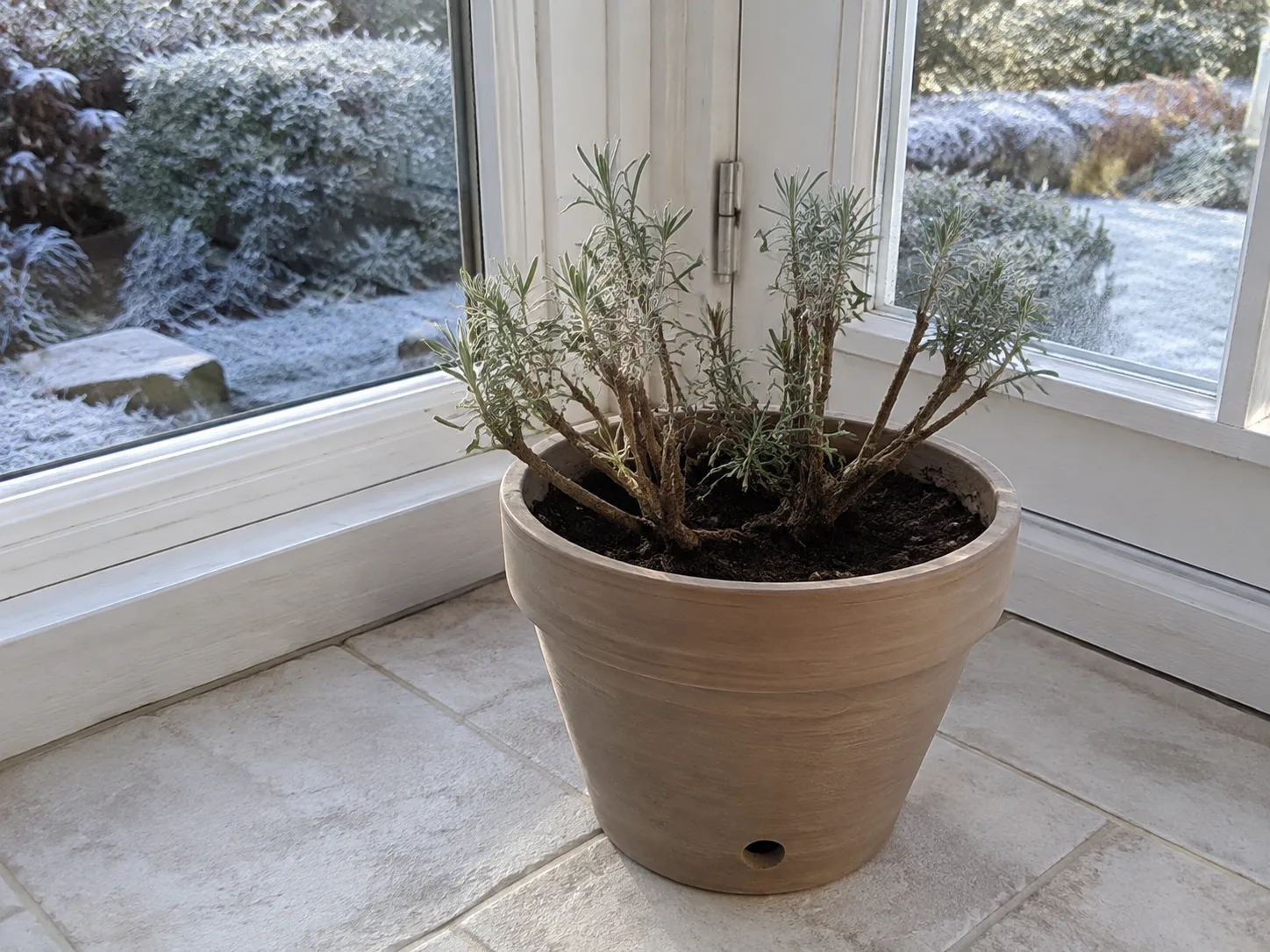
A recently cut-back container plant can be sheltered from frost in a bright, cool place while growth slows for winter.
For an outdoor plant, keep the old stems through cold weather if they help shield the crown. After a hard frost or once the coldest period has passed, remove blackened growth and apply 2 to 3 inches of loose mulch over the root zone. Keep the mulch away from the crown and remove or thin it as spring growth begins. The Missouri Botanical Garden profile notes that in a mild winter, a protected plant may survive outdoors after a cutback and good winter mulch; treat that as a possibility, not a guarantee.
For a container plant, bring it inside before the first frost. Inspect stems and leaf undersides for pests, wash the foliage if needed, and place the pot in the brightest cool room available or under a grow light. Cut back only enough to make the plant manageable, and water much less often in winter because growth and evaporation slow indoors.
If you do not have room for a large pot, overwinter rooted cuttings instead. Keep them in bright light at normal indoor temperatures, pinch overly long shoots, and water when the mix has begun to dry. This option preserves several young plants with less soil, less pest risk, and less stress than digging a mature shrub out of the ground.
Reacclimate a wintered plant gradually in spring, extending outdoor time over a week or two. Protect it from late frost and intense sun until it has adjusted.
Troubleshoot Leaves, Stems, and Missing Flowers
Start with the pattern and the root zone instead of treating every symptom as a fertilizer problem. A single yellow lower leaf is different from a whole plant turning yellow; afternoon wilt with damp soil is different from all-day wilt in dry soil; and a plant with buds in early summer is not actually flowerless yet.
No flowers by early summer: This may be normal. Mexican bush sage is a late-season bloomer, so wait until late summer before deciding it has failed. If autumn arrives with no buds, check for fewer than six hours of direct sun, a recent hard cutback, excessive nitrogen, a short growing season, or bright artificial light close to the plant at night. The latter is a practical possibility raised in Blooming Expert’s seasonal guide; first correct the more common light, pruning, and frost-timing issues.
Long, floppy stems: Move the plant toward stronger light if possible and give it more space. A ring support installed before flowering is less conspicuous than tying mature stems after they have fallen. Avoid repeatedly shearing the top while leaving a shaded, woody base; use the late-winter cutback to encourage new basal shoots.
Yellow leaves or sudden leaf drop: Check moisture at root-ball depth. Wet soil, a sour smell, a soft crown, or blackened stem bases point toward root or crown damage, while dry, hard soil points toward drought stress. Pause irrigation while saturated soil drains, improve the grade or container drainage, and remove only tissue that is clearly dead. Leaves can also drop after frost or severe drought; do not add fertilizer to a plant whose roots are not functioning.
Brown leaf edges in a pot: Confirm that water is reaching the whole root ball and escaping the drainage hole. A small pot, reflected heat, or hydrophobic mix can dry unevenly, so rehydrate slowly and shift to a larger container if it repeatedly dries within a day.
Aphids, whiteflies, mealybugs, or spider mites: NC State lists these insects among the pests associated with S. leucantha. Inspect new growth and leaf undersides weekly, especially before bringing a container indoors. For a small infestation, isolate the pot and knock pests off with a firm water spray, then reassess; if you use a registered pesticide or soap, follow that product’s label for the plant, dilution, protective equipment, and re-entry instructions.
Pests and diseases to watch
Disease prevention begins with the site. NC State also lists rust, powdery mildew, fungal leaf spot, stem rot, and southern blight among possible problems. Good spacing, soil-level watering, quick removal of fallen diseased leaves, and avoiding wet mulch against the crown reduce the conditions that let many of these problems spread.
Rust or leaf spot usually deserves closer inspection of both sides of the leaves and the watering pattern. Powdery mildew is more likely where foliage stays crowded and air movement is poor; moving the plant into more sun and thinning congested growth can help. A collapsing crown or stem base is more urgent: stop watering, inspect the roots and crown, and consider replacing a plant in a persistently wet site rather than repeatedly treating the symptom.
Do not compost heavily diseased material in a small home pile that never heats adequately. Bag it or dispose of it according to local guidance, clean pruners between plants, and avoid taking cuttings from a plant that is already showing unexplained decline. Propagation multiplies a healthy parent’s traits—and can also multiply a problem.
Conclusion
Mexican bush sage rewards a little patience. Give it six or more hours of direct sun, soil that drains while retaining moderate moisture, and enough room for its arching habit. Water regularly while it establishes, then irrigate deeply only when the root zone and weather call for it; feed lightly, prune after new basal growth appears, and let the late-season flowering cycle happen on its own schedule.
The winter decision is the main dividing line. In a warm, protected garden, mulch and timely spring pruning may be enough. In a colder garden, a container or a handful of rooted cuttings gives you a realistic way to enjoy the same plant next year without gambling the entire season on an exposed crown.



