Houseplants Minimalists Never Grow: A Pro Organizer's List
String of pearls, monstera, croton, and more look great online but fight minimalist homes. Learn the four-point plant audit and better low-fuss alternatives.
A minimalist room is not empty—it is edited. Every object earns its place, surfaces stay clear, and visual noise stays low. Houseplants break that contract fast when they shed beads across the floor, drop leaves after every draft, or grow toward the ceiling faster than you can repot. Professional organizers and simplicity coaches consistently steer clients away from a short list of Instagram-famous plants that look calm in photos but behave like small maintenance businesses at home.
The seven plants below are not “bad.” They are simply a poor fit when your goal is a tidy, low-friction interior. Use the audit framework first, then read why each plant fails the test—and what to grow instead if you still want living greenery without the daily cleanup.
What Minimalist Homes Actually Need From a Houseplant
Minimalist interiors reward plants that stay predictable: stable size, restrained color, leaves that remain attached, and care that does not colonize your counter space. A plant can be beautiful and still violate every one of those rules. The mismatch is usually not laziness—it is buying for a Pinterest mood board instead of your actual room, light, and tolerance for leaf litter.
Aesthetic Minimalism vs Lifestyle Minimalism
Aesthetic minimalism is the white-wall, single-succulent look: one sculptural plant in a ceramic pot, photographed from above. Lifestyle minimalism is broader—it is about owning fewer things that demand attention, not banning color or life from a room. You can live minimally and still want plants; you just need species that do not create hidden labor.
That distinction matters because many “minimalist plant” lists recommend the same trendy trailing succulents and giant monsteras shown in design magazines. Those photos are styled once. Your home is lived in daily. If a plant needs weekly pruning, daily bead sweeping, or a humidity station on the kitchen counter, it works against the lifestyle version of minimalism even when it nails the aesthetic for a weekend.
The Four-Point Plant Audit
Before you bring any houseplant into a calm room, score it on four questions organizers use when decluttering plant collections with clients:
- Visual noise — Does the foliage add pattern, contrast, or color that competes with the rest of the room? Muted greens and simple silhouettes read calmer than speckled pink leaves or rainbow variegation.
- Physical mess — Does it shed beads, leaves, scale, or spent flowers onto floors and furniture? Cleanup frequency matters as much as watering.
- Maintenance load — Beyond water, does it need soaking baths, misting schedules, pebble trays, grow lights, or weekly haircuts to look acceptable?
- Footprint growth — Will it outgrow its spot, need a moss pole, or demand repotting twice a year?
A plant that fails two or more categories is one minimalists typically pass on. The seven below fail hard on at least two—often three or four.
String of Pearls: Delicate Looks, Daily Cleanup
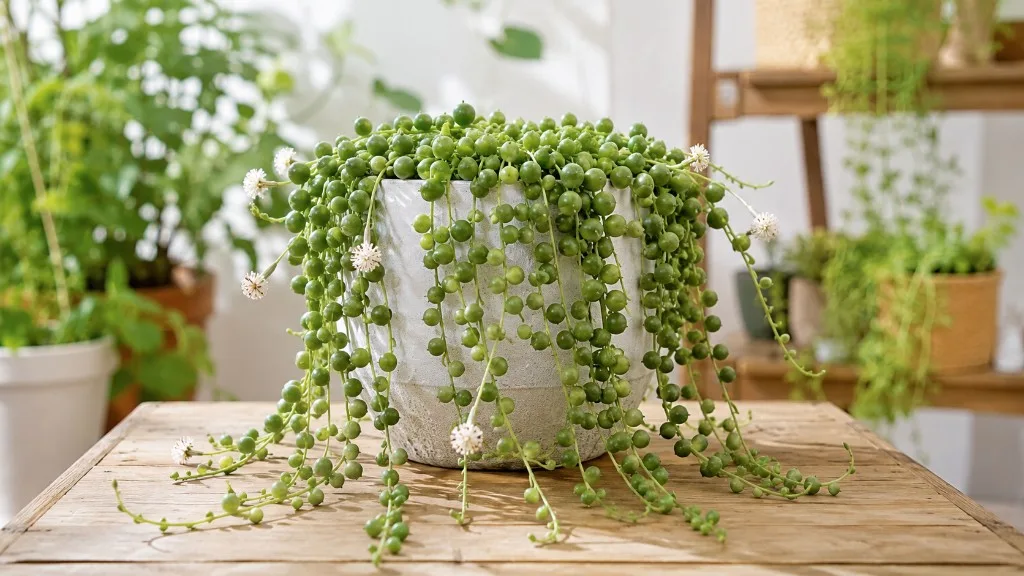
String of pearls (Curio rowleyanus, formerly Senecio rowleyanus) is the plant minimalists mention first when they talk about hidden mess. In photos it is a perfect green cascade over a shelf edge. In real homes, those round succulent leaves detach easily and roll into corners, under furniture, and along baseboards where a vacuum cannot reach them cleanly.
Why Beads Shed and Scatter
The plant’s bead-like leaves are designed to store water in dry native habitats, but they are not firmly anchored. Normal handling, brushing past the pot, underwatering stress, and overwatering rot all cause pearls to drop. NC State Extension notes the species is particular about water and light—wilting from both extremes—and that older plants tend to die back after several years, which triggers more shedding during decline.
The cleanup is uniquely annoying because the beads are small, round, and green. They do not read as obvious debris until you have dozens of them. For a home where clear floors and surfaces are non-negotiable, that is a daily contradiction of the minimalist goal.
Better Trailing Alternatives
If you want a hanging line without the bead hunt, consider string of hearts (Ceropegia woodii) with firmer leaves, or a well-rooted pothos in a controlled length you trim on schedule. Neither is mess-free, but dropped pothos leaves are flat and easy to spot. For a truly hands-off trailer in bright indirect light, a hoya grows slowly and holds leaves more stubbornly—trading speed for stability.
Monstera: A Ceiling Plant in a Tabletop Pot
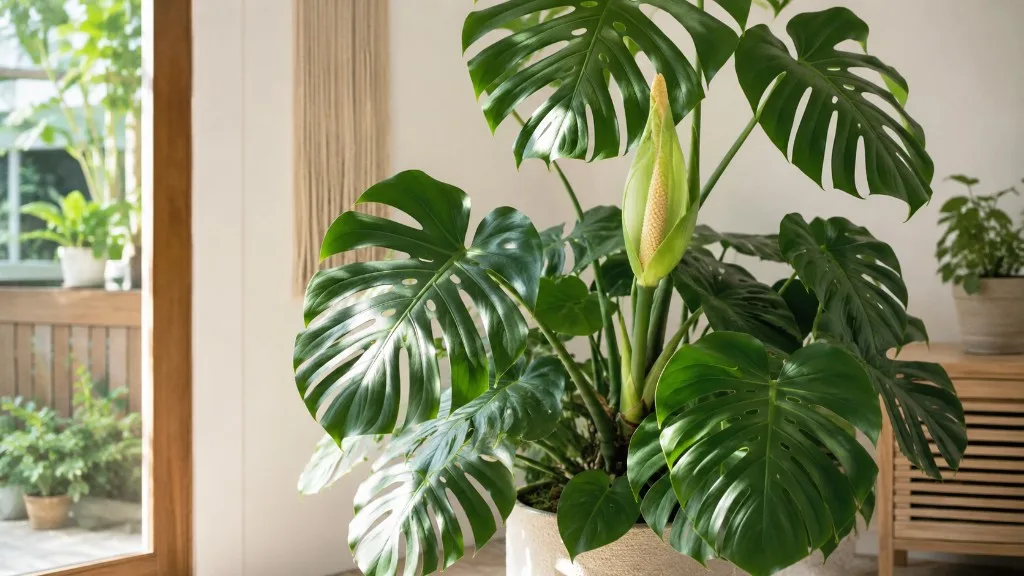
Monstera deliciosa is the split-leaf icon of modern interiors—and the plant most likely to outgrow a minimalist corner within two years. NC State Extension describes it as a climbing vine that can reach 70 feet in the wild but typically grows 6 to 8 feet tall indoors, with gigantic lobed leaves that need regular dusting and sturdy support to prevent stem breakage.
Size, Support, and the Mess Tax
Minimalist rooms favor negative space. A mature monstera consumes it. The plant also prefers high humidity and benefits from pebble trays or humidifiers in dry homes—extra objects on the shelf you were trying to clear. Large leaves yellow and drop during adjustment periods, and aerial roots search for something to climb. Without a moss pole or trellis, the plant sprawls horizontally and looks chaotic rather than architectural.
A small starter monstera can fit a minimalist shelf temporarily. Organizers flag it because buyers rarely plan for the ceiling-stage version. If your apartment has 8-foot ceilings and you want one statement plant with a dedicated moss pole and a repotting calendar, monstera can work. If you wanted a set-and-forget accent on a floating shelf, it will fight you.
Polka Dot Plant: High-Contrast Foliage That Never Stays Compact
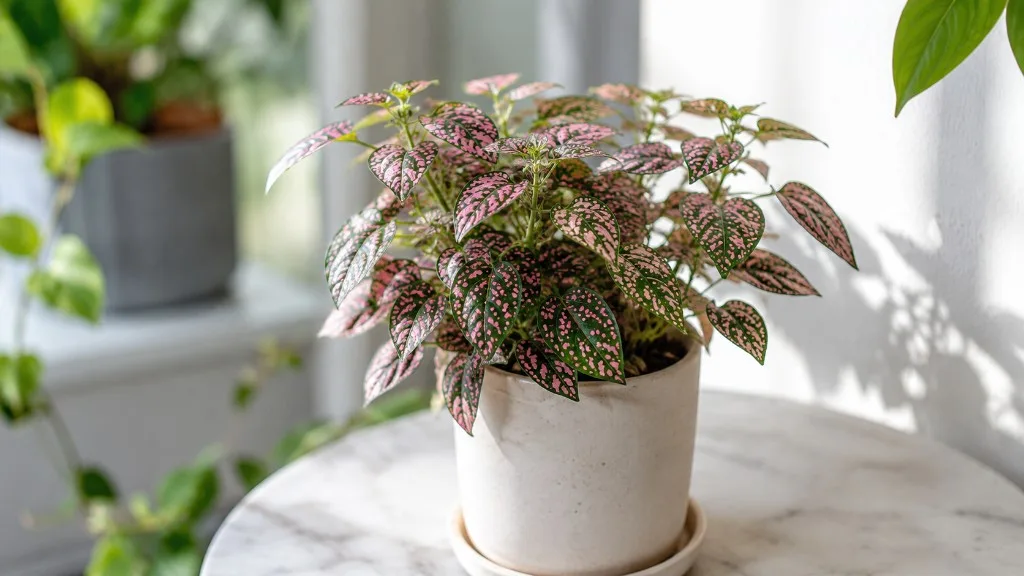
Polka dot plant (Hypoestes phyllostachya) sells the fantasy of a neat pink-or-white-spotted mound. Reality is an aggressive grower that legges within weeks without weekly pinching. The speckled pink, red, or white variegation is exactly the kind of high-contrast pattern that reads as visual noise in a room built on unified neutrals.
Minimalist styling relies on repetition and calm materials—linen, oak, matte ceramic. A polka dot plant introduces a busy print at eye level. Keeping it compact requires constant maintenance: pinching growing tips, rotating for even light, and accepting that it is a short-lived annual temperament in many homes. For organizers, that is a plant that creates recurring calendar tasks to preserve a look it will not hold on its own.
If you love color, a single bloom cycle from a phalaenopsis orchid delivers impact without year-round speckled foliage competing with your walls. When the flowers finish, the strap leaves are plain green and easy to tuck out of sight.
Ficus Trees: Dramatic Leaf Drop From Drafts, Sun, and Stress
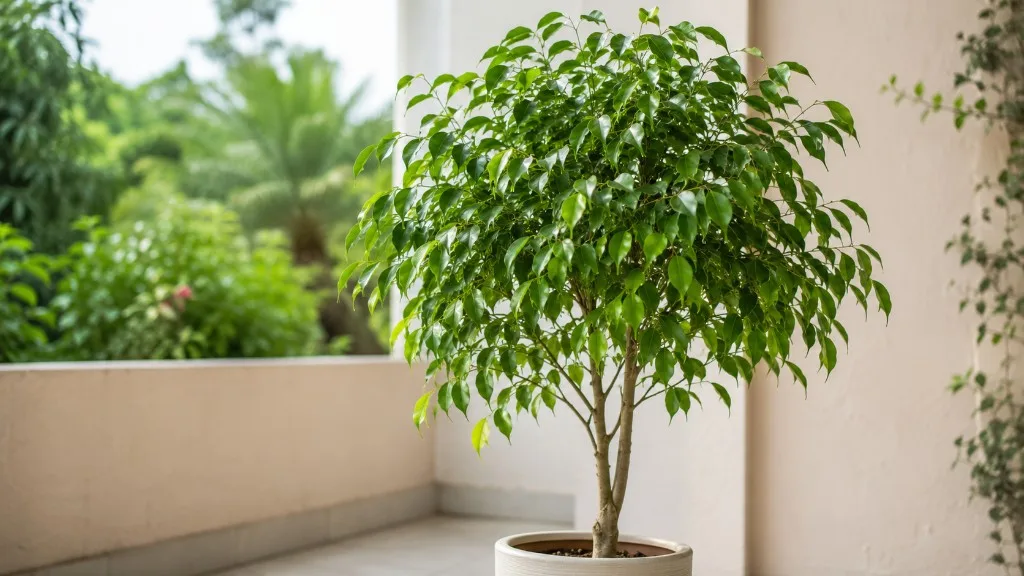
Weeping fig (Ficus benjamina) and its relatives are lobby plants for a reason—they look elegant at six feet until something changes. Then they drop leaves dramatically. Drafts from HVAC vents, a move to a new window, too much direct sun, too little light, overwatering, and underwatering all trigger leaf fall. For a minimalist who values predictable floors, a ficus is a plant that announces stress by littering.
Ficus trees also scale up. A “small” tree becomes a floor-dominating column that needs space on all sides. Leaf pickup becomes part of your weekly routine, and yellow leaves often mean diagnosing multiple environmental factors at once. Hotel lobbies have staff to sweep; your living room does not.
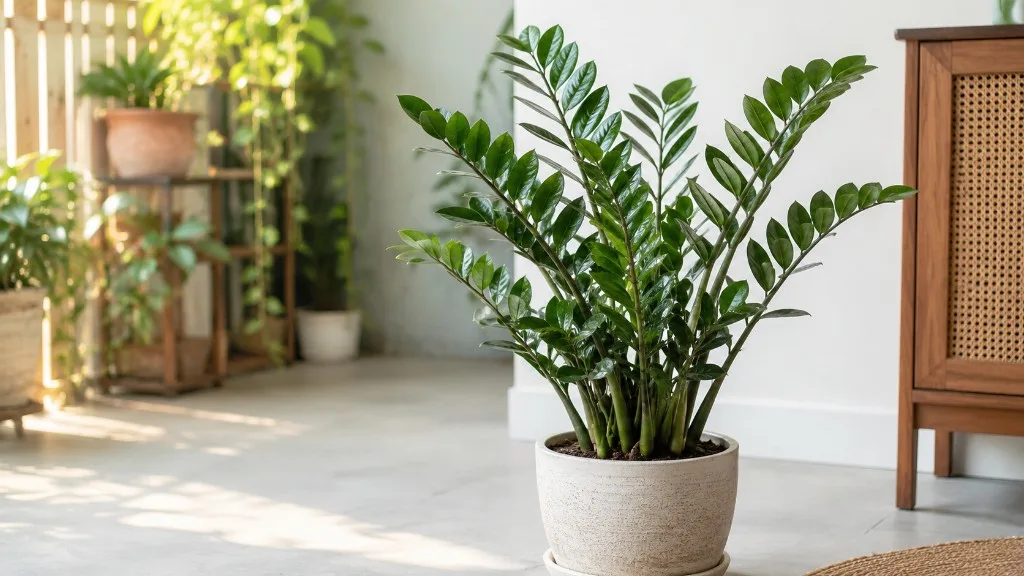
Calmer tree-form options for tight spaces include a slow dracaena or a compact olive tree in very bright light—neither is zero-maintenance, but both lack the ficus reputation for mass leaf drop after every minor change. For true set-and-forget structure, a ZZ plant (Zamioculcas zamiifolia) stays upright with waxy leaves that rarely abandon ship; see our ZZ plant care guide for light and watering basics.
Croton: Loud Color and Fragile Leaves
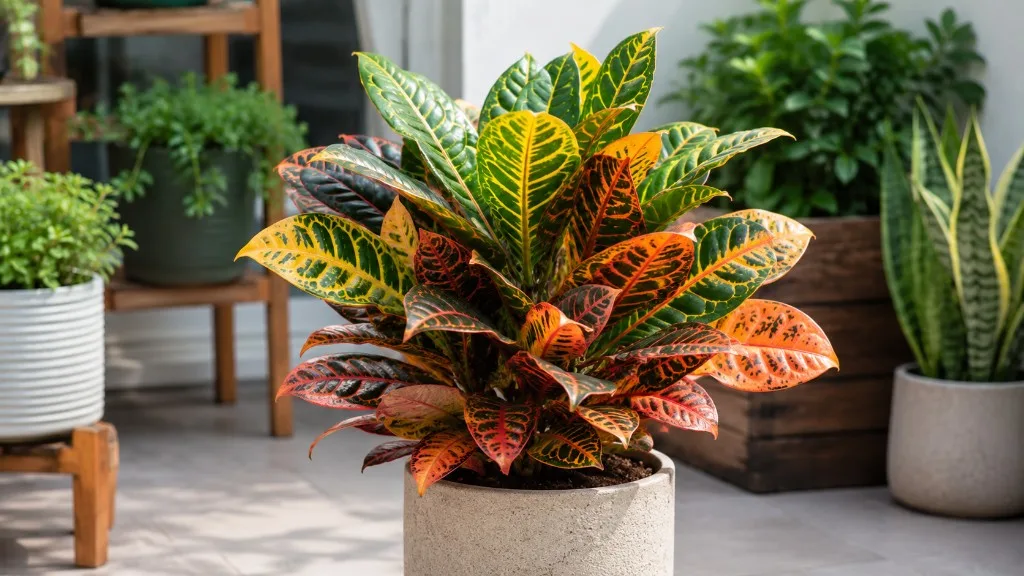
Croton (Codiaeum variegatum) is the opposite of a quiet green accent. Cultivars like ‘Petra’ pack orange, yellow, pink, and red along every vein—gorgeous in a greenhouse, chaotic in a room designed around restraint. NC State Extension notes crotons need bright light with some direct sun to hold color; shade causes lower leaf loss. They also shed leaves when temperatures drop, humidity falls, or the plant is moved—common in heated winter homes.
The sap is milky and irritating to skin, which adds friction when you are already cleaning dropped foliage. Spider mites plague dry indoor air, which means more intervention. Organizers classify croton as high visual volume plus high emotional labor: the plant looks unhappy quickly, and unhappy crotons broadcast it by dropping leaves.
If you want warmth without the circus, a rubber plant (Ficus elastica) in a burgundy or plain green cultivar gives large leaves and vertical habit with far less technicolor volatility.
Air Plants: Soil-Free but Not Clutter-Free
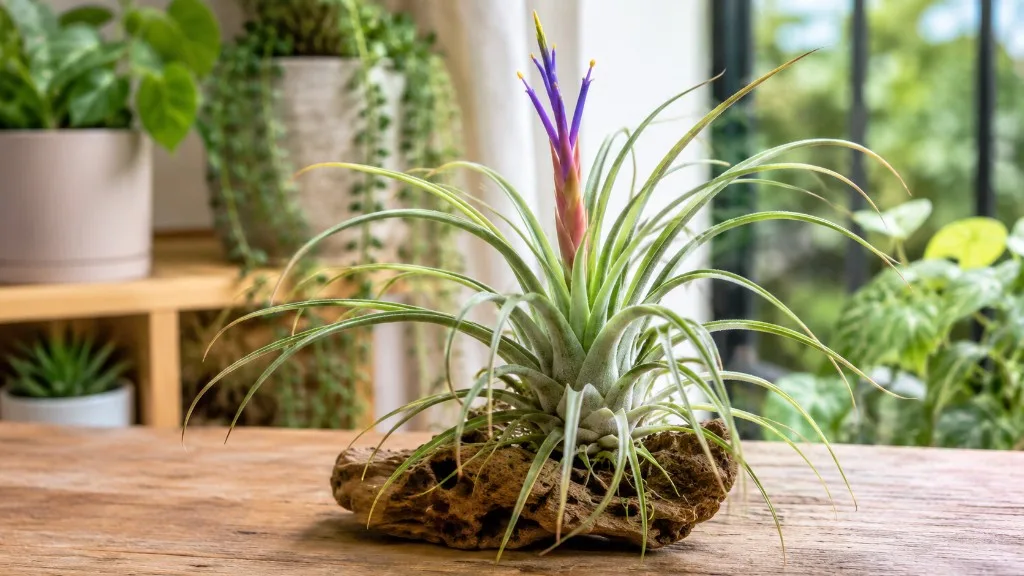
Tillandsia species are marketed as minimalist miracles: no pot, no soil, just a sculptural rosette on a shelf. The hidden cost is the soaking ritual. Most air plants need a full submersion bath on a weekly or biweekly schedule, then upside-down drying so water does not rot the crown. That means clearing counter space, remembering bath day, and often accumulating display holders—wire frames, driftwood mounts, glass globes—that contradict a less-is-more shelf.
Air plants also die quietly if humidity is too low or light is too dim, turning into brittle brown sculptures you did not notice until guests arrive. For a lifestyle minimalist, a plant that cannot live in its display spot without a recurring kitchen workflow fails the audit on maintenance load and object creep (extra holders, hooks, and drying racks).
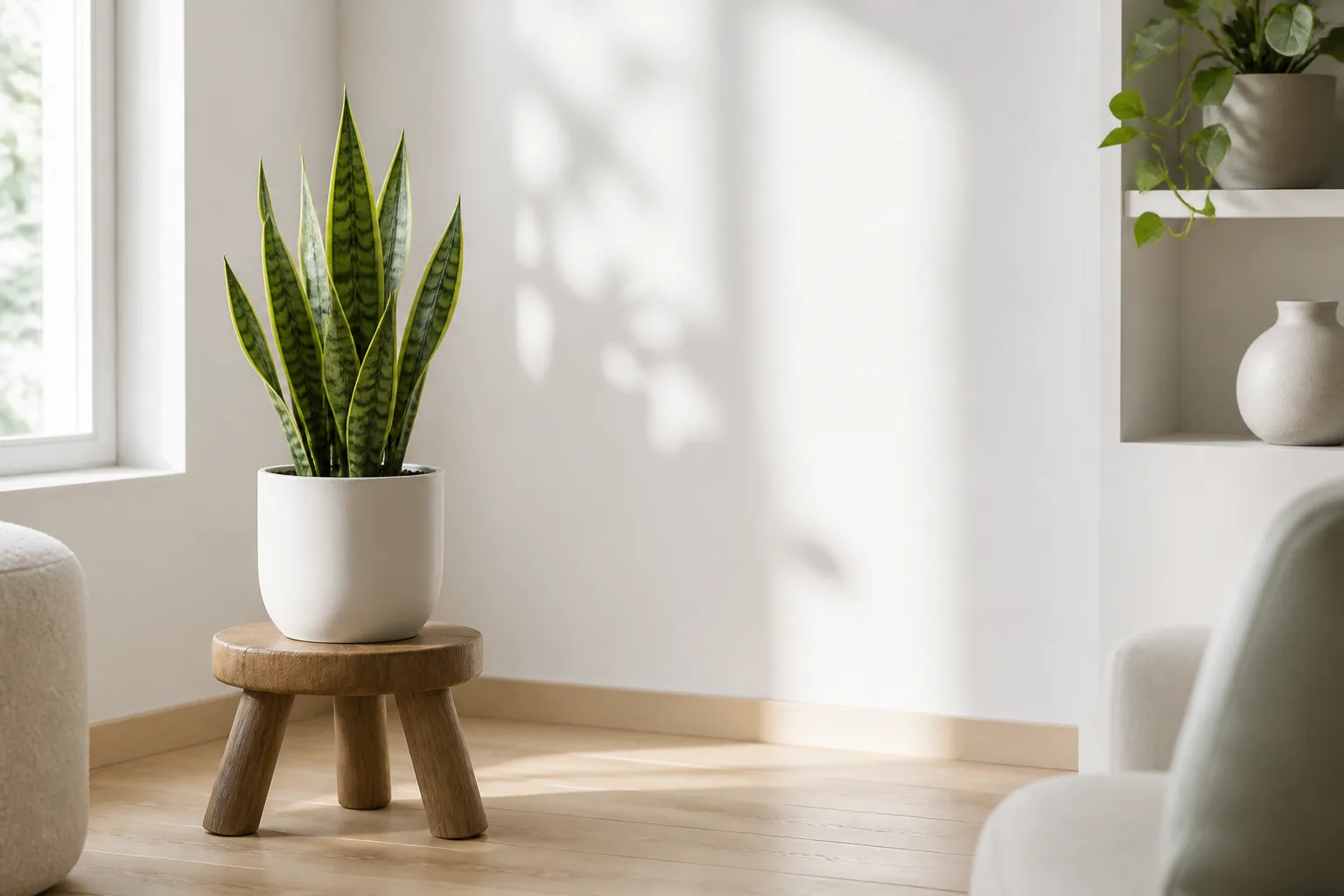
A single snake plant in one pot delivers vertical lines without bath day. Our snake plant care overview covers the infrequent watering rhythm that suits busy households.
Ferns: A Victorian Humidity Commitment
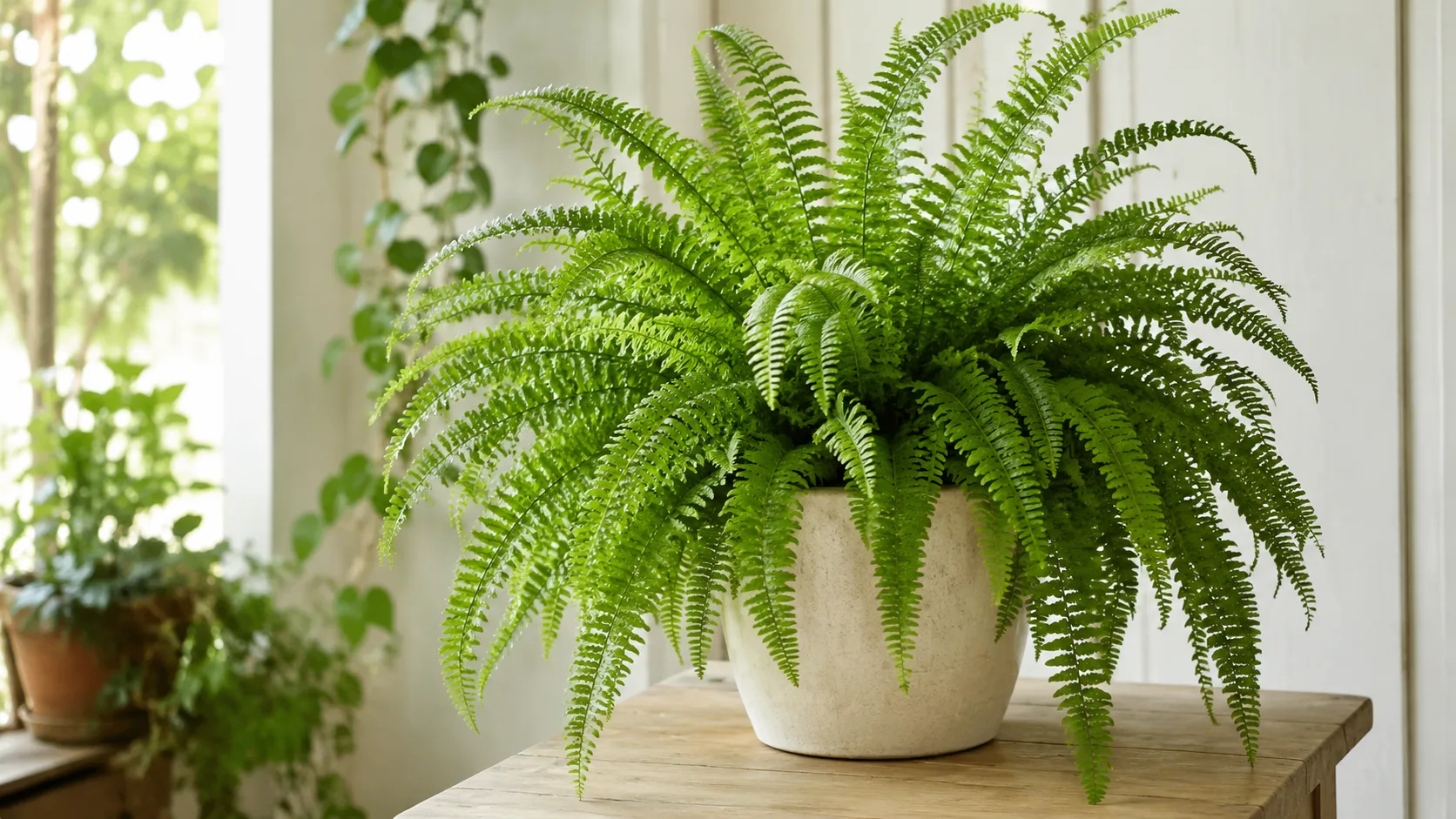
Boston fern (Nephrolepis exaltata) and its cousins evoke lush conservatories—not spare apartments. NC State Extension describes a plant that wants consistent moisture, bright indirect light, and high humidity, often reaching two to three feet tall and wide as a hanging basket fills in. Fronds brown at the tips when air is dry; entire fronds yellow when watering swings wrong.
Minimalist homes in winter are hostile to ferns: forced-air heat, single-pane drafts, and reluctance to run a humidifier for one plant. The fern becomes a humidity engine that demands pebble trays, grouping with other plants, or daily misting—exactly the kind of multi-object plant station organizers try to eliminate.
If you want soft texture without the misting schedule, a bird’s nest fern (Asplenium nidus) tolerates average humidity better and grows in a simple rosette rather than a shedding arch. It is still not zero-care, but it will not punish you for owning a furnace.
Should You Skip Houseplants Entirely?
Some simplicity coaches argue that no houseplant is minimalist if minimalism means removing every optional maintenance task from your week. That is a valid lifestyle choice, not a design rule. Plants offer air quality benefits, biophilic calm, and satisfaction that objects cannot replicate—but only if you genuinely enjoy tending them.
If plants feel like guilt triggers (yellow leaves you “should have” prevented), skipping them may be more minimalist than forcing a collection. If you enjoy one or two well-chosen pots, minimalism supports intentional quantity: one great plant beats seven mediocre ones shedding on the floor.
Houseplants That Actually Fit a Minimalist Home
Plants that pass the four-point audit tend to share traits: slow or predictable growth, solid green or restrained variegation, leaves that stay attached through normal indoor conditions, and care that fits a biweekly rhythm rather than a daily checklist.
Orchids, Jade, and Other Low-Footprint Winners
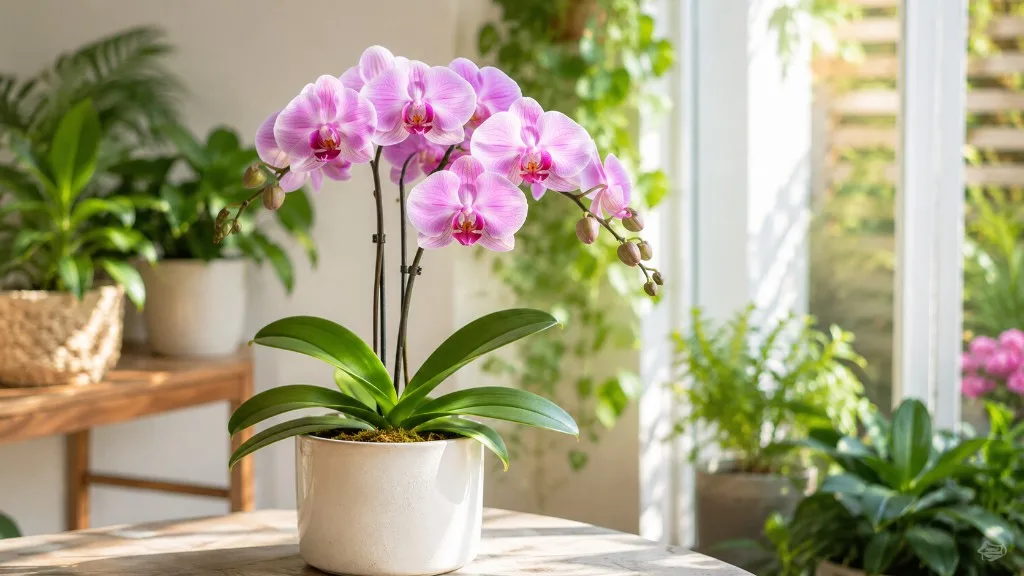
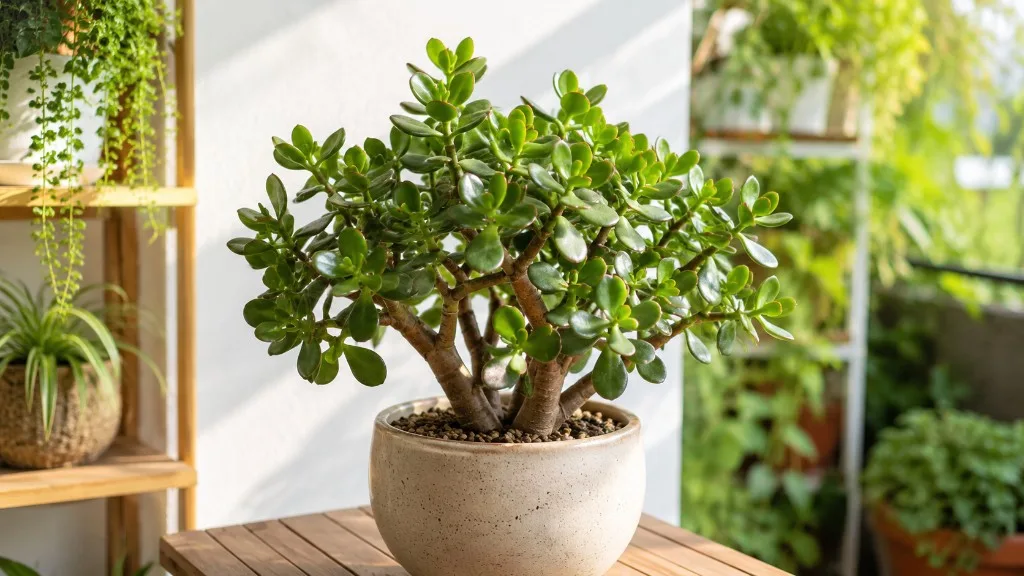
Phalaenopsis orchids stay vertically compact, need no trailing cleanup, and spend much of the year as plain green foliage between bloom cycles—easy to place on a shelf without visual competition. Jade plants (Crassula ovata) grow only a few inches per year indoors, hold thick leaves, and tolerate missed waterings better than most succulents.
A ZZ plant survives low light and irregular watering with glossy leaves that rarely drop.
 Snake plants add height in a narrow footprint. Pothos in a trimmed, managed length gives green without the bead-shedding of string of pearls—see our pothos guide for the care baseline.
None of these are immortal. Orchids need a post-bloom decision (rebloom attempt or compost). Jade eventually needs repotting. ZZ plants are toxic to pets if chewed. The difference is that their failures are slow and visible, not daily litter across your floor.
When shopping, run the four-point audit before checkout. If a plant fails on mess and maintenance, no ceramic pot will fix it.
Conclusion
Minimalist homes do not require plant-free rooms—they require honest plant choices. String of pearls, monstera, polka dot plant, ficus trees, croton, air plants, and ferns are favorites on design blogs because they photograph well at one moment in their life cycle. Organizers flag them because they create bead litter, ceiling-scale growth, constant pruning, leaf drop, bold visual noise, soaking workflows, or humidity stations that erode the calm you built elsewhere.
Use the four-point audit—visual noise, physical mess, maintenance load, footprint growth—to evaluate any new plant, not just this list. When you want greenery without the churn, orchids, jade, ZZ plants, and snake plants earn their shelf space by staying predictable. The most minimalist plant is the one whose care you will actually perform without resentment—and whose leaves stay where they belong.



