How Often to Fertilize a Christmas Cactus for More Blooms
Use a simple Christmas cactus fertilizer schedule with safe dilution, seasonal stop rules, and fixes for weak growth, salt buildup, and missing buds.
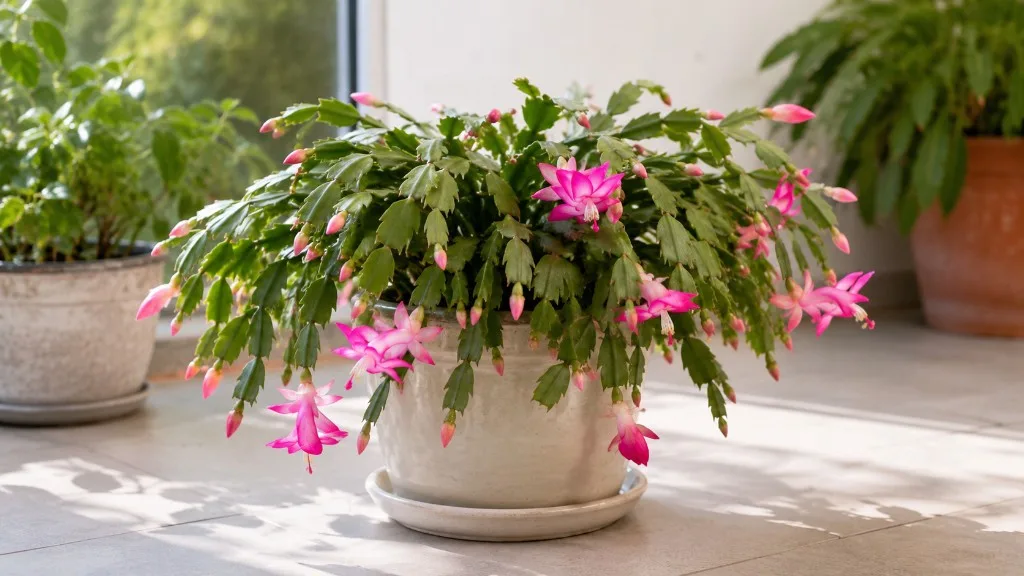
The short answer: feed during growth, rest before bloom
Fertilize a Christmas cactus about once every four weeks during active growth, usually from spring through late summer. Start when the plant has finished its post-bloom rest and is producing new stem segments; stop before the fall flower-bud-setting period begins. A sound starting point is a complete, water-soluble houseplant fertilizer diluted to one-quarter to one-half of the label rate, applied to soil that drains freely.
Do not fertilize a Christmas cactus simply because it has flower buds, open flowers, or a disappointing bloom count. Once the plant is preparing to flower, its priorities have shifted from making green growth to responding to shorter days and cooler nights. Feeding later cannot replace those cues, and extra fertilizer can leave mineral salts around the fine roots. The Missouri Botanical Garden’s Christmas cactus guidance recommends monthly feeding from new growth in late winter or early spring through summer, using a quarter-strength soluble fertilizer.
Why the calendar matters more than the fertilizer brand
Fertilizer matters because a Christmas cactus needs enough nutrition to build healthy new segments. Those segments become the framework for future flowers, since blooms appear at stem tips. A plant that adds several firm, green segments during the growing season has more potential flowering sites than one that spends the year stalled, even if both receive the same product.
The timing is equally important. Fertilizer is useful when roots and shoots are active, but a resting plant uses less water and takes up fewer nutrients. Applying food to a cool, dim, barely growing plant concentrates salts in a small pot instead of turning them into new tissue. That is why a modest monthly dose during growth is more sensible than feeding every time you water or trying to “catch up” before the holidays.
Christmas cactus is a rainforest epiphyte, not a desert cactus
Christmas cactus is a forest cactus in the genus Schlumbergera. In nature, related plants grow in humid tropical forests, often in crevices or on branches where organic debris collects but water drains away quickly. The Royal Horticultural Society’s growing guide and the Missouri Botanical Garden Plant Finder both describe the plant as a tropical, epiphytic cactus rather than the dry-desert type many people picture.
That background explains two fertilizer rules that can seem contradictory: the plant appreciates regular nourishment during growth, yet its root system is easy to damage with strong solutions or constantly wet soil. Think of feeding as replacing a small, regularly washed-through supply of nutrients, not loading the pot with a large reserve. A loose mix, a pot with a drainage hole, and a real dry-down between waterings matter as much as the fertilizer label.
Choose a gentle, complete fertilizer
Look for a complete liquid or water-soluble houseplant fertilizer that supplies nitrogen, phosphorus, potassium, and, ideally, a normal range of micronutrients. A balanced 10-10-10 or 20-20-20 product is a reasonable default for a healthy Christmas cactus. You do not need a fertilizer marketed specifically for cacti if its instructions are clear and the application can be diluted accurately.
The numbers on the front of the package are the NPK analysis: nitrogen, phosphorus, and potassium in that order. Nitrogen supports new green growth, while phosphorus and potassium have broader roles in root development, energy use, flowering physiology, and water regulation. Those jobs overlap, so the most useful choice for routine care is usually a complete product used lightly, not a single nutrient pushed to an extreme.
A balanced formula is the best default
A balanced fertilizer works well because Christmas cactus needs to grow foliage and branches before it can carry a larger crop of flowers. The Clemson Cooperative Extension guidance on indoor plants also identifies complete fertilizers containing nitrogen, phosphorus, and potassium as a good choice for indoor gardens and notes that dilute solutions reduce the risk of fertilizer burn.
If your product is 20-20-20, do not assume that the larger numbers automatically mean better blooms. They describe concentration, not quality. A 20-20-20 product mixed at half the label rate can be gentler than the same product mixed at full strength, and a 10-10-10 product may be perfectly adequate when the plant is growing in a fresh, lightly fertilized mix.
Liquid fertilizer is especially practical for this plant because you can adjust the dose as the season, light, and potting mix change. Slow-release pellets or stakes are not automatically wrong, but they are harder to remove if the plant enters a rest period early, the pot stays wet, or you accidentally combine them with liquid feed. If you use one, follow the label for container plants and do not stack products.
What about bloom boosters, Epsom salt, and kitchen scraps?
You do not need a high-phosphorus “bloom booster” to make a Christmas cactus flower if its fall conditions are wrong. Cooler nights, shorter days, enough daytime light, stable watering, and undisturbed buds have a larger influence on the seasonal switch. Adding more phosphorus can also add more total salts without solving the actual problem.
Routine Epsom salt is another popular shortcut that deserves restraint. It supplies magnesium, but magnesium is not a universal bloom trigger, and adding it without evidence of deficiency can upset the balance of other nutrients. Epic Gardening’s fertilizing guide treats magnesium supplements as conditional rather than essential; for ordinary home care, use a complete fertilizer with micronutrients and skip the supplement unless a soil test or a clear diagnosis gives you a reason.
Coffee grounds, sugar water, and other kitchen remedies are poor substitutes for a measured fertilizer. They make the moisture and salt environment harder to predict, especially in a small pot. If the plant is weak, inspect its light, roots, and potting mix before reaching for another additive.
Use this seasonal fertilizer calendar
Use the plant’s growth stage as the final decision, then use the calendar as a reminder. Indoor temperatures, window exposure, cultivar, and local daylight can shift the exact dates by several weeks.
| Plant stage | Fertilizer decision | What to watch |
|---|---|---|
| Flowers fading and post-bloom rest | Do not feed | Allow a cooler, slightly drier rest; avoid trying to restart growth immediately |
| New segments appearing in late winter or spring | Begin lightly | Confirm the plant is making new growth and the mix drains well |
| Spring through summer growth | Feed every four weeks | Use a diluted complete fertilizer at normal watering intervals |
| Late summer and early fall | Give the final dose, then stop | Let the plant transition to cooler nights, shorter days, and less frequent watering |
| Visible buds, flowering, or winter rest | Do not feed | Keep conditions steady; fertilizer will not open a bud that is already formed |
The RHS recommends liquid houseplant feed from April through September, while the BBC Gardeners’ World Christmas cactus guide gives the practical shorthand of monthly feeding in spring or summer. Treat those windows as a useful baseline, not a command to feed a plant that is still resting or has already begun its autumn bud response.
Late winter and early spring: wait for new growth
After flowers fade, Christmas cactus benefits from a rest period rather than an immediate dose of plant food. Keep watering more sparingly for a while, protect it from heat and harsh direct sun, and watch the stem tips. When you see fresh segments forming and the plant begins taking up water normally, restart with a diluted application.
This “new growth first” rule is useful for plants that bloom at unusual times or live in warm climates. A date on the calendar may say spring, but if the plant is still limp, cold, dim, or sitting in wet mix, fertilizer is not the first correction. Restore light and root health, then feed once active growth is obvious.
Spring through summer: feed every four weeks
During the active season, choose one regular watering day each month for fertilizer. Monthly feeding is frequent enough to support new segments in a container without turning every watering into a nutrient event. If the plant is small, newly divided, recently repotted into rich mix, or growing in weak winter light, choose the quarter-strength end of the range and reassess its new growth before increasing anything.
If a mature plant is making firm new segments but the soil dries unusually fast in bright summer light, do not respond by increasing fertilizer frequency. Check whether the pot is too small, the mix has broken down, or the plant needs a more consistent watering routine. More fertilizer cannot compensate for roots that are alternately parched and waterlogged.
Late summer through bloom: stop before buds form
The last feeding should happen before the plant’s autumn transition, often by late August or early September in a typical indoor schedule. Stop sooner if you notice cool nights, slower green growth, or the first tiny flower buds. The goal is to let the plant experience a clean shift into its reproductive cycle instead of continuing a leafy-growth program.
For reliable flowering, the Missouri Botanical Garden notes bright daytime light, cool night temperatures, and about 13 hours of total darkness for six to eight weeks when natural conditions are not enough. The RHS gives a similar seasonal picture: cooler conditions around 12–15°C (55–59°F), less watering in autumn, and a return to normal care once buds appear. Fertilizer supports the growth that came before this stage; it is not the cue that starts it.
Apply fertilizer without burning the roots
The safest feeding routine is simple, but each part matters: dilute accurately, apply to a root ball that is not bone dry, allow runoff, and empty the saucer. A Christmas cactus in a small pot has little room to dilute a mistake, and mineral residue is easy to overlook when the plant still looks green.
Start with a moist, draining root ball
Do not pour concentrated fertilizer onto completely dry mix. If the pot is dry enough to need a drink, water it thoroughly with plain water first, let the excess drain, and fertilize at the next normal watering. If the mix is already slightly moist and the plant is actively growing, the diluted fertilizer solution can serve as that watering.
The pot must have a drainage hole, and the decorative cover pot or saucer must not hold runoff against the base. Water moving through the mix carries fertilizer past the roots and reduces the chance that a strong pocket remains in the top layer. Never leave the container standing in the drained solution.
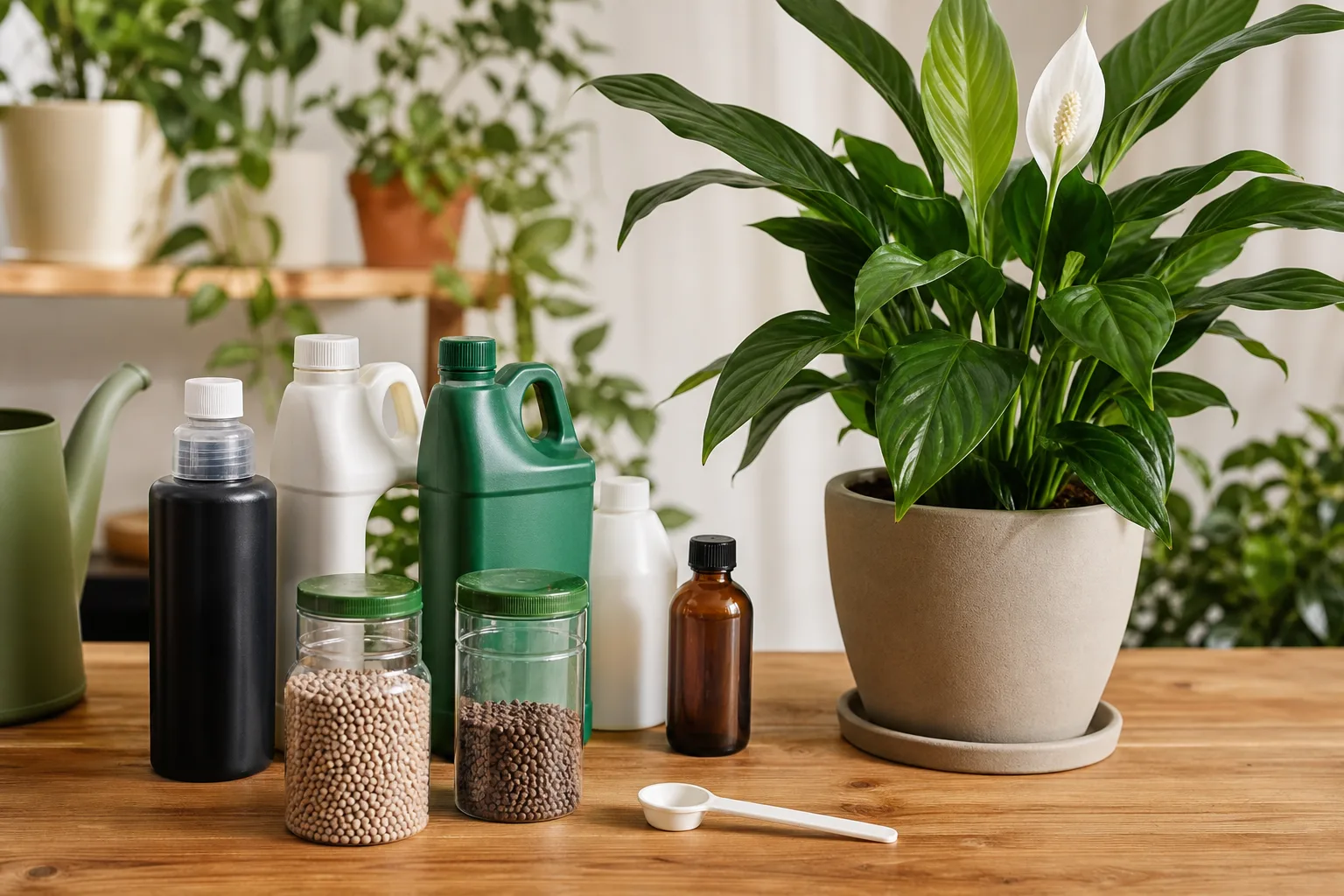
Measure the dilution and empty the saucer
Read the label’s rate for the exact product rather than borrowing a dose from another fertilizer. If the label says one teaspoon per gallon and you choose half strength, use one-half teaspoon per gallon; at quarter strength, use one-quarter teaspoon per gallon. That small calculation is safer than estimating a splash.
Pour the solution evenly over the potting mix, not onto the flowers. Allow some water to run from the drainage hole, then empty the saucer after the pot has finished dripping. The Gardening Know How fertilizer guide specifically recommends removing excess runoff and occasionally watering thoroughly enough to move accumulated salts out of the mix.
During the feeding season, an occasional plain-water flush can help if the pot drains freely and the mix is otherwise healthy. Run plain water through the root ball until it exits the holes, let it drain completely, and return to the ordinary dry-down rhythm. Do not use flushing to excuse a waterlogged mix; if water stays in the pot, fix the drainage and roots first.
Make the rest of the setup support flowering
Fertilizer only helps a plant that has enough light and functioning roots to use it. Give Christmas cactus bright, indirect light during active growth; direct, hot sun can bleach or scorch the flattened stems, while deep shade can produce thin growth and few flowering sites. In winter, a bright window is useful, but keep the plant away from a radiator, heating vent, or cold draft.
Use an airy, well-drained potting mix with organic material and some larger particles. A slightly acidic mix is reasonable, but you rarely need to adjust pH just because a plant has fewer flowers. It is more important that the mix stays open after watering and that the pot is only modestly larger than the root ball. Both the RHS and Epic Gardening emphasize drainage and a forest-cactus growing environment rather than a dry desert setup.
Keep the plant stable once buds appear. Moving it from a cool, dark room to a hot window, turning it repeatedly, or changing watering sharply can cost buds that fertilizer cannot replace. If you want a fuller plant with more stem tips over time, prune or pinch a few segments after flowering and allow the plant to regrow during the next feeding season.
If your Christmas cactus has no flowers
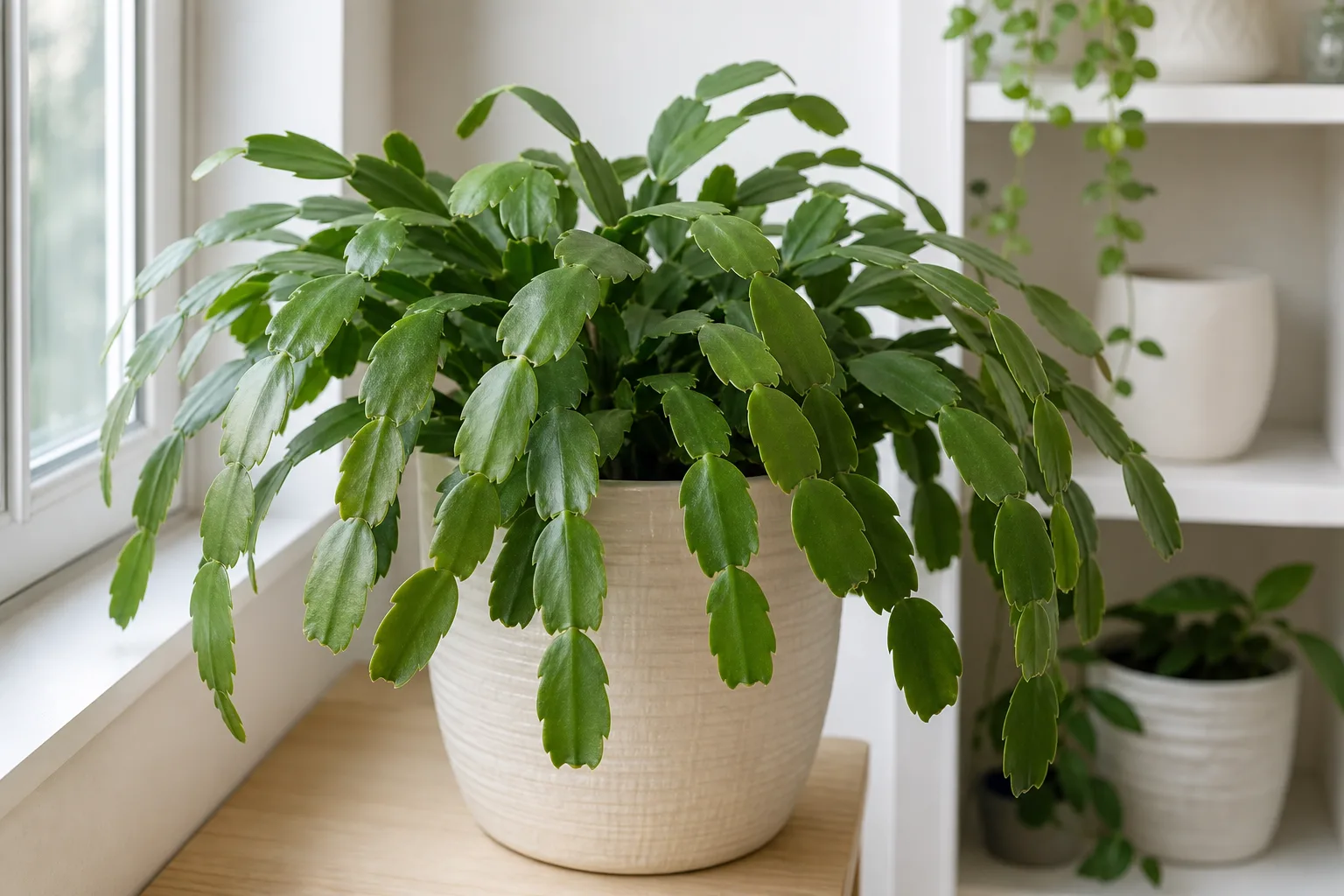
Do not assume “no flowers” means “needs more fertilizer.” Work through the causes in this order so you do not turn an environmental problem into a root problem.
- Check whether it made enough new growth. If the plant barely grew, inspect light, pot size, drainage, pests, and root health before changing the dose. A missed feeding may reduce vigor, but a few extra applications cannot create mature flowering tips overnight.
- Check daytime light. Bright indirect light powers the growth that later carries flowers. Low light can leave the plant alive but too weak to make a substantial display; harsh direct sun can redden or bleach the segments and slow recovery.
- Check the autumn signal. Flowering depends on a meaningful seasonal shift: cooler nights, shorter days, and a period of long, uninterrupted darkness. Missouri Botanical Garden recommends night temperatures around 55–65°F and approximately 13 hours of darkness for six to eight weeks for indoor plants; the Horticulture magazine guide similarly recommends starting a controlled dark period about eight weeks before the desired display.
- Check for light leaks. A nearby lamp, television, hallway light, or frequently opened closet can interrupt the long-night cue. Use a genuinely dark room or a consistent cover that does not trap heat, and do not keep moving the plant to check it.
- Check the roots and potting mix. A pot that is too large, soil that stays wet, or roots damaged by rot can stop growth even when fertilizer is present. The RHS lists poor flowering alongside problems such as overly warm autumn conditions, bud drop, root deterioration, and overwatering; that is a useful reminder that more plant food is rarely the first rescue.
If all of those conditions are sound and the plant is actively growing but remains unusually pale or stalled, use the fertilizer label and potting history to decide whether to feed at quarter or half strength. Change one variable at a time and give the plant several weeks of new growth before judging the result.
If buds drop or leaves turn brown
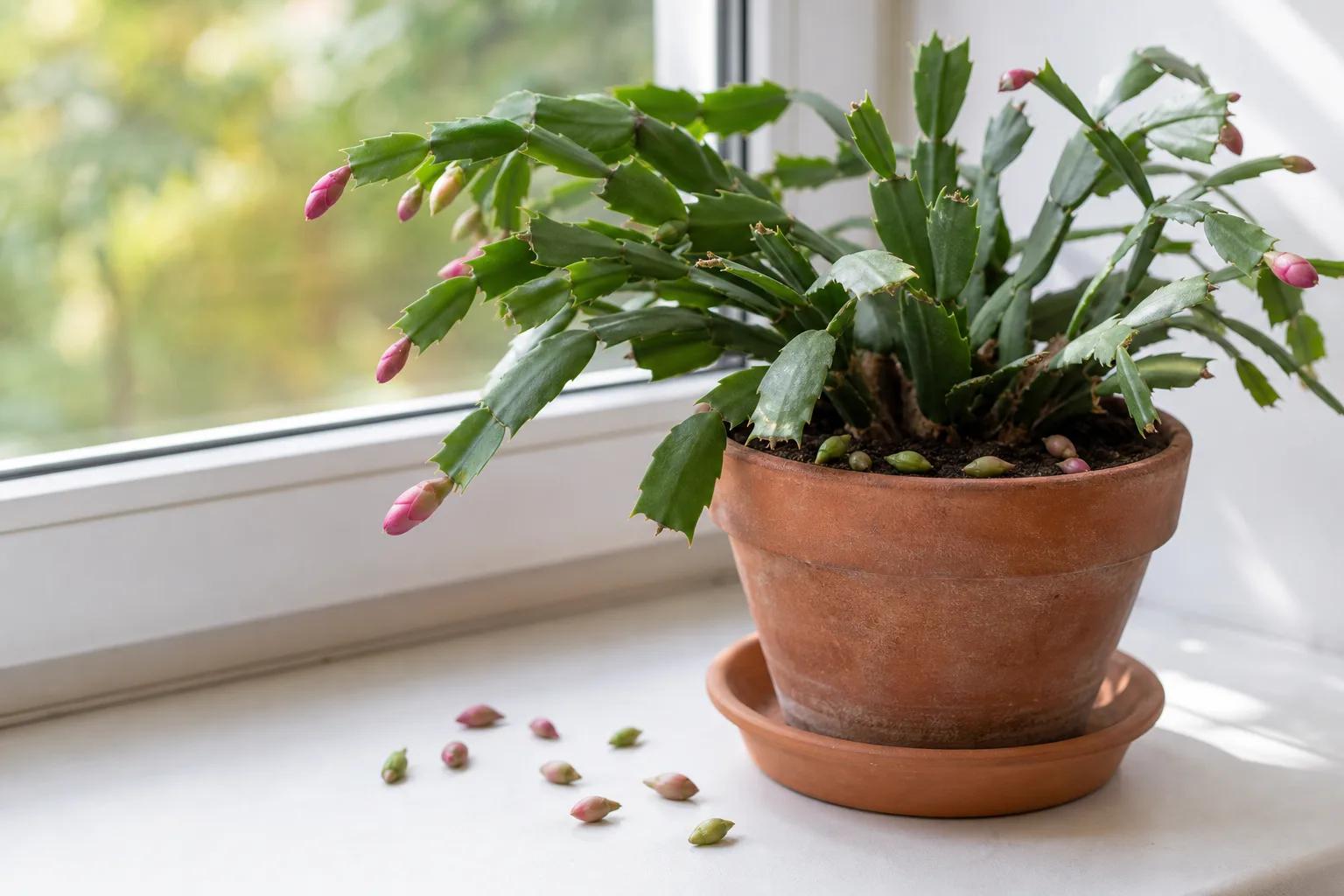
Bud drop is usually a stability problem, not a hunger signal. Sudden changes in location, temperature swings, hot or cold drafts, overwatering, or letting the mix become excessively dry can all cause a plant to shed buds. The Gardeners’ World guide and Missouri Botanical Garden both advise keeping a budded plant in one stable spot and avoiding abrupt changes.
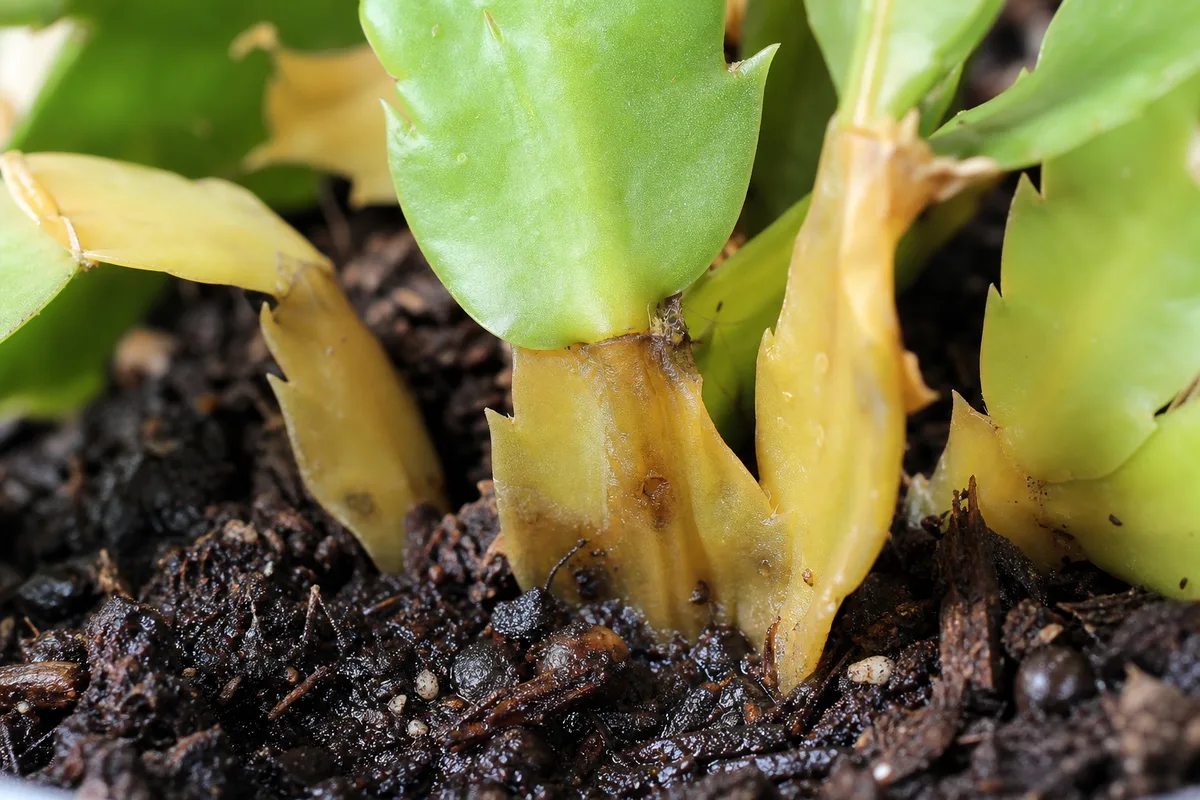
Brown tips and white crust point in a different direction. A white film on the mix or a chalky rim around the drainage hole, especially with brown tips or declining growth, can indicate soluble salt buildup from fertilizer or water. Clemson explains that accumulated salts can injure roots and produce brown tips, dropped lower leaves, wilting, or reduced growth. Stop fertilizer, make sure the pot actually drains, and flush with plain water only if the root ball can drain freely.
Soft, yellowing segments, a sour smell, and mix that stays wet for days suggest root trouble rather than a nutrient shortage. Unpotting is stressful, so do it when the plant is not carrying a full display unless the root damage is severe; remove rotted material, use fresh airy mix, and keep the recovering plant on the dry side of its normal watering range. Do not fertilize until it has resumed healthy new growth.
Finally, do not “correct” bud drop by moving the plant into a colder or brighter spot overnight. During flowering, preserve the conditions that triggered the buds. Make the next seasonal adjustment after the display ends, then restart the feeding calendar when fresh growth returns.
Conclusion
The most dependable Christmas cactus fertilizer schedule is one diluted feeding every four weeks during active spring and summer growth, beginning after the post-bloom rest and ending before autumn buds form. Use a complete balanced fertilizer, choose quarter strength for a small or freshly repotted plant, and never leave runoff in the saucer.
More blooms come from the whole sequence: healthy new segments in the growing season, bright indirect light, an airy mix, cooler autumn nights, long uninterrupted darkness, and a stable home once buds appear. When flowers are missing, inspect those conditions before increasing fertilizer; when roots show salt or rot stress, stop feeding and repair the growing environment first.



